【安藤忠雄建築】日没閉館 織田廣喜ミュージアム|太陽が沈むまで、光だけで絵を見る(Daylight Museum | Seeing Art Only While the Sun Shines)
建築概要
Architecture Overview
- 名称:日没閉館 織田廣喜ミュージアム(現・ブルーメの丘美術館)
- 設計:安藤忠雄
- 所在地:滋賀県蒲生郡日野町
- 竣工:1998年
- 用途:美術館
- Name:Daylight Museum(Blume no Oka Museum)
- Architect:Tadao Ando
- Completed:1998
- Location:Hino, Shiga, Japan
- Type:Art Museum
「日没閉館 織田廣喜ミュージアム」は、滋賀農業公園ブルーメの丘の一角に建つ安藤忠雄設計の小さな美術館である。1997年から98年にかけて計画・建設され、『新建築』1998年11月号にも安藤忠雄建築研究所の作品として掲載された。英語では「Daylight Museum」と呼ばれ、現在はブルーメの丘美術館として利用されている。
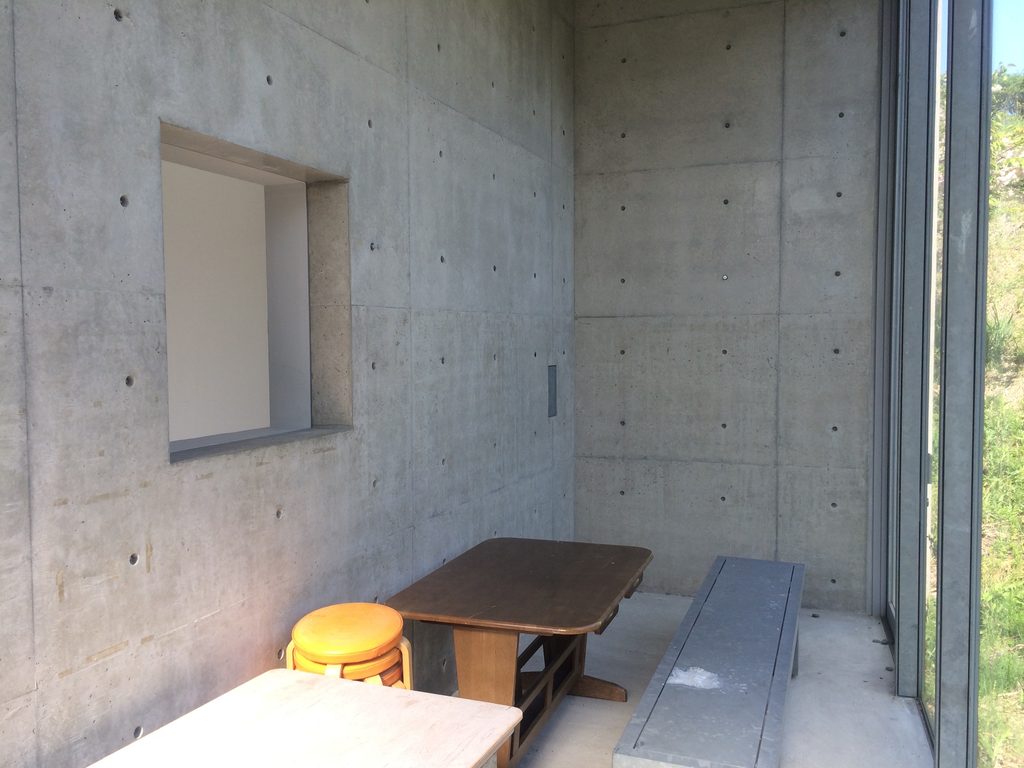
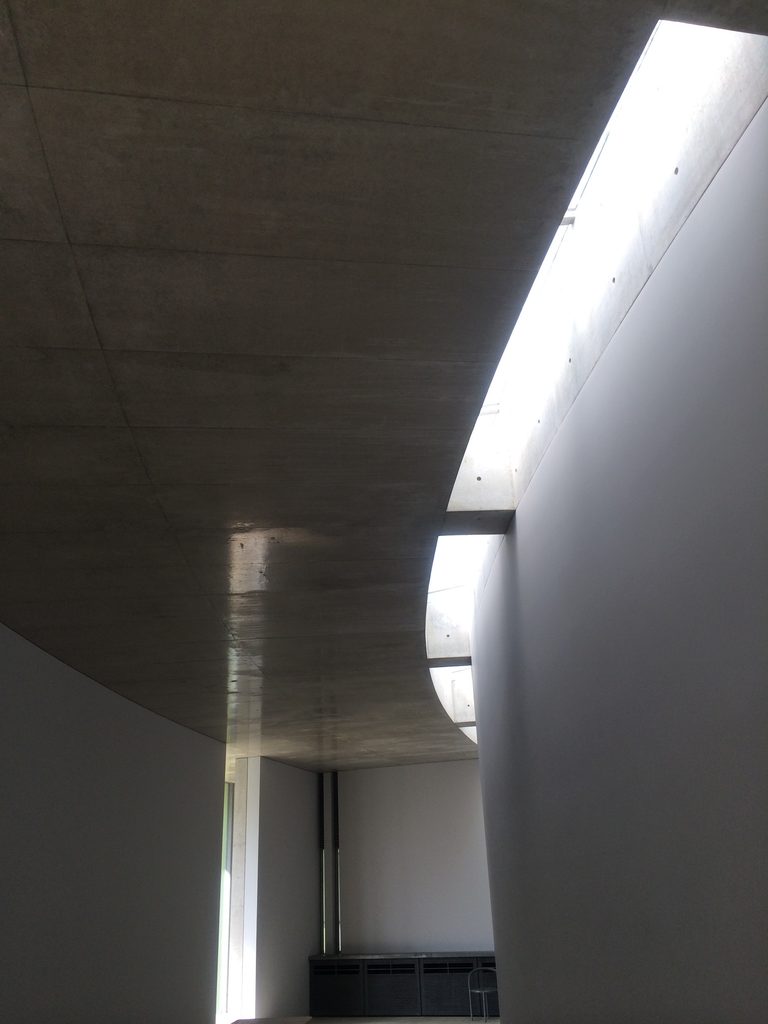
この建築を特徴づけるのは、その名の通り自然光によって作品を見るという考え方である。人工照明に頼らず、外から入る光によって展示空間を成立させるため、太陽が沈めば美術館も閉じる。建物は周囲の緑へ低く沈み込み、長いコンクリート壁、曲面の展示空間、半透明のガラス、トップライトやスリットから入る光によって構成されている。
ここでは光は作品を均質に照らす設備ではない。時間や天候とともに変化しながら、建築と絵画の見え方そのものを変えていく。美術館から人工の光を取り去り、太陽の時間をそのまま鑑賞体験へ取り込んだ建築である。
The Daylight Museum is a small art museum designed by Tadao Ando within Blume no Oka in Hino, Shiga. Completed in 1998 as a museum dedicated to painter Hiroki Oda, the project is listed as Daylight Museum in English-language records of Ando’s work.
Its defining idea is remarkably simple: the galleries depend on daylight rather than artificial illumination. When daylight disappears, the museum closes. Concrete walls, curved exhibition spaces, translucent glass, skylights and narrow openings bring changing natural light into the architecture.
Here, light is not merely a means of illuminating art. It changes with the hour and weather, allowing the experience of the museum itself to change with the sun.
1. 緑の中へ、コンクリートの壁をたどる
Following Concrete into the Landscape
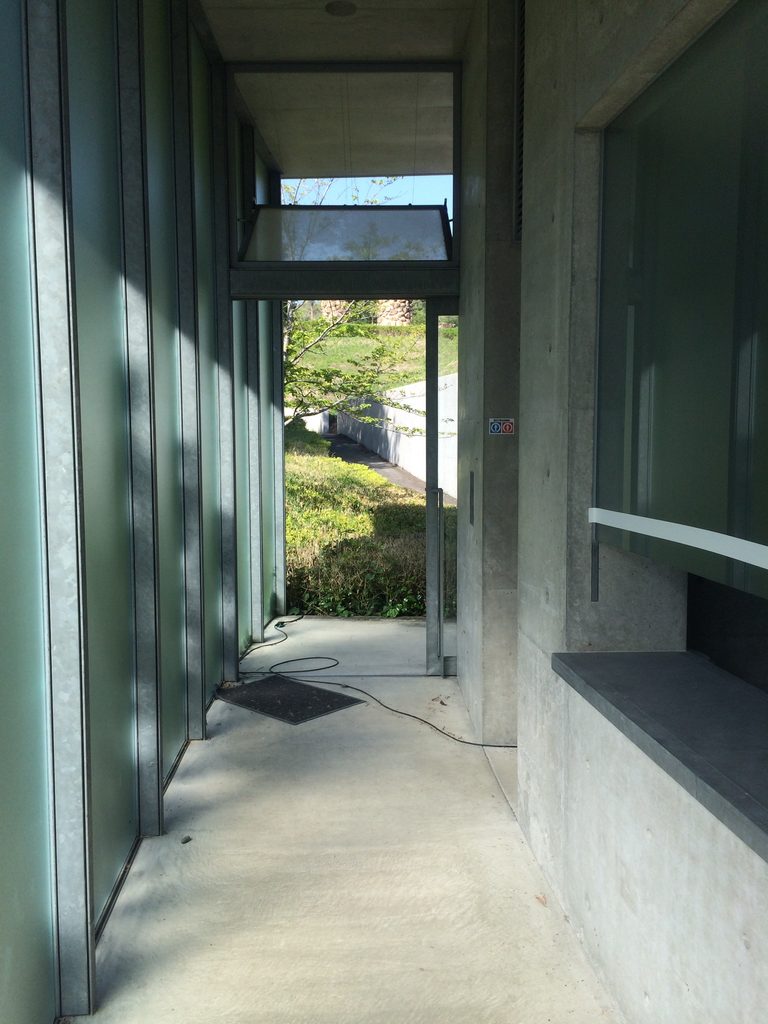
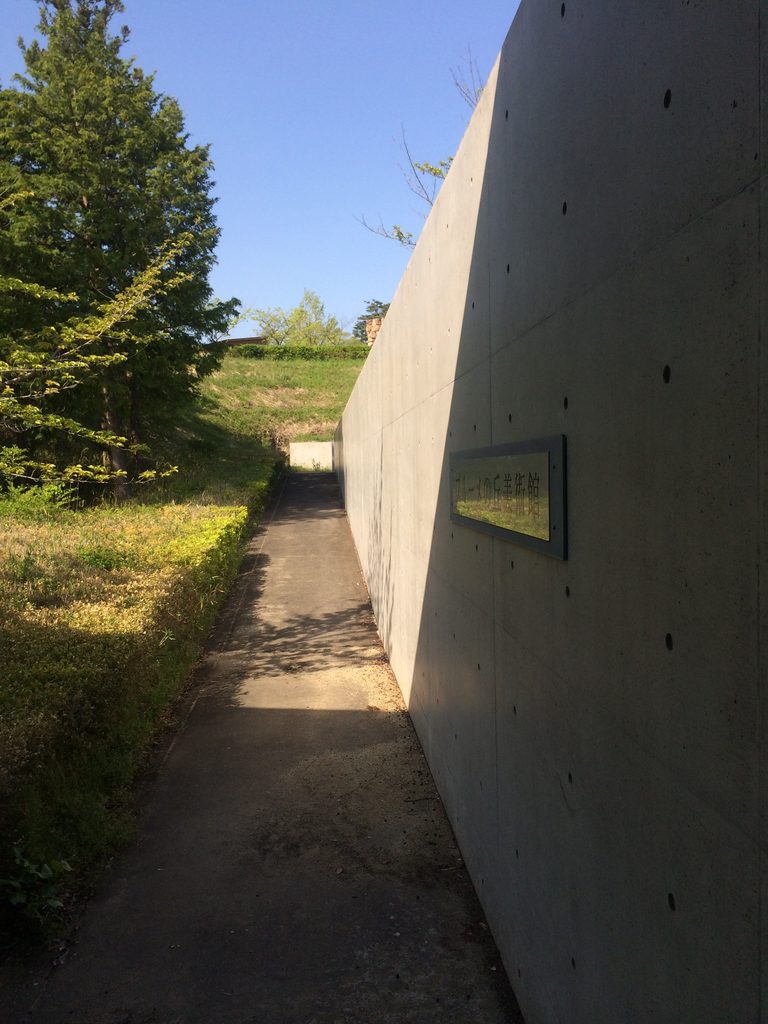
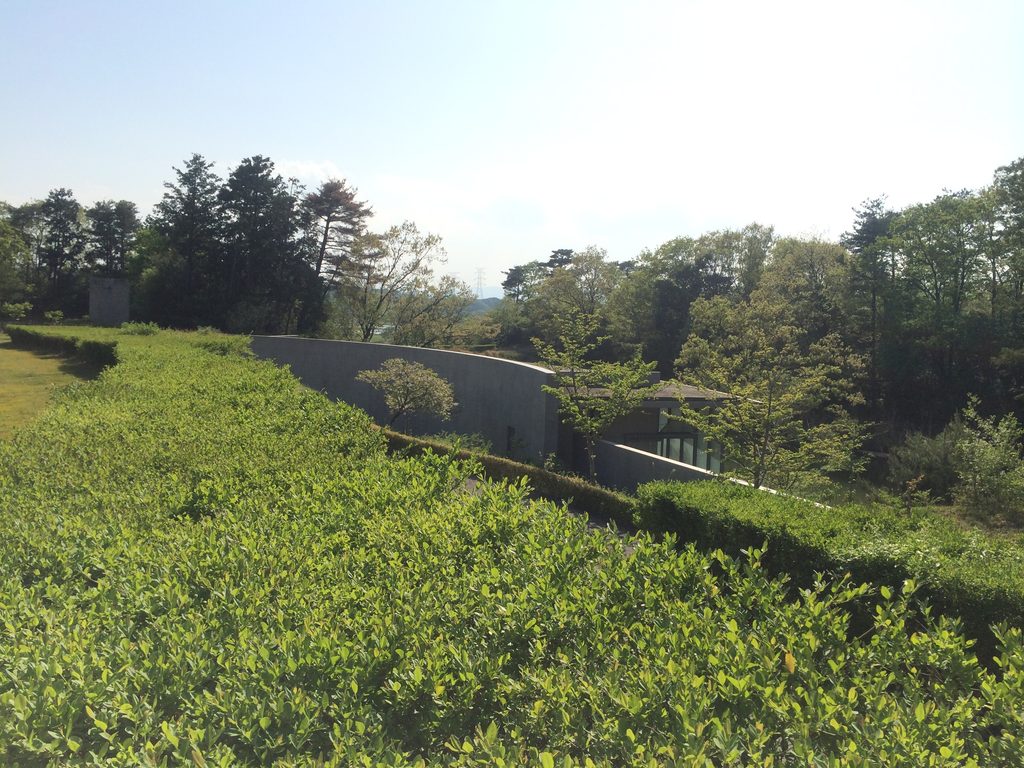
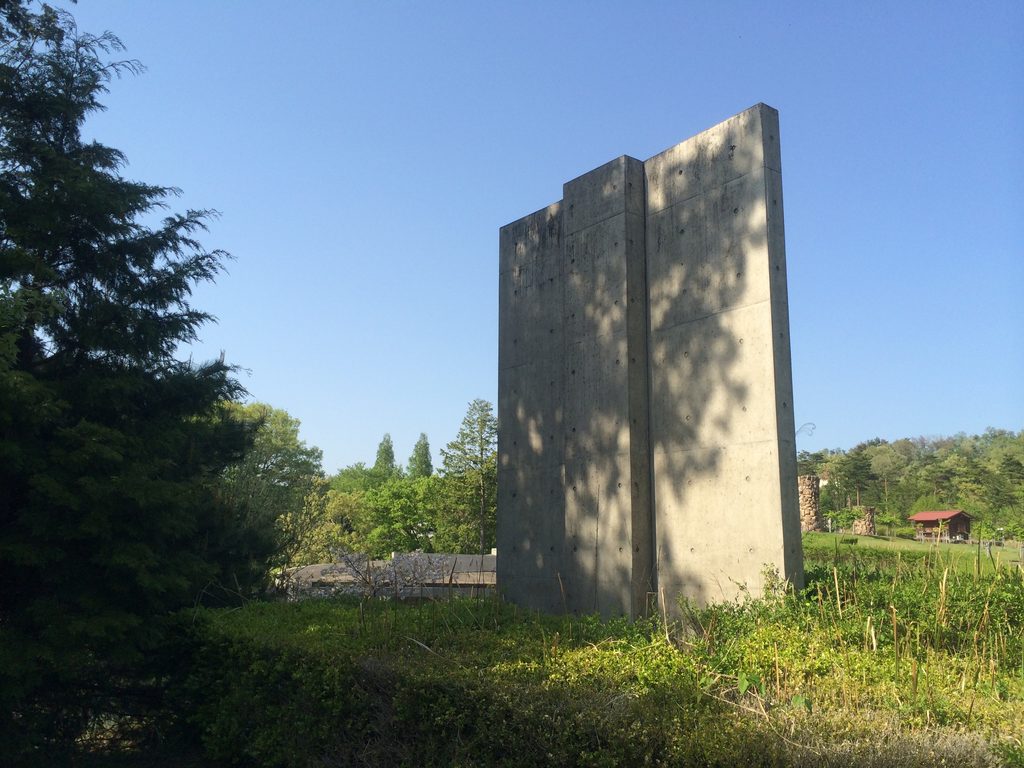
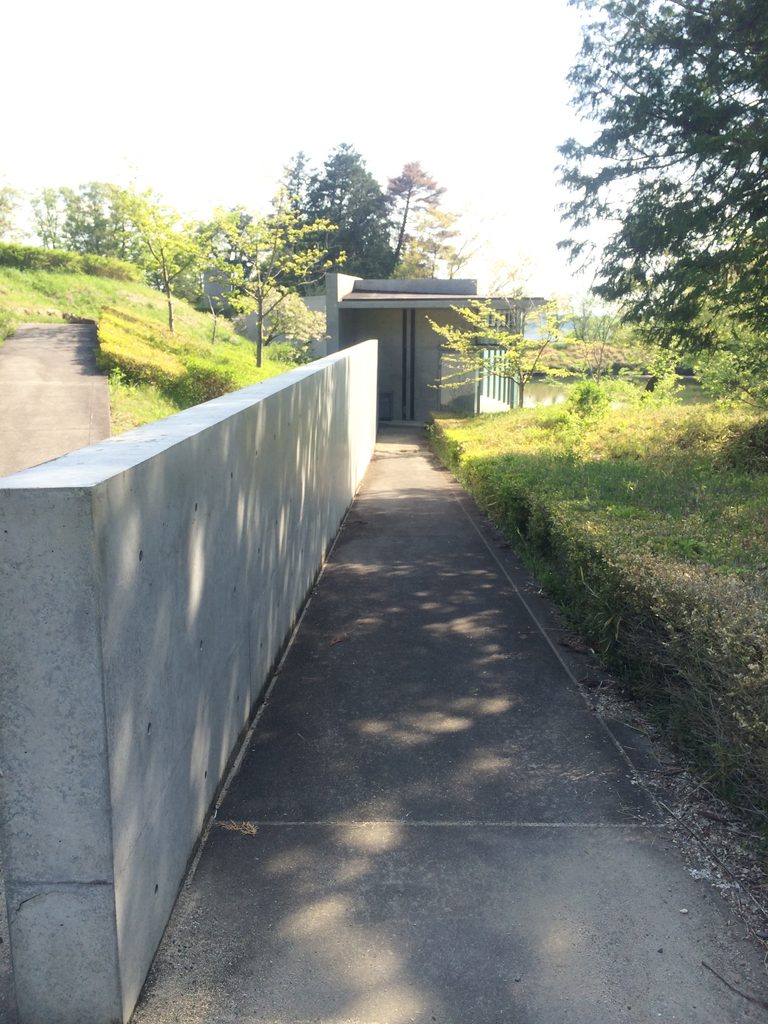
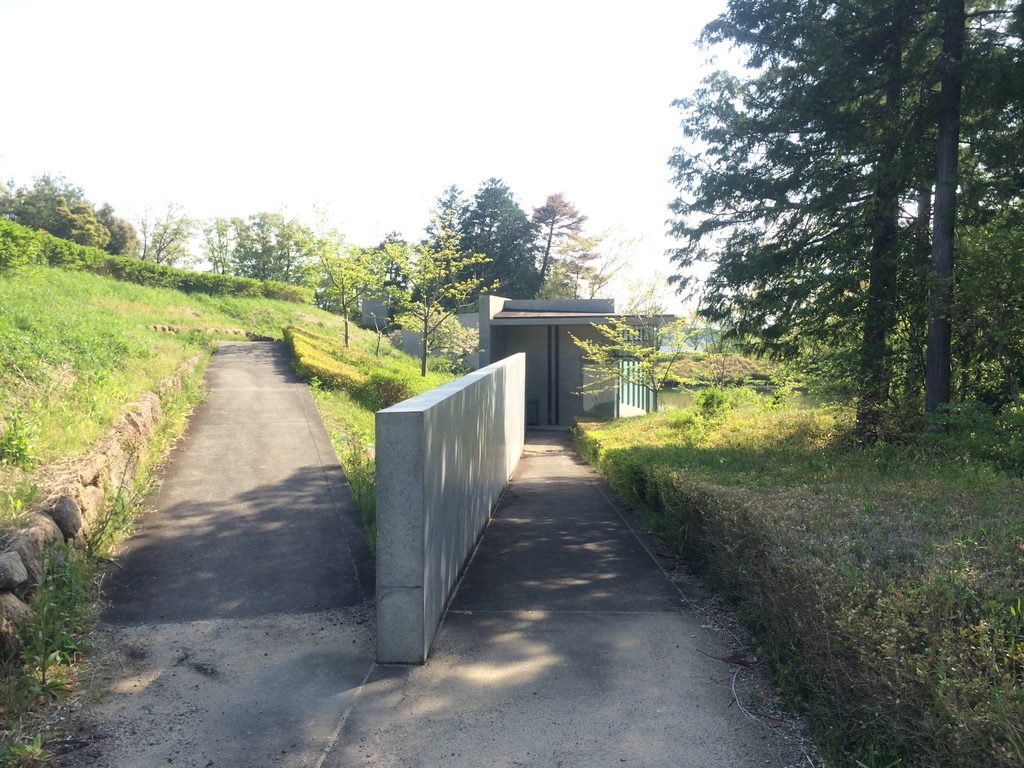
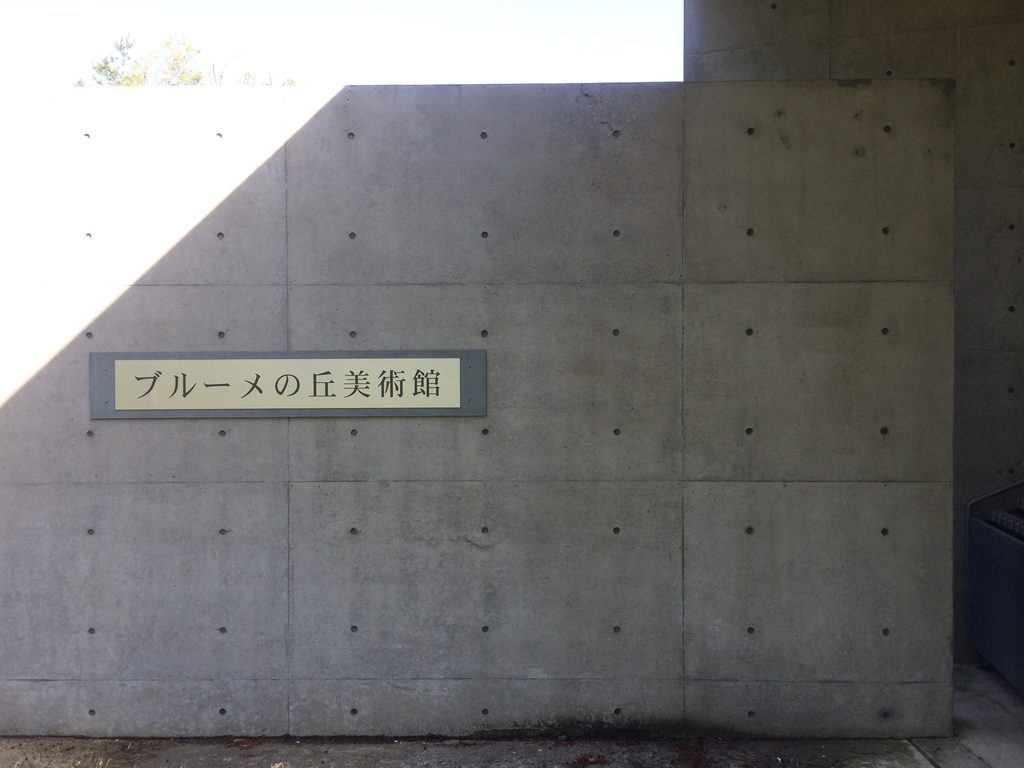
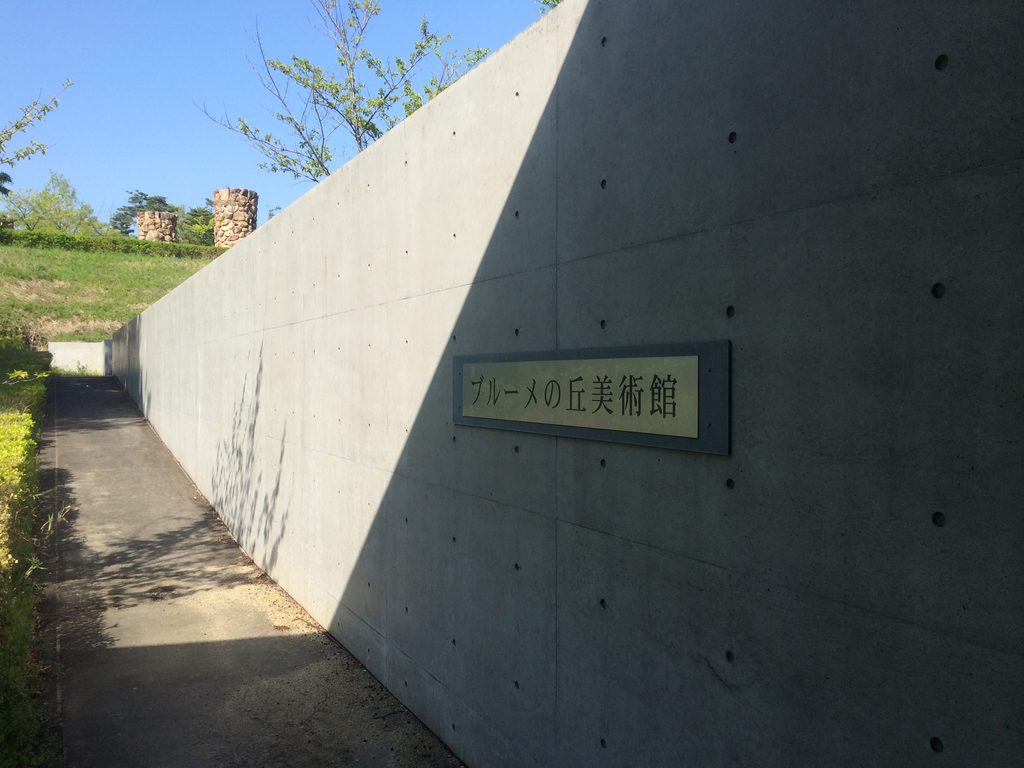
ブルーメの丘の賑やかなエリアから離れていくと、周囲の景色は次第に静かになり、緑の中に一本の打放しコンクリート壁が現れる。
Away from the busier areas of Blume no Oka, a long concrete wall emerges quietly from the greenery.
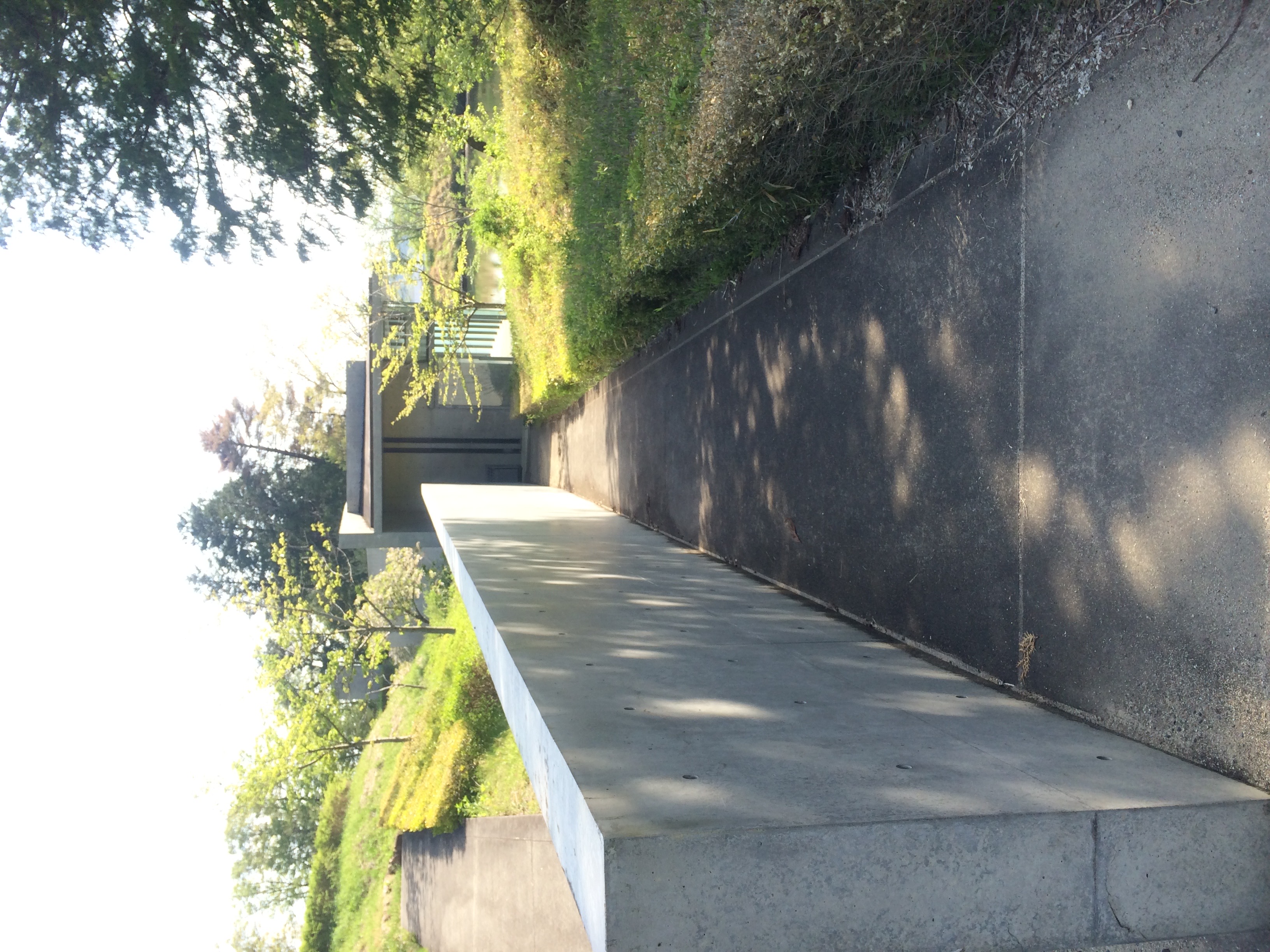
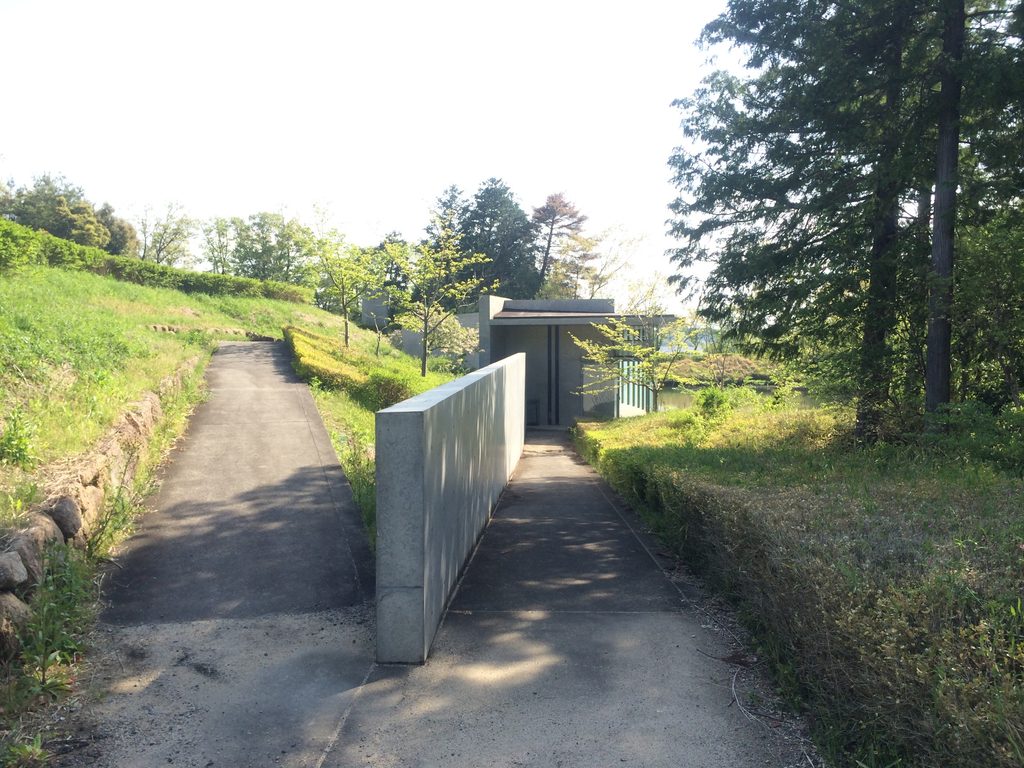
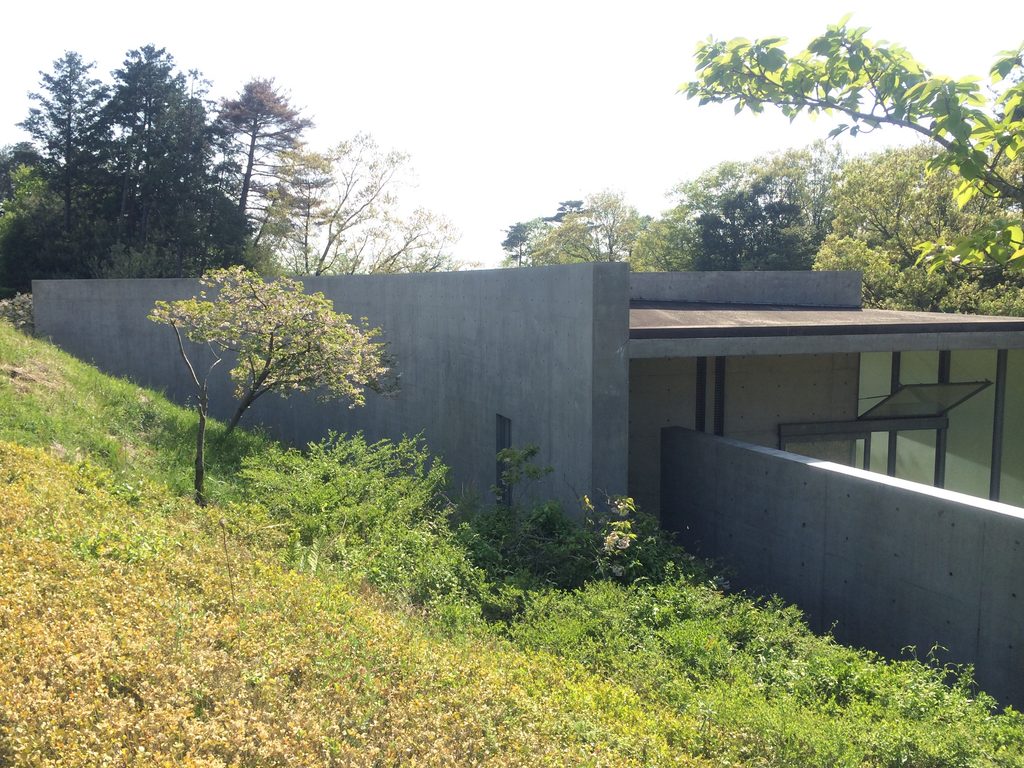
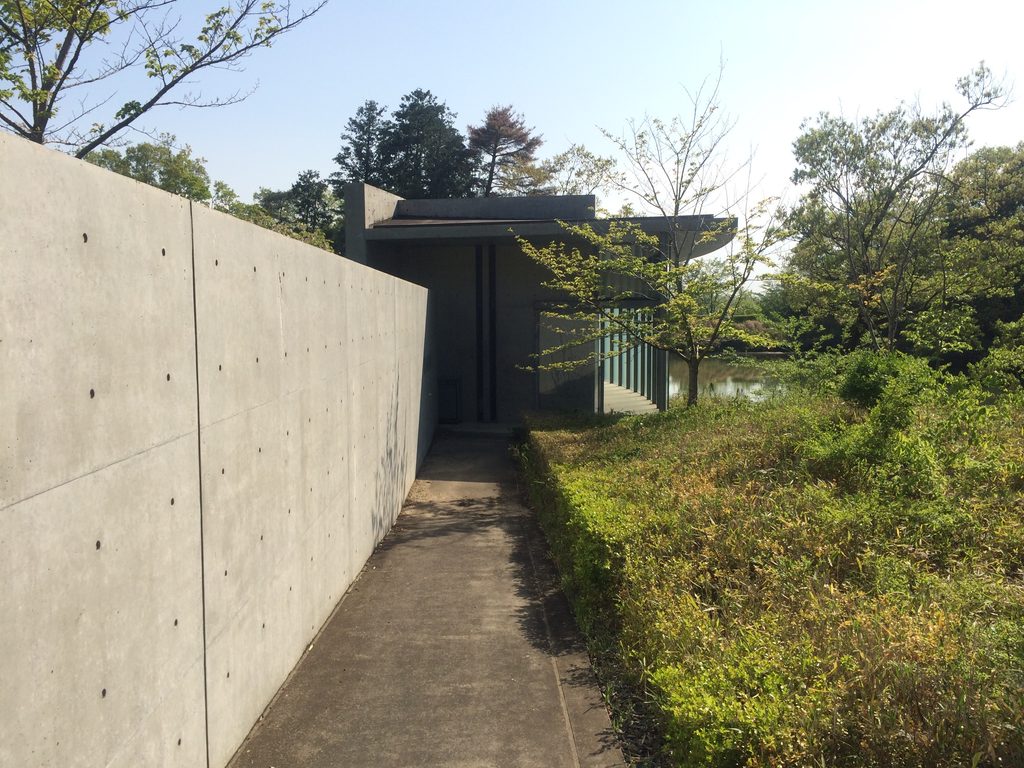
建物全体を最初から見せるのではなく、低い壁に沿って歩きながら入口へ近づいていく。美術館は地形の中へ沈み込むように配置され、遠くから見ると建築そのものより緑の方が強く感じられる。
The building is not revealed all at once. A narrow path follows the wall toward the entrance, gradually separating the visitor from the surrounding park.
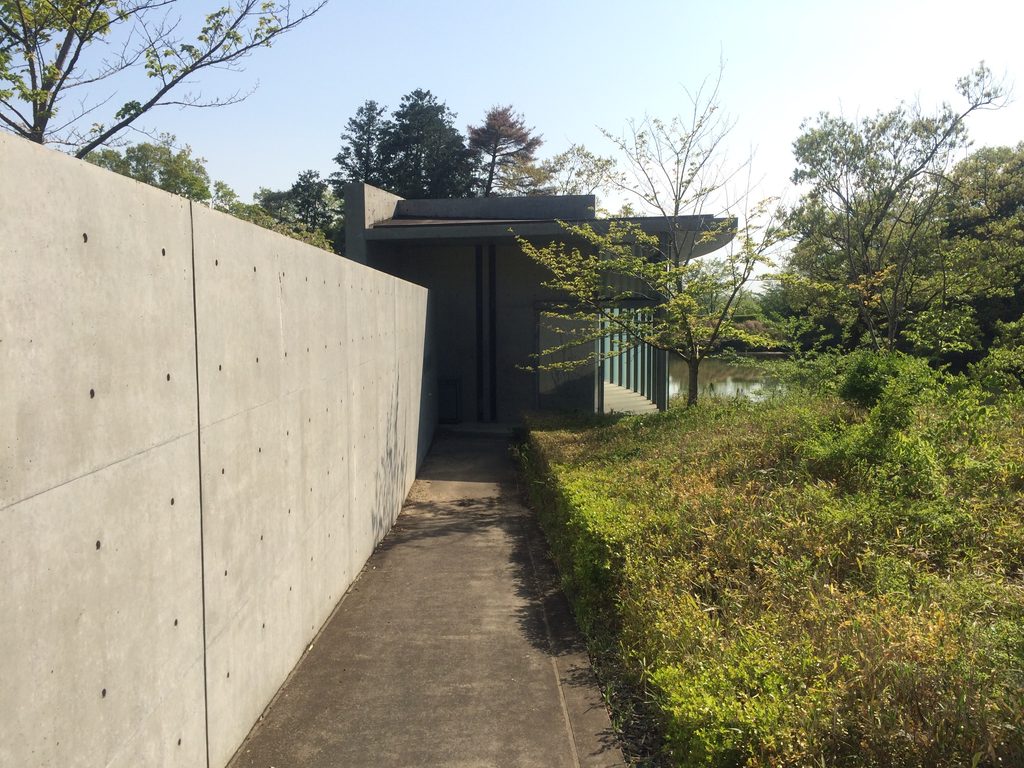
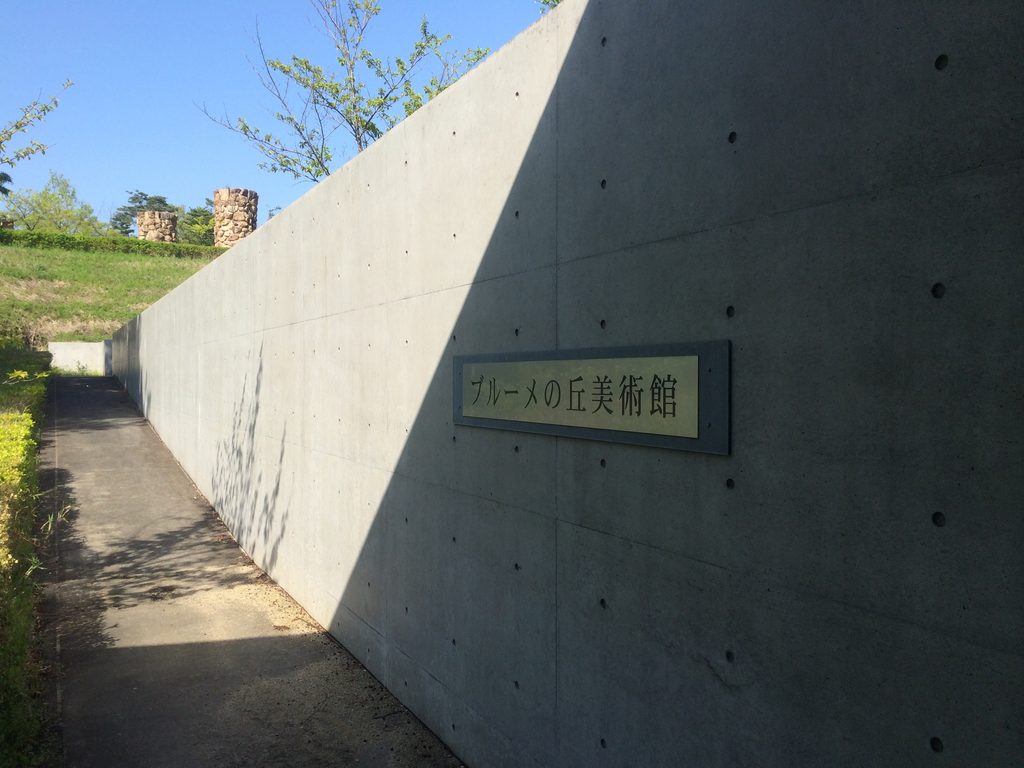
そのアプローチは決して劇的ではない。しかし、明るい屋外からコンクリート壁に挟まれた細い道へ入ることで、少しずつ周囲の情報が減っていく。
The architecture sits low in the landscape, allowing vegetation to remain more visually dominant than the building itself.
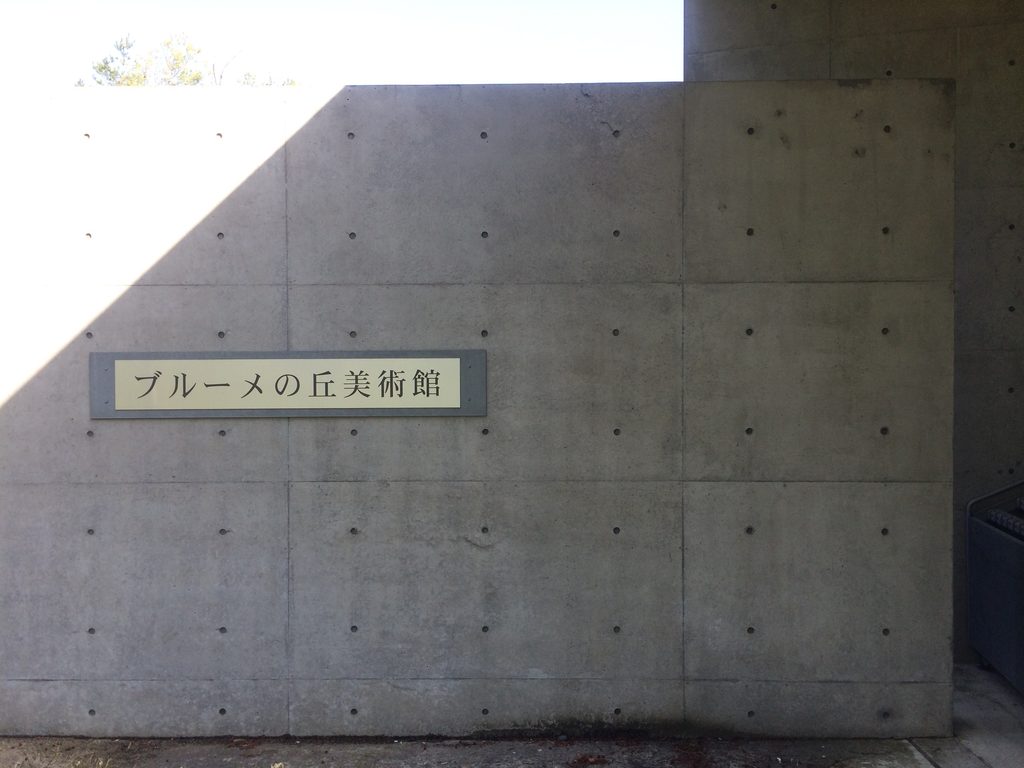
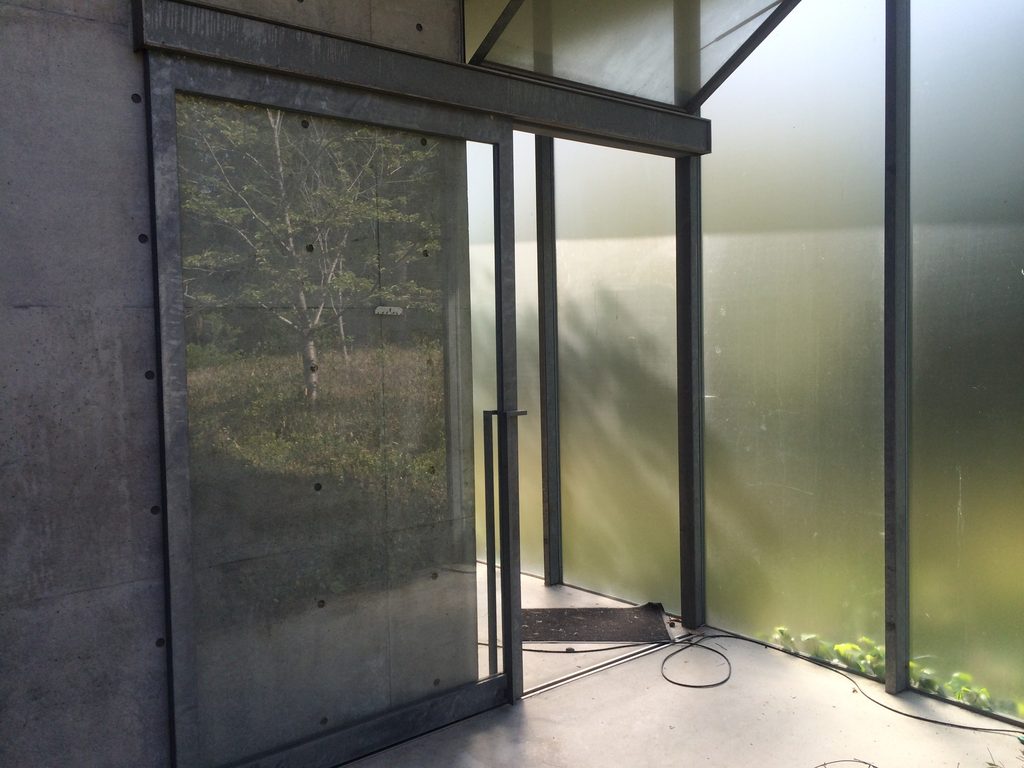
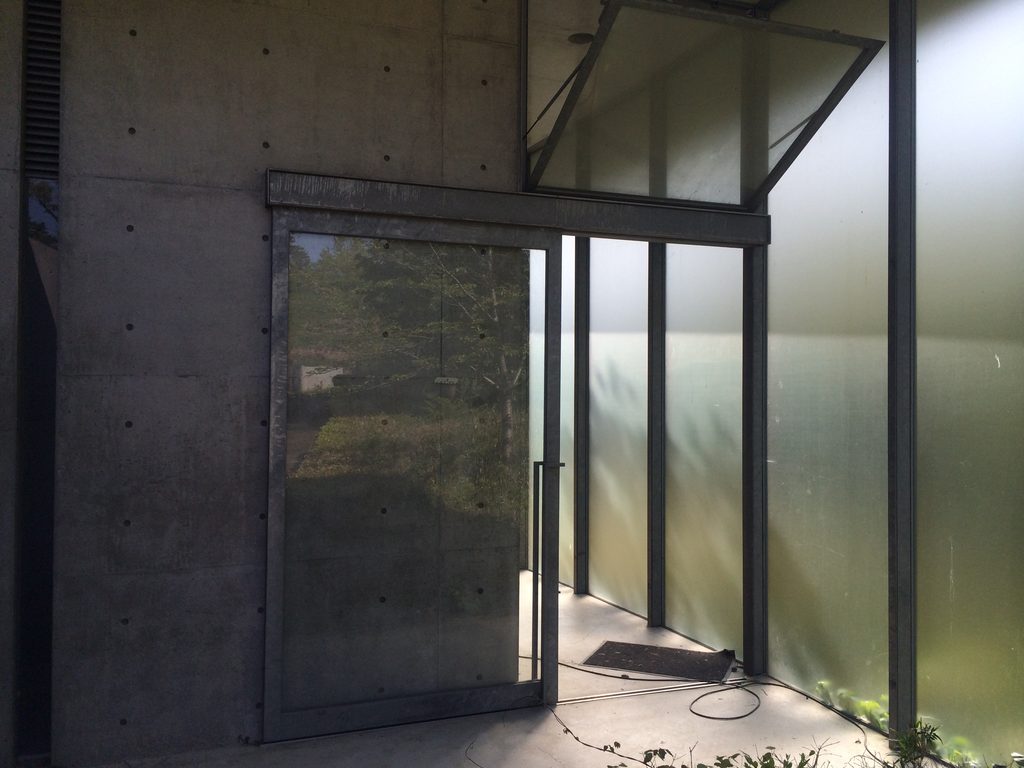
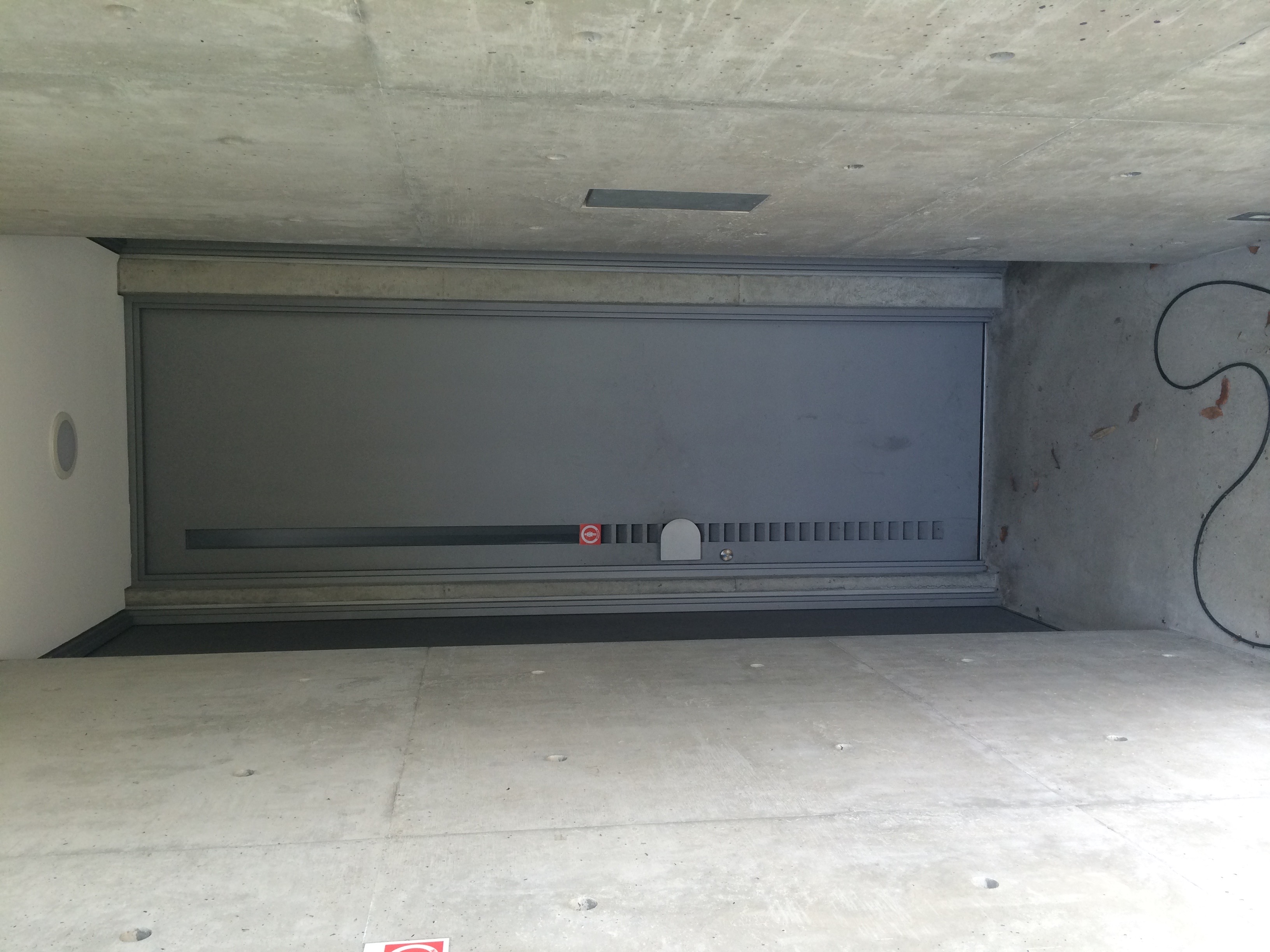
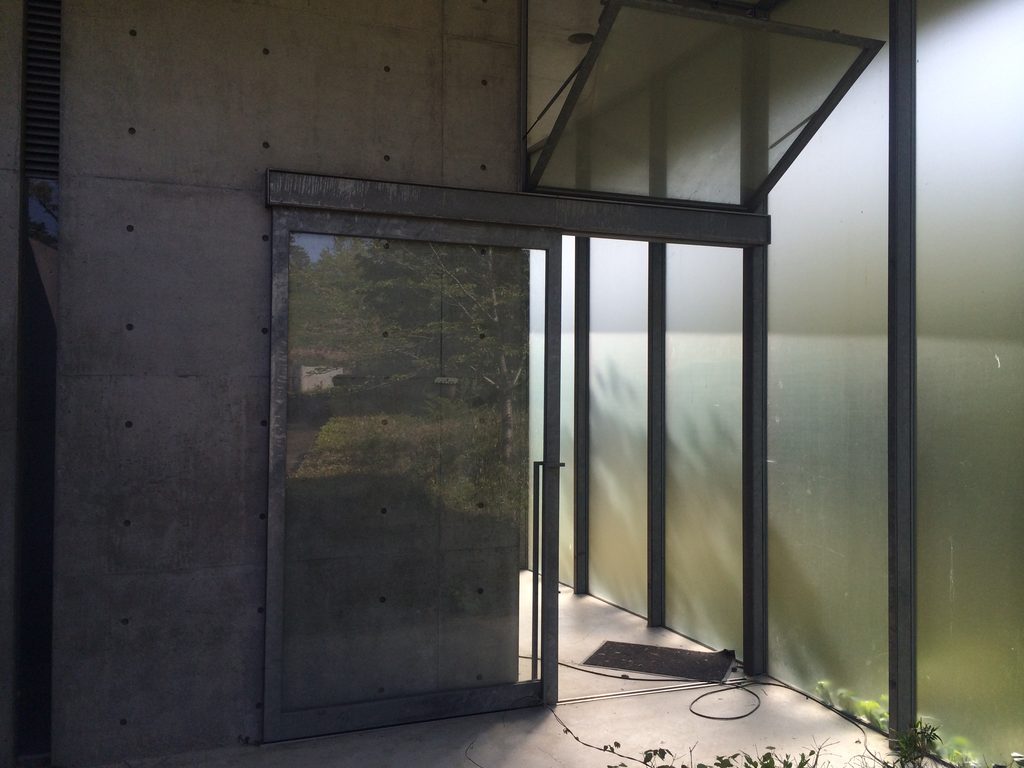
そして壁の奥に、ガラスの入口が静かに現れる。
At the end of this restrained approach, a glass entrance appears within the concrete.
2. 壁の向こうで、光が細く続いていく
Walking Between Wall and Light
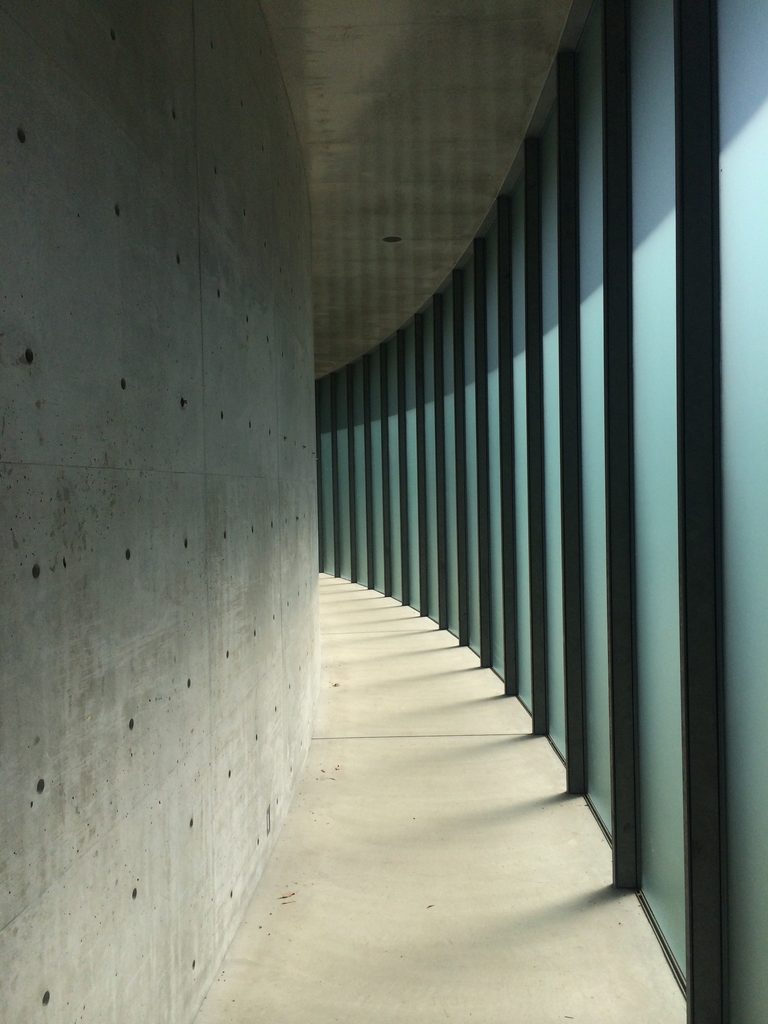
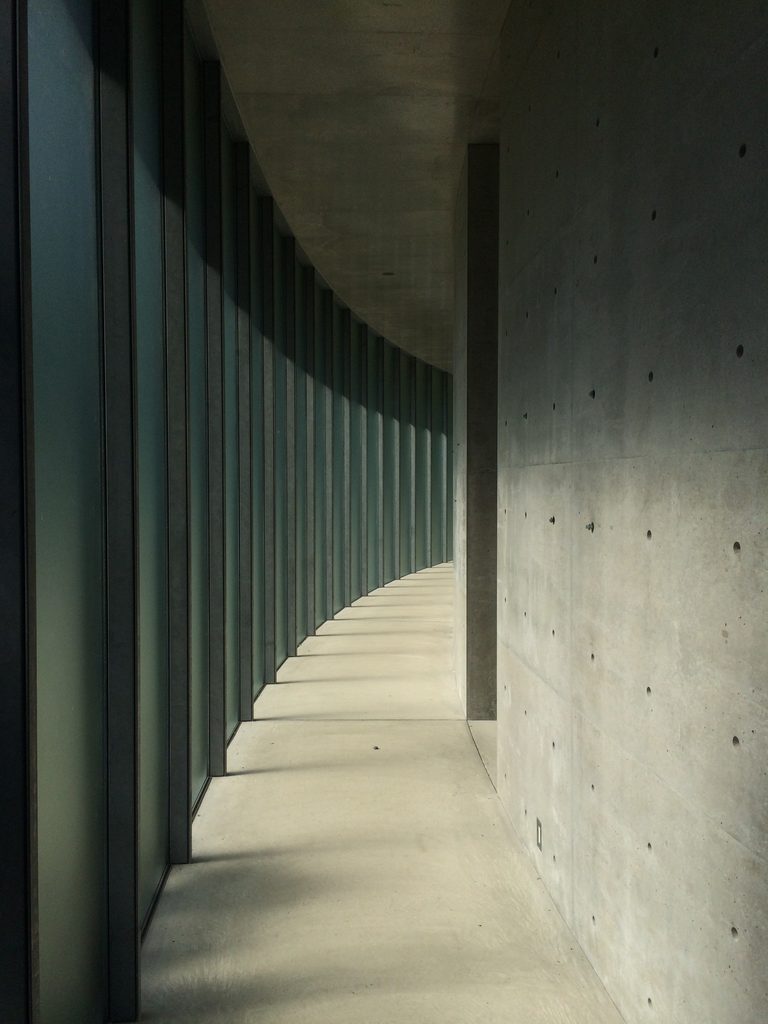
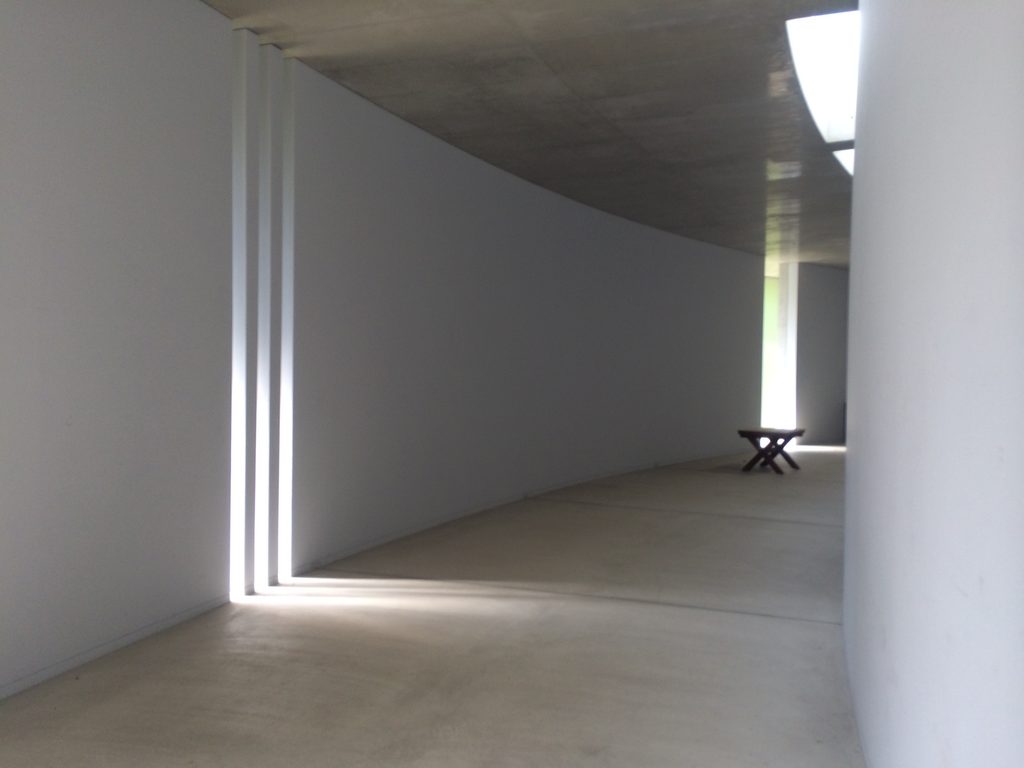
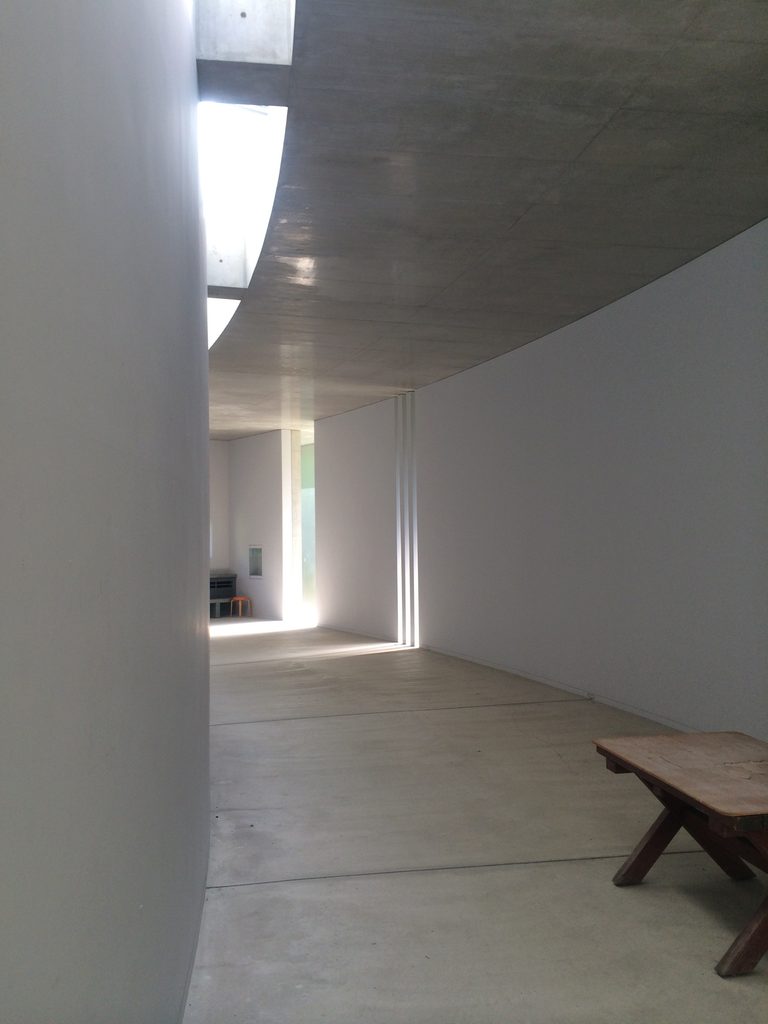
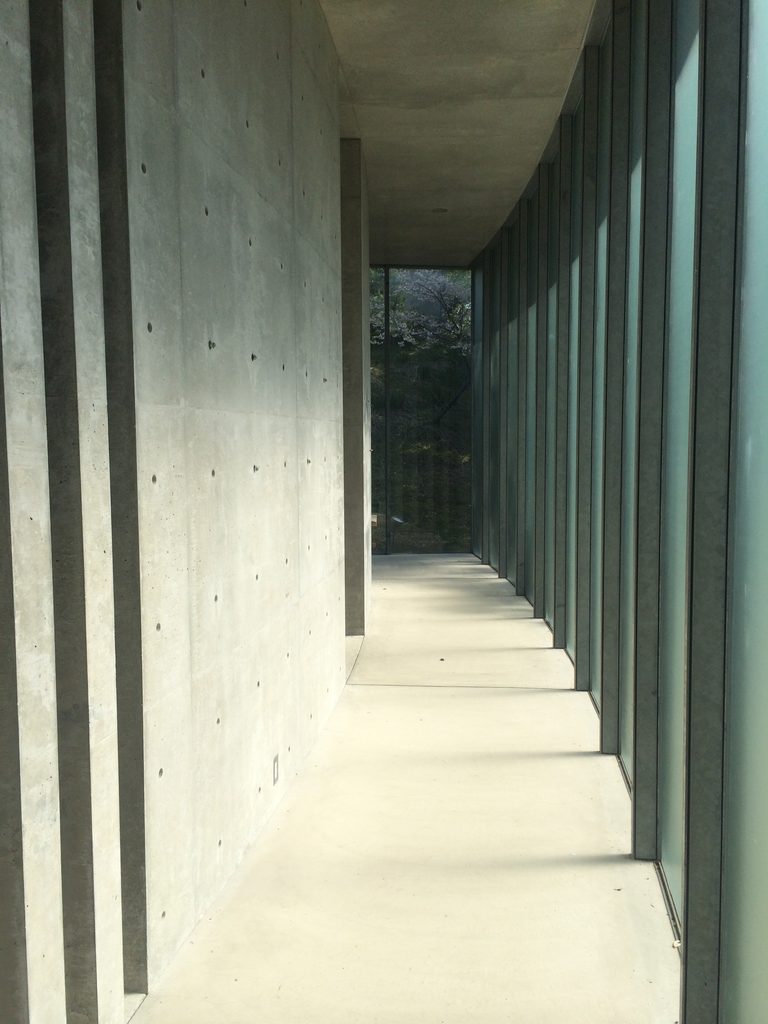
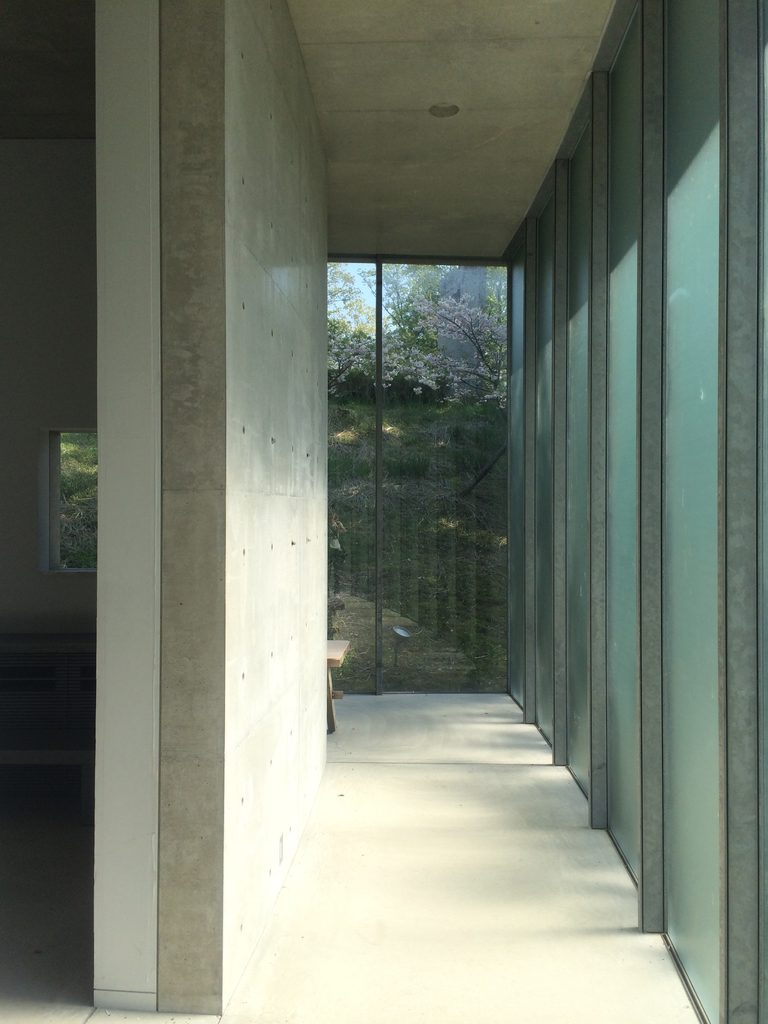
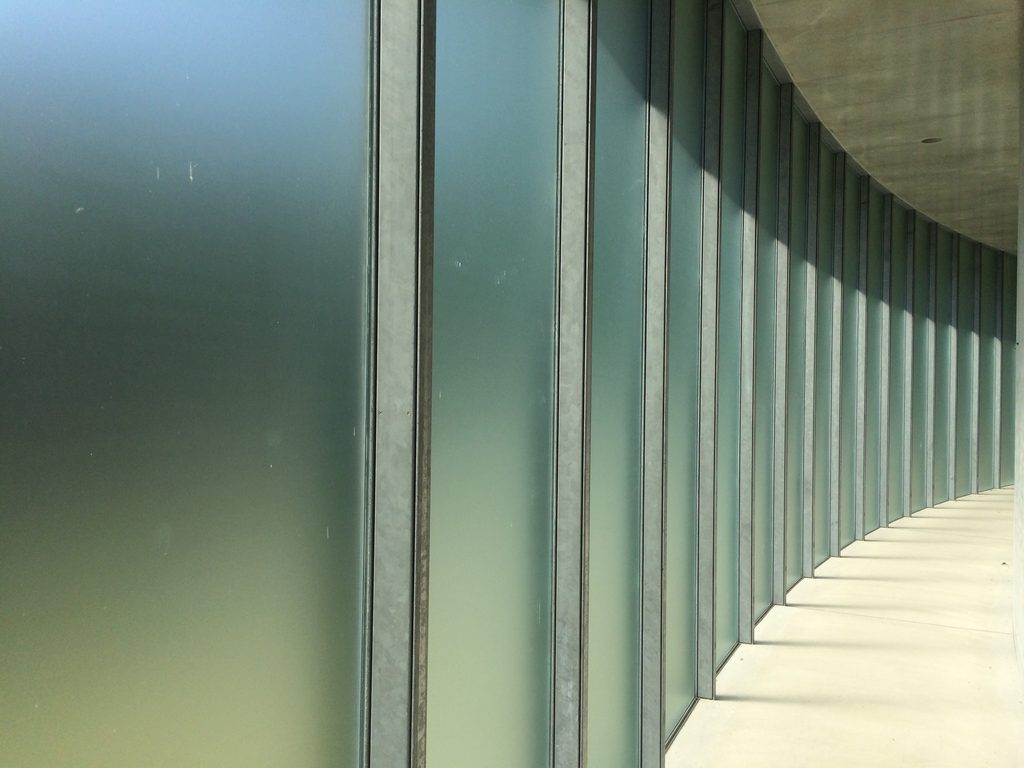
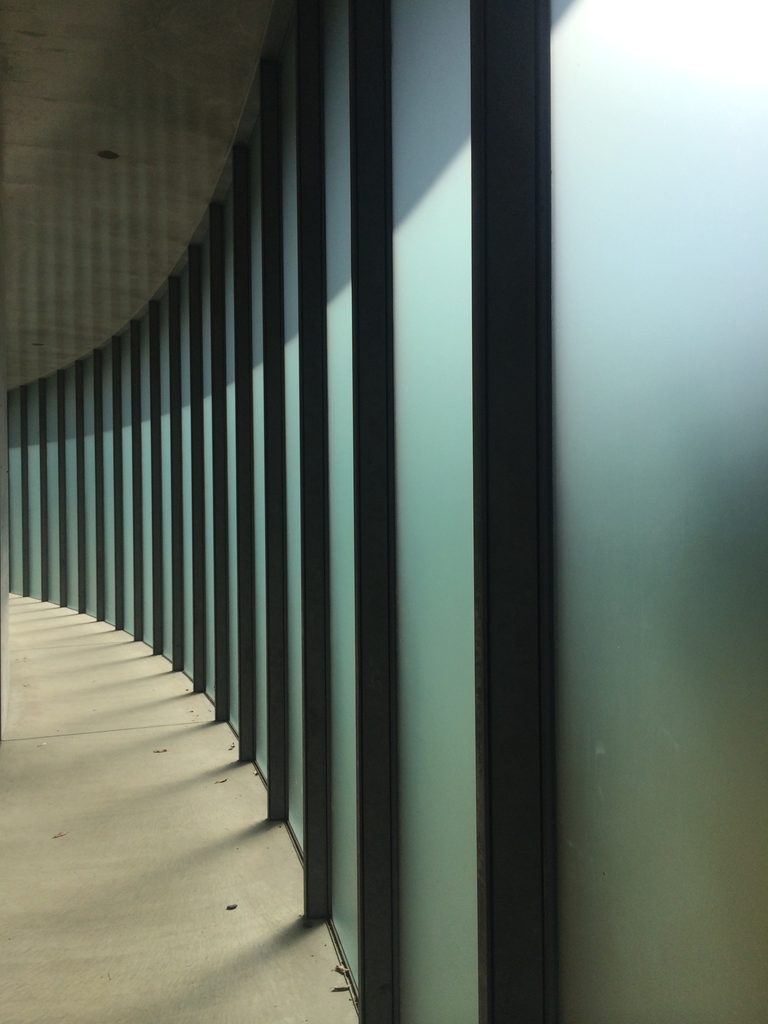
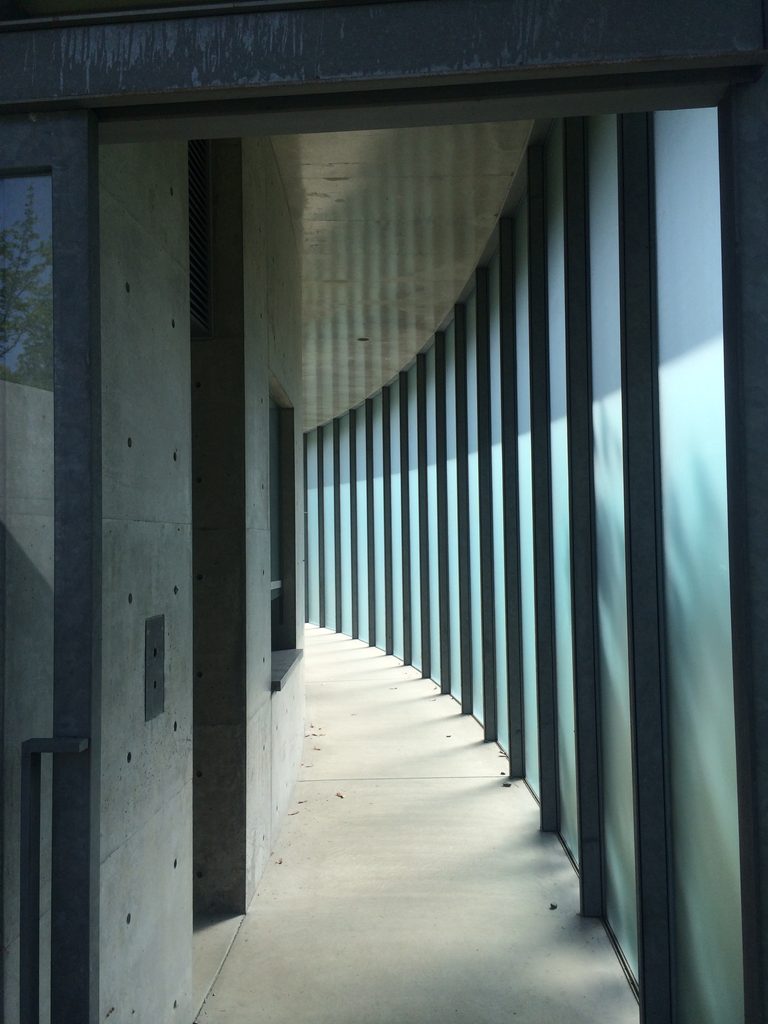
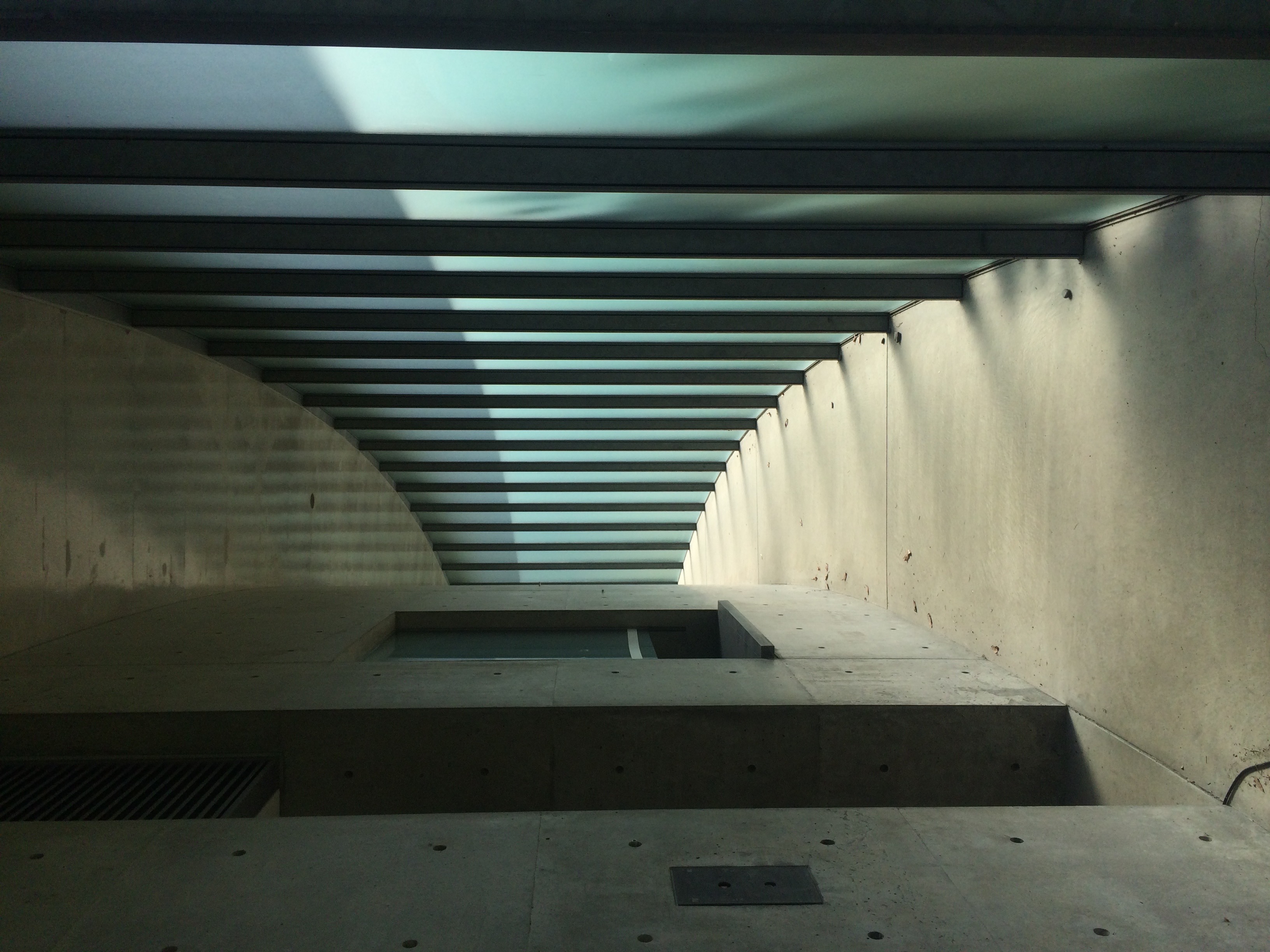
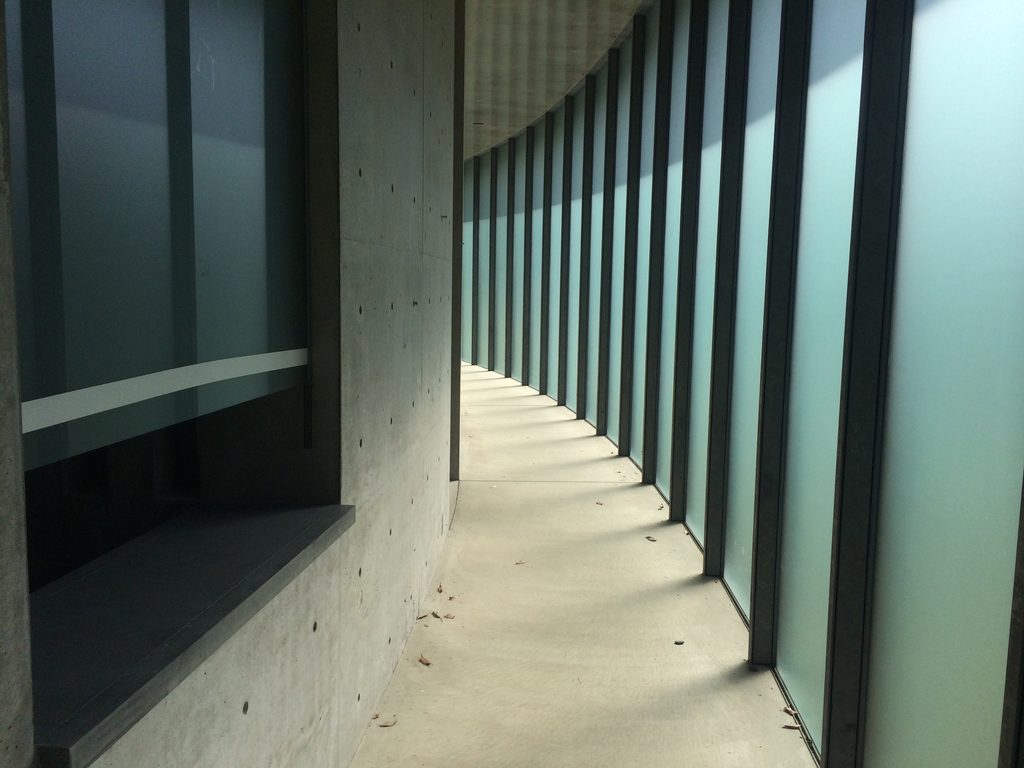
内部へ入ると、外観から受けた閉じた印象とは対照的に、片側をガラスとした細長い通路が続く。
Inside, a long glazed corridor creates a very different atmosphere.
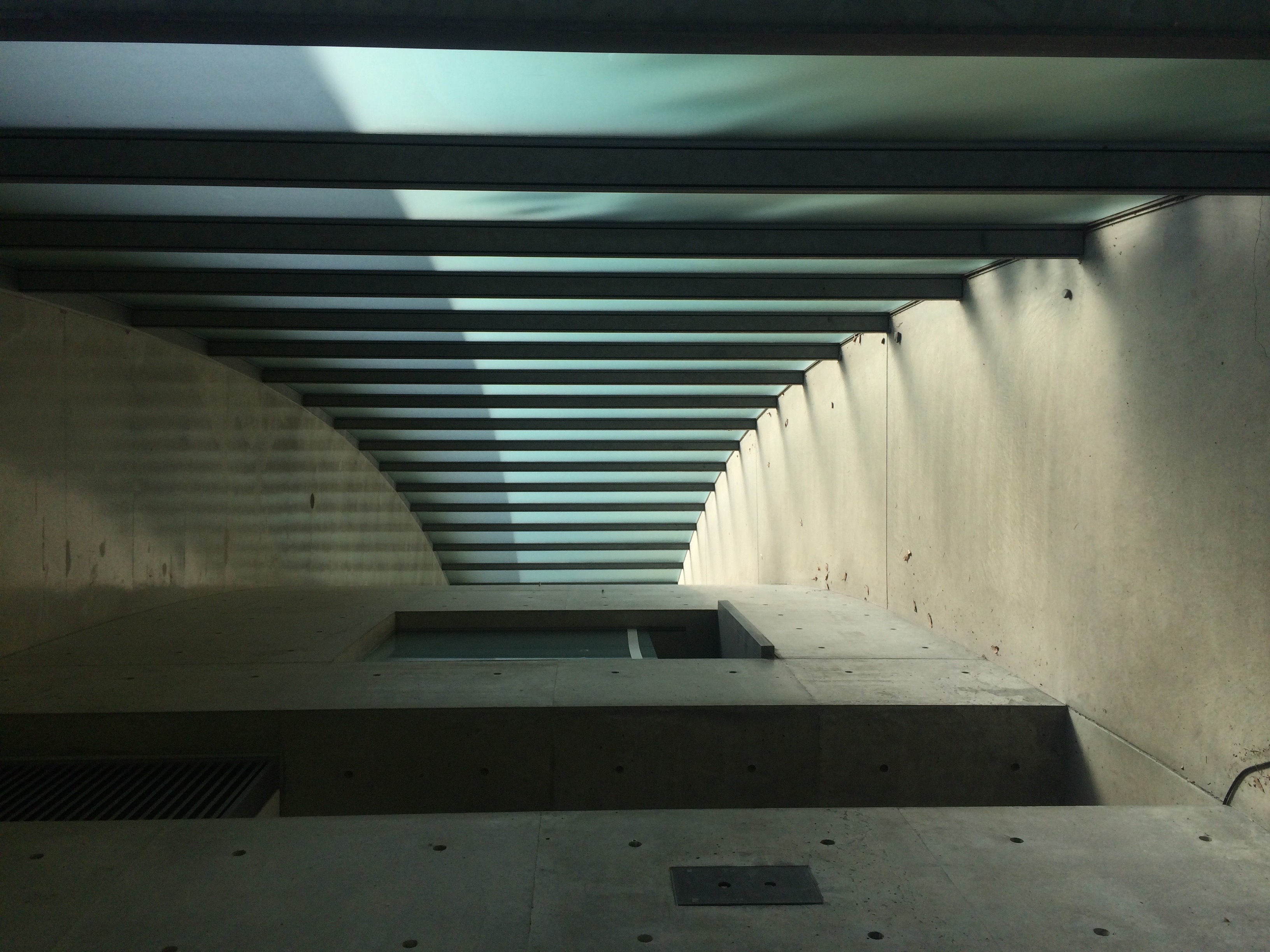
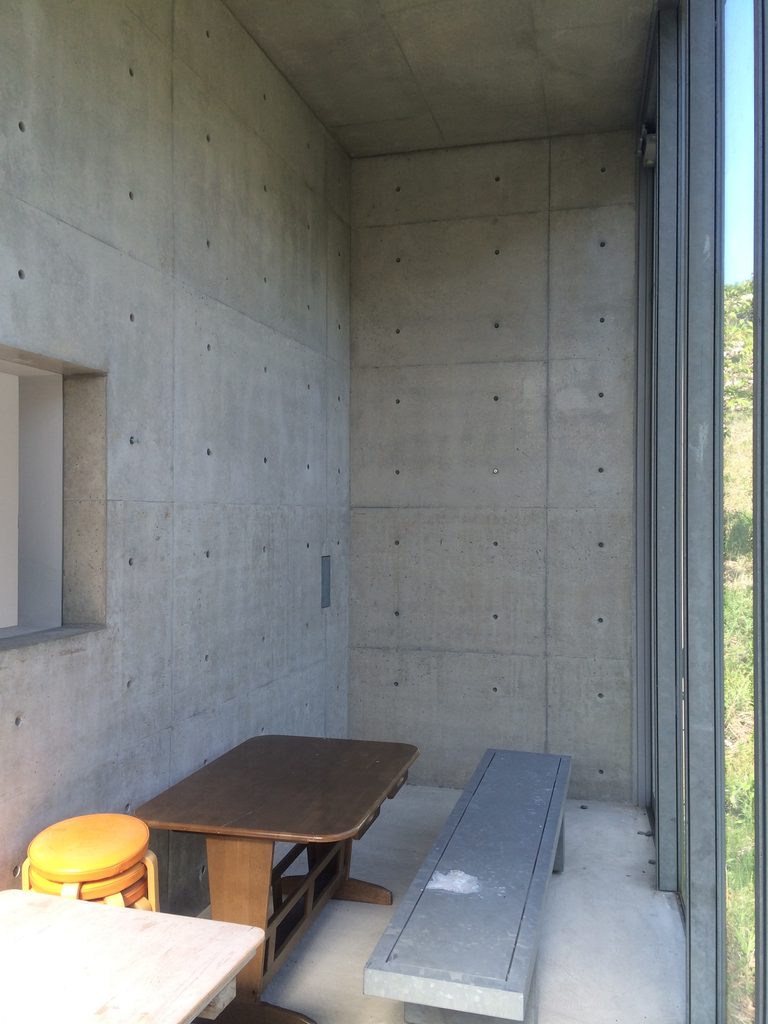
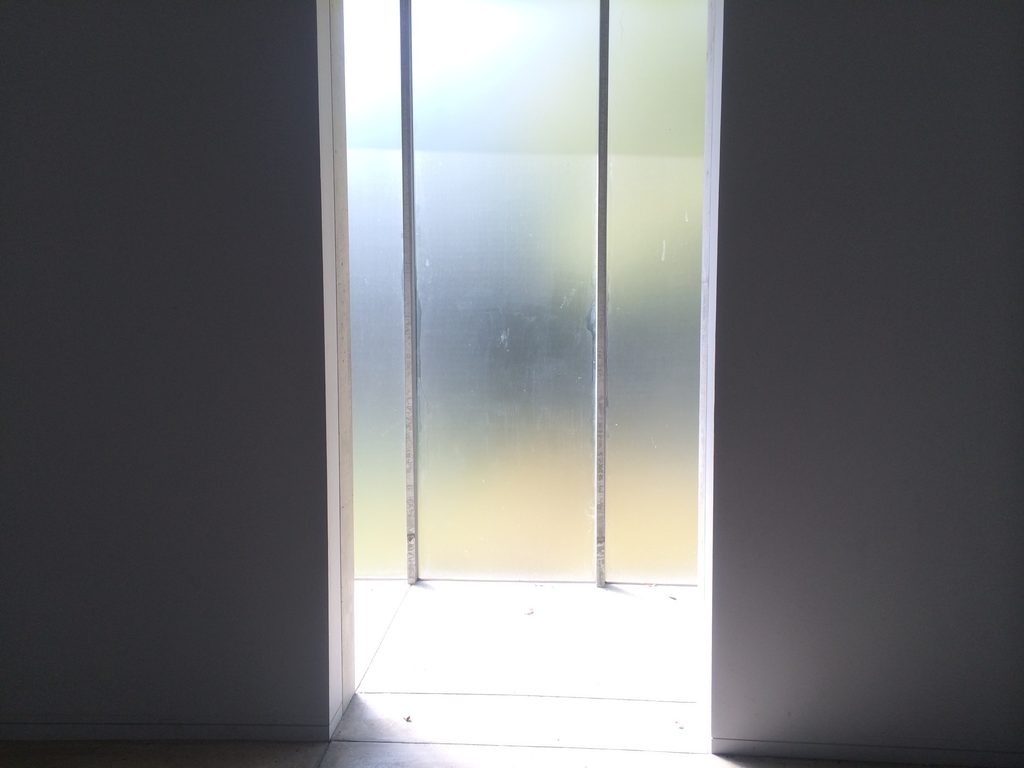
ガラスは外の風景を鮮明に見せるためのものではなく、光を柔らかく内部へ取り込む膜のように感じられる。反対側には重いコンクリート壁が続き、光と壁の間に細い移動空間がつくられている。
The glass does not simply frame a clear view of the landscape. Instead, it softens the outside world, allowing brightness to enter while the heavy concrete wall continues along the opposite side.
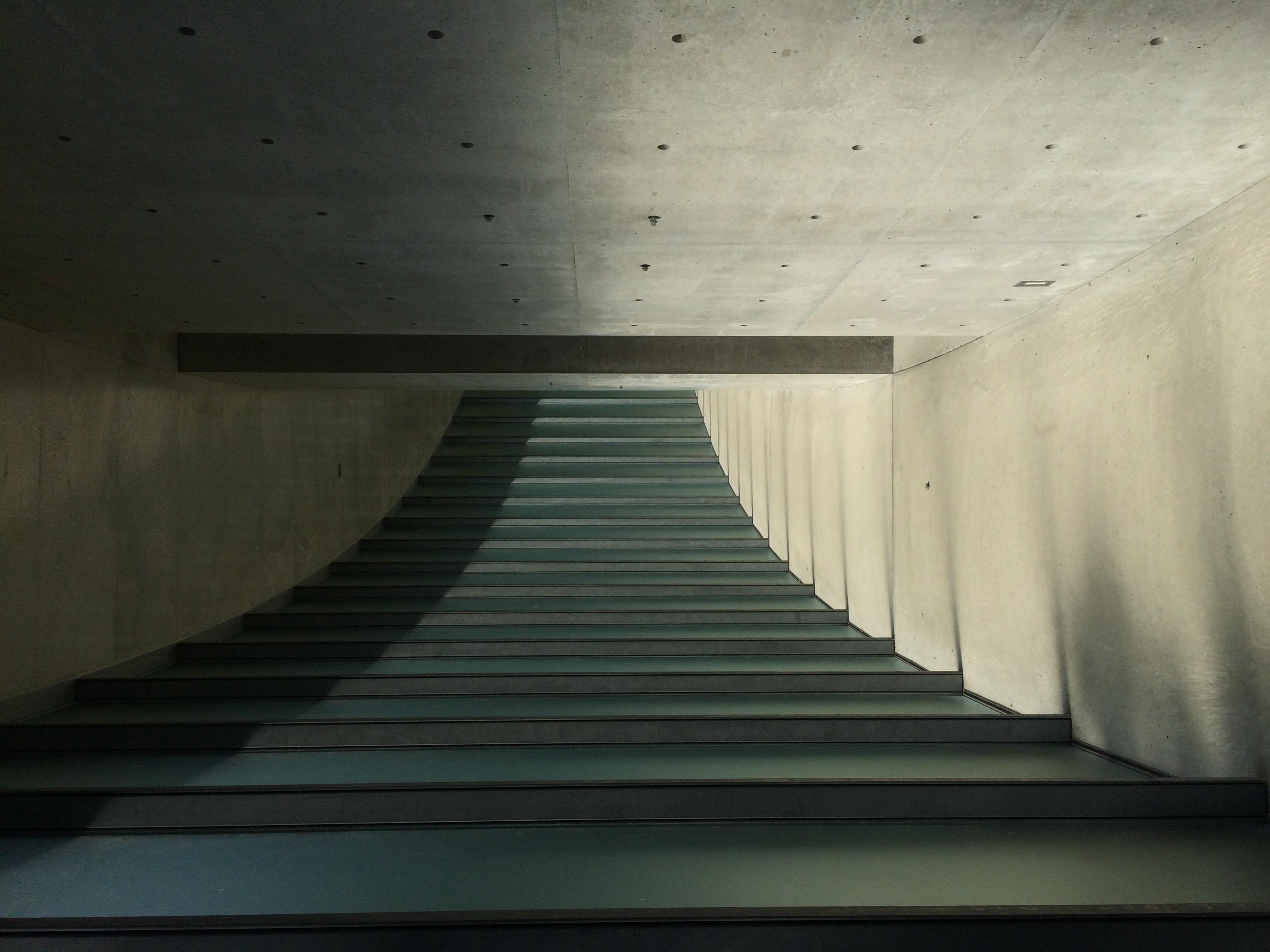
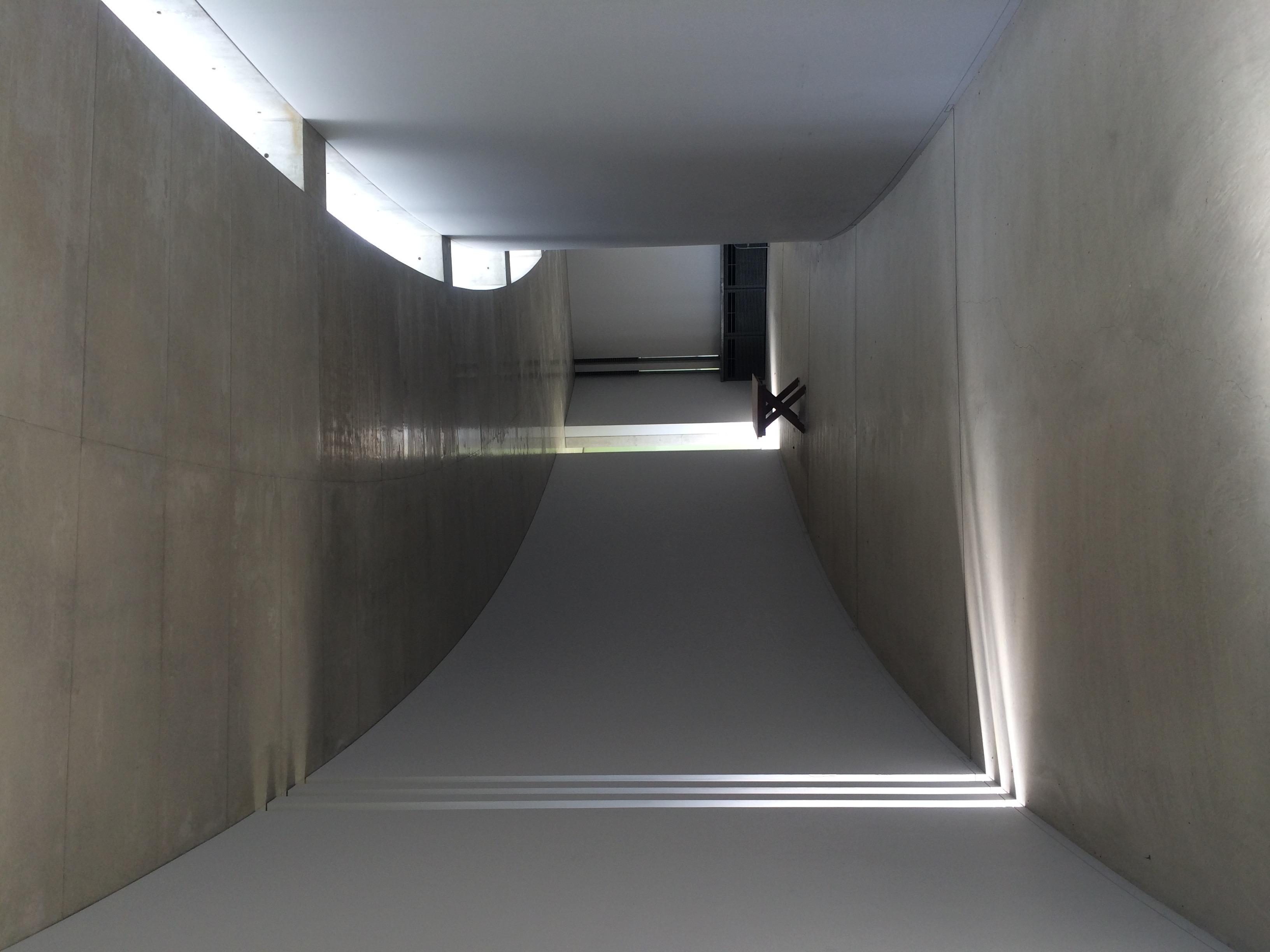
その通路自体も直線ではない。緩やかな曲線を描きながら先へ続くため、歩くにつれてガラス面とコンクリート壁の関係が少しずつ変化していく。
The corridor curves gently, changing the relationship between concrete, glass and daylight as one walks.
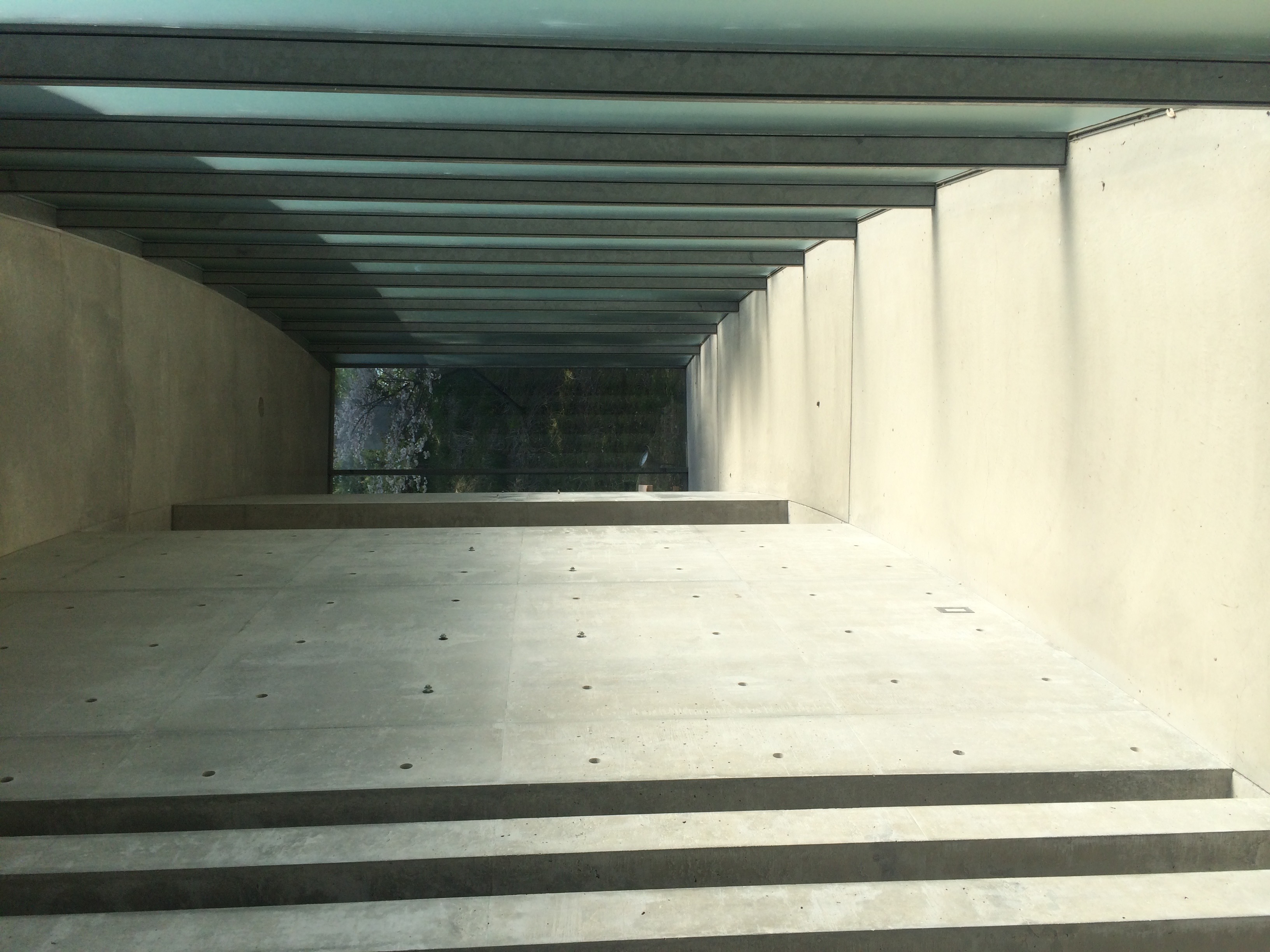
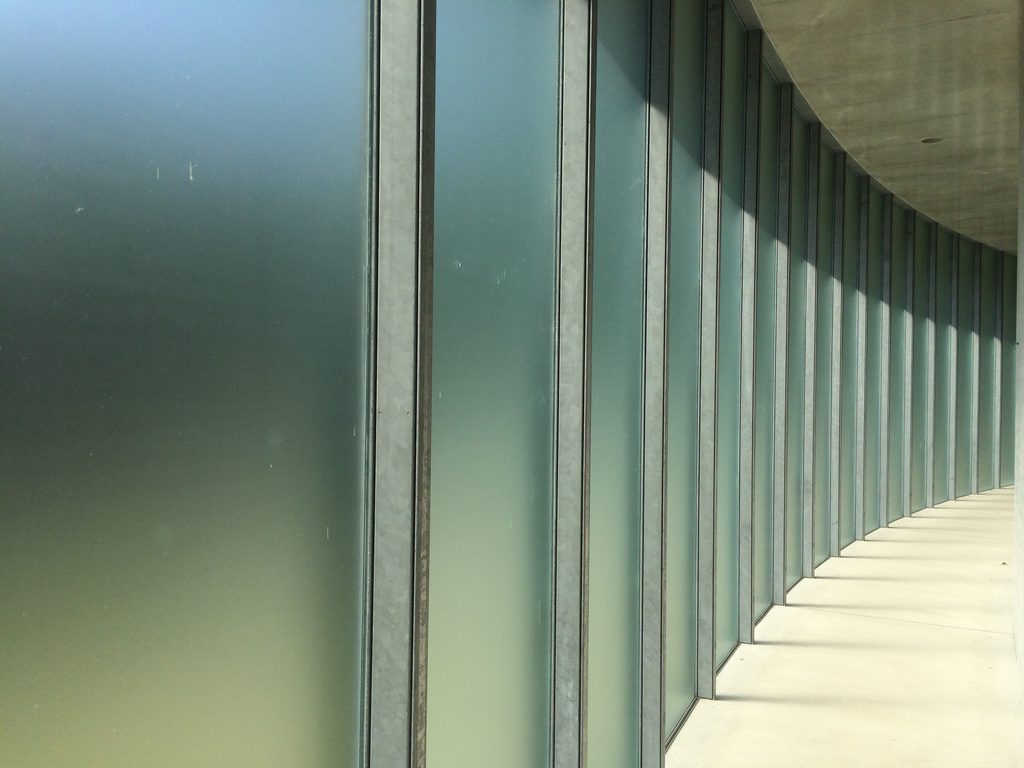
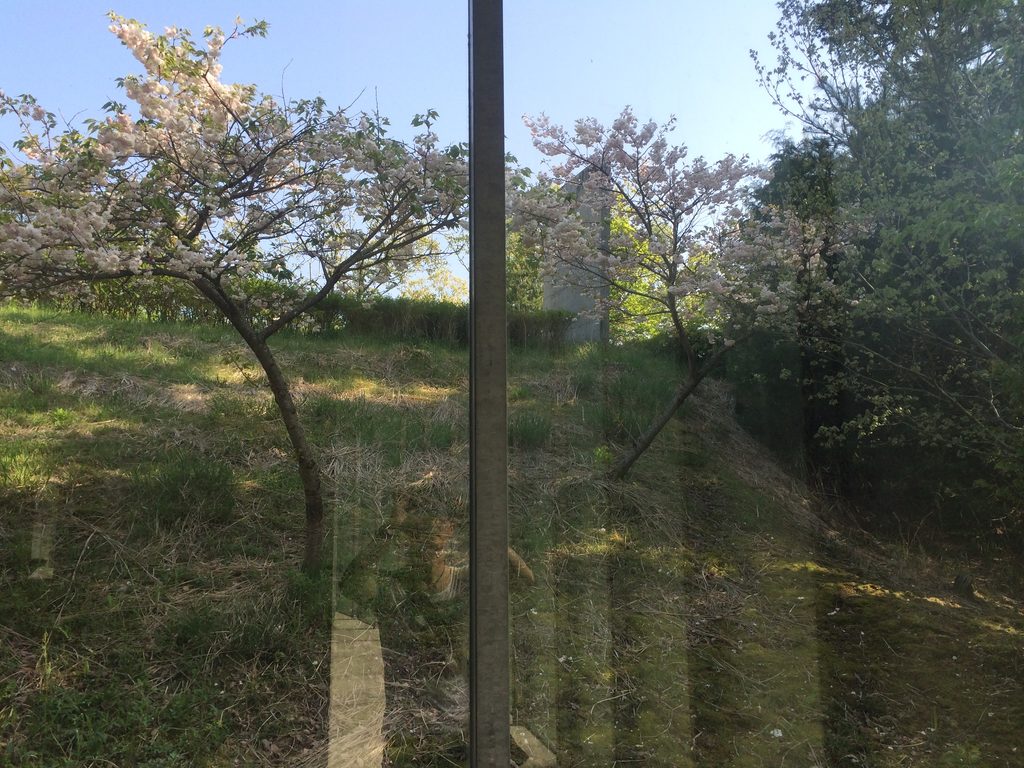
外の緑は半透明のガラス越しに輪郭を失い、代わりに明るさだけが内部へ入ってくる。ここでは「外を見る」ことより、外にある光を感じながら歩くことの方が重要なのだと思う。
Rather than looking outward at the landscape, one becomes increasingly aware of the presence of outdoor light inside the architecture.
3. 太陽の光だけで、絵を見る
Seeing Art by the Light of the Sun
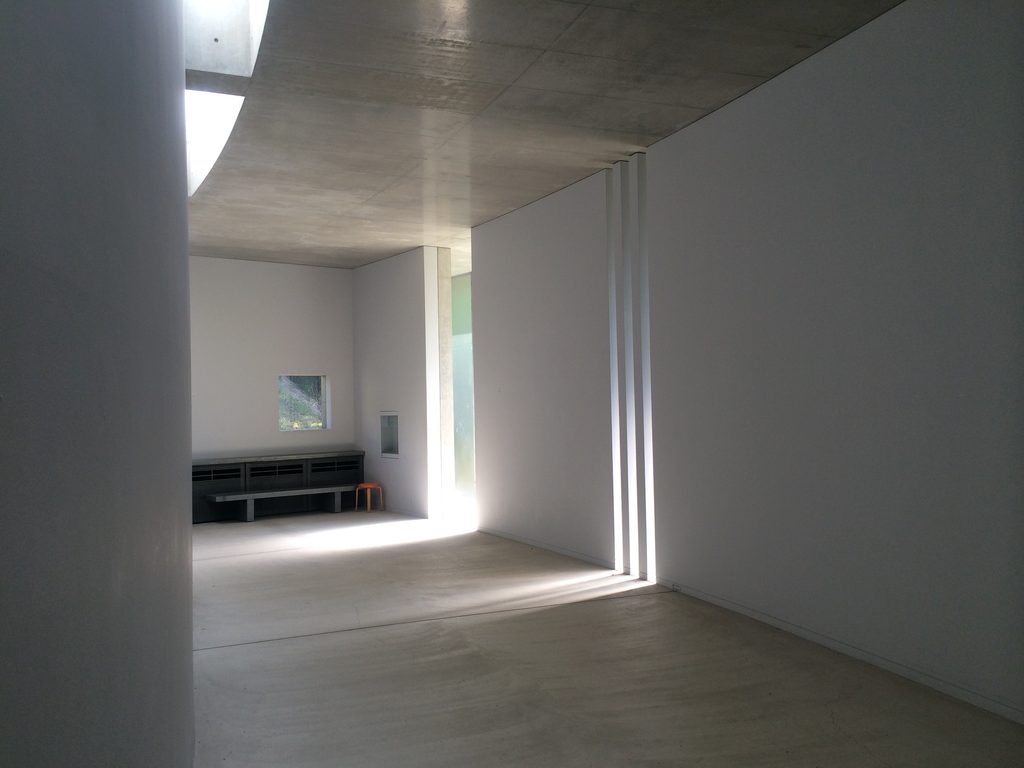
展示空間へ進むと、この美術館の考え方がよりはっきりする。
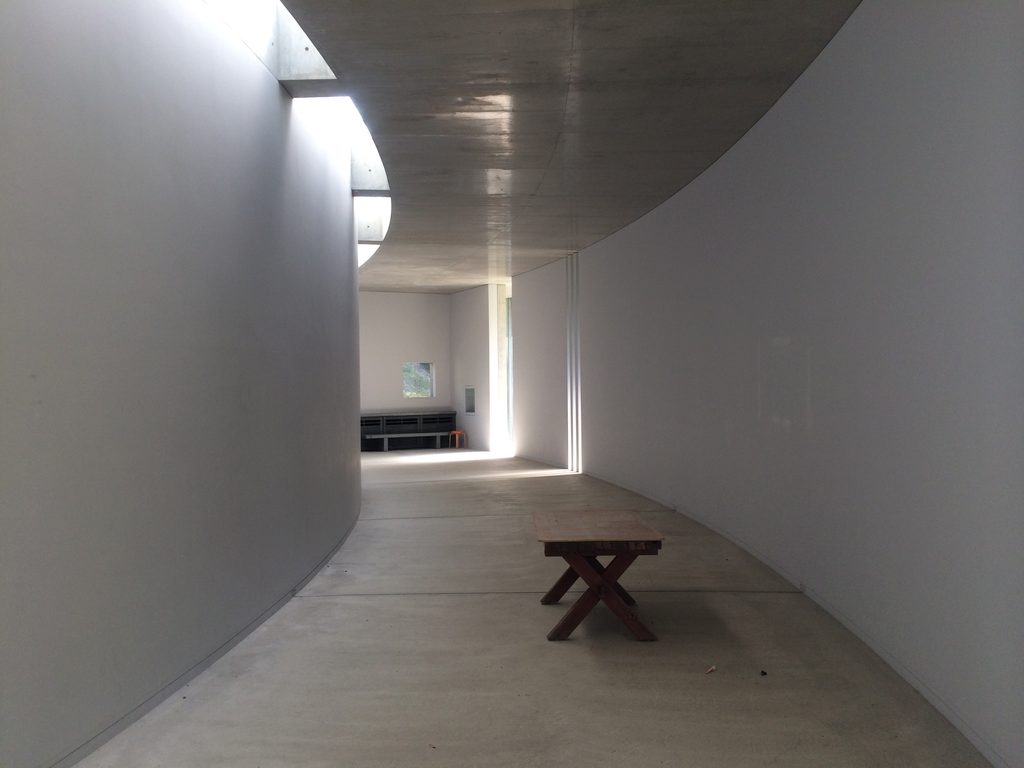
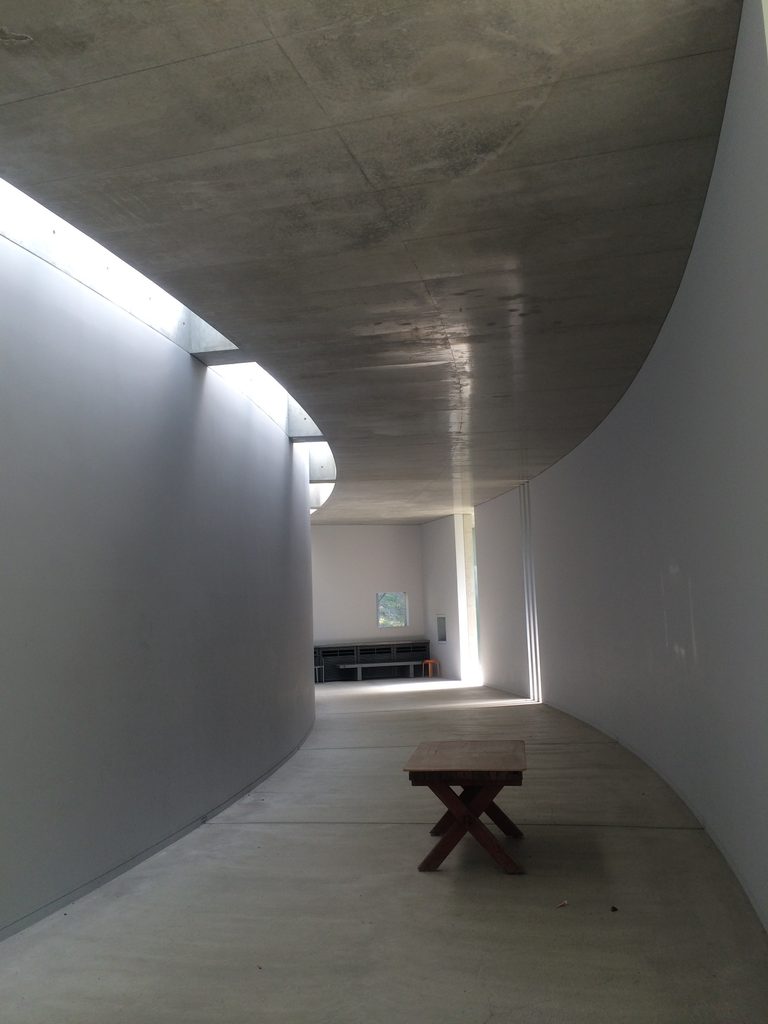
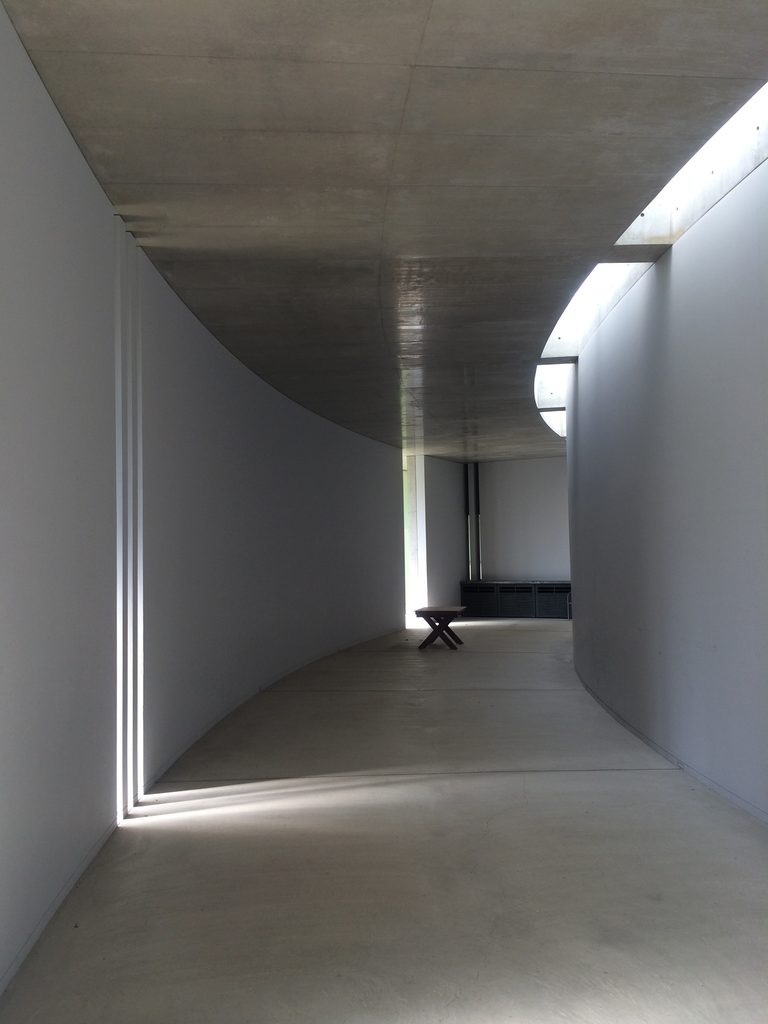
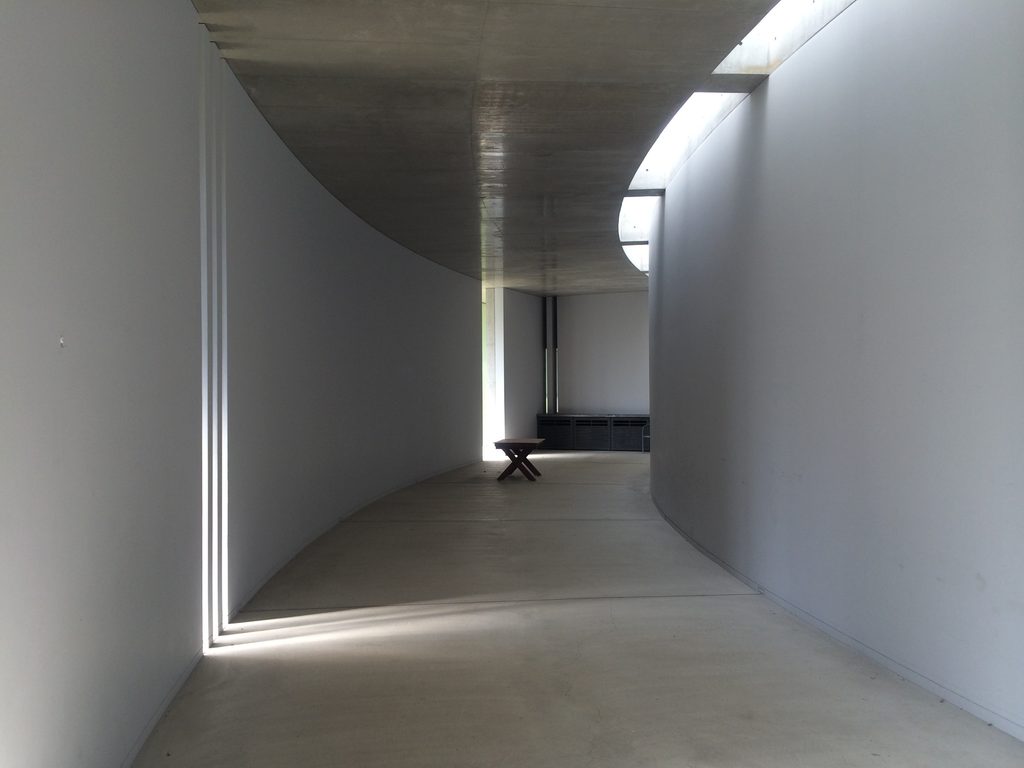
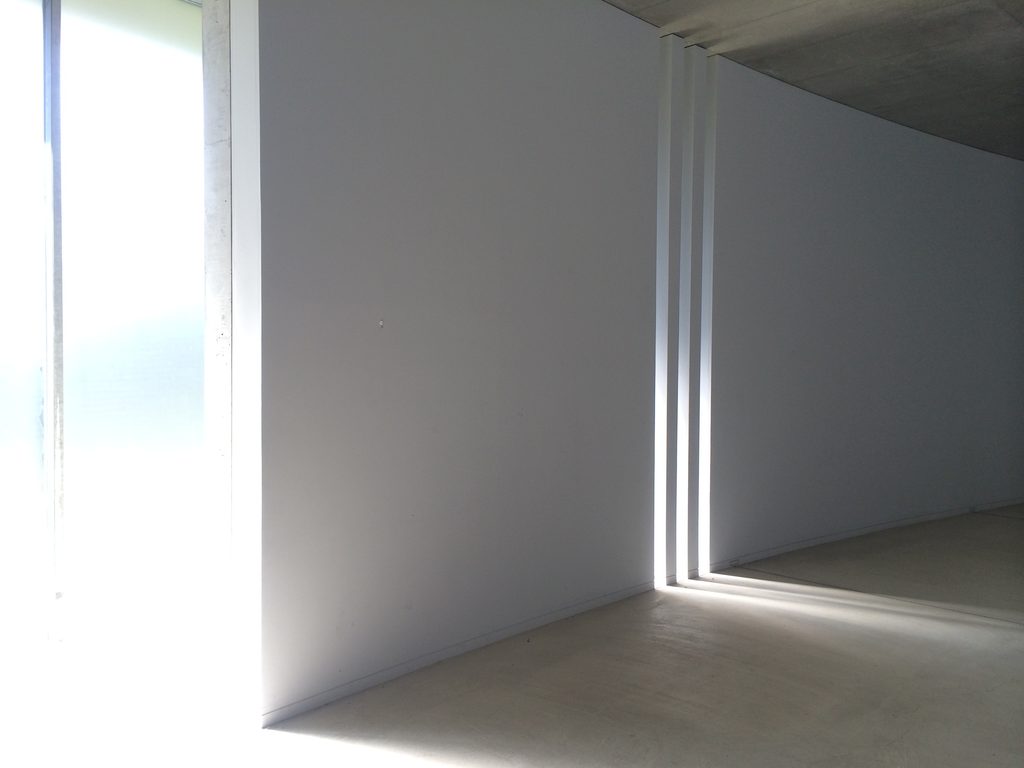
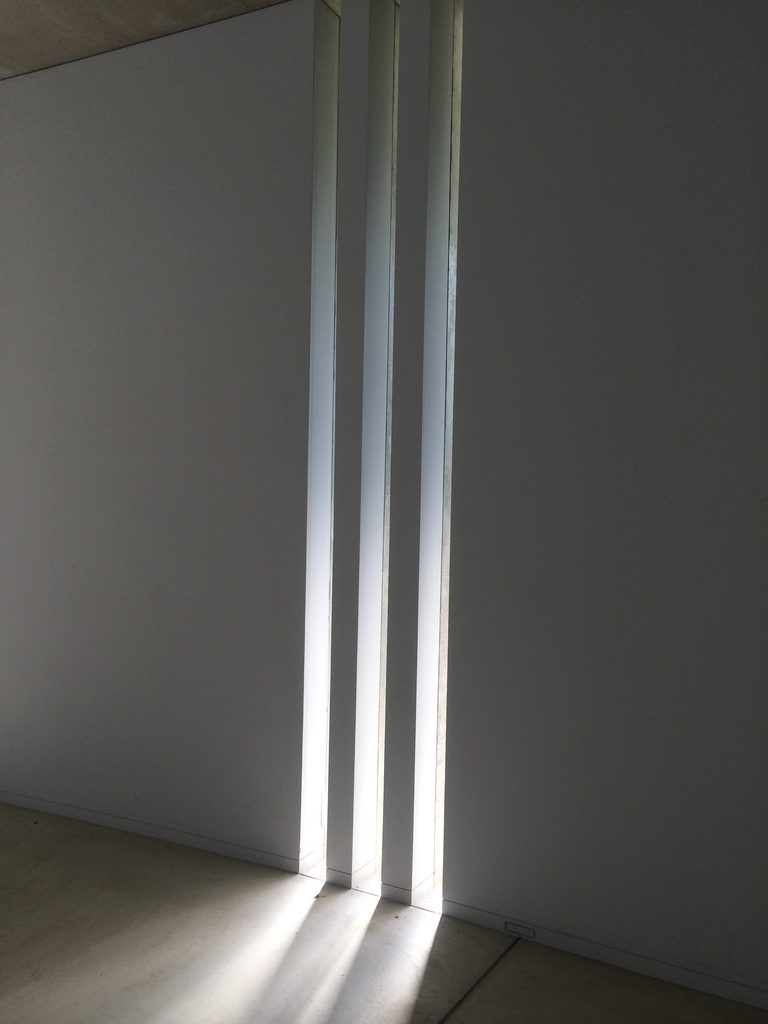
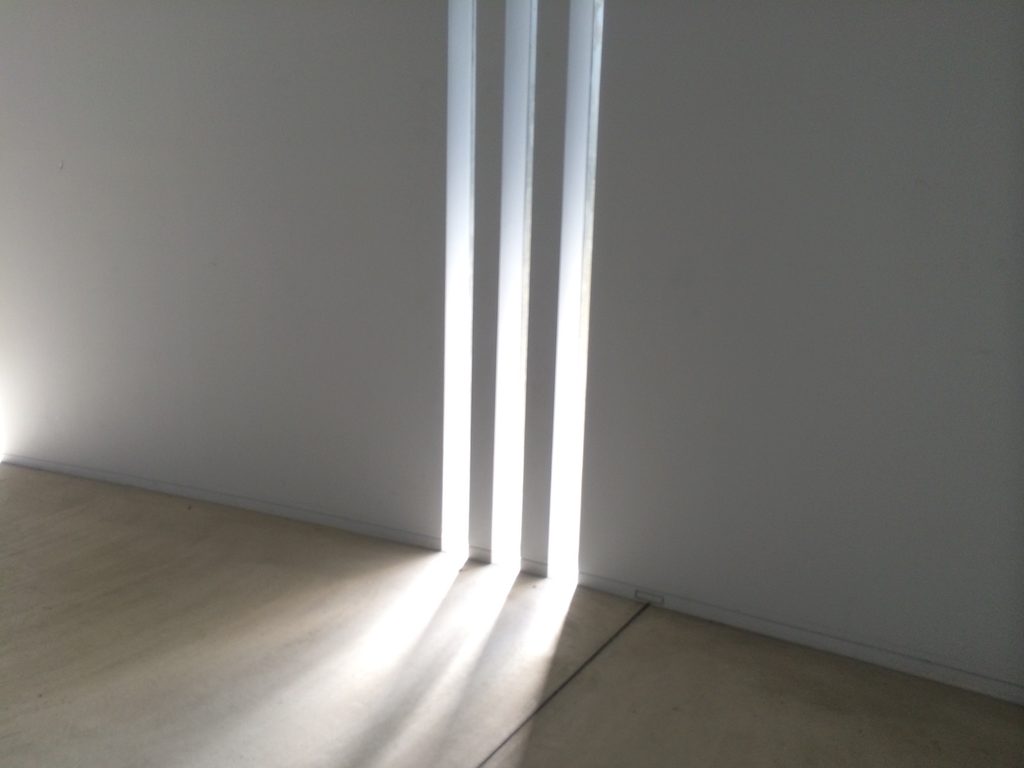
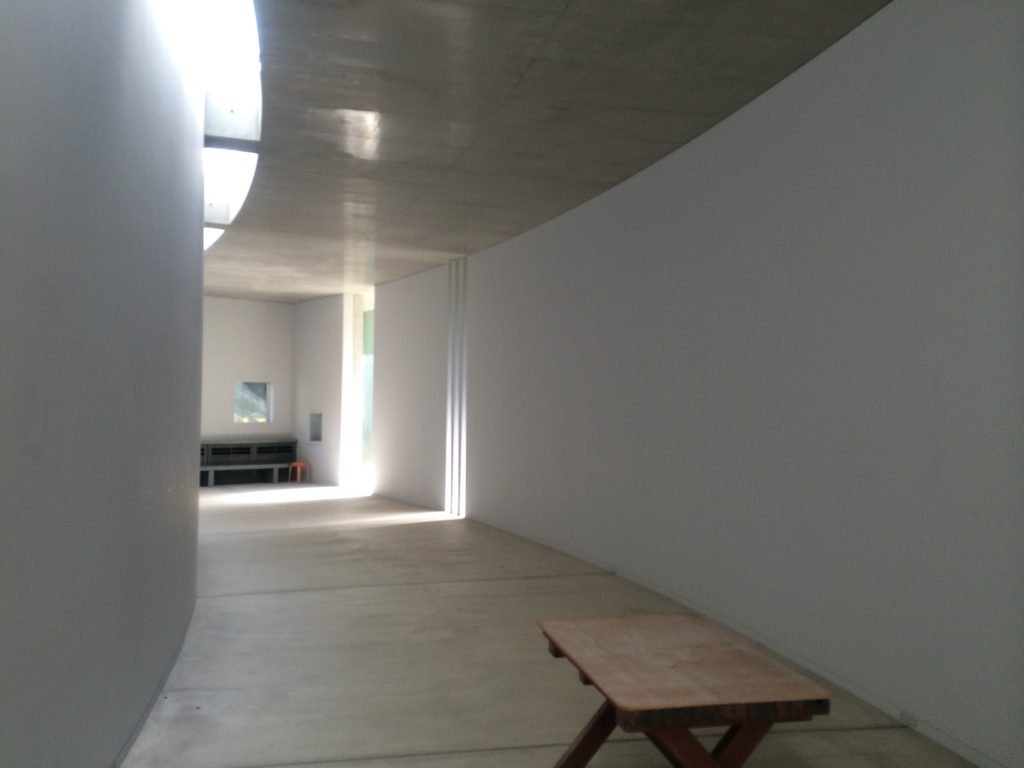
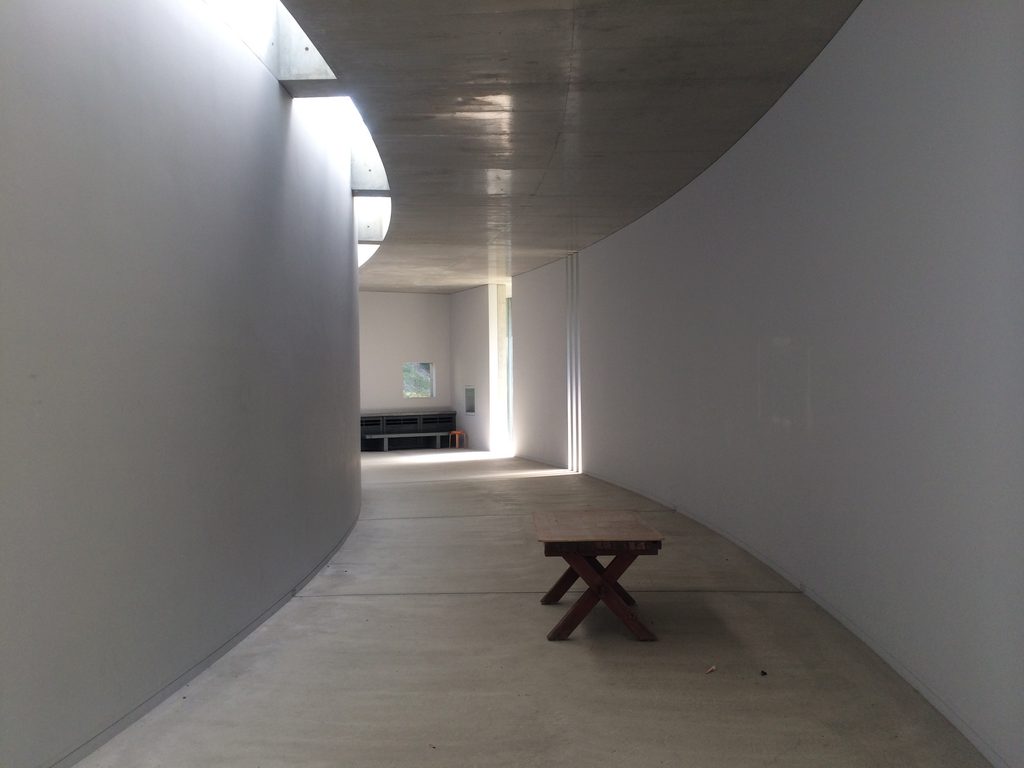
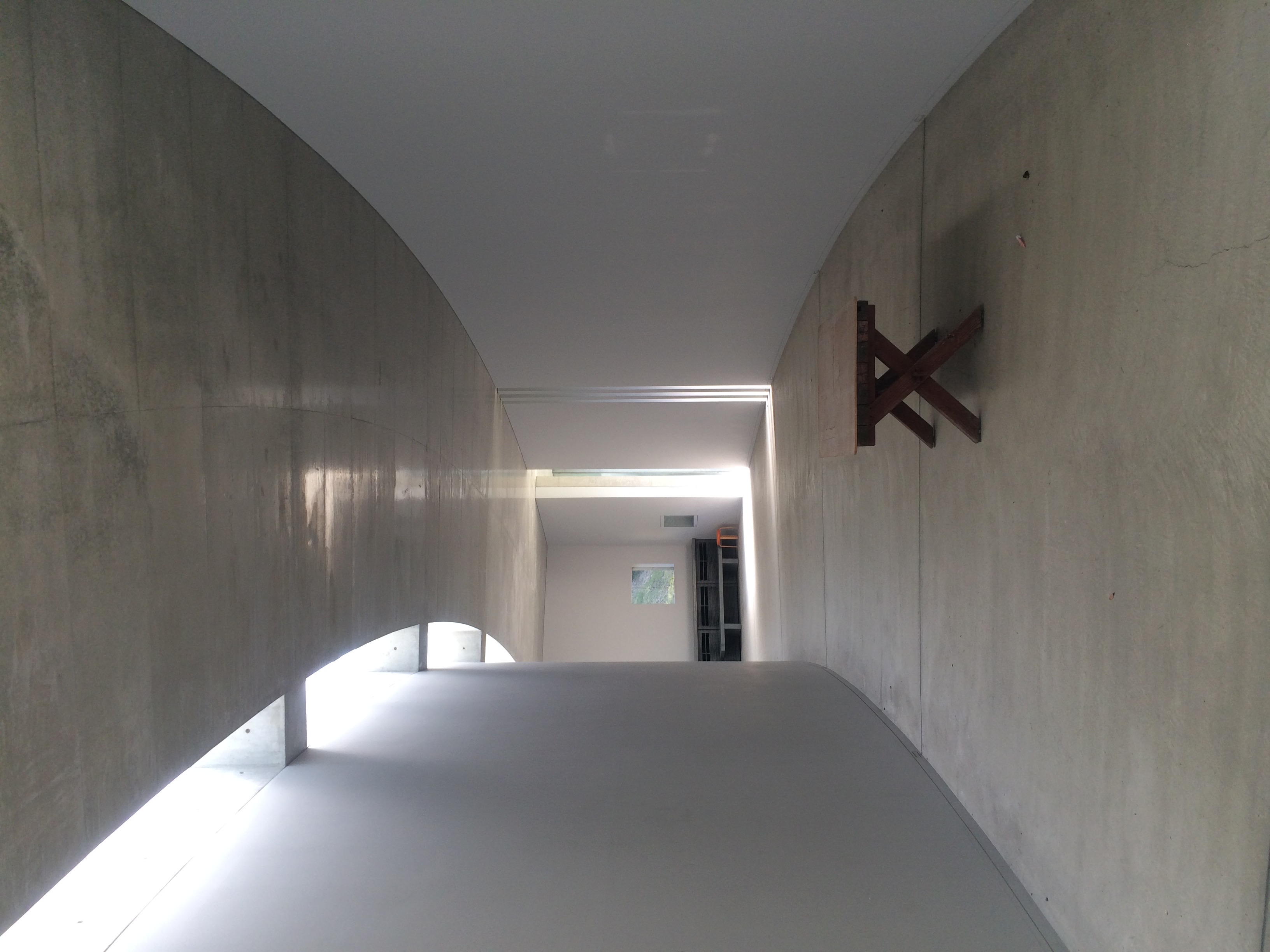
天井を覆うコンクリートの曲面と白い展示壁の間から自然光が落ち、床や壁に細長い明暗をつくる。
The exhibition space makes the museum’s central idea unmistakable.
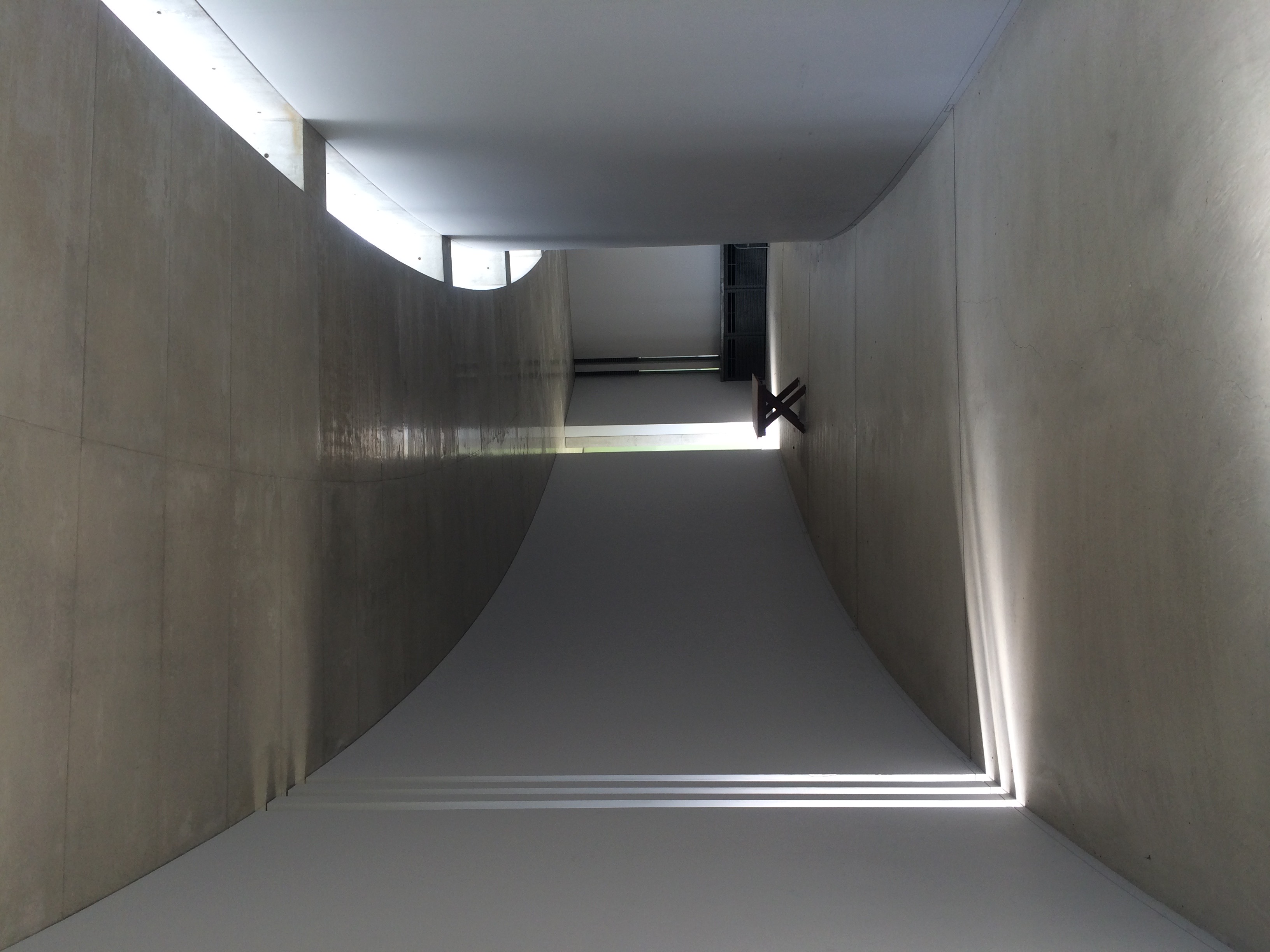
通常の美術館では、作品をできるだけ安定した条件で見せるために照明環境が整えられる。しかしここでは、光の状態そのものが一定ではない。晴れの日と曇りの日、朝と午後では、同じ壁も同じ作品も違って見える。
Natural light enters between curved concrete surfaces and white exhibition walls, drawing narrow bands of brightness across the interior.
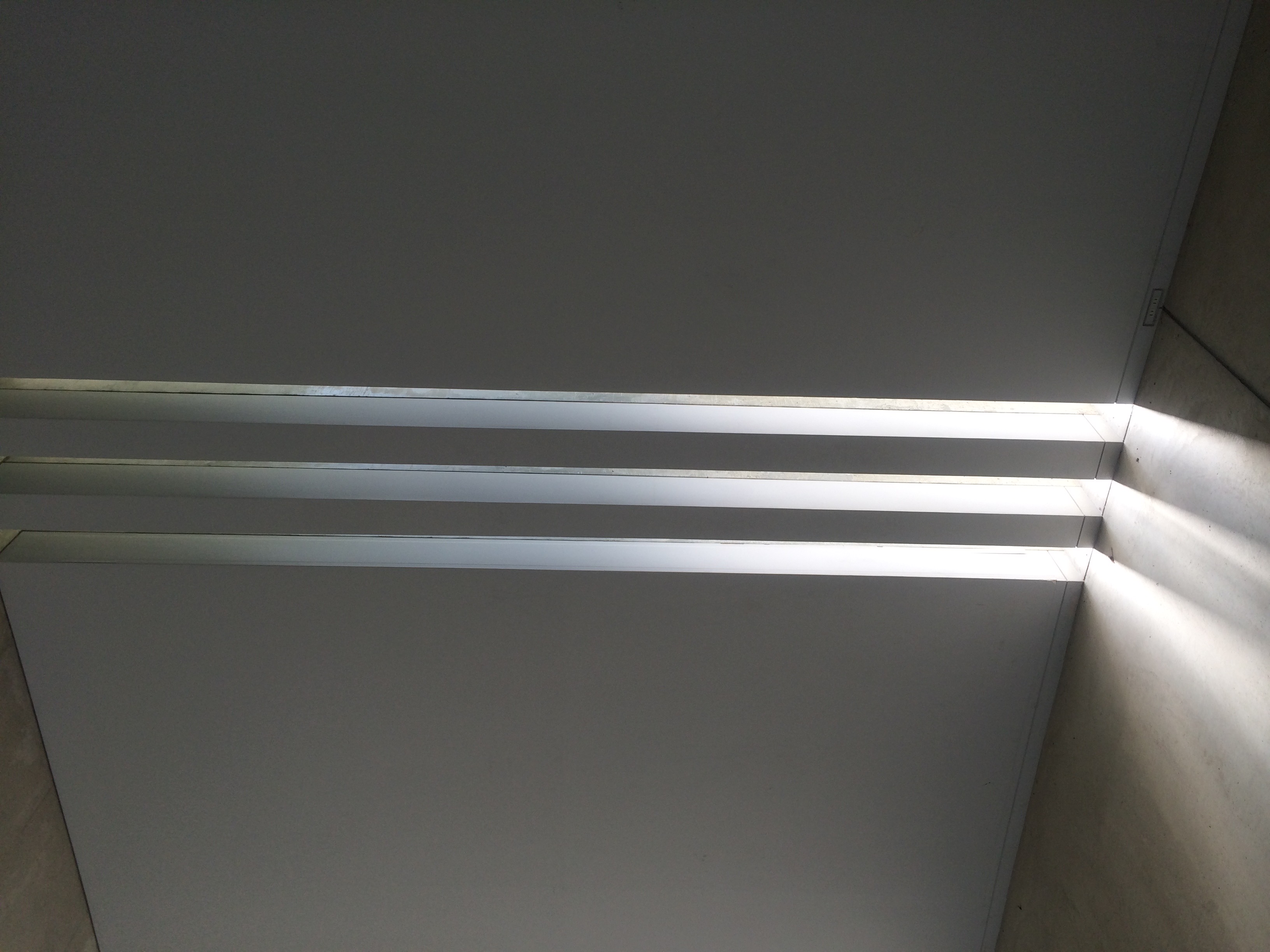
だから「日没閉館」という名称は単なる面白いネーミングではない。
太陽がある間だけ作品を見ることができ、太陽が沈めば鑑賞も終わる。建築が自然の時間に従うことで、絵を見るという行為そのものを、もう一度太陽の下へ戻している。
Unlike a conventional museum designed to maintain consistent lighting conditions, the Daylight Museum allows those conditions to change. Morning and afternoon, clear skies and clouds inevitably alter the way the same space is seen.
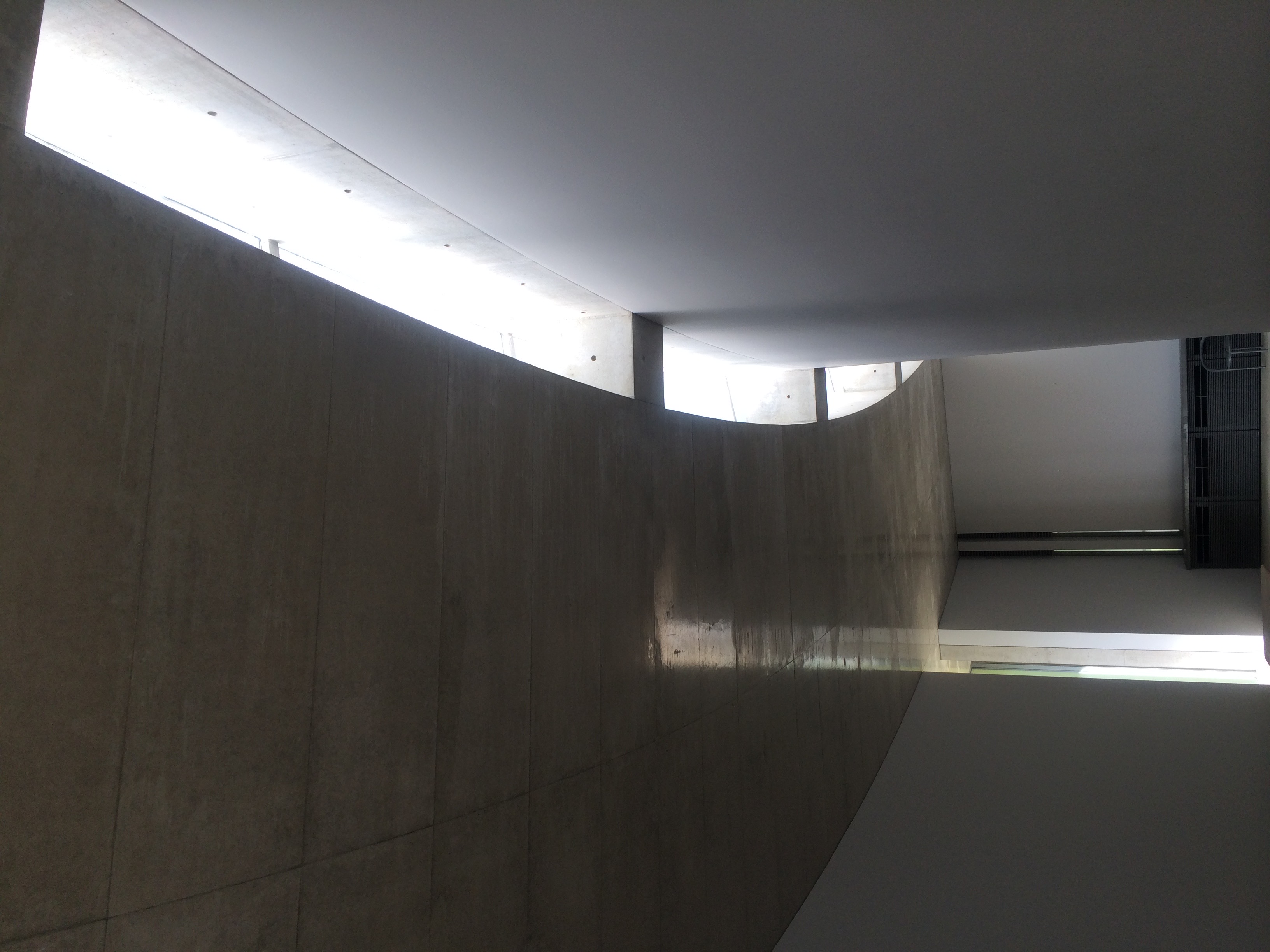
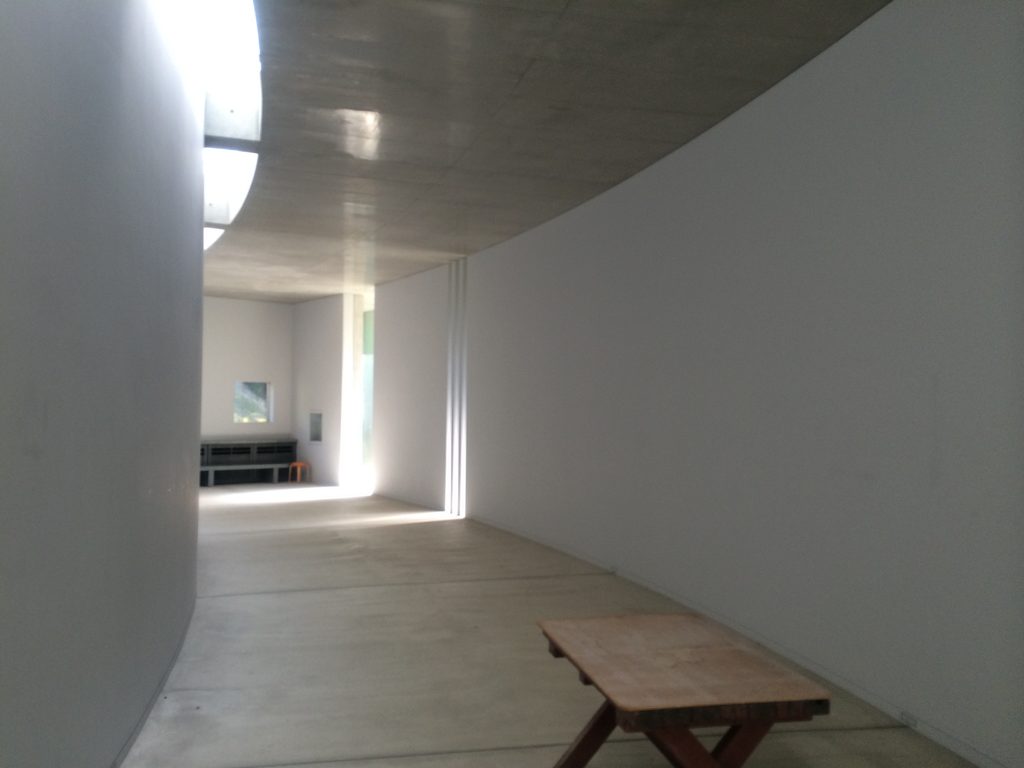
1998年という時期を考えても、この小さな美術館は安藤の「光」の扱いを非常に純粋な形で見ることのできる作品だと思う。光の教会では一本の十字架として現れた自然光が、ここでは美術館全体を成立させる条件になっている。
The idea of closing at sunset is therefore not simply a name. The availability of daylight determines the duration of the museum experience.
The act of seeing art is returned to the time of the sun.
4. 曲線の先で、建築が風景へ戻っていく
Architecture Returning to the Landscape
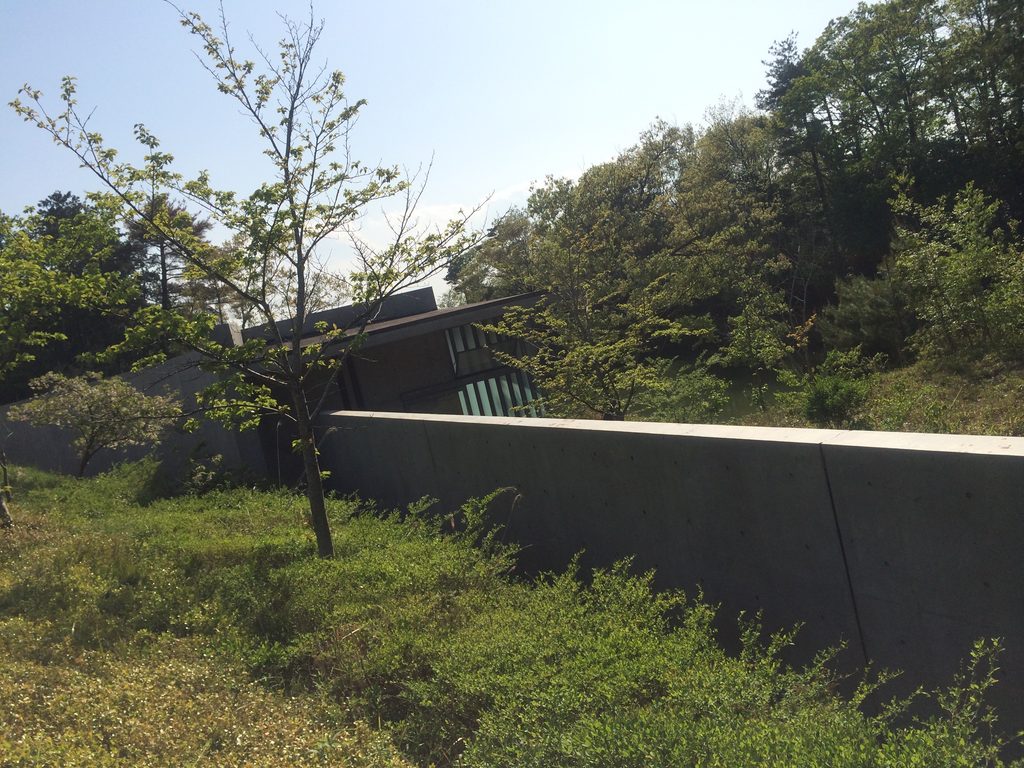
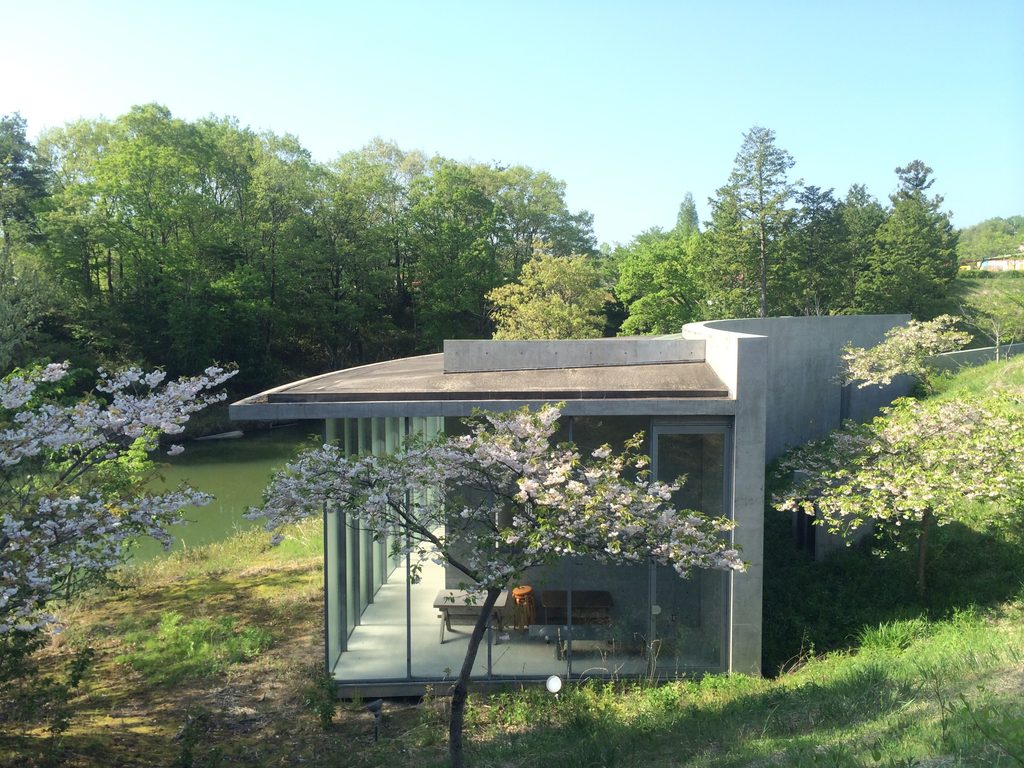
建物の周囲へ出ると、内部で感じた曲線がそのまま外形にも現れている。
Outside, the curve experienced within the museum becomes visible in the form of the building itself.
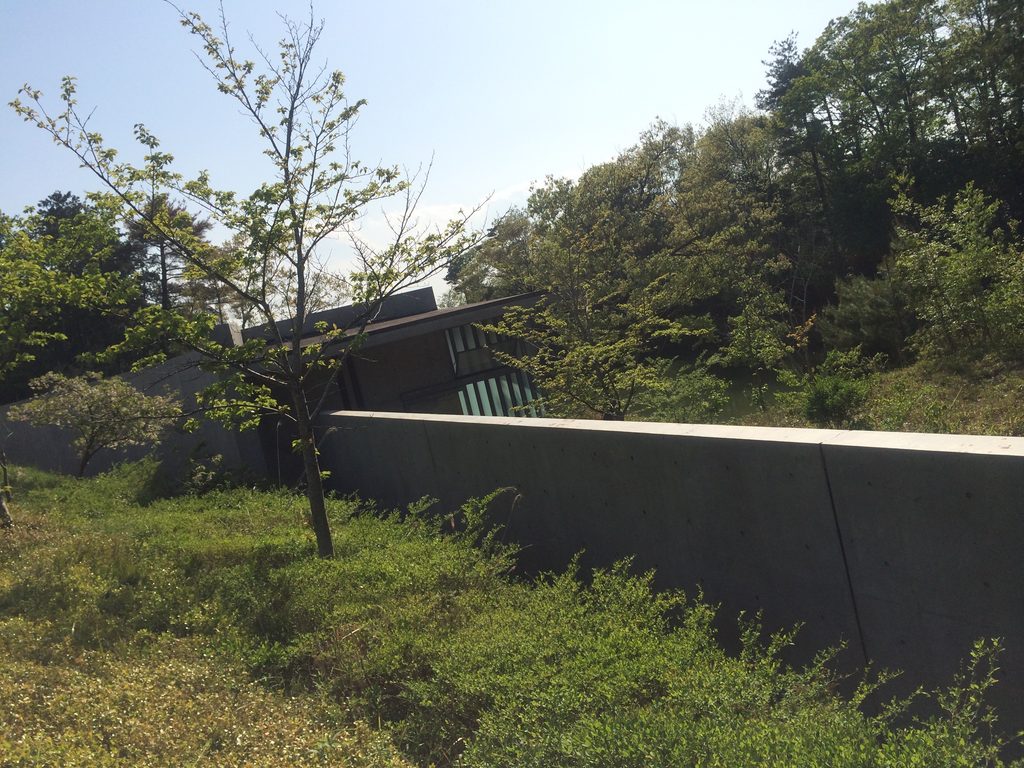
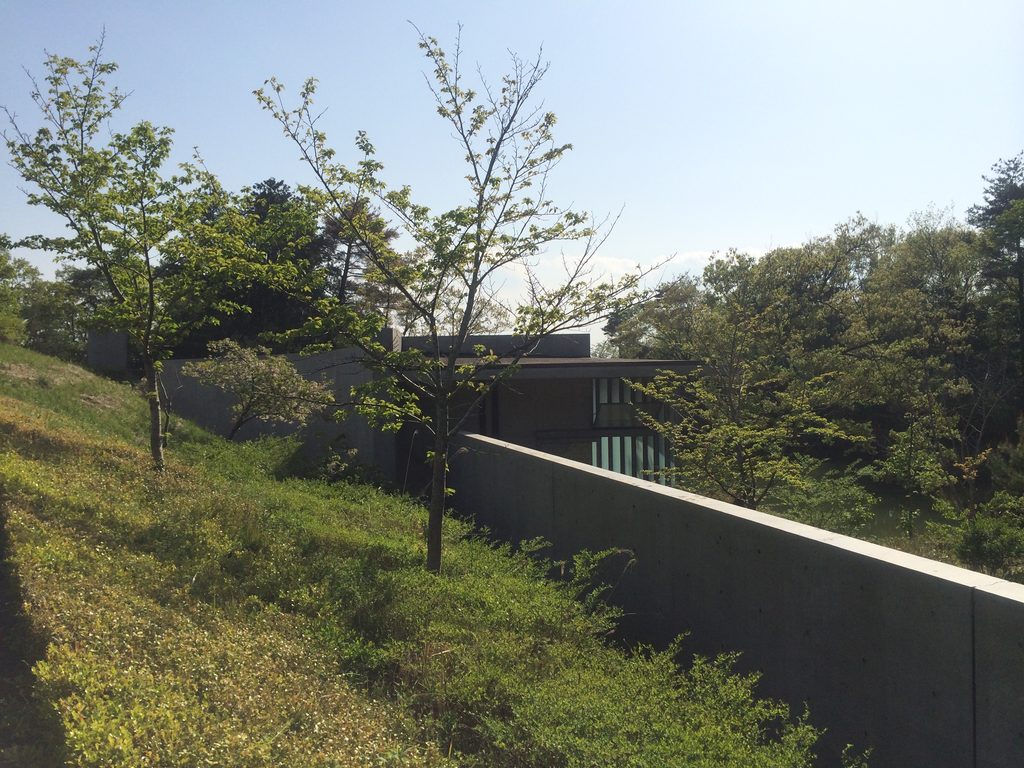
低いコンクリート壁は地形に沿うように伸び、建物の大部分は緑の中へ沈んでいる。
Low concrete walls follow the terrain, while much of the architecture remains embedded in greenery.
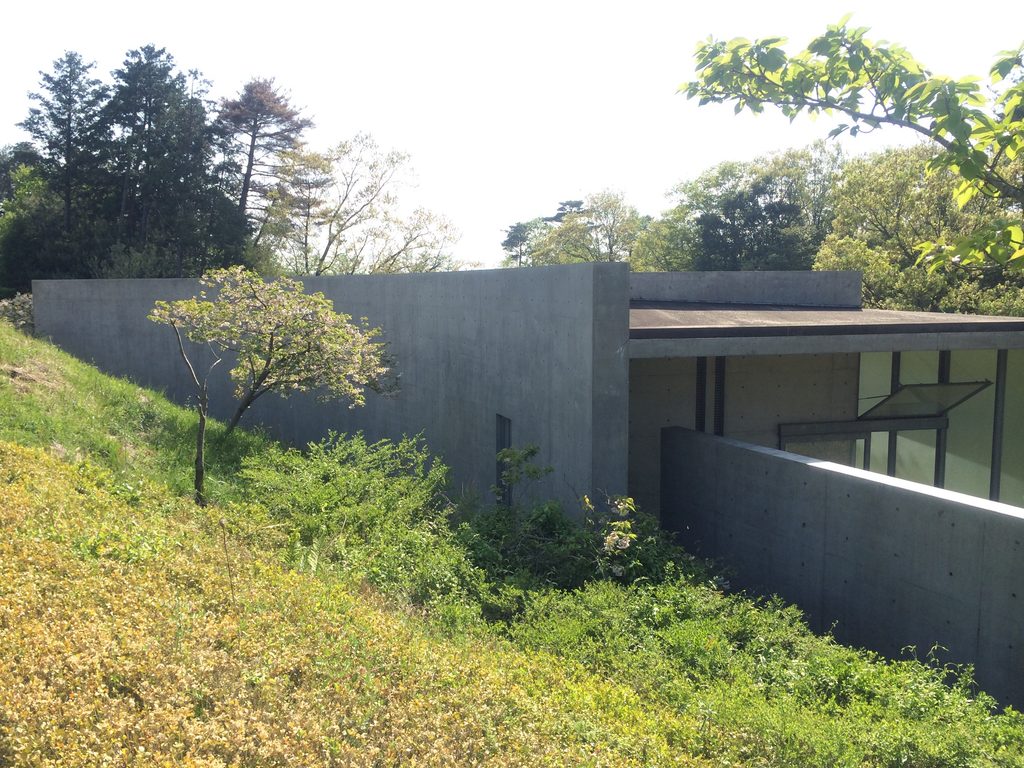
少し離れると、美術館は一つの独立したオブジェというより、草地を切り取る細い線のように見えてくる。
From farther away, the museum begins to look less like an independent object and more like a line drawn through the landscape.
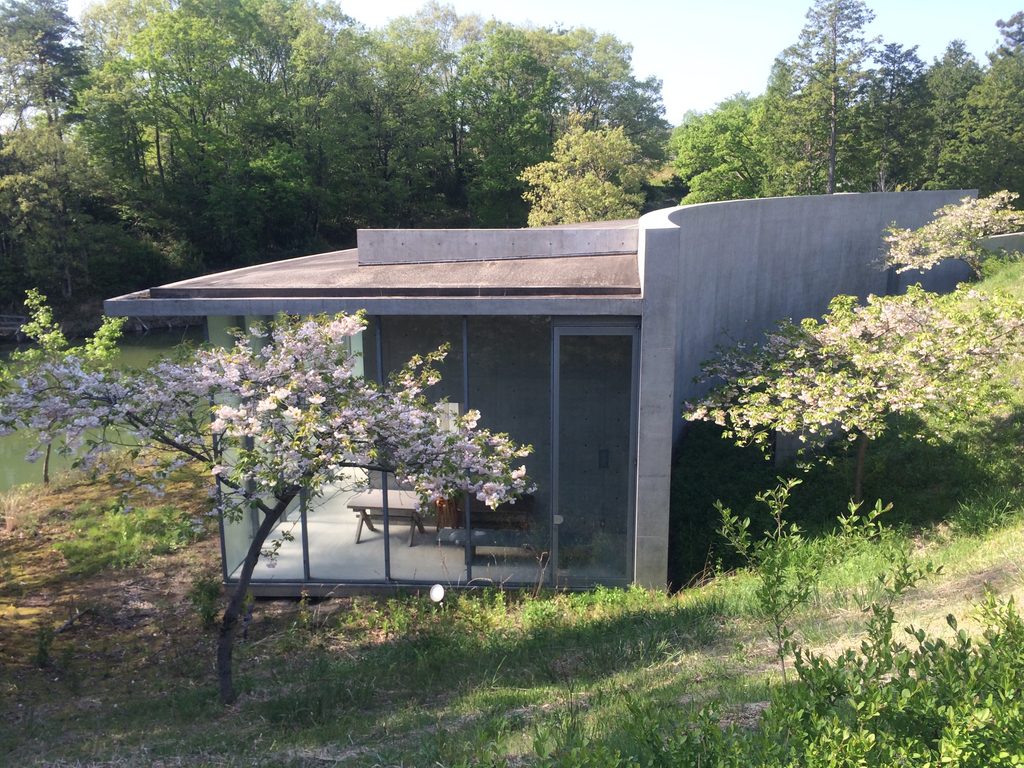
安藤建築にはコンクリートの強い存在感を持つ作品も多いが、ここでは建築そのものを目立たせるより、緑や光と共存させることが優先されているように感じる。
建物を歩き終えたあと、もう一度外から眺めると、内部にあれほど豊かな光の変化を持つ空間が、この低いコンクリートの輪郭の中に収められていたことが少し不思議に思えた。
The powerful material presence of concrete remains, yet it does not dominate the site. Light, vegetation and topography gradually become equally important parts of the architecture.
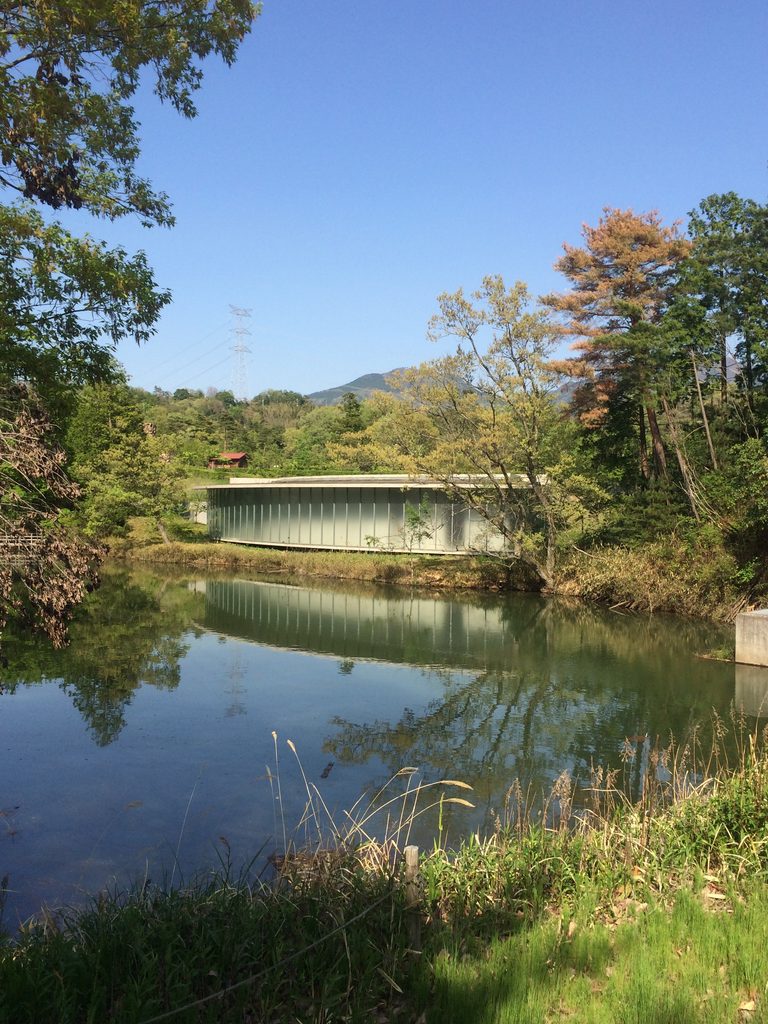
5. 水辺に残る、小さな光の美術館
A Small Museum Beside the Water
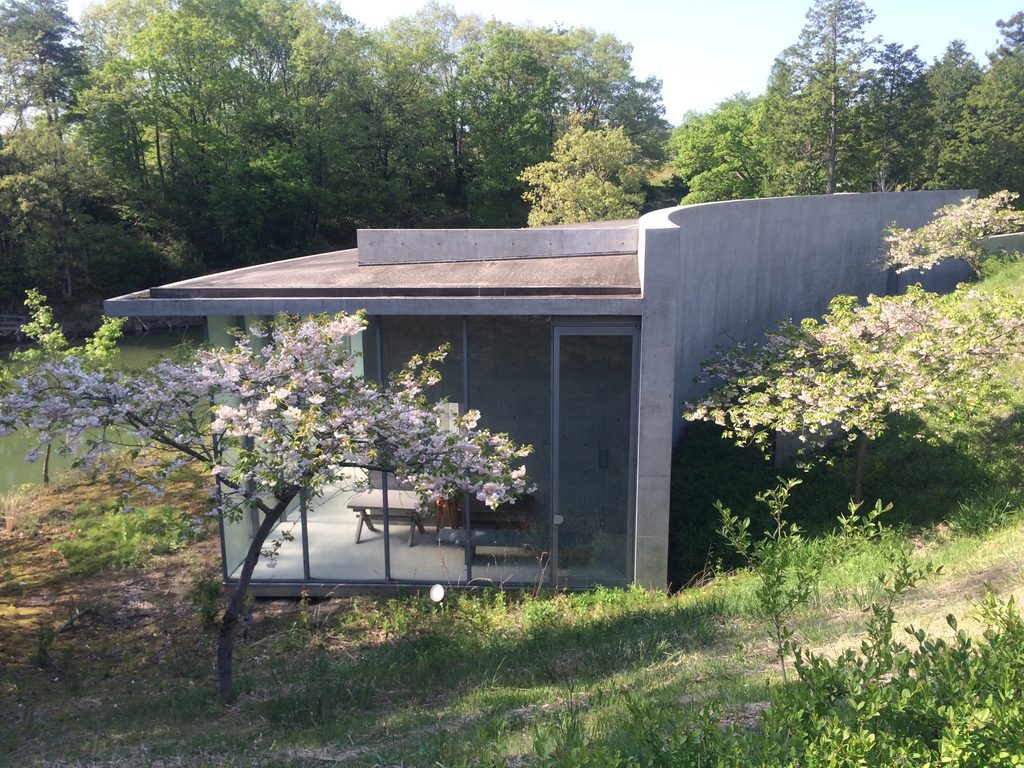
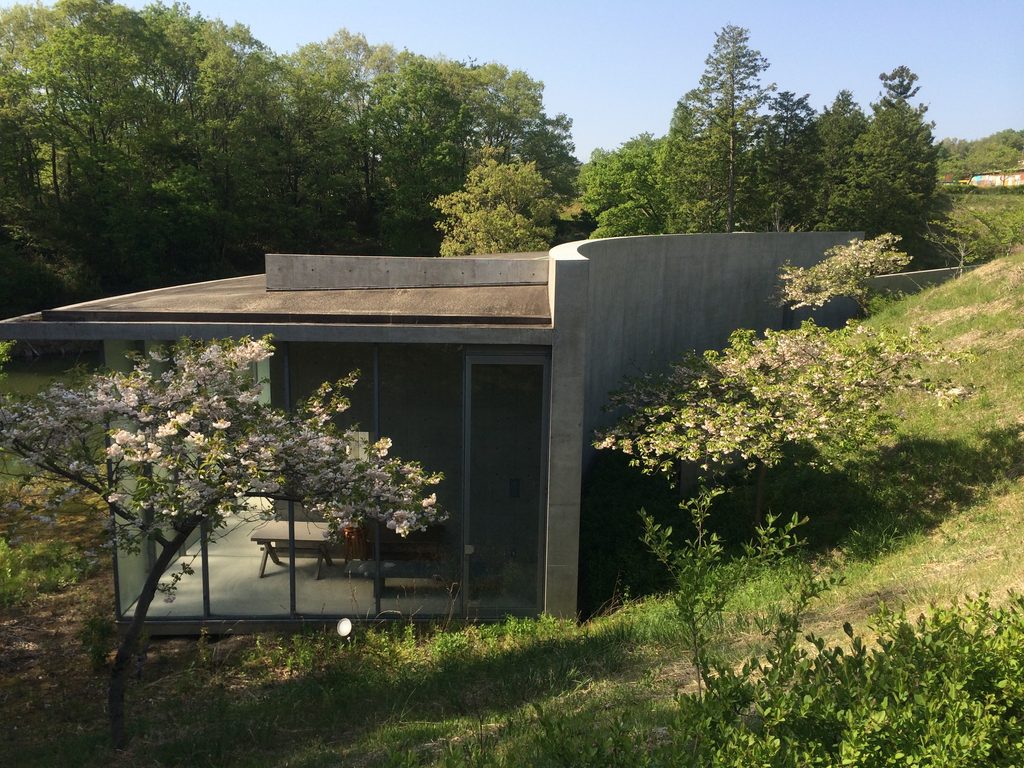
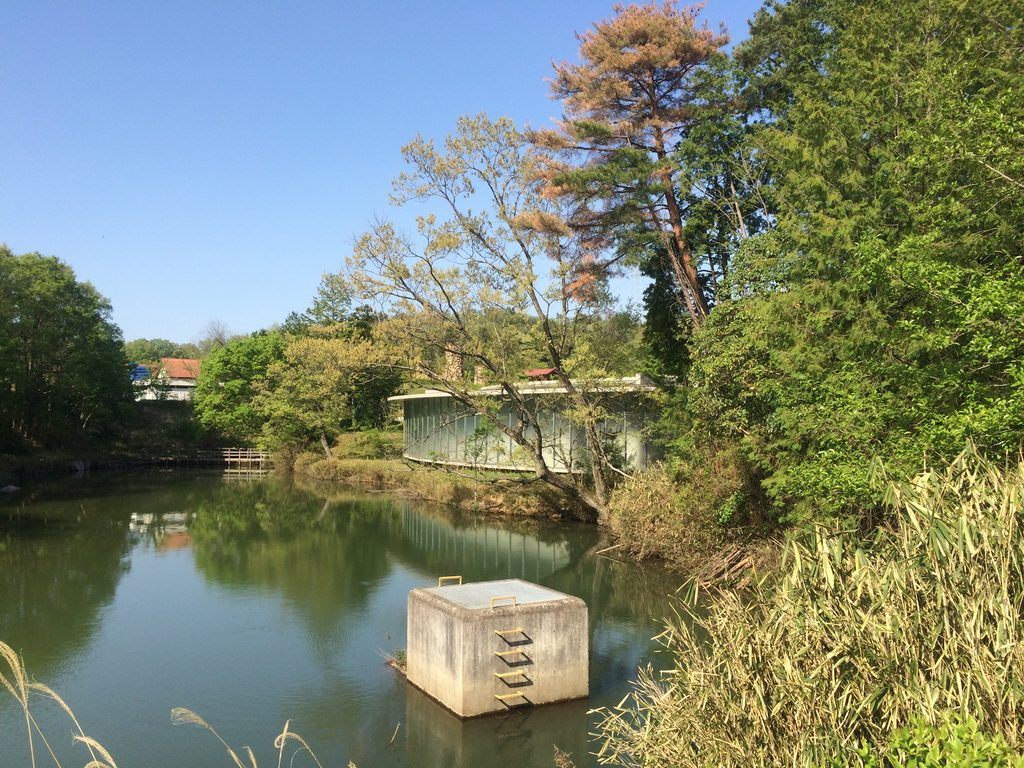
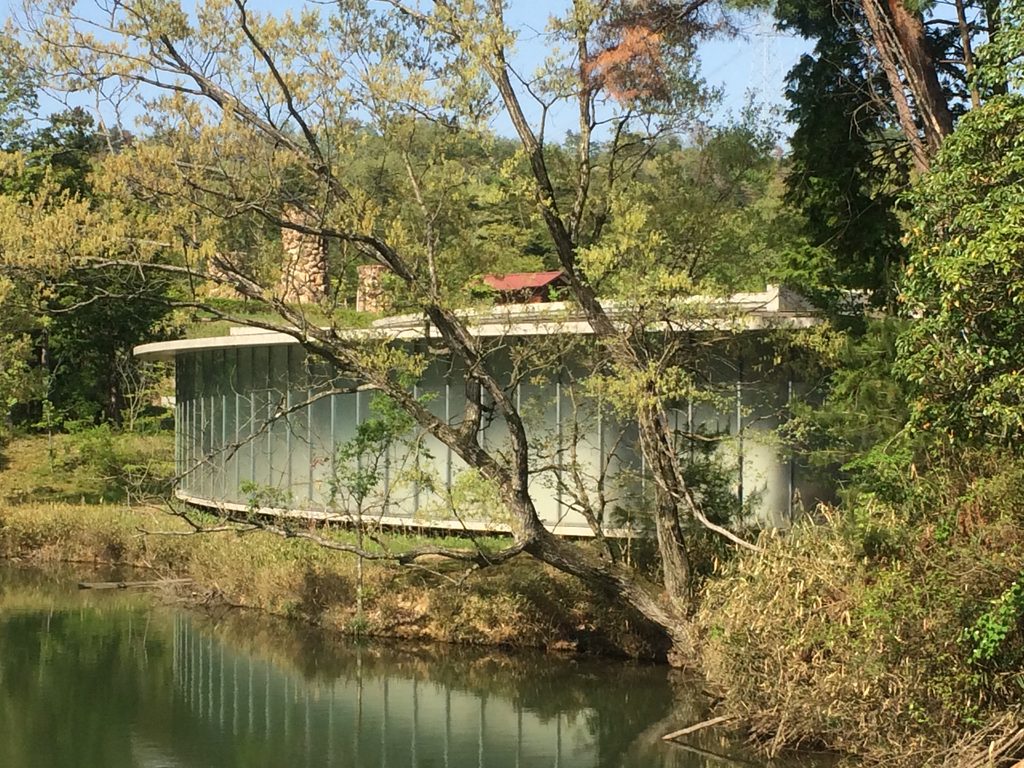
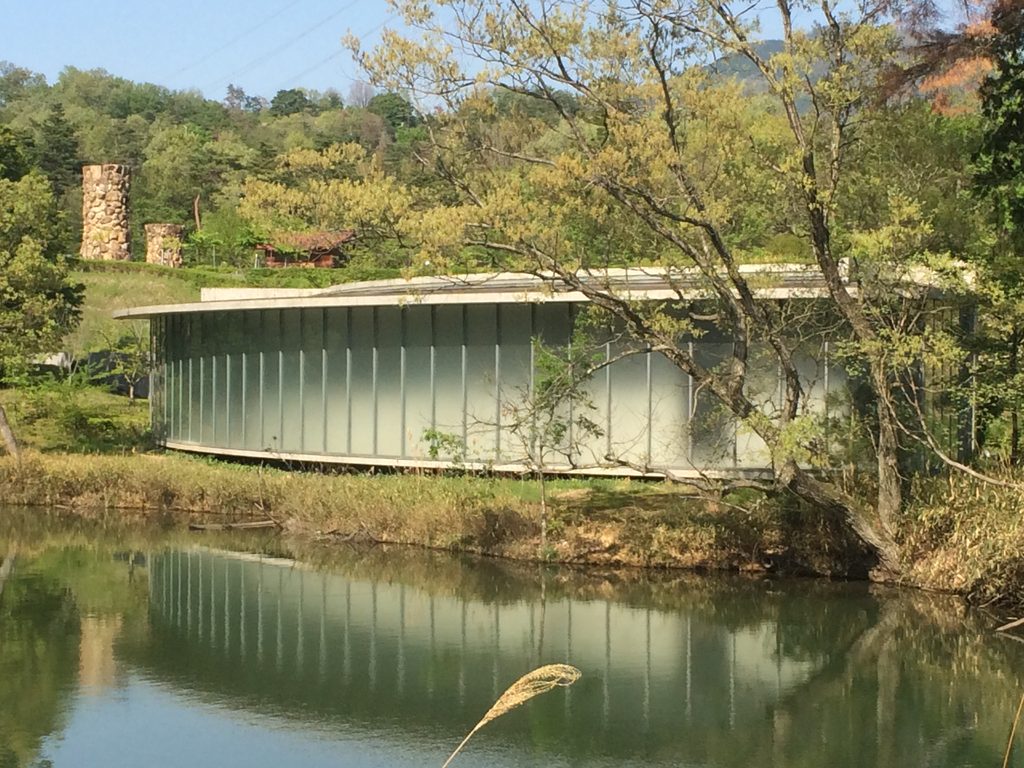
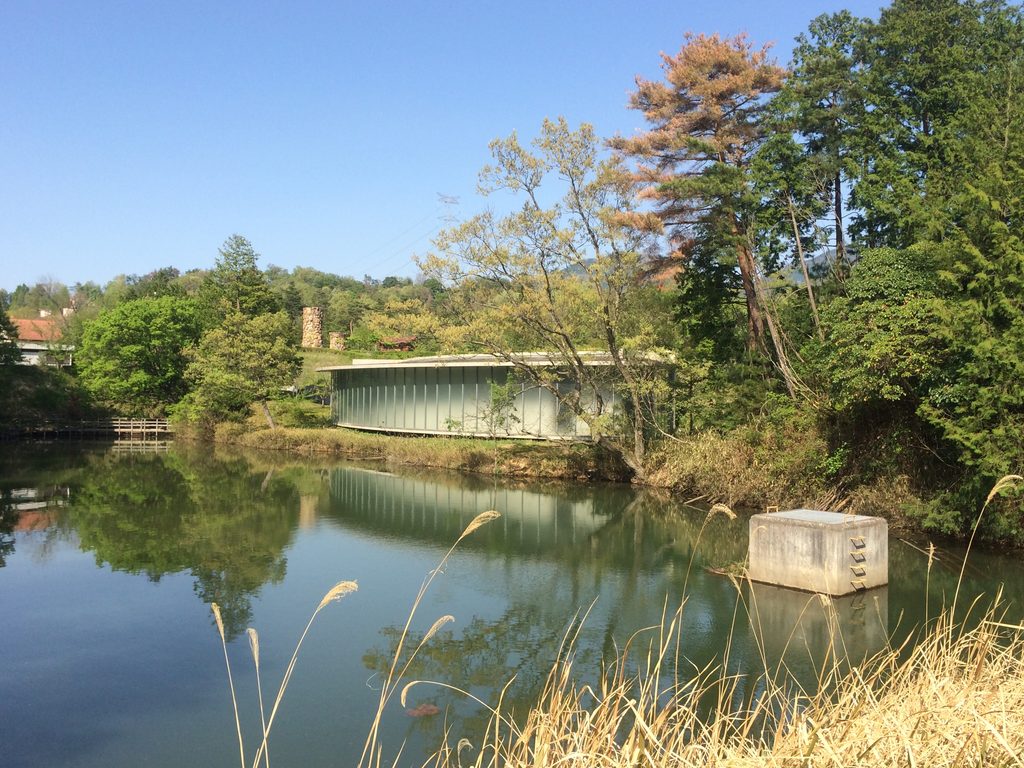
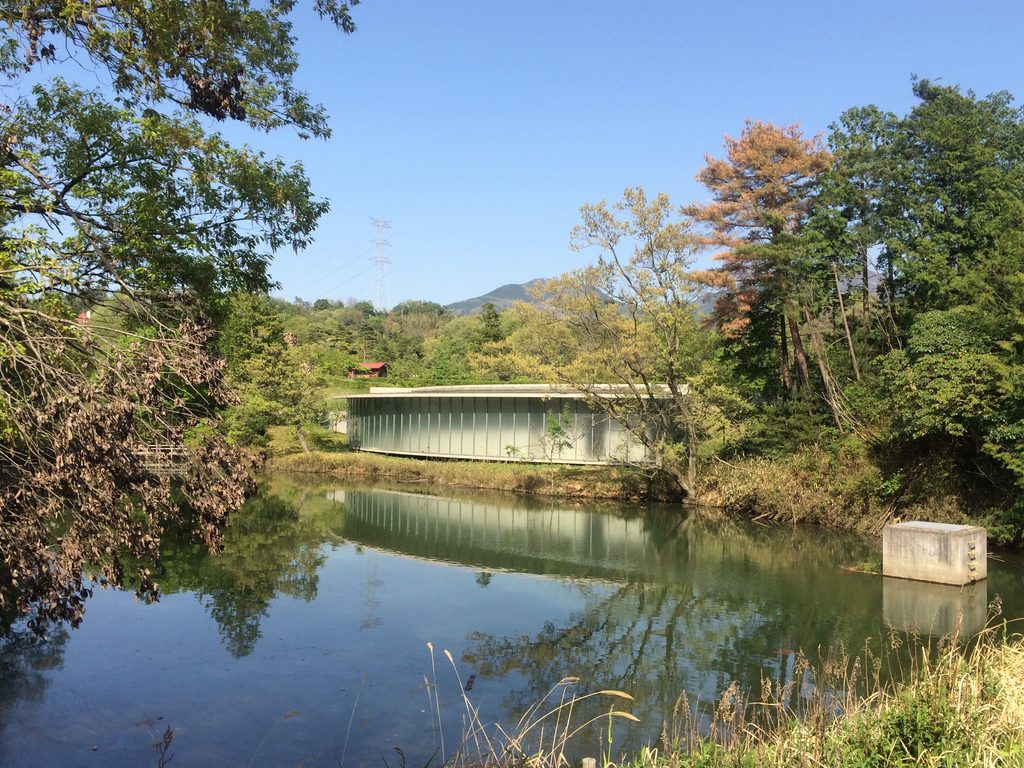
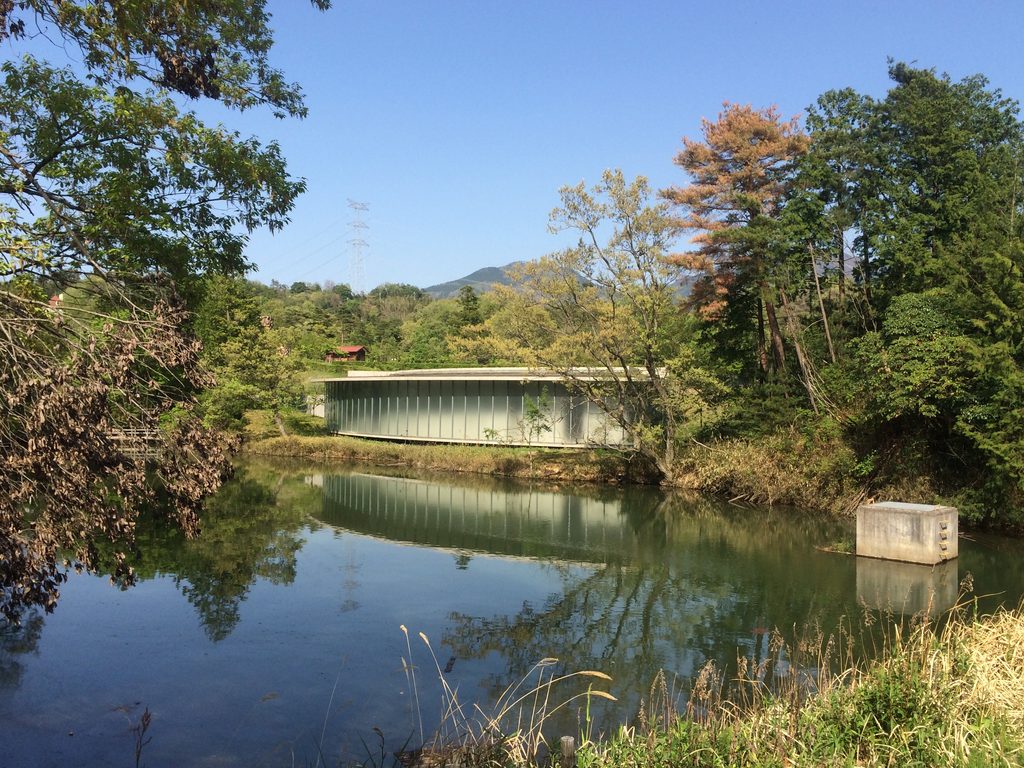
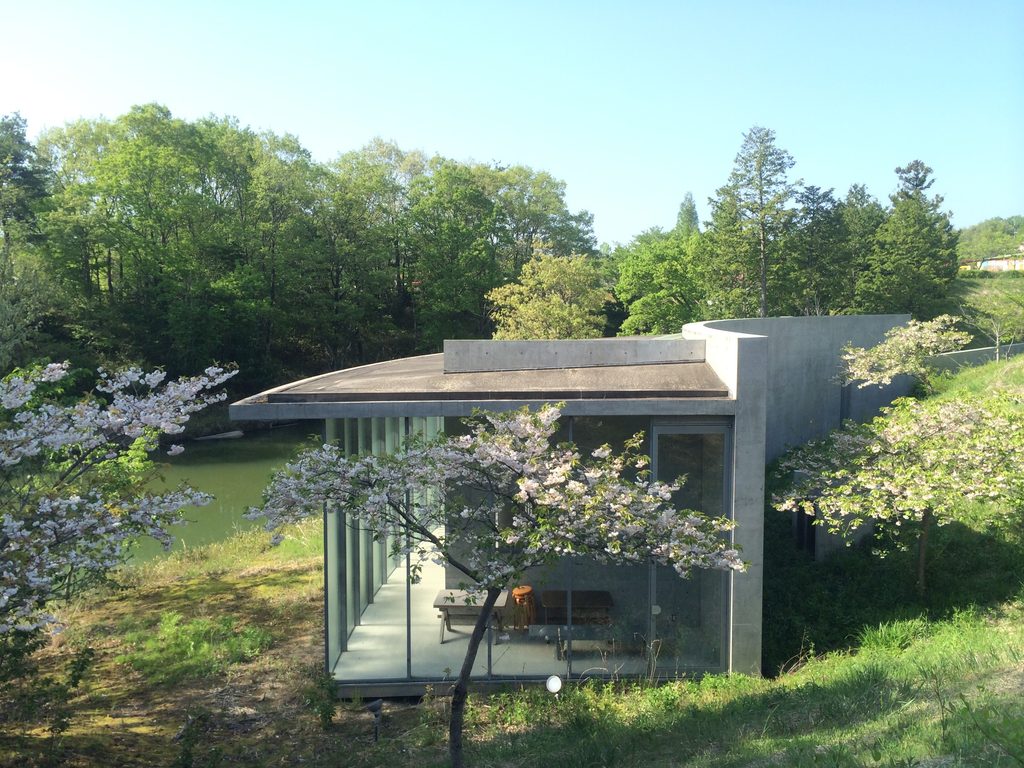
さらに離れて池の反対側へ回ると、建物はそれまでとはまったく違う姿を見せる。
From across the pond, the museum changes once again.
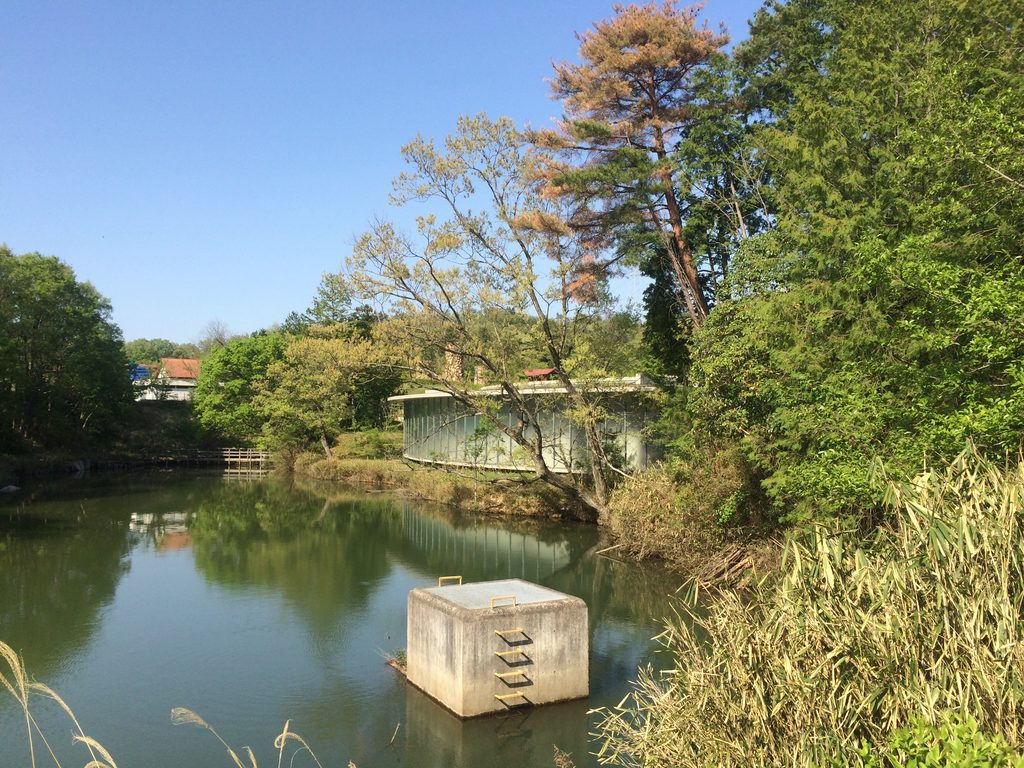
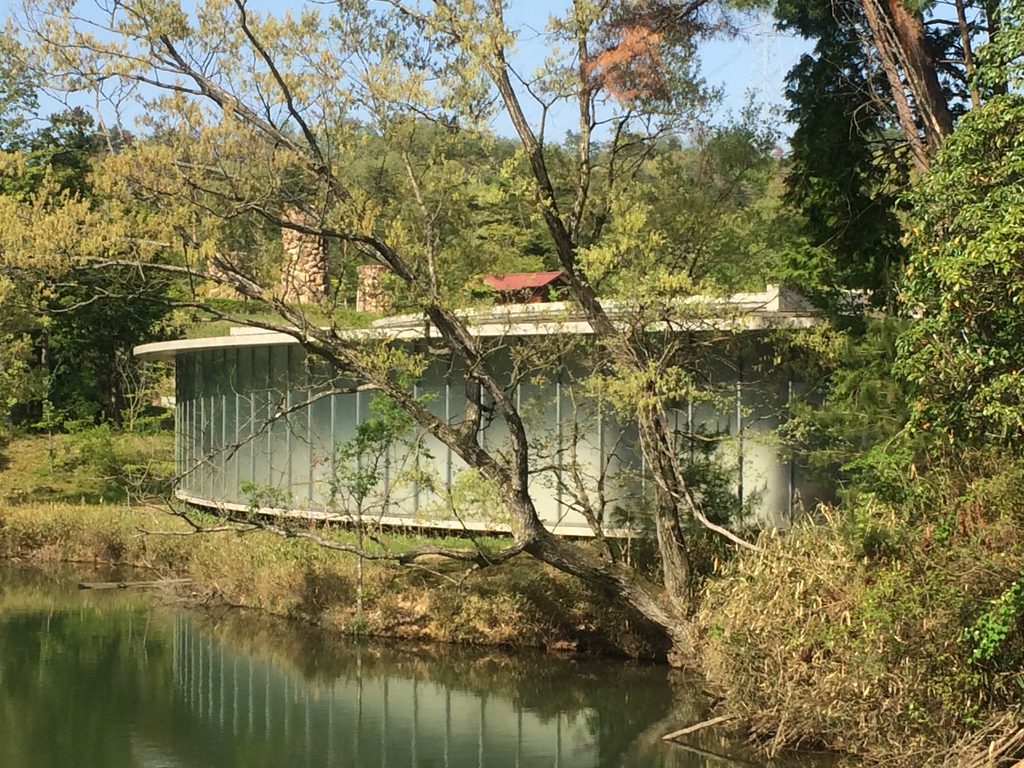
水面の向こうに見えるのは、低く水平に伸びるガラスとコンクリートである。周囲の木々が水に映り、その間に建築が静かに挟まれている。
Concrete and glass extend horizontally between trees, reflected together with the surrounding landscape in the water.
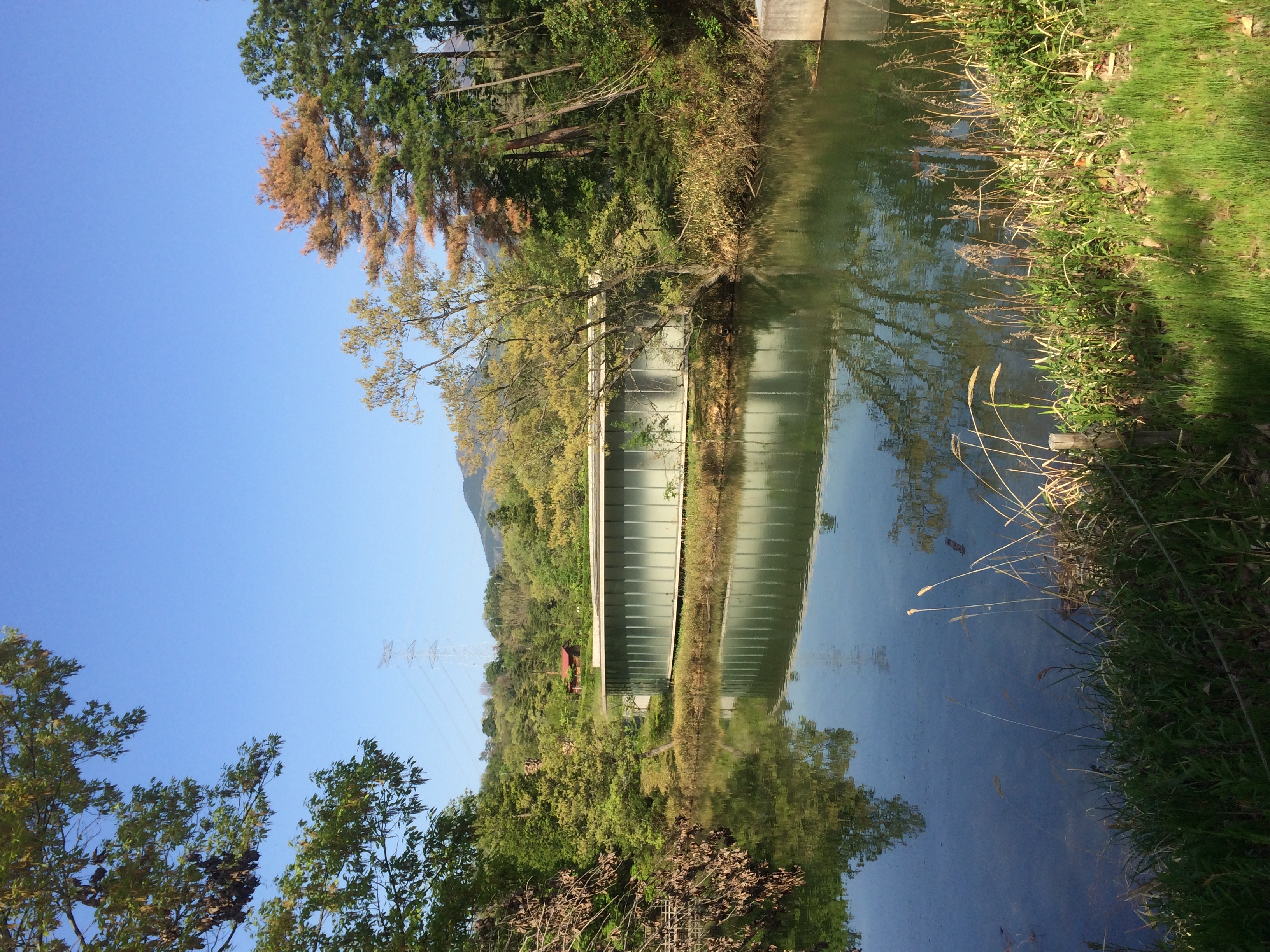
近くで見たときには曲面壁やスリット、コンクリートの質感が強く意識されたが、距離を取るほど建築は風景の一部になっていく。
かつて織田廣喜のためにつくられた美術館は、その後名称や使われ方を変えながらも建築として残った。現在もブルーメの丘美術館を会場とするイベントが行われており、この小さな安藤建築が完全に過去のものになったわけではないことも確認できる。
太陽が沈めば閉館する。
それほど単純で、今ではむしろ贅沢にも思える考え方を持った美術館が、今も滋賀の緑と水の中に静かに残っている。
At close range, one notices concrete surfaces, curves and narrow openings. From here, those details recede and the building becomes part of a much larger landscape.
More than twenty-five years after its completion, the building remains within Blume no Oka, its original identity transformed but its architectural relationship with daylight and landscape still present.
My Impression
この美術館で最も印象に残ったのは、やはり「光を見る」という感覚だった。
安藤建築では光が重要だと何度も言われる。しかし、ここでは光が美しいというだけではなく、光がなければ美術館そのものが成立しない。
What stayed with me most was the feeling that I was not simply looking at light, but becoming conscious of it.
In many buildings by Tadao Ando, light plays an essential role. Here, however, daylight is not merely a beautiful architectural effect. Without it, the museum itself cannot function as originally conceived.
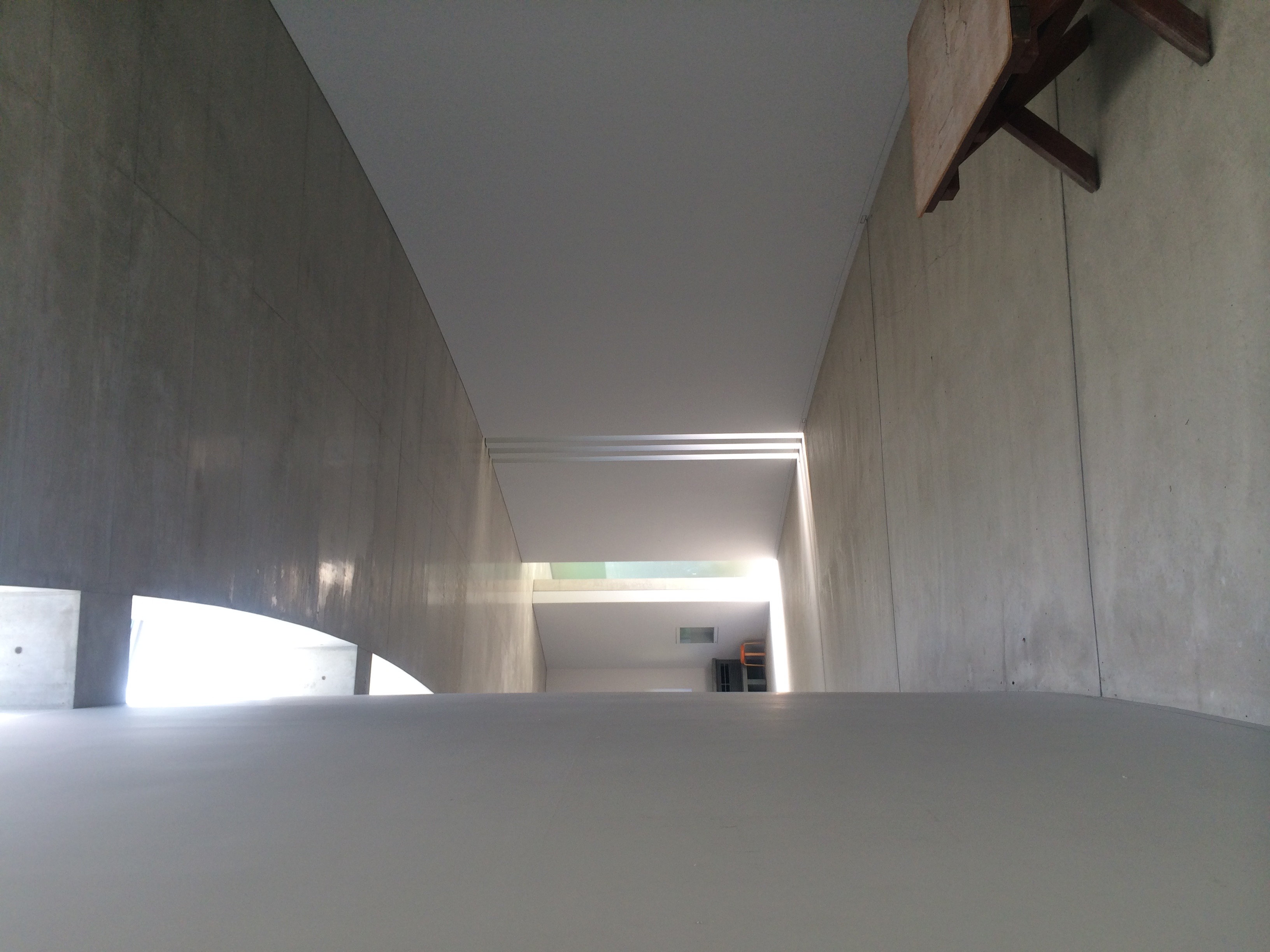
内部を歩いていると、白い壁に細い光が落ち、時間とともにその位置が変わっていく。人工照明なら同じ状態を保つことができるが、この美術館はそれをしない。
だからこそ、その日にそこへ行った自分が見た空間は、その時間だけのものだったのだと思う。
そして外へ出て池の反対側まで歩くと、先ほどまで内部にいた建物が驚くほど小さく見えた。
Light falls across the white walls and changes with time. Artificial illumination could keep the galleries visually constant, but this building deliberately refuses that constancy.
The space I experienced therefore belonged to that particular day and that particular hour.
From across the pond, the building suddenly appeared much smaller than it had from inside.
大きな美術館ではない。展示室も複雑ではない。それでも「自然光だけで絵を見る」という一つの考え方が、アプローチから通路、展示室、そして外の風景まで一貫している。
太陽があるから開き、太陽が沈めば閉じる。
建築が人間の都合だけで時間を決めるのではなく、自然の時間へもう一度合わせてみる。
日没閉館 織田廣喜ミュージアムは、その単純なルールによって、光というものをいつもより少し意識させてくれる建築だった。
This is not a large museum, nor is its plan especially complex. Yet a single idea—seeing art through natural light—connects the approach, corridor, galleries and surrounding landscape.
It opens because the sun is there, and closes when the sun disappears.
Through that simple rule, the Daylight Museum makes the passage of natural time unusually tangible.
Archive Gallery