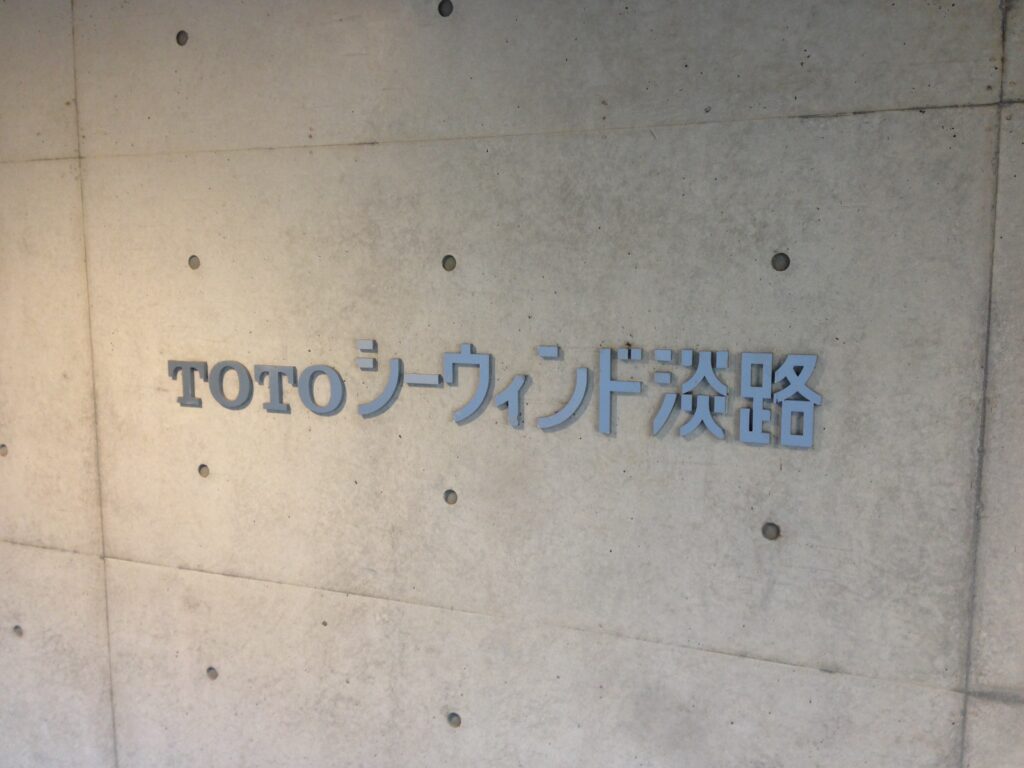
【安藤忠雄建築】TOTOシーウィンド淡路|海を隠すことで、海を強く感じさせる建築(TOTO Seawind Awaji|Architecture That Makes the Sea More Powerful by Hiding It)
建築概要
Overview
- 名称:TOTOシーウィンド淡路
- 設計:安藤忠雄
- 所在地:兵庫県淡路市里
- 竣工:1997年12月
- 用途:宿泊・研修施設
- Name:TOTO Seawind Awaji
- Architect:Tadao Ando
- Completed:December 1997
- Location:Sato, Awaji, Hyogo, Japan
- Type:Accommodation / Training Facility
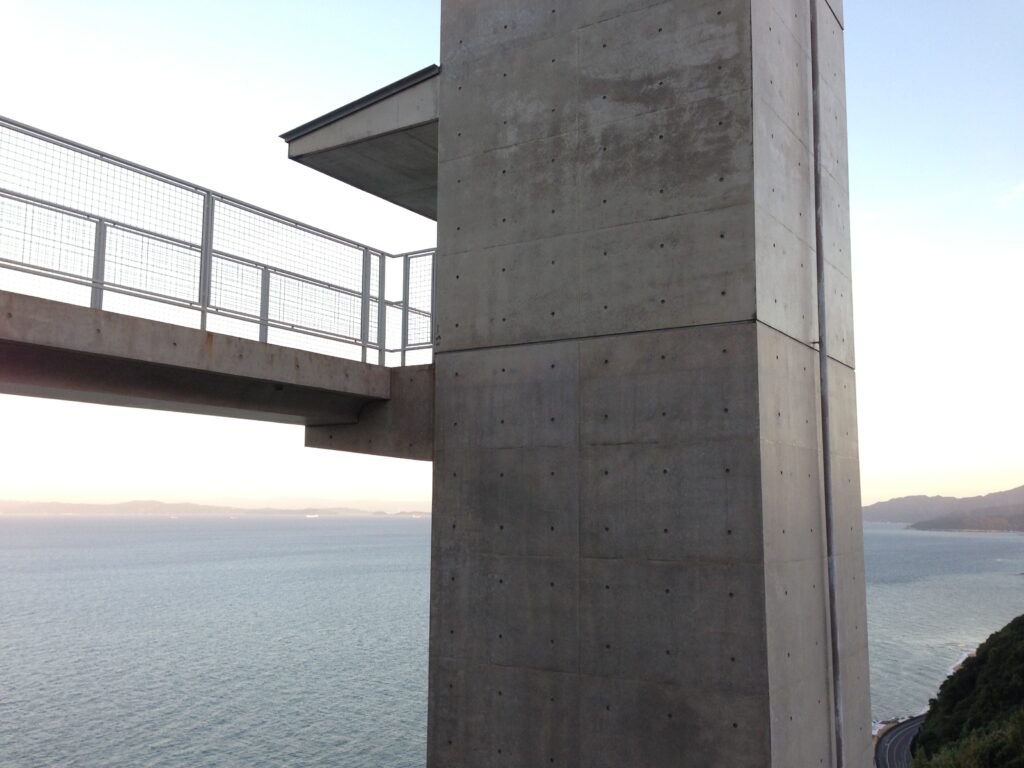
TOTOシーウィンド淡路は、淡路島の急斜面と大阪湾の眺望を生かしてつくられた建築である。建物の大部分を斜面の中に配置することで外部からの存在感を抑えながら、内部では複数のレベルと通路を移動することで、さまざまな角度から海と出会う構成になっている。現在は一般客も宿泊でき、安藤建築を「見る」だけではなく、その中で時間を過ごすことのできる作品でもある。
1.TOTOシーウィンド淡路 — 海を隠すことで、海を強く感じさせる建築
TOTO Seawind Awaji — Architecture That Makes the Sea More Powerful by Hiding It
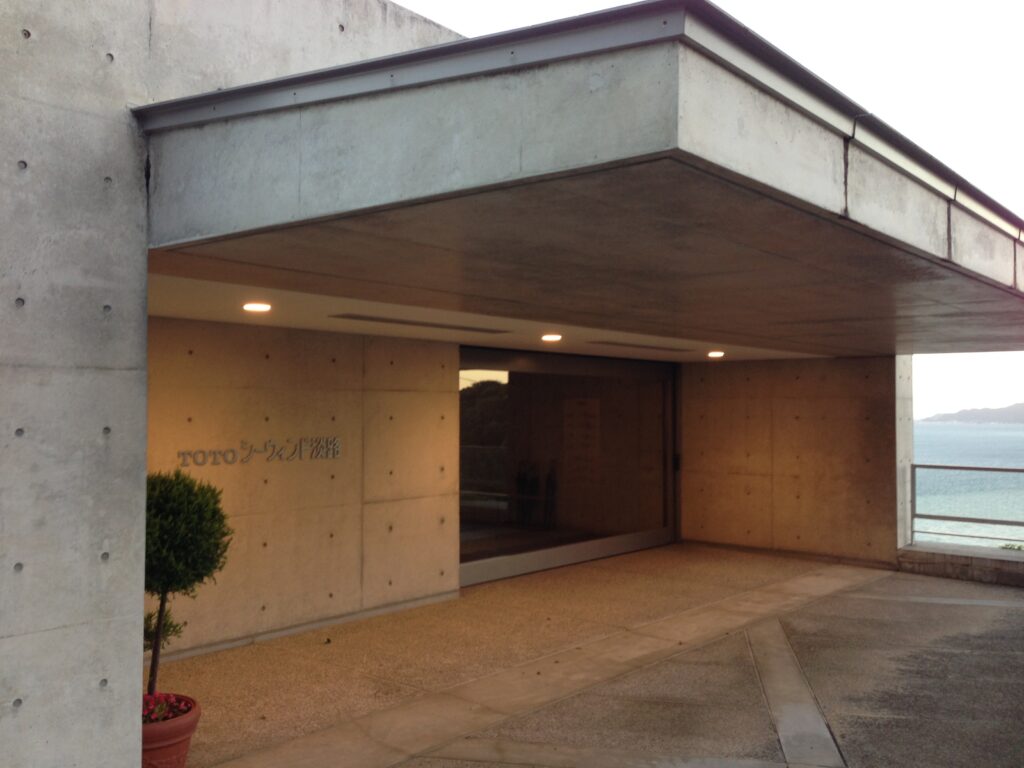
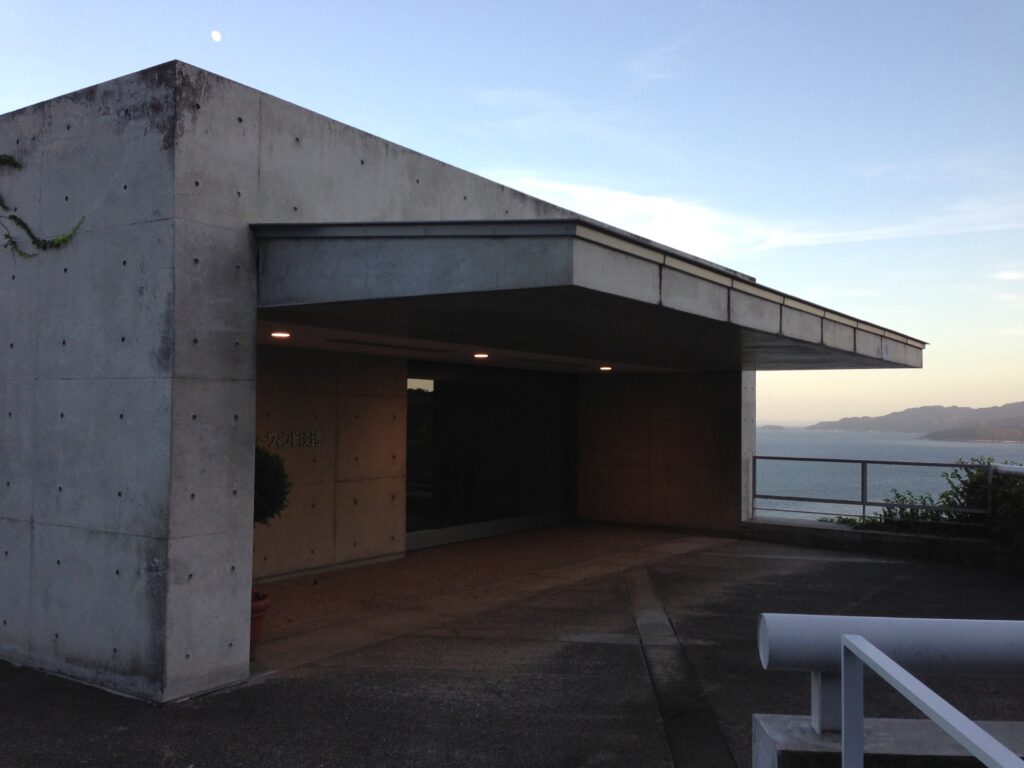
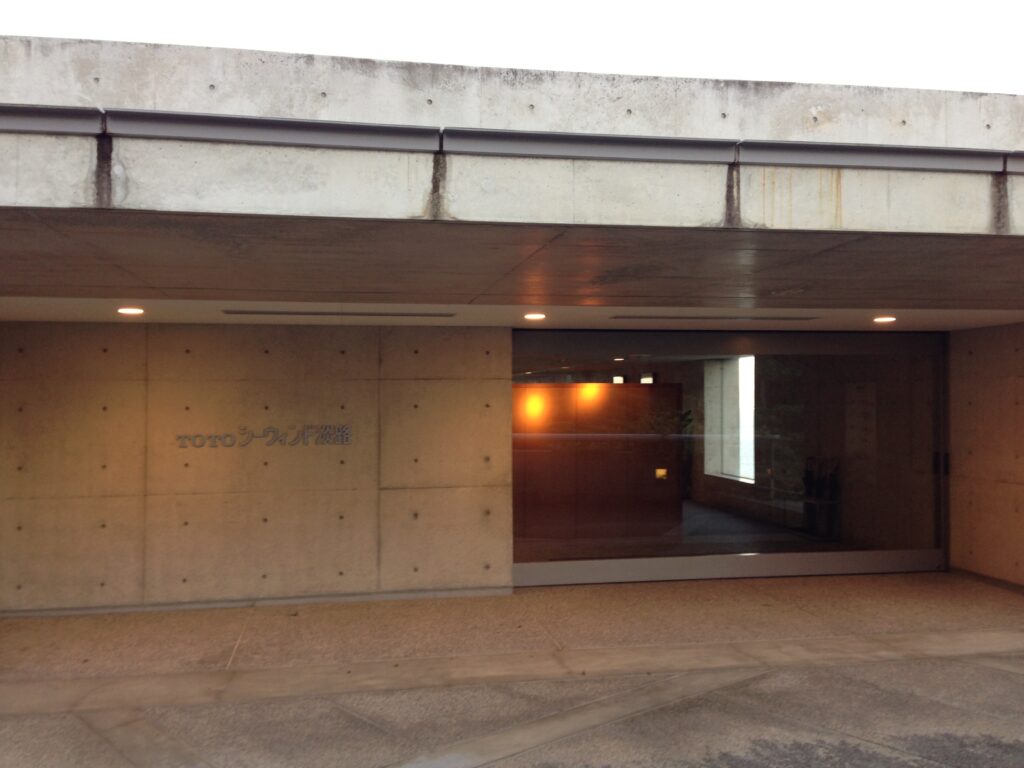
淡路島の東岸、大阪湾を見下ろす斜面に建つTOTOシーウィンド淡路。安藤忠雄が設計し、1997年に竣工した宿泊施設である。もともとはTOTOの保養施設としてつくられ、現在は一般にも開かれたリゾートとして、この建築そのものに宿泊することができる。
この建築で面白いのは、これほど海に恵まれた場所にありながら、どこからでも海を見せようとはしていないことだった。コンクリートの壁によって視界を閉ざし、暗い通路を歩かせ、ときには海の存在そのものを忘れさせる。そして次の瞬間、壁の向こうや開口部の先に大阪湾が突然現れる。海を見せ続けるのではなく、あえて隠す。そのことで海との出会いを強く印象づける建築だった。
TOTO Seawind Awaji stands on a hillside overlooking Osaka Bay on the eastern coast of Awaji Island. Designed by Tadao Ando and completed in 1997, it was originally built as a retreat and training facility for TOTO and today operates as an accommodation facility open to the public.
What fascinated me most about this building was that, despite its extraordinary location beside the sea, the architecture does not attempt to reveal the view from everywhere. Concrete walls block the landscape, dark passages temporarily make you forget the presence of the sea, and then suddenly Osaka Bay appears beyond a wall or through an opening. Rather than continuously displaying the sea, the architecture deliberately hides it. By doing so, each encounter with the water becomes far more powerful.
2.斜面の中へ入っていく
Entering the Hillside
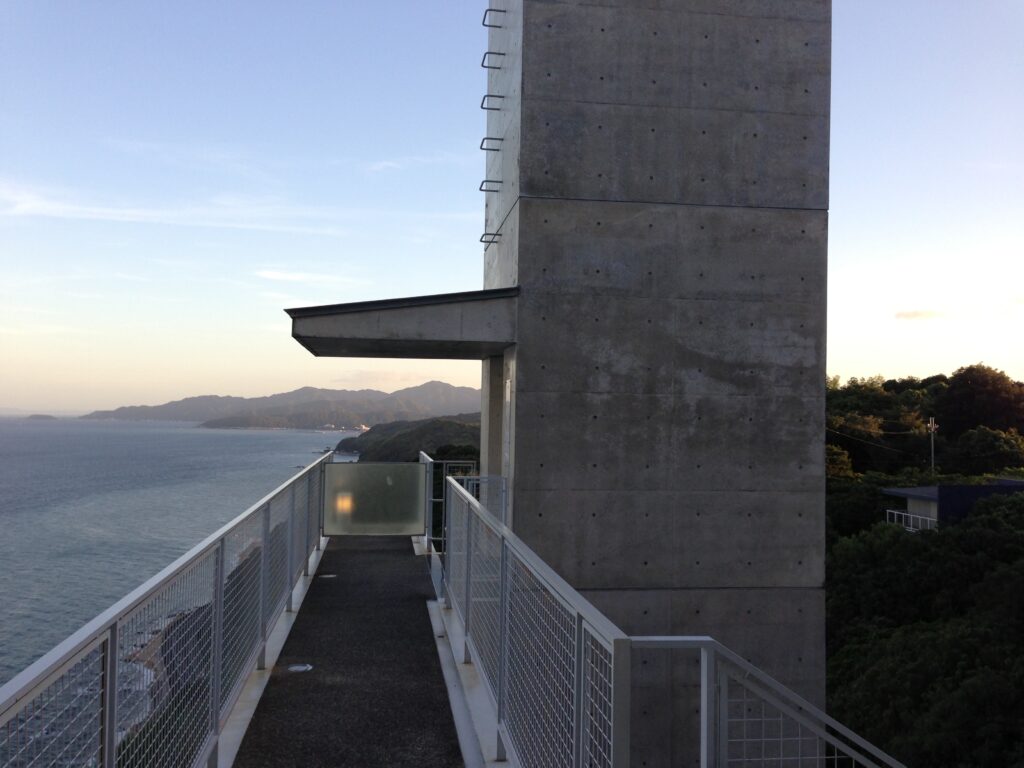
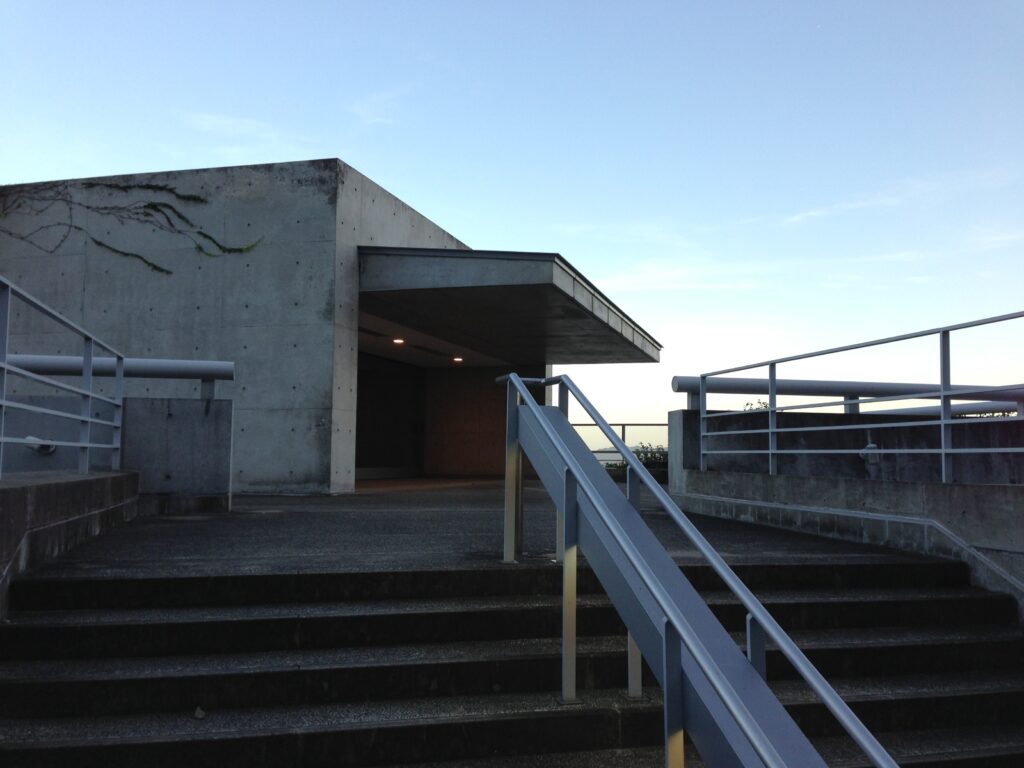
建築の中へ進むと、まず感じるのは建物が地形の上に置かれているというより、斜面の中へ入り込んでいるような感覚だった。コンクリートの壁と細い通路が連続し、建物全体の姿を一度に把握することはできない。
その一方で、壁の向こうには海があることが分かっている。見えない海の存在を意識しながら建築の中を進んでいく。この「見えていないものを意識させる」という感覚が、TOTOシーウィンド淡路の体験の始まりだった。
Moving into the architecture, I felt less as though the building had been placed on the terrain than that it had been inserted into the hillside itself. Concrete walls and narrow passages continue one after another, making it impossible to understand the entire composition at once.
At the same time, you know that the sea lies somewhere beyond those walls. Walking through the architecture while remaining conscious of a landscape that cannot yet be seen becomes the beginning of the experience at TOTO Seawind Awaji.
3.海を一本の線として見る
Seeing the Sea as a Single Line
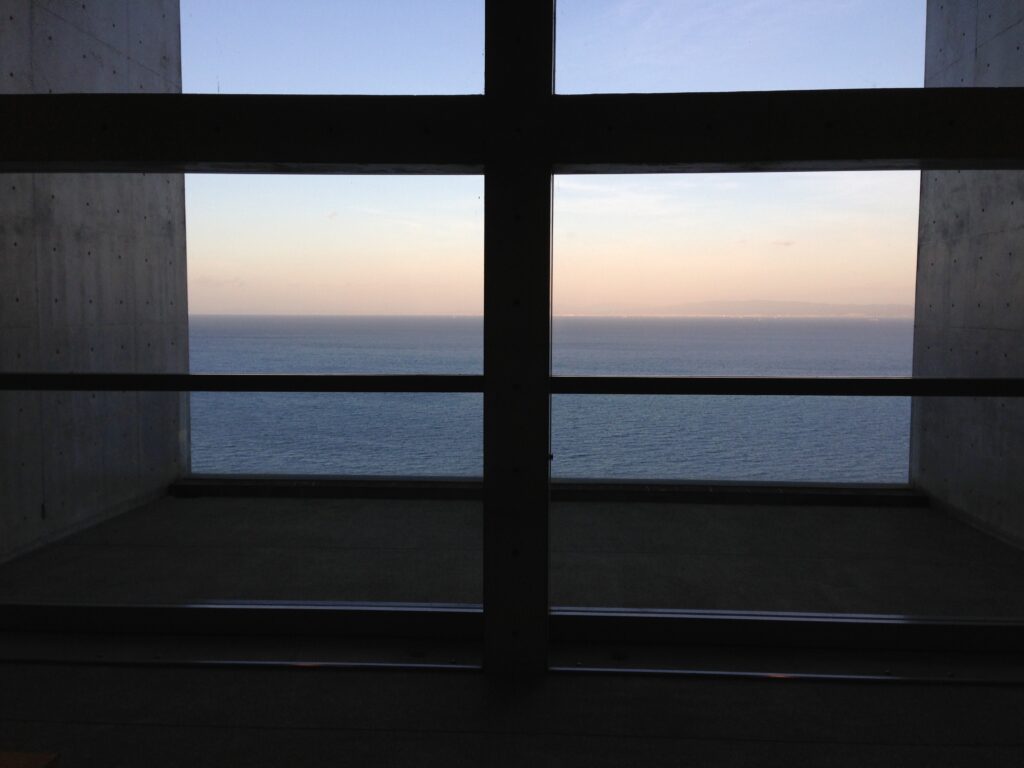
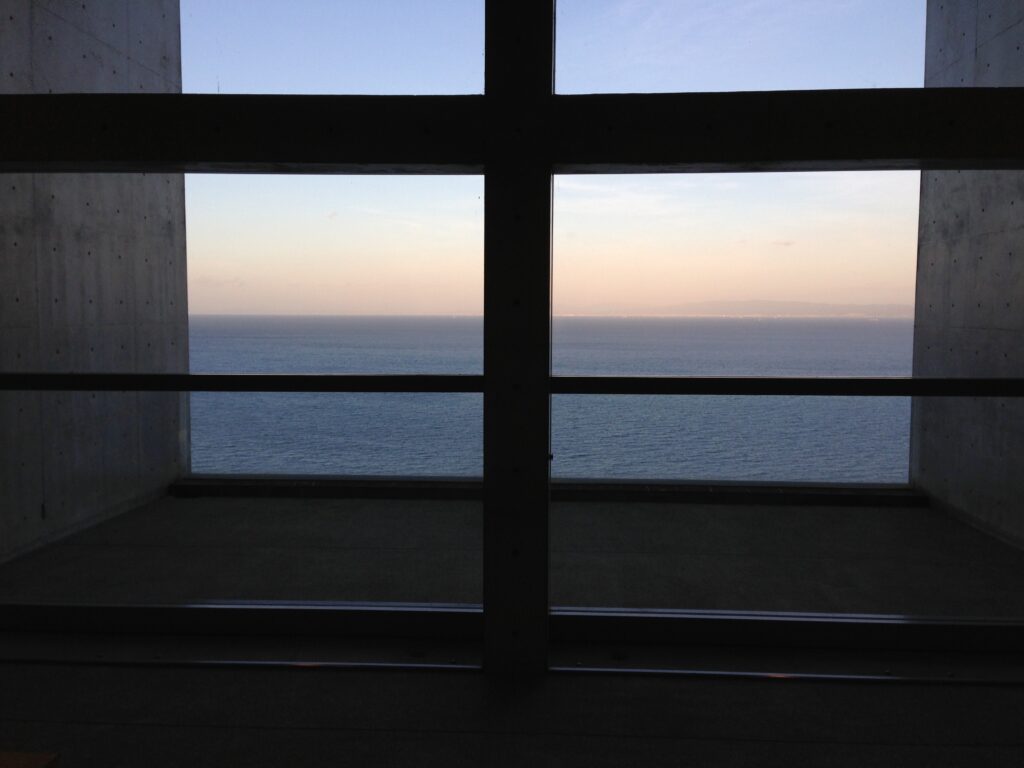
暗い内部から窓を見ると、そこに大阪湾が水平な帯のように現れる。空、海、建築。それぞれが単純な水平線と垂直線によって切り分けられ、一枚の抽象画のようにも見える。
大きなパノラマウインドウで風景を全面的に見せるのではなく、建築によって視界を限定する。その結果、普段なら何気なく眺めてしまう海の水平線が、強く意識されるようになる。
Looking through a window from the darker interior, Osaka Bay appears as a horizontal band. Sky, sea, and architecture are divided by simple horizontal and vertical lines, creating a view that almost resembles an abstract painting.
Rather than presenting the landscape through an enormous panoramic window, the architecture restricts the field of vision. As a result, the horizon of the sea—something that might otherwise be taken for granted—becomes remarkably distinct.
4.壁の向こうにある海
The Sea Beyond the Wall
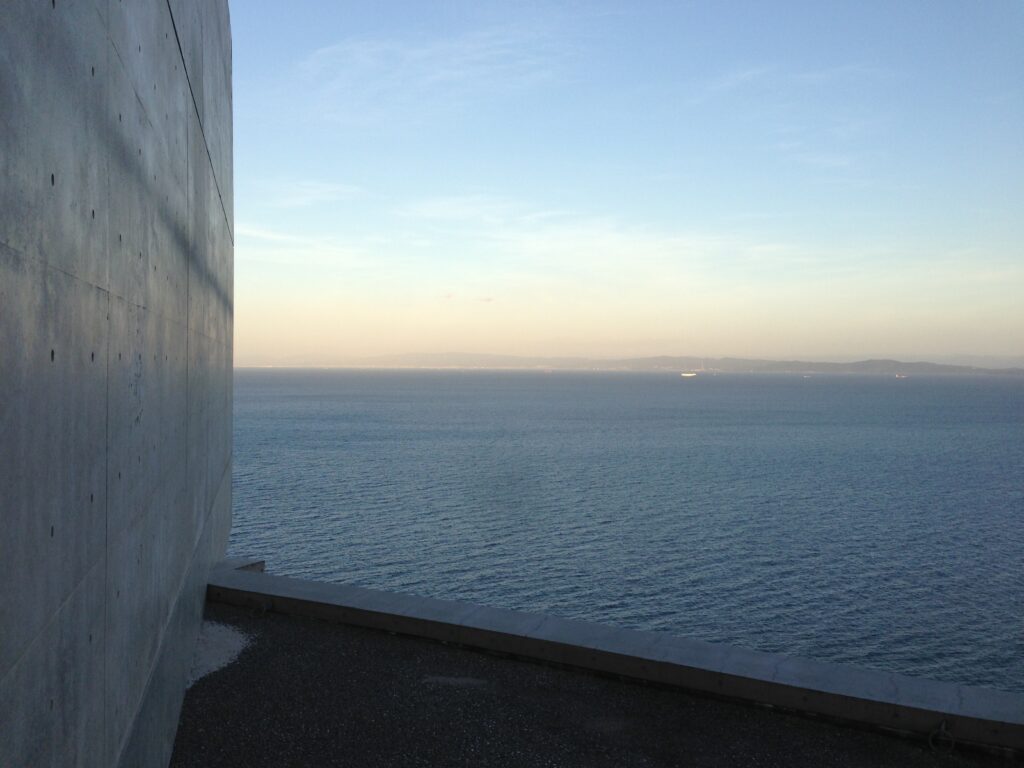
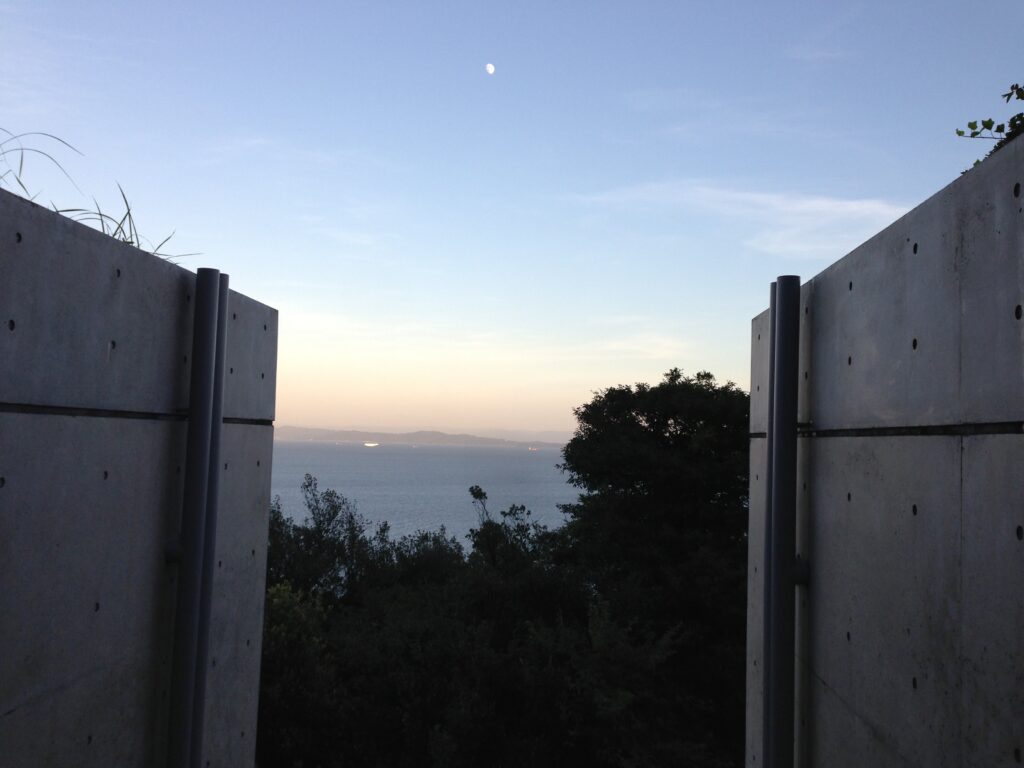
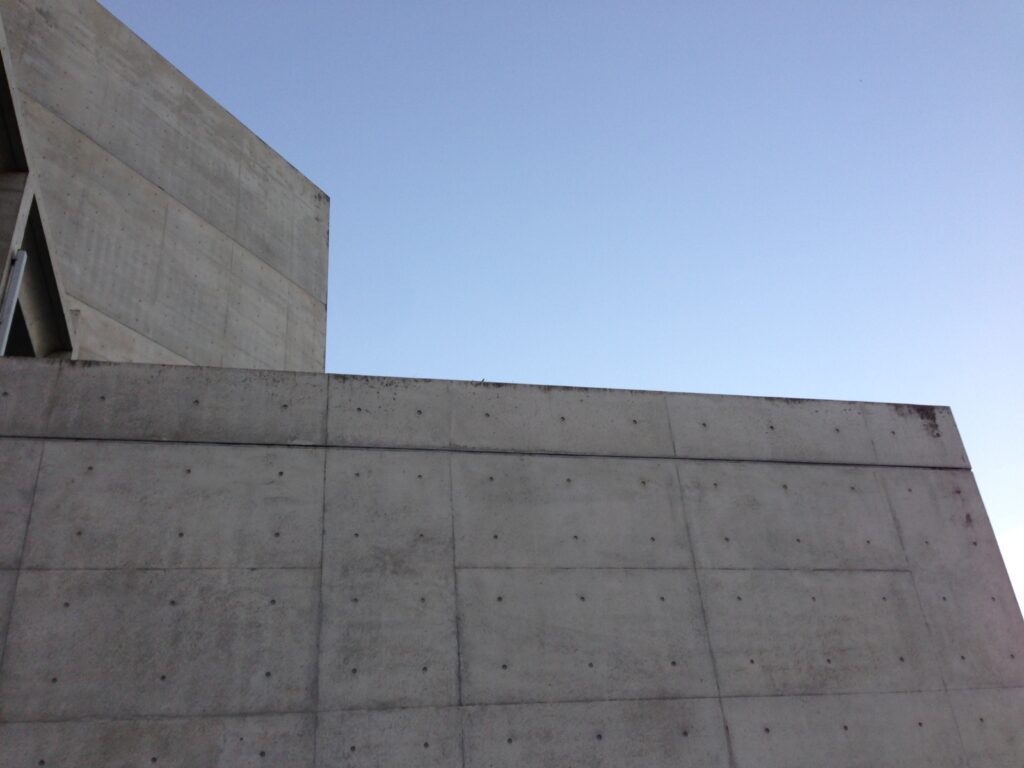
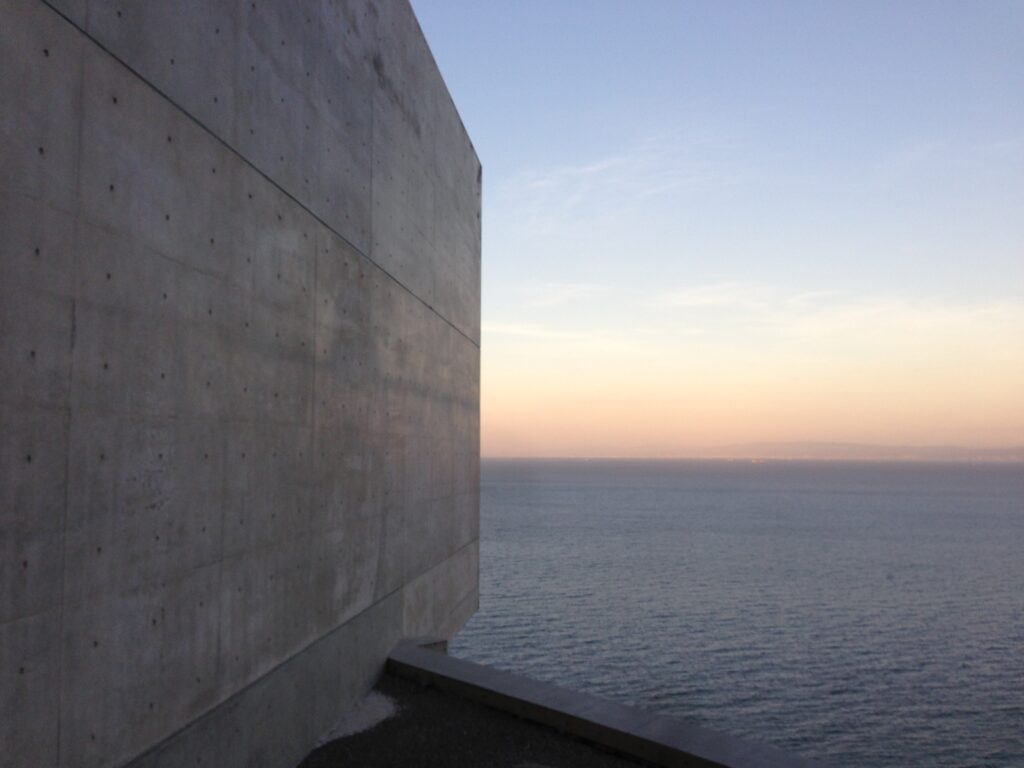
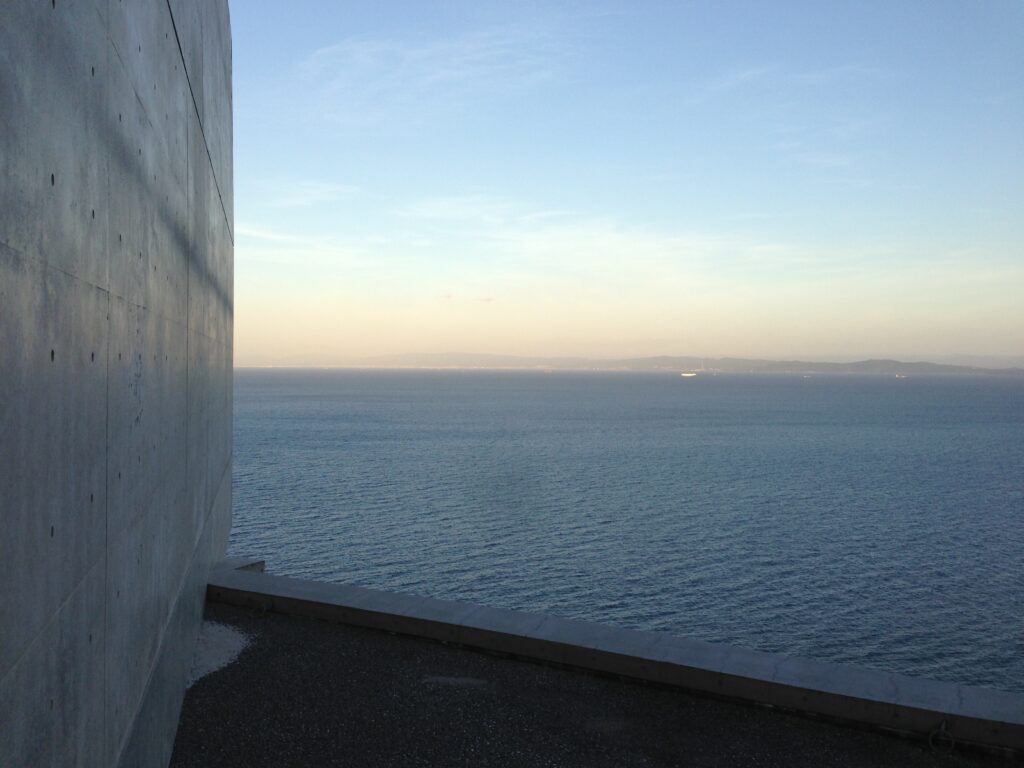
巨大なコンクリート壁の横を歩くと、その端から大阪湾が姿を見せる。目の前にこれほど大きな海が広がっているにもかかわらず、壁はそれを大胆に遮っている。
風景の良いホテルなら、できるだけ海を見せようとするのが普通だろう。しかしここでは逆に、建築が景色を隠す。海が見えない時間をつくることで、次に海が現れた瞬間の印象を強くする。この逆説的な操作が、とても安藤忠雄らしく感じられた。
Walking beside a monumental concrete wall, Osaka Bay begins to appear only at its edge. Despite the vast sea directly in front of the building, the wall boldly interrupts the view.
A conventional seaside resort might attempt to expose the ocean as much as possible. Here, the opposite happens. By creating periods when the sea cannot be seen, the architecture intensifies the moment when it reappears. This paradoxical approach felt unmistakably characteristic of Tadao Ando.
5.海へ向かう一本の通路
A Passage Leading Toward the Sea
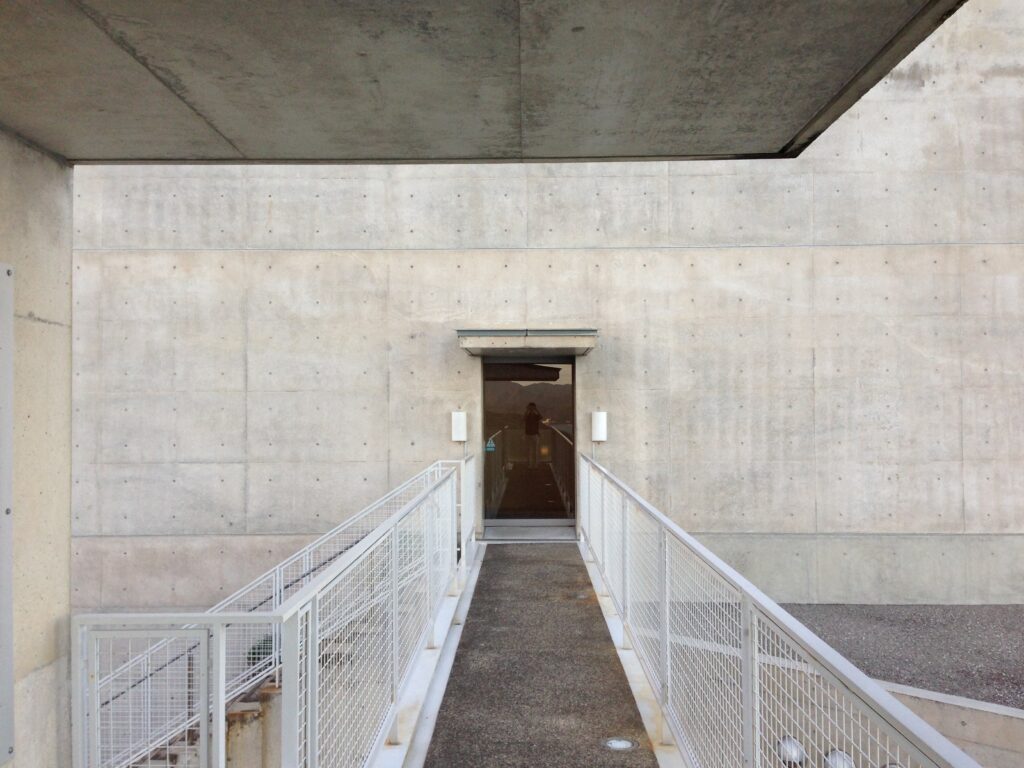
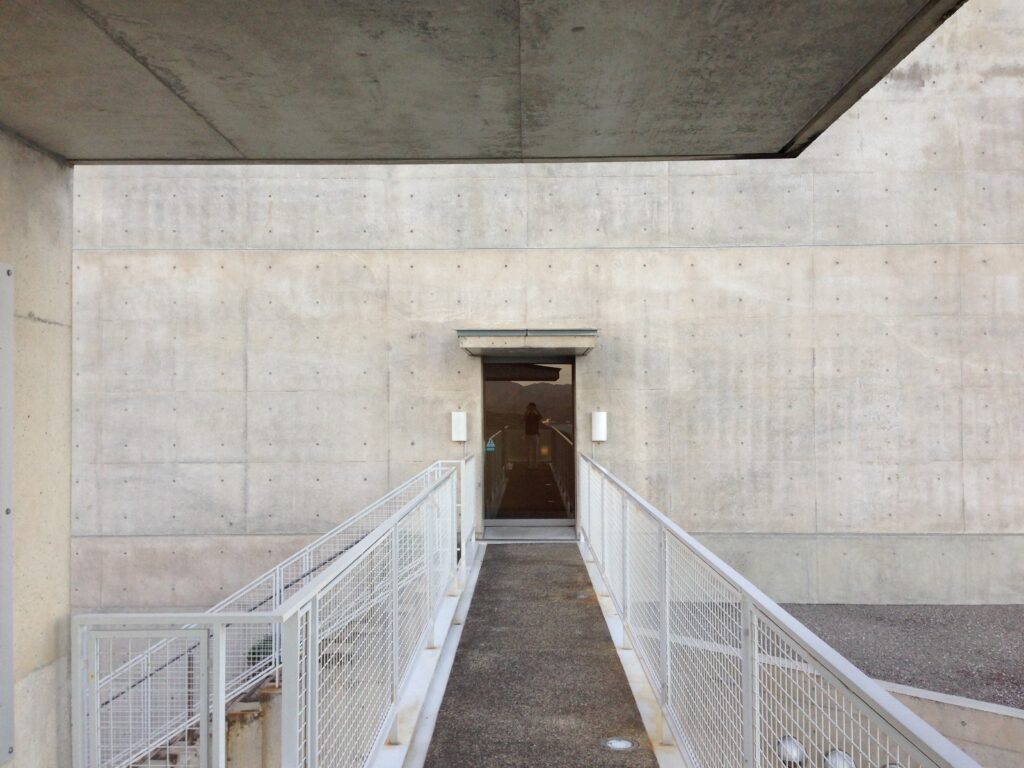
コンクリートに囲まれた空間の中央を、細い渡り廊下が一直線に伸びている。その先には小さな開口部があり、わずかに外の光が見える。
ここでも目的地を一度に見せることはない。壁に囲まれた場所から光の方向へ歩くことで、身体が自然とその先へ導かれていく。建築の中を移動することそのものが、一つの演出になっている。
A narrow bridge extends in a straight line through a space enclosed by concrete. At its end, a small opening reveals only a fragment of daylight.
Once again, the destination is not immediately revealed. Walking from an enclosed space toward the light naturally draws the body forward. Movement through the architecture itself becomes part of the experience.
6.額縁の中に現れる大阪湾
Osaka Bay Framed by Concrete
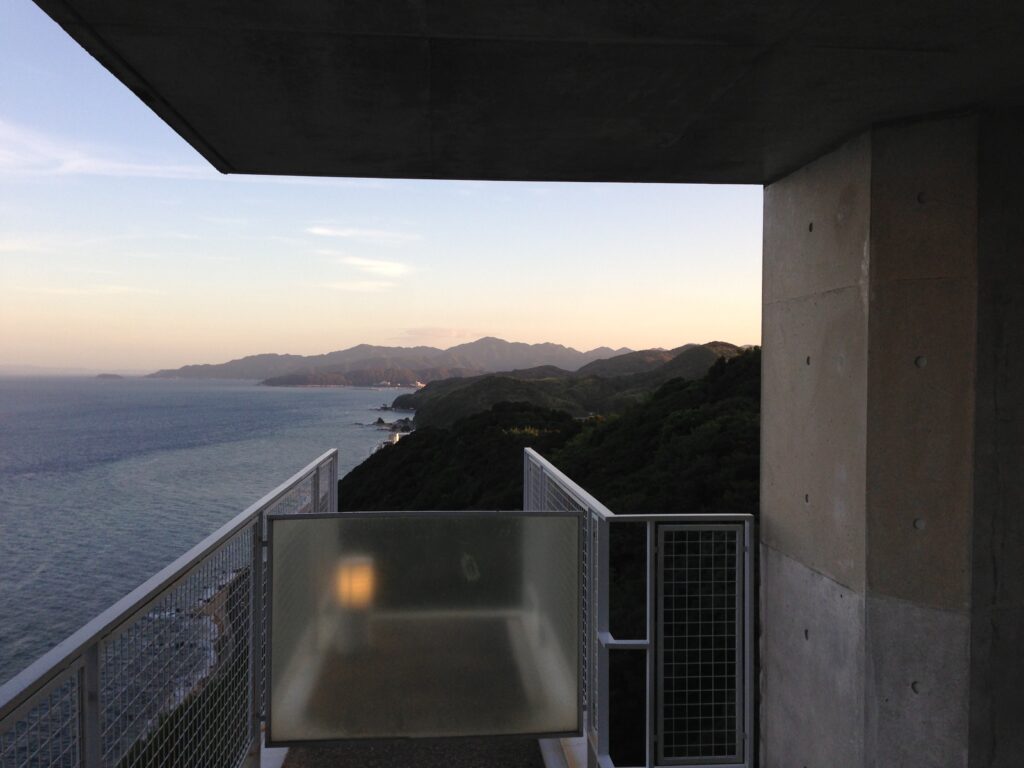
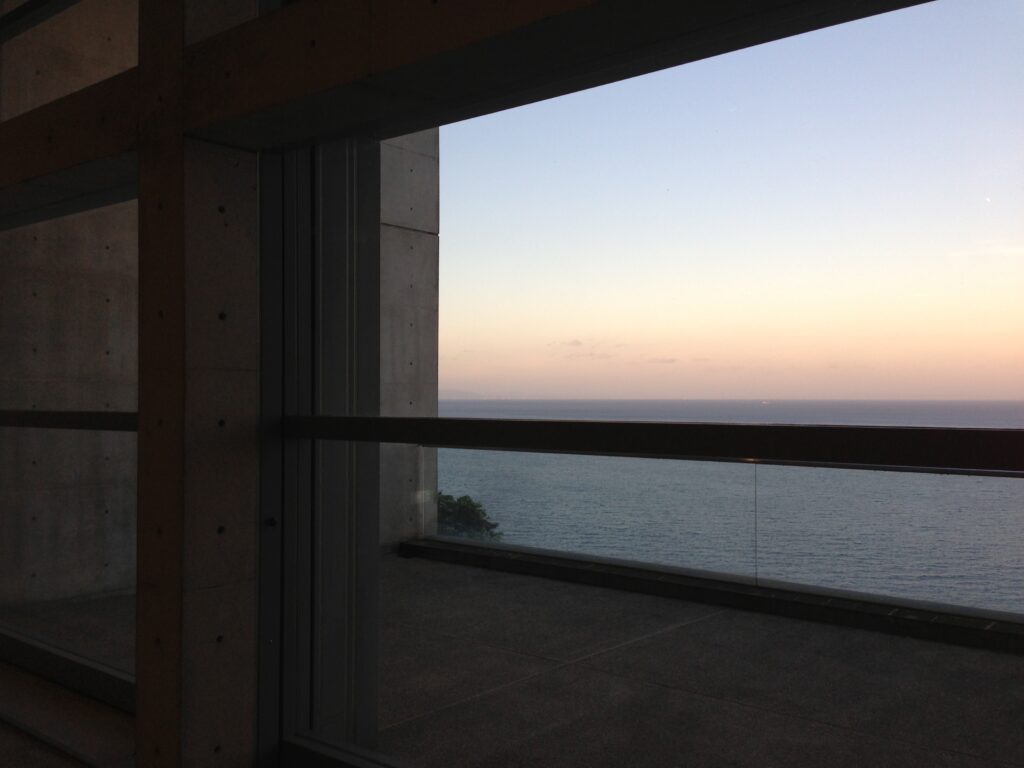
通路を抜けると、コンクリートの大きな開口の向こうに海と淡路島の地形が現れる。まさに風景を額縁の中へ収めたような場所だった。公式サイトでも、窓の外に広がる景色を「一枚の絵」のように切り取ることが、この建築の特徴として紹介されている。
風景そのものは建築がつくったものではない。しかし壁の位置や開口部の大きさを決めることで、どのようにその風景と出会うかは建築によってつくることができる。TOTOシーウィンド淡路では、そのことが非常に分かりやすく体験できた。
Emerging from the passage, the sea and the landscape of Awaji Island appear through a large opening in the concrete. The view feels almost as though it has been placed inside a picture frame.
The landscape itself was not created by the architecture. Yet by determining the position of the walls and the dimensions of the opening, architecture can determine how we encounter that landscape. At TOTO Seawind Awaji, this relationship between building and view can be experienced with remarkable clarity.
7.内と外の境界が曖昧になる
Where Interior and Exterior Begin to Blur
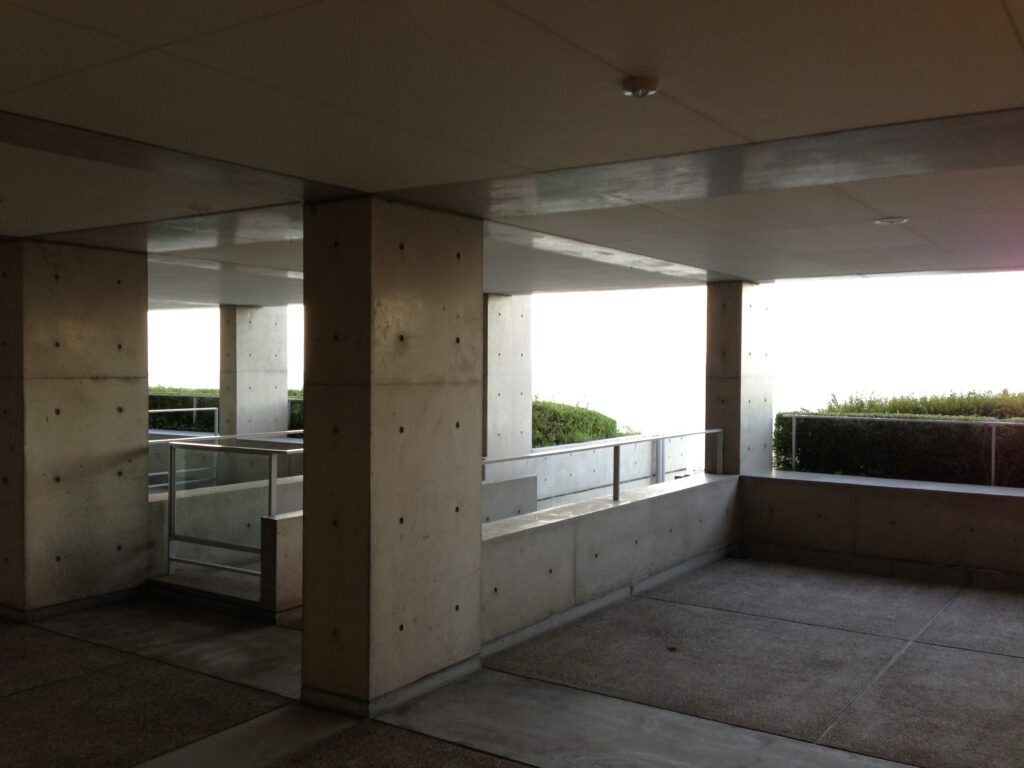
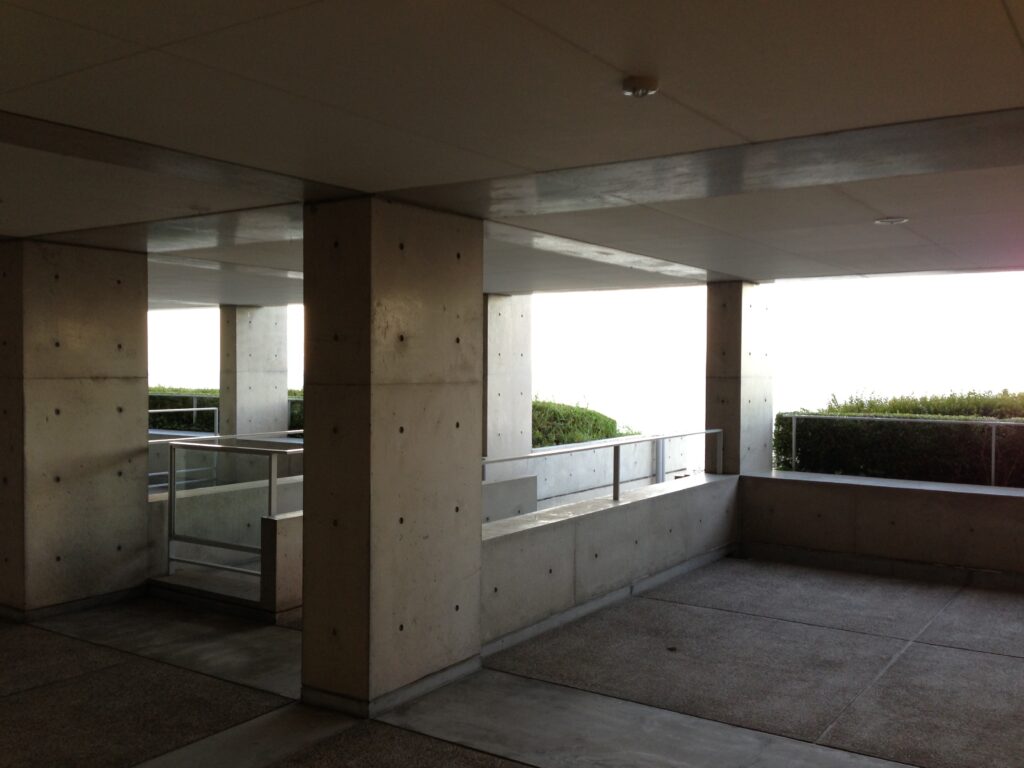
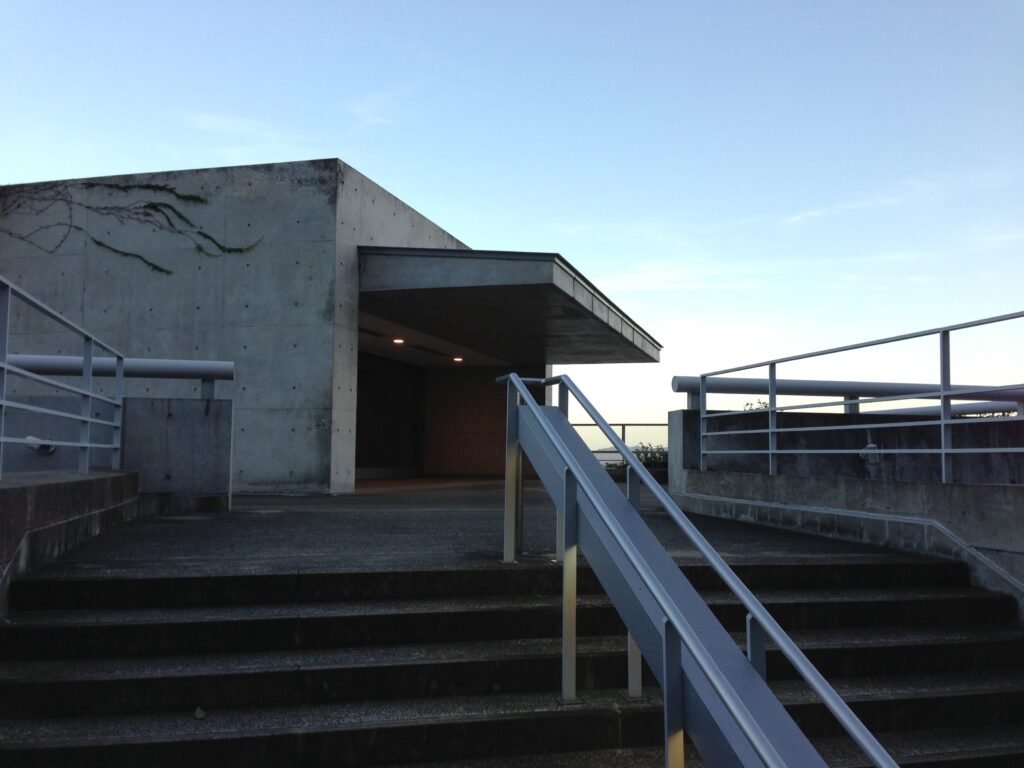
半屋外のような空間へ出ると、コンクリートの柱と天井の向こうに緑と空が見える。完全な内部でもなければ、完全な外部でもない。その中間にいることで、風や気温、海から届く空気をより強く感じる。
安藤建築ではこうした「内でも外でもない場所」に何度も出会う。壁によって空間をつくりながら、その一部を自然へ開くことで、建築と環境の境界を曖昧にしていく。
Entering a semi-outdoor space, greenery and sky appear beyond concrete columns and the ceiling above. It is neither completely interior nor completely exterior. Standing in this intermediate space makes the wind, temperature, and air arriving from the sea feel more immediate.
I have encountered these spaces that seem to exist between inside and outside in many of Ando’s buildings. Walls define the architecture, yet selective openings toward nature make the boundary between building and environment increasingly ambiguous.
8.海と並んで歩く
Walking Beside the Sea
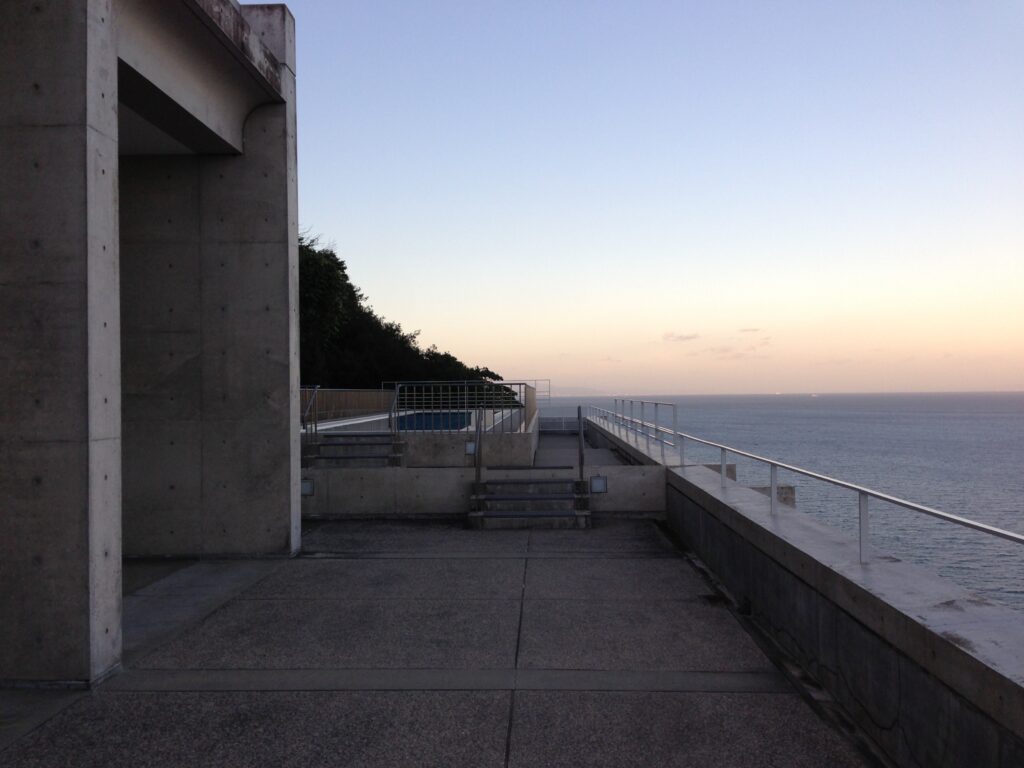
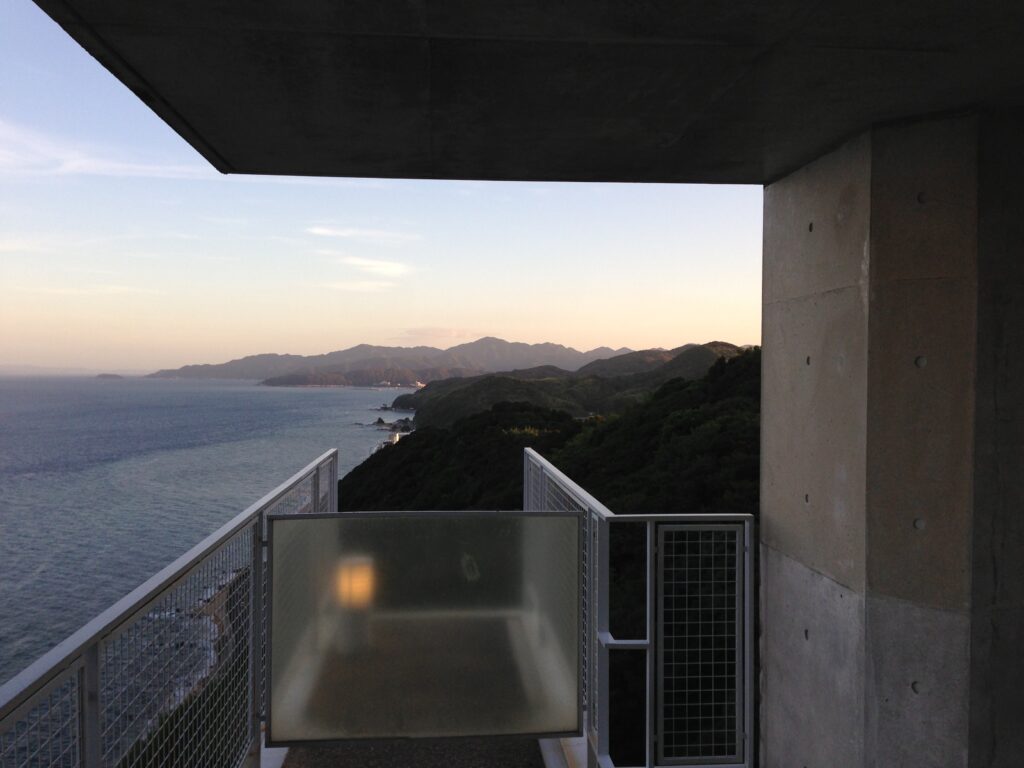
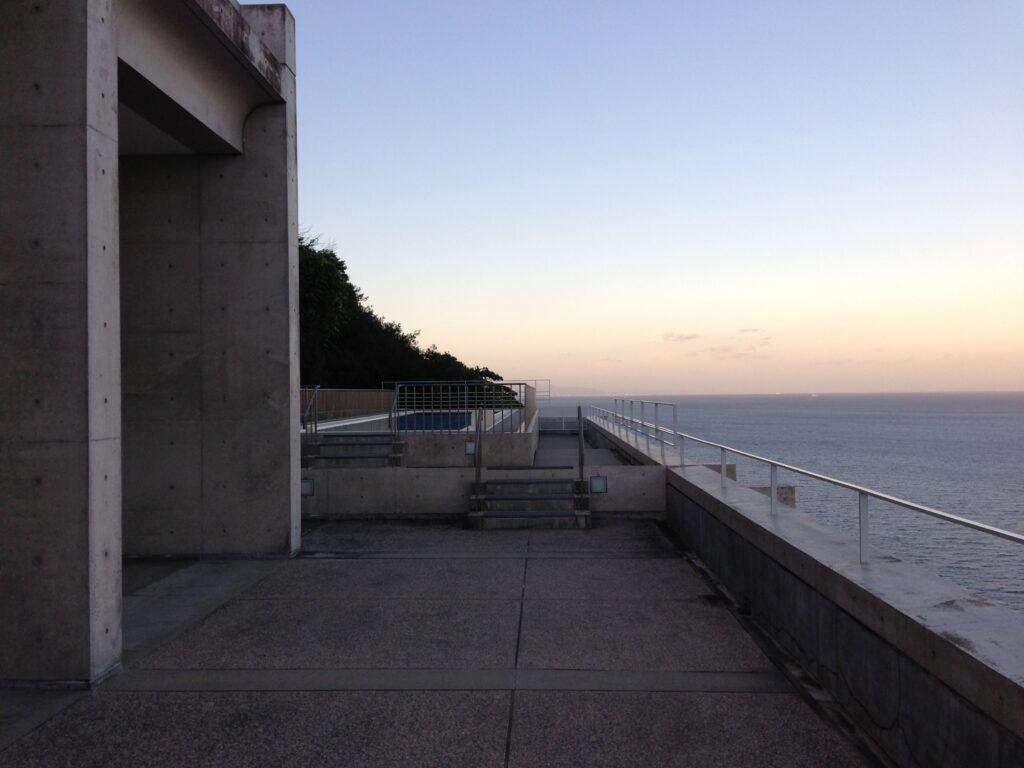
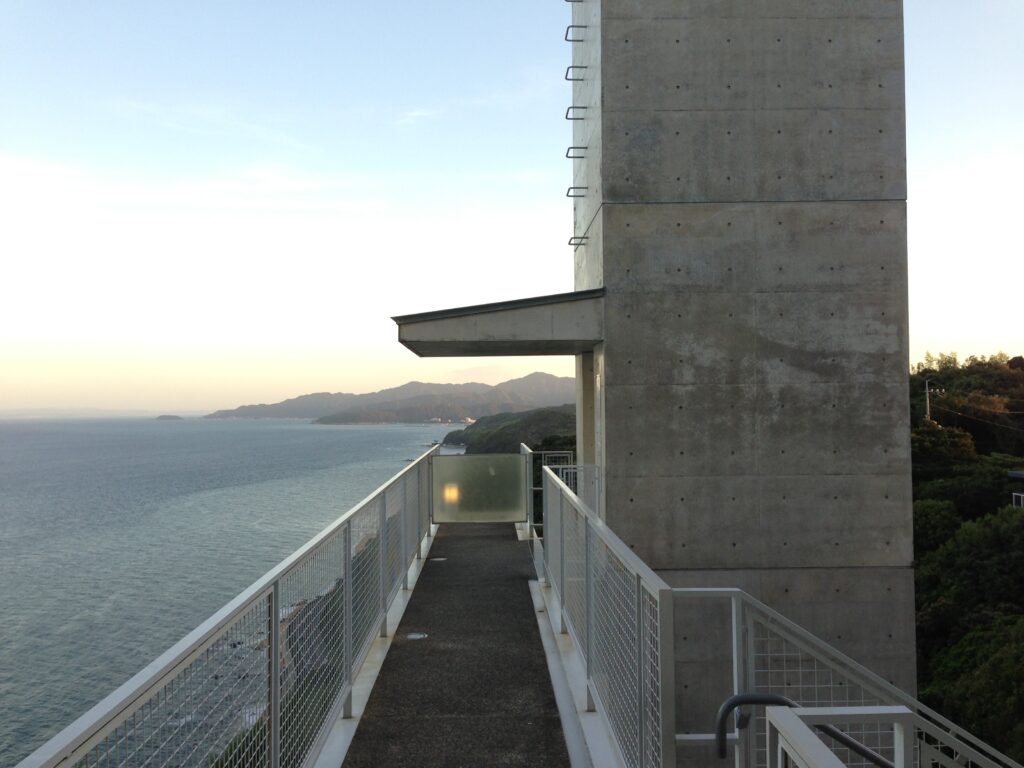
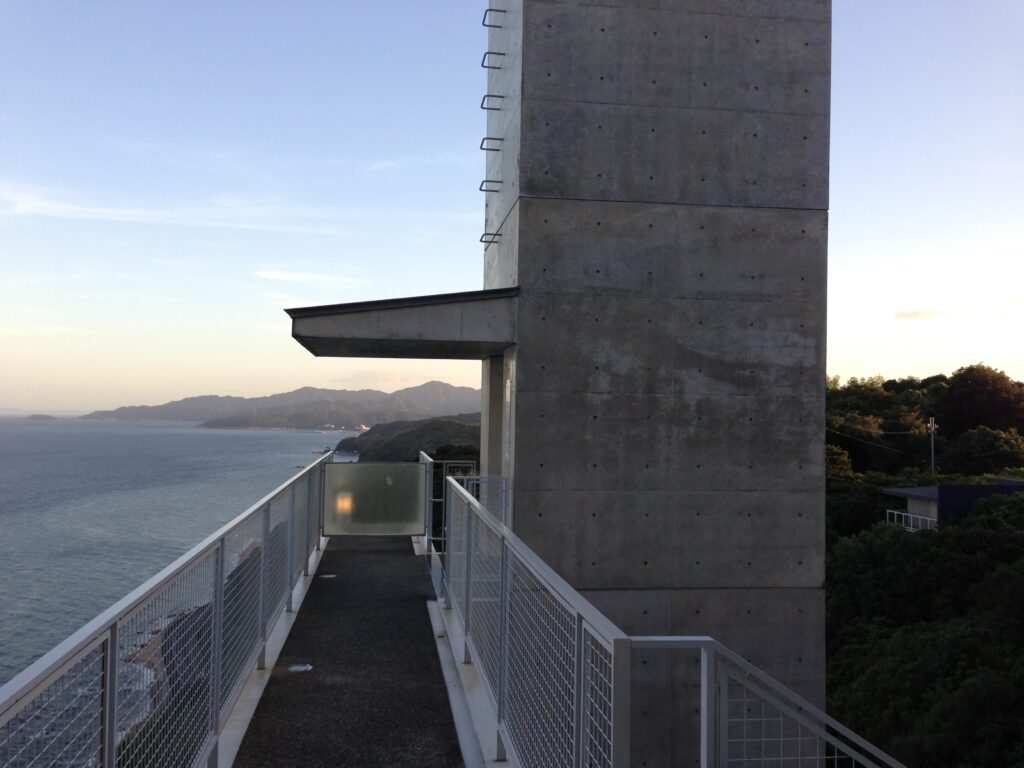
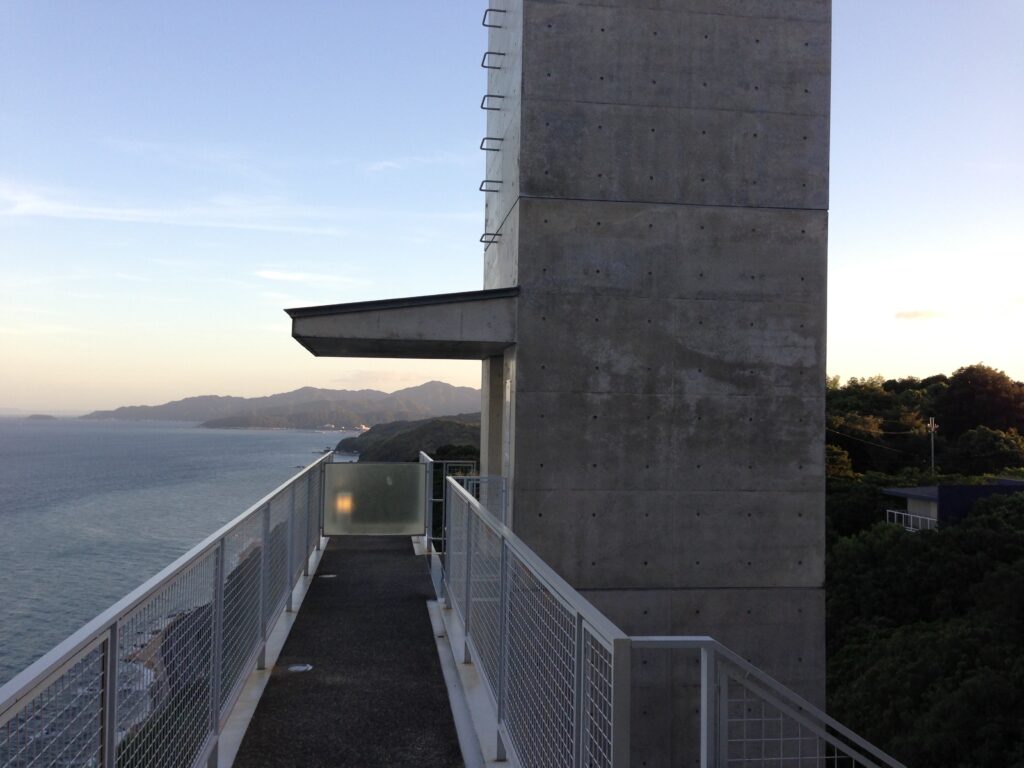
海に面したテラスへ出ると、それまで壁によって断片的に見えていた大阪湾が一気に広がる。ここではもう海を隠すものはない。水平線と並ぶように細長い通路が伸び、歩く身体の横を海がずっとついてくる。
閉じた場所を歩いてきたからこそ、この開放感が強く感じられる。最初からこの風景だけを見せられていたら、ここまで印象には残らなかったかもしれない。
Stepping onto the terrace facing the water, Osaka Bay suddenly opens out in full. The sea that had previously appeared only in fragments is no longer obstructed. A long passage stretches parallel to the horizon, allowing the water to remain beside you as you walk.
The sense of openness is powerful precisely because of the enclosed spaces that came before it. Had this panorama been visible from the beginning, it might not have remained in my memory so strongly.
9.上下に重なるコンクリート
Concrete Layered Across the Hillside
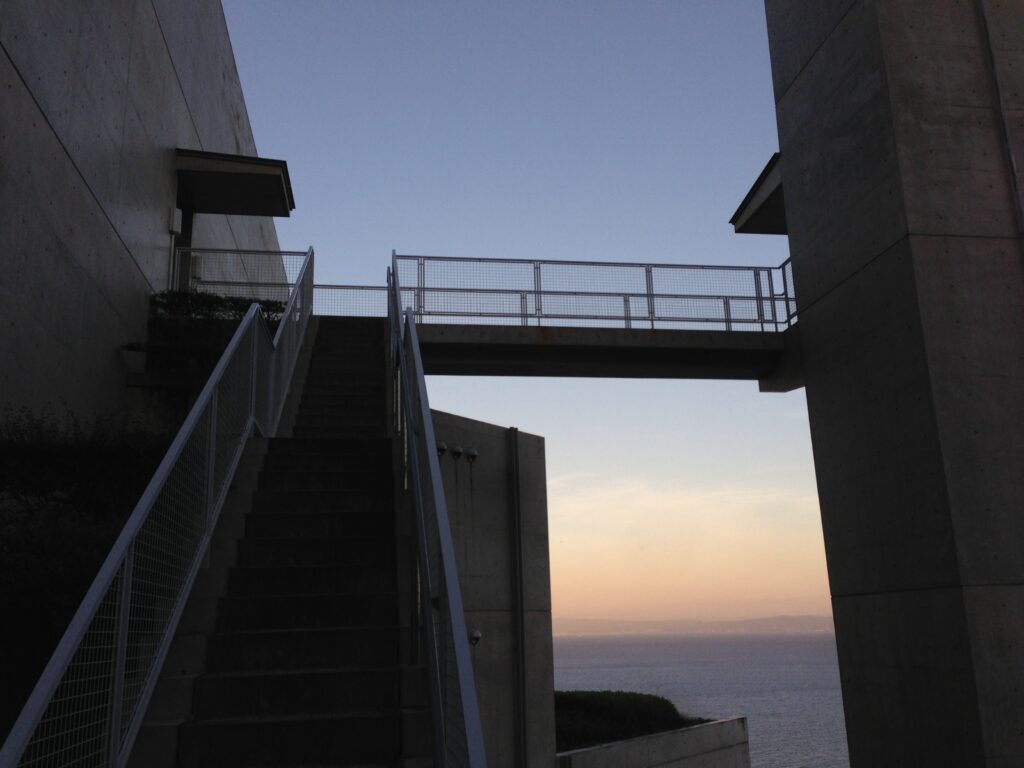
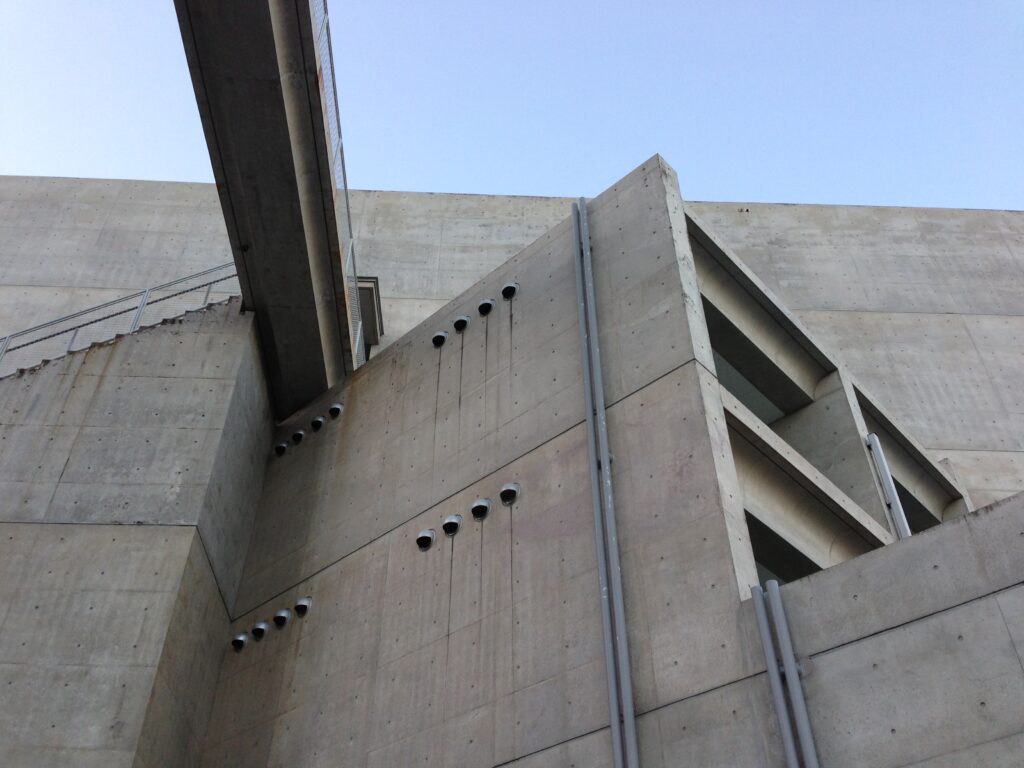
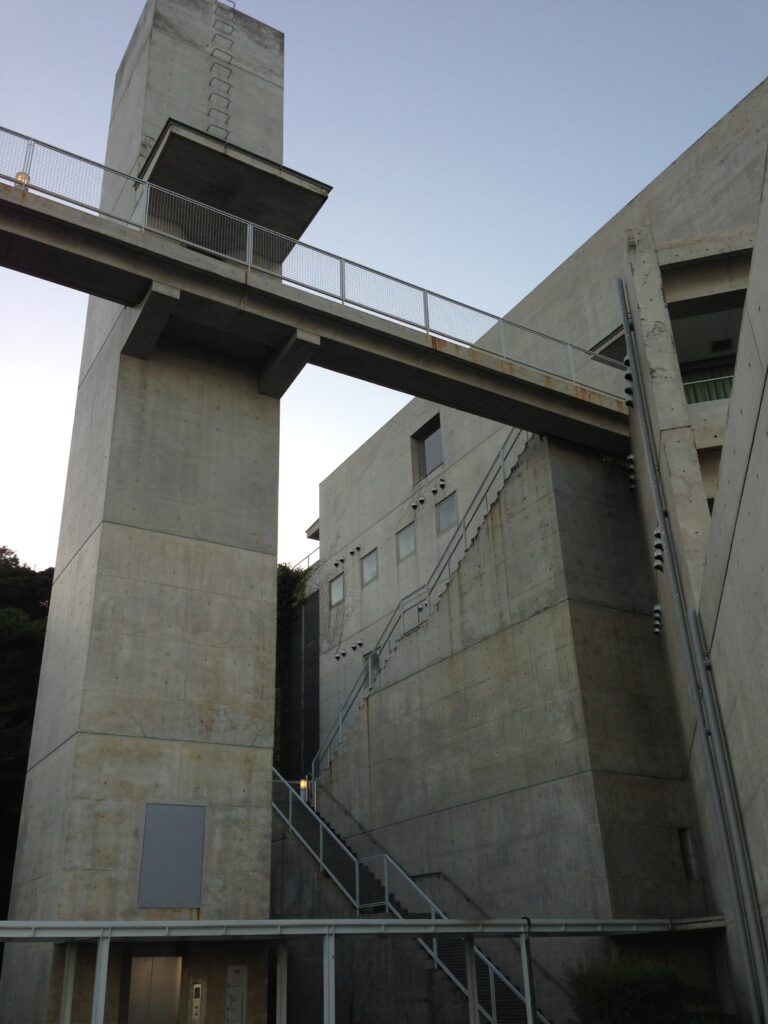
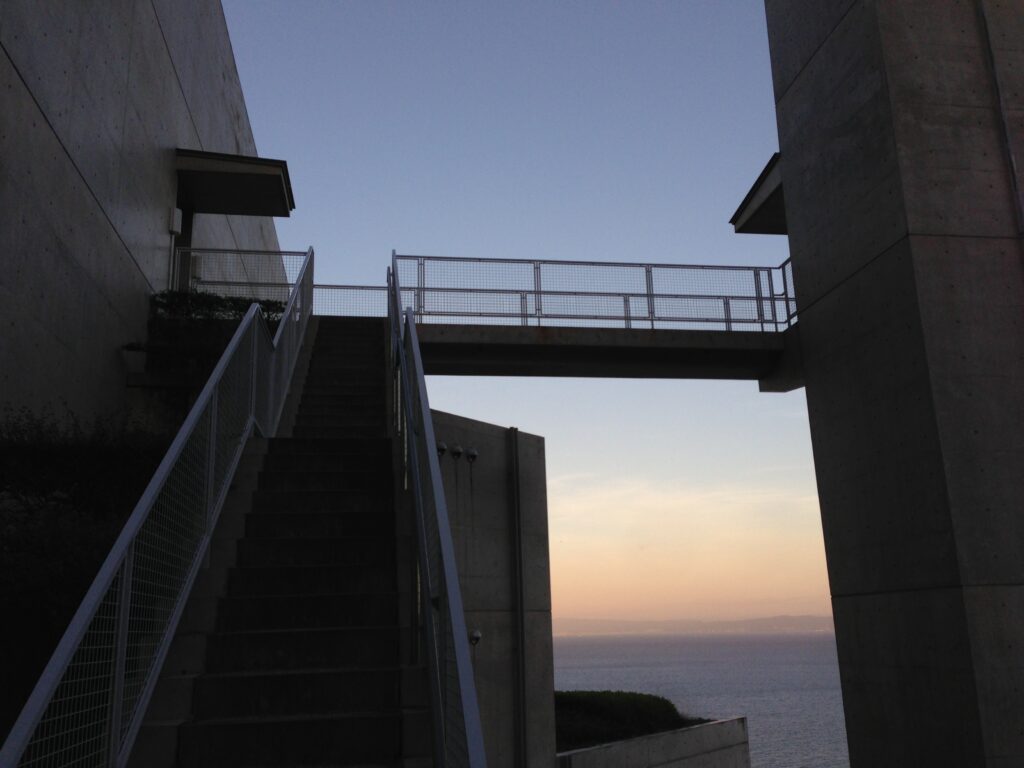
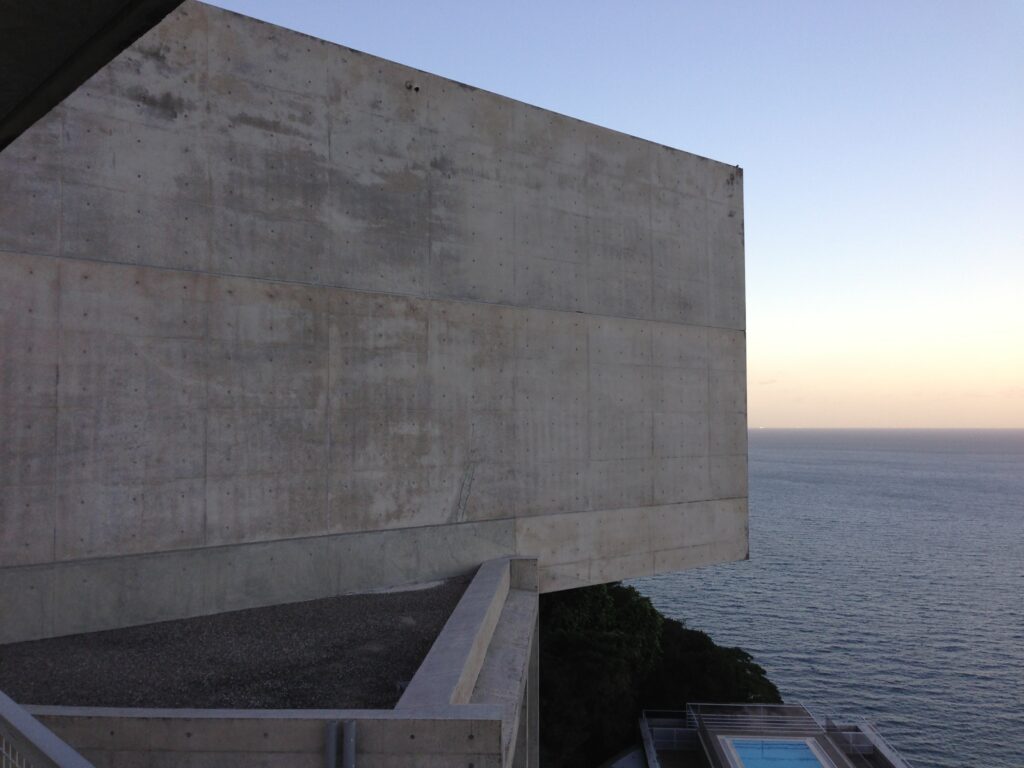
振り返ると、階段、渡り廊下、壁、柱が複数の高さで交差している。TOTOシーウィンド淡路は、平面だけでは理解しにくい建築だ。斜面に沿って上下へ移動することで、同じコンクリートの壁を異なる高さから何度も見ることになる。
建築を歩きながら少しずつ全体像を理解していく感覚は姫路文学館にもあったが、ここでは地形そのものがその体験に加わっている。斜面と建築が一体となって、人の動きをつくっているように感じた。
Looking back toward the building, stairs, bridges, walls, and columns intersect at different heights. TOTO Seawind Awaji is difficult to understand as a flat plan. Moving vertically along the hillside allows the same concrete surfaces to be experienced repeatedly from different levels.
I felt something similar while walking through the Himeji City Museum of Literature, but here the terrain itself becomes part of the sequence. Architecture and hillside seem to work together to determine how the body moves.
10.海が消える廊下
A Corridor Where the Sea Disappears
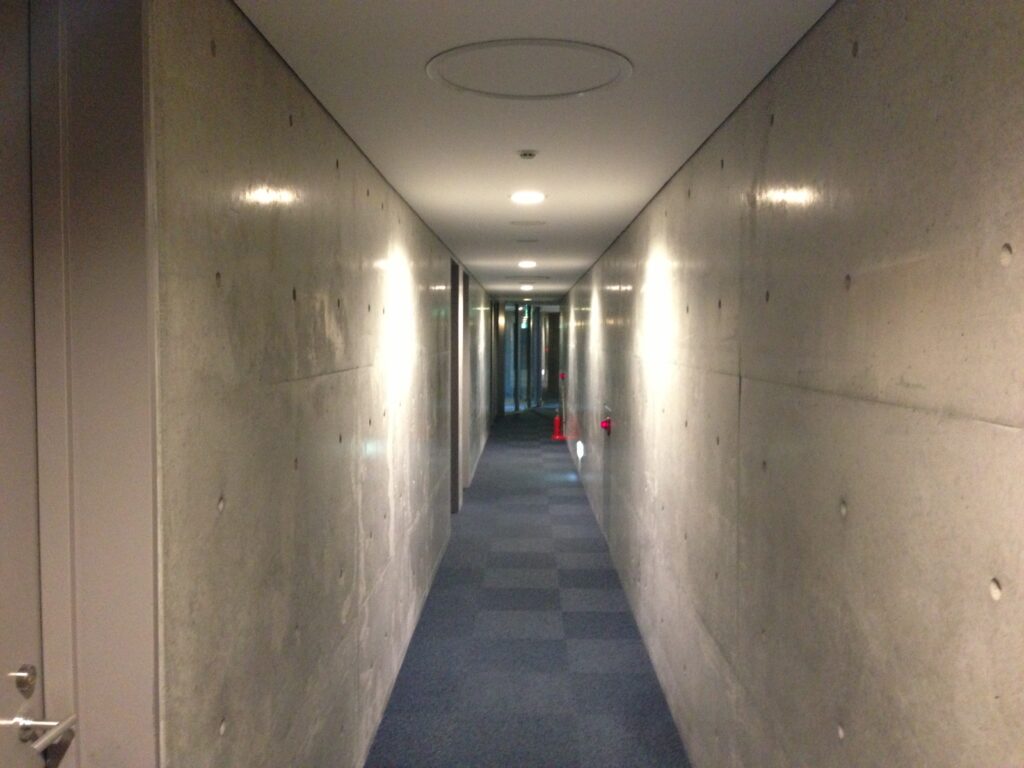
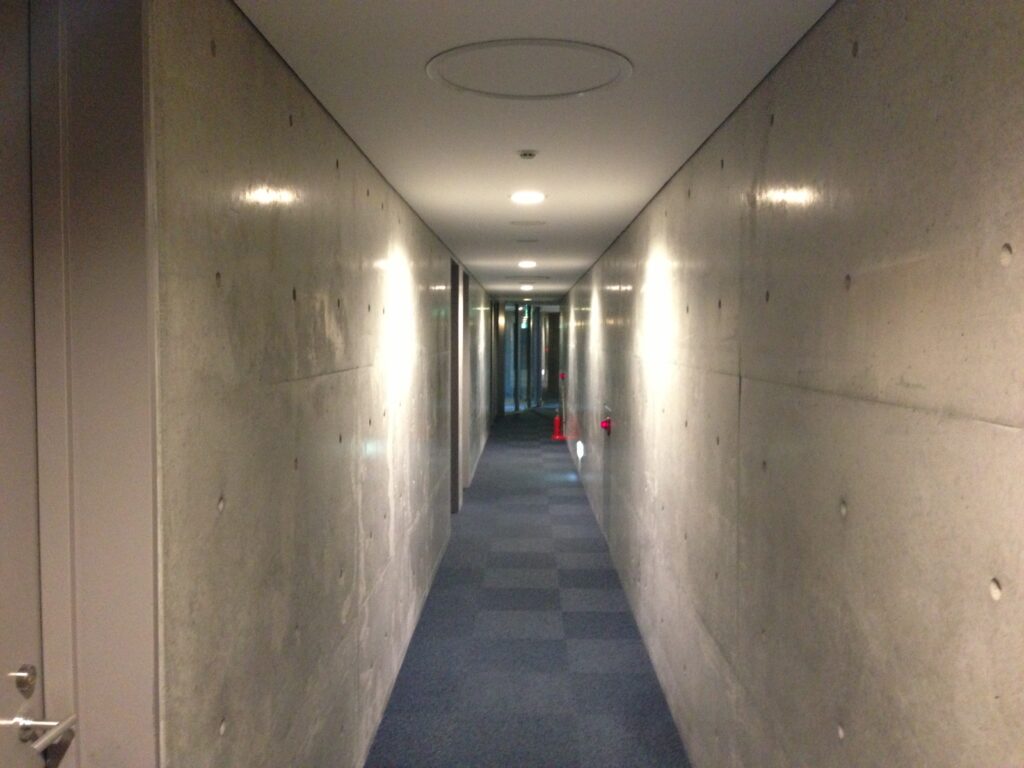
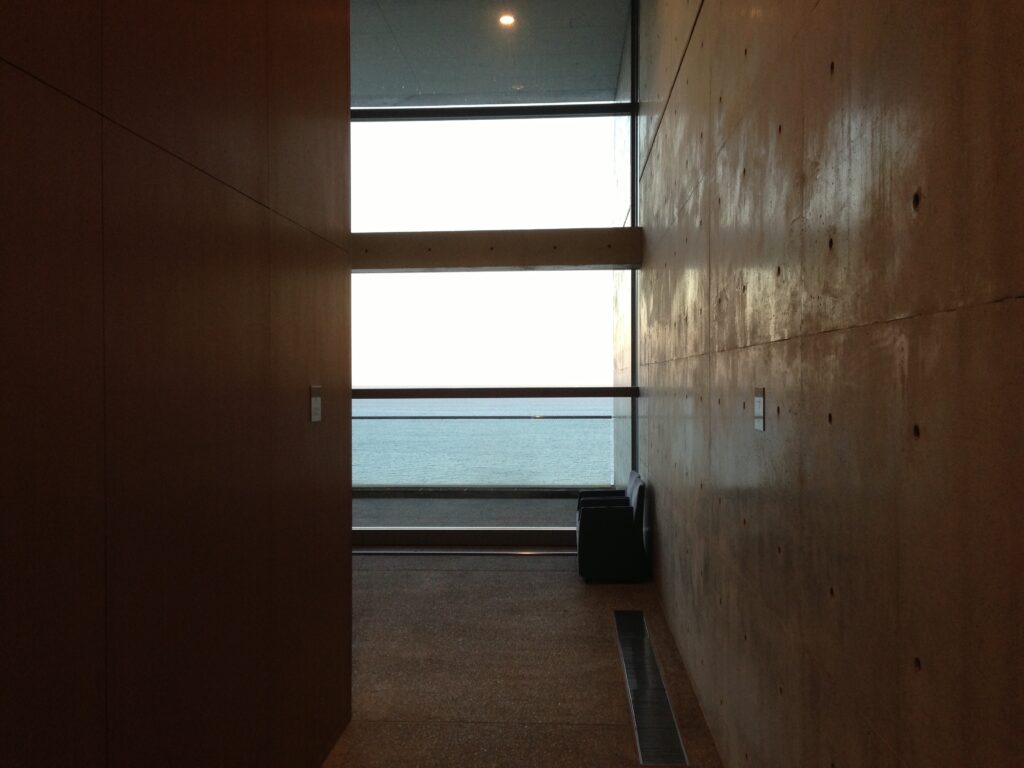
客室へ向かう廊下に入ると、それまで存在感を放っていた海が完全に消える。両側をコンクリートに囲まれた細長い空間が続き、視線は正面の一点へ集中する。
この切り替えが面白い。海辺のリゾートだからといって、建築のすべてを眺望に従属させない。閉じた場所と開いた場所を明確につくることで、滞在中の体験にリズムが生まれている。
Entering the corridor leading toward the guest rooms, the sea that had dominated the experience suddenly disappears completely. A long, narrow space enclosed by concrete directs the eye toward a single point ahead.
This transition is fascinating. Even though this is a seaside resort, the entire building is not subordinated to the view. By clearly distinguishing enclosed and open spaces, the architecture gives rhythm to the experience of staying here.
11.暗闇の先にある海
The Sea at the End of Darkness
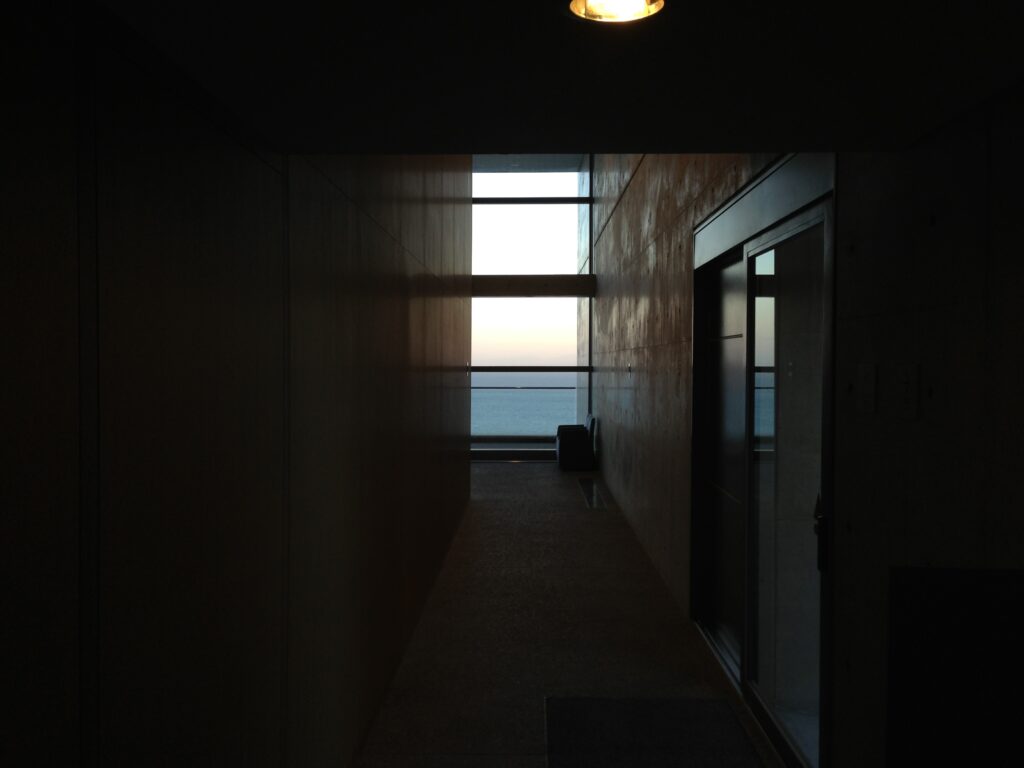
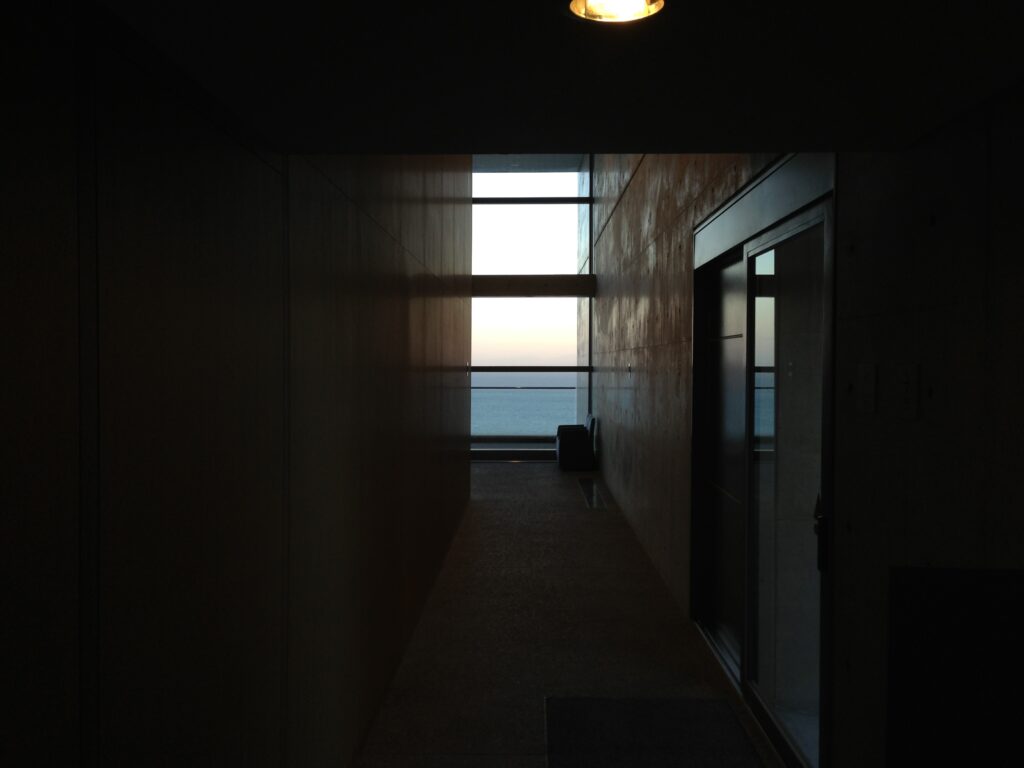
さらに暗い通路を進むと、その突き当たりに小さく海が見える。明るい大阪湾と暗い内部とのコントラストによって、海そのものが光源のようにも感じられる。
ここまで来ると、この建築が海を「眺めるためのホテル」ではないことが分かってくる。海を見せたり隠したりしながら、光、距離、身体の向きを変化させることで、海の存在そのものを体験させている。
Continuing through a darker passage, a small glimpse of the sea eventually appears at its end. The contrast between the bright surface of Osaka Bay and the shadowed interior makes the water itself seem almost like a source of light.
By this point, it becomes clear that TOTO Seawind Awaji is not simply a hotel designed for looking at the ocean. By revealing and concealing the sea, and by changing light, distance, and the direction of the body, the architecture makes the presence of the sea itself something to be experienced.
12.部屋の中にも切り取られた風景
A Landscape Framed Inside the Room
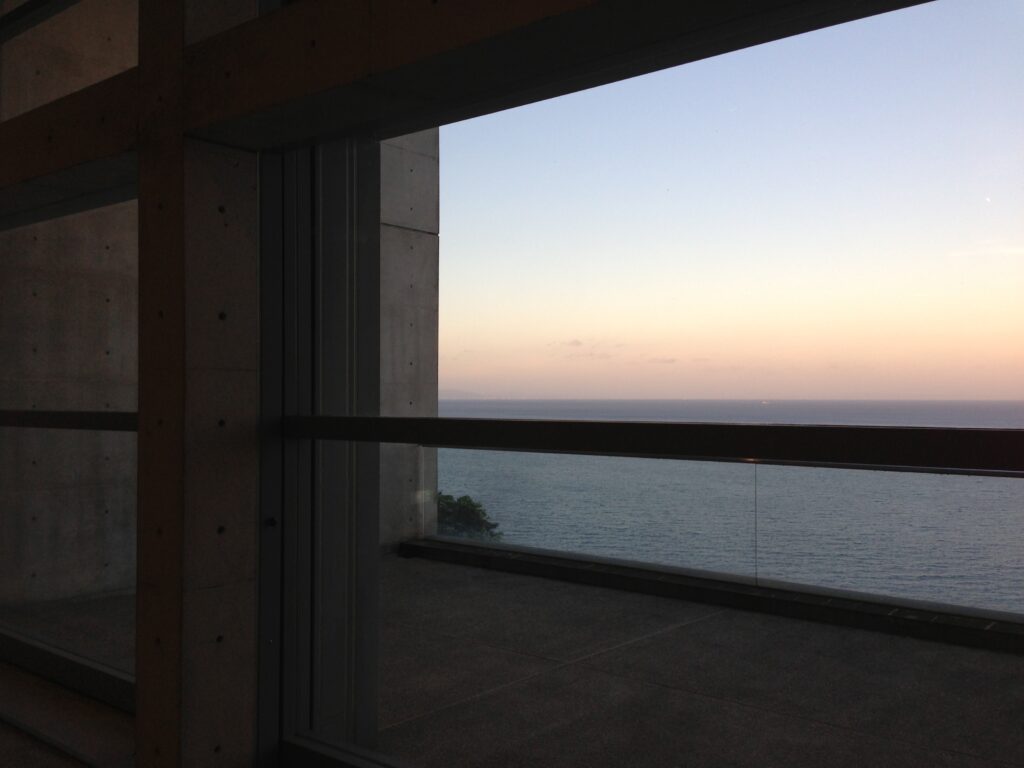
室内から外を見ると、ここでも海は窓というフレームによって切り取られている。建築の外を歩いていたときとは違い、静かな室内から見ることで風景との距離感も変わる。
TOTOシーウィンド淡路の面白さは、こうした体験を数十分で終える必要がないことにある。夕方、夜、朝と、光の変化を同じ建築の中で見続けることができる。「泊まる」という行為によって、建築と過ごす時間そのものが長くなる。
Seen from inside a guest room, the sea is once again framed by architecture. The relationship with the landscape feels different here from the experience of walking through the exterior spaces. From the quiet interior, the distance between the body and the sea changes once more.
This is where staying overnight at TOTO Seawind Awaji becomes especially meaningful. There is no need to experience the architecture within the limited duration of a conventional visit. Evening, night, and morning allow the same landscape and the same building to be experienced under completely different light.
13.建築に泊まるという体験
Staying Inside Architecture
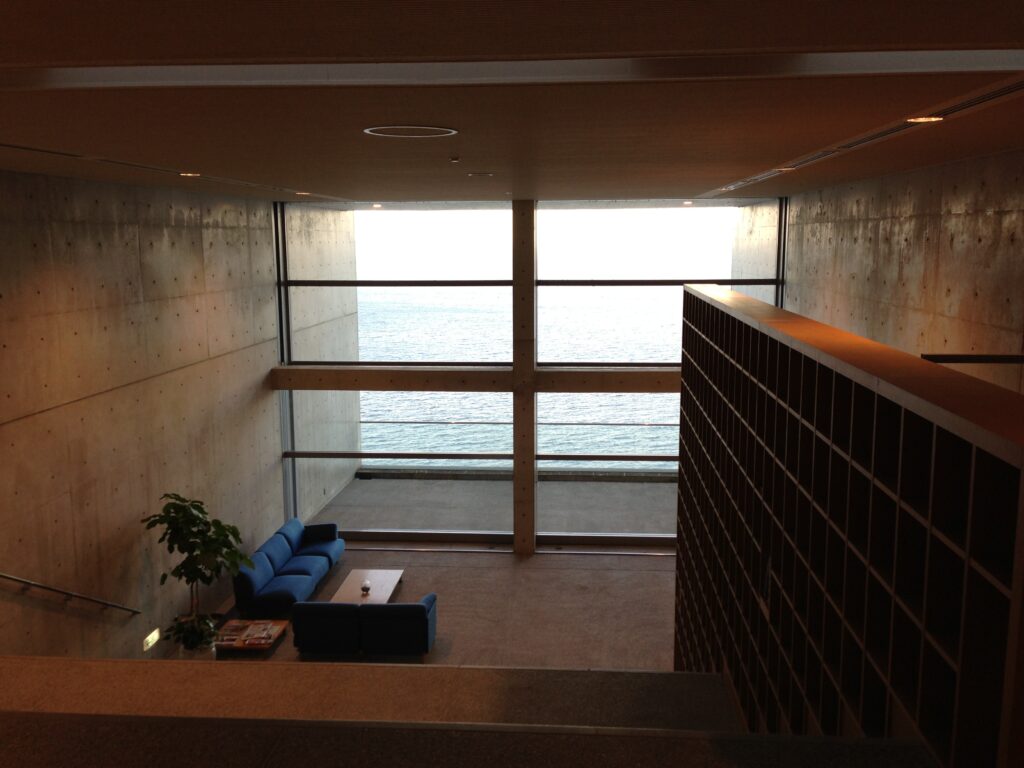
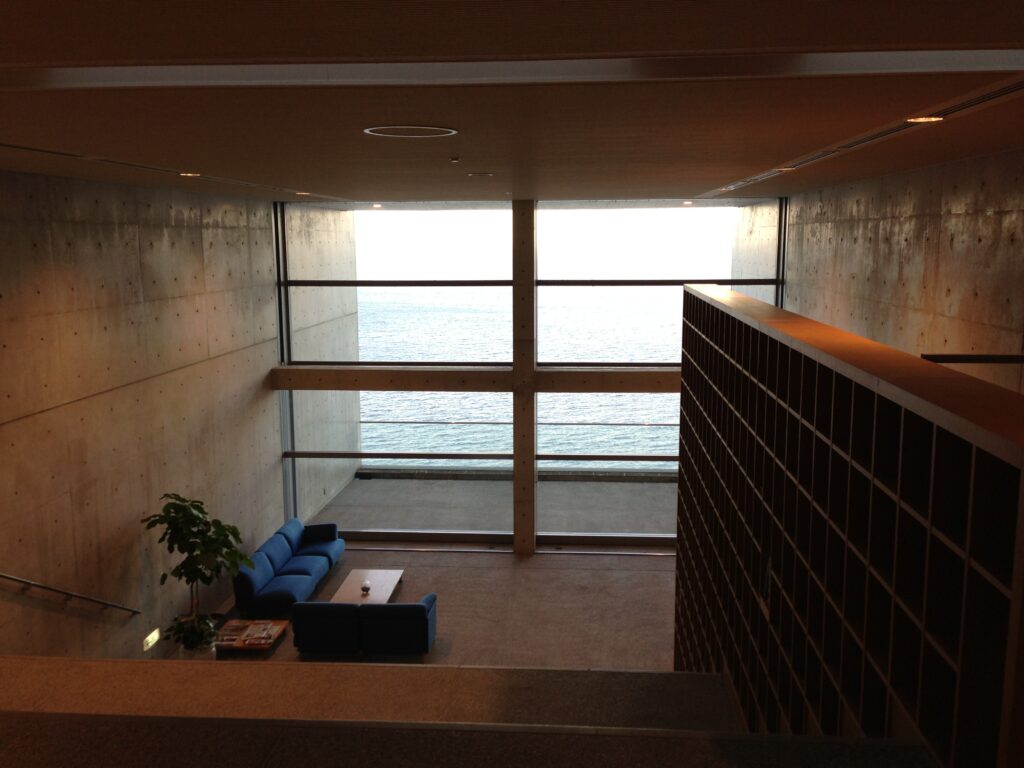
ロビーや共用空間でも、コンクリート、木、ガラス、その向こうの海が重なって見える。美術館であれば閉館時間になれば建物を離れる。しかし宿泊施設では、日が沈んでも建築の中にいることができる。
人が少なくなった夜の廊下を歩き、朝になればまた違う光の中で同じ場所を見る。建築を作品として「鑑賞する」のではなく、その中で生活に近い時間を過ごす。この違いは思っていた以上に大きかった。
In the lobby and shared spaces, concrete, wood, glass, and the sea beyond overlap within the same view. In a museum, closing time eventually requires you to leave the architecture. At an accommodation facility, you remain inside even after daylight disappears.
You can walk through quiet corridors after other visitors have gone, then return to the same spaces the following morning under completely different light. Rather than simply observing architecture as an object, you spend something closer to everyday time within it. That difference was greater than I had expected.
14.光へ向かう大階段
A Grand Staircase Toward the Light
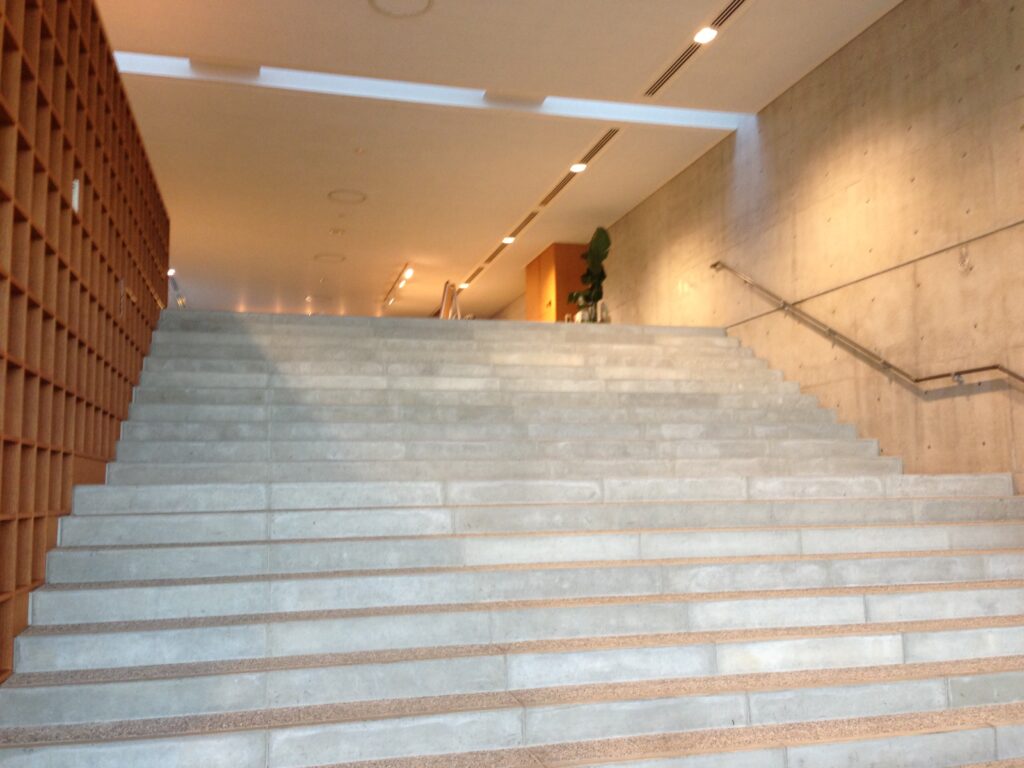
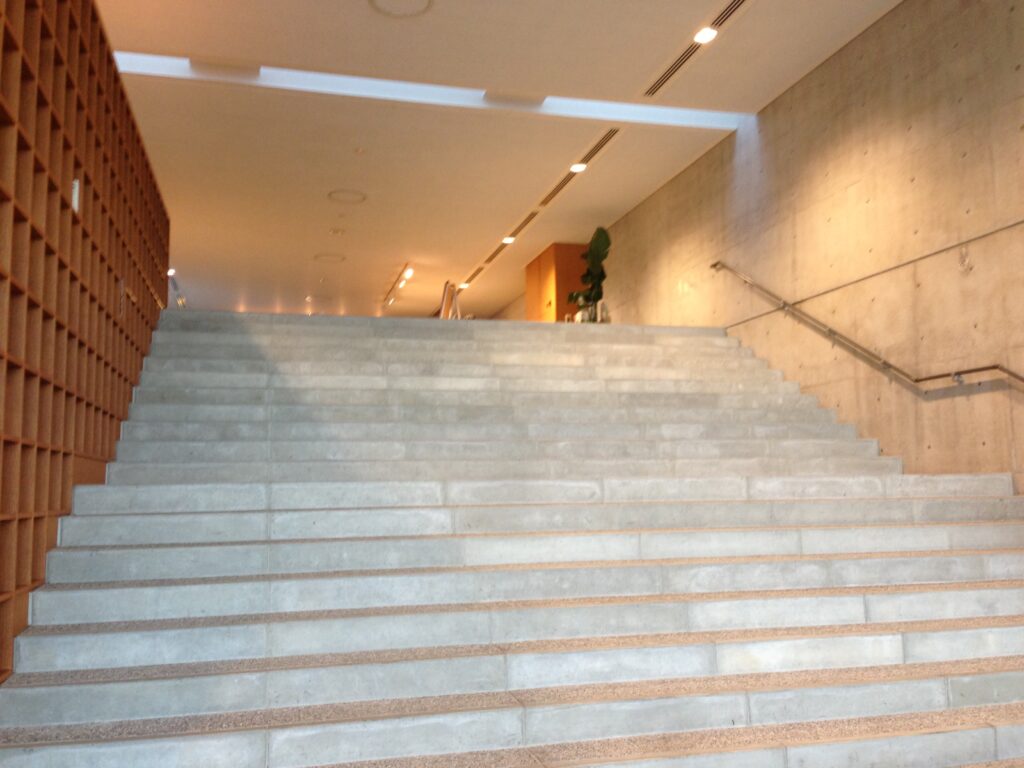
内部には、上階へ向かって大きく伸びる階段がある。コンクリートに囲まれた階段の上部から光が入り、自然と視線が上へ導かれる。
階段は単なる上下移動の設備ではなく、建築の中で身体の方向を変えるための場所になっている。海を横方向に眺めていた身体が、ここでは光を追うように上へ向かう。水平と垂直、その切り替えもこの建築を歩く面白さの一つだった。
Inside the building, a large staircase rises toward the upper levels. Light enters from above the concrete enclosure, naturally drawing the eye upward.
The staircase is not merely equipment for vertical circulation. It changes the direction of the body within the architecture. After looking horizontally toward the sea, the body is now directed upward toward the light. The transition between horizontal and vertical movement is another part of the pleasure of walking through this building.
My Impression
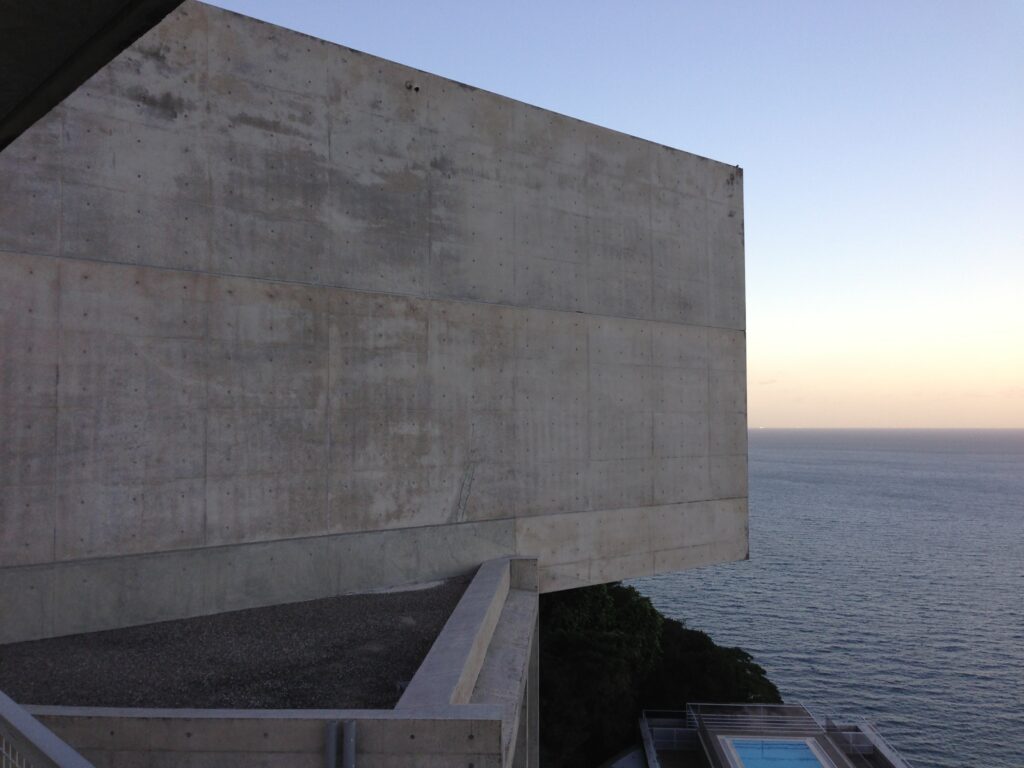
TOTOシーウィンド淡路で最も印象に残ったのは、これほど海の近くにある建築なのに、その海を簡単には見せてくれないことだった。コンクリートの壁に視界を遮られ、暗い通路を歩き、細い渡り廊下を進む。その先で突然大阪湾が現れるたびに、同じ海なのにまったく違う風景を見ているように感じた。
そしてこの建築には、実際に泊まることができる。夕方の海、暗くなった廊下、静かな夜、そして朝の光。短時間の建築見学ではなく、一日の時間の変化を安藤建築の中で経験できることは、TOTOシーウィンド淡路ならではの魅力だと思う。
海を見せるために大きな窓をつくるのではなく、海を隠し、切り取り、時には完全に消すことで、その存在を強く意識させる。建築が自然より前へ出るのではなく、建築を歩くことで自然を改めて発見する。TOTOシーウィンド淡路は、淡路島の海と地形、そして安藤忠雄の建築が一体になった「泊まることで完成する建築」だった。
What stayed with me most strongly at TOTO Seawind Awaji was the fact that, despite being so close to the sea, the architecture never allows you to see it too easily. Concrete walls block the view, dark passages conceal the landscape, and narrow bridges guide you forward. Each time Osaka Bay suddenly reappeared, the same sea somehow seemed like an entirely different landscape.
And this is architecture in which you can actually stay overnight. The sea in the evening, concrete corridors after dark, the stillness of the night, and the light of the following morning all become part of the architectural experience. Spending an entire cycle of changing time within a Tadao Ando building offers something that a short architectural visit simply cannot provide.
Rather than creating enormous windows simply to display the sea, the architecture hides it, frames it, and sometimes makes it disappear completely. Instead of placing architecture ahead of nature, it uses the act of moving through architecture to make us rediscover nature. TOTO Seawind Awaji felt like an architecture in which the sea, the terrain of Awaji Island, and Tadao Ando’s concrete become inseparable—an architecture that can only be fully experienced by staying within it.
Archive Gallery
本文では紹介しきれなかった写真を掲載しています。
建築を歩きながら出会った光や空間、その場の空気を記録したアーカイブです。
Additional photographs from this visit.
A collection of details, perspectives, and moments that complement the main article.