【安藤忠雄建築】西宮市貝類館|海辺に立つ一枚の帆から、貝の世界へ入る(Nishinomiya Shell Museum | From a Sail by the Sea into the World of Shells)
建築概要
Architecture Overview
- 名称:西宮市貝類館
- 設計:安藤忠雄
- 所在地:兵庫県西宮市西宮浜
- 竣工:1999年5月7日
- 用途:博物館
- Name:Nishinomiya Shell Museum
- Architect:Tadao Ando
- Completed:May 7, 1999
- Location:Nishinomiya-hama, Nishinomiya, Hyogo, Japan
- Type:Museum
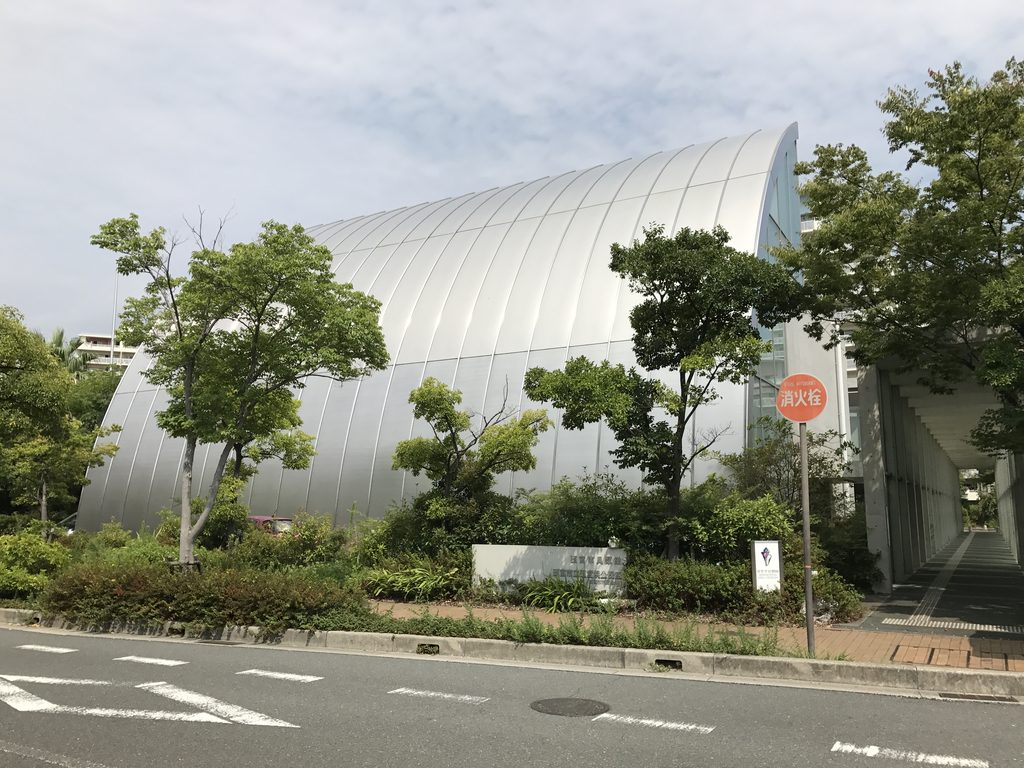
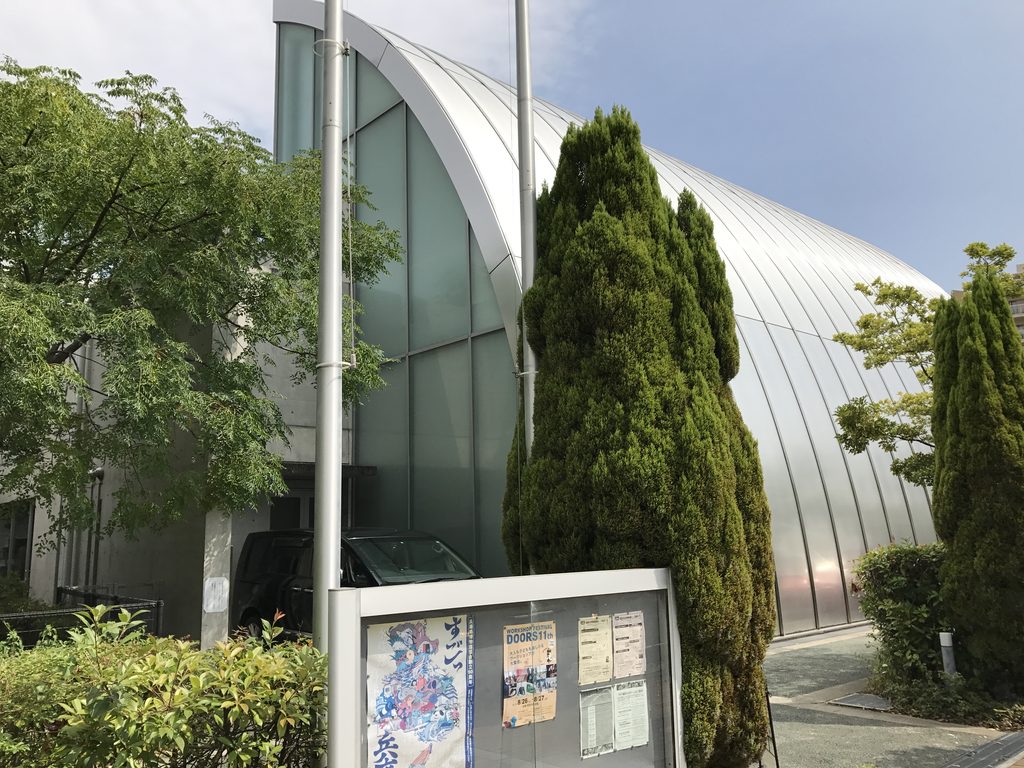
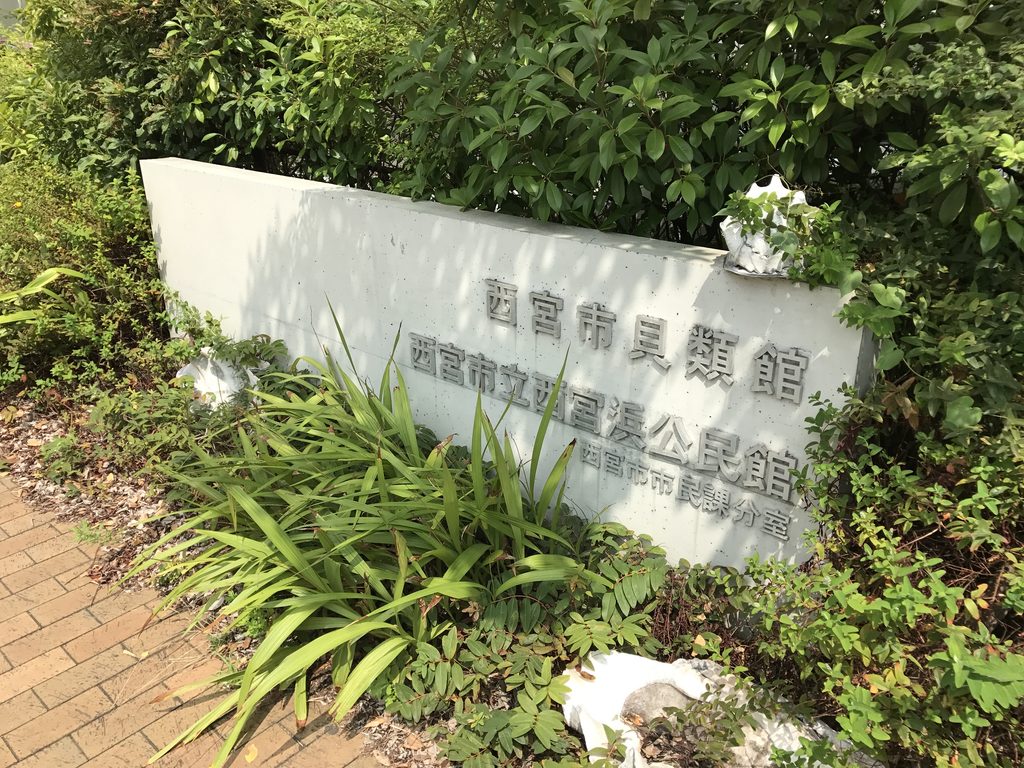
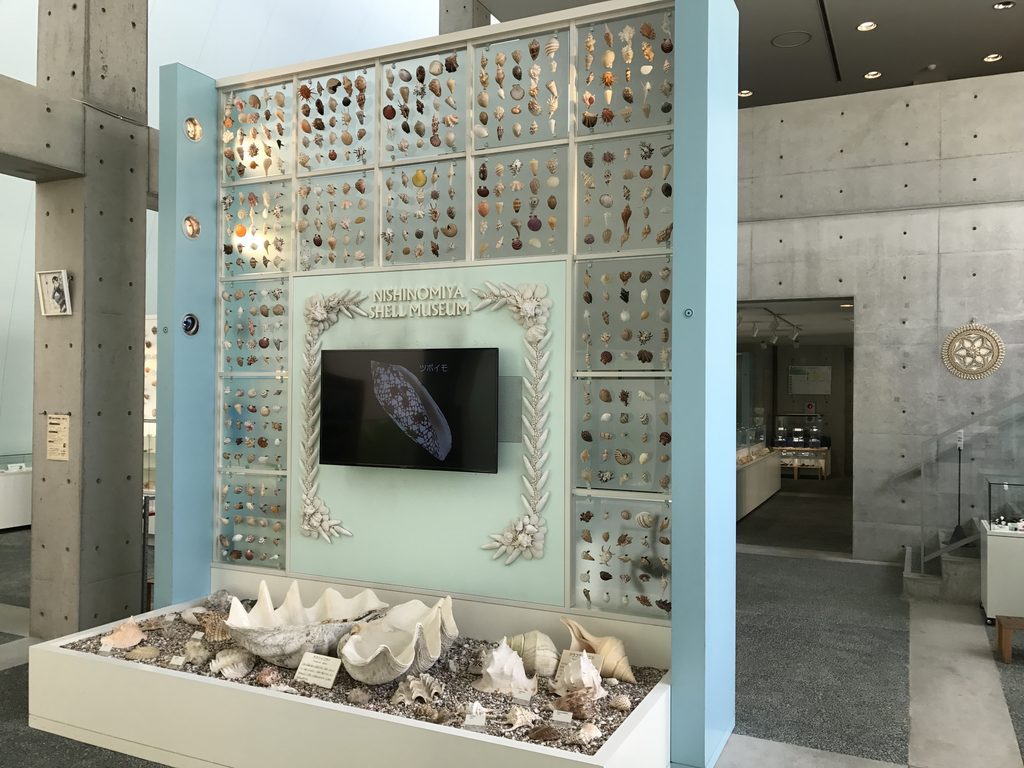
西宮市貝類館は、西宮浜の海に近い場所に建つ安藤忠雄設計の貝類専門博物館である。日本の貝類学の礎を築いた黒田徳米博士の学術資料を核として約10万点の標本を所蔵し、館内では約2,000種、5,000点の貝を展示している。建物はヨットの帆をイメージした外観を持ち、内部は海の中を思わせるブルーで統一されている。
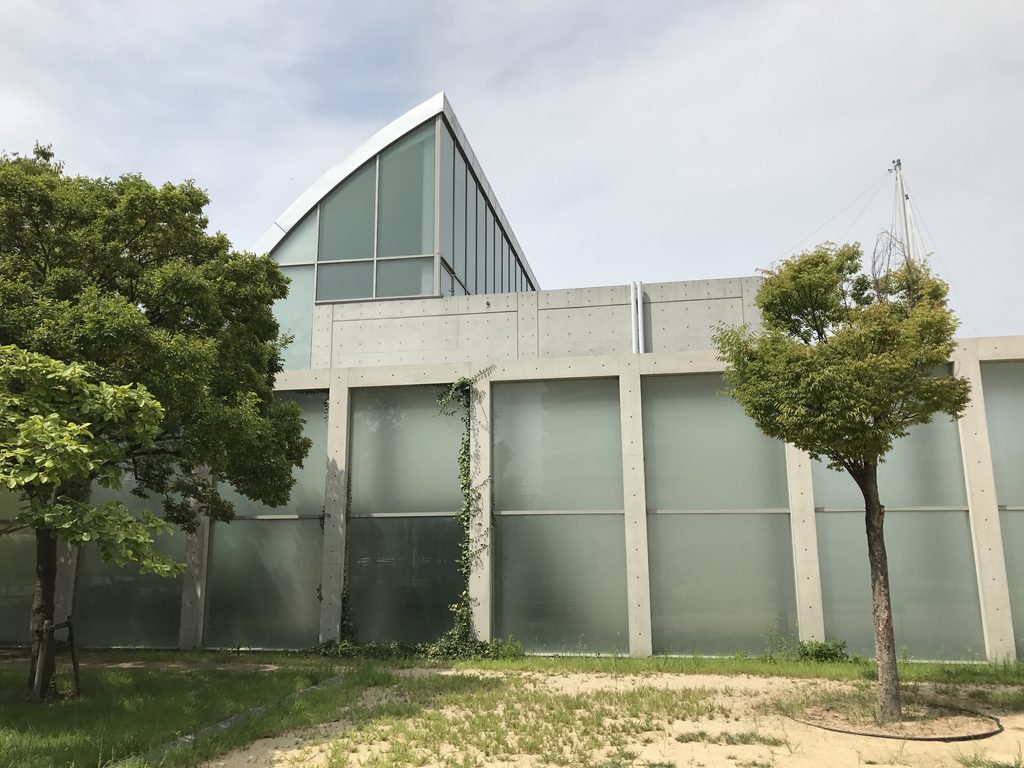
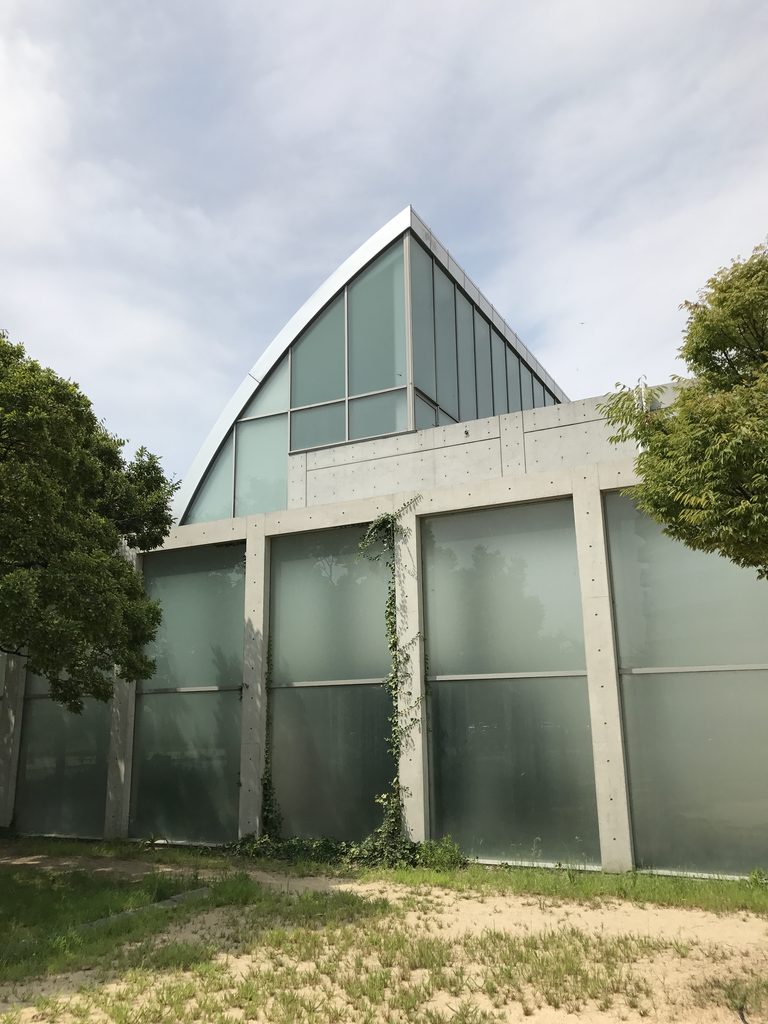
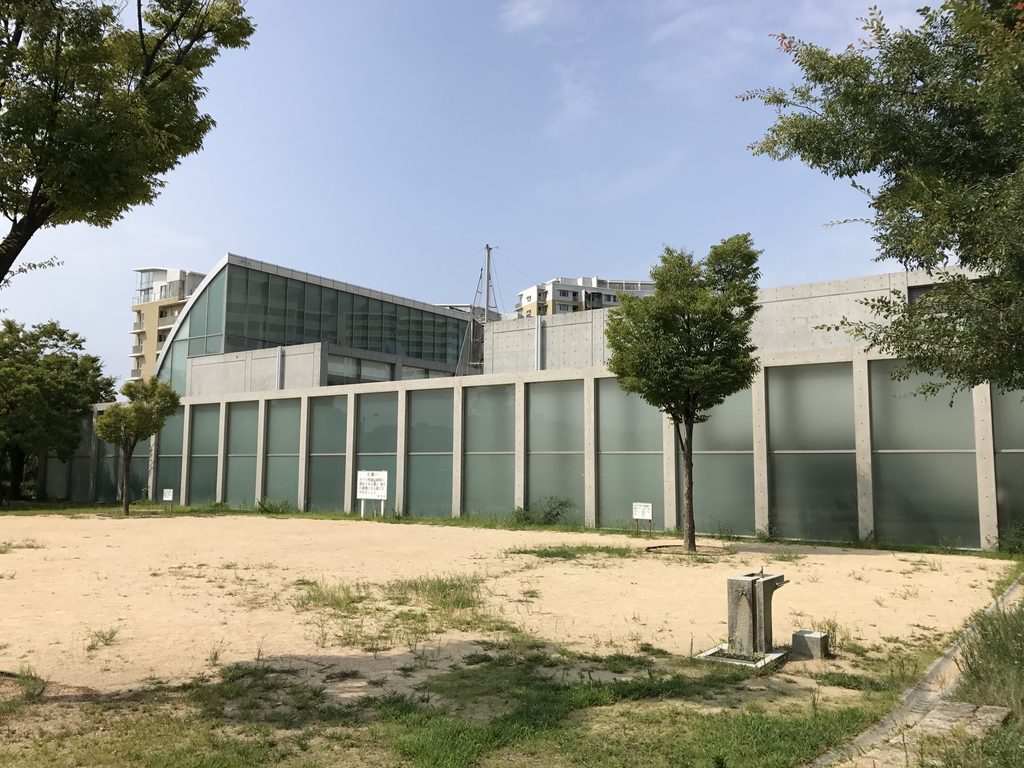
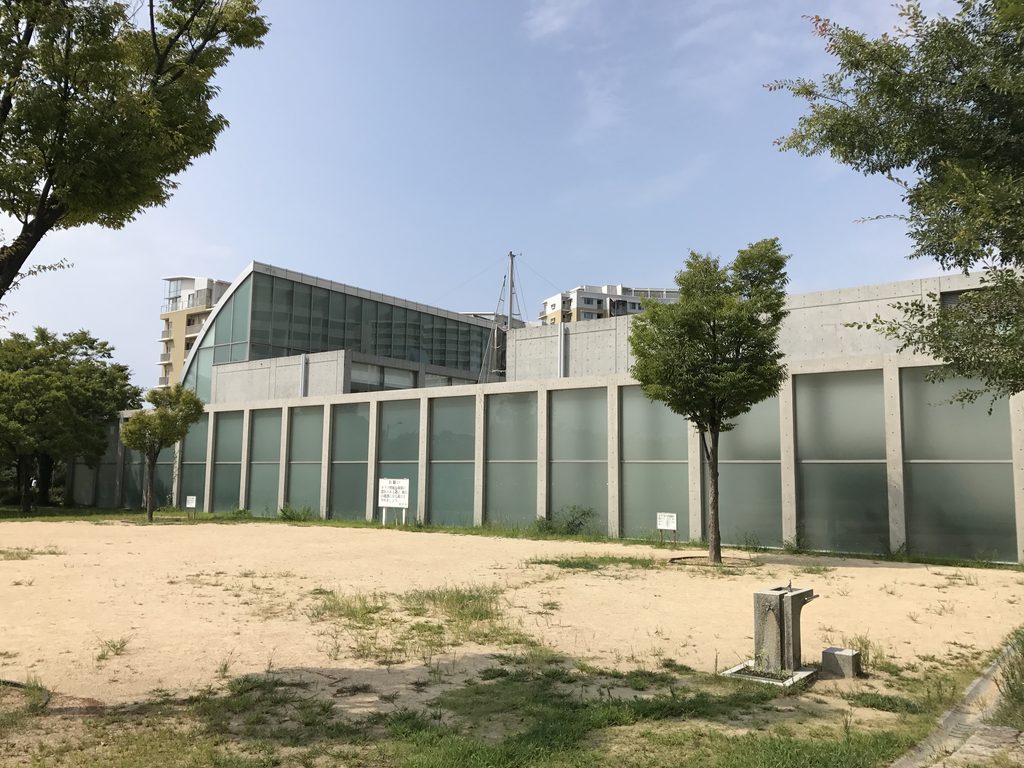
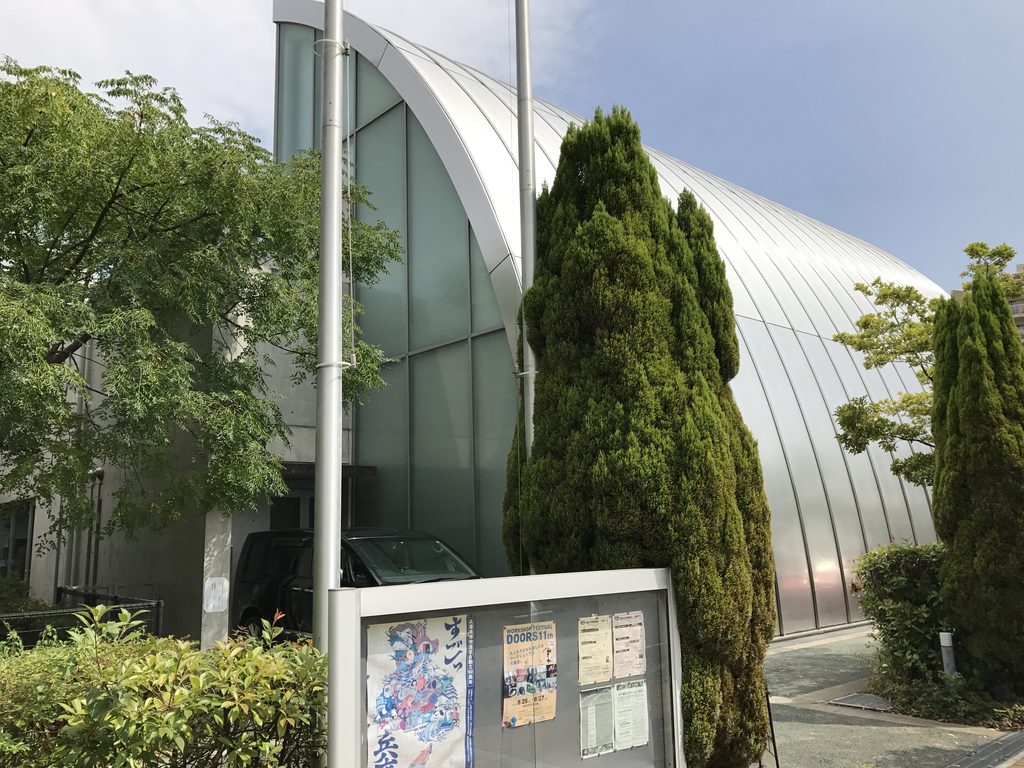
安藤建築というと、直線的な打放しコンクリートの壁や幾何学的な構成を思い浮かべることが多い。しかしこの建物では、低く水平に伸びるヴォリュームから大きな曲面が立ち上がり、海辺という場所を象徴する「帆」が建築の輪郭そのものをつくっている。
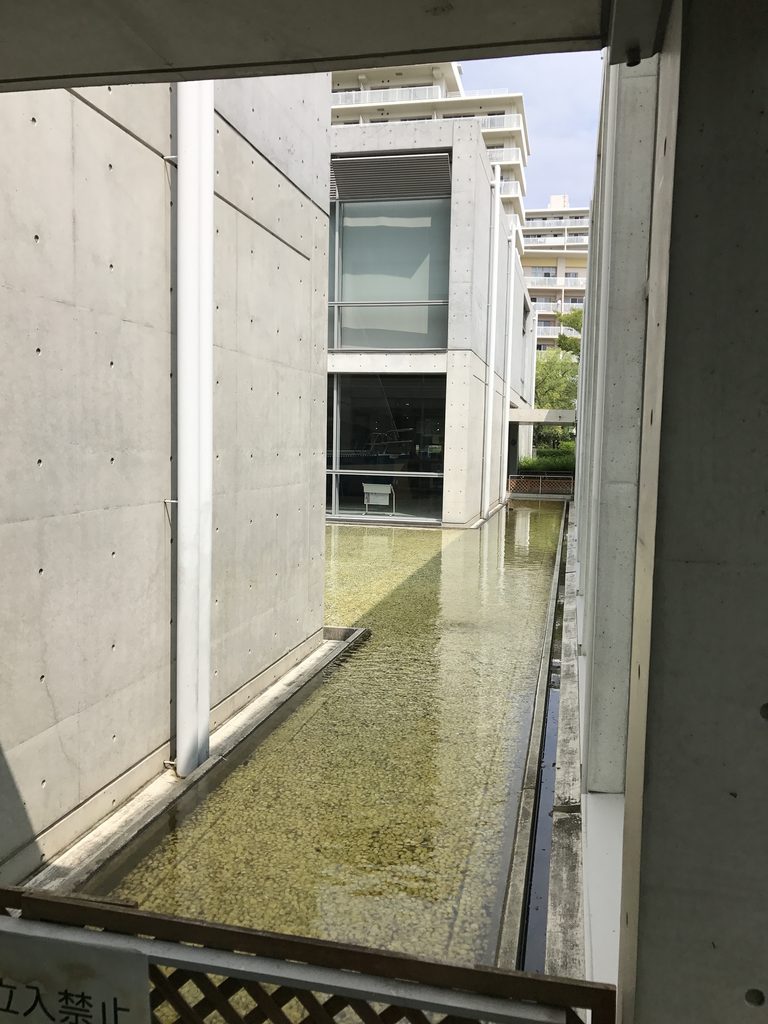
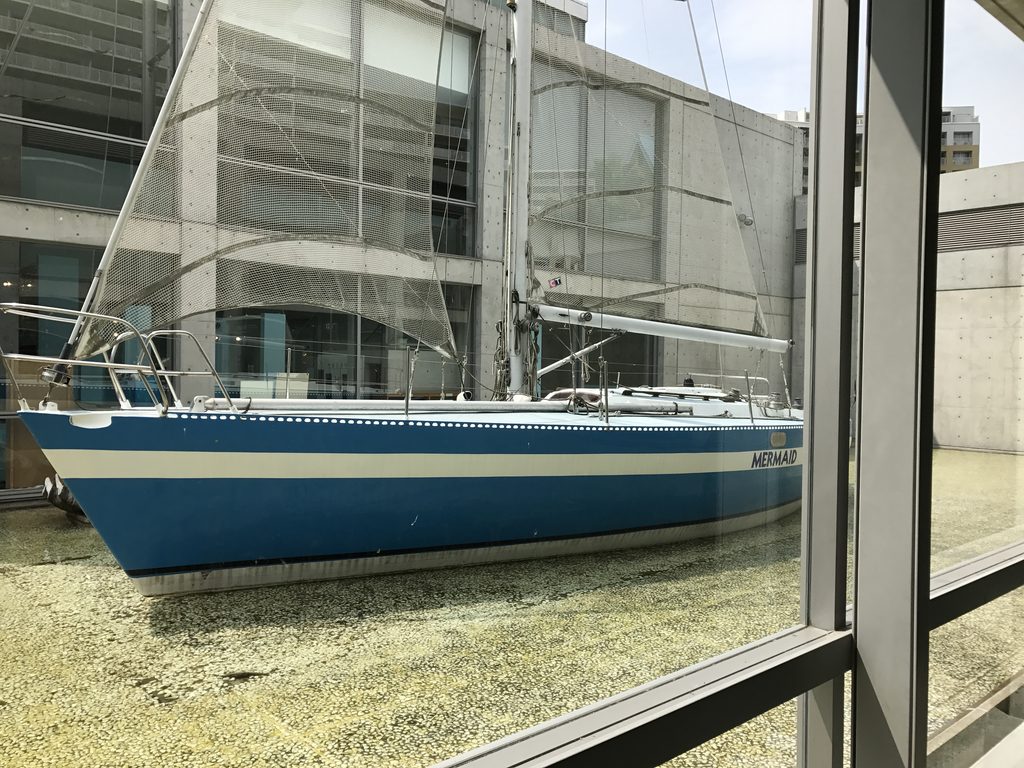
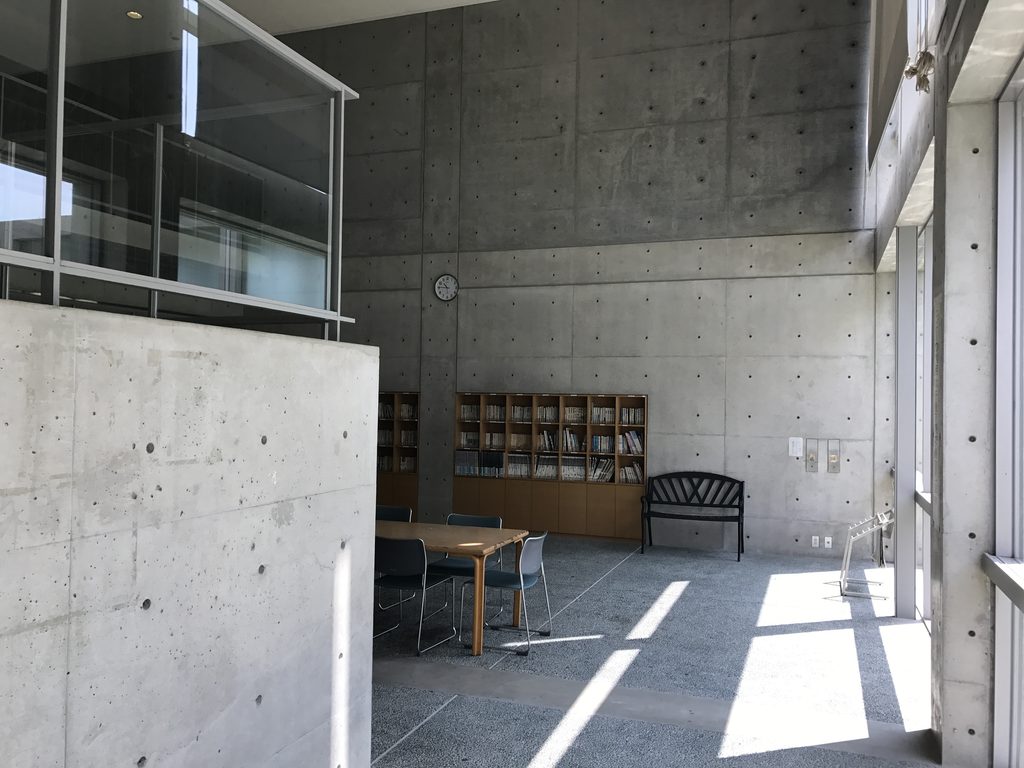
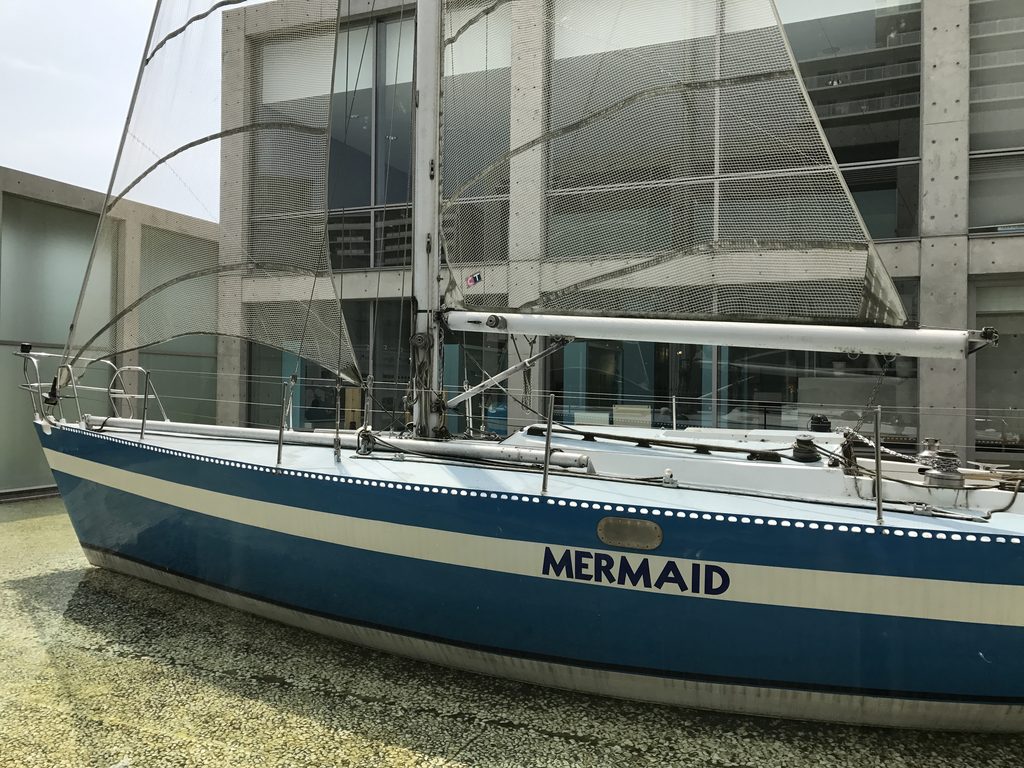
その一方で内部へ入れば、コンクリートの壁、吹抜け、階段、ガラス、光によって視線と動きを導く安藤らしい空間が現れる。そして中庭には、海洋冒険家・堀江謙一が航海に使用した「マーメイド4世号」が置かれている。
貝を展示する博物館をつくるだけではなく、建築そのものを通して海を感じさせる。 小さな博物館の中に、展示と場所と建築を一つの物語として結びつけた作品である。
Nishinomiya Shell Museum is a museum dedicated to shells, designed by Tadao Ando near the waterfront of Nishinomiya-hama. Its collection includes approximately 100,000 specimens, centered on the academic materials of Tokubei Kuroda, a pioneering Japanese malacologist, with around 5,000 shells representing some 2,000 species on display.
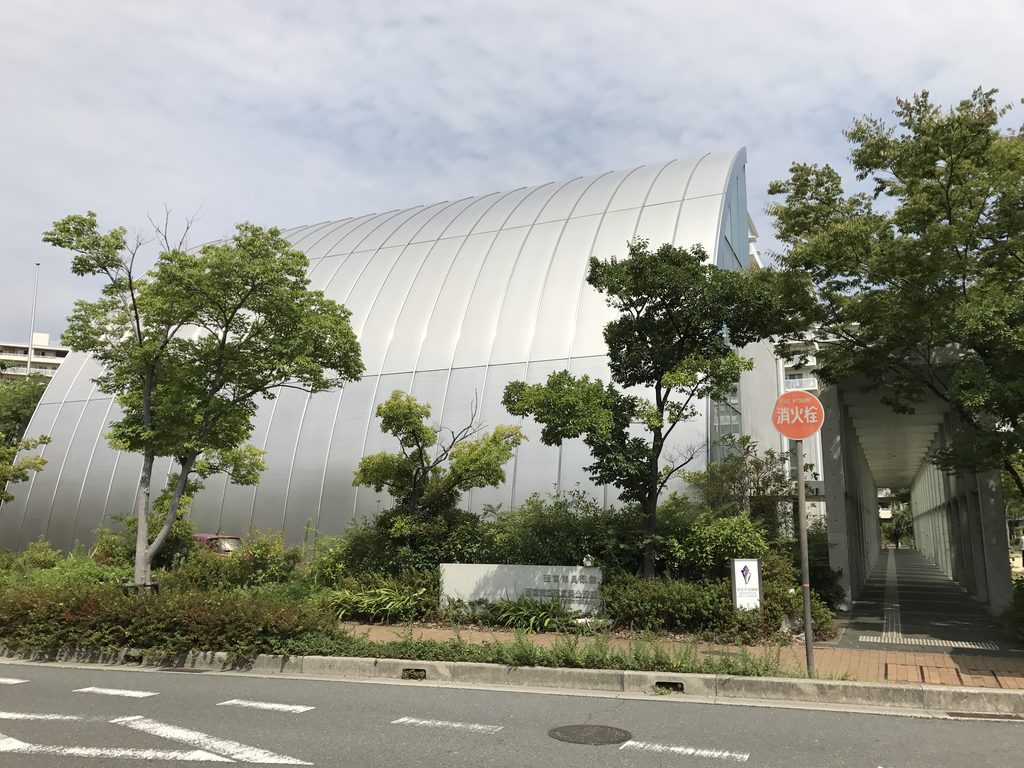
The building’s distinctive exterior was conceived in the image of a yacht’s sail. A large curved form rises above a low horizontal volume, while the interior uses blue to evoke the atmosphere of the sea.
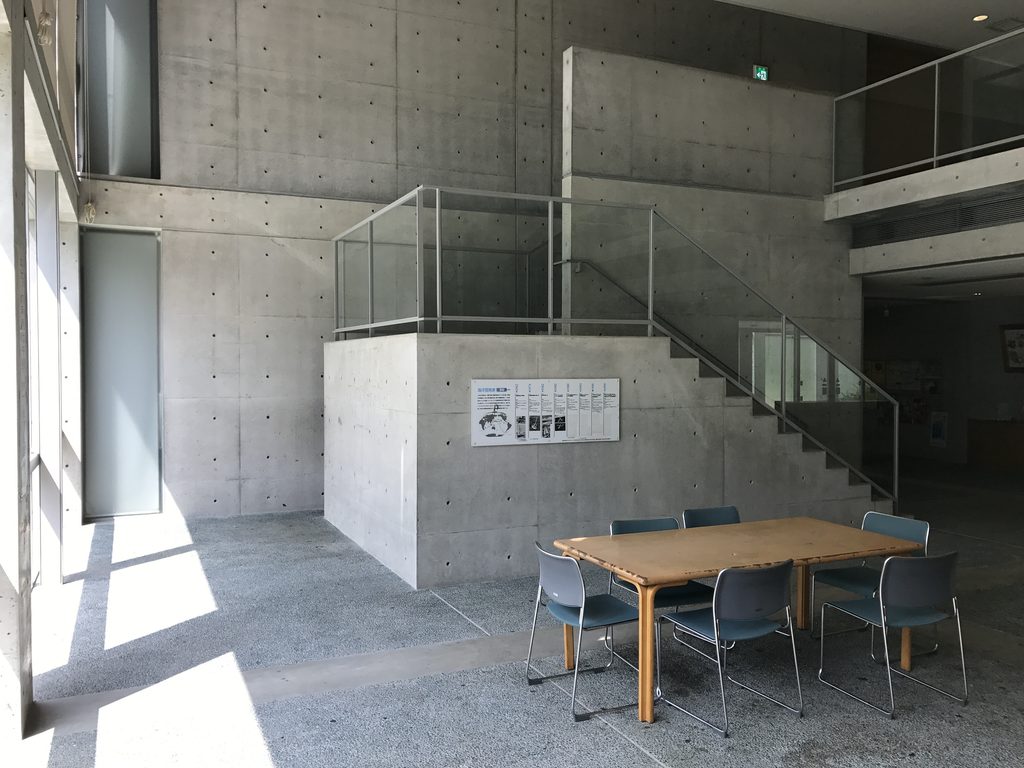
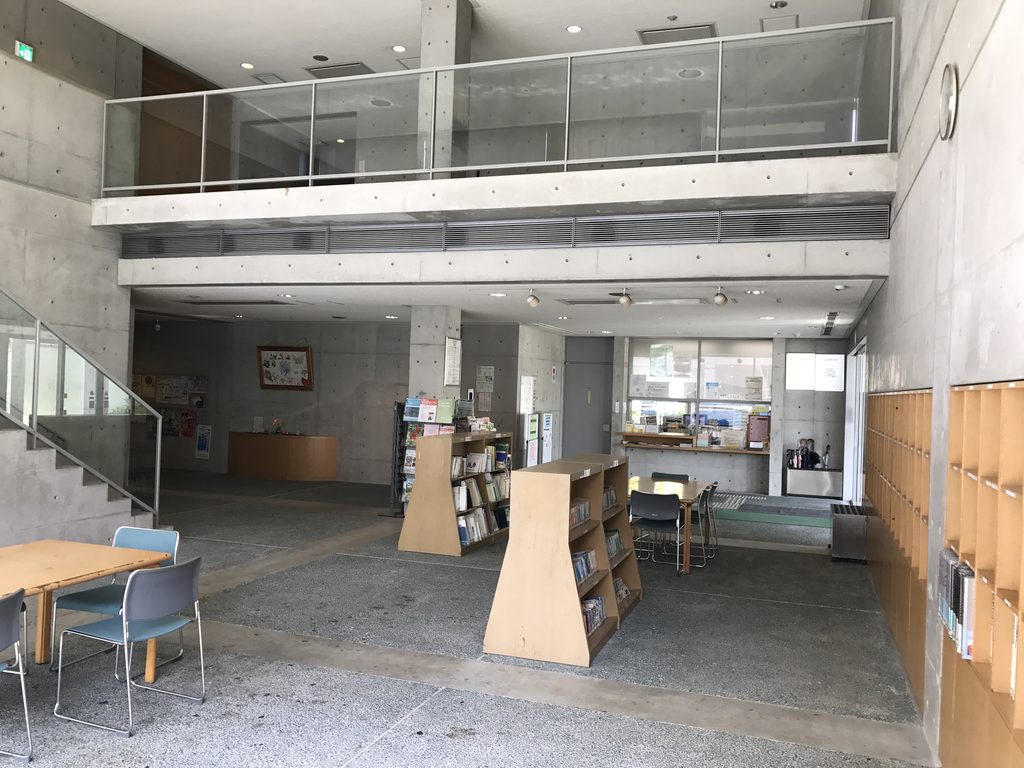
Inside, exposed concrete, glass, stairs, voids and natural light create a sequence unmistakably associated with Ando’s architecture. In the courtyard stands Mermaid IV, the yacht used by Japanese ocean adventurer Kenichi Horie.
Rather than simply providing rooms in which shells can be displayed, the architecture transforms the museum’s subject—the sea—into a spatial experience.
1. 海辺に、一枚の帆を立ち上げる
Raising a Sail Beside the Sea
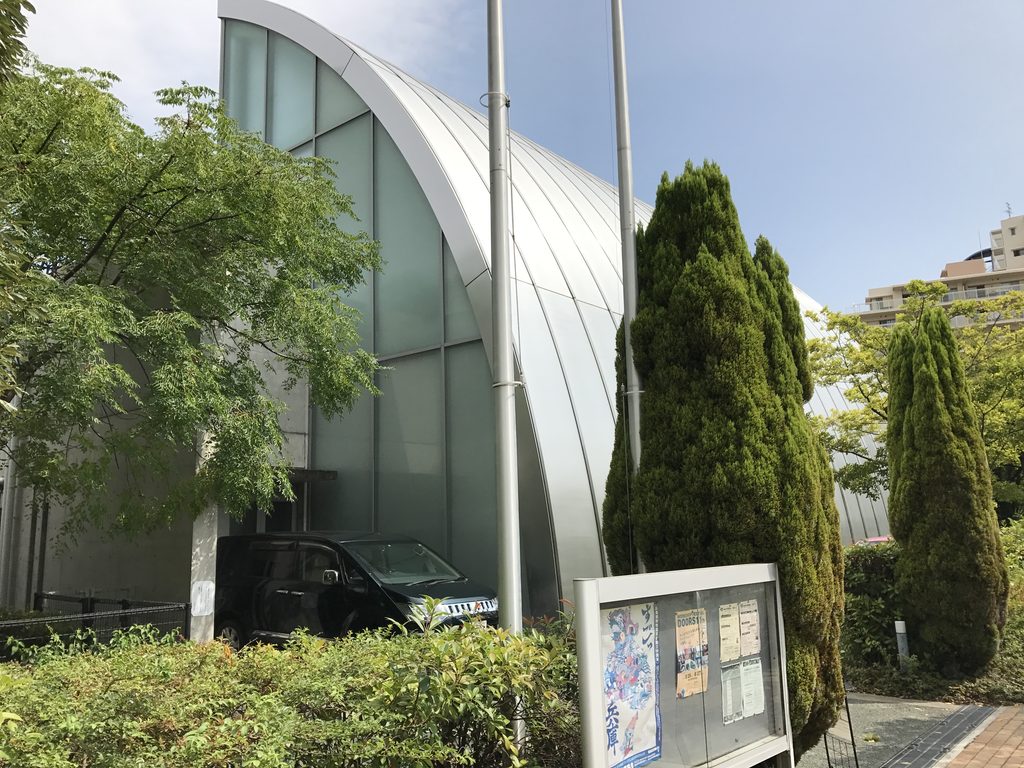
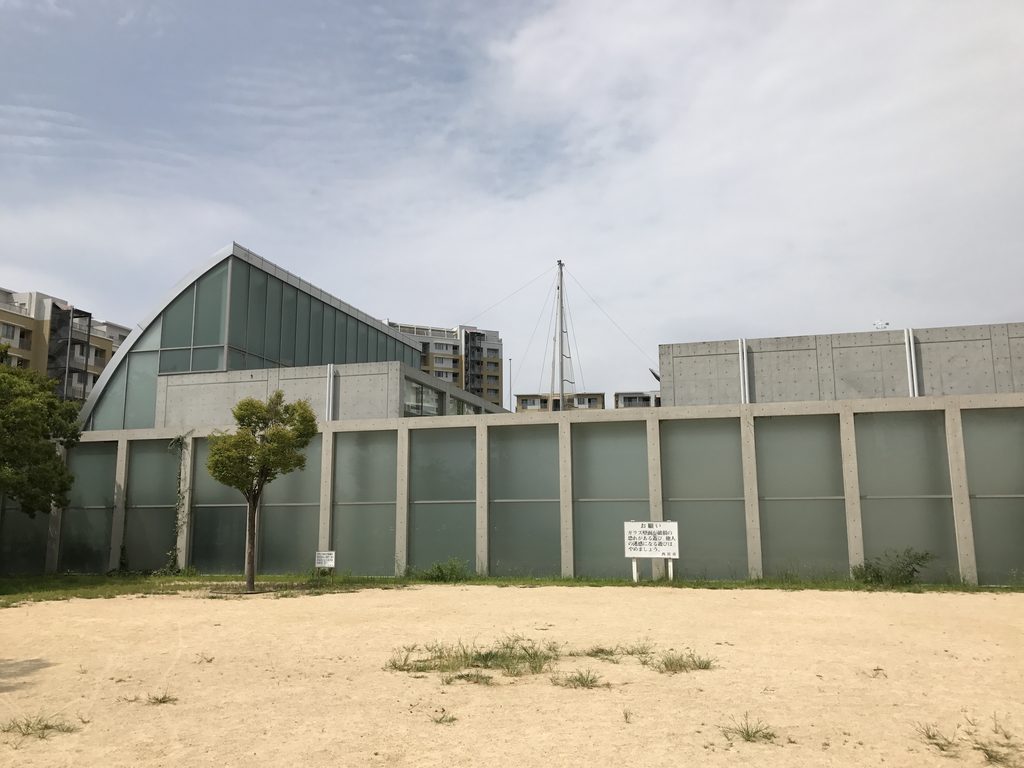
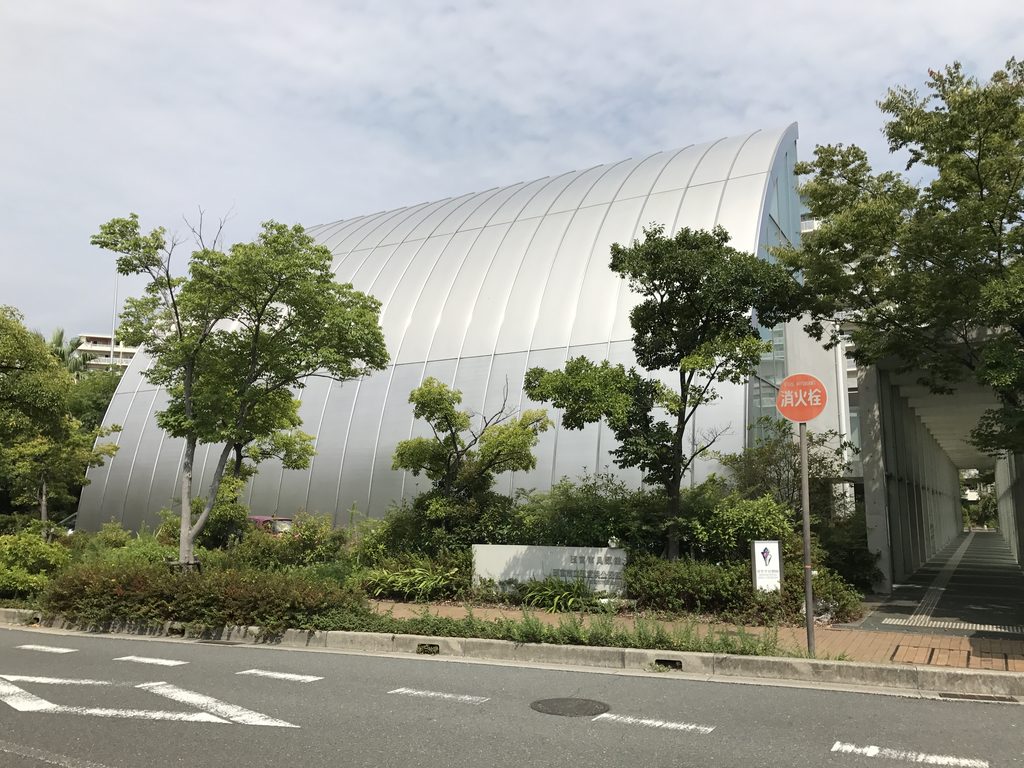
西宮浜の街を歩いていると、低く伸びる建物の向こうから、大きな白い曲面が姿を現す。
Approaching Nishinomiya Shell Museum, a large white curve appears above the low horizontal building.
西宮市が「ヨットの帆をイメージした外観」と説明するこの曲面は、単なる装飾として建物に付け加えられたものではない。水平に広がる建築に対して大きく立ち上がり、遠くからでもこの建物の存在を示す輪郭になっている。
Conceived as the image of a yacht’s sail, this curved form is more than an applied symbol. Rising dramatically above the otherwise horizontal composition, it gives the museum a recognizable silhouette against the waterfront sky.
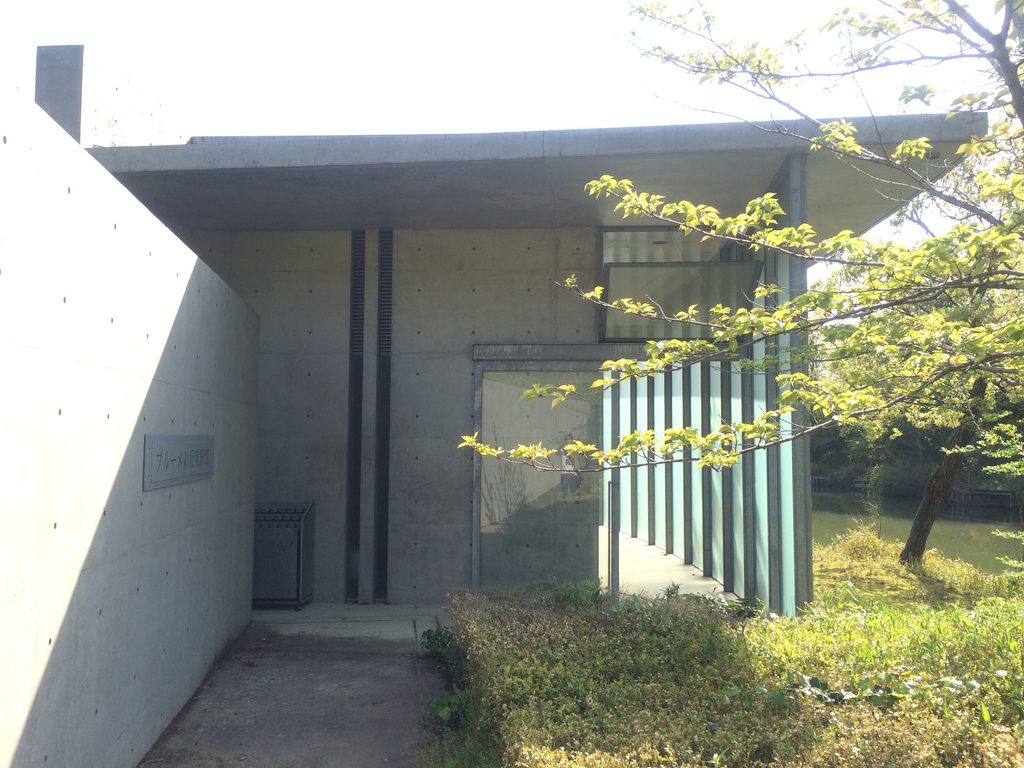
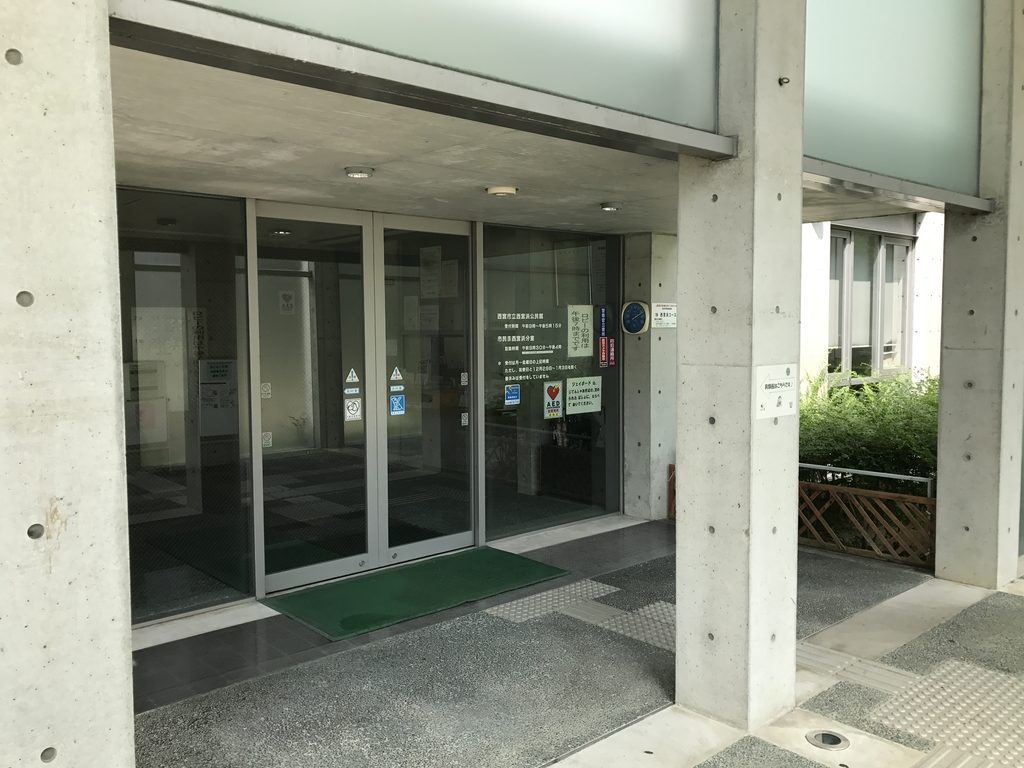
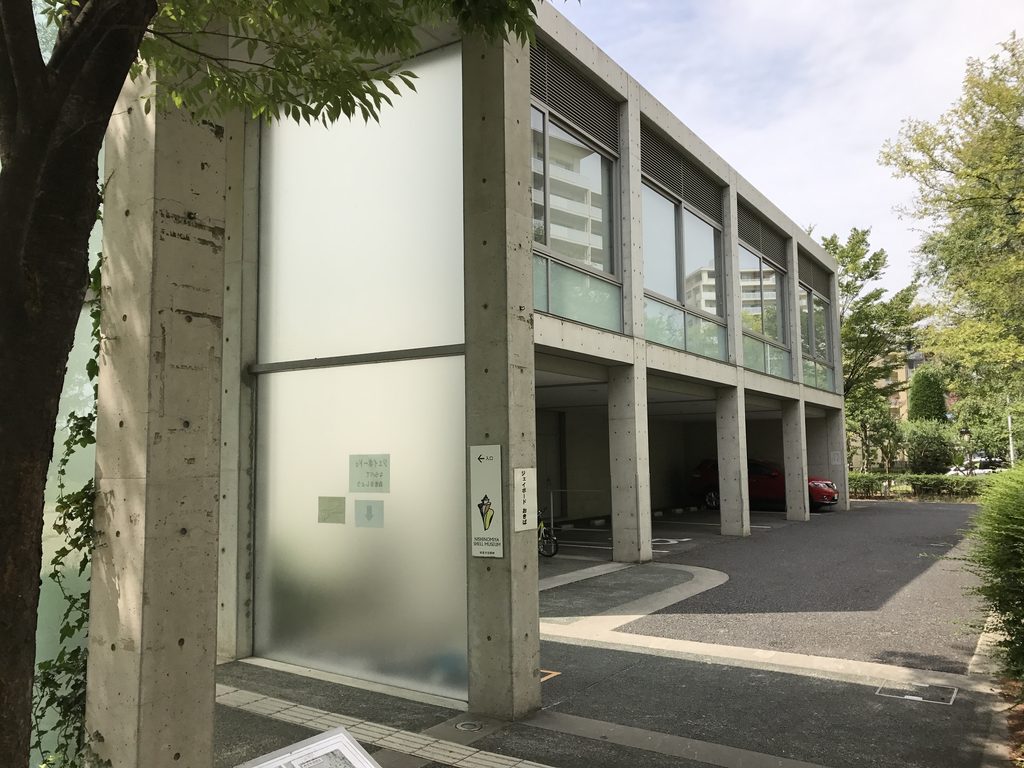
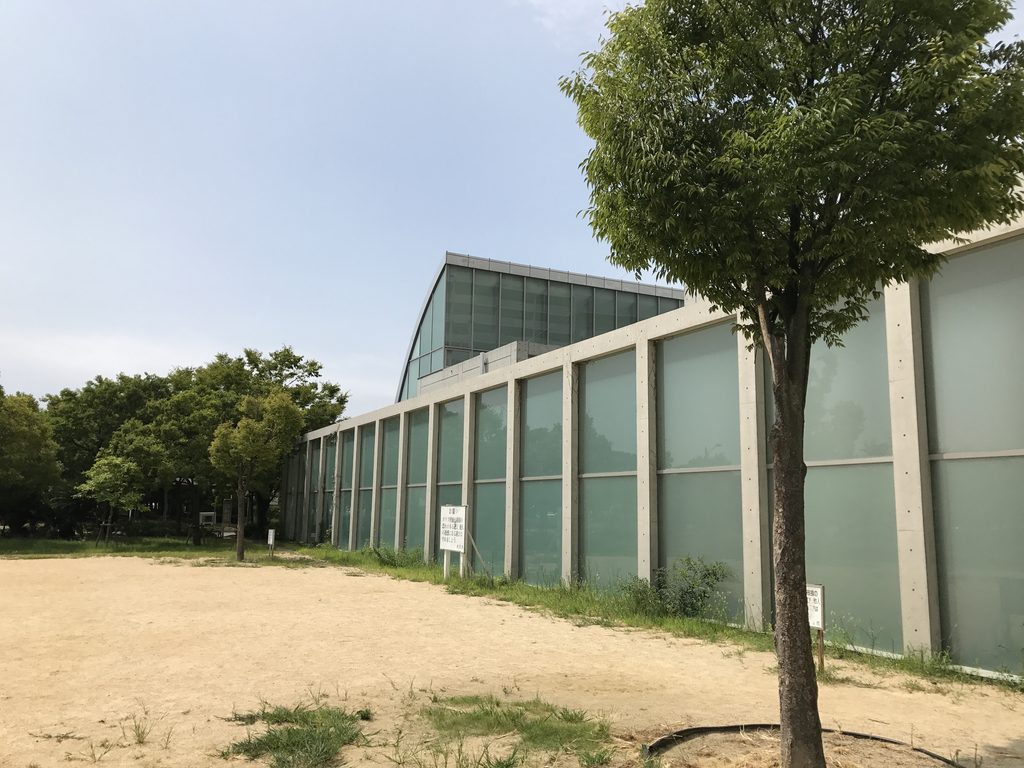
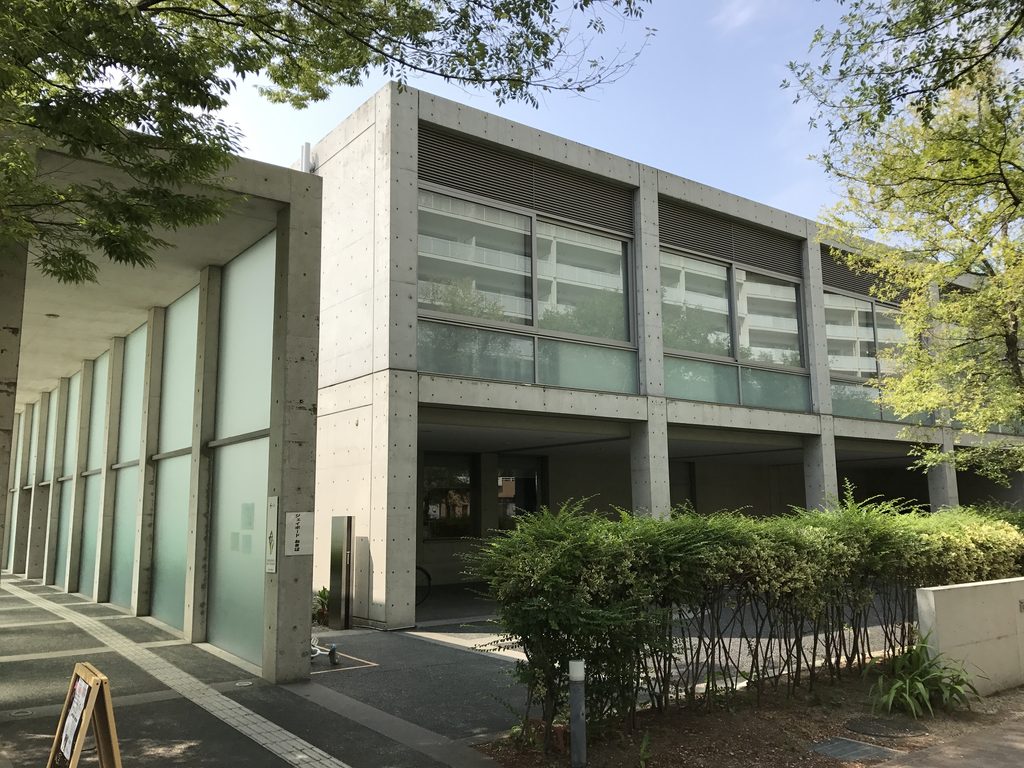
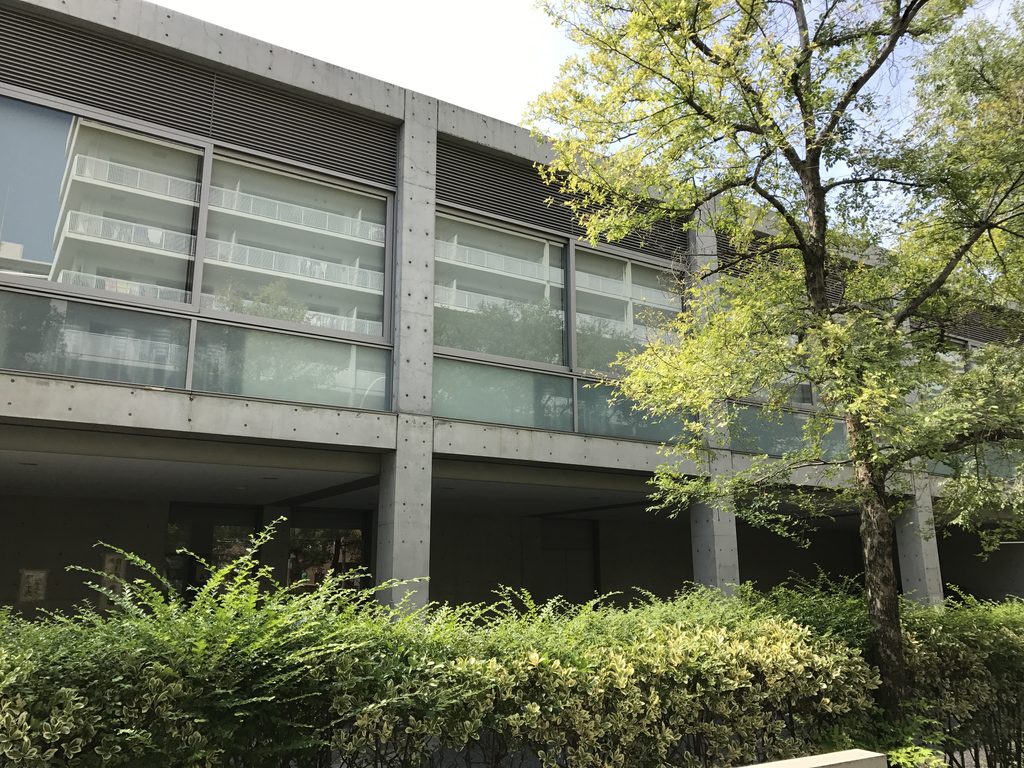
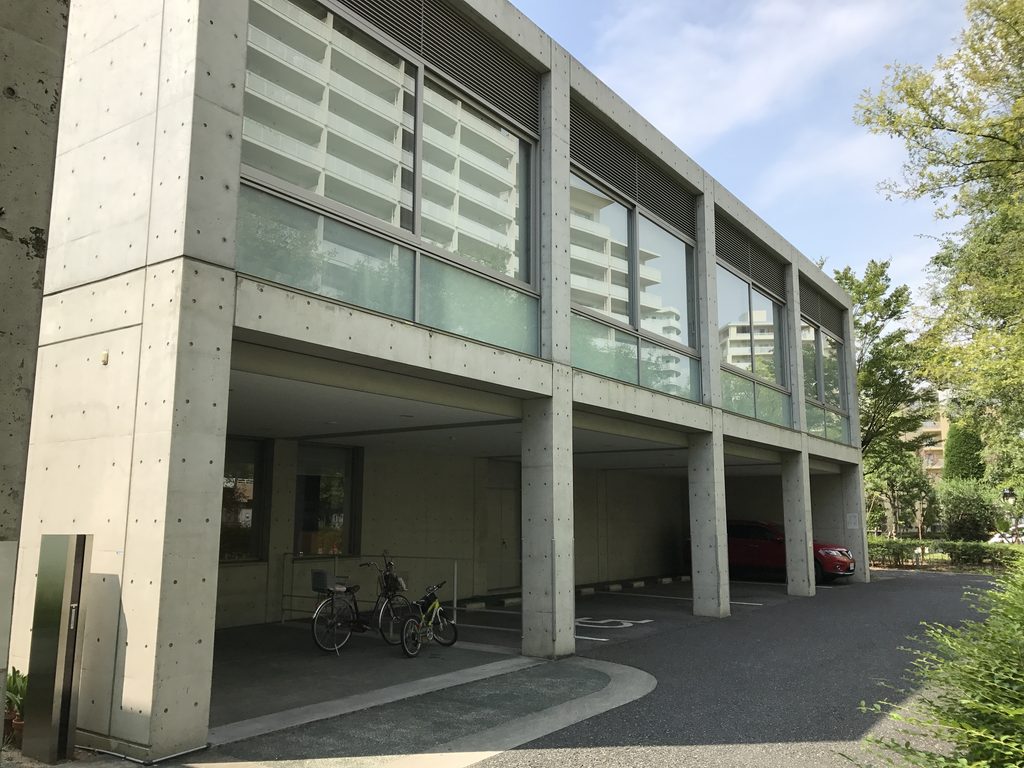
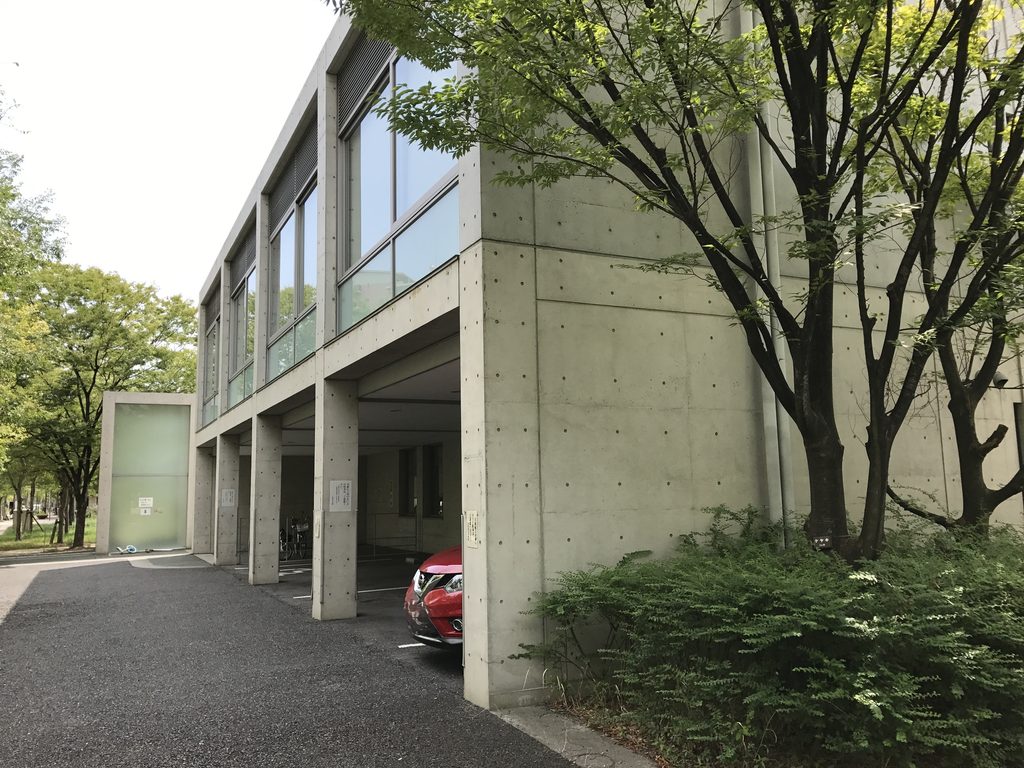
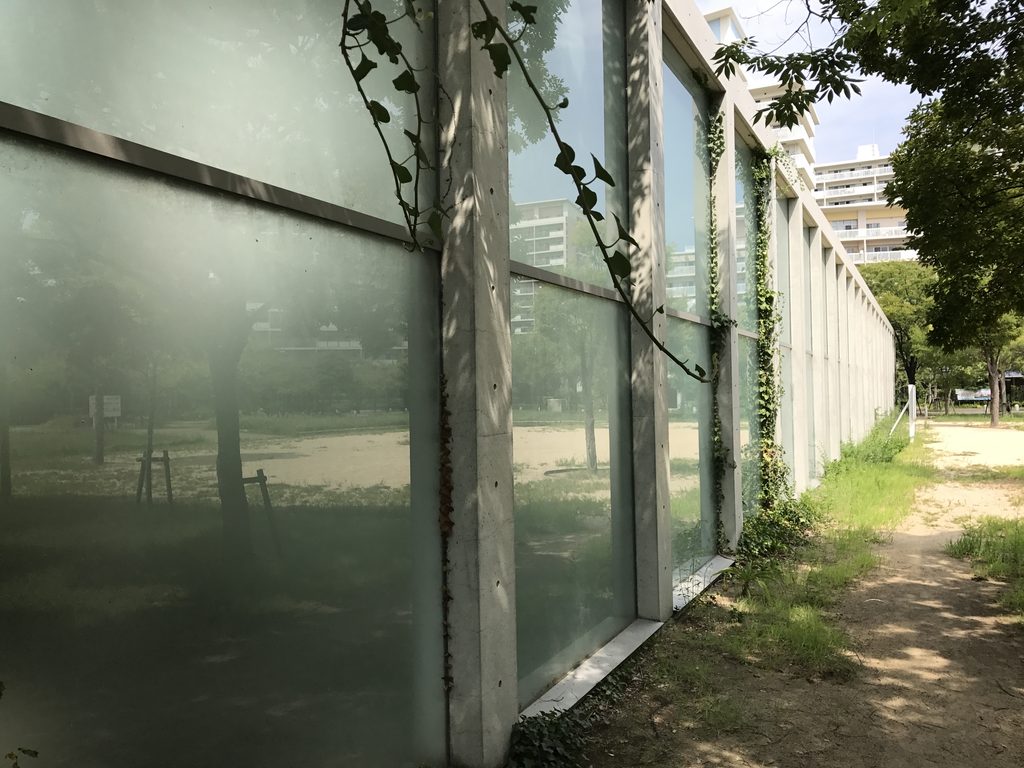
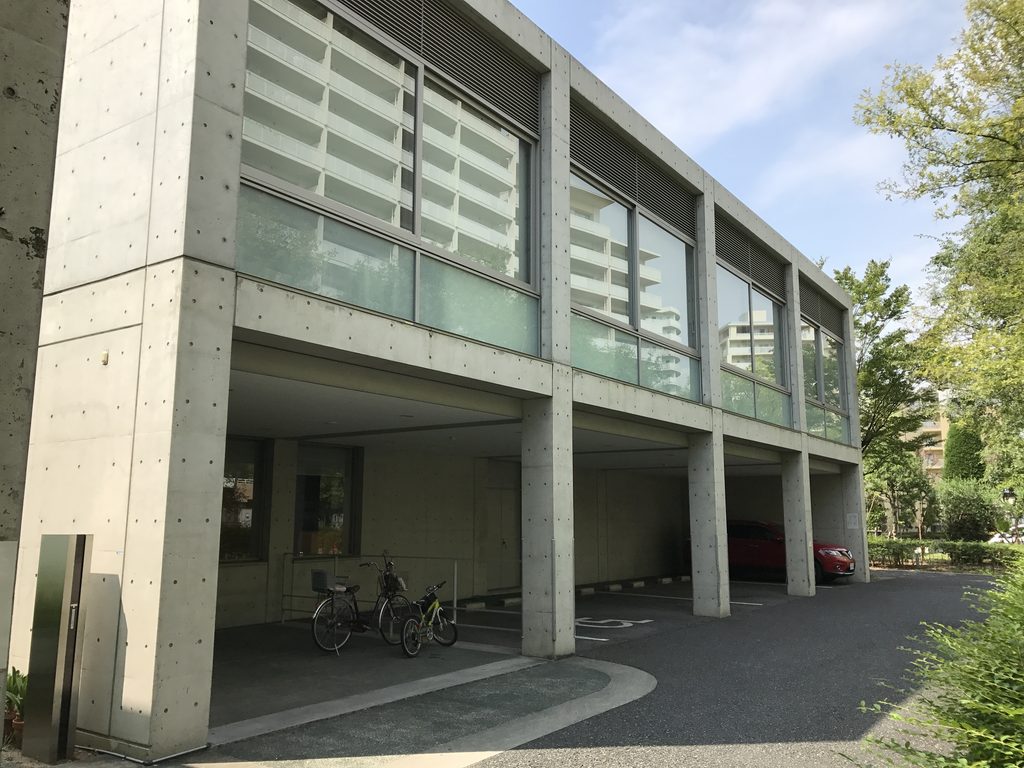
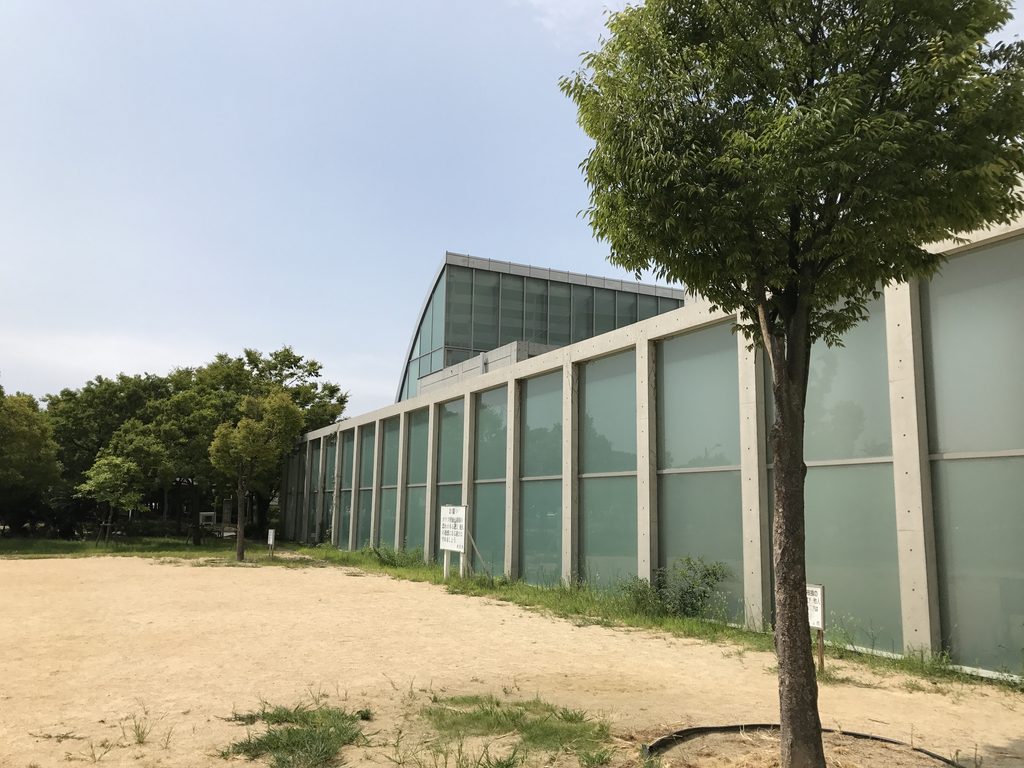
近づくと、その印象は少し変わる。白い曲面だけが独立しているのではなく、打放しコンクリートの壁やガラス、庇の水平線と組み合わされ、直線と曲線が一つの建築をつくっている。
Closer to the building, the composition becomes more complex. The white curve is combined with exposed concrete walls, glass and long horizontal lines.
安藤の建築には、場所の意味を抽象的な幾何学へ置き換える作品がある。ここでは海辺にある貝の博物館に対して、「海」をそのまま再現するのではなく、一枚の帆を思わせる曲線だけを強く立ち上げることで、場所の記憶を建築へ取り込んでいる。
Ando often translates something particular to a site into abstract geometry. Here, instead of literally reproducing the sea, a single sail-like curve brings the memory of the waterfront into the architecture.
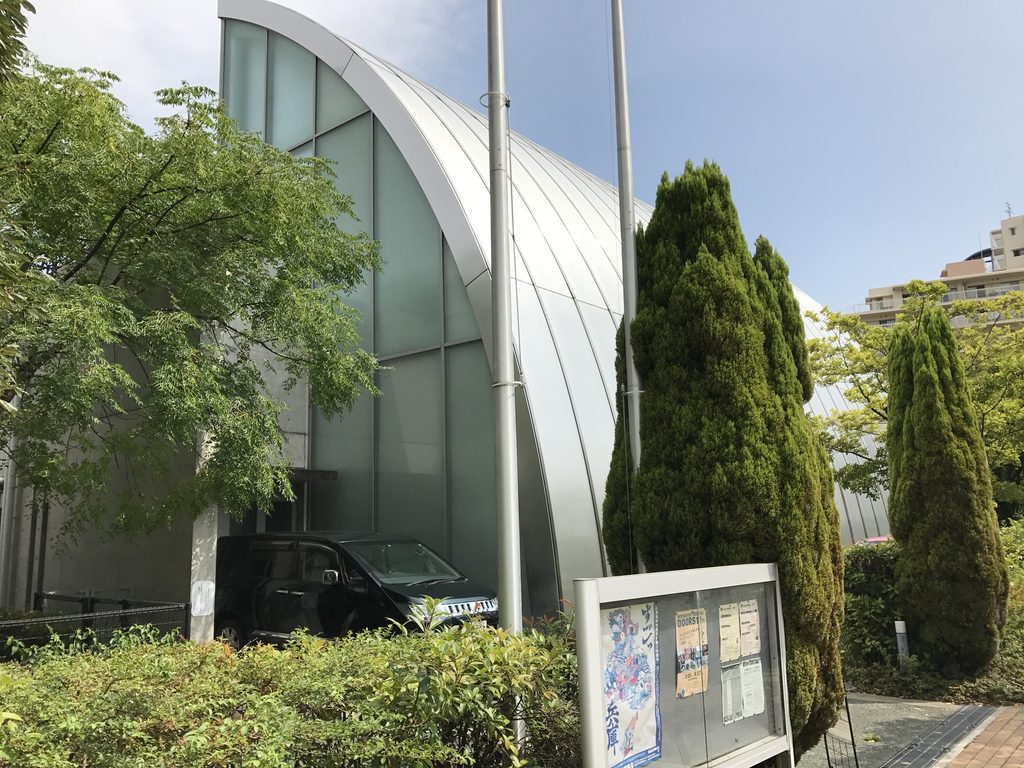
規模は決して大きくない。それでも海辺の空の下に白い曲面が立つ姿には、この博物館が何を扱う場所なのかを予感させる力がある。
The museum is relatively small, yet the white form rising into the open sky immediately suggests its connection to the sea.
2. コンクリートの中へ、海の青を入れる
Bringing the Blue of the Sea into Concrete
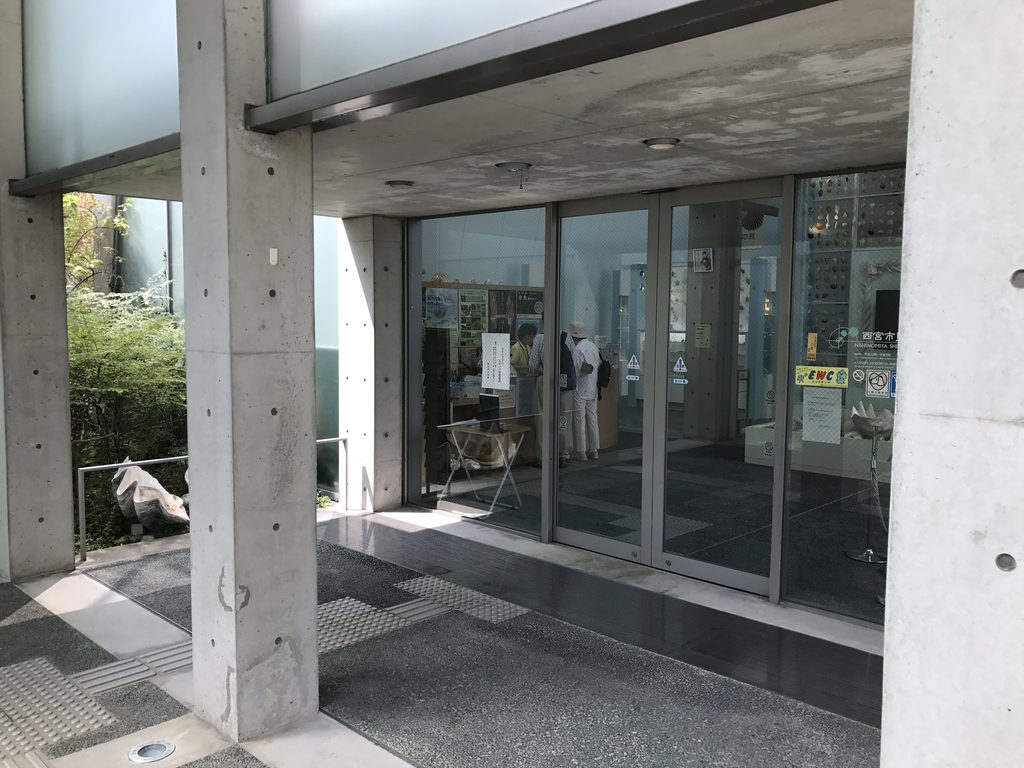
建物の中へ入ると、外観の白い帆とは異なる世界が現れる。
Entering the museum reveals a different world from the white sail outside.
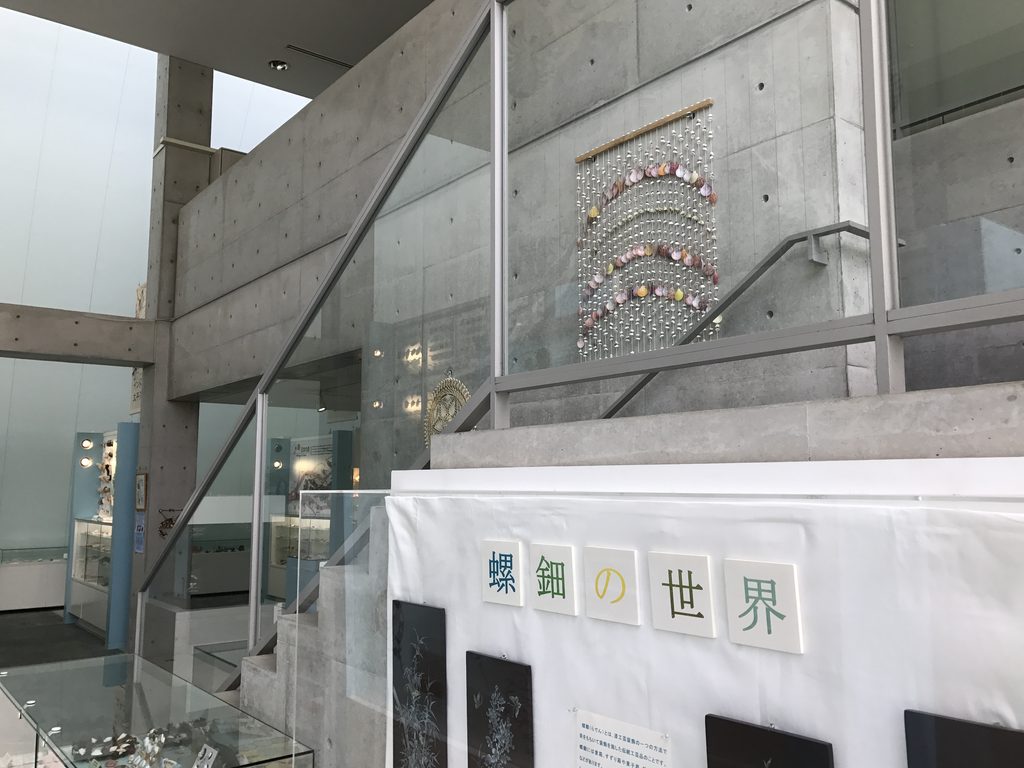
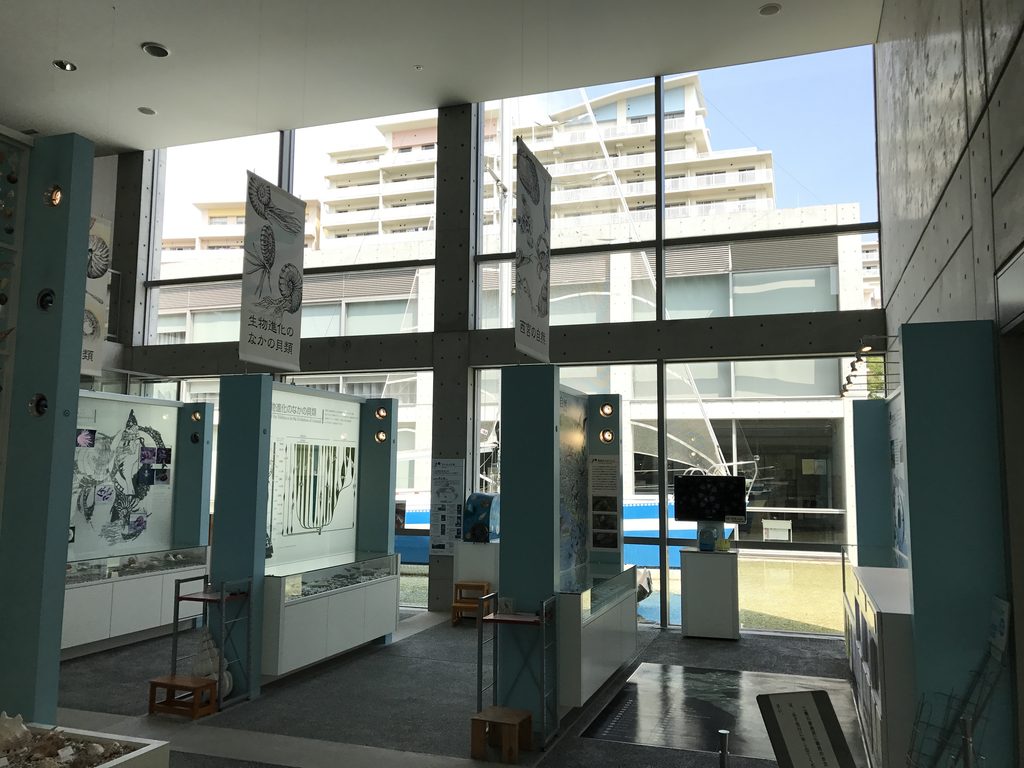
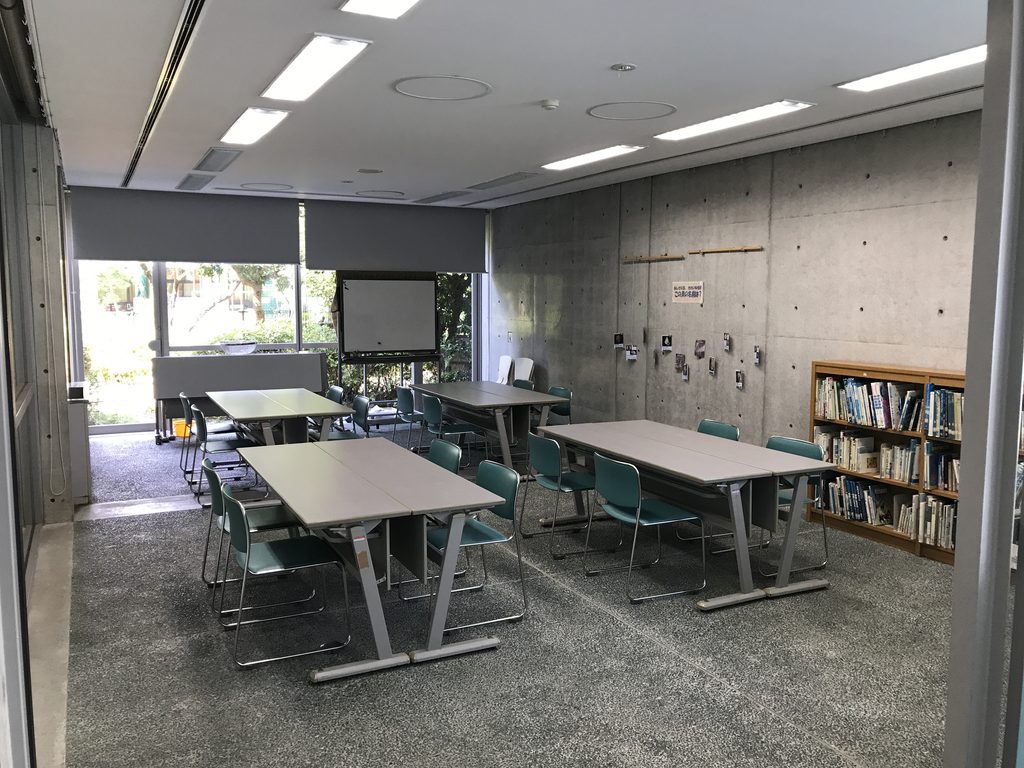
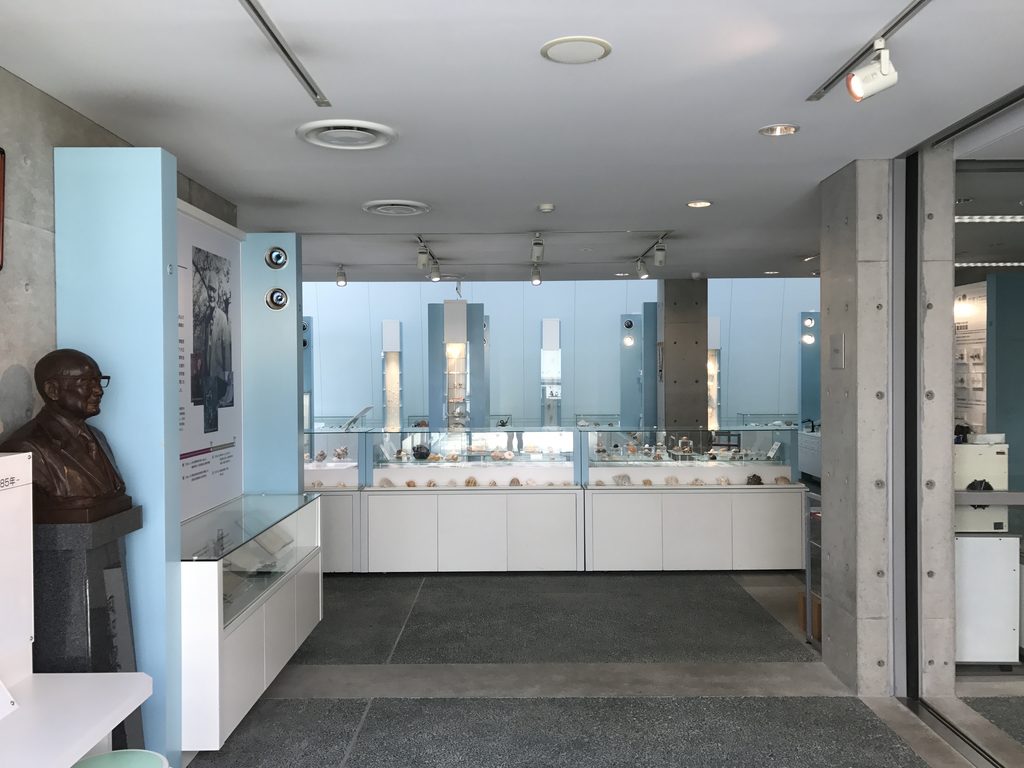
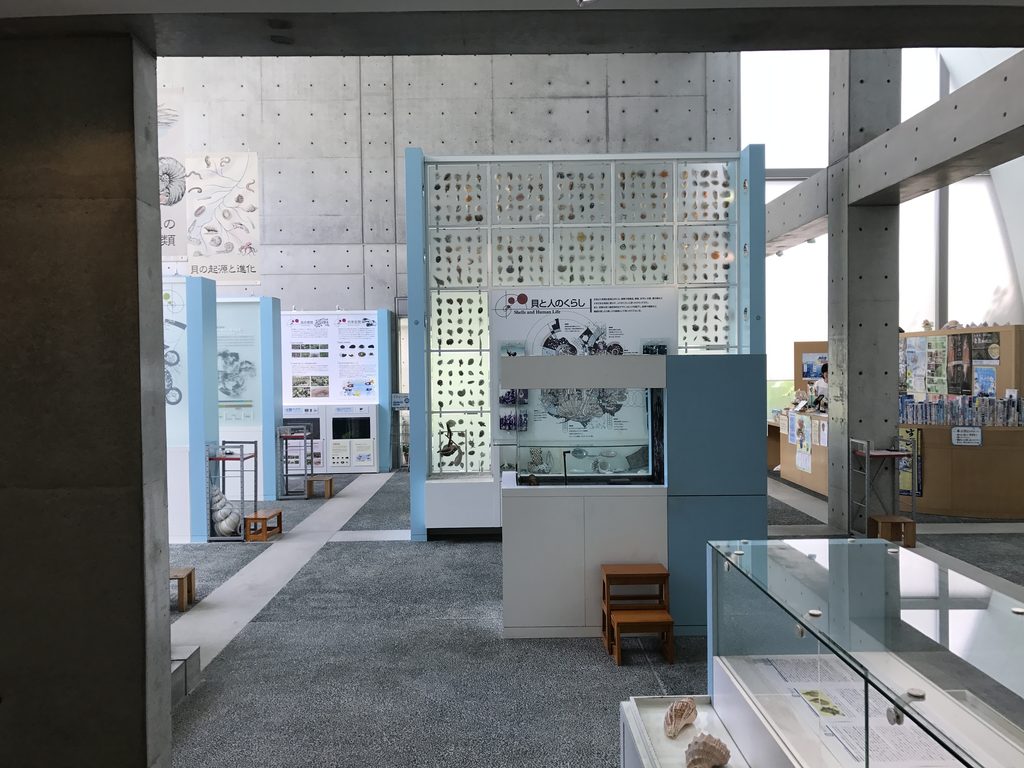
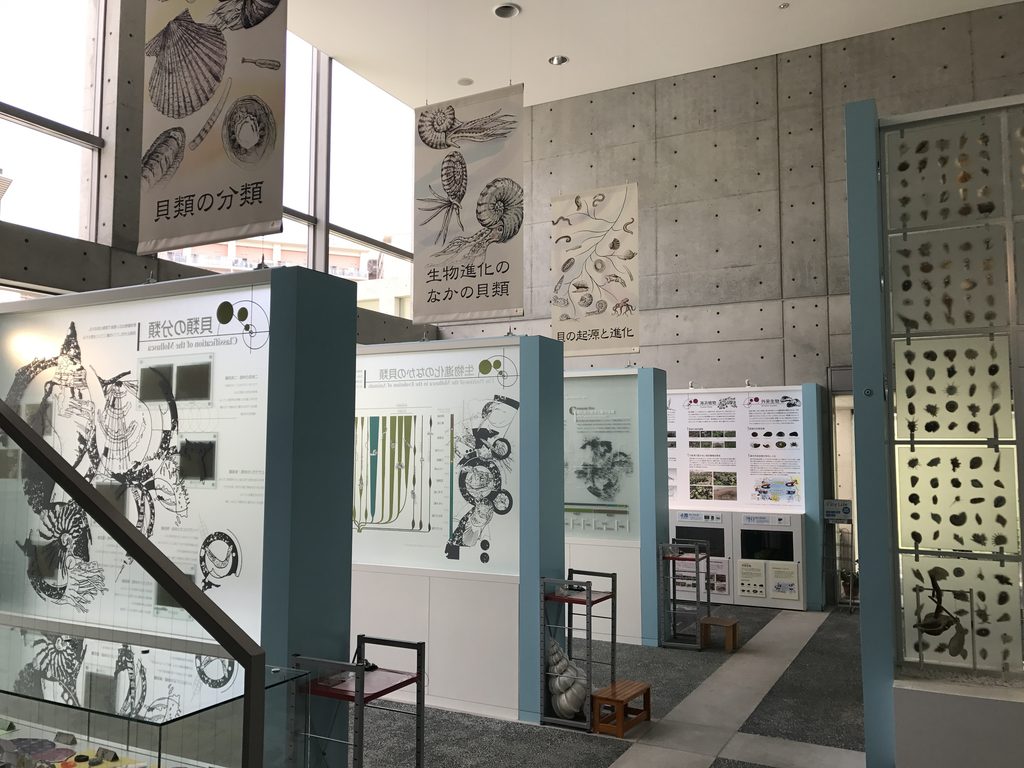
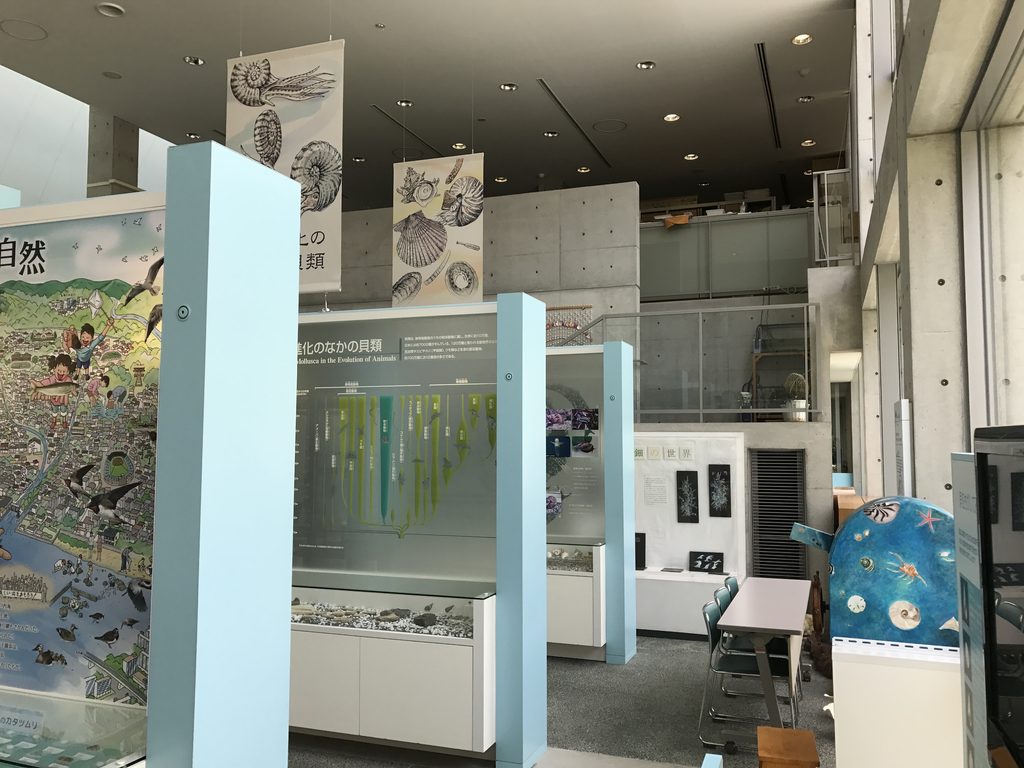
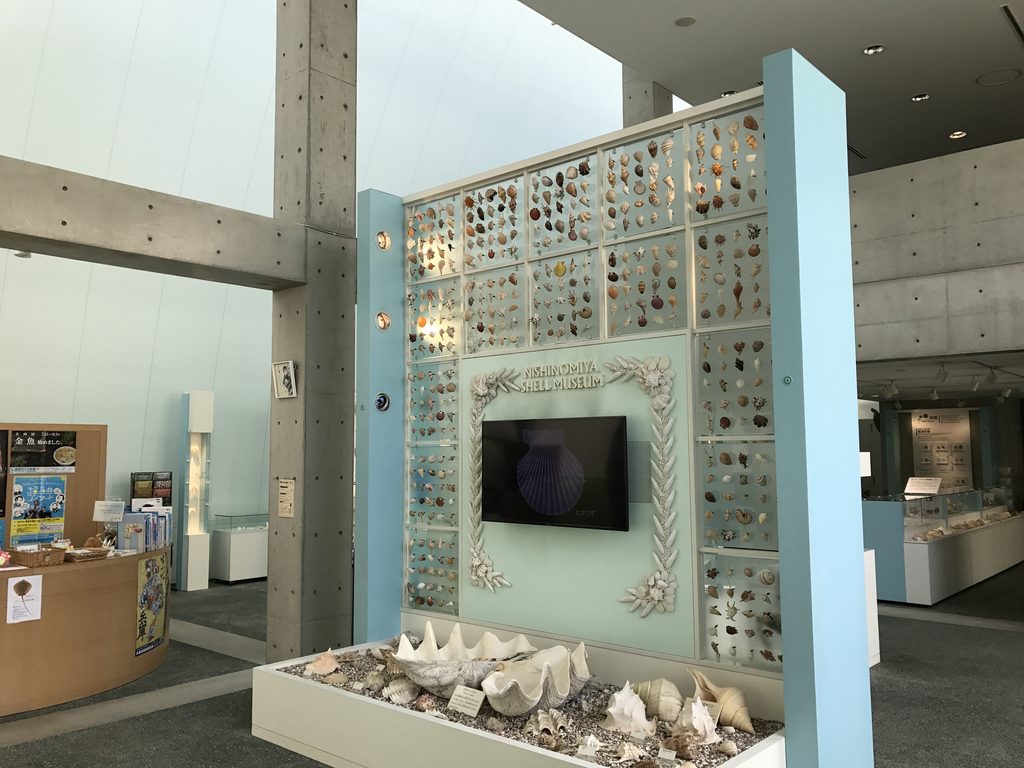
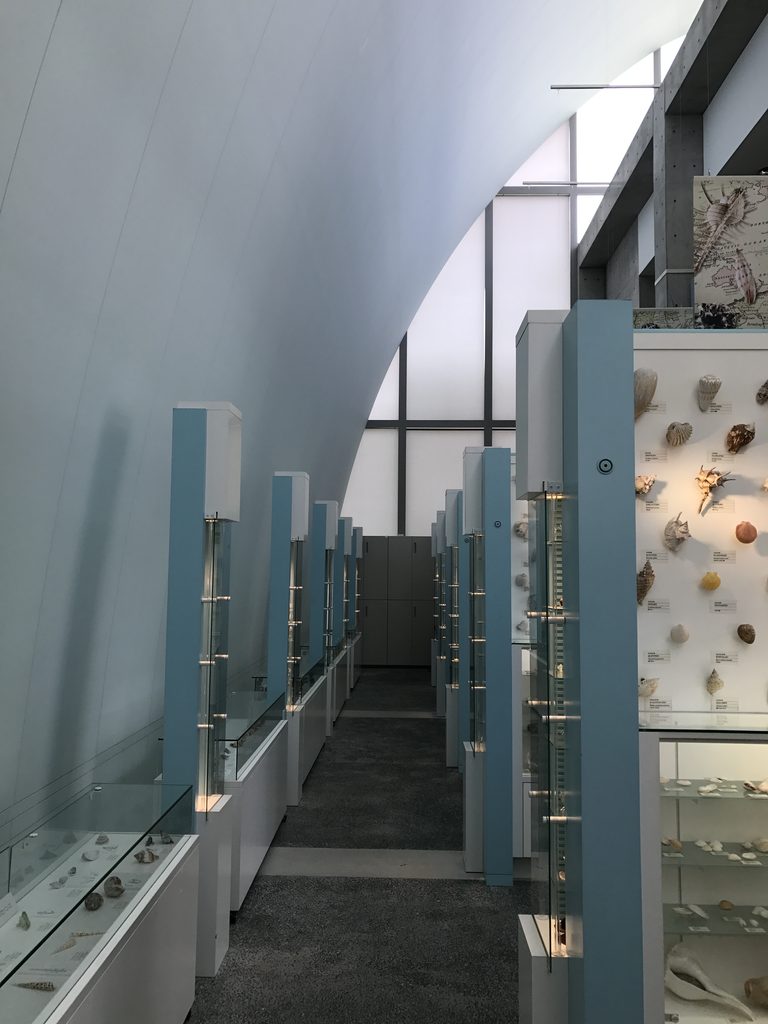
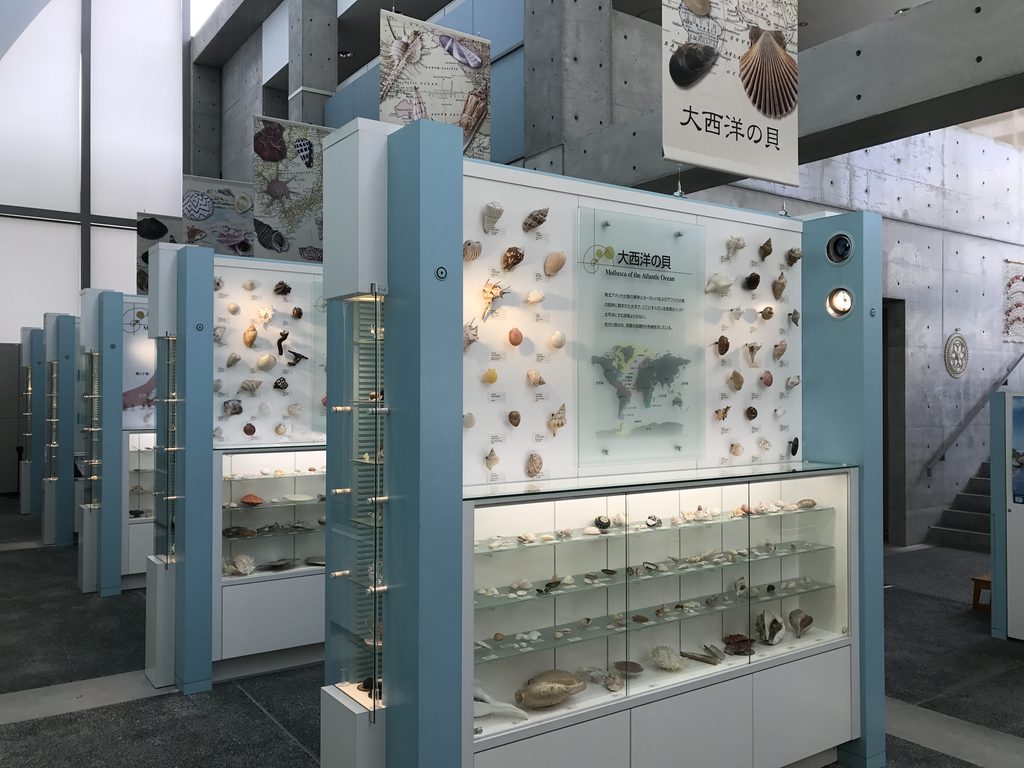
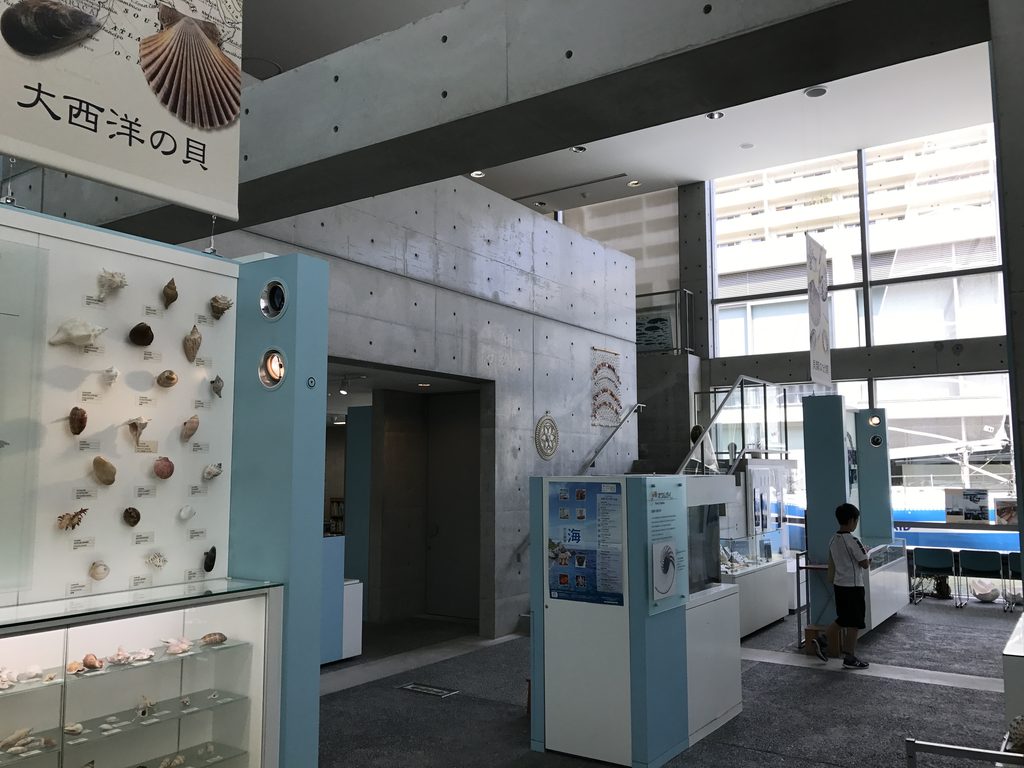
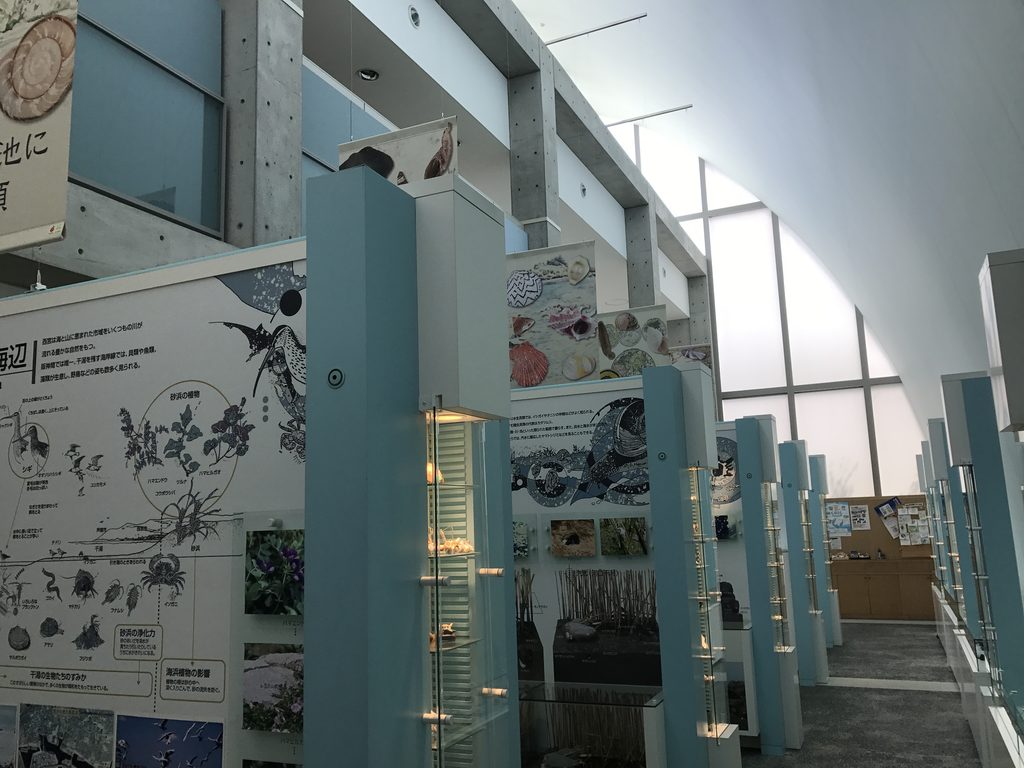
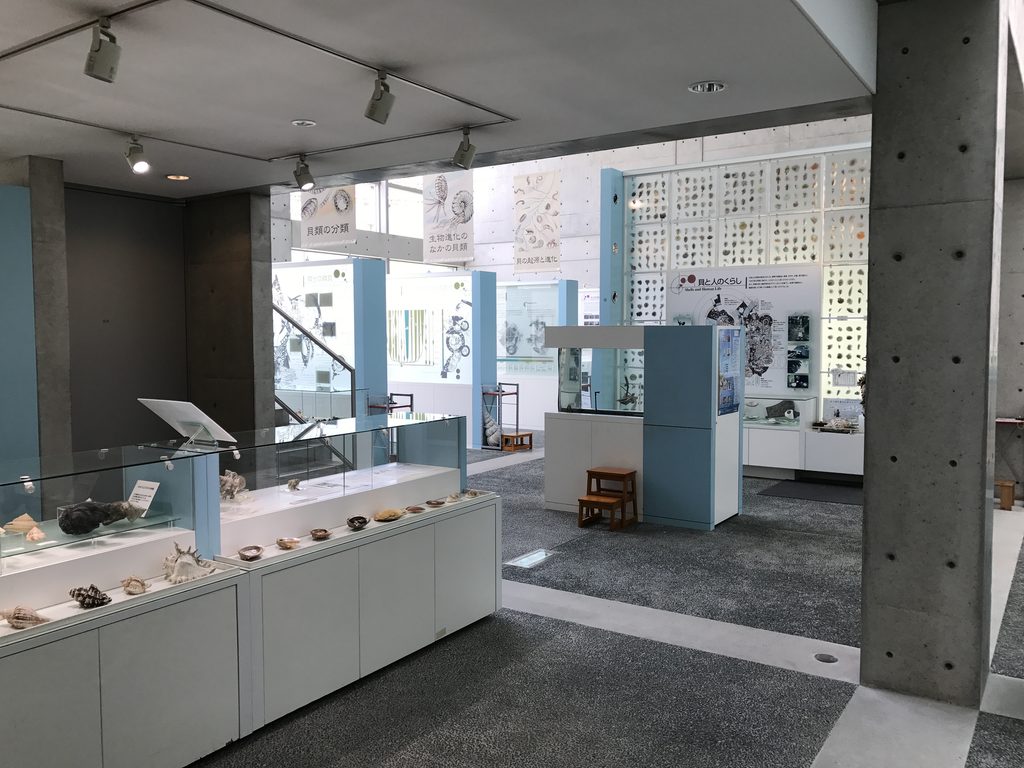
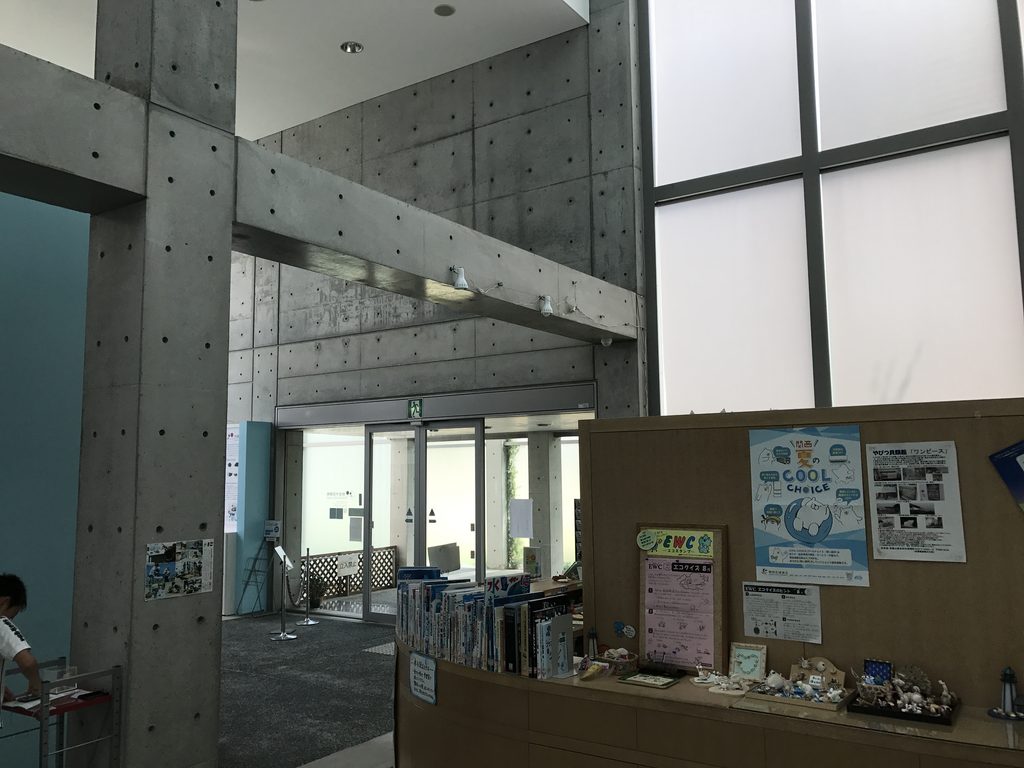
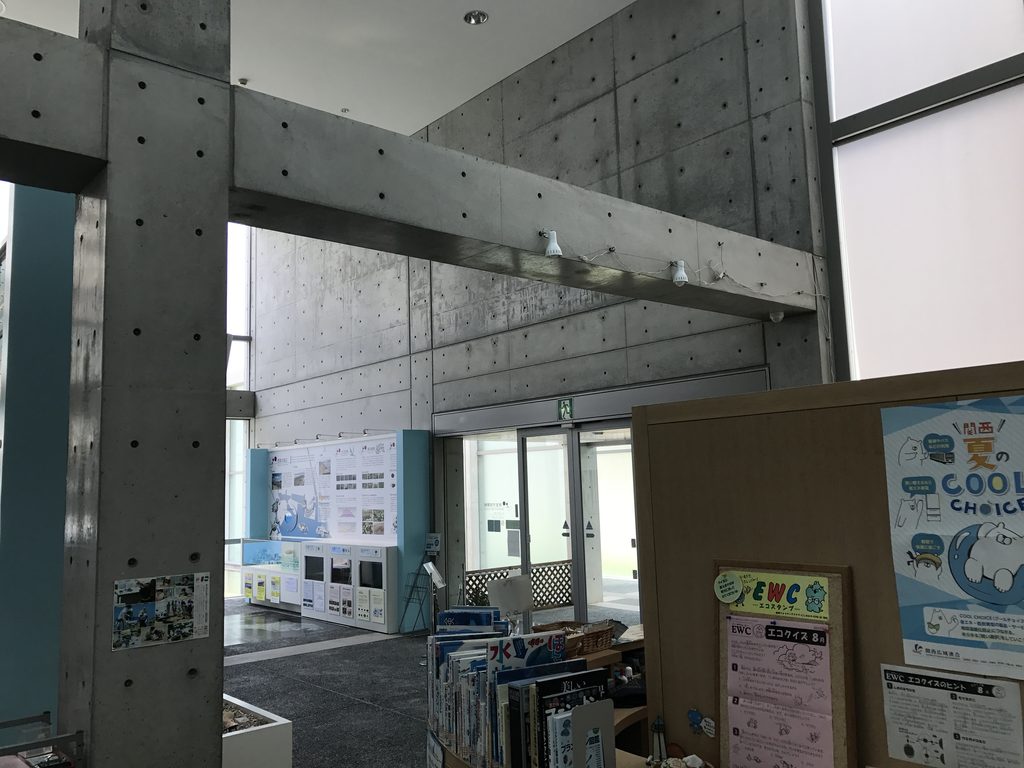
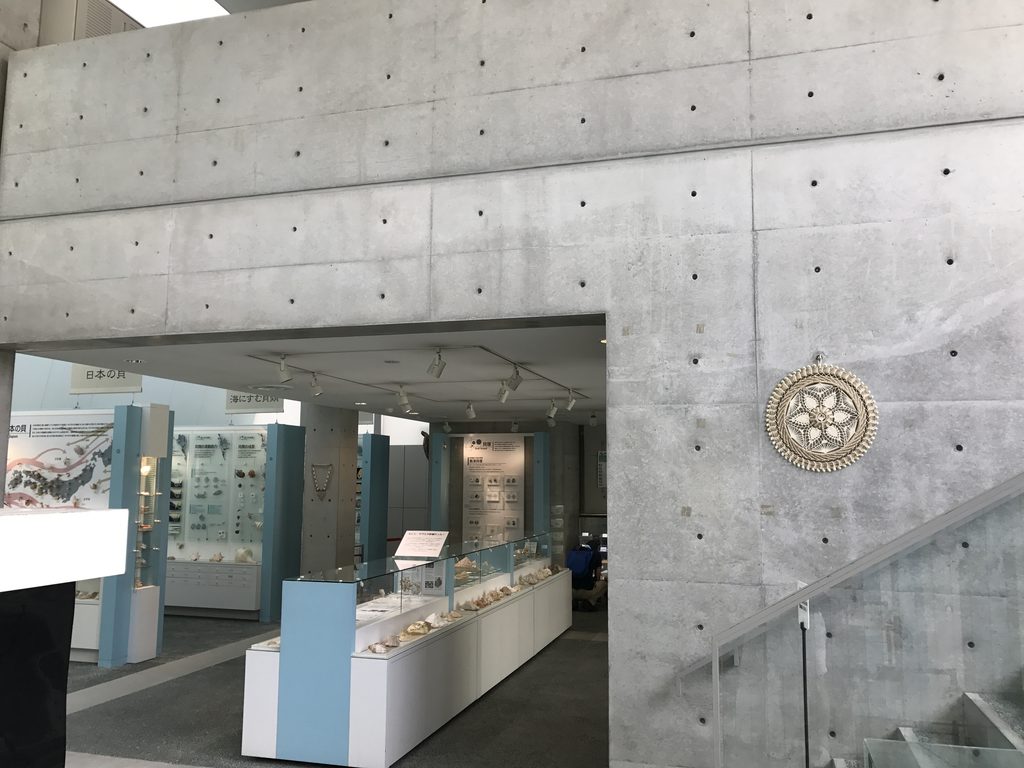
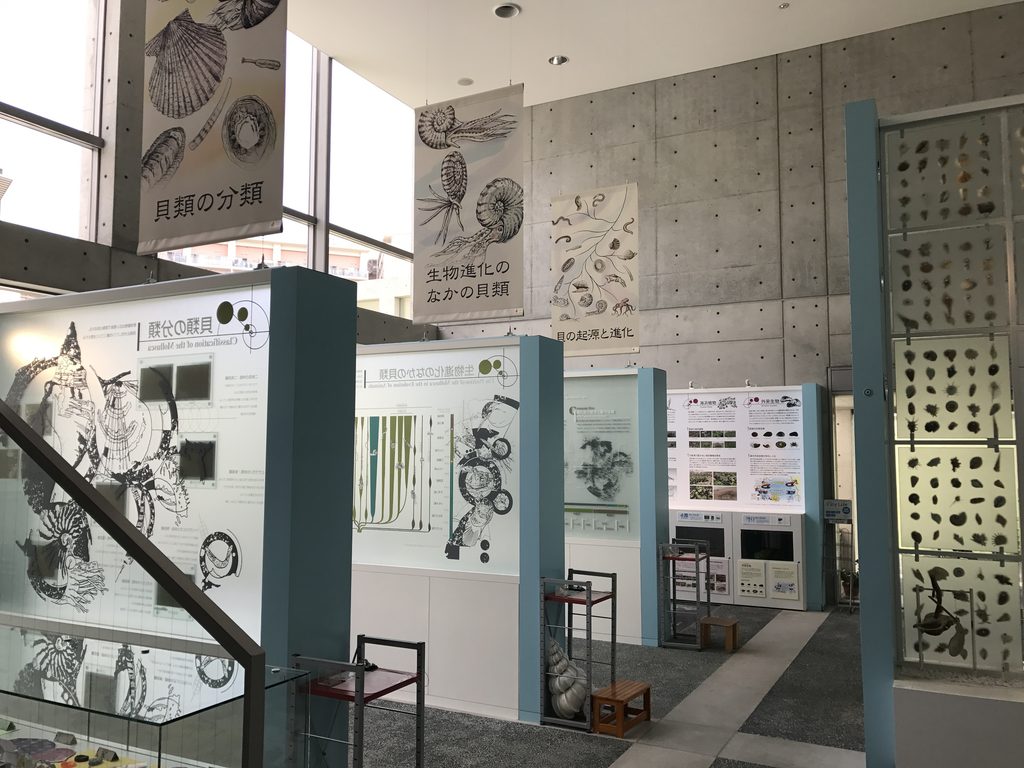
コンクリートを基調とした空間の中に、展示ケースや壁面の青が広がる。西宮市も館内について「海の中を思わせるブルー」で統一されていると説明しており、展示デザインそのものが博物館のテーマを空間へ持ち込んでいる。
Blue exhibition surfaces spread through an interior dominated by concrete. The museum itself describes this color scheme as evoking the atmosphere of being beneath the sea.
しかし興味深いのは、青だけで海を演出しているわけではないことである。
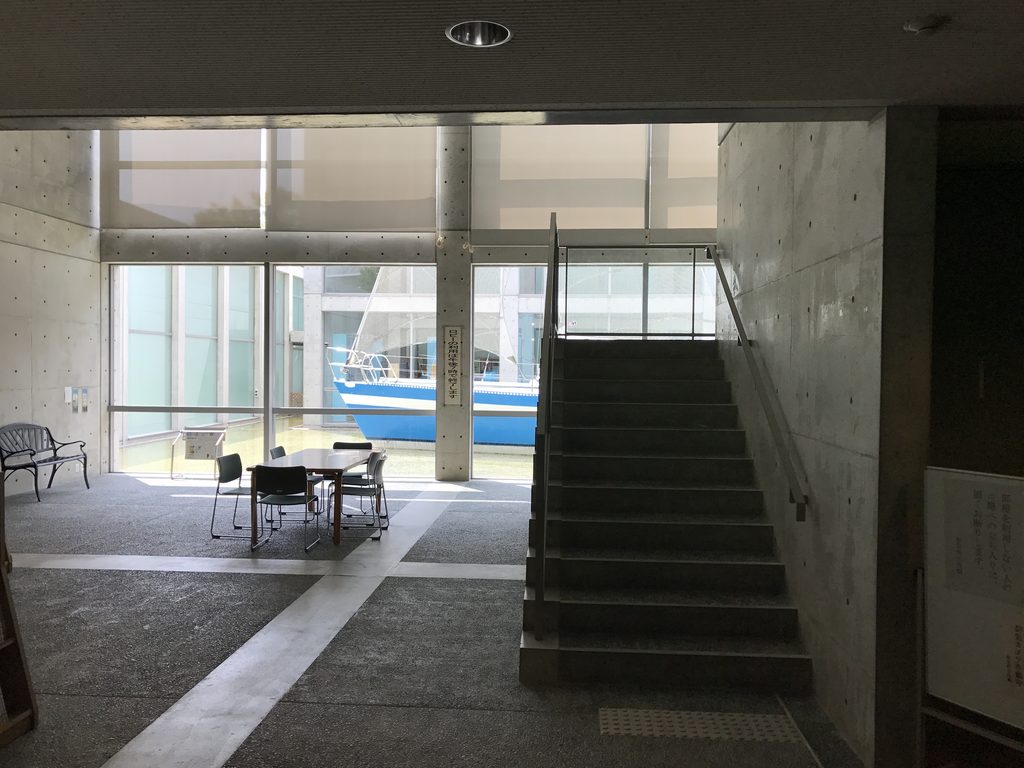
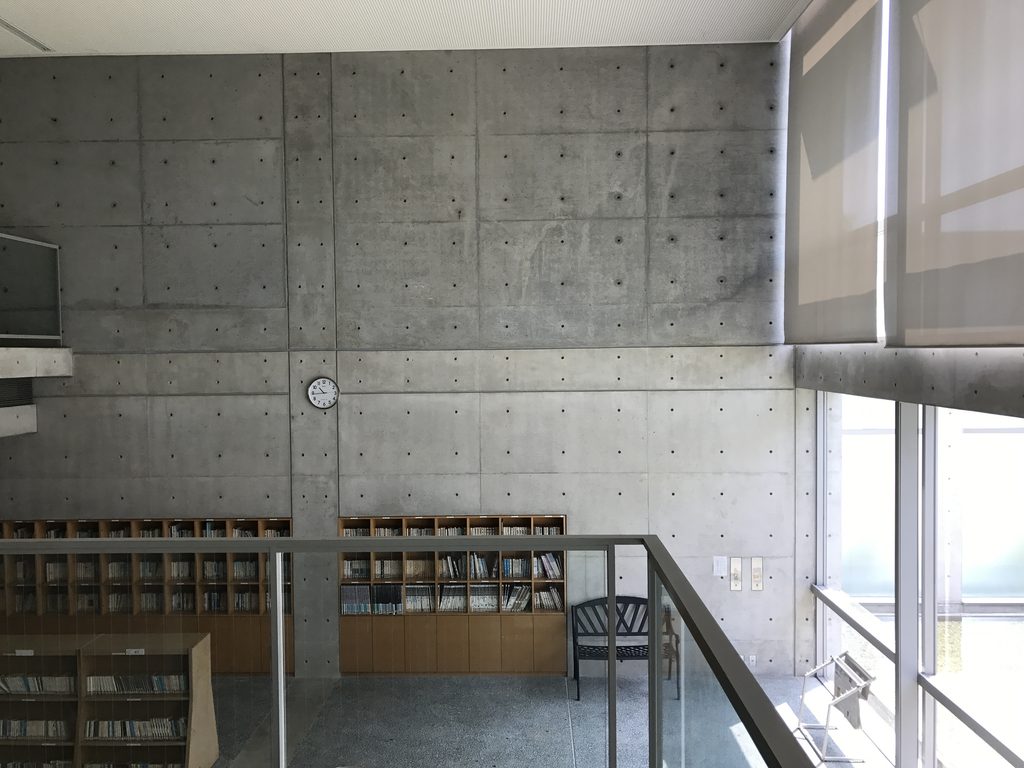
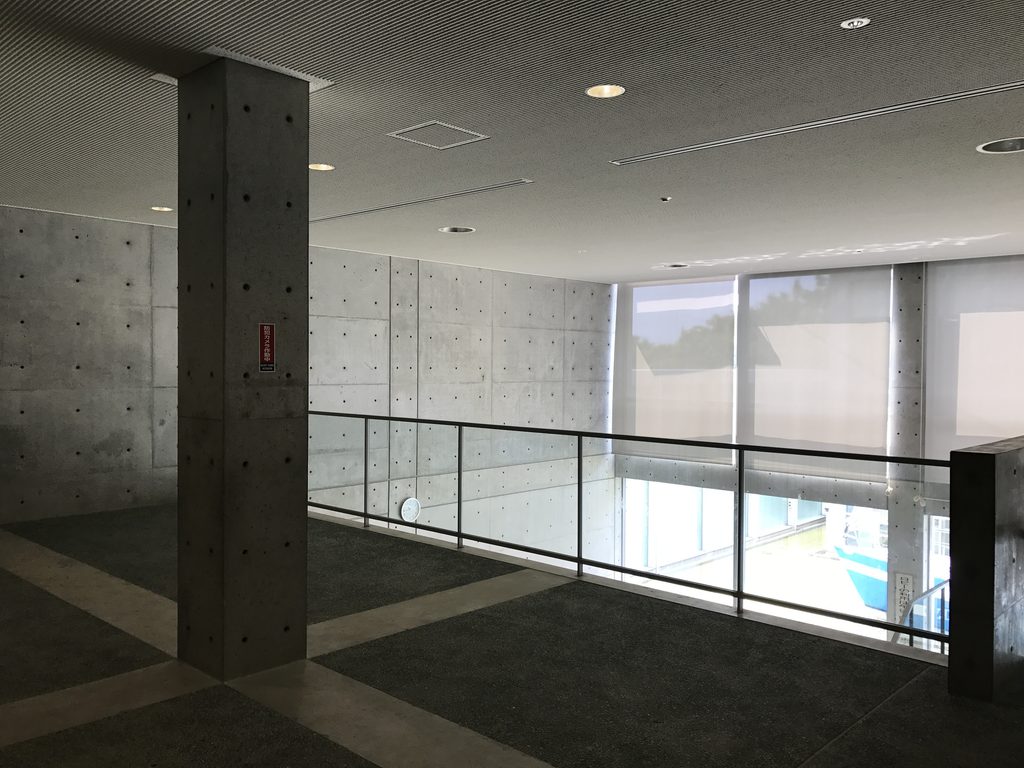
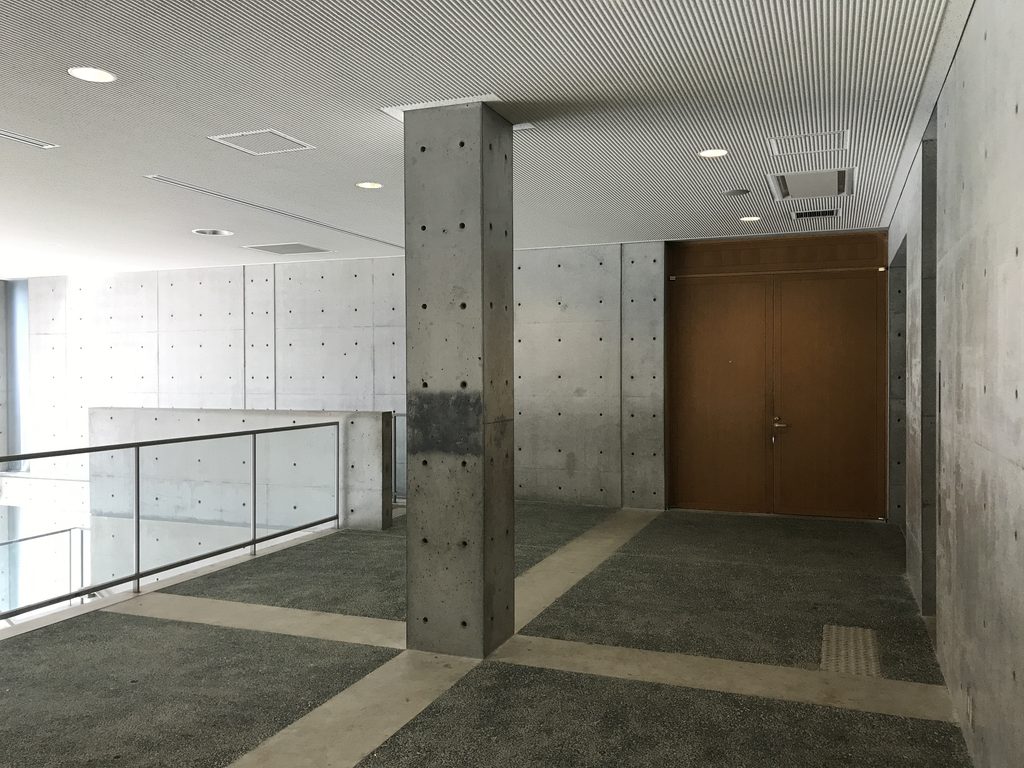
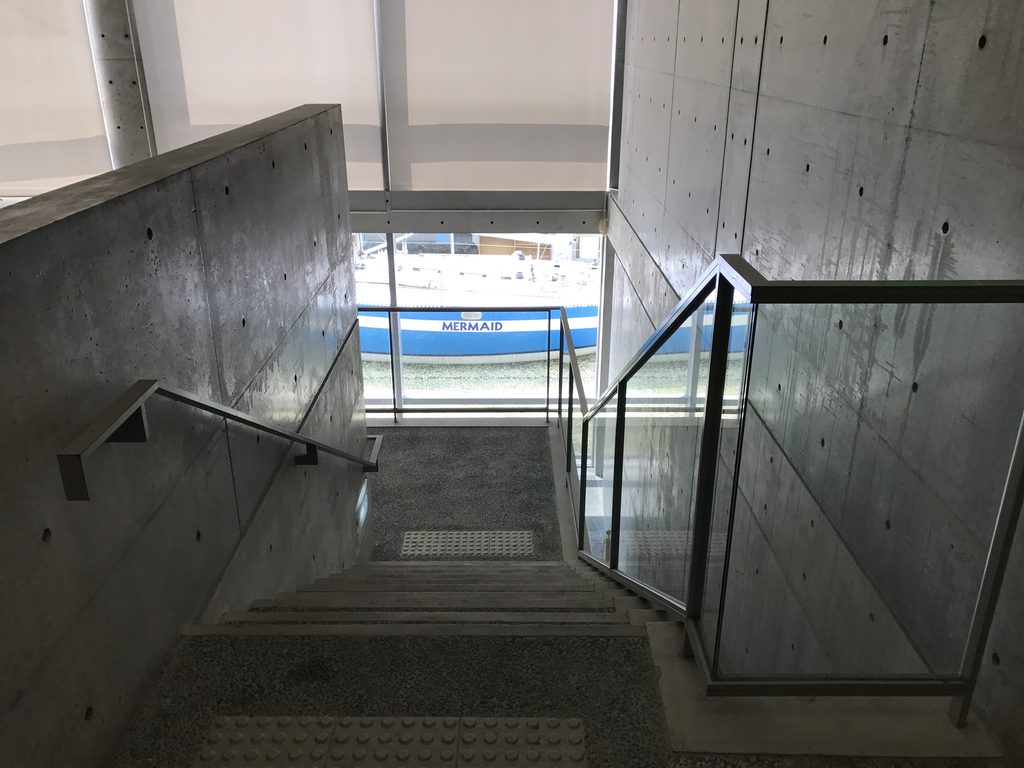
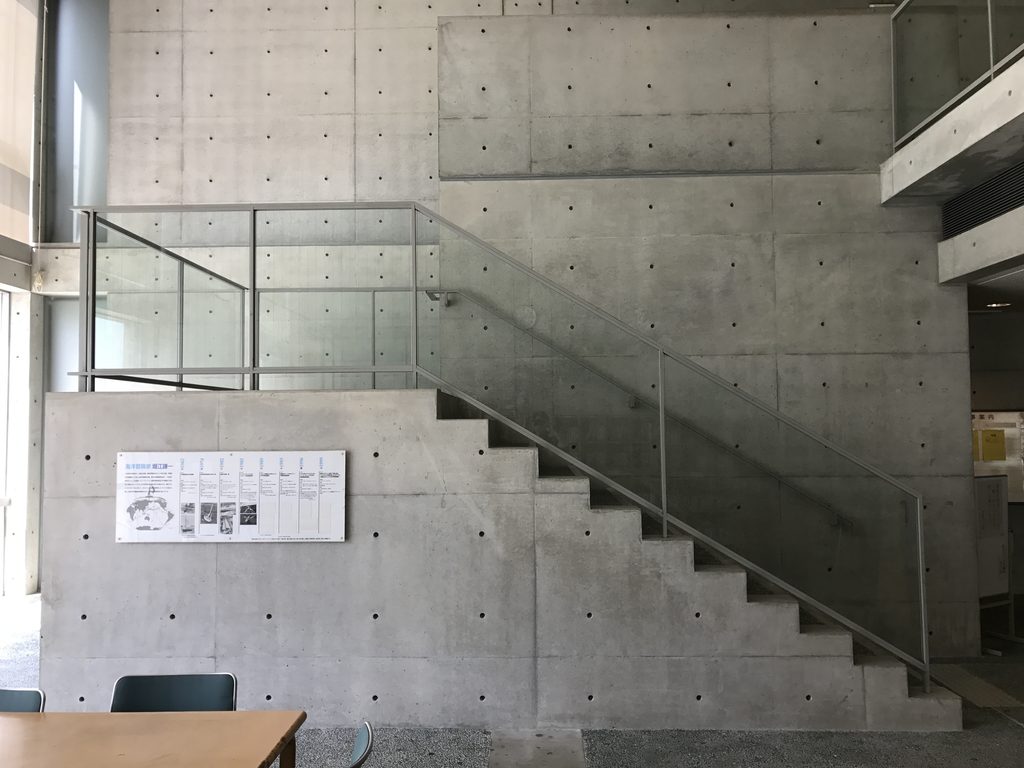
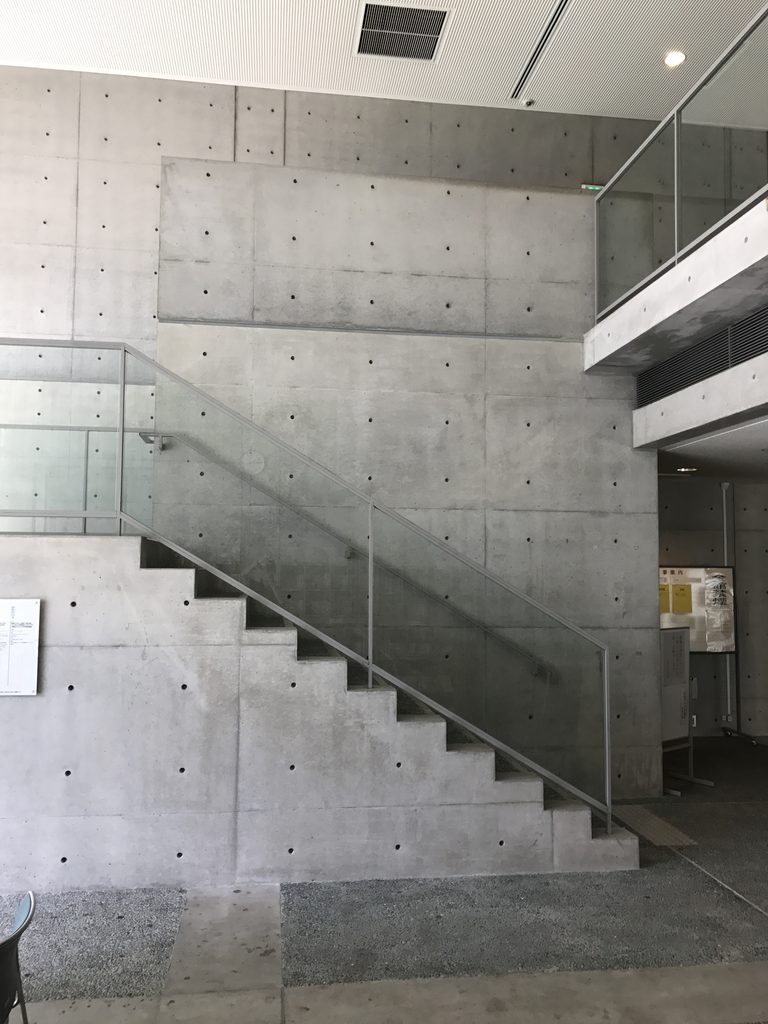
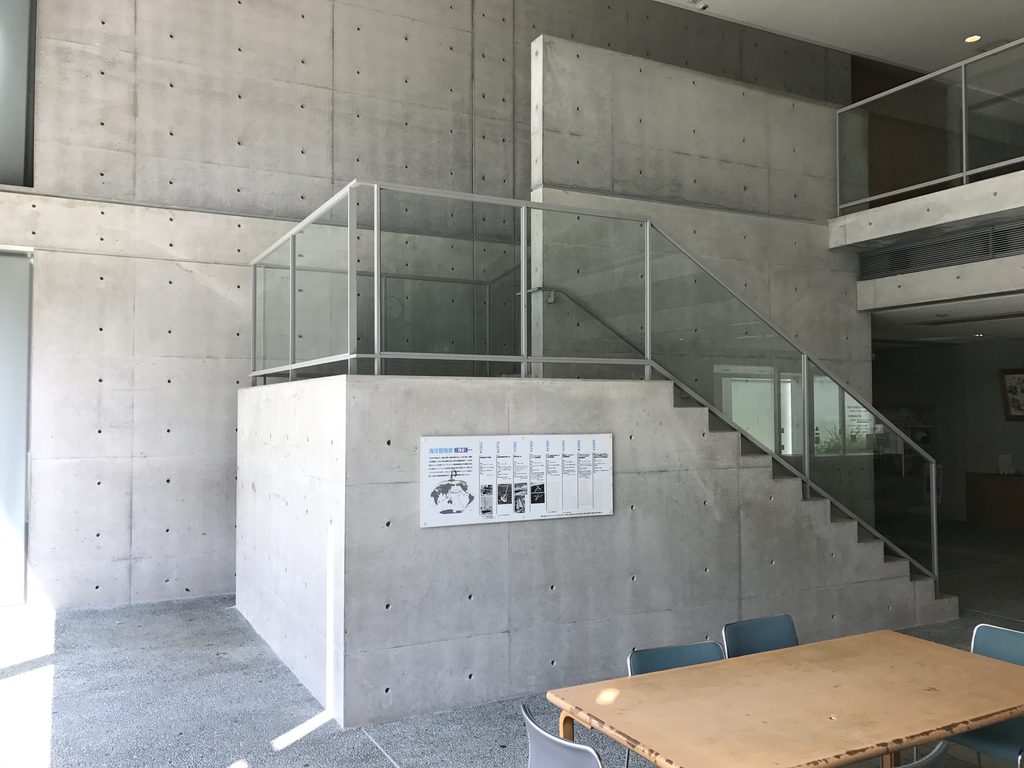
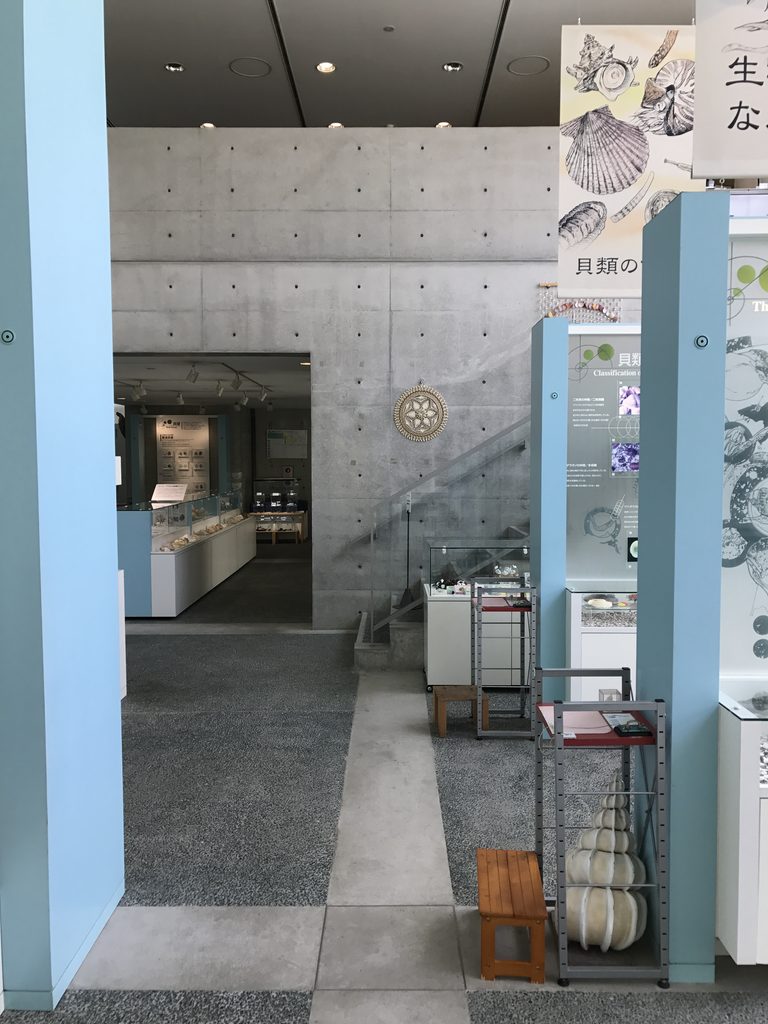
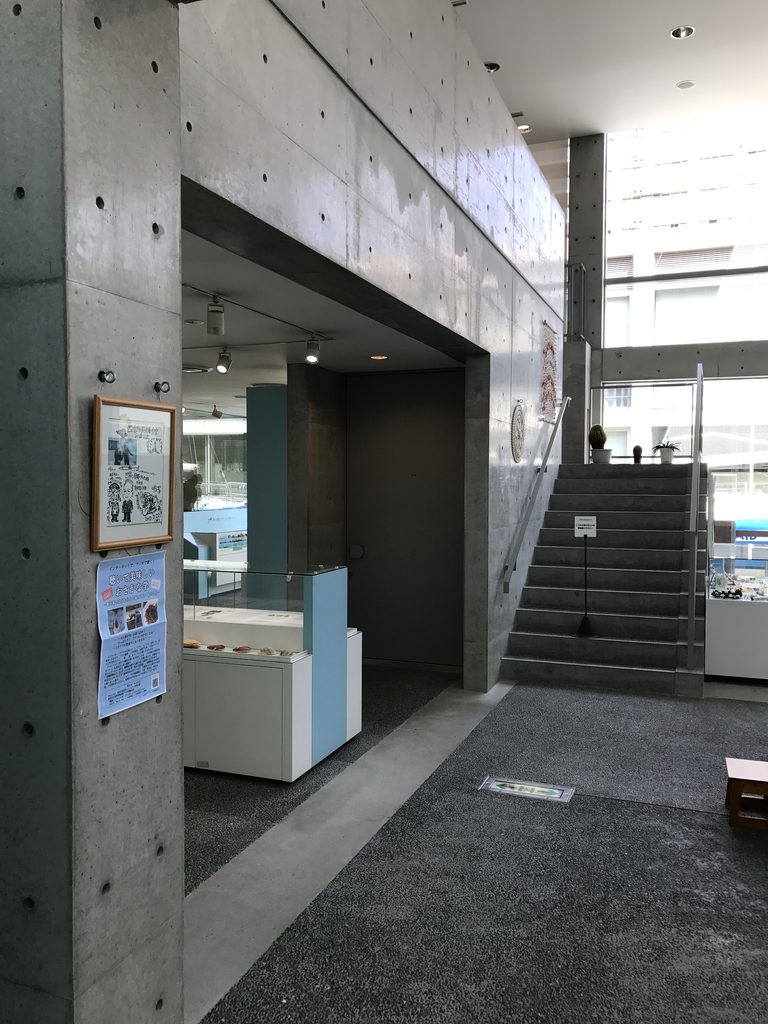
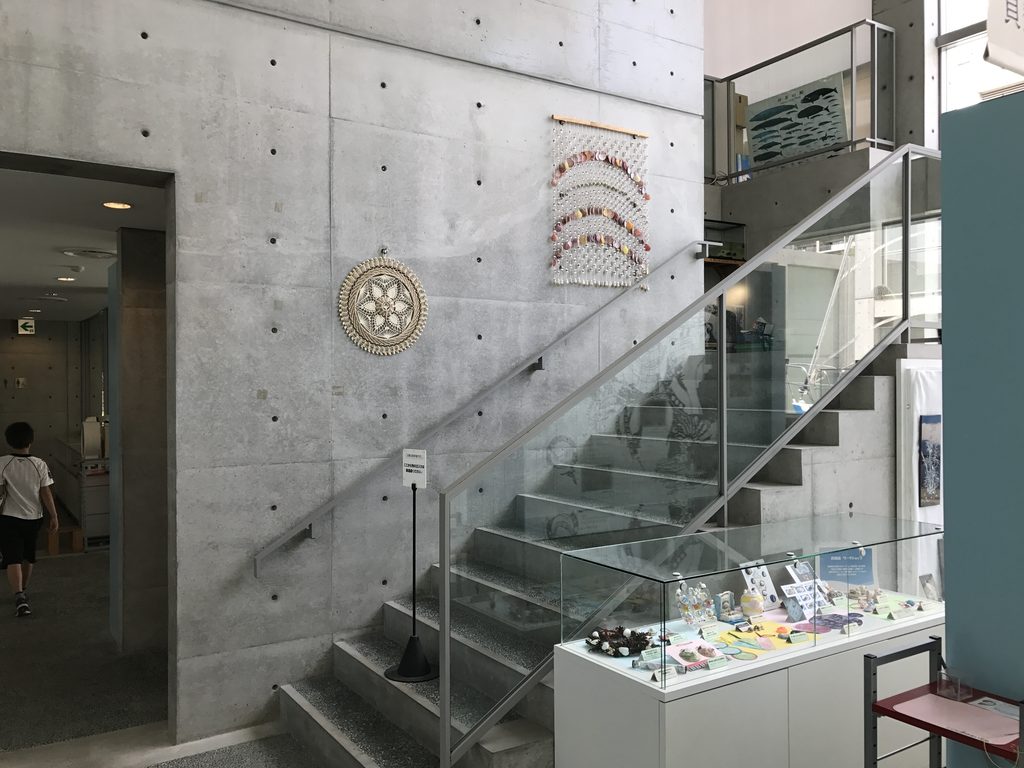
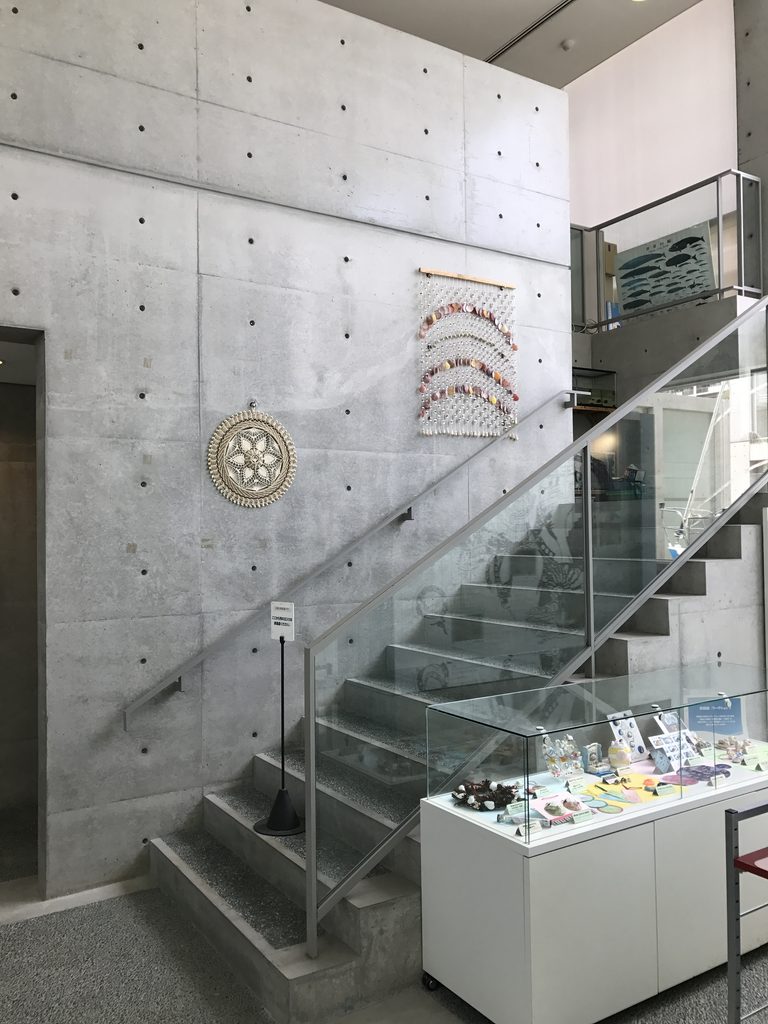
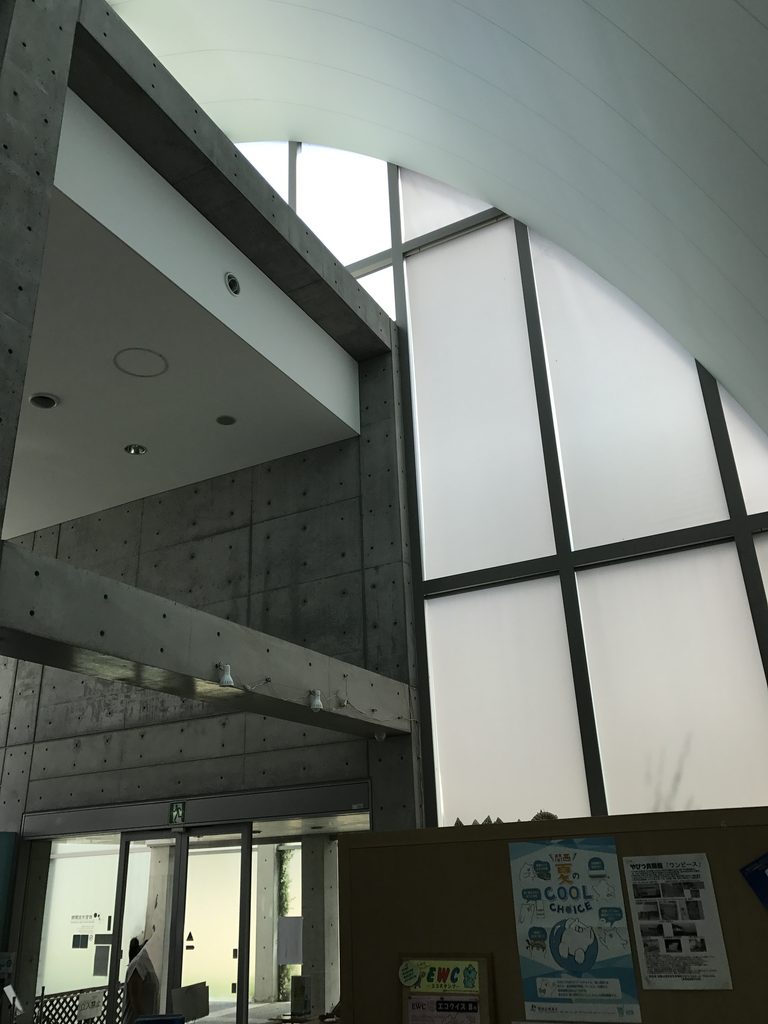
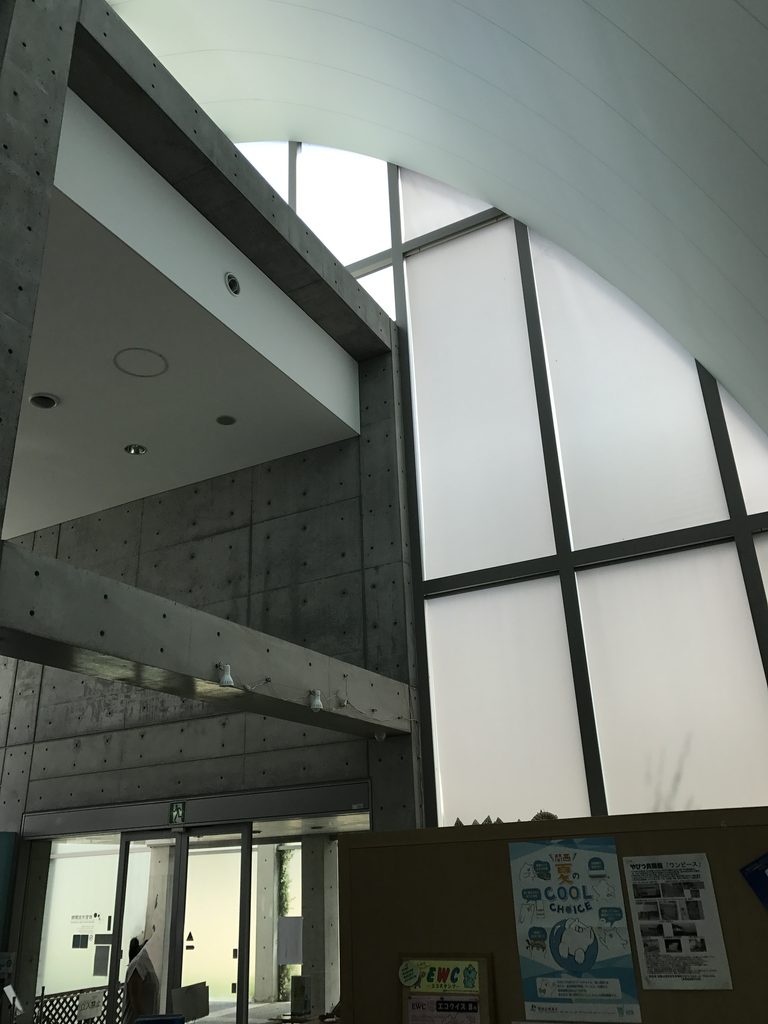
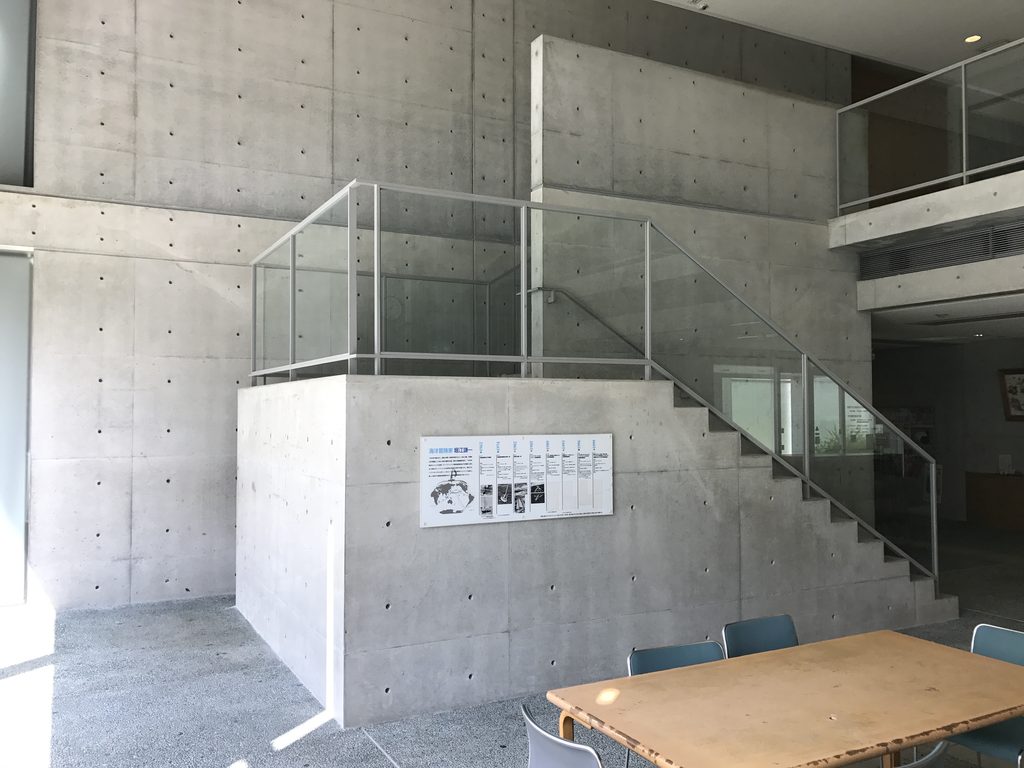
吹抜けによって上下の空間がつながり、細長いガラスから自然光が入り、階段を移動することで視点の高さが変わっていく。展示物を見るだけでなく、建物の中を歩くこと自体に変化がつくられている。
Yet color alone does not create the experience.
Voids connect different levels, narrow glazing introduces natural light, and stairs continuously alter the visitor’s viewpoint. Movement through the building becomes part of experiencing the exhibits.
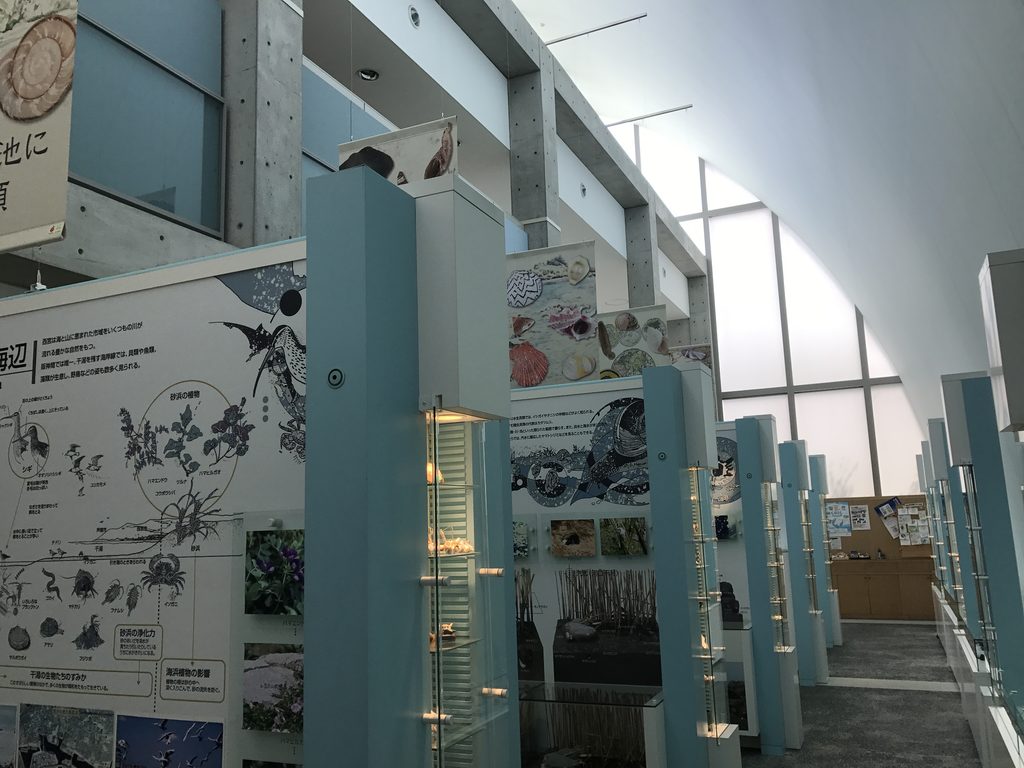
展示されているのは、色も形も大きさも異なる無数の貝である。その有機的で複雑な形に対して、周囲の建築はコンクリートと直線によって極めて明快につくられている。
The shells themselves vary enormously in color, texture and organic form. Around them, the architecture remains geometrically precise.
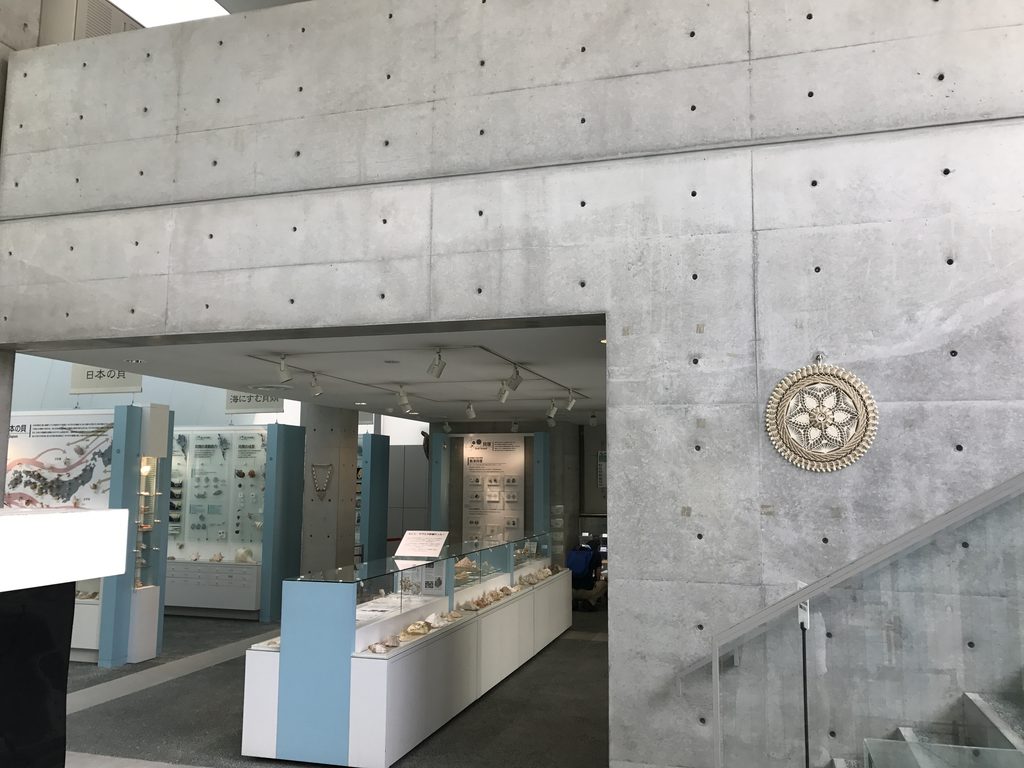
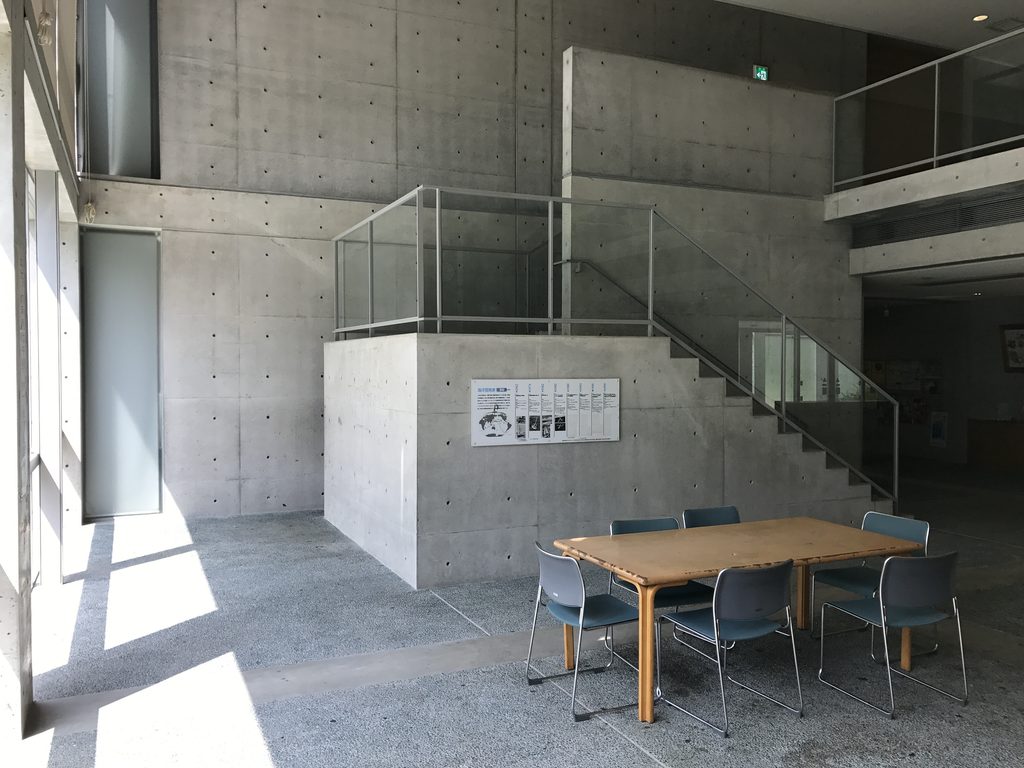
貝の曲線とコンクリートの直線、展示の青とコンクリートの灰色。
異なるものを混ぜ合わせるのではなく、対比させることで互いの存在を強く見せる。 そこにも安藤らしい空間のつくり方を感じる。
Curved shells and straight concrete. Blue displays and gray walls.
Rather than blending these elements together, their contrast makes each appear more vivid.
3. ガラスの向こうに、本物の海の物語を置く
A Real Story of the Sea Beyond the Glass
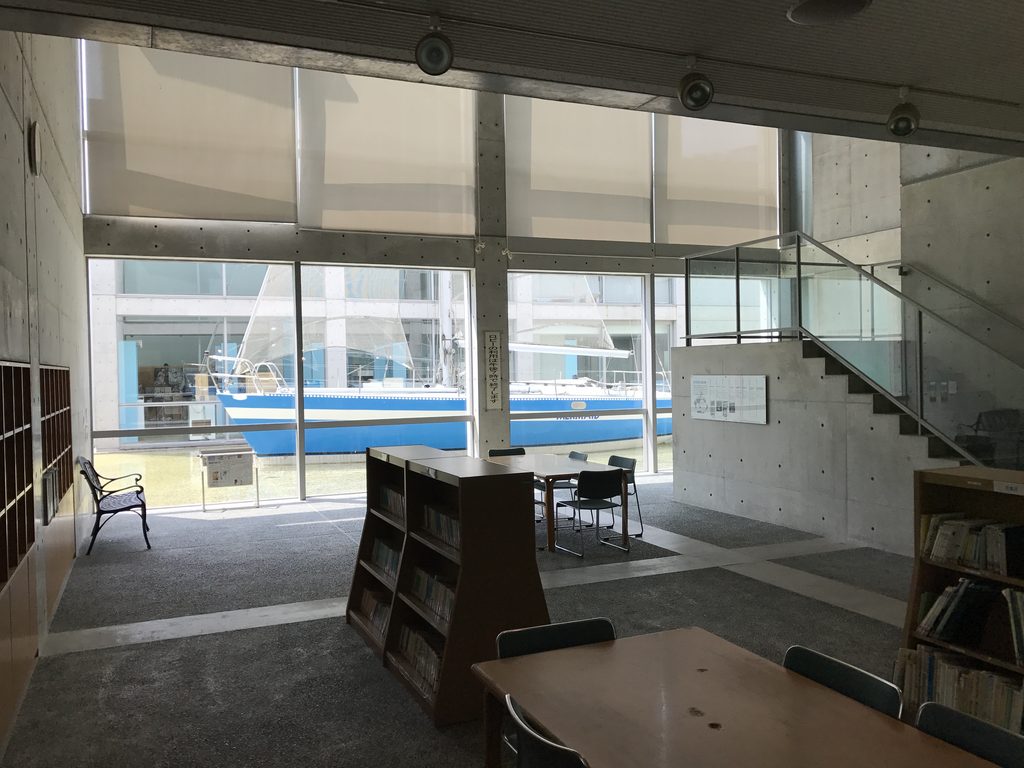
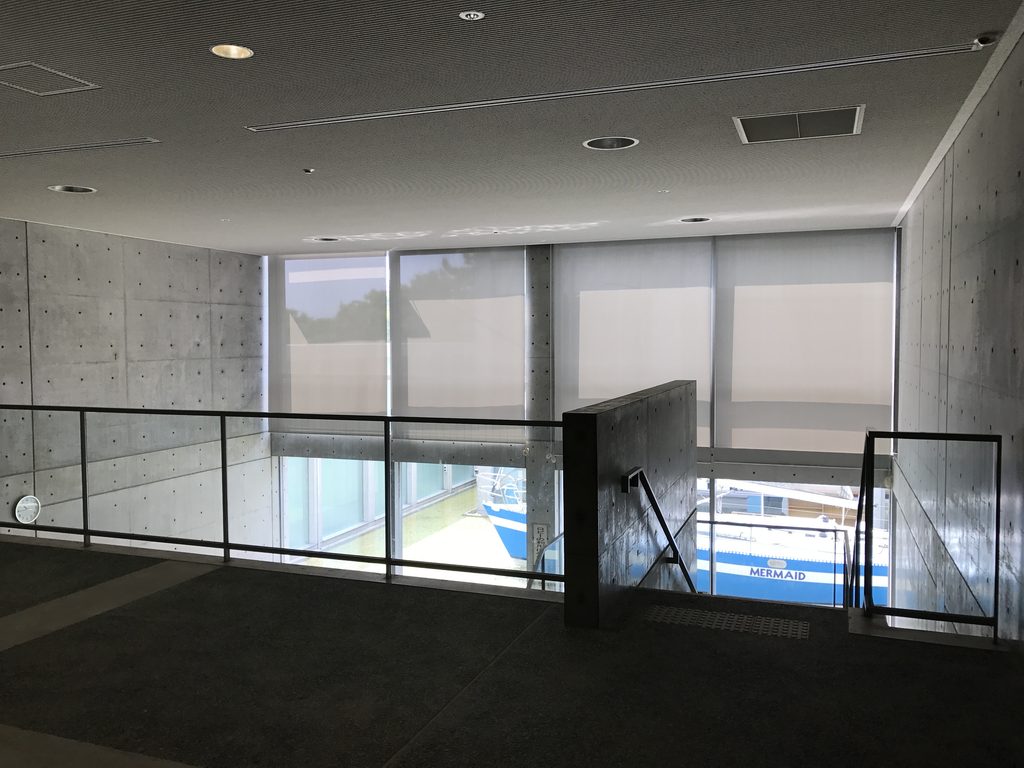
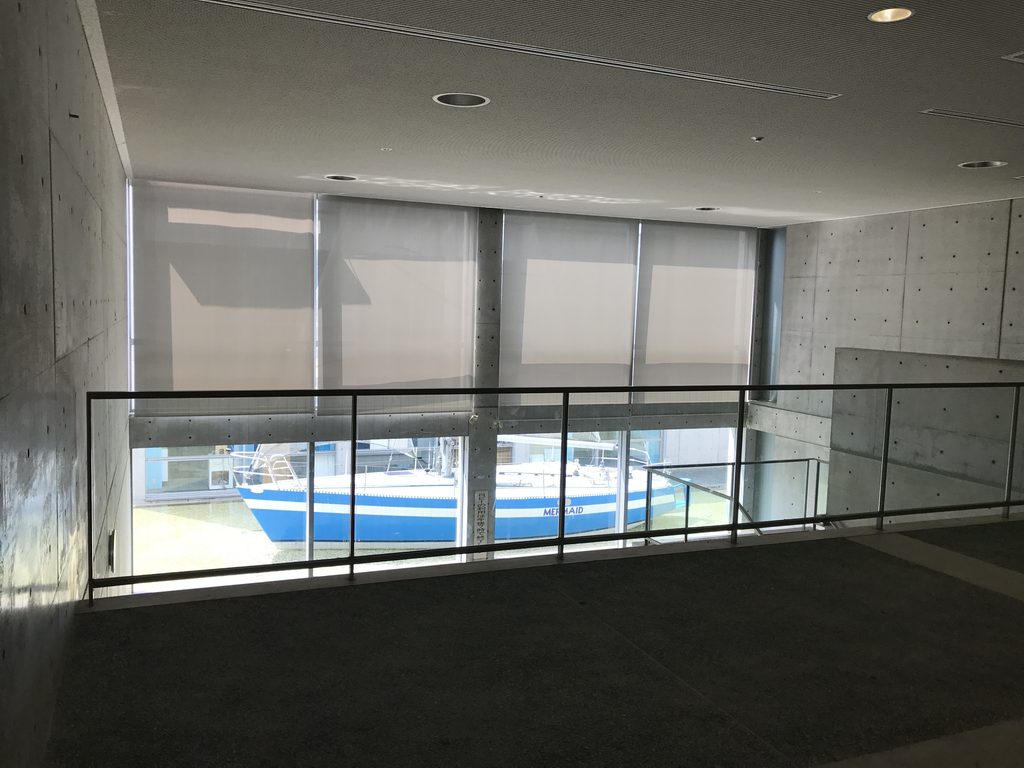
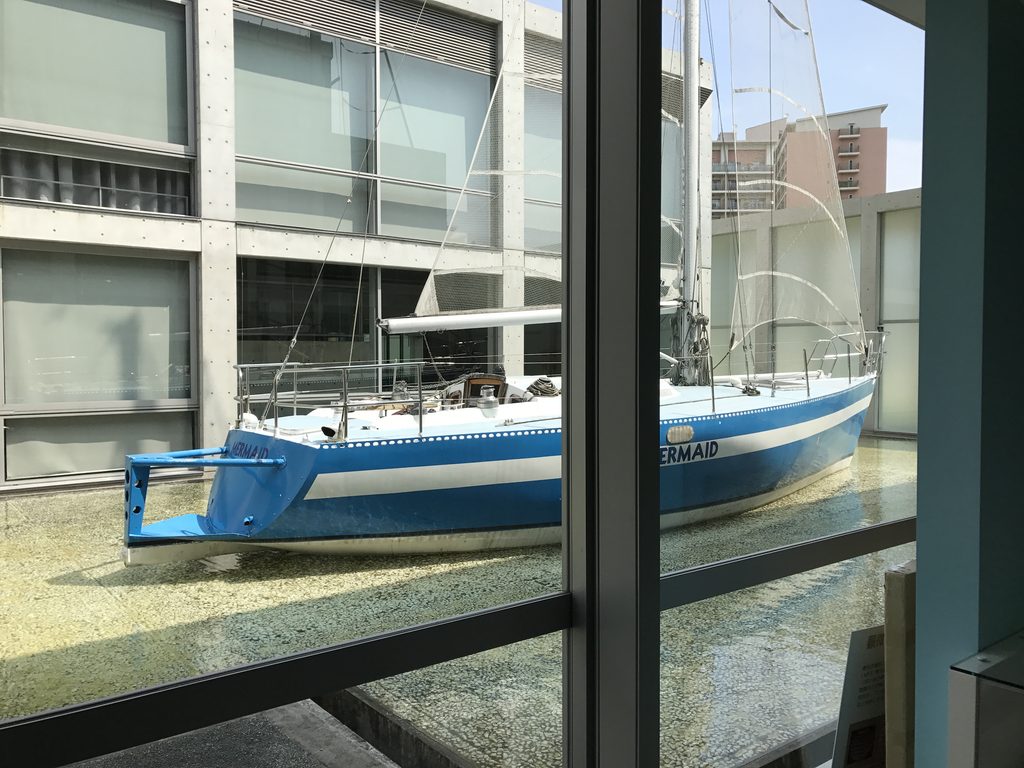
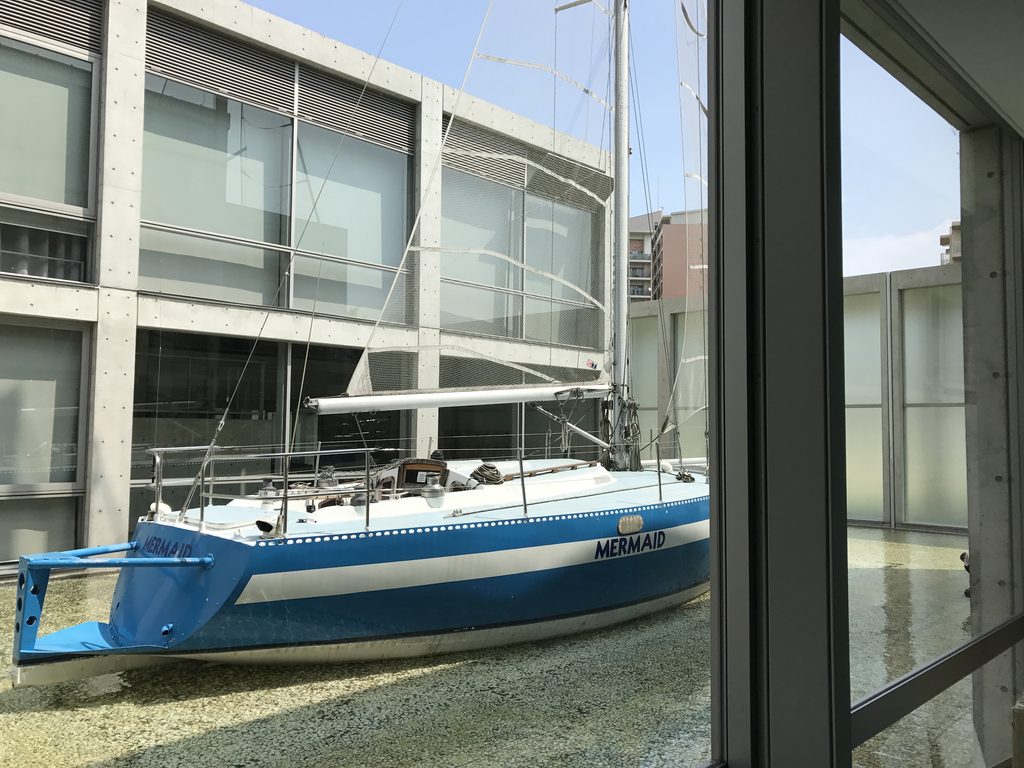
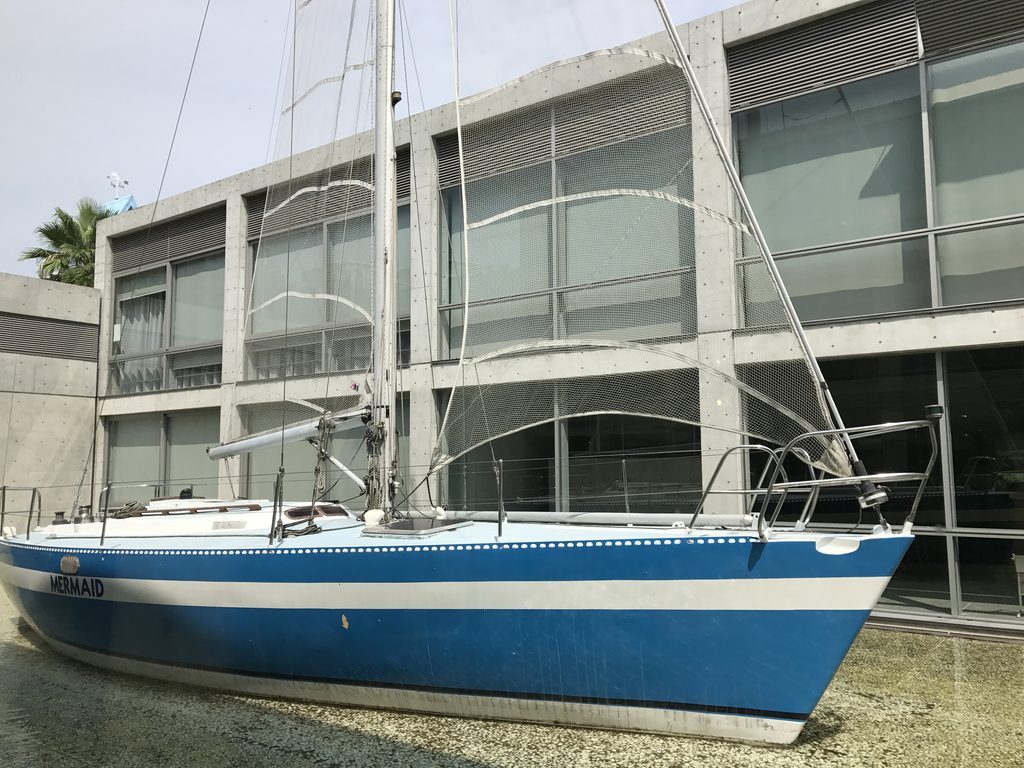
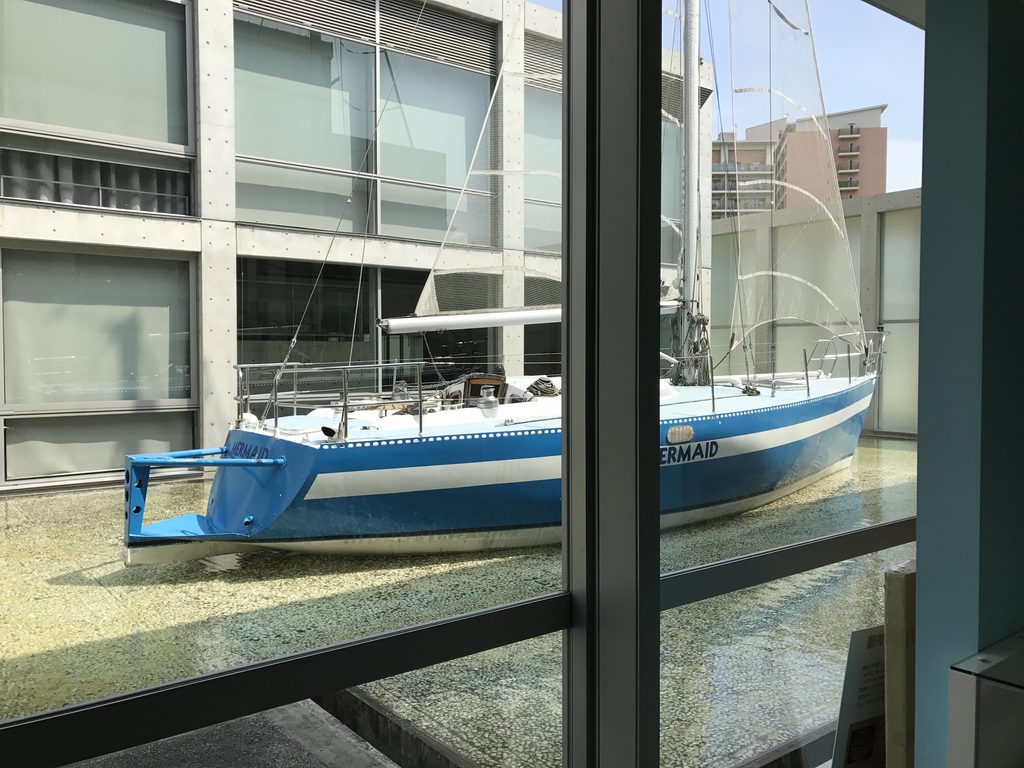
館内を歩いていると、ガラスの向こうに一艘の青いヨットが現れる。
As I moved through the museum, a blue yacht appeared beyond the glass.
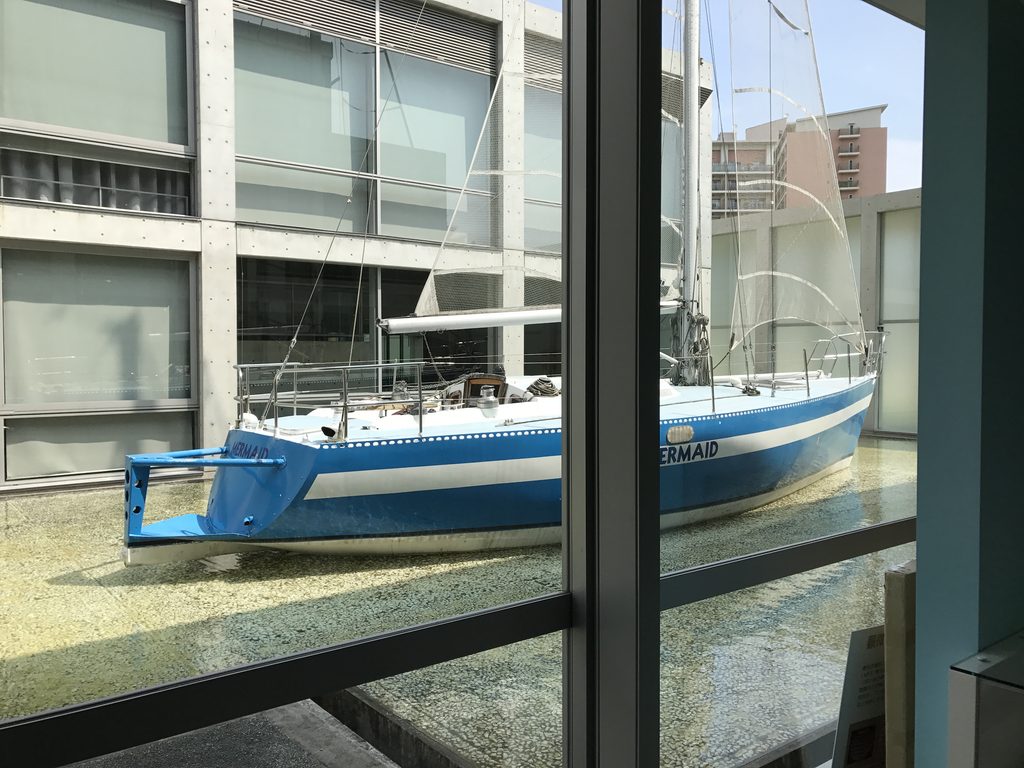
これは海洋冒険家・堀江謙一の「マーメイド4世号」である。現在は中庭に展示され、西宮市貝類館を特徴づけるもう一つの存在になっている。
This is Mermaid IV, associated with ocean adventurer Kenichi Horie and now displayed in the museum courtyard.
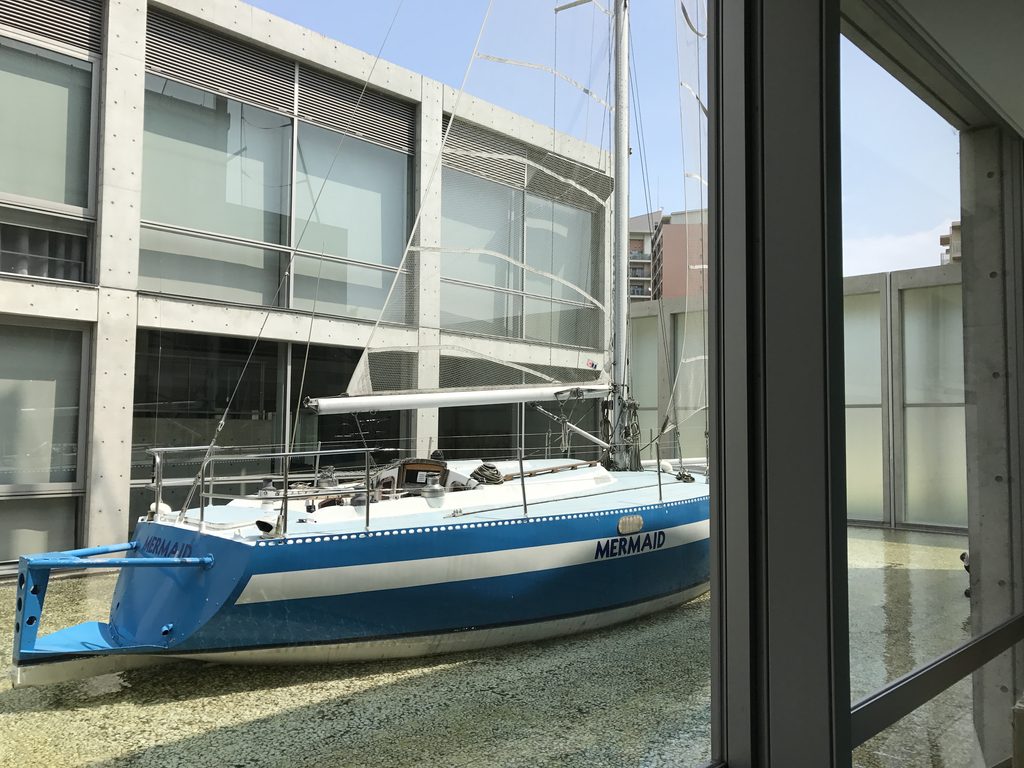
面白いのは、船だけを独立した展示物として見るのではなく、館内のさまざまな場所からその姿が現れることである。
ガラス越しに見る。吹抜けから見る。階段を移動しながら角度を変えて見る。
What makes the boat particularly effective is the way it repeatedly appears from different parts of the building.
It can be seen through glass, across the void and from different heights while moving along the stairs.
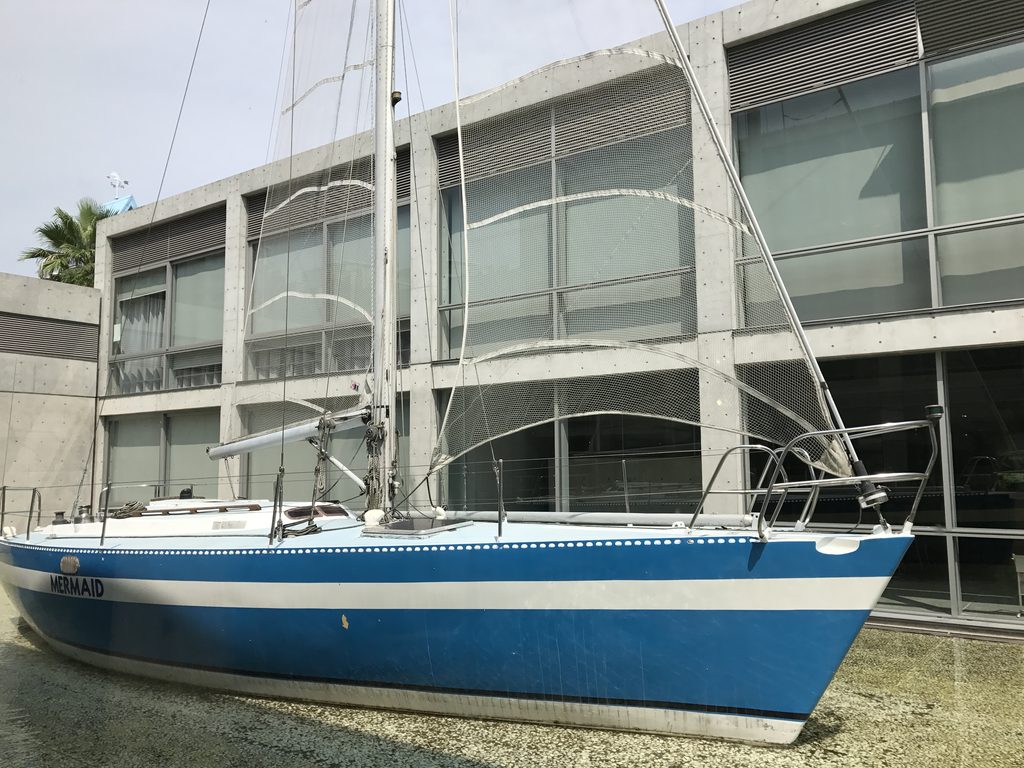
建築の中を歩くことで、同じ船が少しずつ違った姿を見せる。
館内には海から生まれた無数の貝が並び、その外には実際に海を渡った船が置かれている。そして建物の外観にはヨットの帆を思わせる曲面が立ち上がる。
ここまで来ると、それぞれが別々の要素には感じられない。
貝、海、船、帆という一つの物語が、展示と建築の間を行き来している。
The same yacht changes as the visitor moves.
Inside are thousands of shells formed by the sea. Outside is a vessel that actually travelled across it. Above the building rises a form resembling a sail.
At that point, these no longer feel like separate elements.
Shells, sea, yacht and sail move back and forth between exhibition and architecture as parts of a single story.
4. 小さな博物館を、ひとつの海の体験にする
Turning a Small Museum into an Experience of the Sea
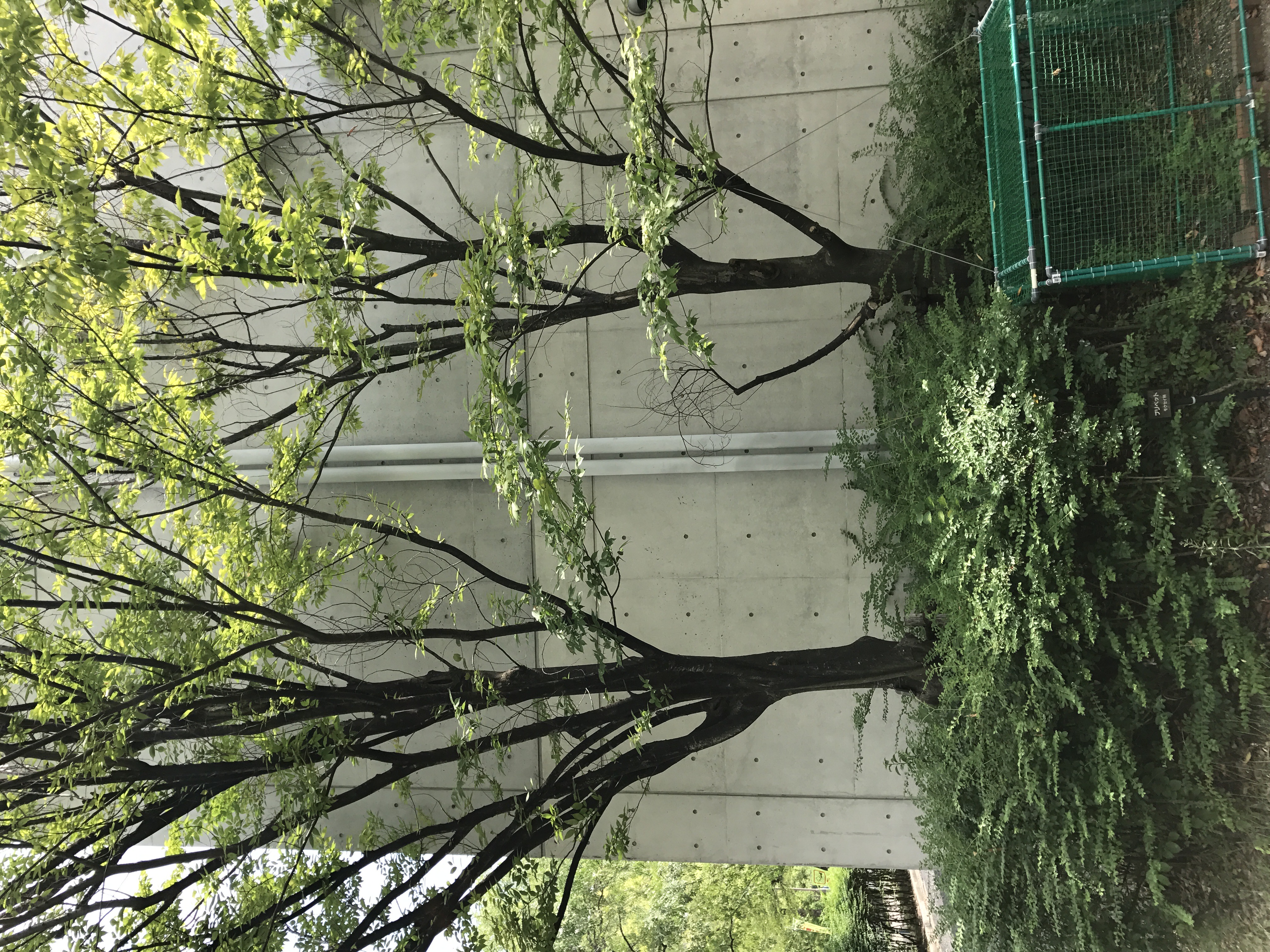
再び外へ出て建物の周囲を歩くと、最初に見た「帆」だけではなかったことに気づく。
Walking around the exterior again reveals that the sail is only one part of the building.
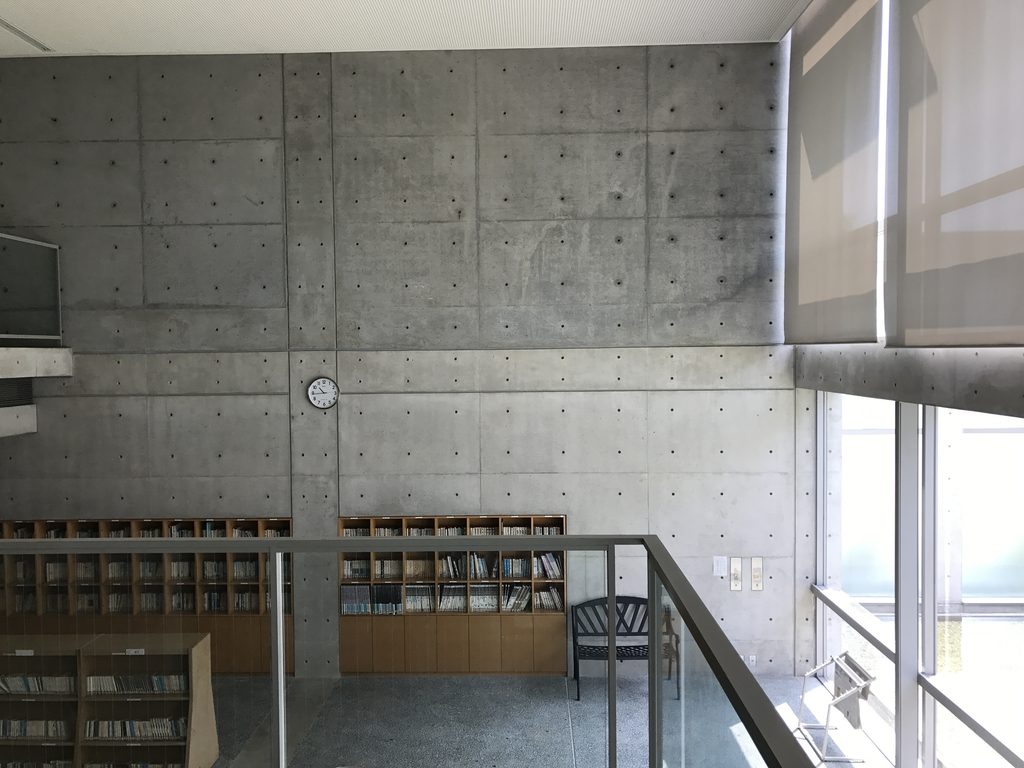
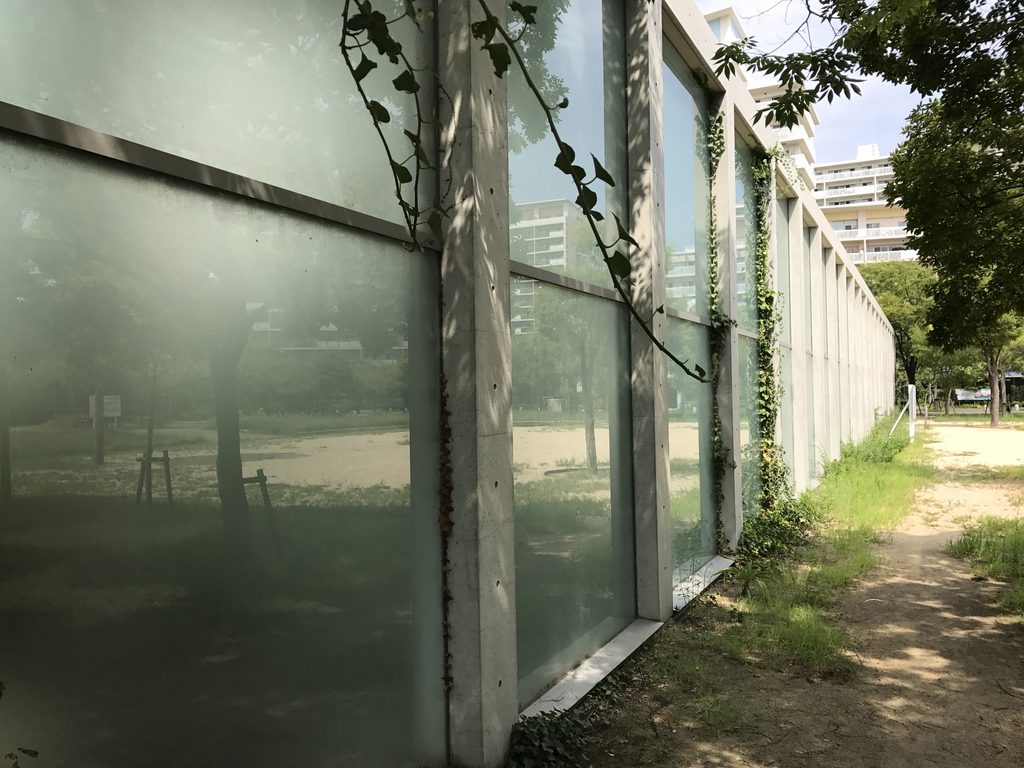
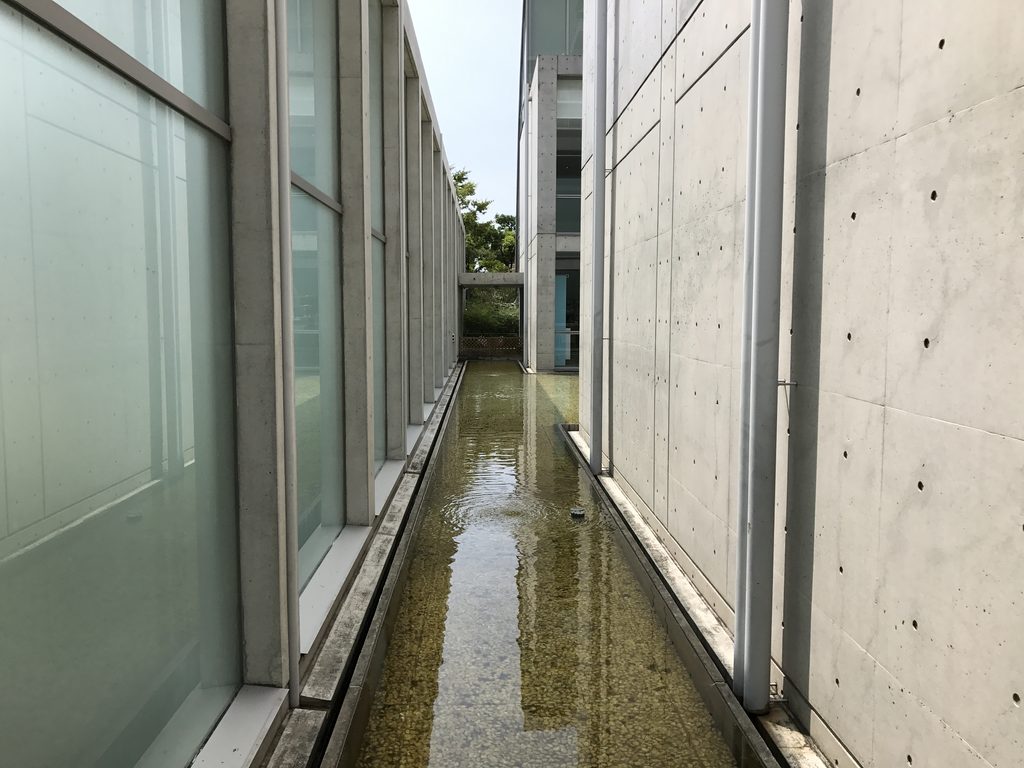
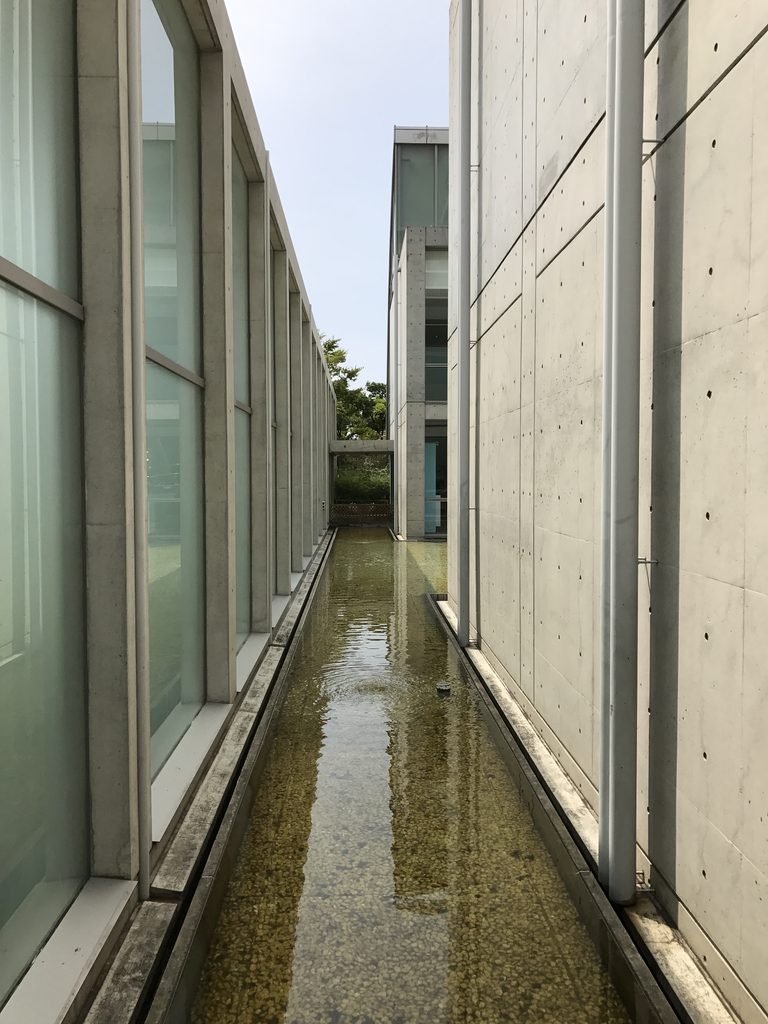
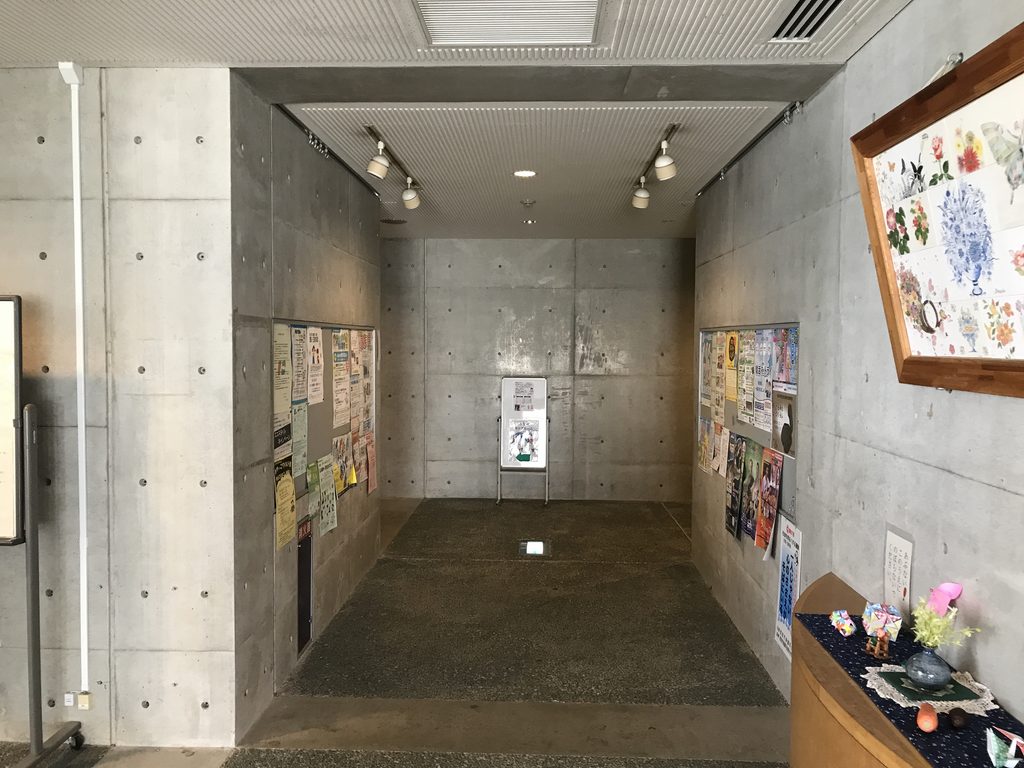
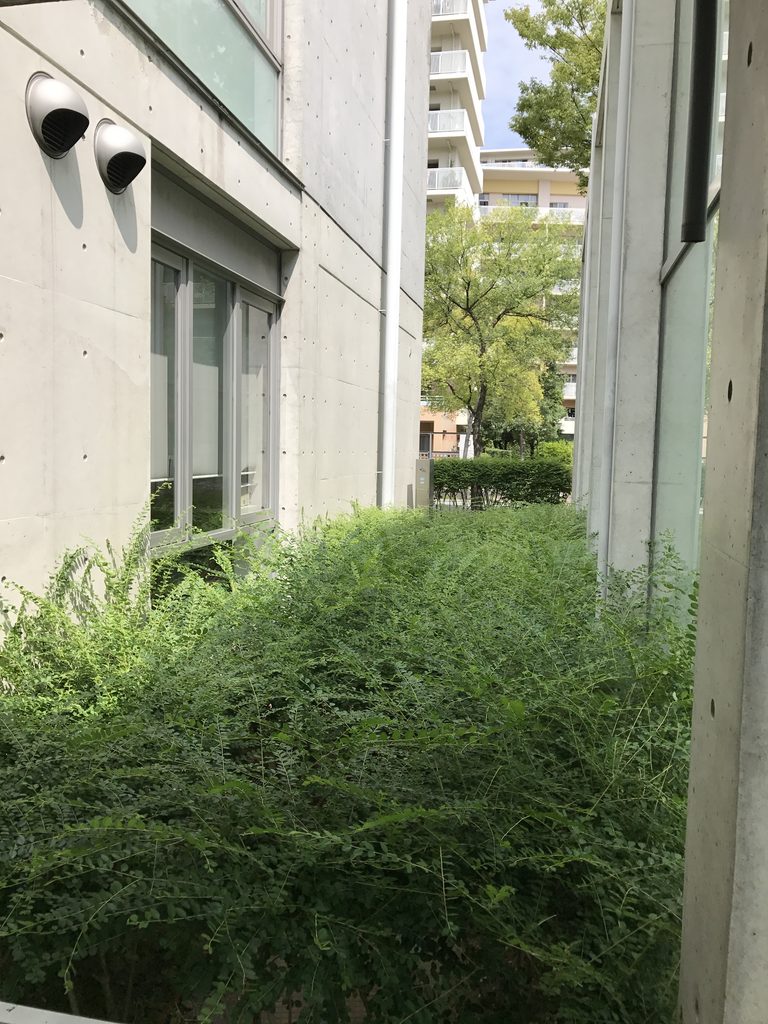
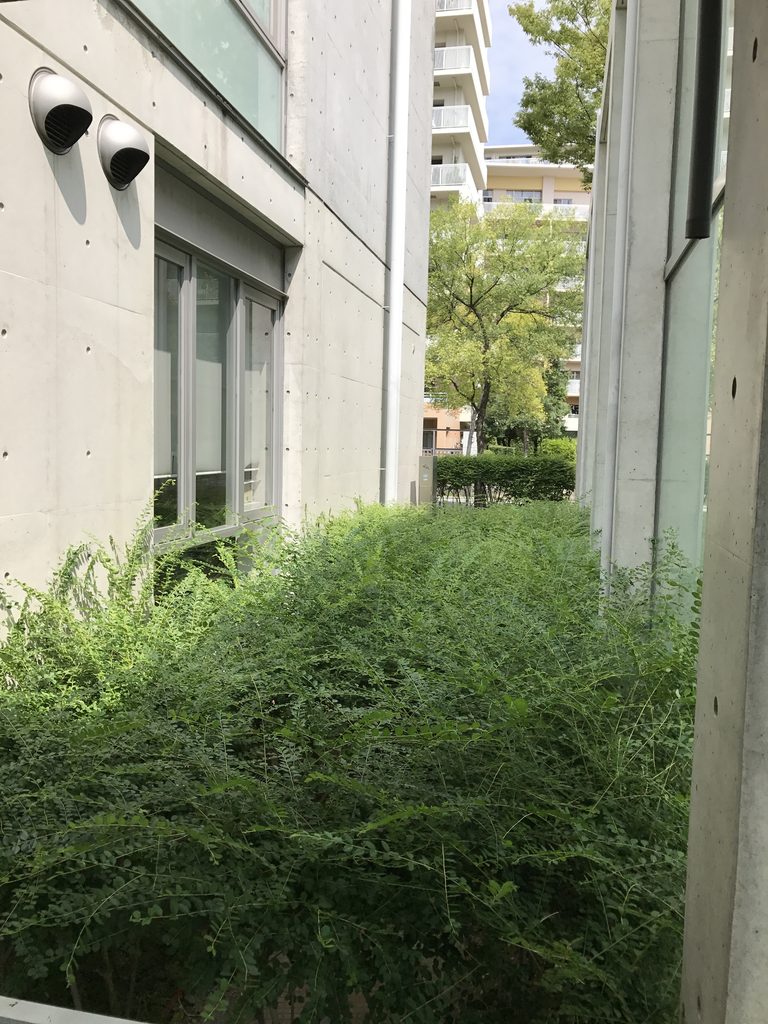
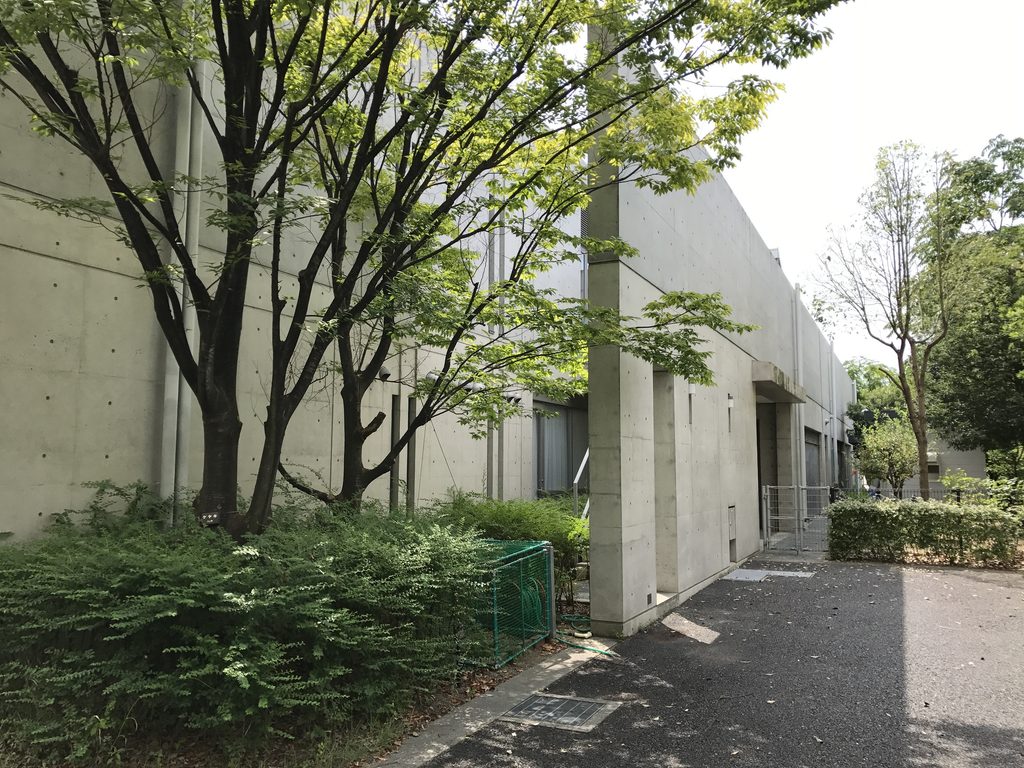
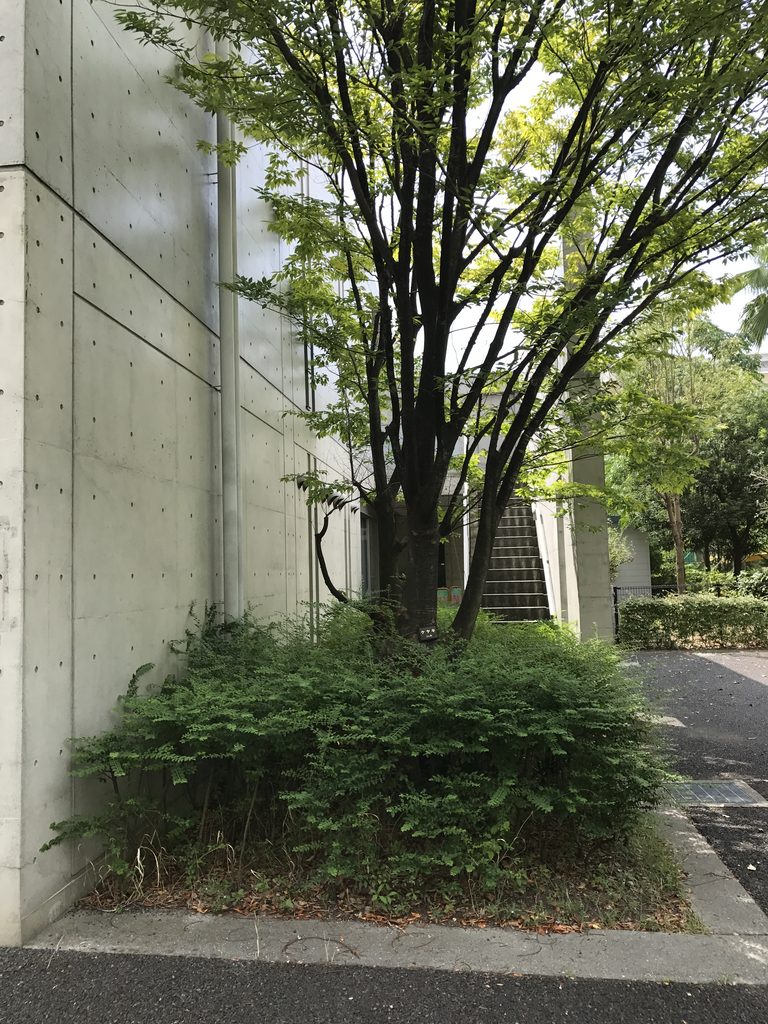
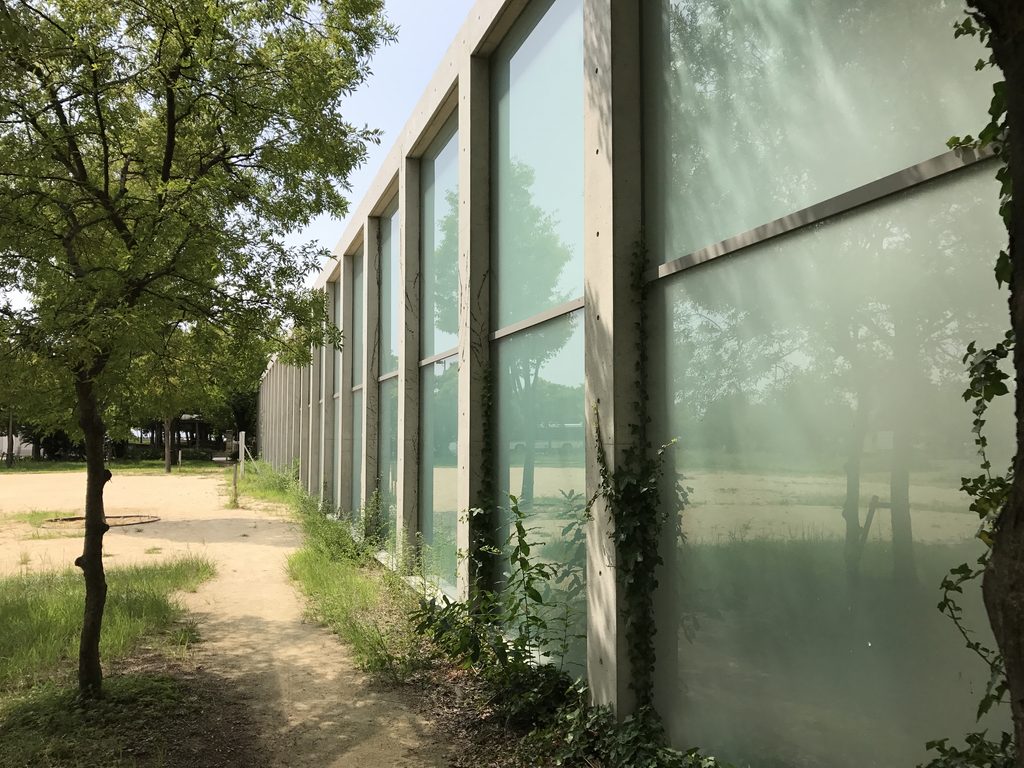
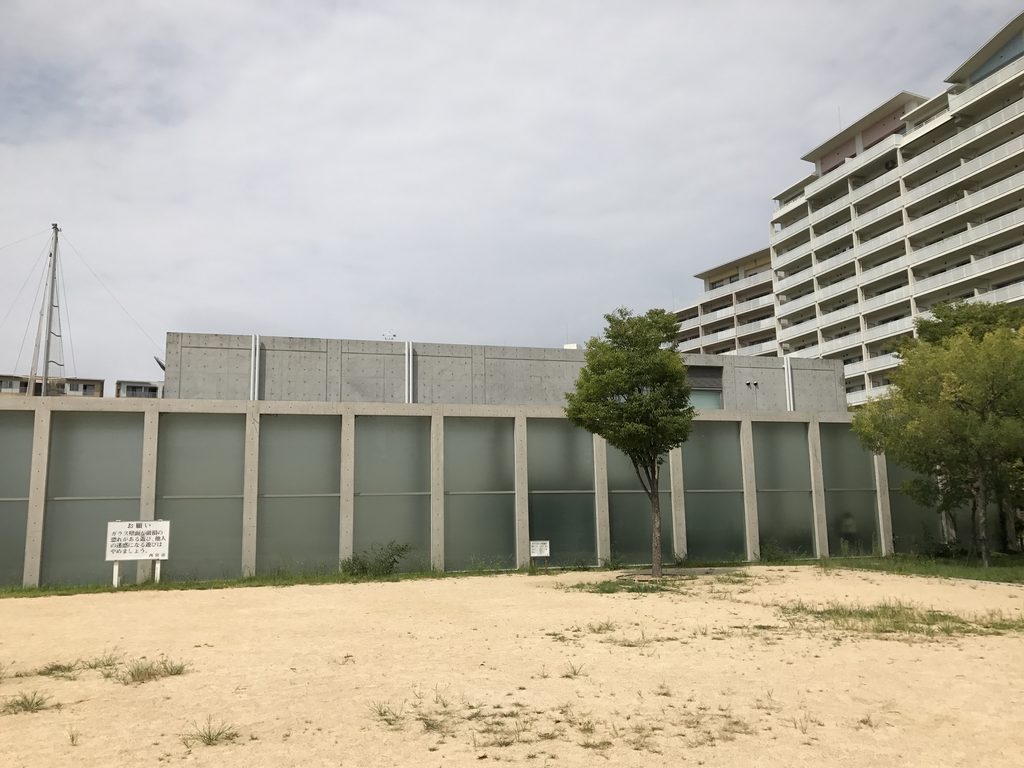
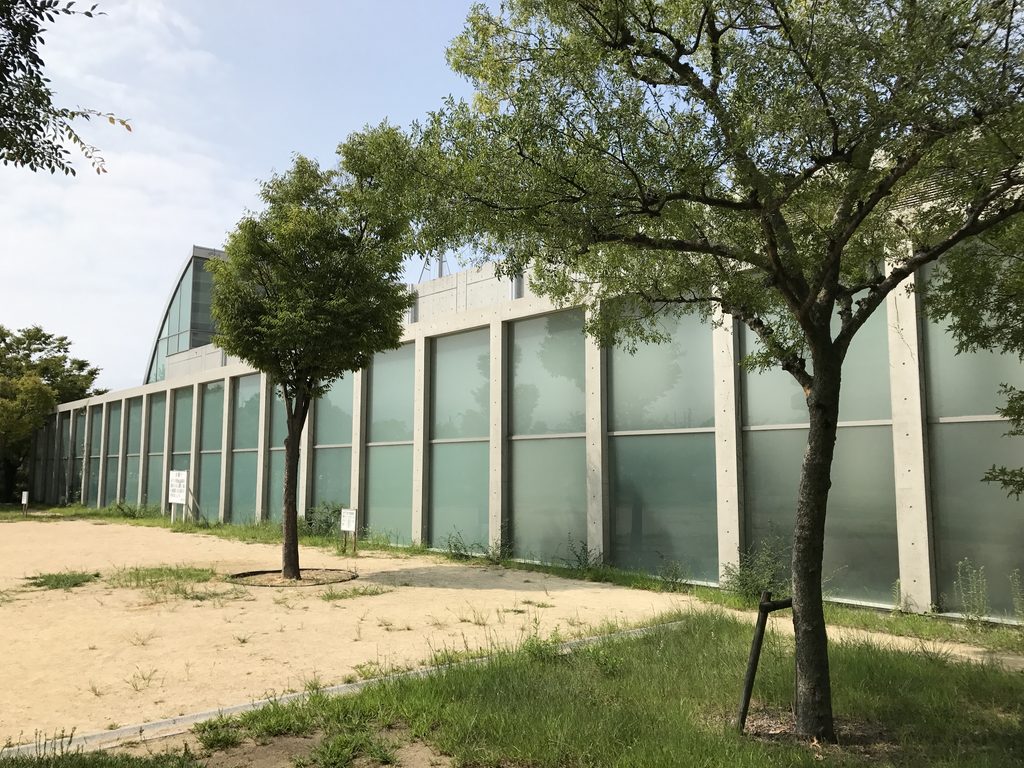
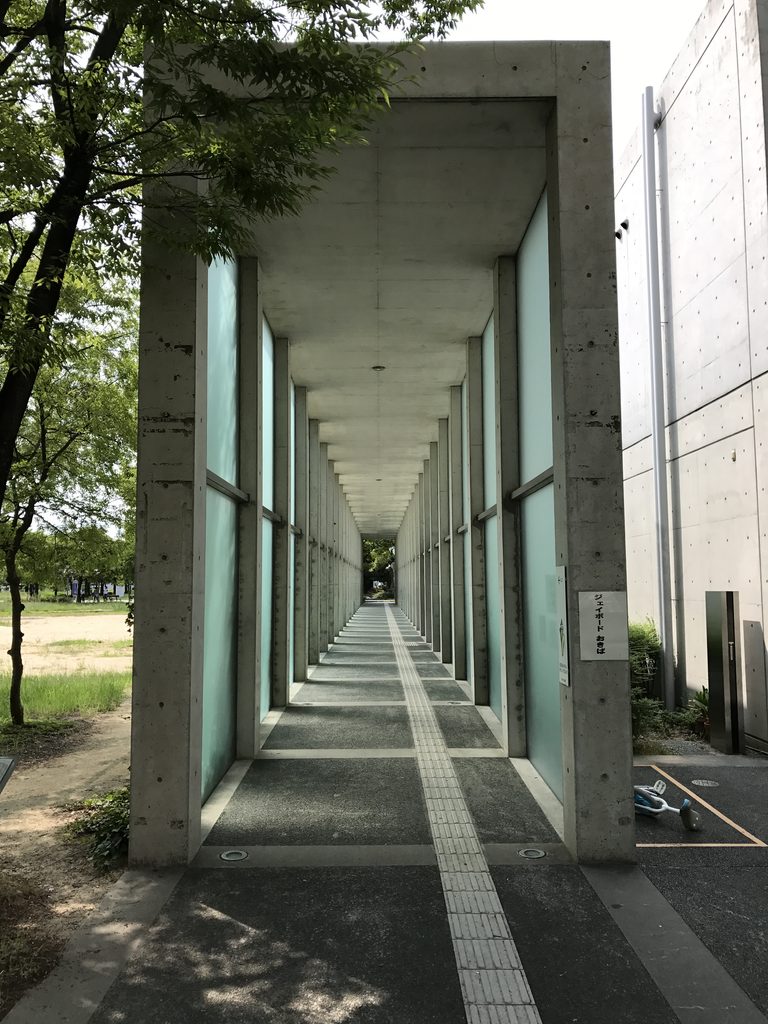
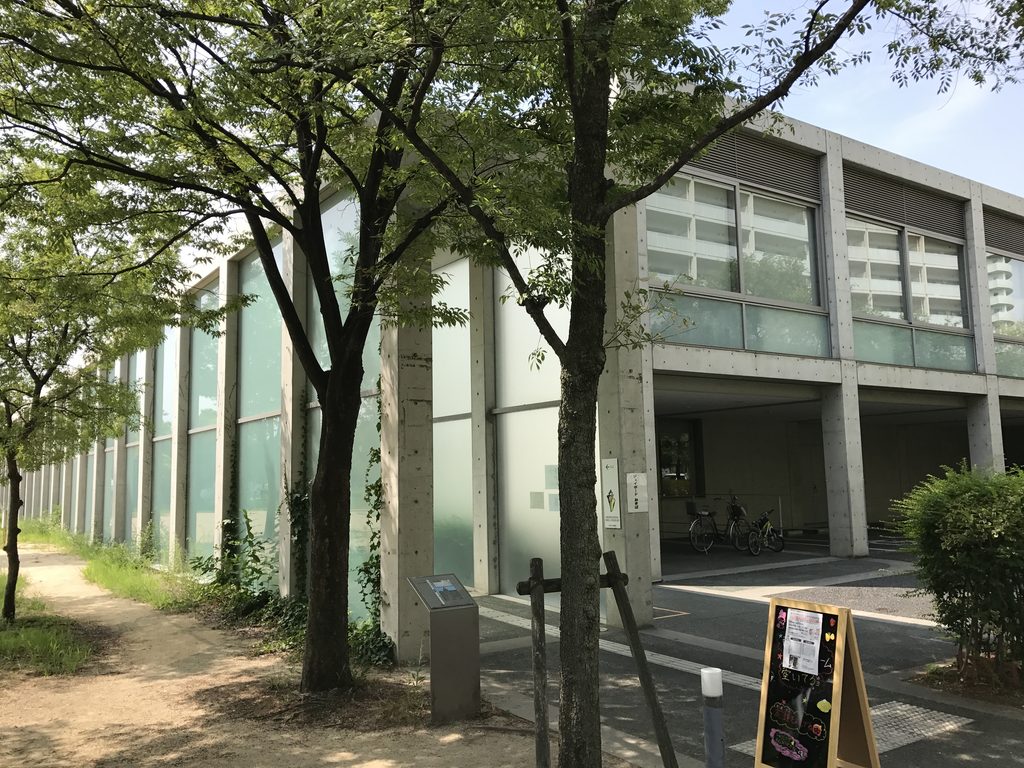
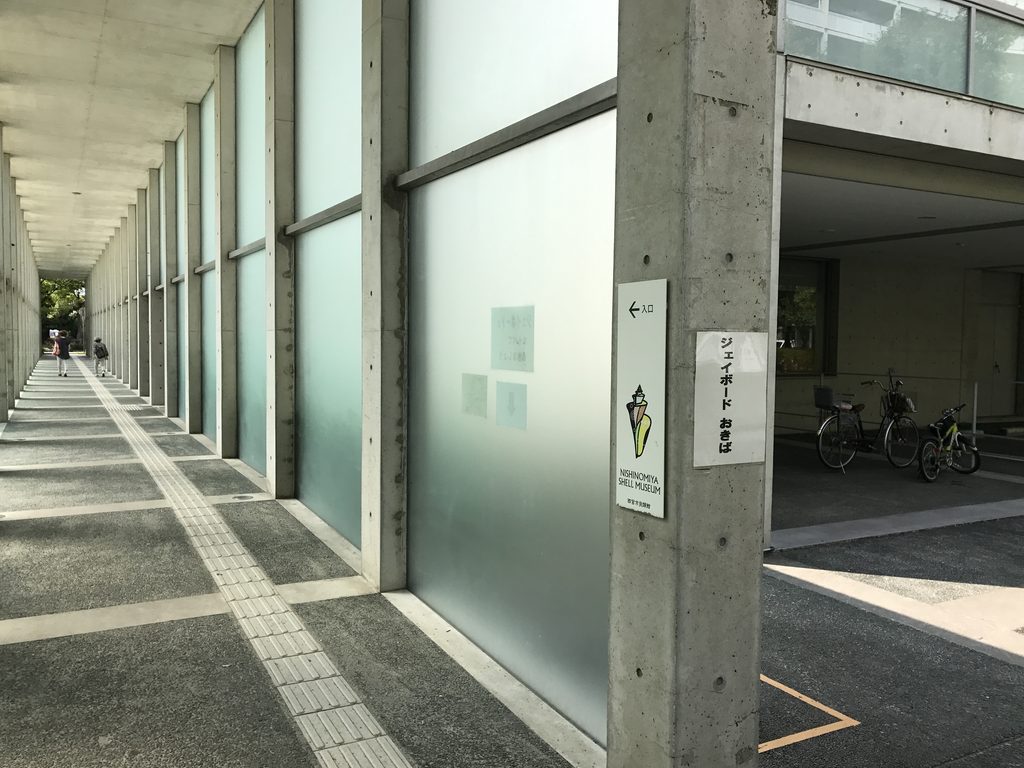
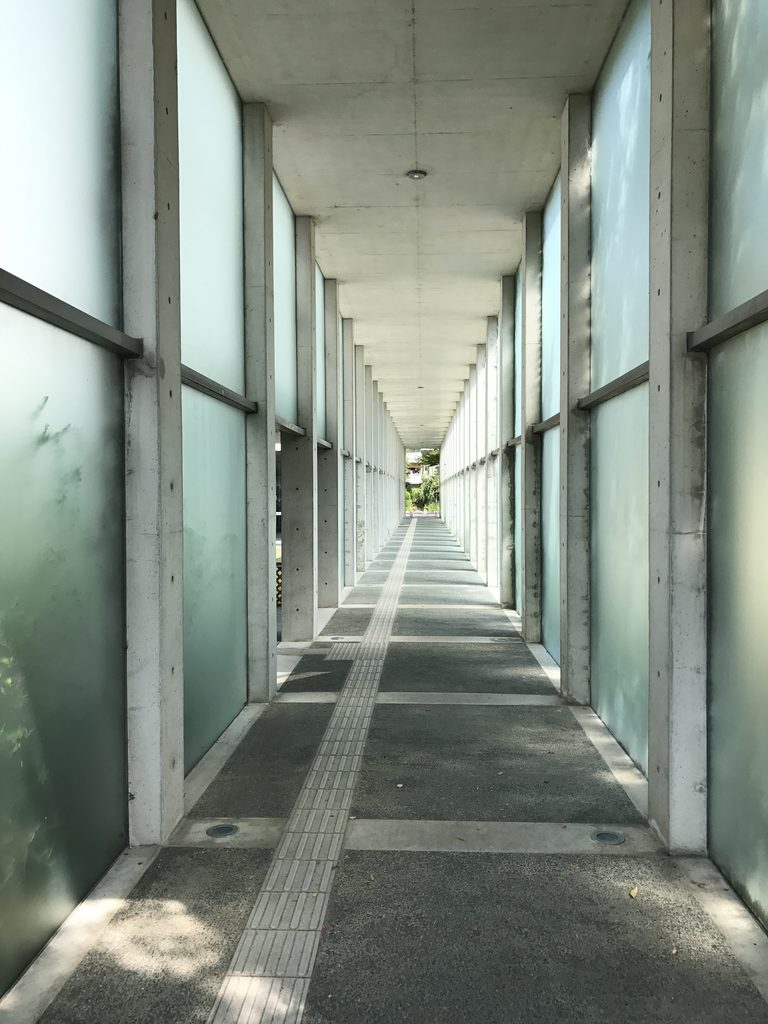
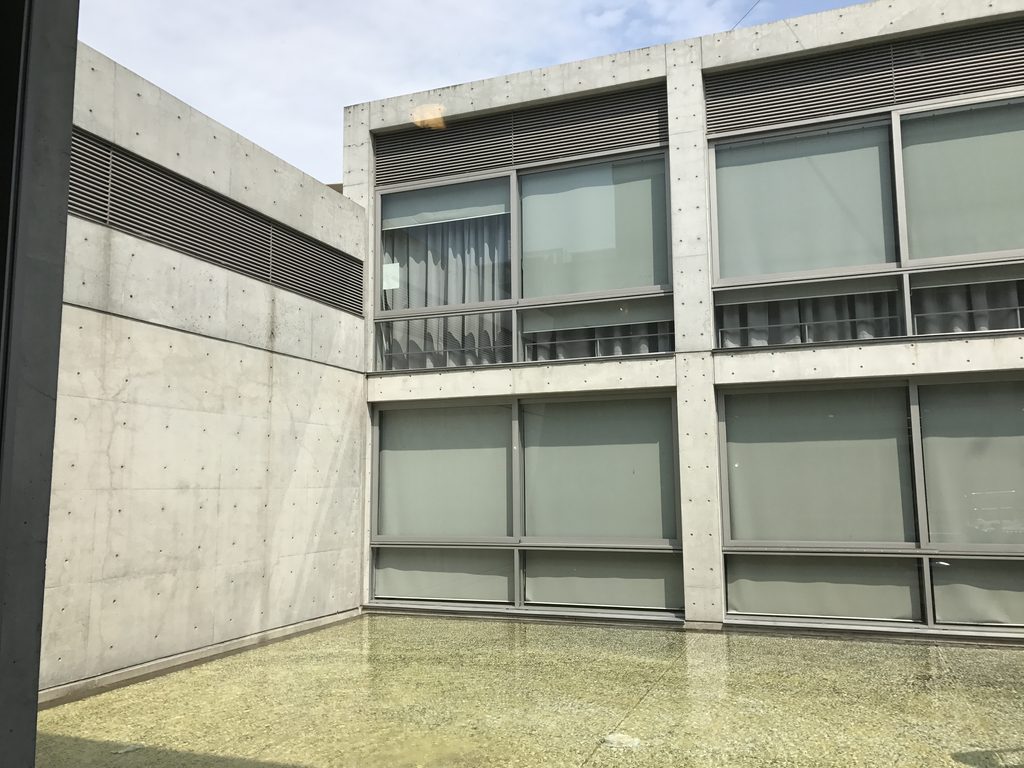
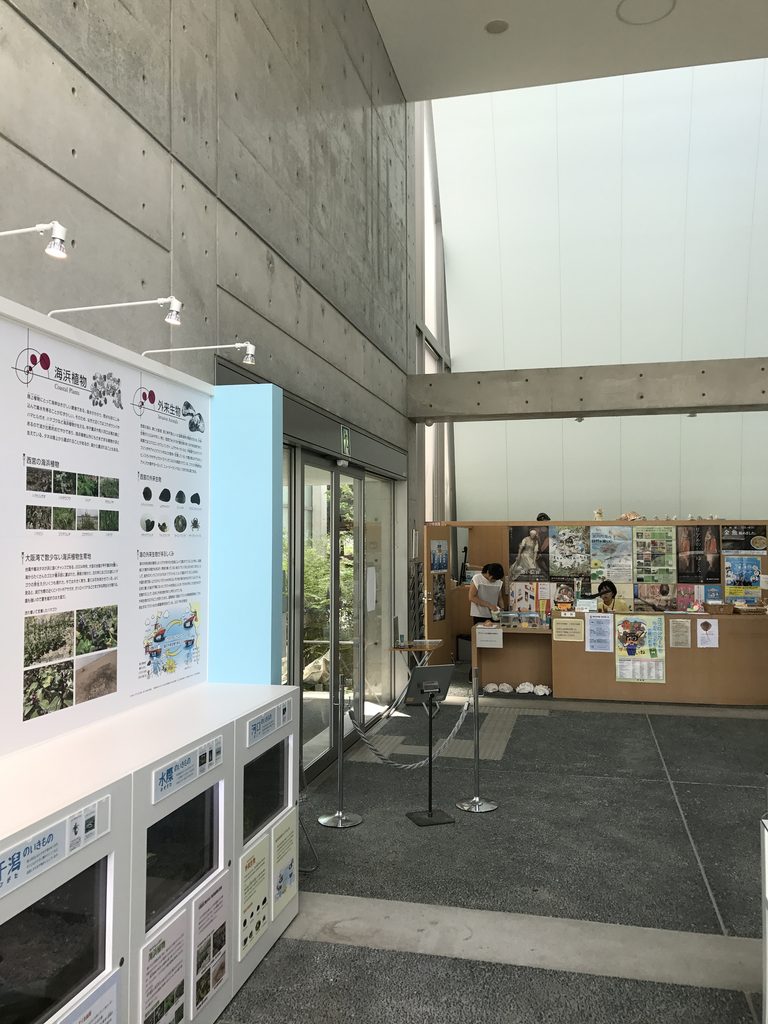
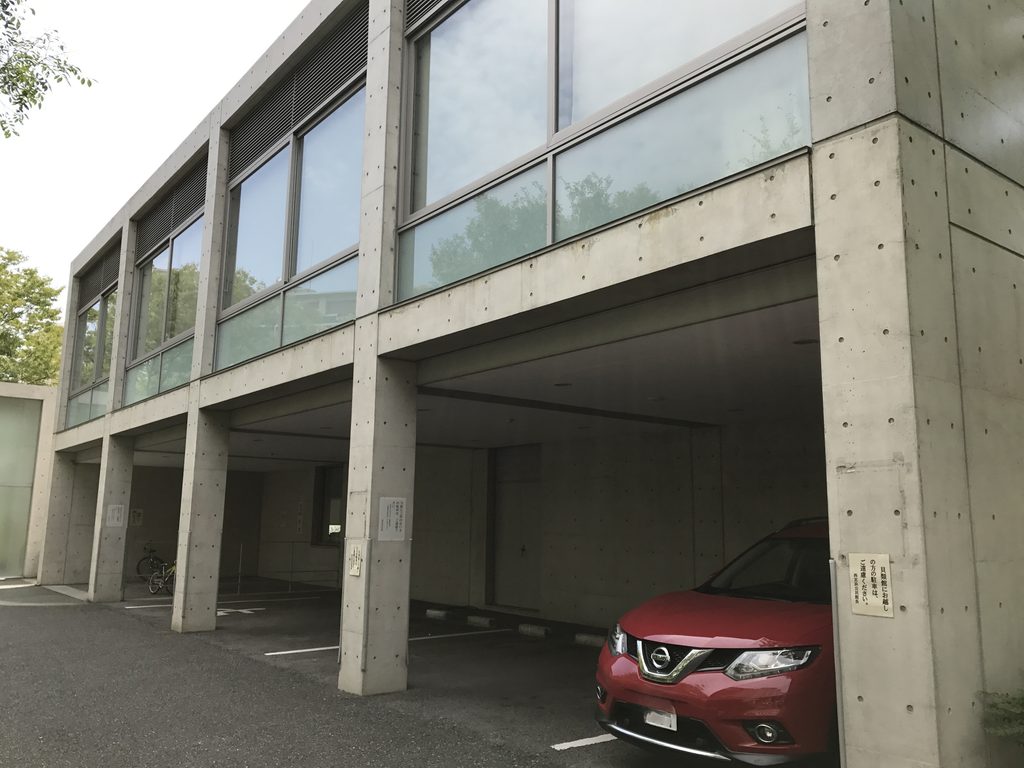
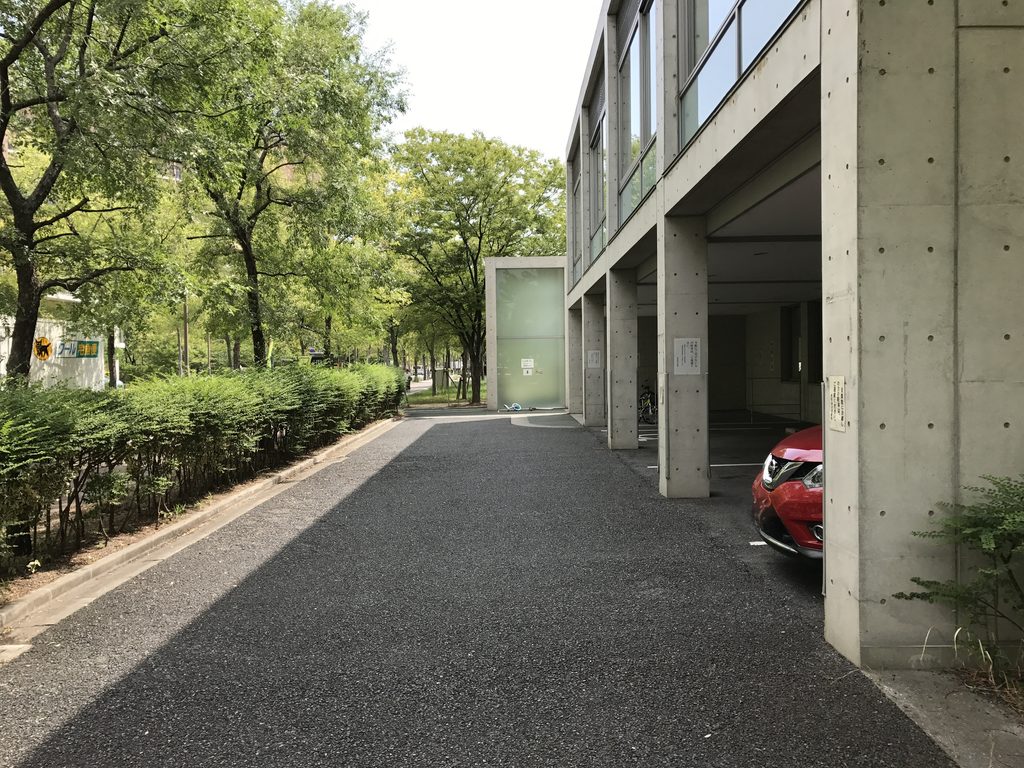
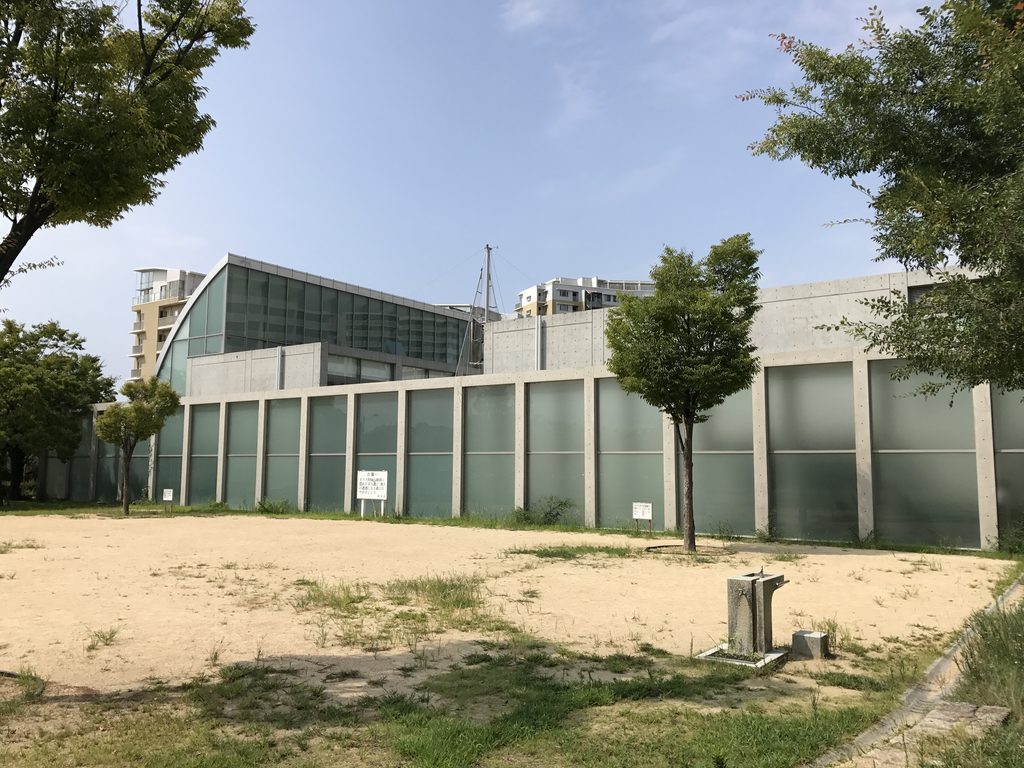
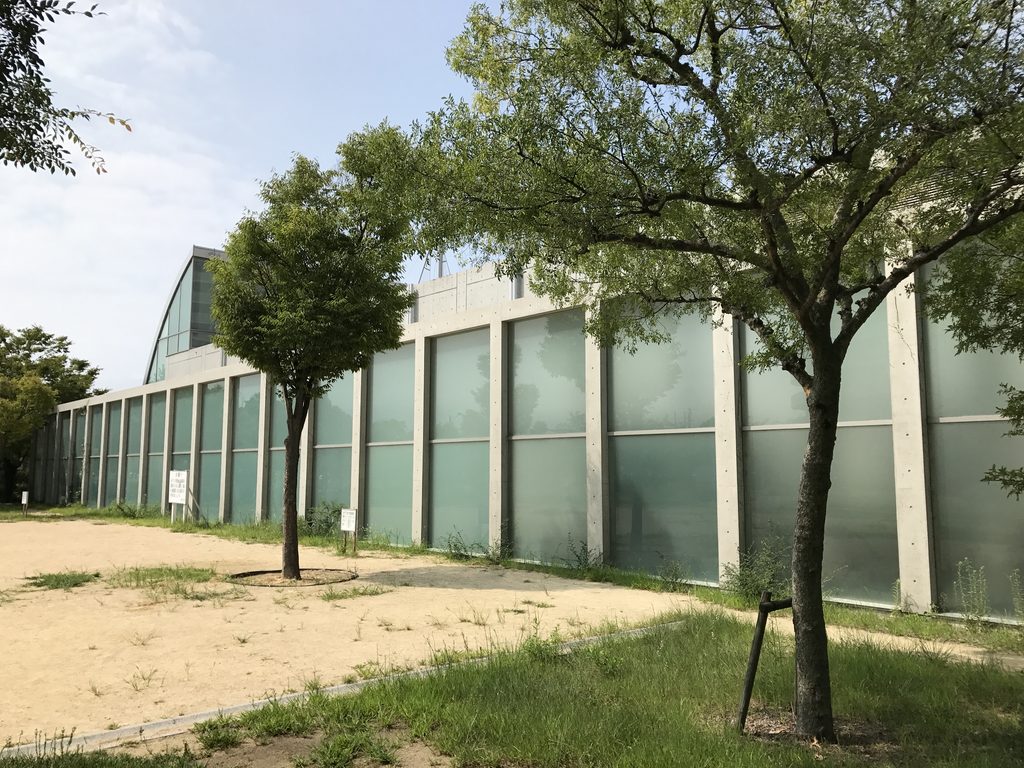
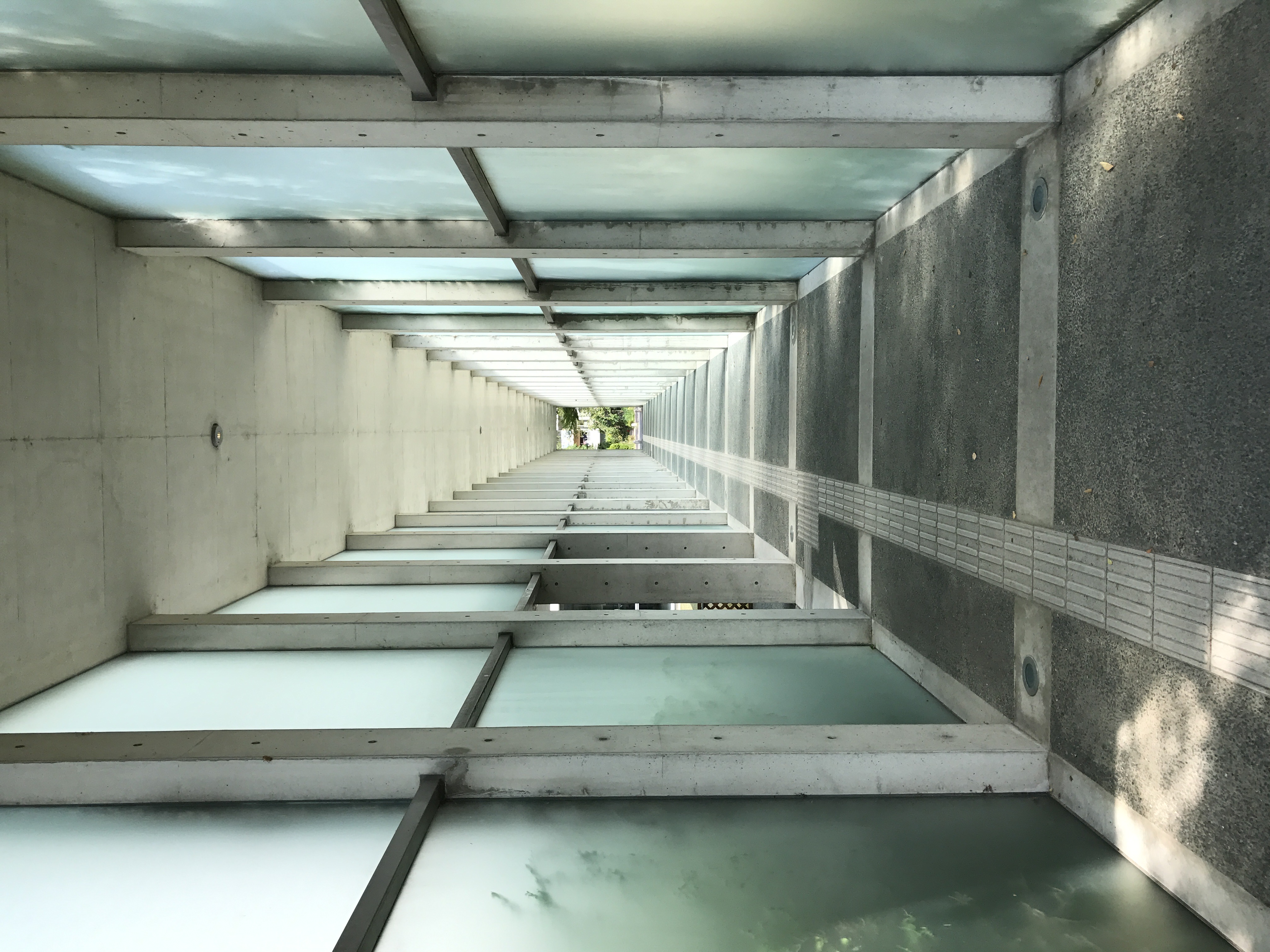
打放しコンクリートの壁に沿って外部通路が伸び、ガラスの向こうには内部空間が見え、そのさらに先に中庭がある。
Exterior passages follow exposed-concrete walls. Through the glass, the interior remains visible, with the courtyard beyond.
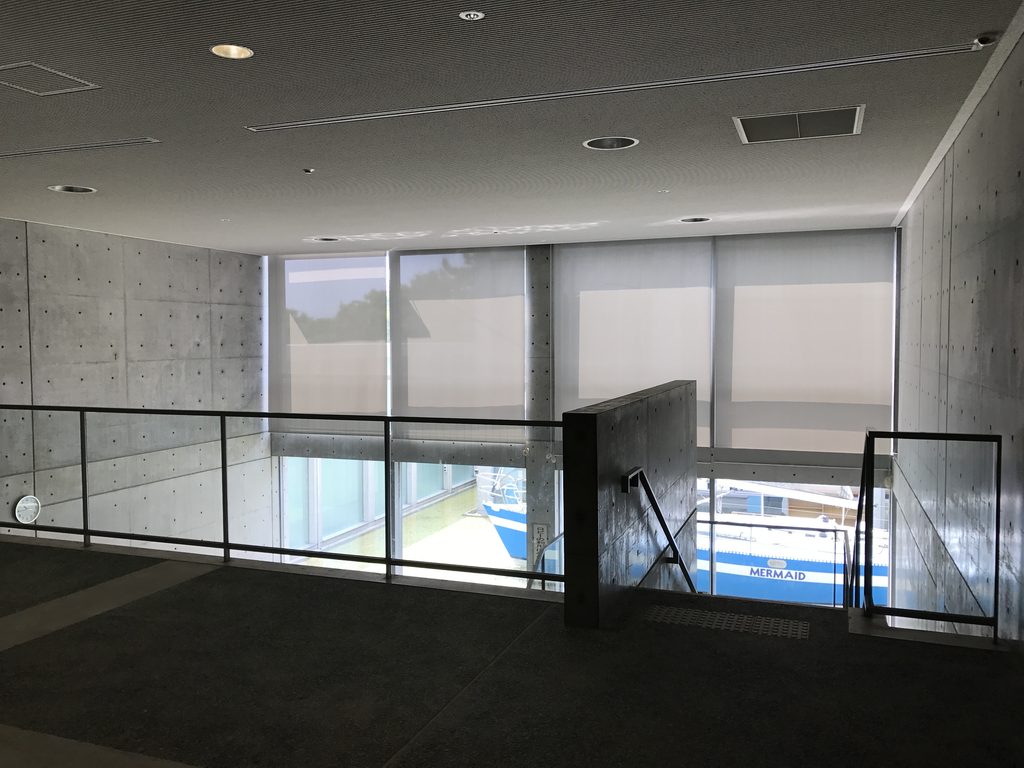
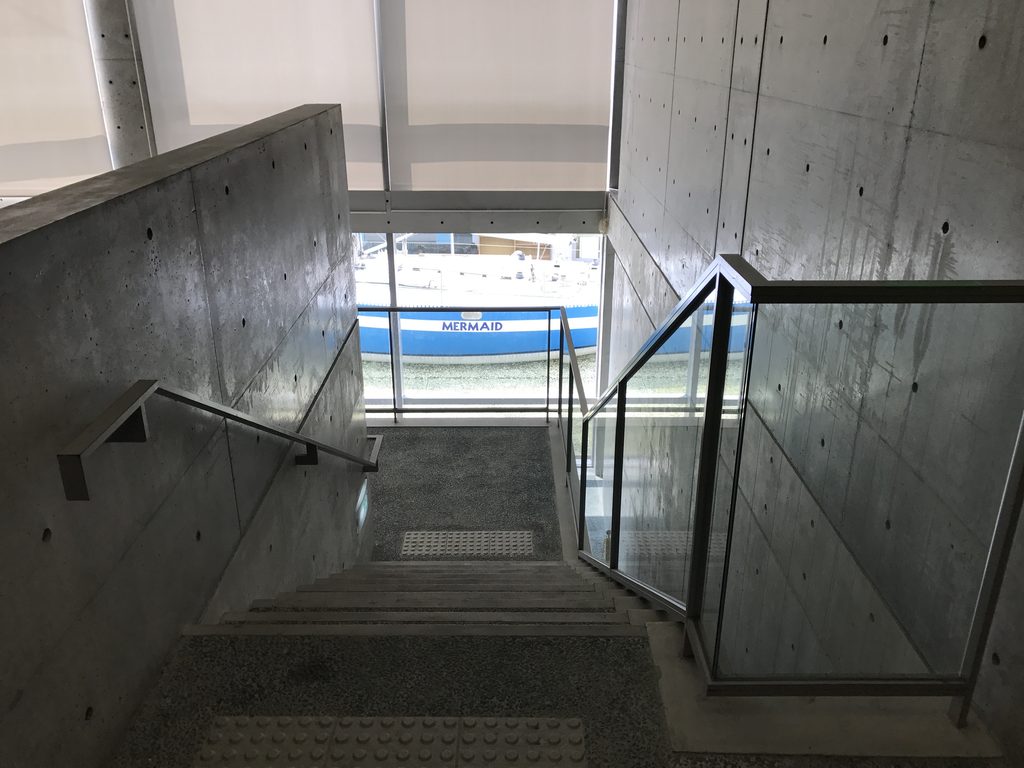
内と外を完全に切り分けるのではなく、歩きながら何度も両者を行き来することで、小さな建物の中にいくつもの場面が生まれている。
Interior and exterior are not treated as completely separate worlds. Moving between them creates a surprising number of scenes within a relatively compact building.
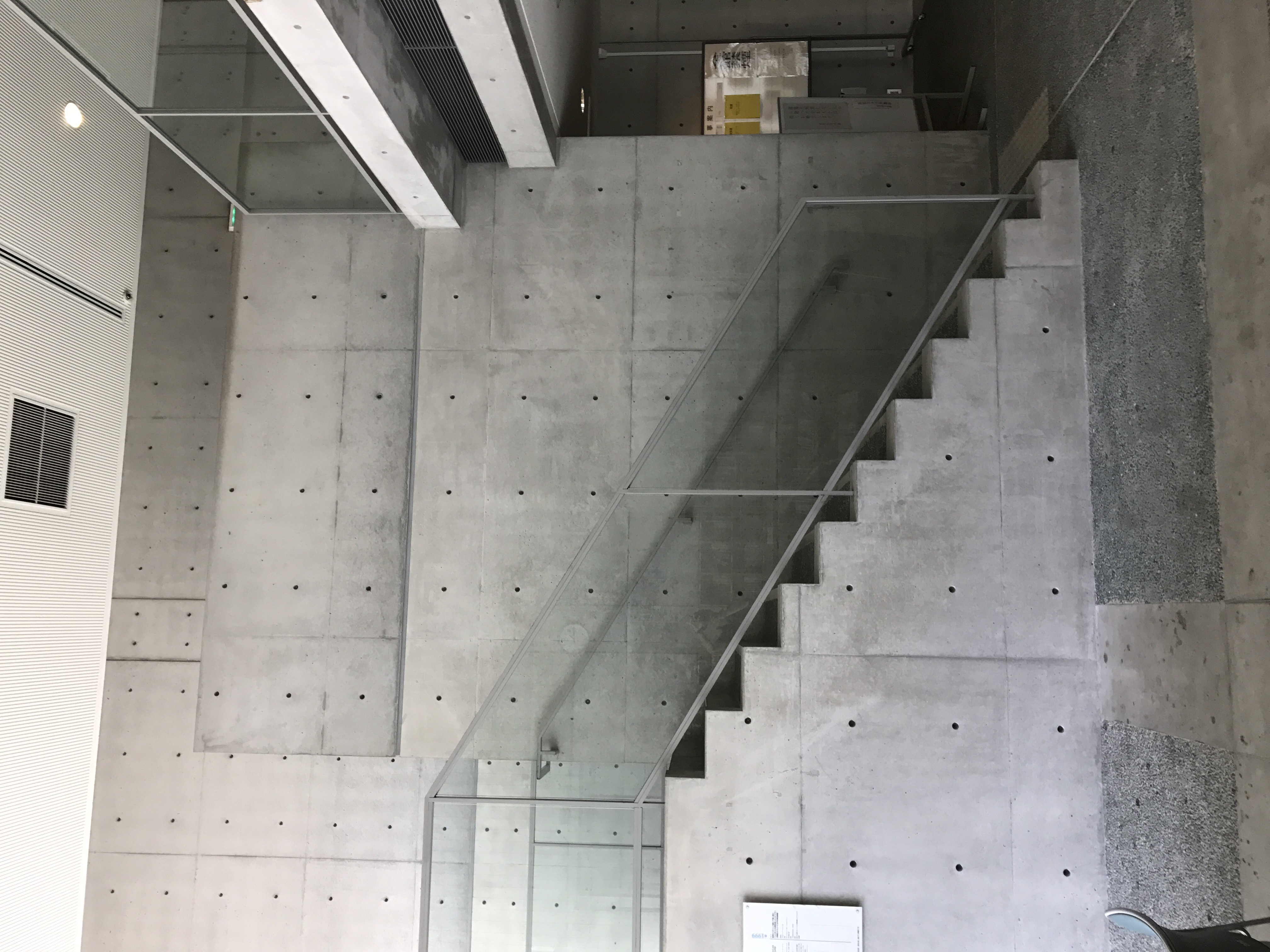
そして建物から少し距離を取ると、再び白い曲面が見えてくる。
From a distance, the white curve appears once again.
訪れたときには単純に「帆の形をした安藤建築」と見ていたものが、館内を歩いたあとでは少し違って見える。
その帆の下には貝があり、青い展示空間があり、ガラスの向こうには実際に海を渡った船がある。
西宮市貝類館は大規模な博物館ではない。しかし限られた規模の中で、建築の形、展示、光、移動、そして本物の船までを「海」という一つのテーマでつなぐことで、建物全体を一つの体験にしている。
それが、この小さな博物館の面白さなのだと思う。
Before entering, it may seem simply like a sail-shaped gesture. After walking through the museum, its meaning becomes richer.
Beneath that sail are shells, blue exhibition spaces and changing light. Beyond the glass is a yacht that once travelled across the sea.
Nishinomiya Shell Museum is not a large museum. Yet by connecting architectural form, exhibits, movement and an actual vessel through the single theme of the sea, the entire building becomes one continuous maritime experience.
My Impression
西宮市貝類館を訪れる前から、安藤忠雄設計であることはもちろん知っていた。
しかし写真で見ていた印象では、正直なところ「ヨットの帆をモチーフにした少し変わった安藤建築」という程度の理解だった。
実際に訪れてみると、その印象はかなり変わった。
Before visiting Nishinomiya Shell Museum, I already knew that it had been designed by Tadao Ando.
From photographs, however, I had thought of it mainly as an unusual Ando building with a yacht sail as its motif.
Visiting changed that impression.
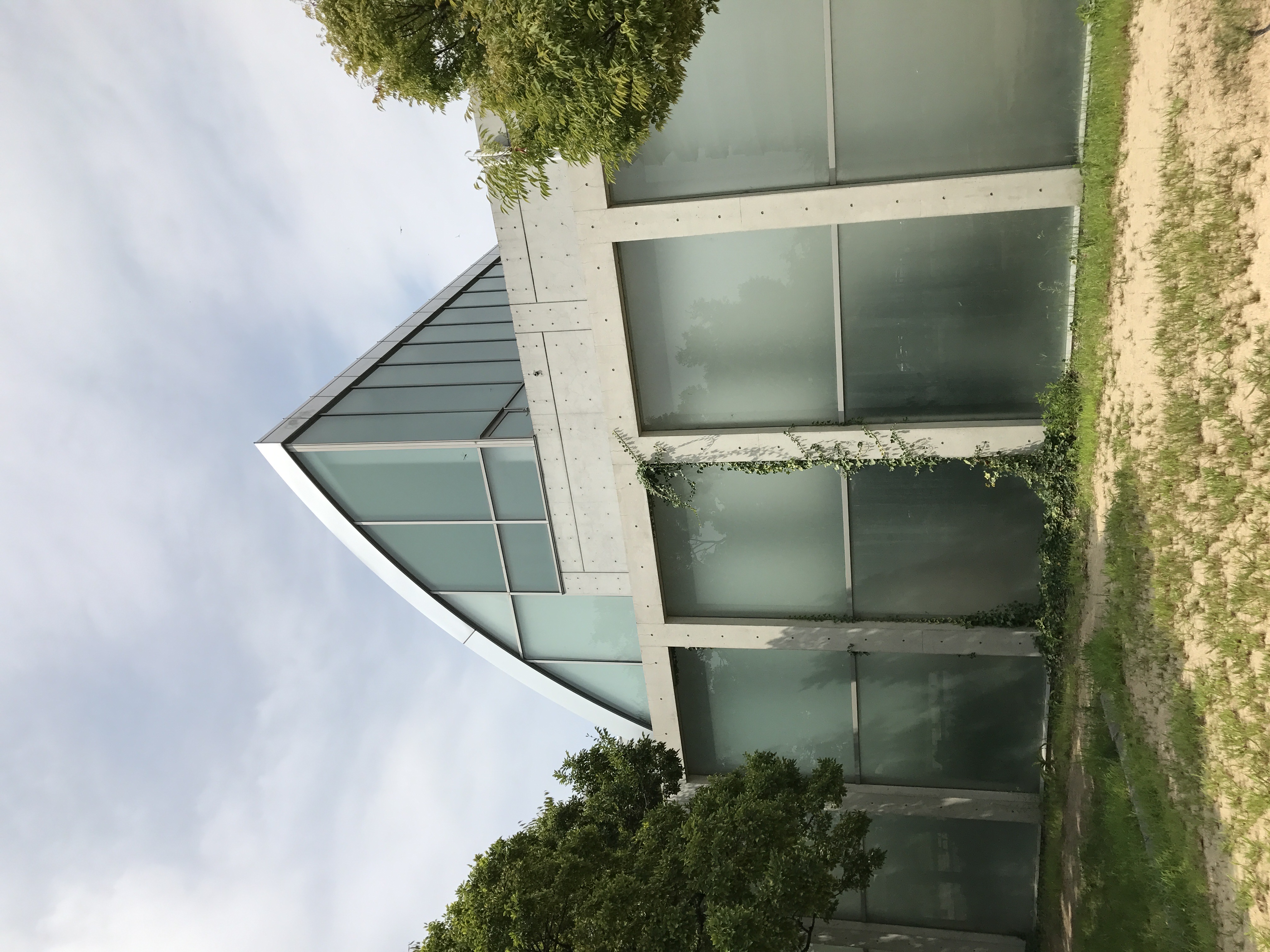
確かに外観の白い曲面は強い。普段イメージする安藤建築とは少し違う形なので、最初はそこに目を奪われる。
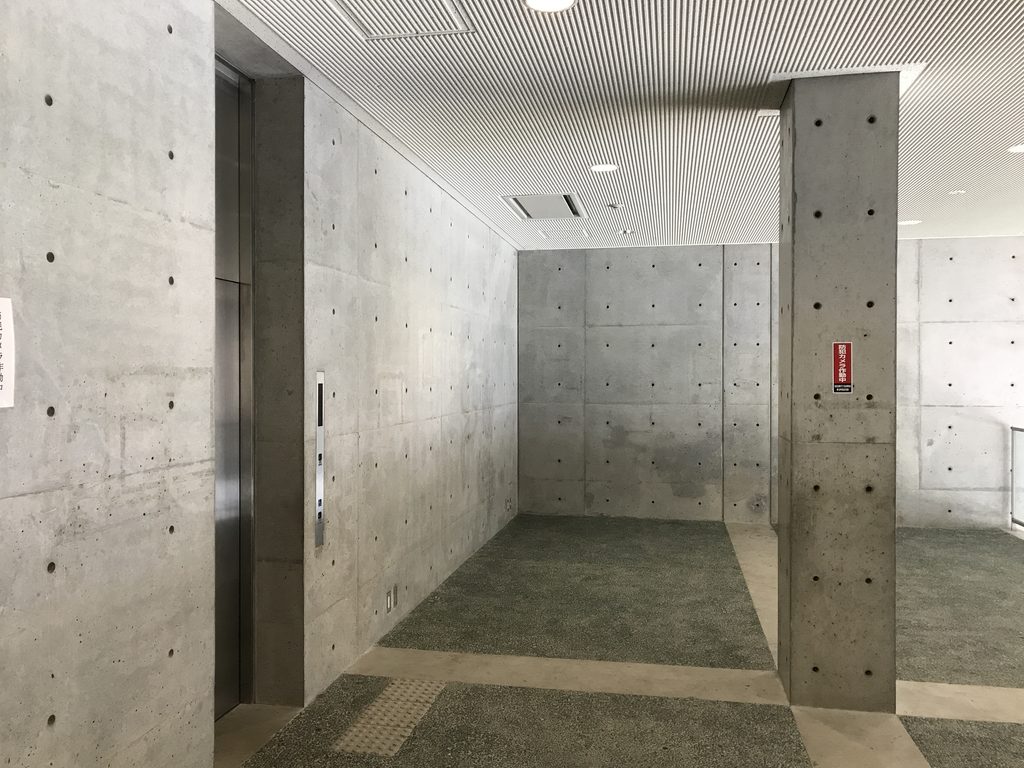
しかし中へ入ると、コンクリートの壁、光の入り方、階段による視点の変化、ガラスによる内外の重なりなど、いつもの安藤建築で感じる要素が次々に現れた。
The white curve is certainly striking. Its form differs from the image of Ando’s architecture that first comes to mind, so naturally it attracts attention.
Once inside, however, familiar elements begin to appear: concrete walls, changing light, stairs that shift the viewpoint, and glass that layers interior and exterior spaces.
そして何より印象に残ったのが、マーメイド4世号だった。
館内を歩いていると何度も船が見える。そのたびに背景や高さが変わり、いつの間にか展示物を見るというより、建築の中から船を眺めること自体が一つの体験になっていた。
What remained most strongly in my memory was Mermaid IV.
The yacht appears repeatedly while walking through the museum. Each time, the height and background change, until looking at the boat through the architecture becomes an experience in itself.
今回86枚の写真を見返してみると、自分が貝の展示だけでなく、船、階段、ガラス越しの景色、外部の曲面を何度も撮っていることに気づく。
おそらく現地でも、無意識のうちにそれらが一つにつながっていることを感じていたのだと思う。
巨大な美術館のような圧倒的な空間があるわけではない。
それでも、海辺に一枚の帆を立て、その中に貝の世界をつくり、外には海を渡った船を置く。
小さな建築だからこそ、一つのテーマが建物全体へ濃く行き渡っている。
西宮市貝類館は、安藤忠雄の代表作を語るときに最初に名前が挙がる建築ではないかもしれない。
しかし実際に歩いてみると、場所の意味を読み取り、それを形と空間へ変換する安藤の方法が、とても分かりやすく凝縮された作品だった。
Looking back through the photographs, I noticed that I had repeatedly photographed not only the shell exhibits, but also the yacht, stairs, views through glass and the curved exterior.
Perhaps I had already sensed that these elements belonged together.
There is no overwhelming monumental space here.
Instead, Ando raises a sail beside the sea, places a world of shells beneath it, and allows a real ocean-going yacht to appear beyond the glass.
Because the building is small, its central idea seems to permeate the entire architecture with unusual clarity.
Nishinomiya Shell Museum may not be the first building mentioned when discussing Tadao Ando’s major works. Yet walking through it reveals, in a remarkably concentrated form, his ability to read the meaning of a place and transform it into architecture.
Archive Gallery