【安藤忠雄建築】風の教会|光へと導かれる、小さなコンクリートの聖堂(Church of the Wind|A Small Concrete Sanctuary Guided by Light)
建築概要
Overview
- 名称:風の教会(六甲の教会)
- 設計:安藤忠雄
- 所在地:兵庫県神戸市灘区六甲山町
- 竣工:1986年
- 用途:教会・チャペル
- Name:Church of the Wind / Church on Mount Rokko
- Architect:Tadao Ando
- Completed:1986
- Location:Mount Rokko, Nada-ku, Kobe, Hyogo, Japan
- Type:Church / Chapel
1.風の教会 — 光へと導かれる、小さなコンクリートの聖堂
Church of the Wind — A Small Concrete Sanctuary Guided by Light
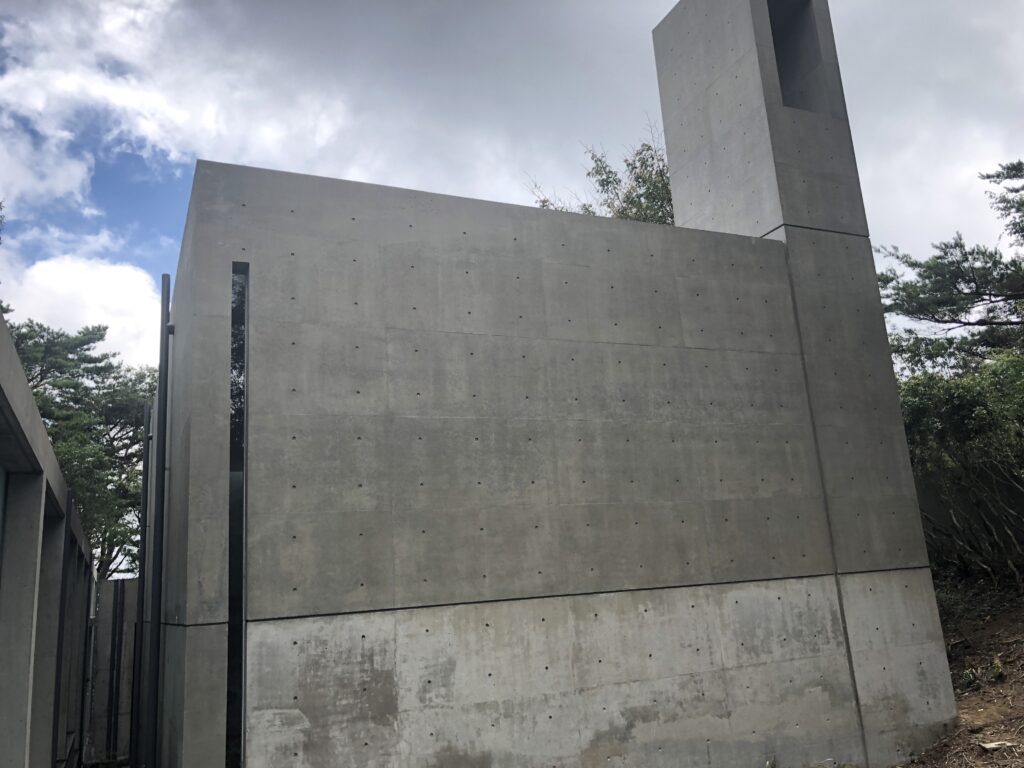
六甲山の緑の中に静かに佇む「風の教会」。
1986年に竣工した安藤忠雄による初期の教会建築であり、後の「水の教会」「光の教会」へと続く教会三部作の最初の作品でもある。
建物そのものは決して大きくない。しかし実際にここを歩いてみると、ガラスの回廊、閉ざされたコンクリートの空間、そしてその先に現れる光という、安藤建築を特徴づける要素が驚くほど凝縮されていることに気づく。
巨大な建築によって圧倒するのではなく、人を歩かせ、方向を変え、明暗を切り替えることで感覚そのものを変えていく。
風の教会は、小さな建築だからこそ、その空間体験の純度が際立つ作品だと感じる。
Quietly standing amid the greenery of Mount Rokko, the Church of the Wind is one of Tadao Ando’s early religious works, completed in 1986 and the first of the three churches that would later include the Church on the Water and the Church of the Light.
The building itself is by no means large.
Yet walking through it reveals an extraordinary concentration of architectural ideas that would come to characterize Ando’s work: a glass corridor, an enclosed concrete passage, and finally, light.
Rather than overwhelming the visitor through scale, the architecture changes perception through movement, shifts in direction, and transitions between brightness and darkness.
Perhaps precisely because of its modest size, the Church of the Wind offers an architectural experience of remarkable intensity.
2.礼拝堂へ向かう、長いガラスの回廊
A Long Glass Corridor Leading Toward the Chapel
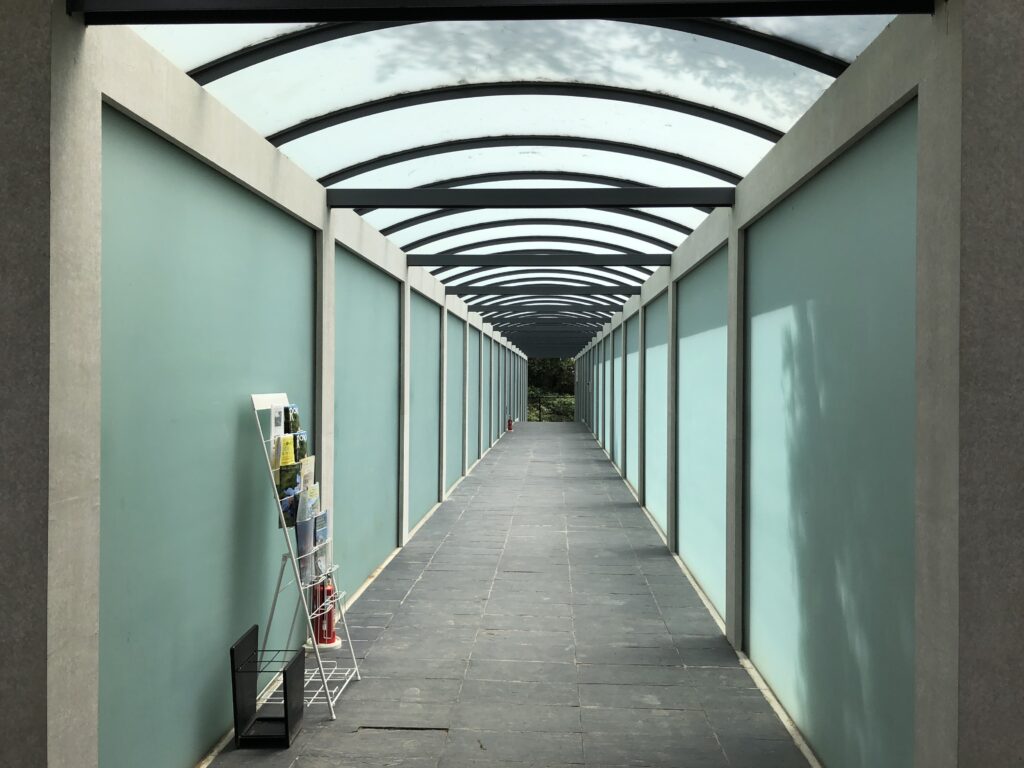
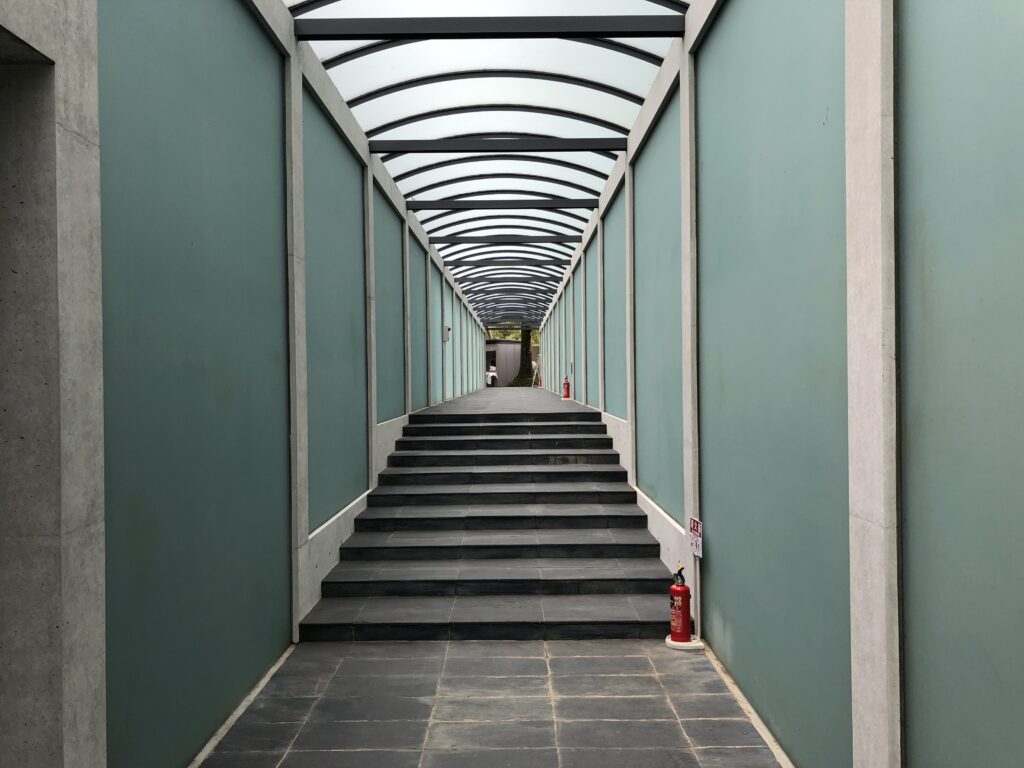
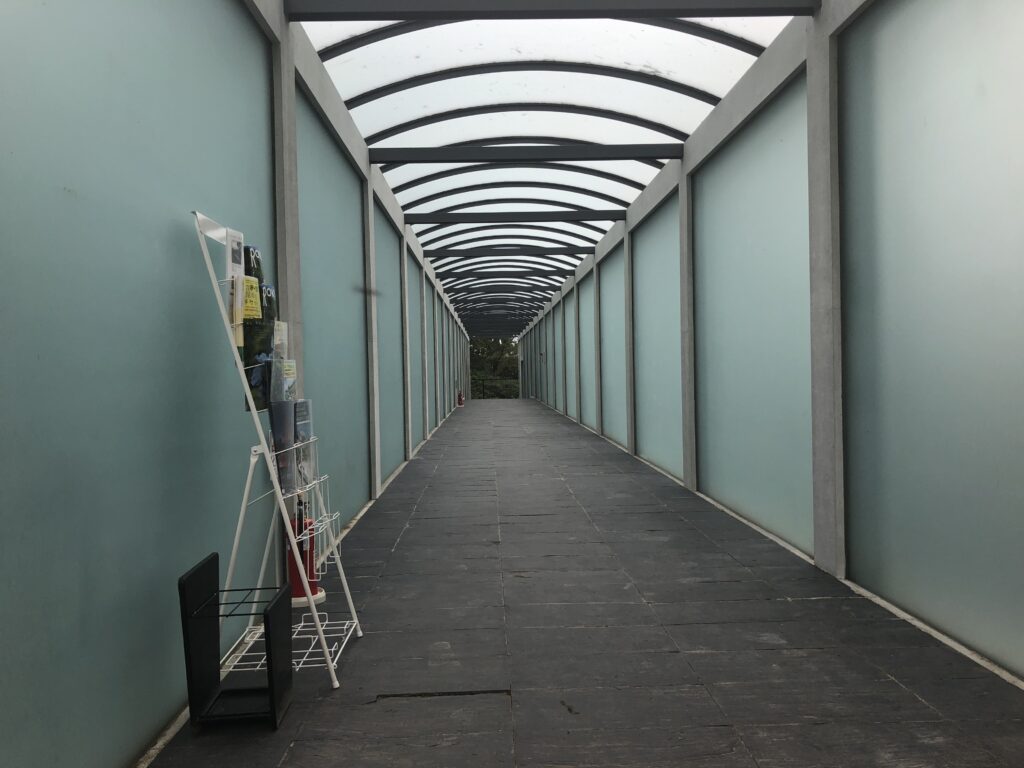
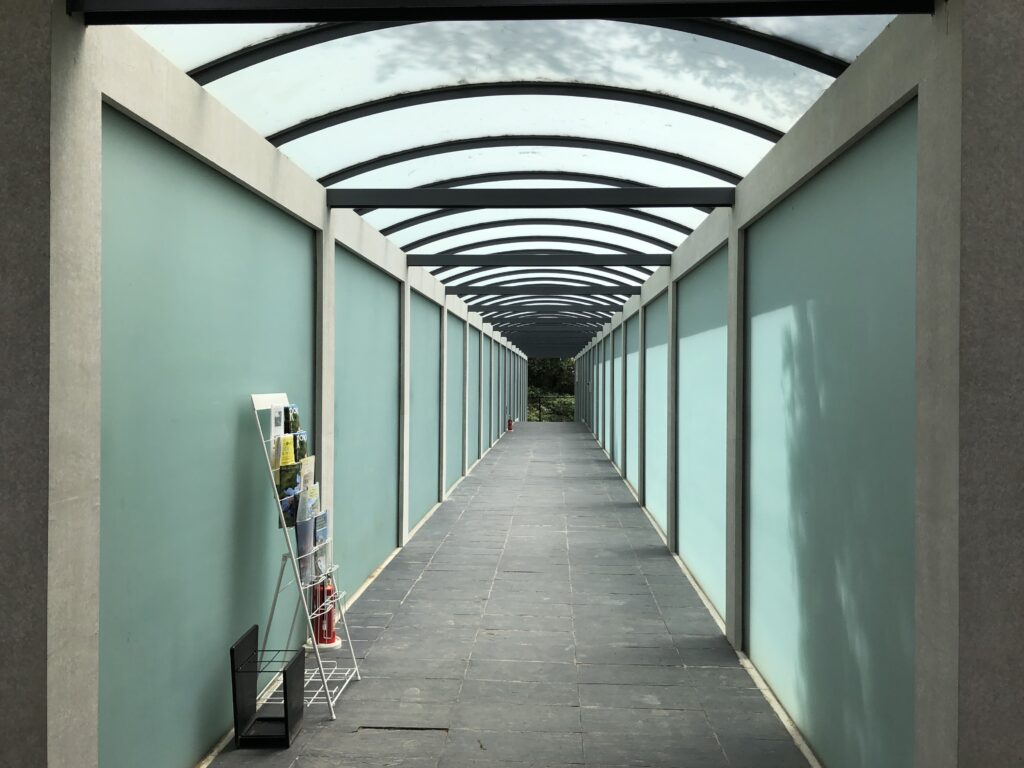
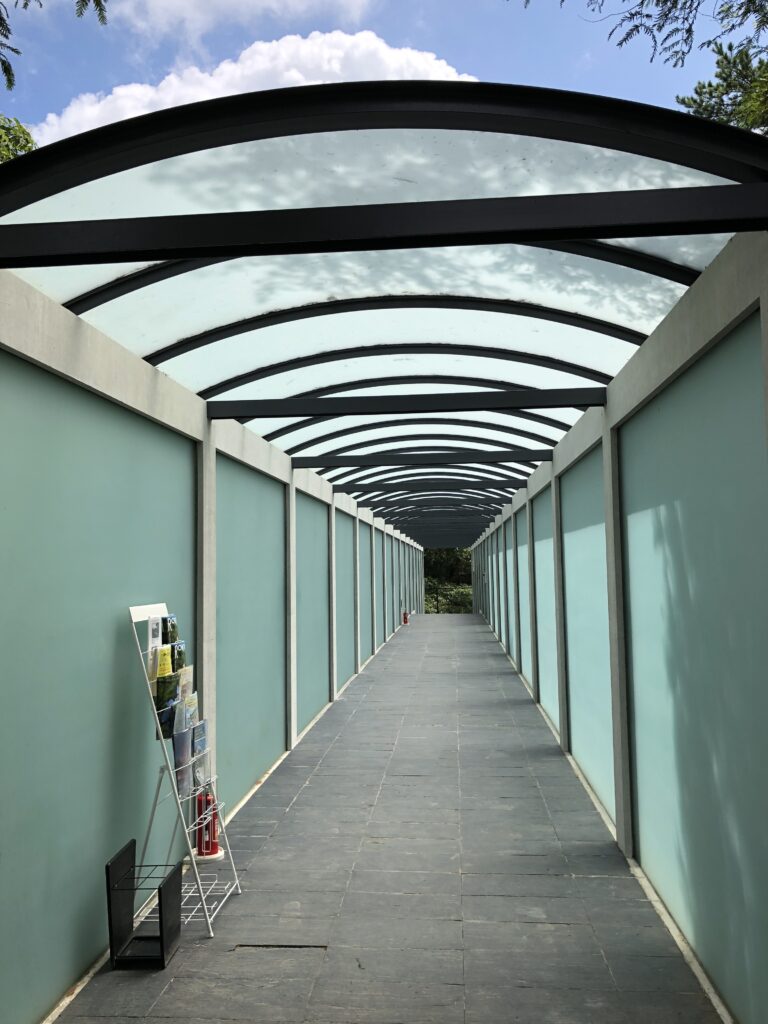
風の教会で最初に強く印象に残るのは、礼拝堂そのものではなく、そこへ至るまでの長い回廊だった。
半透明のガラスと細いフレームによってつくられた通路がまっすぐ先へと伸び、その先に何があるのかはまだ見えない。
外部にいるようでもあり、内部にいるようでもある曖昧な空間を歩きながら、少しずつ日常から切り離されていく。
礼拝堂へ直接入るのではなく、そこへ至る「時間」を建築としてつくる。この回廊を歩き始めた瞬間から、すでに風の教会の体験は始まっている。
One of the first things that stayed with me at the Church of the Wind was not the chapel itself, but the long corridor leading toward it.
A passage enclosed by translucent glass and slender frames stretches straight ahead, while its destination remains hidden from view.
It feels neither entirely outside nor entirely inside.
As I walked through this ambiguous space, there was a gradual sensation of leaving the everyday world behind.
Rather than allowing visitors to enter the chapel directly, Ando turns the time spent approaching it into architecture.
The experience of the Church of the Wind begins the moment you step into this corridor.
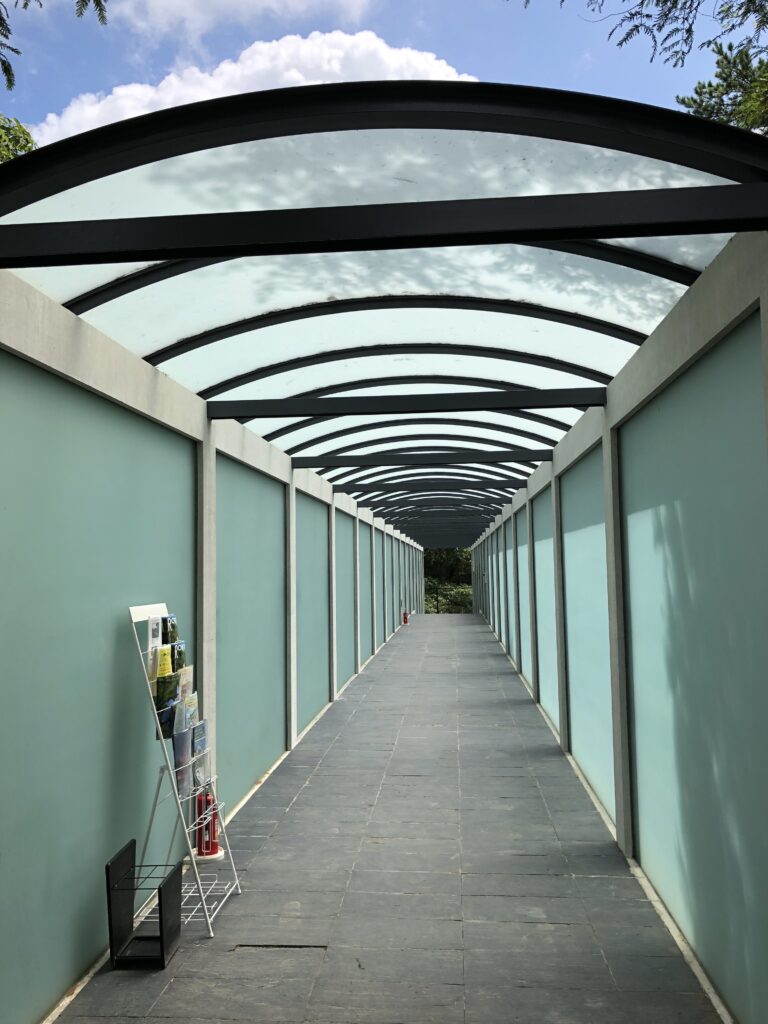
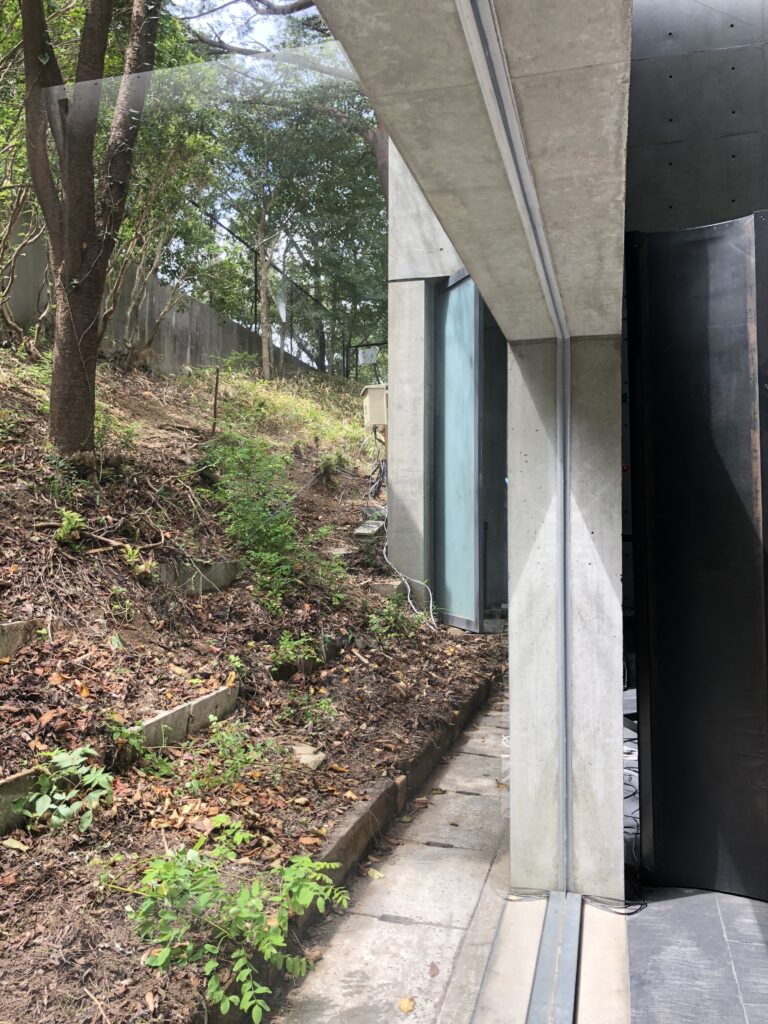
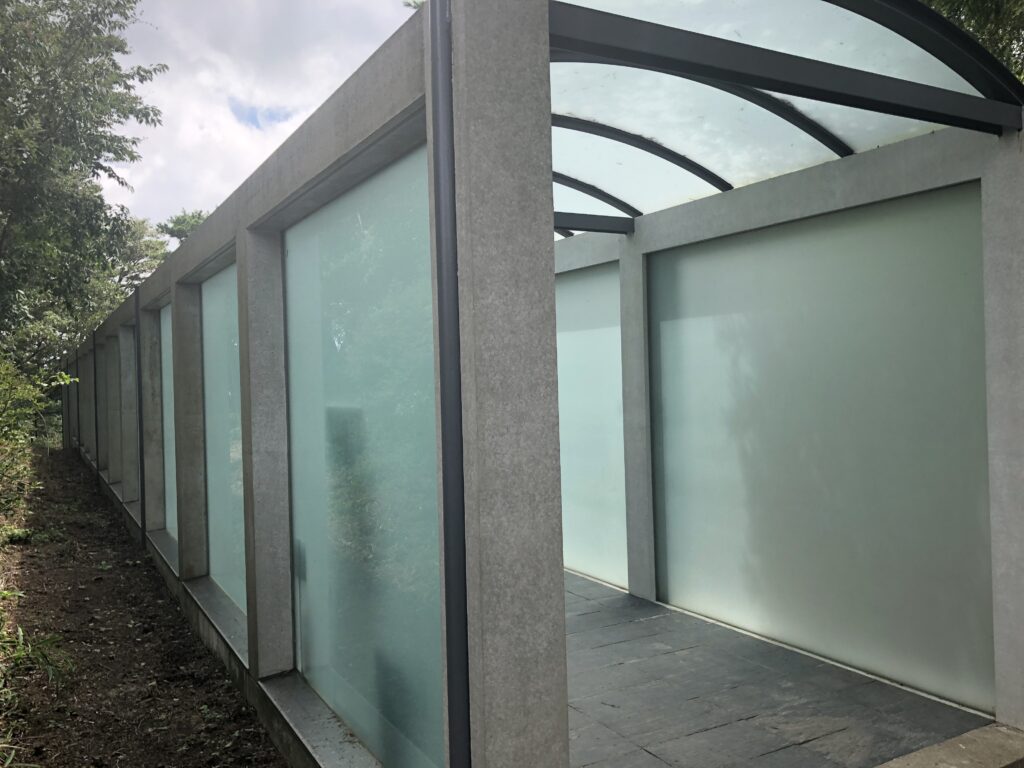
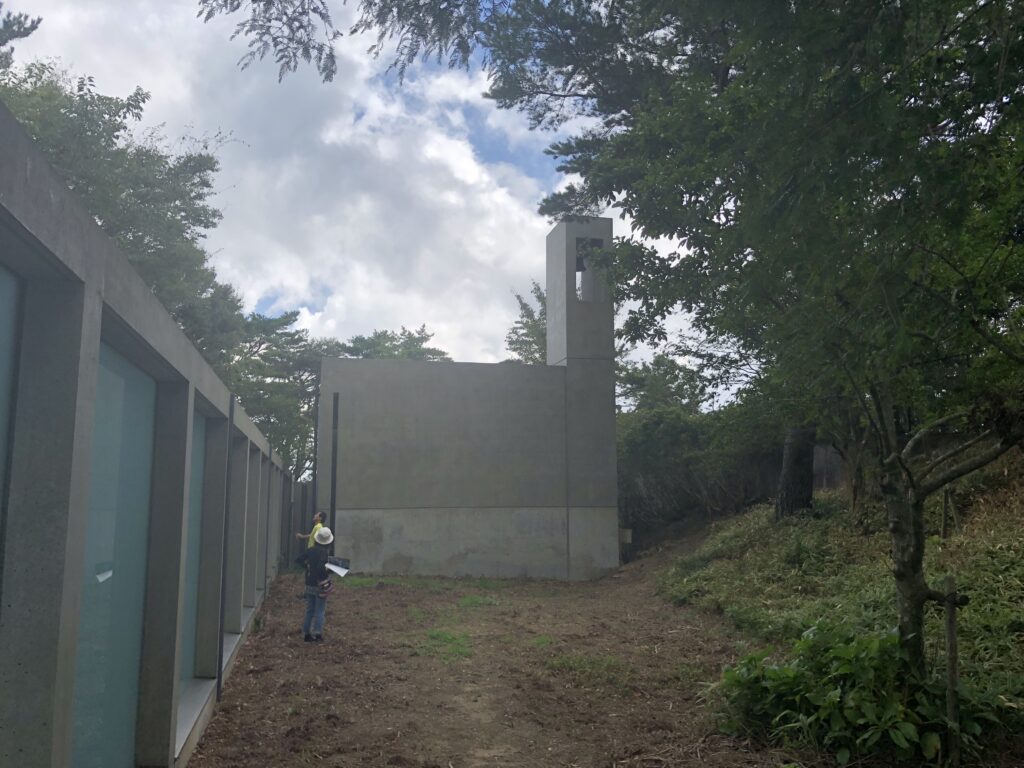
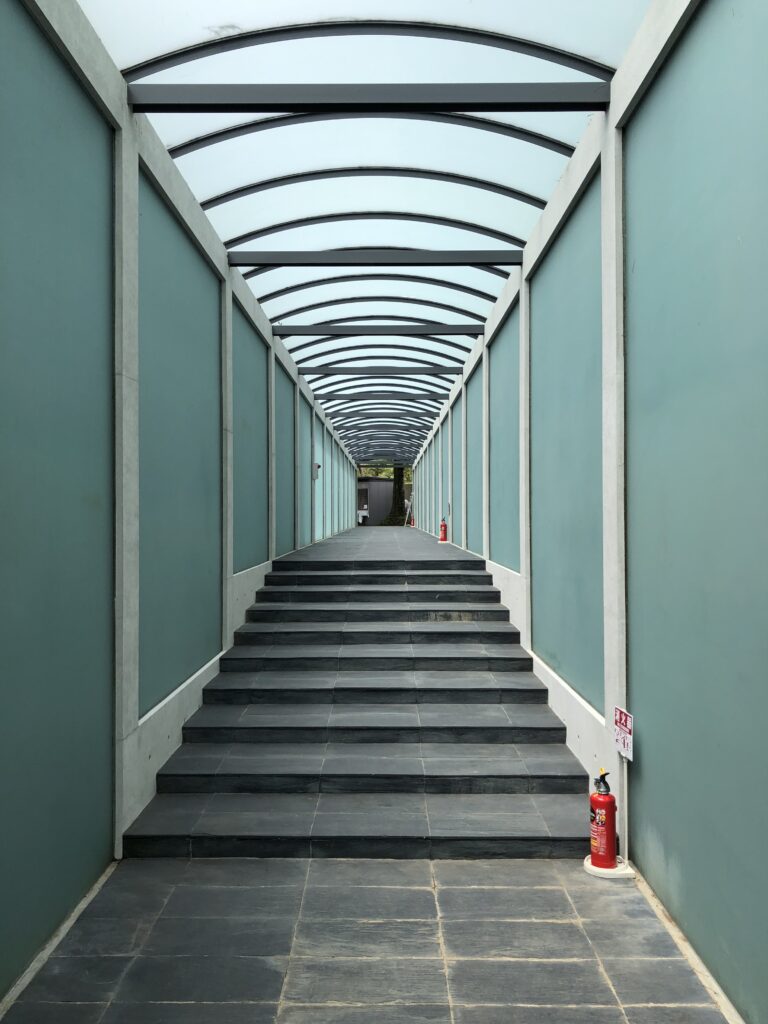
回廊を横から見ると、その構成はさらに明快になる。
コンクリートの壁に沿って反復するフレームと半透明のガラス。
その向こうには六甲山の空や緑が透けて見えるが、風景がそのまま見えるわけではない。
自然を完全に遮断するのでも、全面的に開放するのでもなく、いったんガラスという膜を介して感じさせる。外部の気配を残しながら、人の意識だけを徐々に建築の内側へ向けていくような空間だ。
Seen from the side, the structure of the corridor becomes even clearer. Repeating frames and translucent glass extend alongside the concrete wall, while glimpses of the sky and greenery of Mount Rokko remain visible beyond them.
Nature is neither completely shut out nor fully opened to view.
Instead, it is perceived through a thin membrane of glass.
The outside world remains present, but the architecture gradually redirects the visitor’s attention inward.
3.光の中から、コンクリートの静寂へ
From Light into the Silence of Concrete
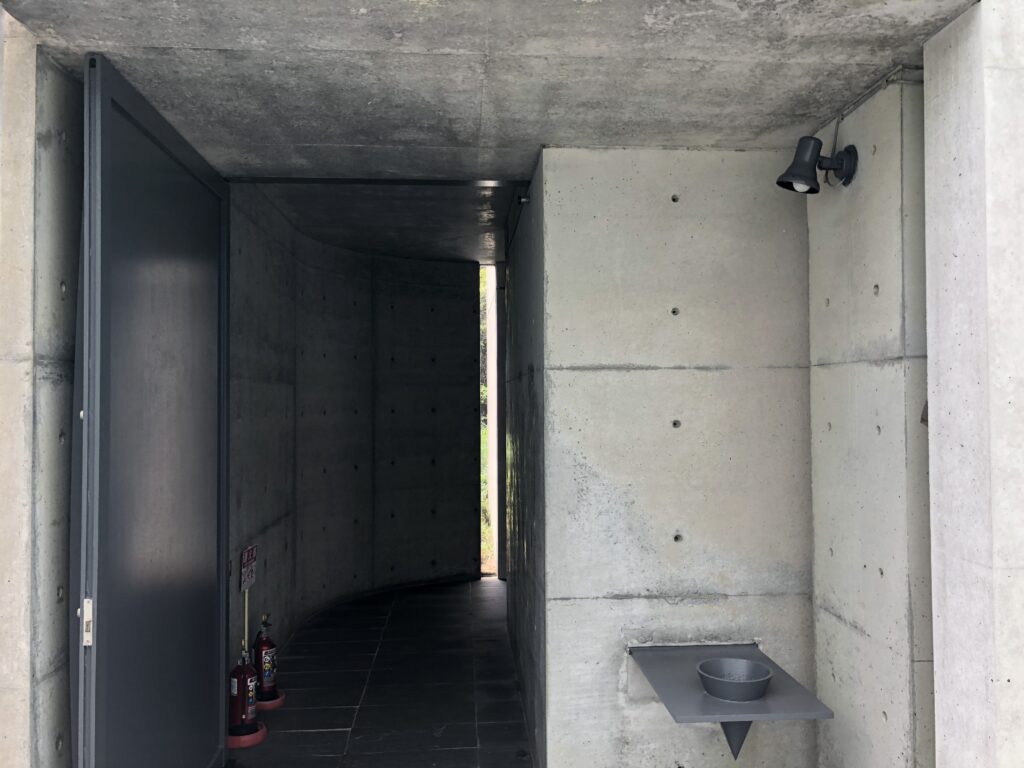
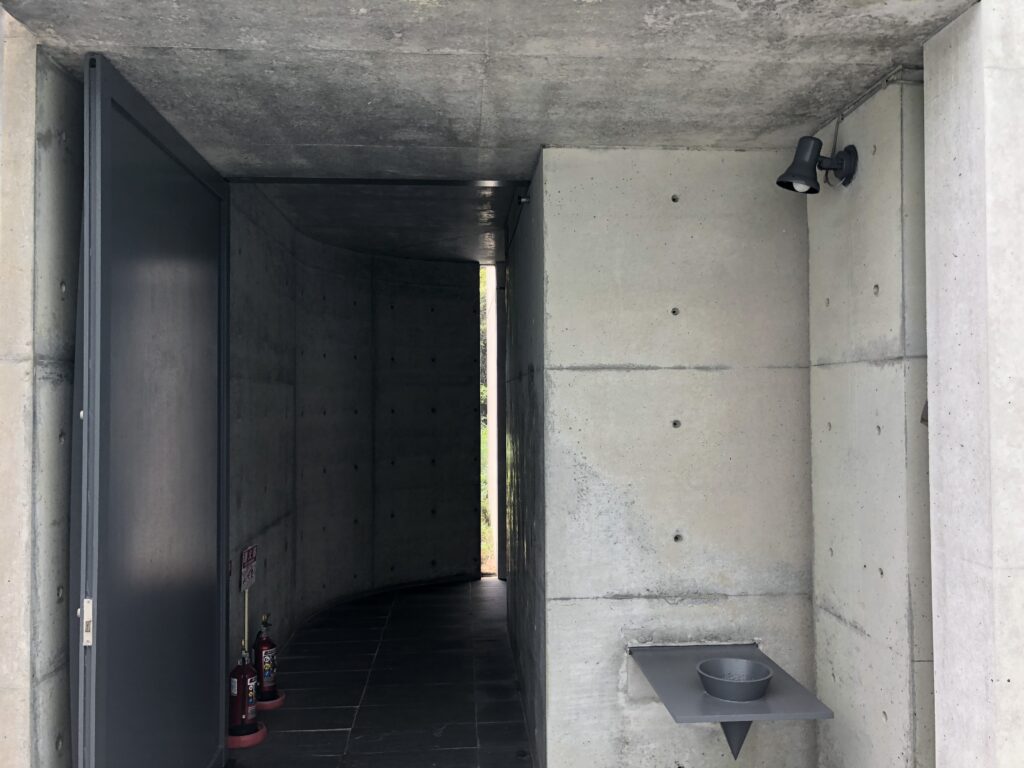
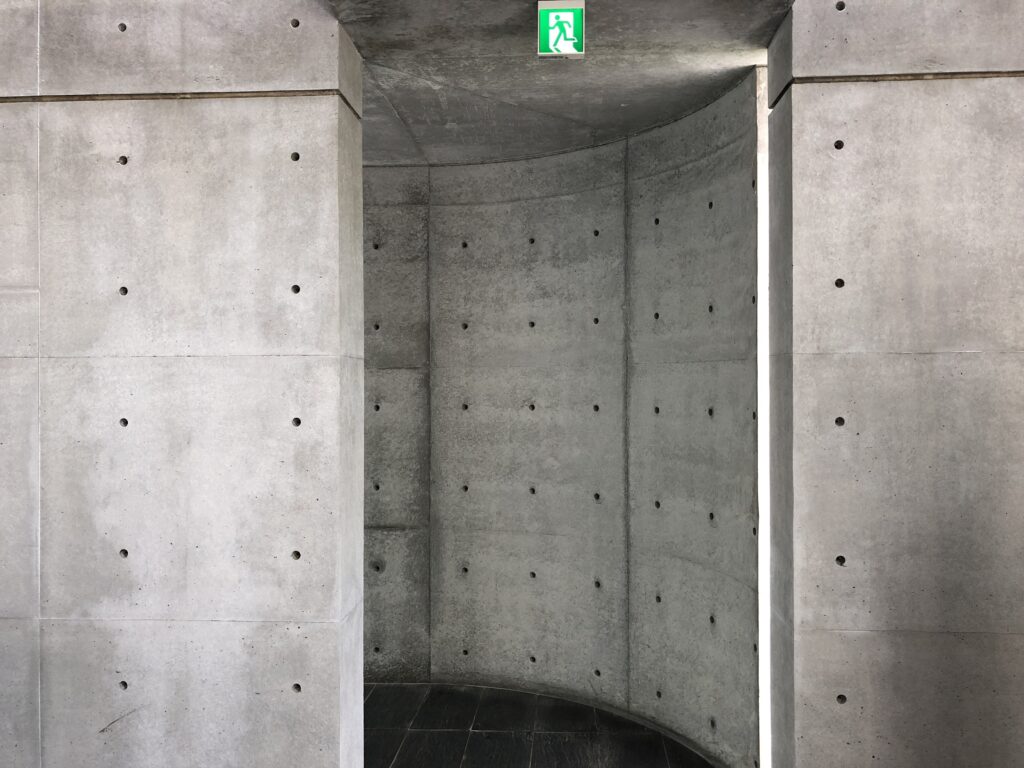
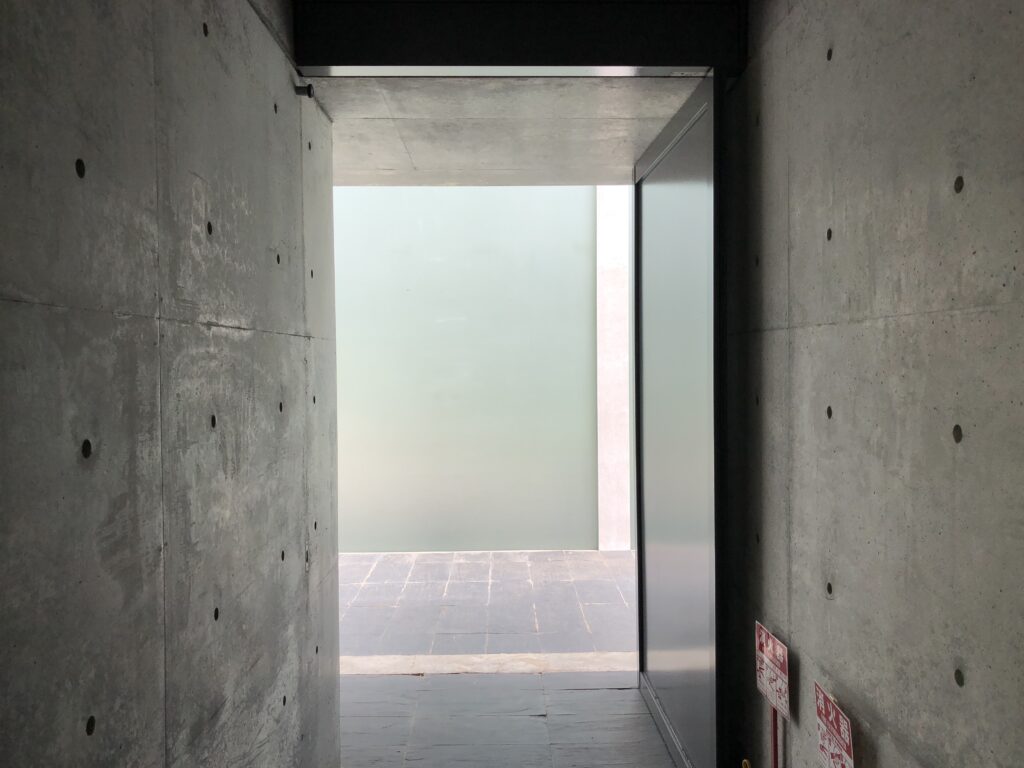
明るいガラスの回廊を進んだ先で、空間の表情は突然変わる。
目の前に現れるのは、光を抑えた打放しコンクリートの通路。
先ほどまで周囲に感じていた空や緑は姿を消し、視界を占めるのはコンクリートの壁と天井になる。
この明から暗への切り替えが非常に鮮烈だった。
建物の規模は小さいにもかかわらず、ほんの数歩の移動によって自分がまったく違う場所へ入り込んだような感覚になる。
At the end of the bright glass corridor, the character of the architecture suddenly changes.
What appears ahead is a passage of exposed concrete with very little light.
The sky and greenery that had remained visible only moments before disappear, replaced by concrete walls and ceiling.
The transition from brightness to darkness is striking.
Although the building is small, only a few steps are enough to create the sensation of having entered an entirely different world.
4.そして、十字架と出会う
Encountering the Cross
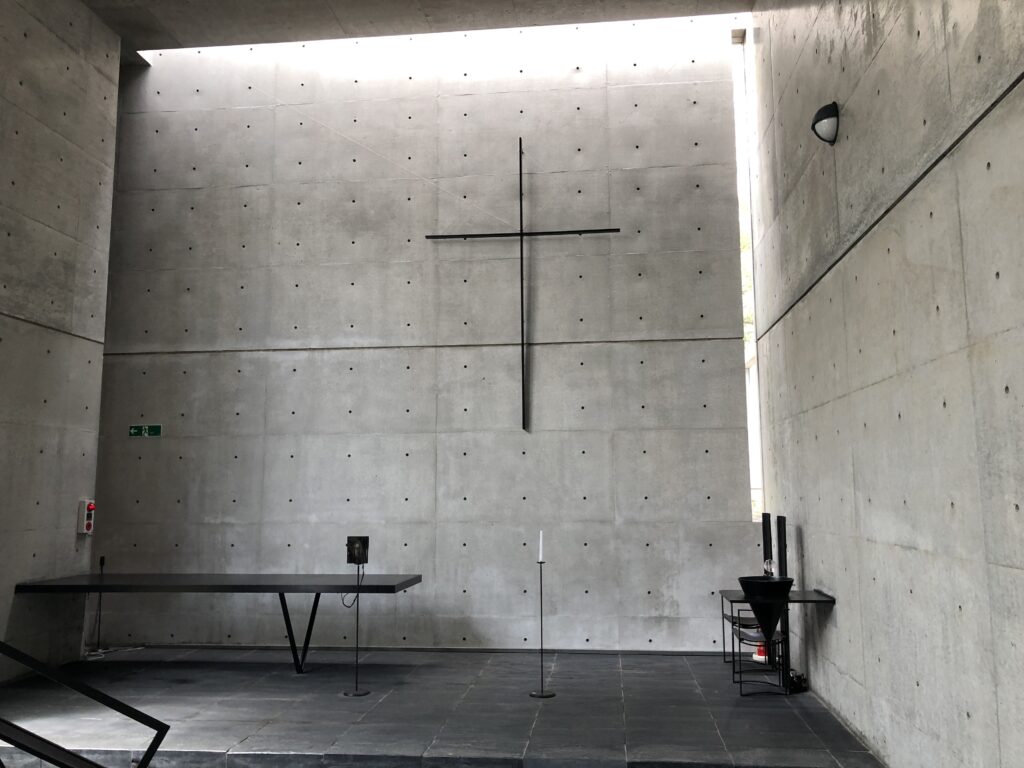
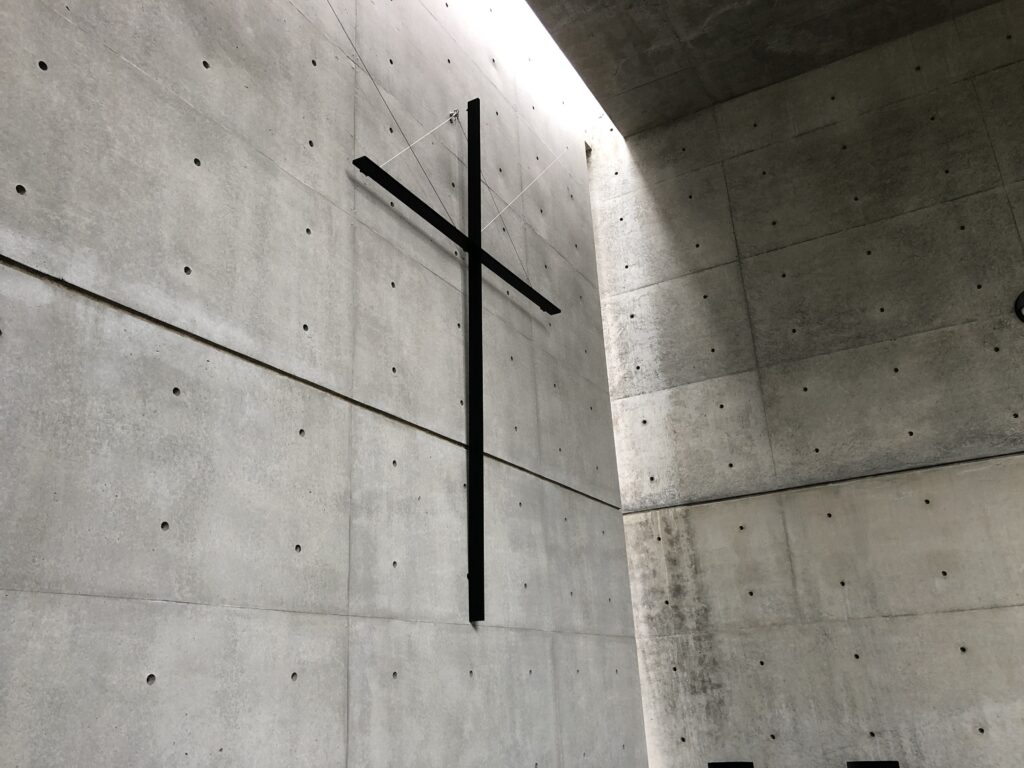
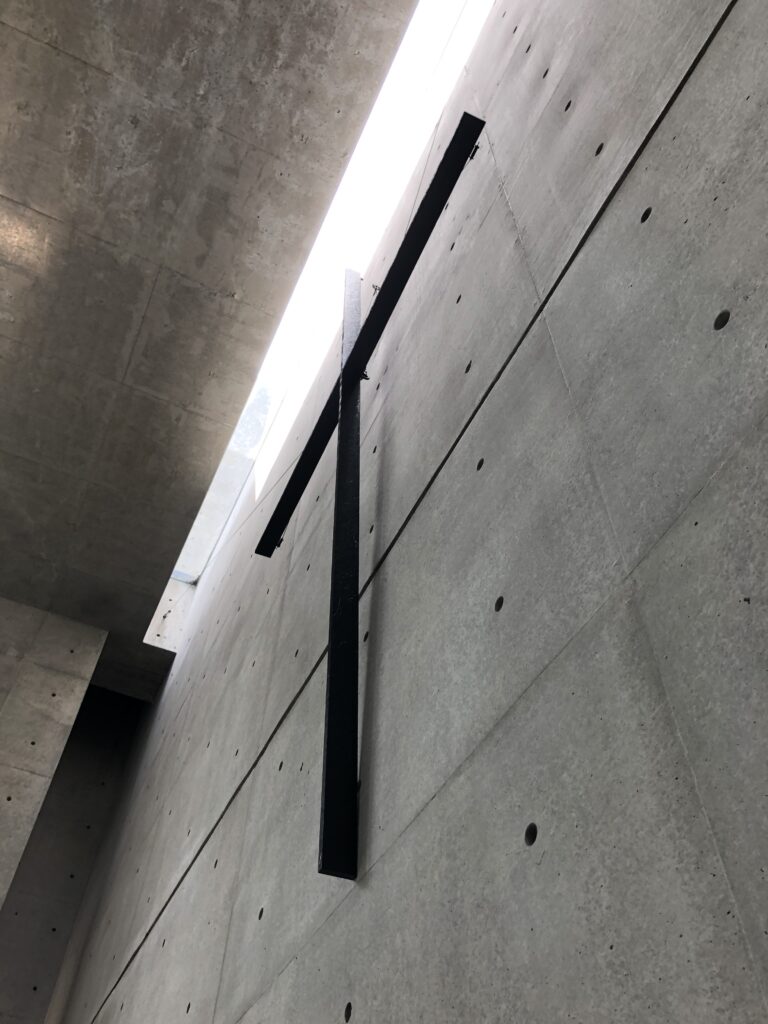
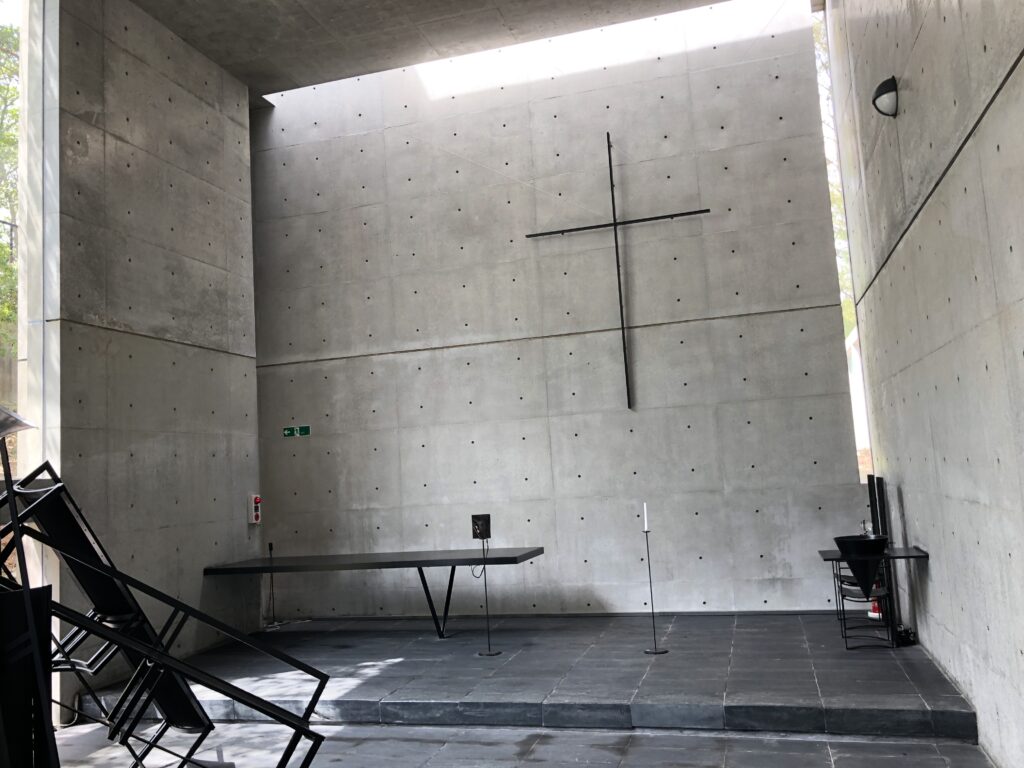
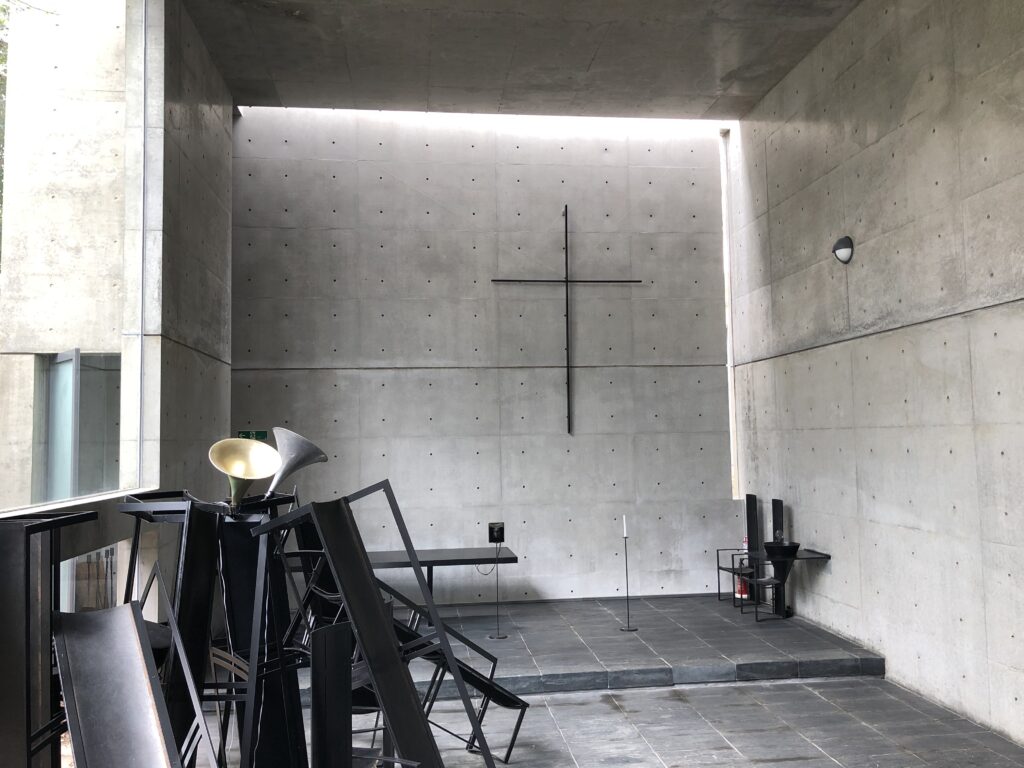
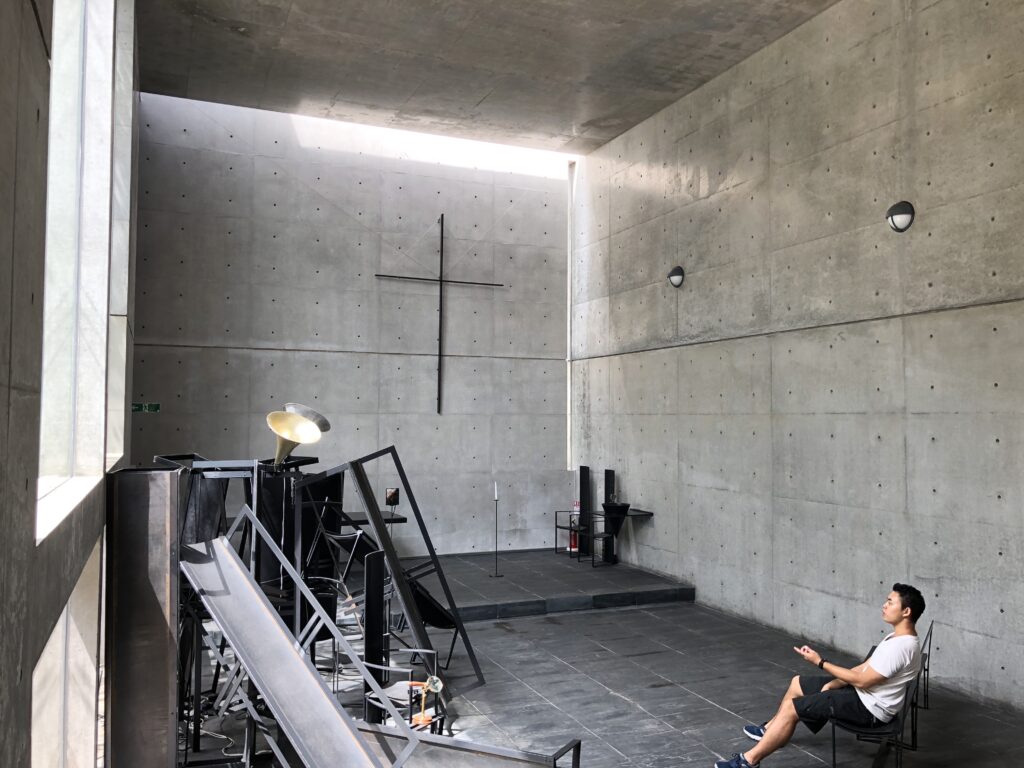
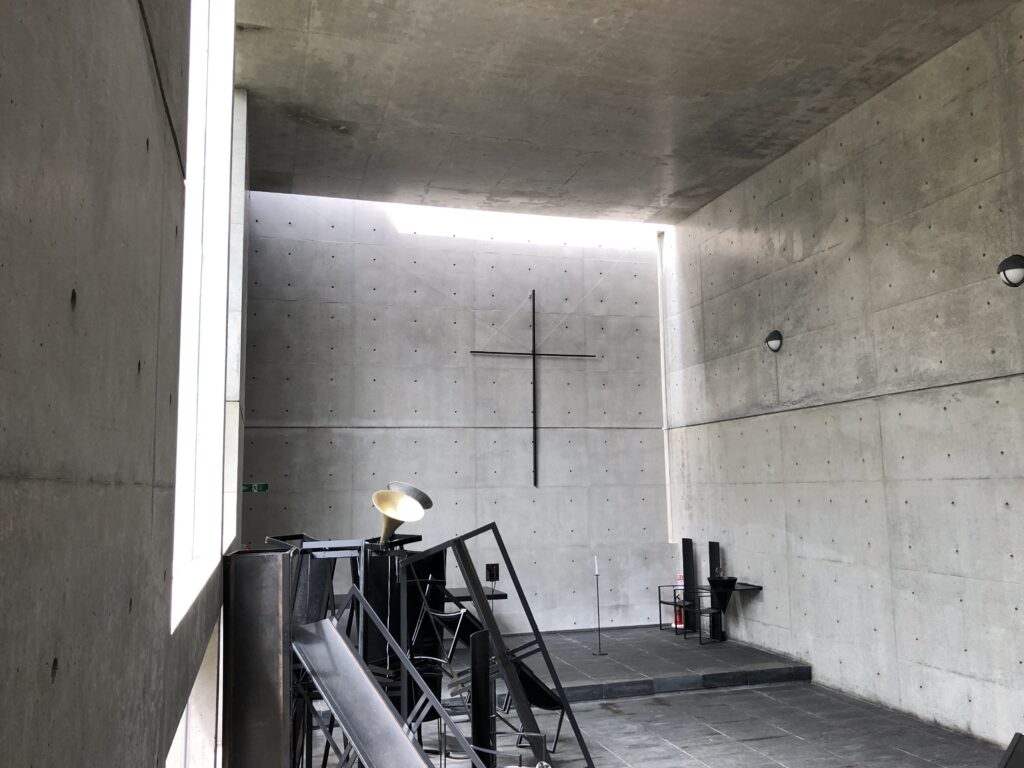
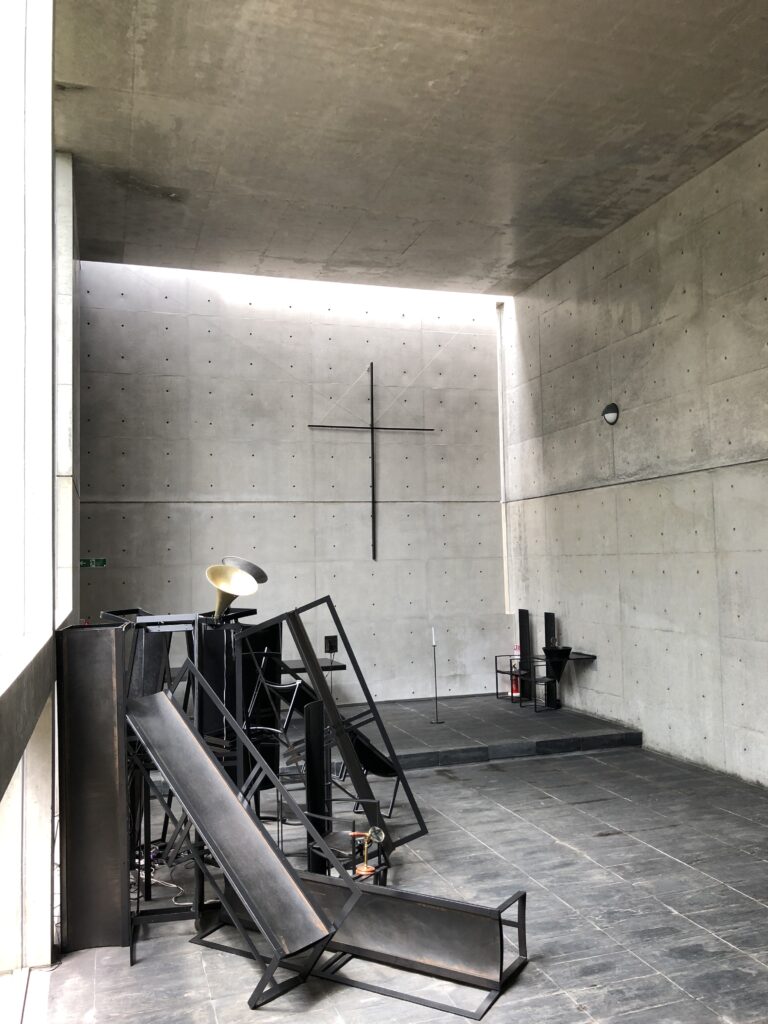
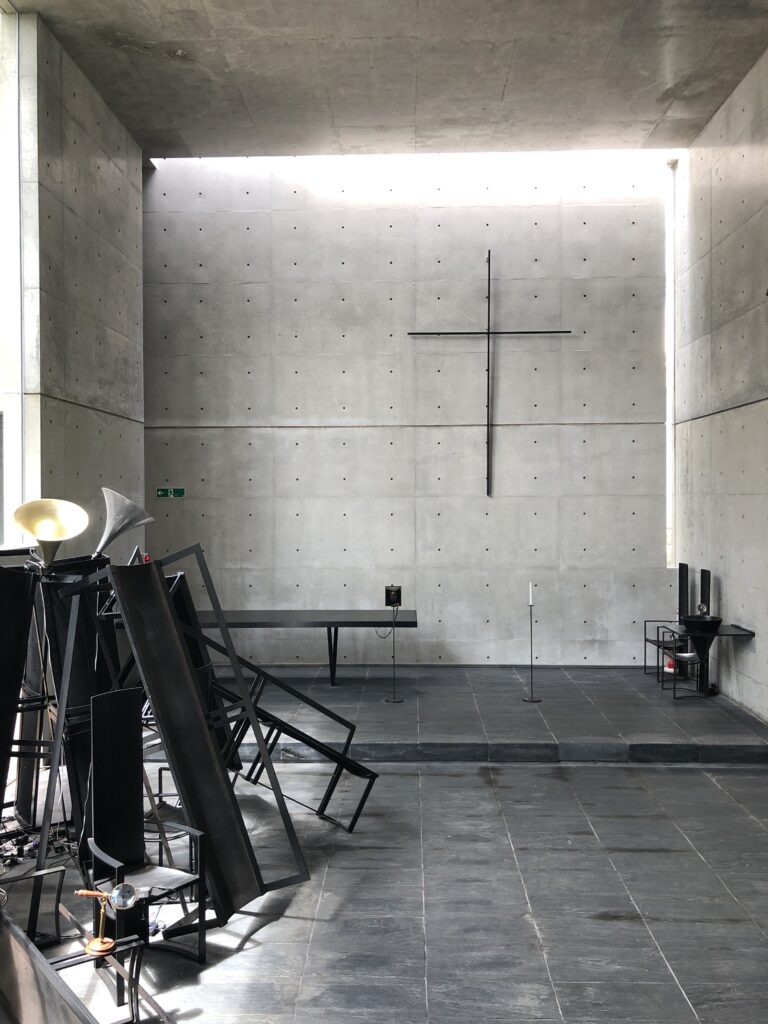
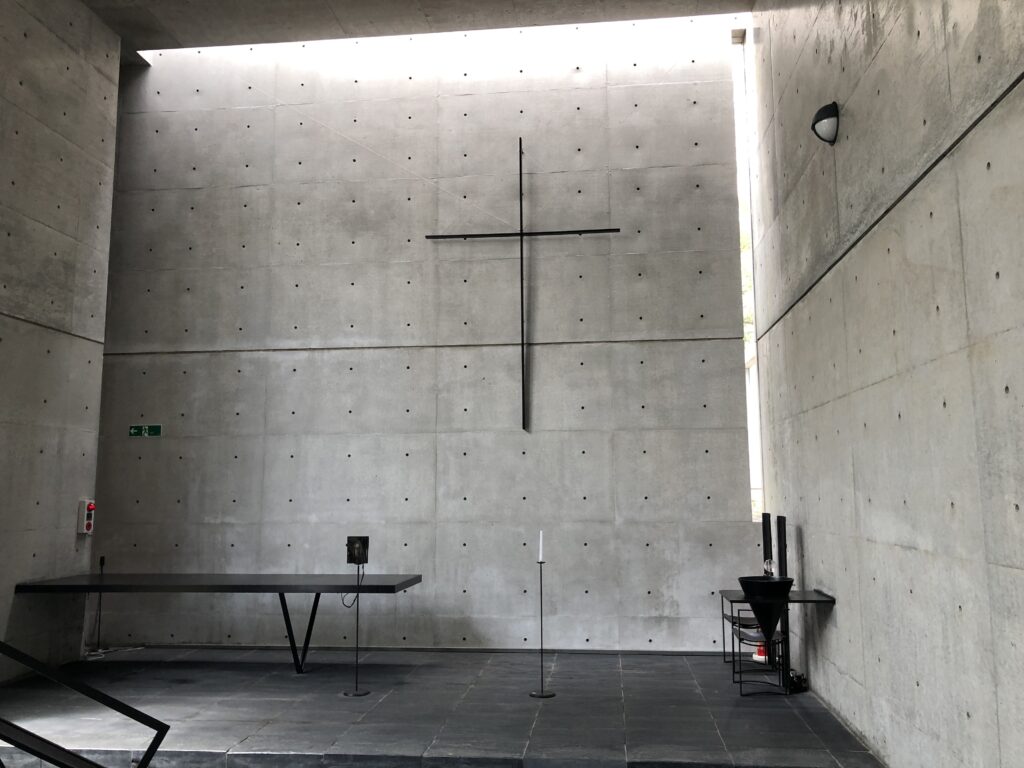
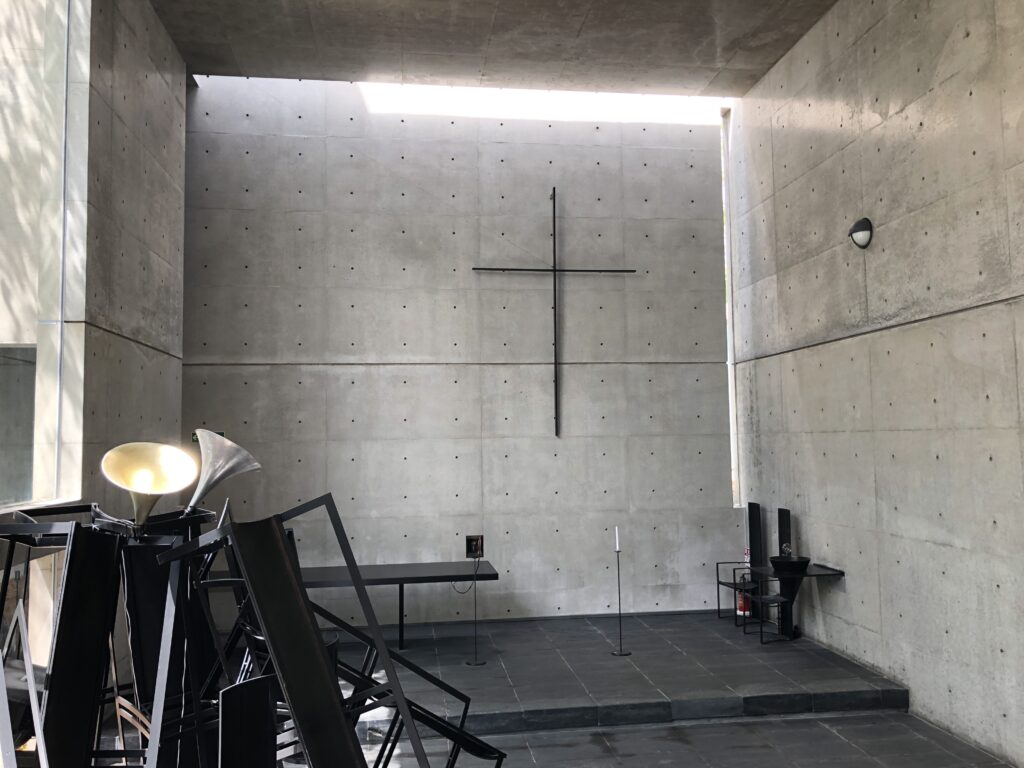
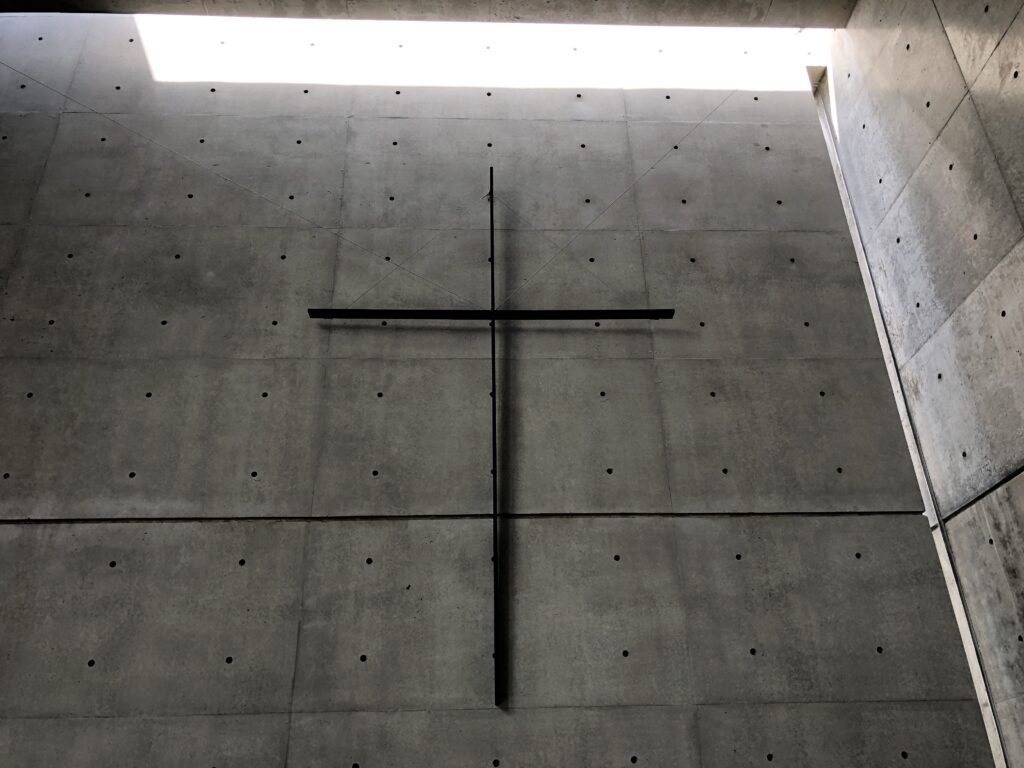
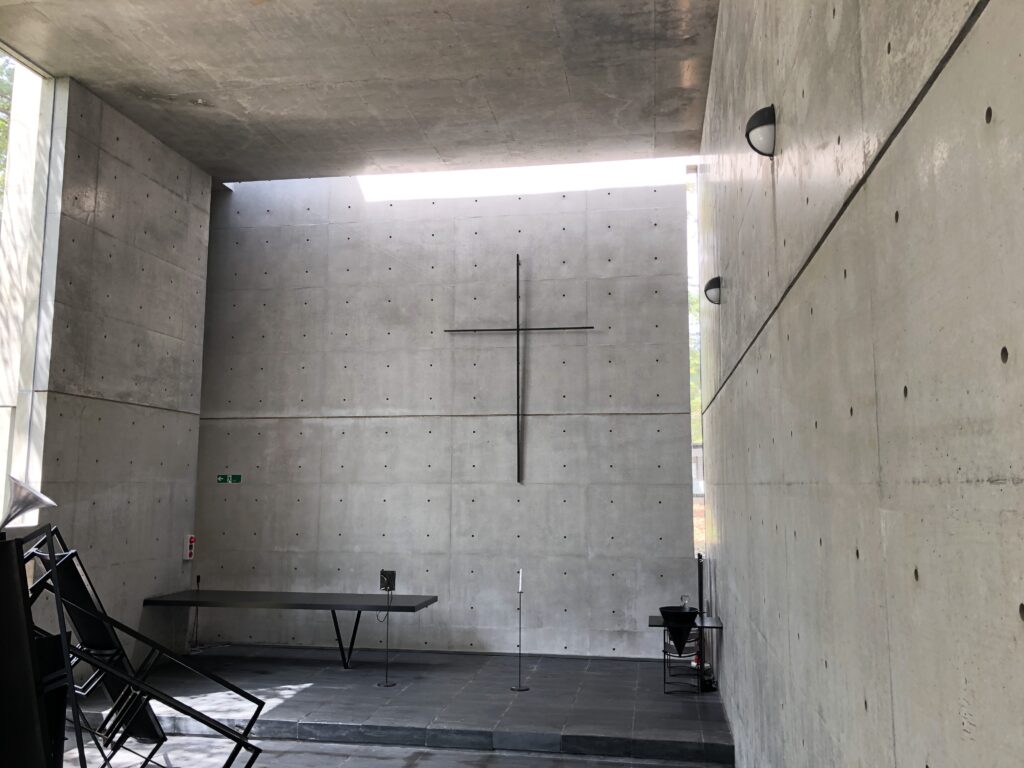
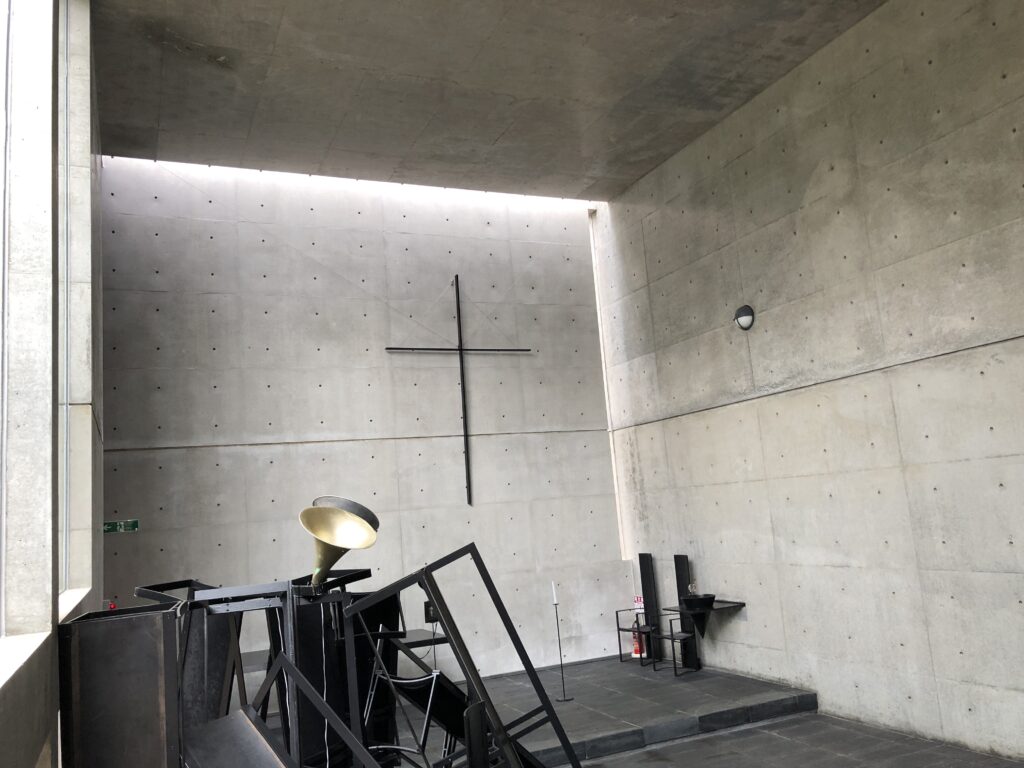
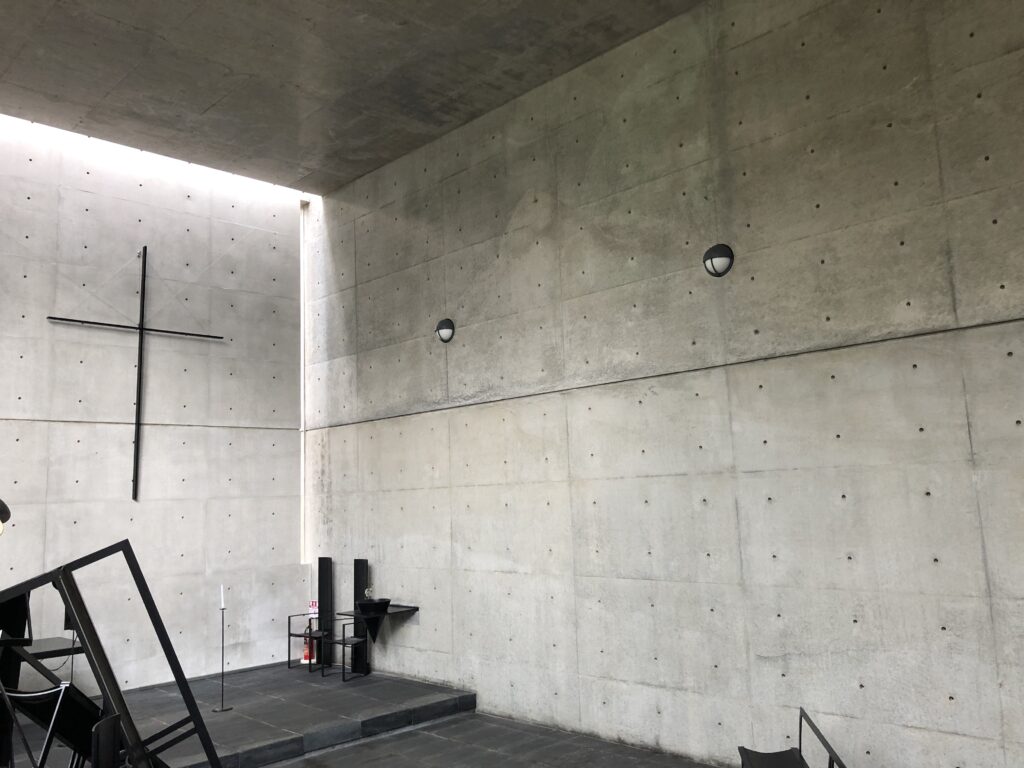
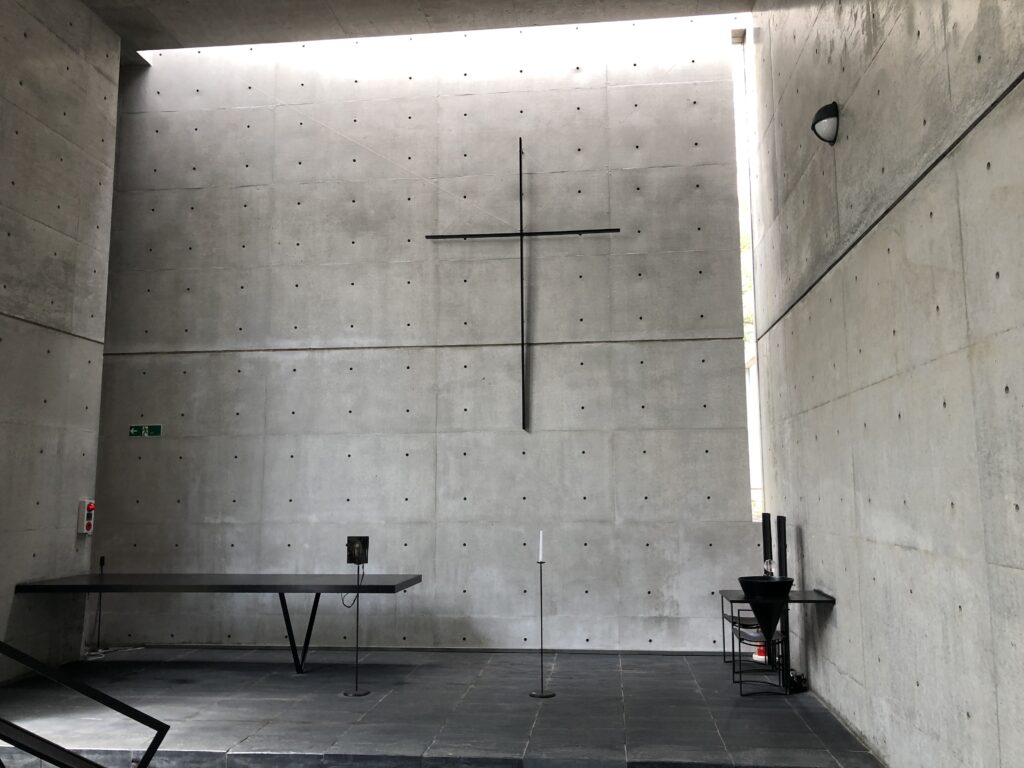
暗い通路を抜けて礼拝堂へ入ると、正面のコンクリート壁に一本の黒い十字架が現れる。
装飾らしい装飾はほとんどない。
打放しコンクリートの壁、黒い十字架、そして壁と天井の境界から入り込む光。
そのわずかな要素だけで空間が成立している。
ここまで回廊を歩き、暗い通路を抜けてきたからこそ、この十字架が単なる壁面の造形ではなく、空間体験の到達点として強く意識される。
After passing through the dark concrete passage and entering the chapel, a single black cross appears on the concrete wall ahead.
There is almost no decoration. Exposed concrete, the dark cross, and light entering along the boundary between wall and ceiling are nearly all that define the space.
Yet because the visitor has already walked through the glass corridor and the darker passage, the cross does not feel like a simple object placed on a wall.
It becomes the destination of an architectural sequence.
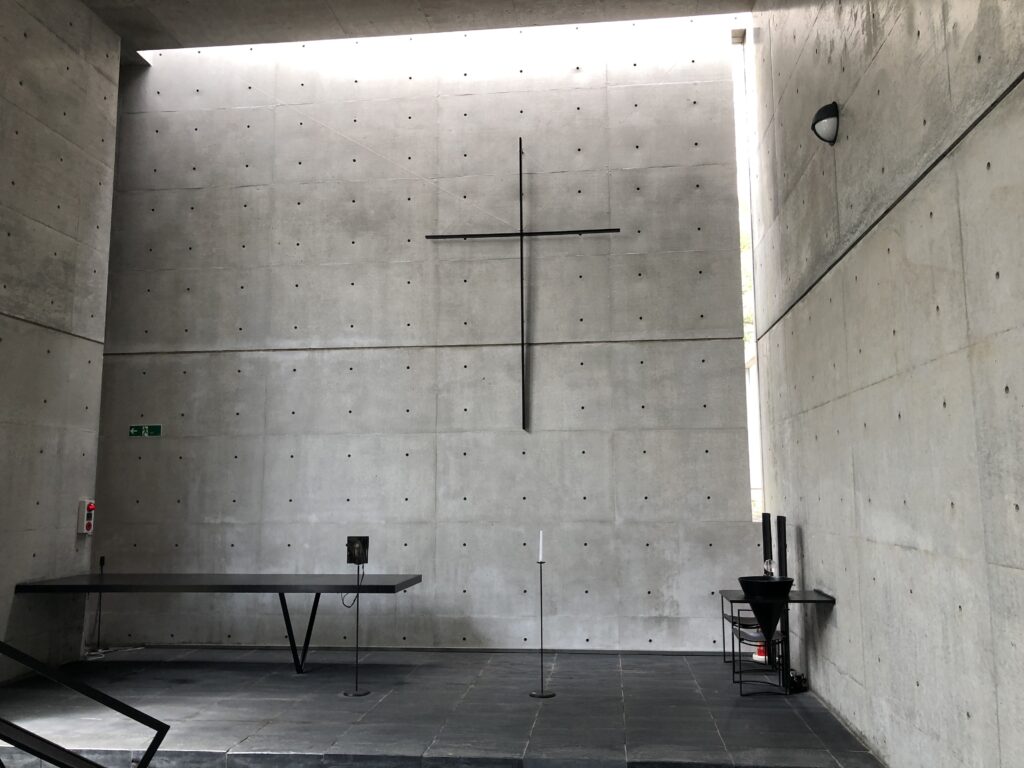
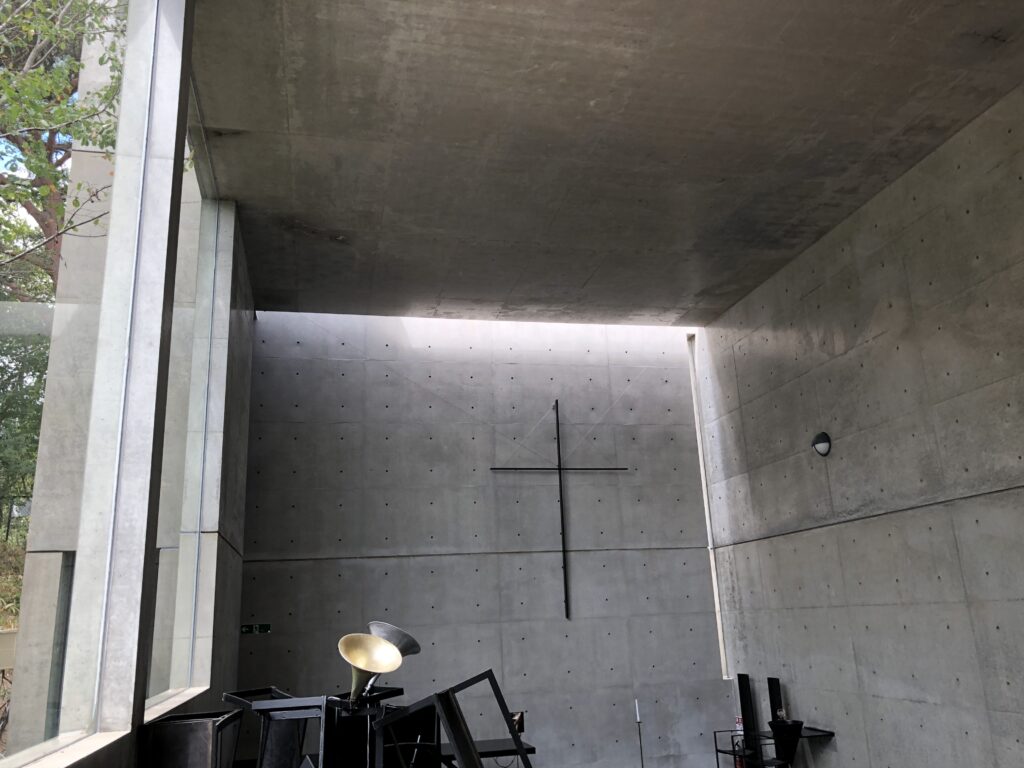
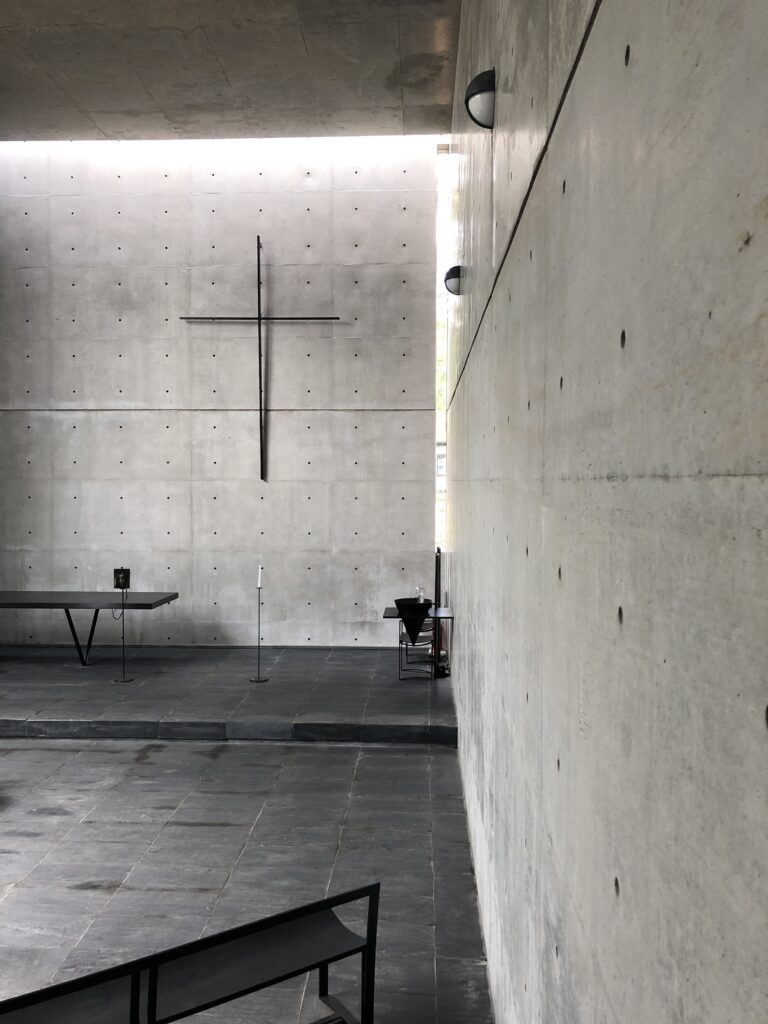
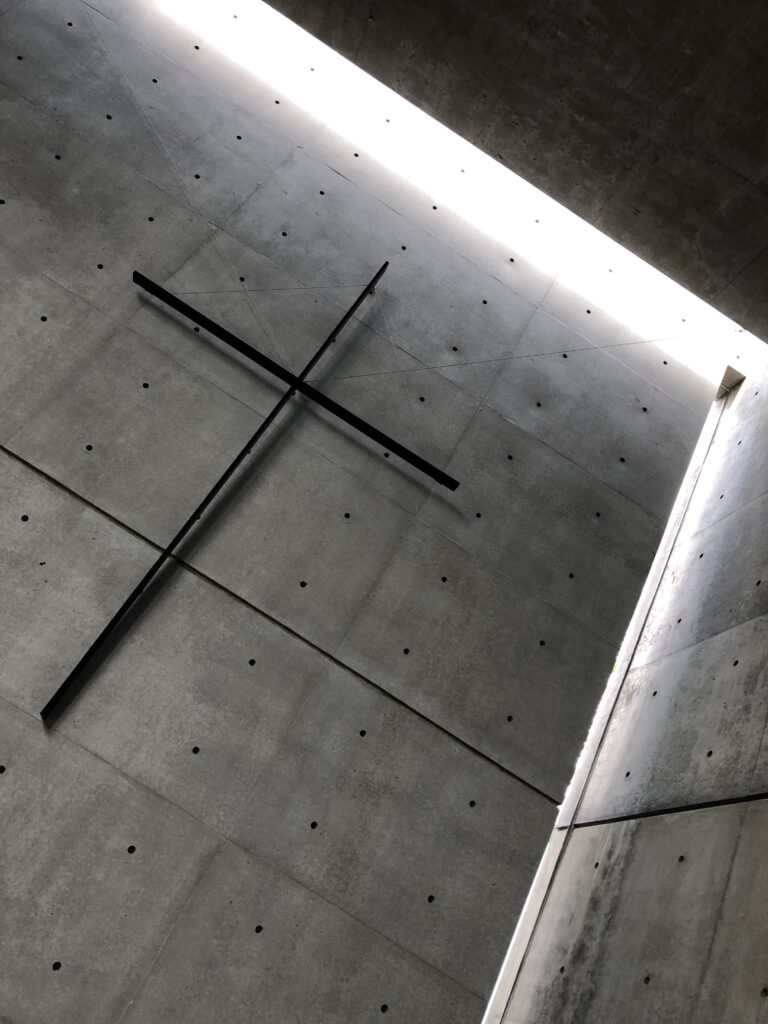
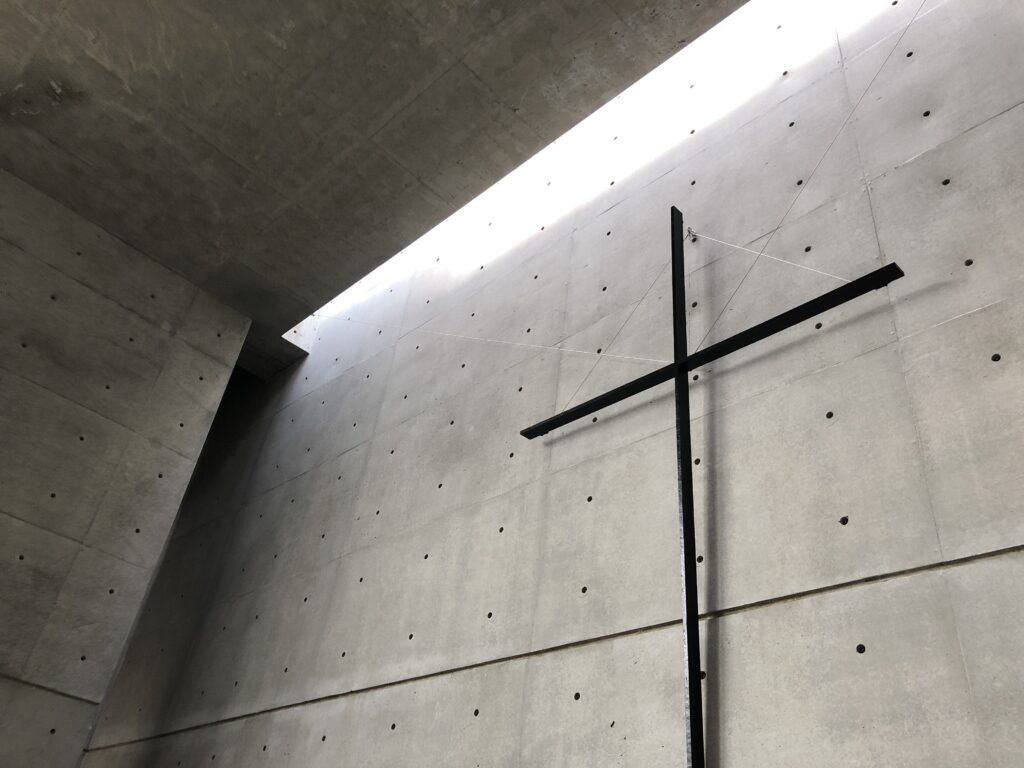
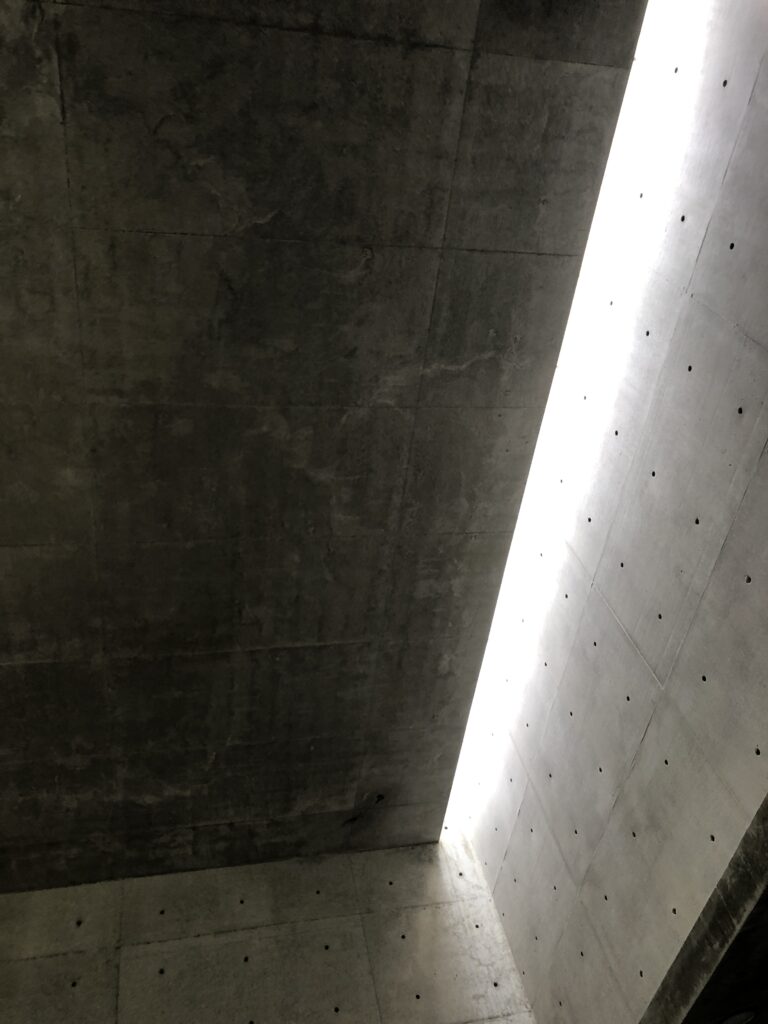
近づいて見上げると、十字架そのもの以上に印象的なのが、その周囲に入り込む光だった。
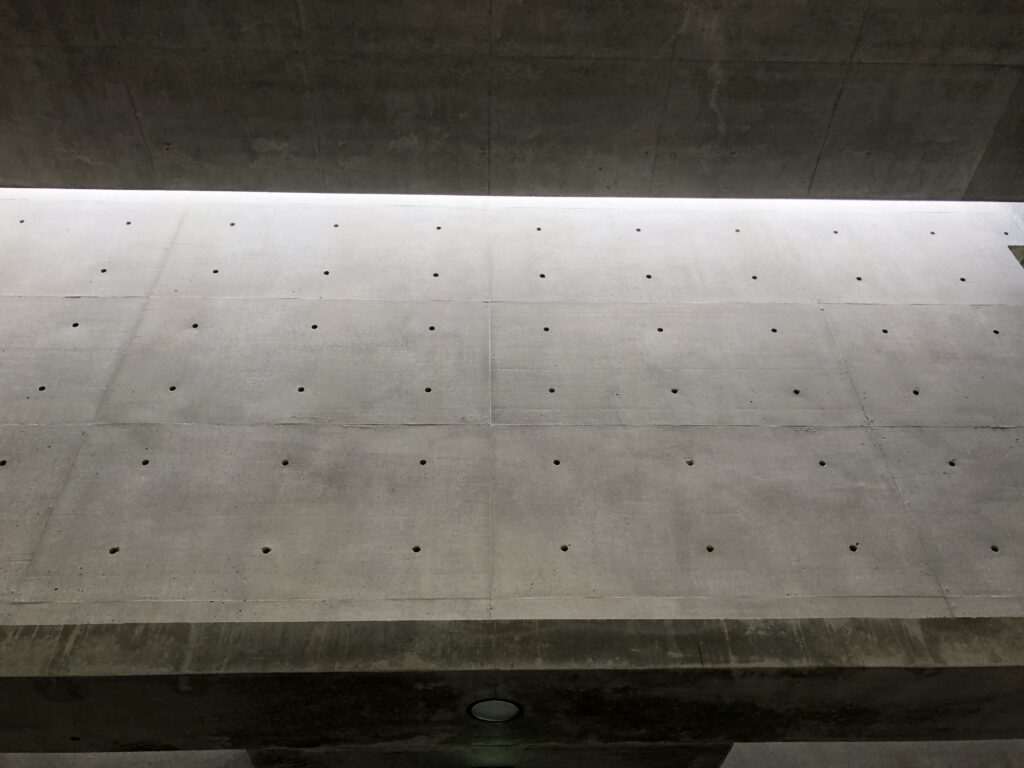
コンクリートの重量感に対して、天井際から差し込む光は驚くほど細く、軽い。
そのわずかな光が壁の輪郭を浮かび上がらせ、静かな礼拝堂に時間の変化を与えている。
コンクリートは閉ざすための素材でありながら、ここでは光を際立たせるための背景にもなっている。
Moving closer and looking upward, I became even more aware of the light surrounding the cross.
Against the weight and solidity of the concrete, the thin line of light entering near the ceiling feels almost weightless.
That subtle illumination reveals the edges of the wall and quietly introduces a sense of changing time into the chapel.
Concrete may be a material capable of enclosure, but here it also becomes a background against which light can be perceived more intensely.
5.「光」を見るためにつくられた空間
A Space Made to See Light
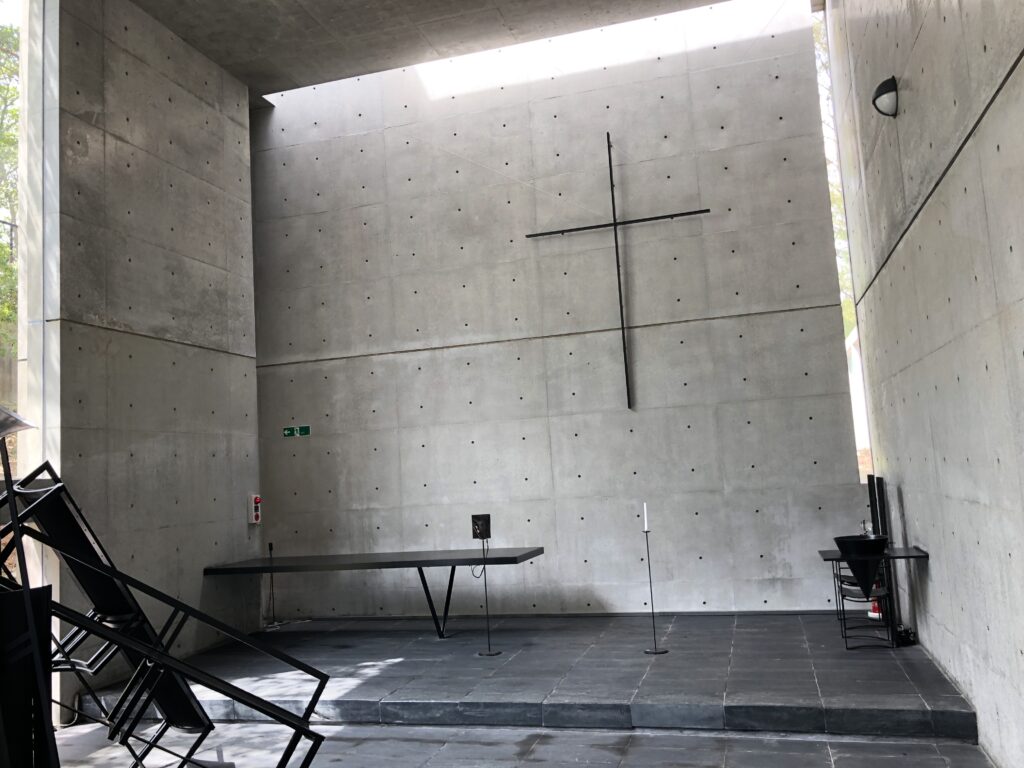
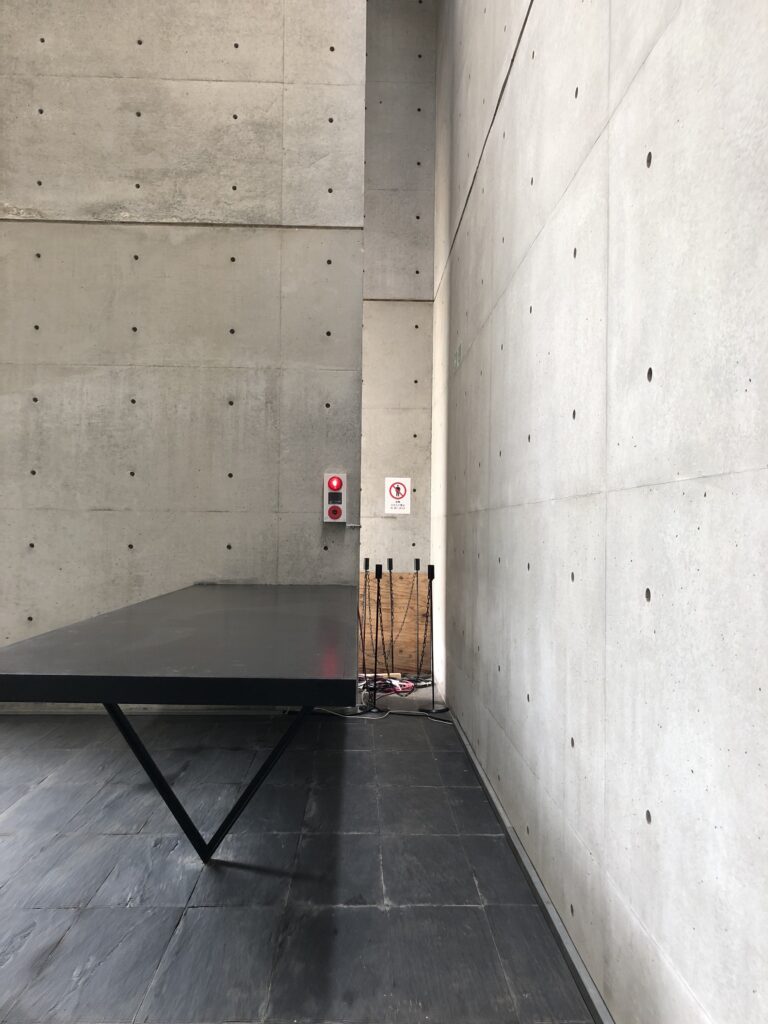
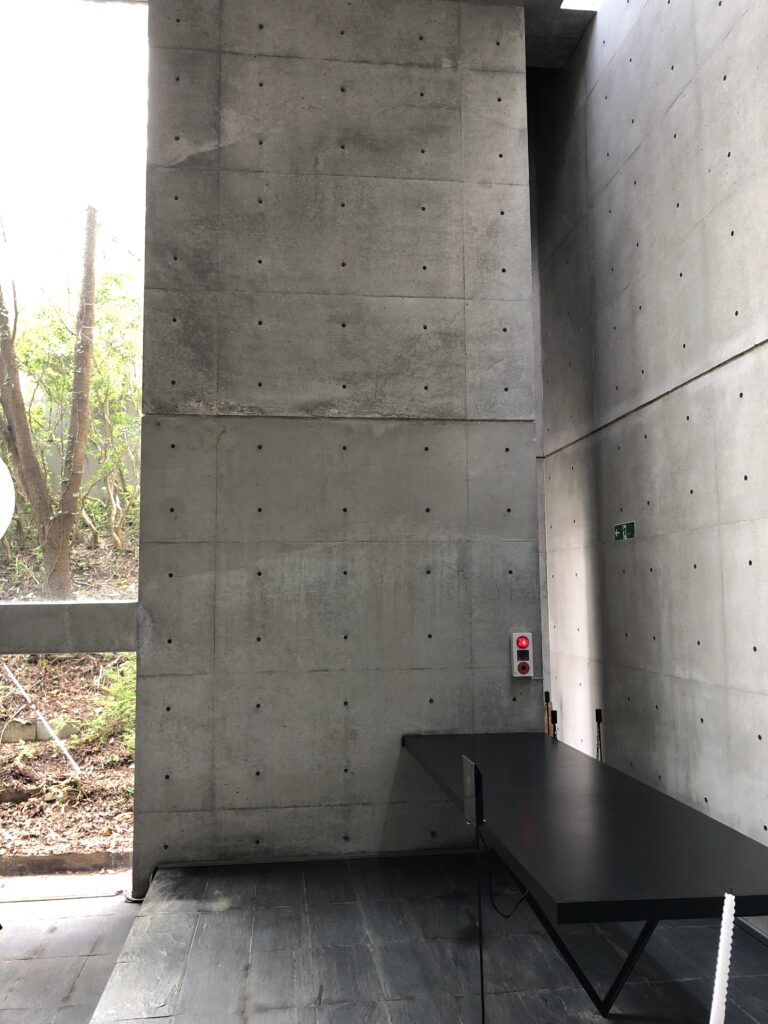
少し距離を取って礼拝堂全体を見ると、この空間がどれほど少ない要素で構成されているかがよく分かる。
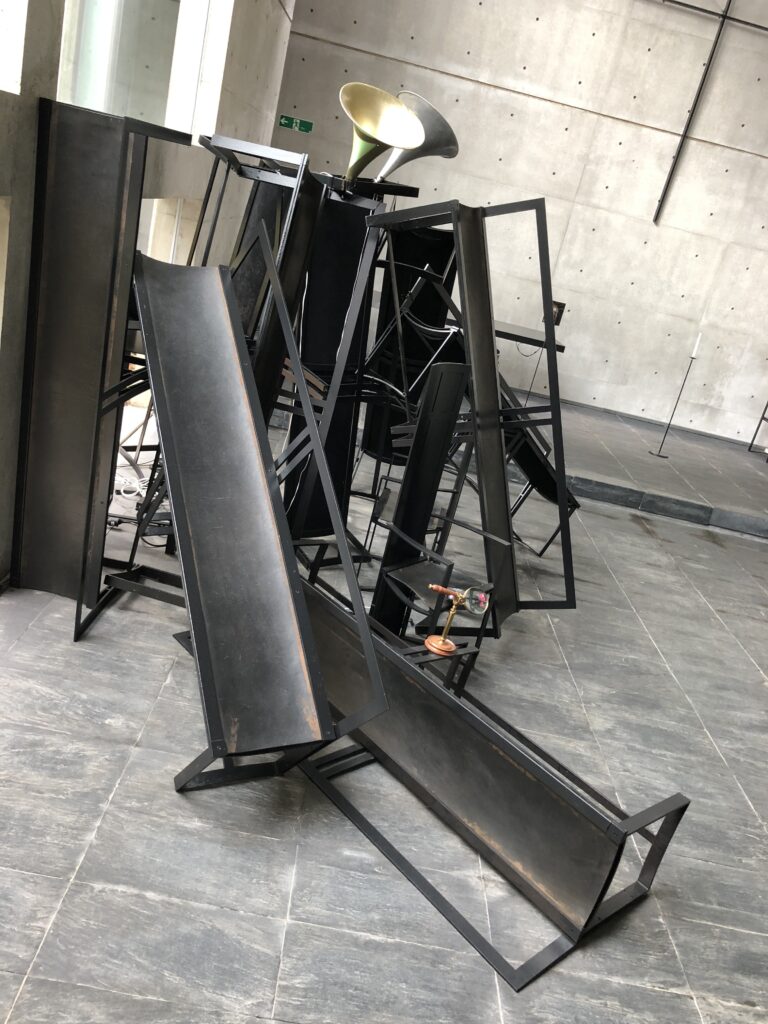
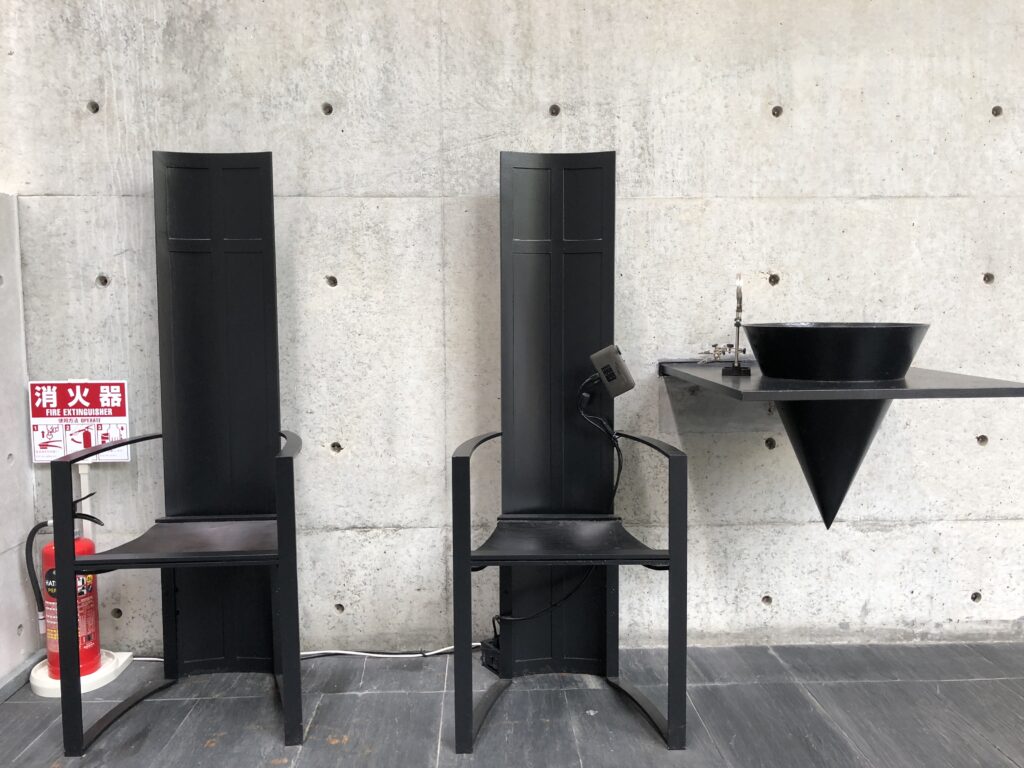
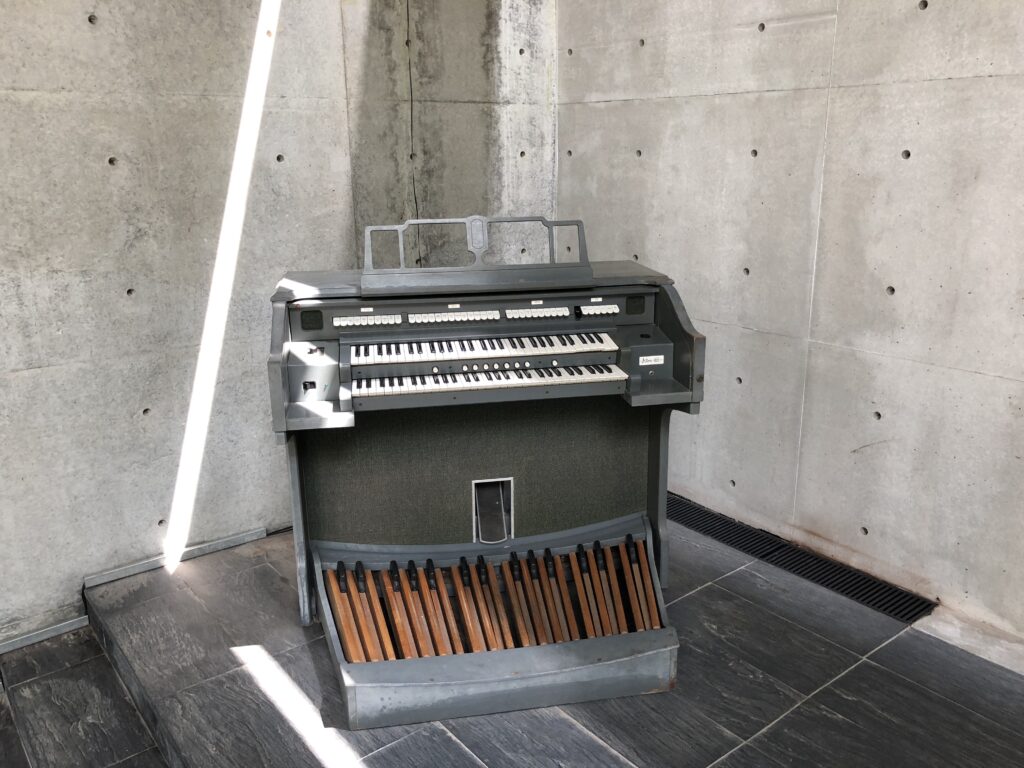
コンクリート、十字架、光、そして必要最小限の家具。
それだけなのに、不思議なほど空間には緊張感がある。
安藤建築ではしばしば「光」が語られるが、光そのものに特別な形があるわけではない。
壁を閉じ、開口部を限定し、暗さをつくることによって、普段なら意識することのない光を建築の主役へと変えているのだと思う。
Stepping back and looking at the chapel as a whole reveals how few elements are actually present: concrete, a cross, light, and only the furniture necessary for the space.
Yet there is an extraordinary tension within this simplicity.
Light is often discussed in relation to Tadao Ando’s architecture, but light itself has no particular architectural form.
By closing the walls, limiting the openings, and deliberately creating darkness, Ando transforms something we normally take for granted into the protagonist of the space.
6.コンクリートと自然が接する場所
Where Concrete Meets Nature
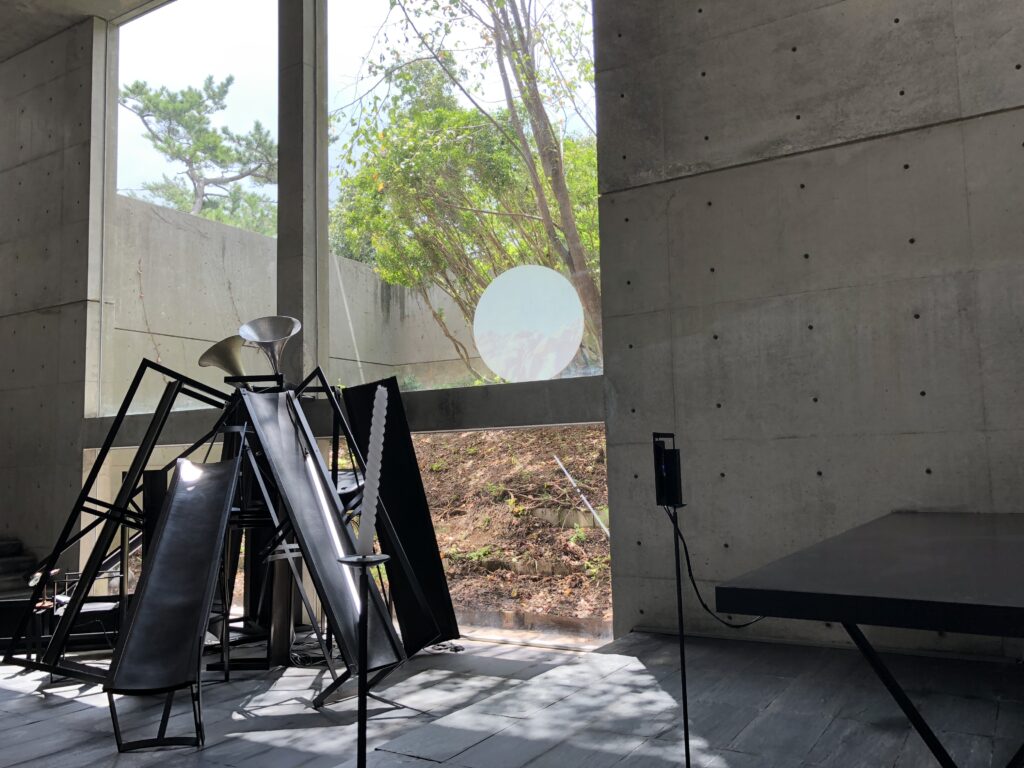
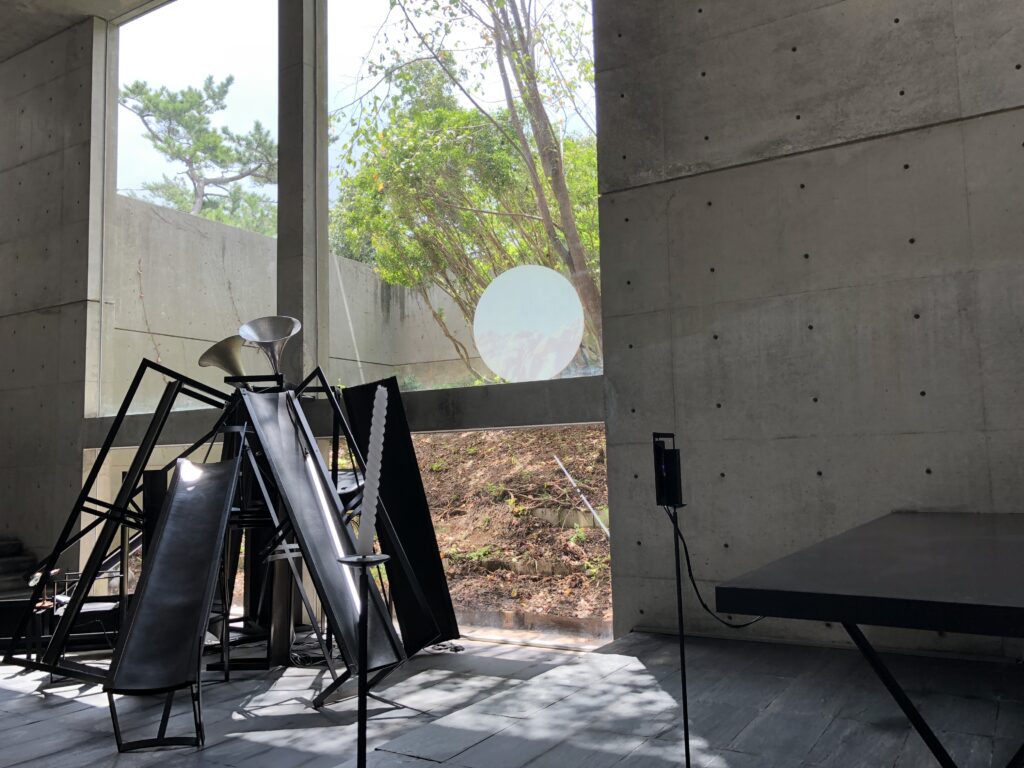
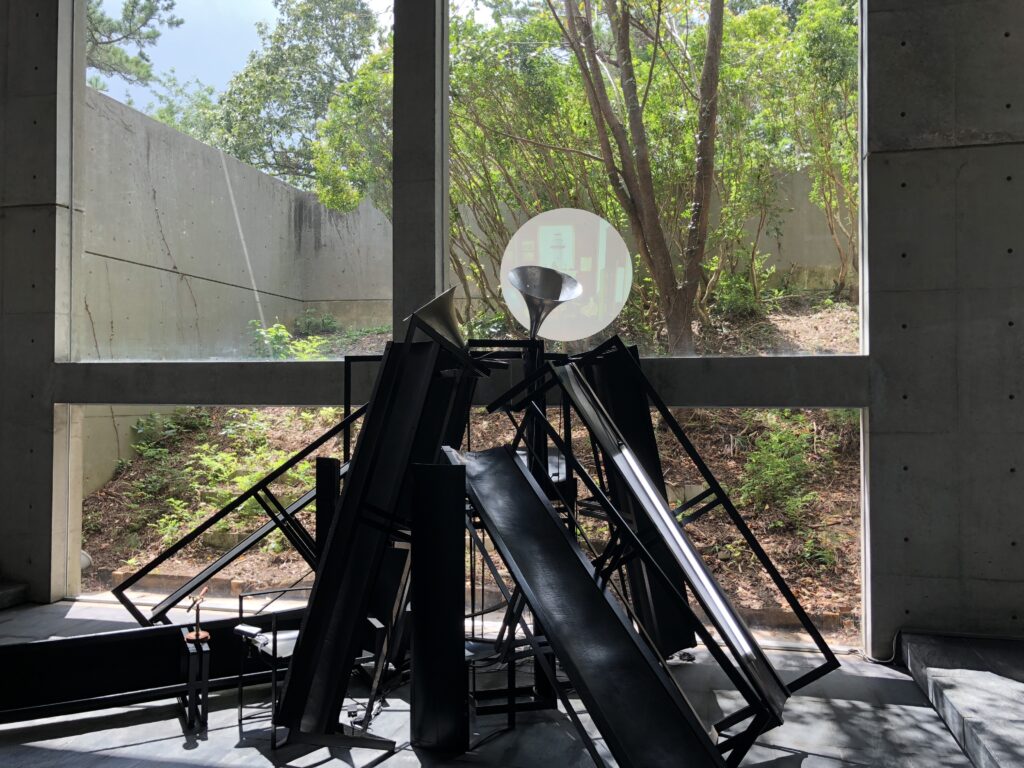
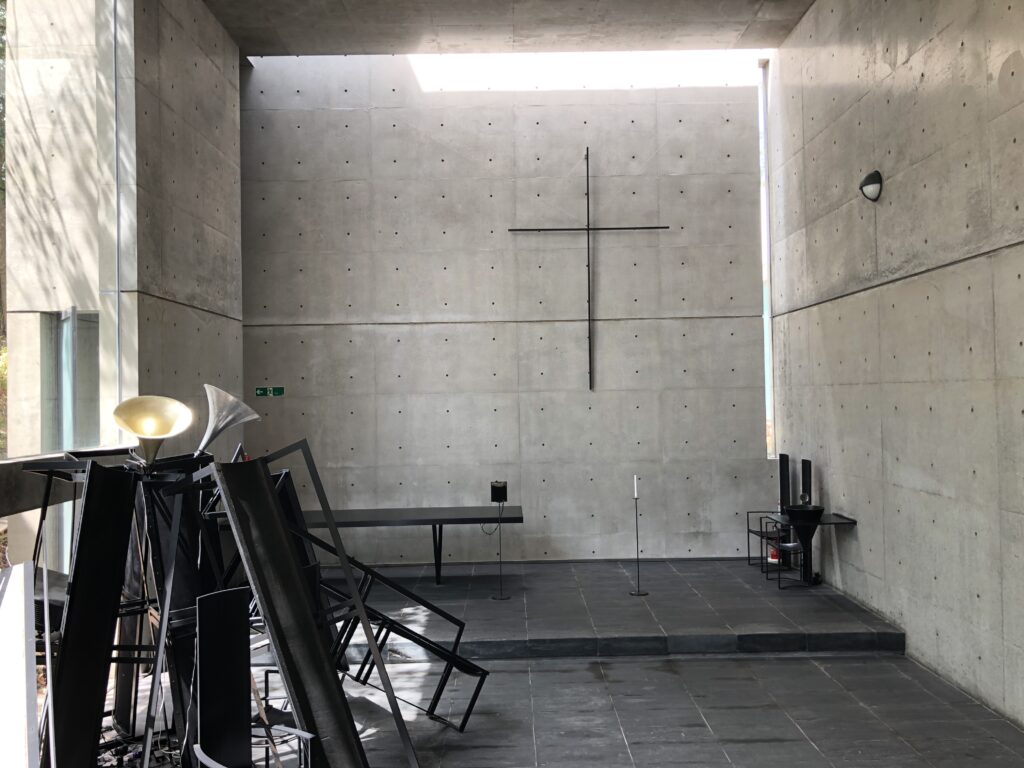
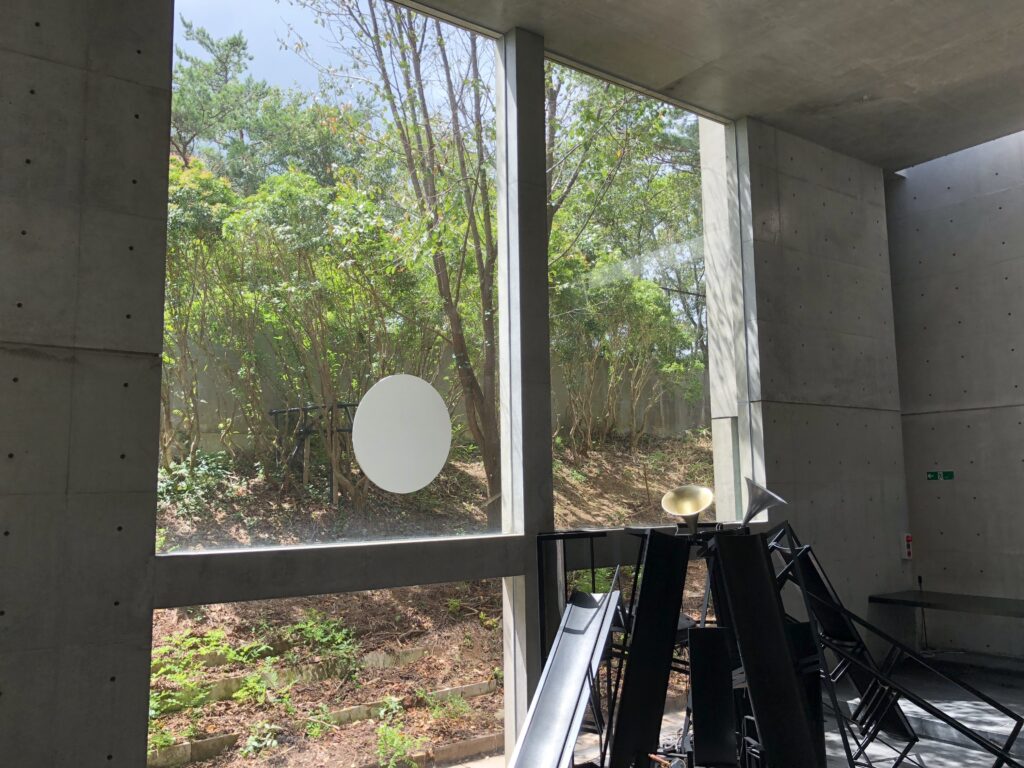
一方の開口部へ目を向けると、礼拝堂のすぐ外には六甲山の緑が広がっている。
無機質なコンクリートと黒い家具、その向こうに見える木々。
内部では徹底して抽象化された空間を体験していたからこそ、窓の外に現れる自然の存在が鮮やかに感じられる。
自然を建築の中へ大量に取り込むのではなく、限定された場所から見せることで、むしろその存在を強く意識させる。ここにも安藤建築らしい自然との距離の取り方が表れている。
Looking toward one of the openings, the greenery of Mount Rokko appears immediately beyond the chapel.
The contrast is vivid: exposed concrete and dark furniture inside, living trees outside.
After experiencing such an abstract interior, the presence of nature beyond the opening feels especially intense.
Rather than bringing the landscape completely into the building, the architecture reveals it selectively.
By limiting the view, nature itself becomes more noticeable.
This carefully controlled relationship between architecture and the natural world is another characteristic I often encounter in Ando’s work.
7.小さな礼拝堂に凝縮された建築
Architecture Condensed into a Small Chapel
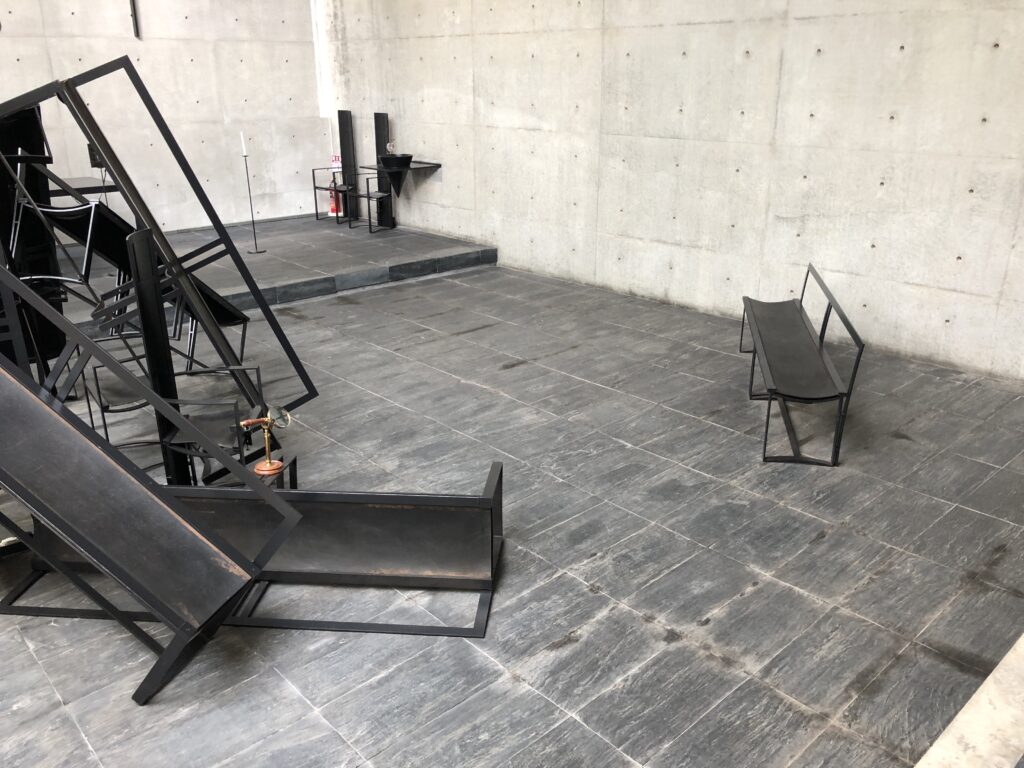
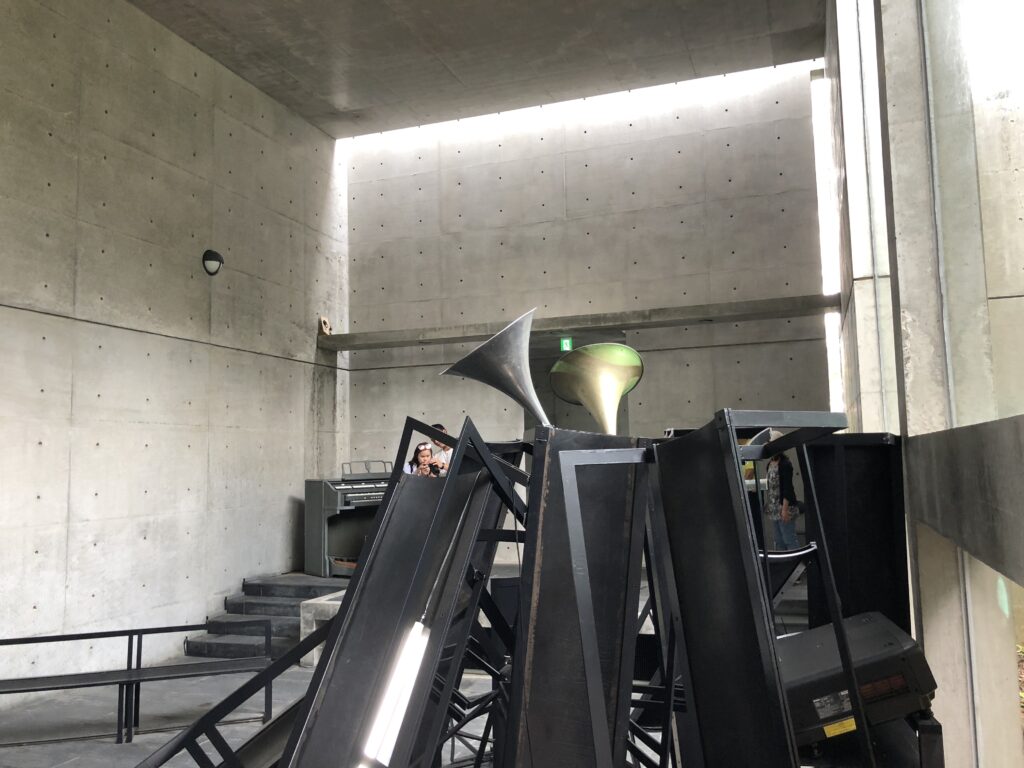
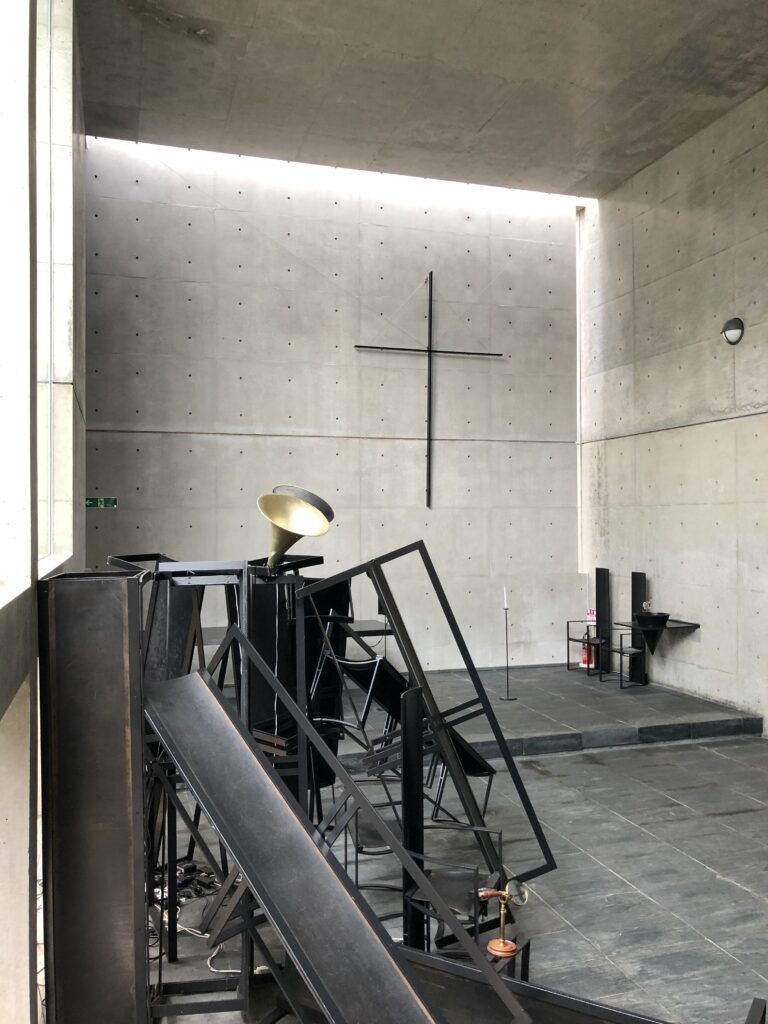
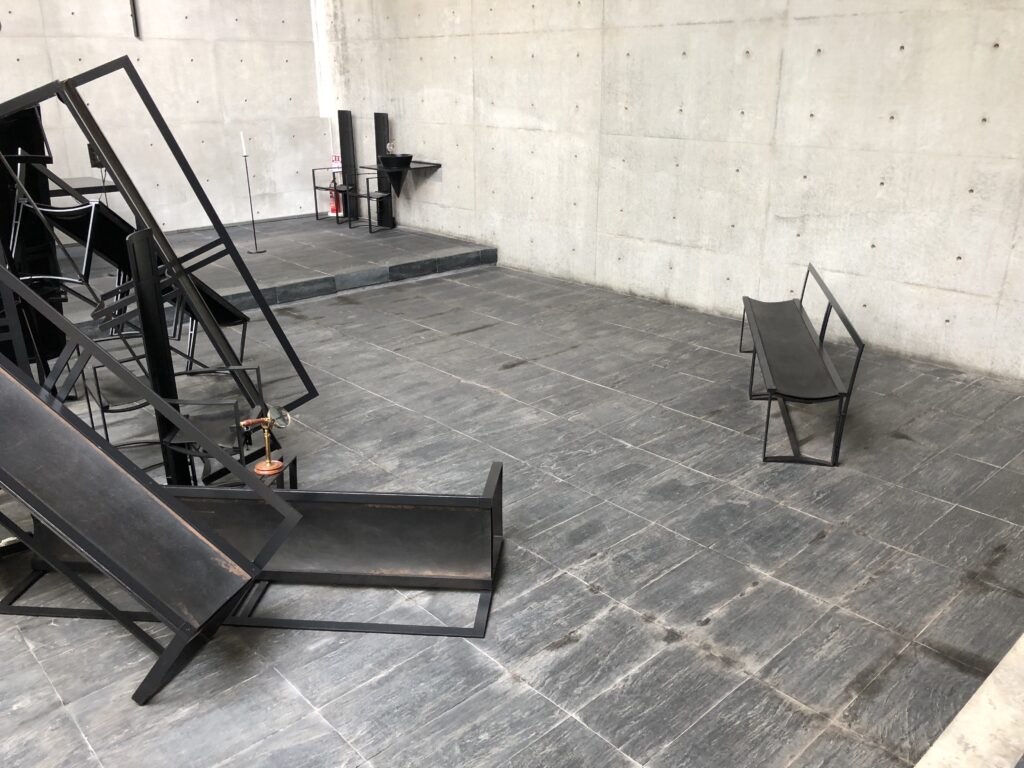
礼拝堂を別の角度から眺めると、空間そのものが驚くほどコンパクトであることに気づく。
しかし狭さはほとんど感じない。
視線が上部の光や外部へ抜け、さらに入口から礼拝堂までの長いアプローチが体験として加わることで、実際の床面積以上の奥行きを感じさせるからだろう。
大きな空間をつくるのではなく、歩く距離、視線の方向、光の入り方を操作することで、体験そのものを大きくする。風の教会を歩いていると、建築のスケールとは必ずしも建物の大きさではないのだと感じる。
Seen from another angle, it becomes clear just how compact the chapel really is.
Yet it rarely feels confined. The eye is drawn toward the light above and toward openings to the exterior, while the long sequence of spaces experienced before reaching the chapel adds another dimension to its perceived depth.
Instead of creating a physically large room, the architecture enlarges the experience through movement, direction, and light.
Walking through the Church of the Wind reminded me that architectural scale is not necessarily the same thing as the physical size of a building.
8.もう一度、回廊を歩く
Walking Through the Corridor Once Again
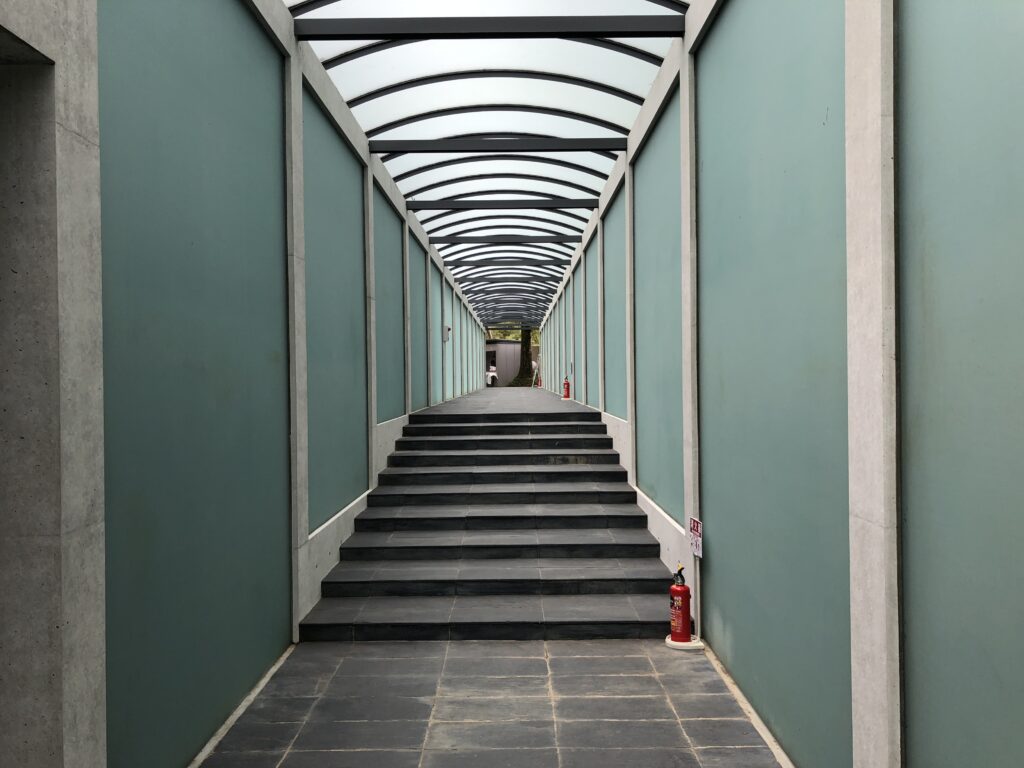
礼拝堂を出て再びガラスの回廊へ戻ると、最初に歩いたときとは印象が少し違って見えた。
暗く閉ざされたコンクリートの礼拝堂を経験した後だからこそ、半透明のガラスを通して広がる光がより明るく感じられる。
建築を「見る」のではなく、歩く順序によって光や空間の感じ方そのものが変化していく。
往路と復路で同じ場所が違って見えることも、この小さな建築の面白さの一つだった。
Returning to the glass corridor after leaving the chapel, the same space somehow felt different.
After experiencing the dark, enclosed concrete interior, the light filtering through the translucent glass seemed noticeably brighter.
This is an architecture that changes not only as you move through it, but also according to what you have already experienced.
The fact that the same corridor can feel different on the way in and on the way out is one of the quiet pleasures of this small building.
9.六甲山の中に残された、小さな塔
A Small Tower Remaining Among the Trees of Mount Rokko
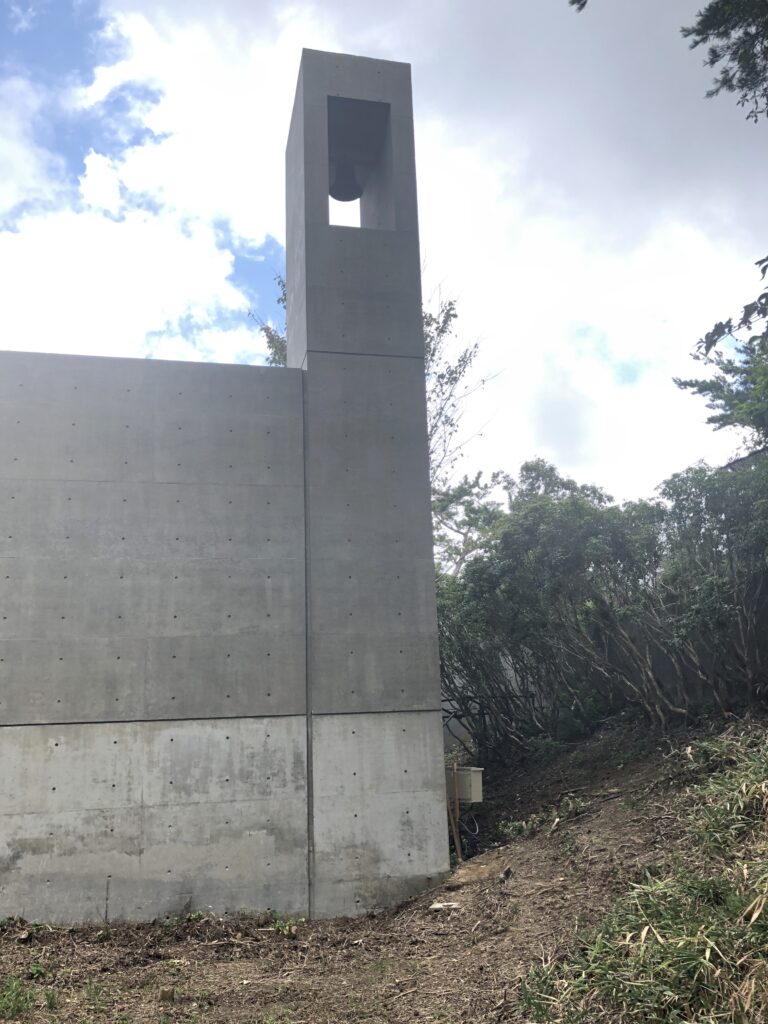
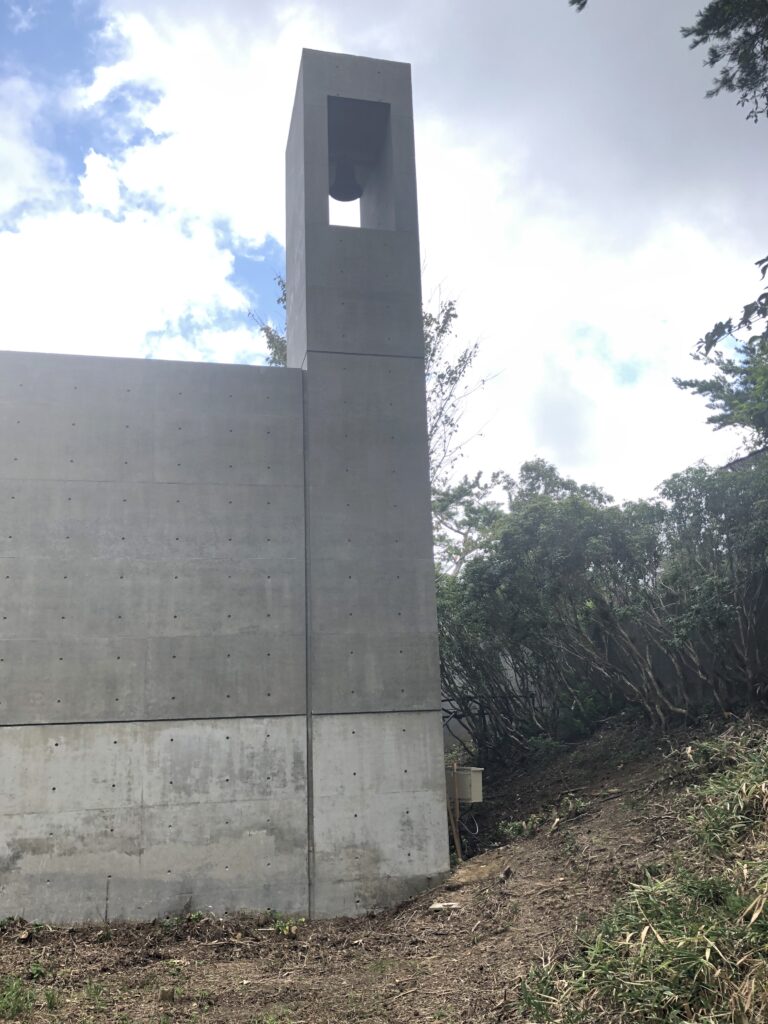
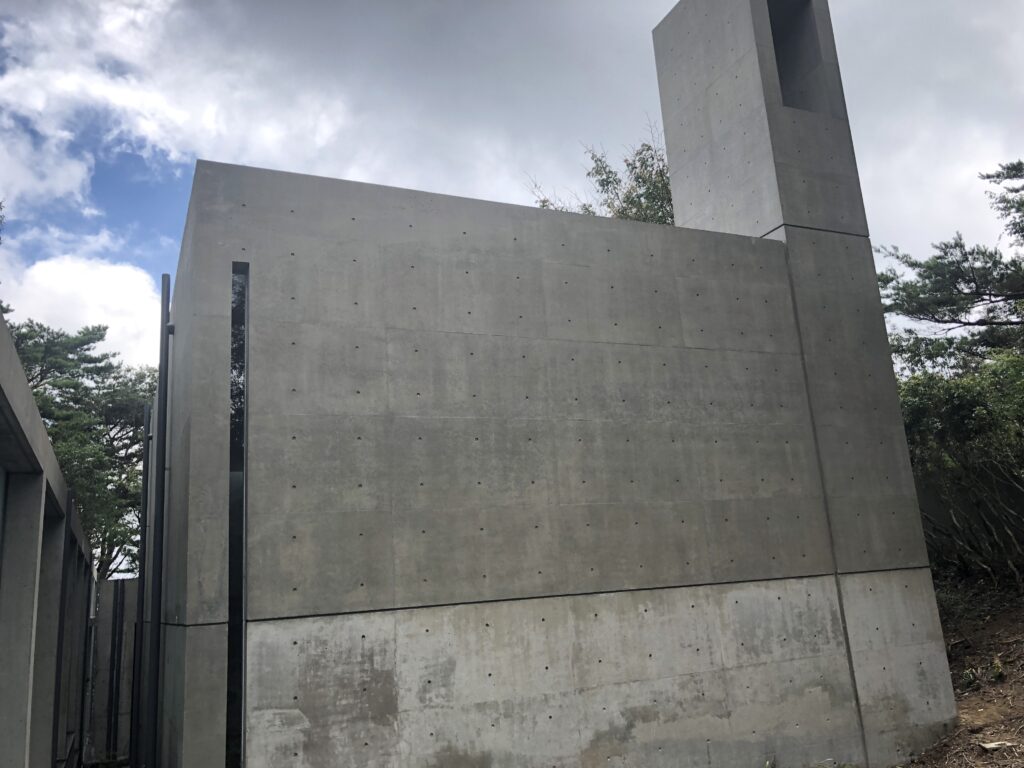
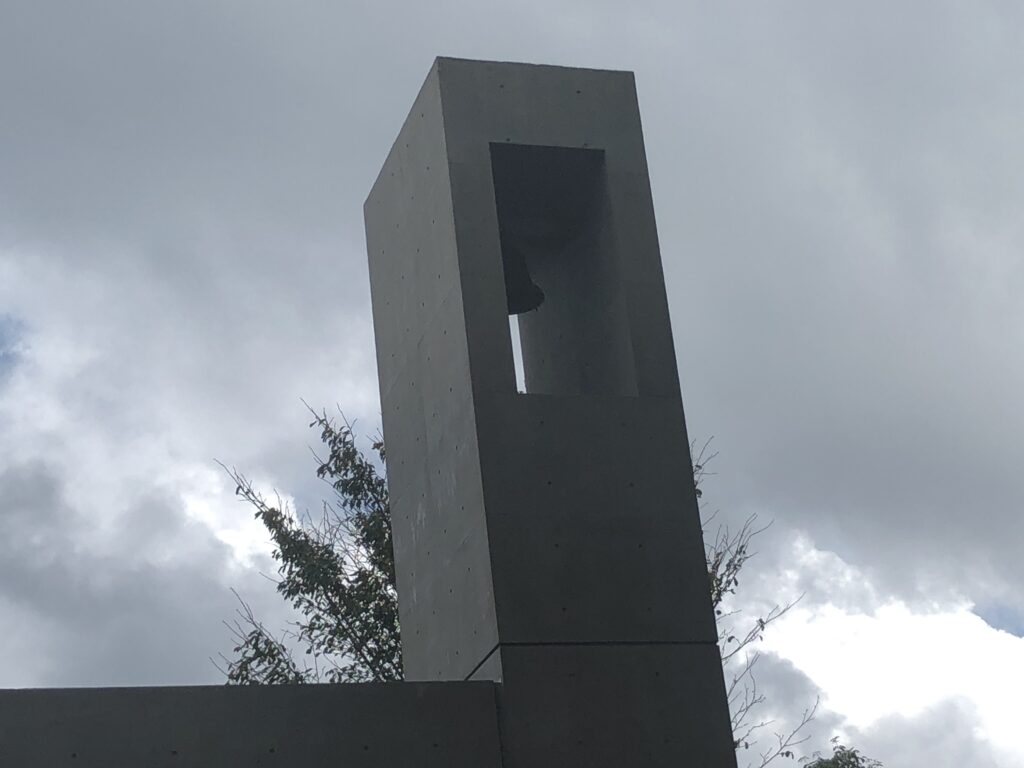
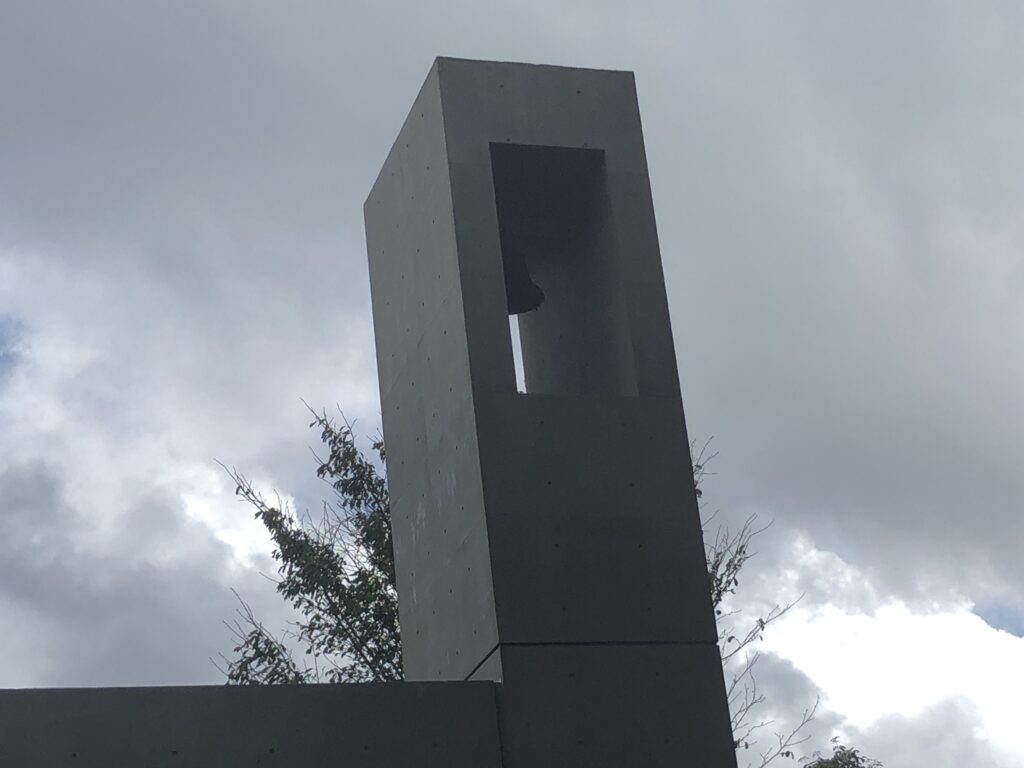
外へ出ると、コンクリートの壁から突き出す直方体の塔が見える。
礼拝堂内部の繊細な光の演出とは対照的に、外観は極めて無口で力強い。
余計な装飾を持たない幾何学的な形態が、六甲山の自然の中に置かれている。
その姿を見ていると、内部で体験した複雑な感覚が、実は非常に単純な形と素材から生み出されていたことに改めて気づかされる。
Outside, a rectangular concrete tower rises above the walls of the building.
Its appearance is remarkably silent and powerful compared with the delicate manipulation of light inside the chapel.
Simple geometric forms without ornament stand against the natural landscape of Mount Rokko.
Looking at the exterior after experiencing the interior, I was reminded that all of those complex sensations had been created from an extraordinarily limited vocabulary of form and material.
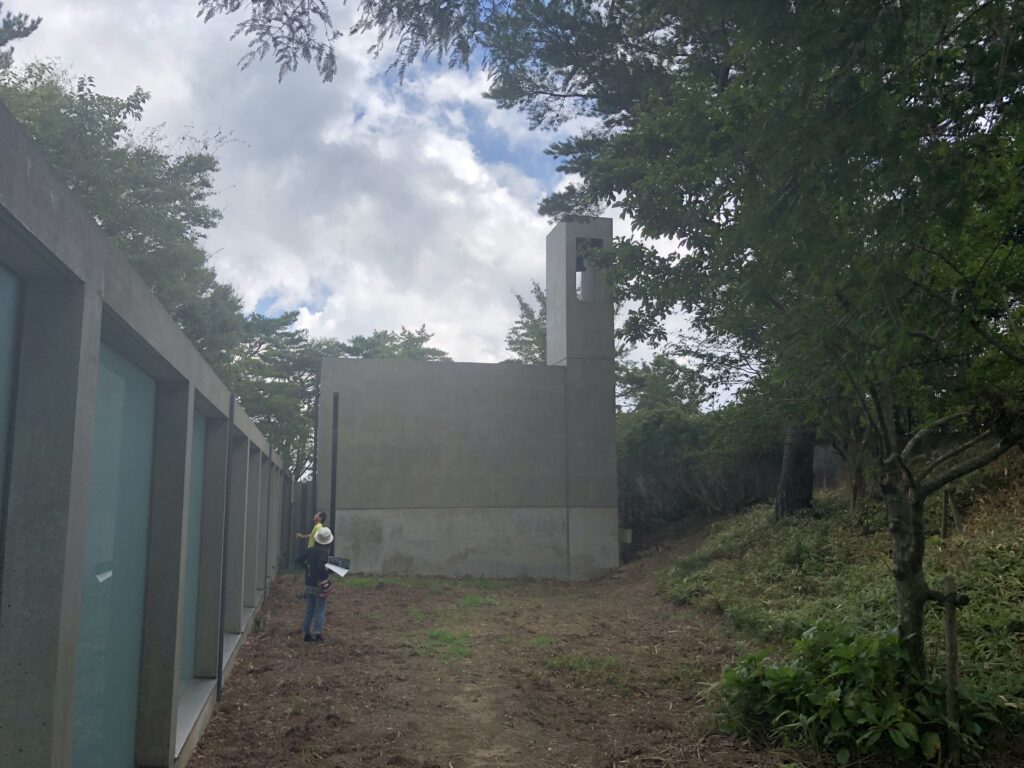
少し離れて見ると、風の教会は周囲の木々の中にひっそりと存在している。
都市の中で強い存在感を放つ建築とは違い、ここでは建築と自然の境界が静かに溶け合っているように見える。
しかし一度内部を歩いた後では、この小さなコンクリートの建物の中に、光、暗闇、風、自然、そして人の動きまでが緻密に組み立てられていることを知っている。
外から見ただけでは、その体験の濃さは想像できない。
From farther away, the Church of the Wind sits quietly among the surrounding trees.
Unlike architecture that asserts itself strongly within the city, this building seems almost to settle into the landscape.
Yet after walking through it, I knew that within this small concrete structure, light, darkness, wind, nature, and human movement had all been carefully composed.
The intensity of that experience is almost impossible to imagine from the exterior alone.
My Impression
風の教会で最も印象に残ったのは、やはり「光」だった。
しかし実際に歩いてみると、その光だけがこの建築の魅力なのではないことが分かる。
半透明のガラスに包まれた長い回廊を歩き、暗いコンクリートの空間へ入り、方向を変えた先で十字架と光に出会う。
その一連の流れすべてが設計されているからこそ、最後に目にする光がこれほど強く感じられるのだと思う。建物自体は決して大きくない。
それでも、歩き終えた後に残る建築体験は驚くほど深い。
風の教会は、安藤忠雄が後に展開していく「光」「コンクリート」「自然」「身体の動き」という建築のテーマが、小さな空間の中に凝縮された作品だった。
What stayed with me most strongly at the Church of the Wind was, inevitably, the light. But walking through the building made me realize that light alone is not what makes this architecture so memorable.
I walked through a long corridor wrapped in translucent glass, entered a dark concrete passage, changed direction, and only then encountered the cross and the light.
It is because that entire sequence has been designed that the final moment feels so powerful.
The building itself is remarkably small, yet the architectural experience it leaves behind is surprisingly deep.
For me, the Church of the Wind feels like a concentrated expression of themes that Tadao Ando would continue to explore throughout his architecture: light, concrete, nature, and the movement of the human body.
Archive Gallery
本文では紹介しきれなかった写真を掲載しています。
建築を歩きながら出会った光や空間、その場の空気を記録したアーカイブです。
Additional photographs from this visit.
A collection of details, perspectives, and moments that complement the main article.