【安藤忠雄建築】TOTOシーウィンド淡路|海を隠し、もう一度出会うための建築(TOTO Seawind Awaji|An Architecture That Conceals the Sea Only to Reveal It Again)
建築概要
Architecture Overview
- 名称:TOTOシーウィンド淡路
- 旧名称: TOTOセミナーハウス
- 設計:安藤忠雄
- 所在地:兵庫県淡路市里
- 竣工:1997年12月
- 用途:研修・宿泊施設/現在はリゾートホテル
- 敷地面積: 5,822.28㎡
- 建築面積: 1,733.75㎡
- 延床面積: 3,191.60㎡
- Name:TOTO Seawind Awaji
- Architect:Tadao Ando
- Completed:December 1997
- Location:Sato, Awaji, Hyogo, Japan
- Type:Training and Accommodation Facility / Resort Hotel
- Site Area:5,822.28 m²
- Building Area:1,733.75 m²
- Total Floor Area:3,191.60 m²
TOTOシーウィンド淡路は、大阪湾を望む淡路島東岸の急斜面に建つ安藤忠雄設計の宿泊施設である。建物の大部分を斜面に沿って配置し、巨大なヴォリュームを山上へ突出させるのではなく、地形の内部へ建築を組み込むことで周辺環境との関係を構成している。施設公式サイトも、安藤が外観について「森の中に埋もれてしまうだろう」と考えていたことを紹介している。
TOTO Seawind Awaji is an accommodation facility designed by Tadao Ando on a steep hillside overlooking Osaka Bay on the eastern coast of Awaji Island.
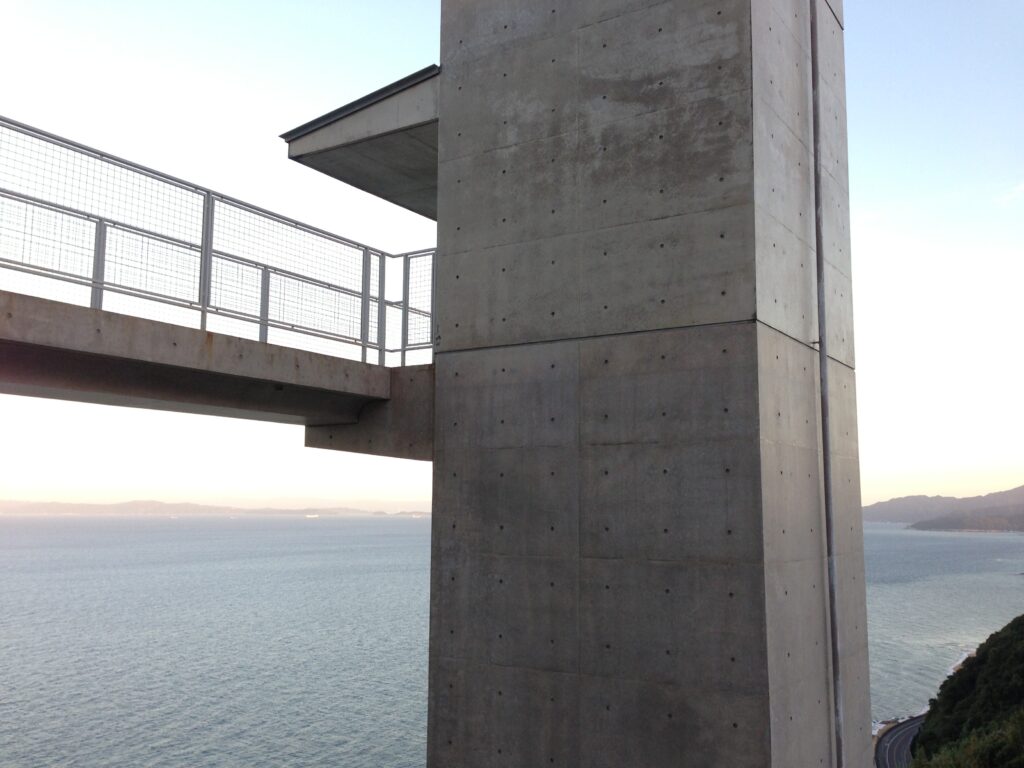
Rather than placing a large hotel volume prominently on the hillside, Ando distributed much of the architecture along the existing slope. Concrete walls, floor slabs, bridges, stairs, corridors, and guest rooms occupy multiple elevations, transforming the natural topography into an essential part of circulation.
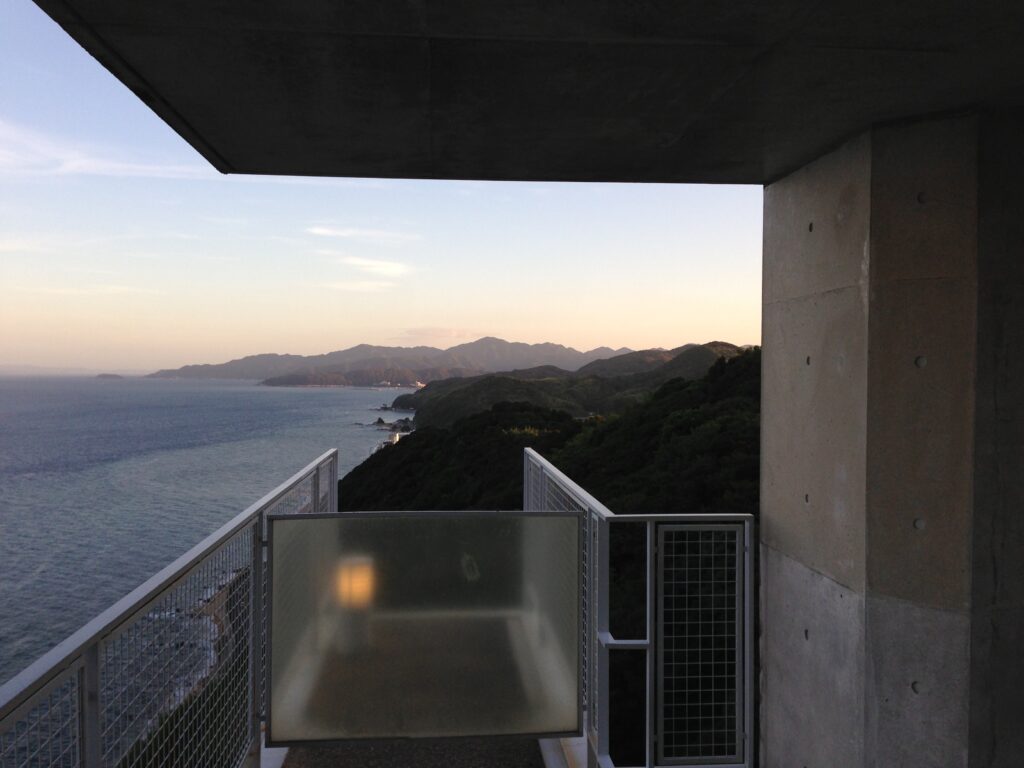
Although the site commands extensive views across Osaka Bay, the sea is not continuously exposed. Concrete walls and enclosed passages repeatedly conceal the landscape, while carefully positioned openings frame fragments of water, sky, and horizon. Movement between different levels continually changes the visitor’s physical and visual relationship with the sea.
As an accommodation facility, the building also introduces a temporal dimension rarely available in architecture experienced only during a short visit. Guests remain within the building from evening through night and into the following morning, allowing the same spaces and views to be experienced under changing conditions of light and darkness.
TOTO Seawind Awaji can therefore be understood as an architecture that uses topography, movement, enclosure, framing, and duration to repeatedly reconstruct the relationship between the human body and the sea.
1.海を隠し、もう一度出会うための建築
An Architecture That Conceals the Sea Only to Reveal It Again
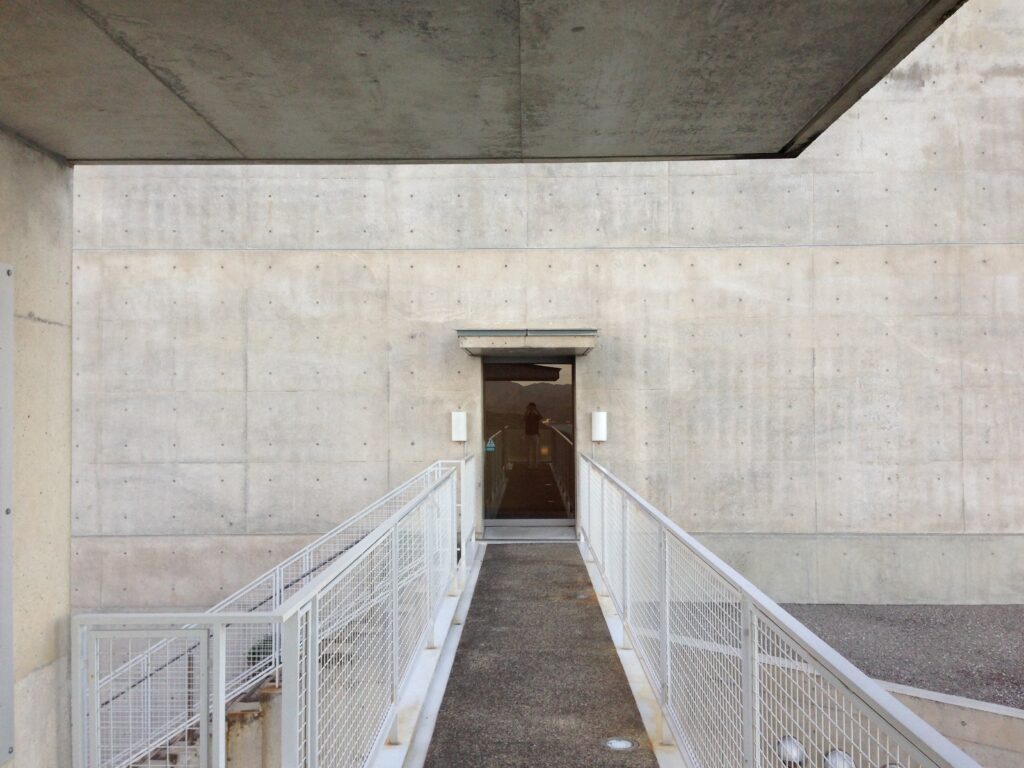
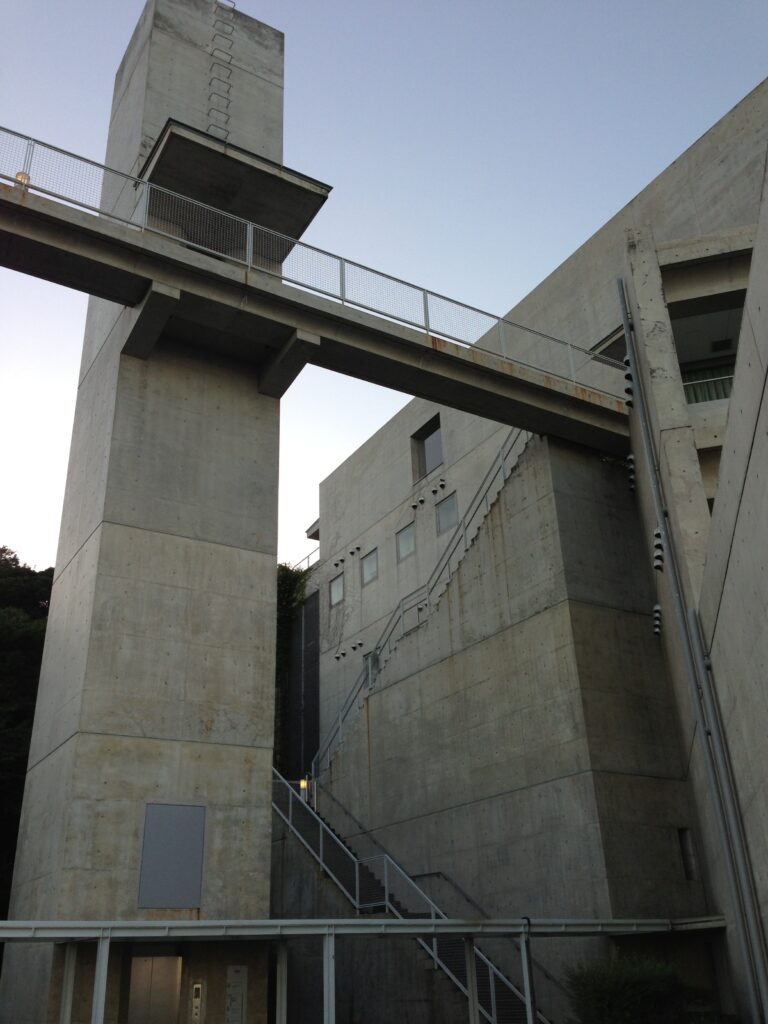
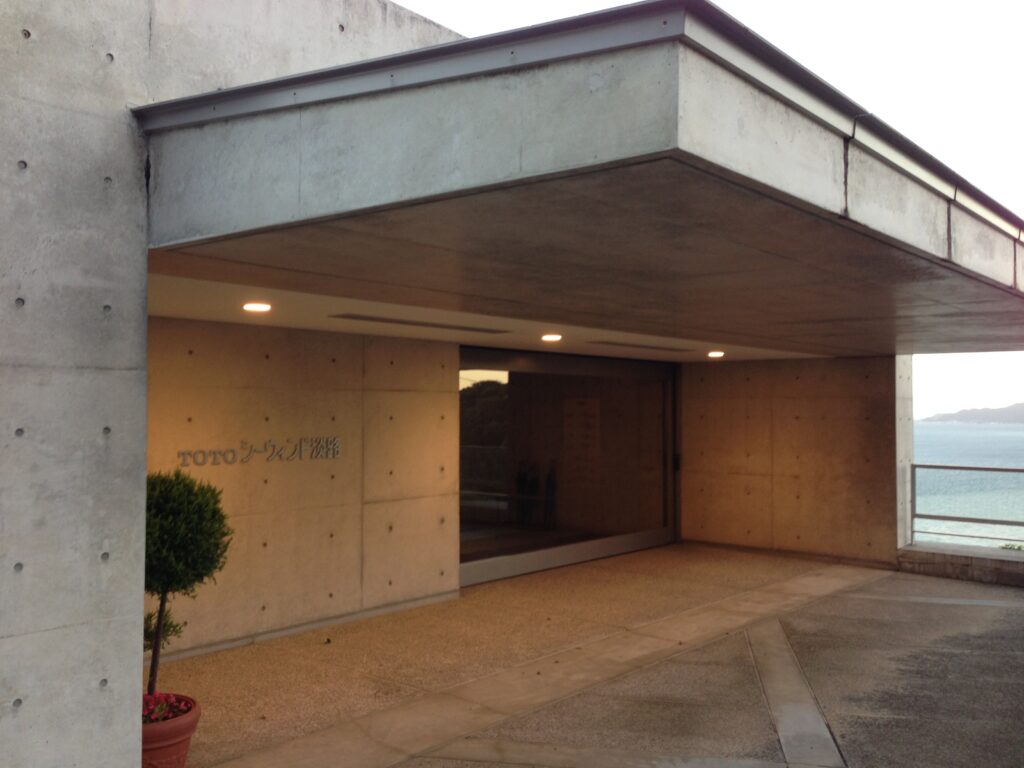
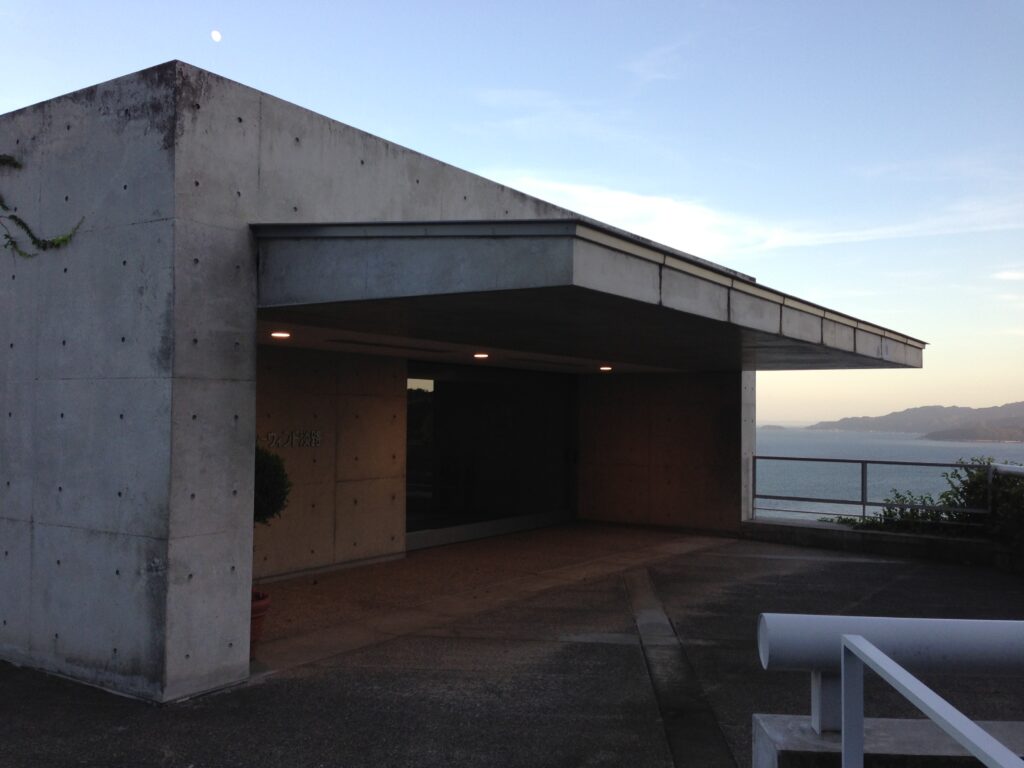
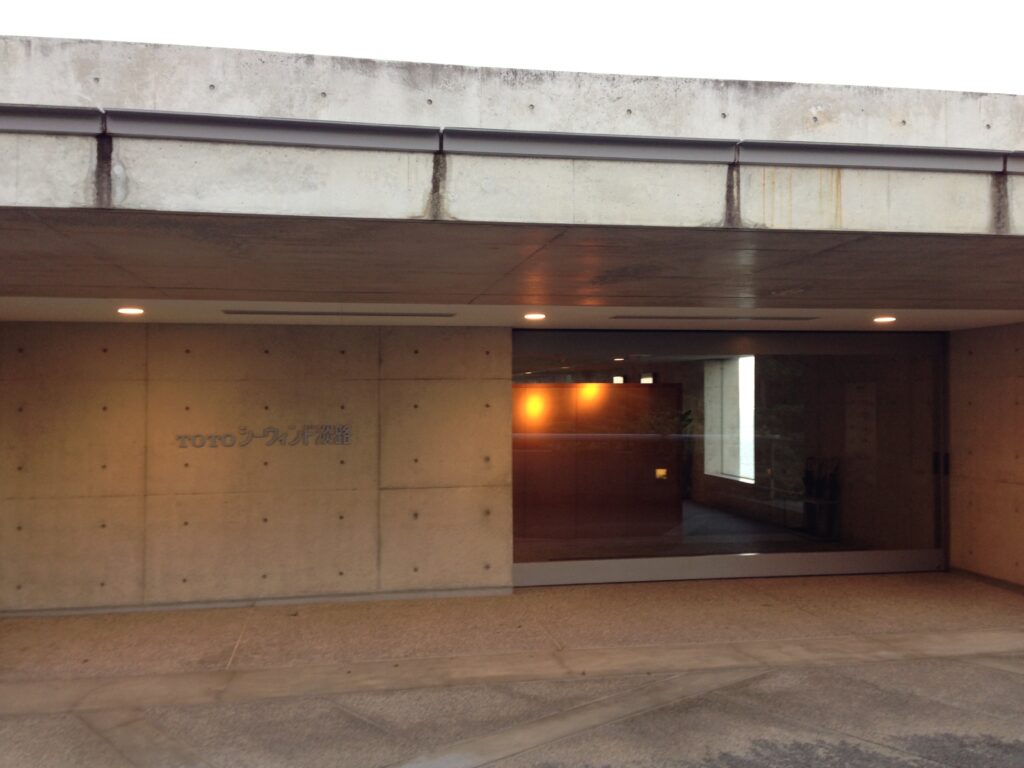
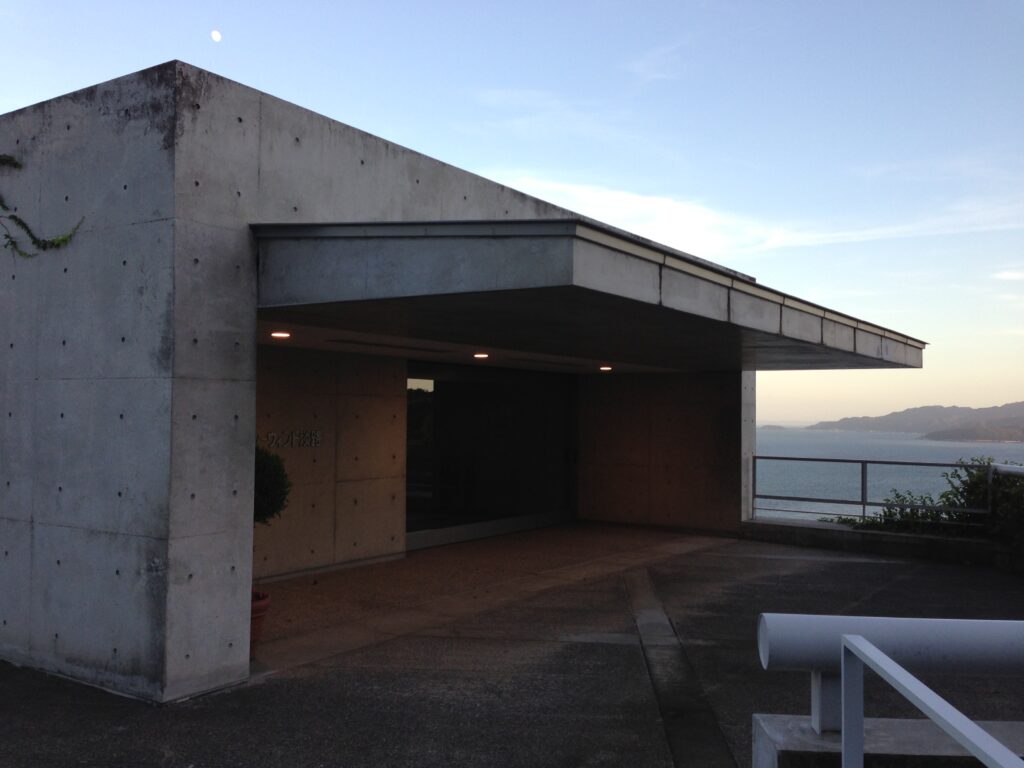
淡路島東岸、大阪湾へ向かって急激に落ち込む斜面の中に、打放しコンクリートの壁、橋、階段、廊下、客室が複数の高さに分散している。1997年に竣工した安藤忠雄設計のTOTOシーウィンド淡路である。
この場所の最大の環境条件は、建築の東側に広がる大阪湾である。しかし安藤は、その眺望を建築のどこからでも無条件に見せる方法を選択しなかった。公式サイトにも、客室や大浴場などから「簡単には海を臨むことはできない」構成が安藤の意向によるものだったと記されている。
On the eastern coast of Awaji Island, where the land falls steeply toward Osaka Bay, concrete walls, bridges, stairs, corridors, and guest rooms are distributed across multiple levels of the hillside. This is TOTO Seawind Awaji, designed by Tadao Ando and completed in 1997.
The most powerful condition of the site is obvious: the vast expanse of Osaka Bay immediately to the east. Yet Ando did not design a resort in which the sea is continuously visible from every part of the building. Even the facility itself explains that the inability to see the sea easily from certain guest rooms and the large bath was part of the architect’s intention.
したがって、この建築で重要なのは海そのものの美しさだけではない。海を見せる場所、隠す場所、断片的に見せる場所、身体を海へ近づける場所を意図的に分けることで、同じ大阪湾との関係を何度も変化させていることにある。
The significance of this architecture therefore lies not simply in the beauty of the sea. Different spaces reveal, conceal, fragment, or approach the water in different ways. By repeatedly changing the physical and visual distance between the body and Osaka Bay, Ando transforms a single landscape into a sequence of distinct experiences.
2.斜面の中へ、建築を沈める
Sinking Architecture into the Hillside
敷地は大阪湾へ向かう約45度の急斜面で、約100mの高低差を持つ。通常であれば建物を造成した平場へ載せ、海に向かって大きく開くことも可能だった。しかしTOTOシーウィンド淡路では、建築構造の多くが斜面に沿って配置されている。
The site occupies an exceptionally steep slope facing Osaka Bay, with a gradient of approximately 45 degrees and a difference in elevation of around 100 meters.
Rather than establishing a large artificial platform and placing a conventional hotel upon it, much of TOTO Seawind Awaji follows the existing topography.
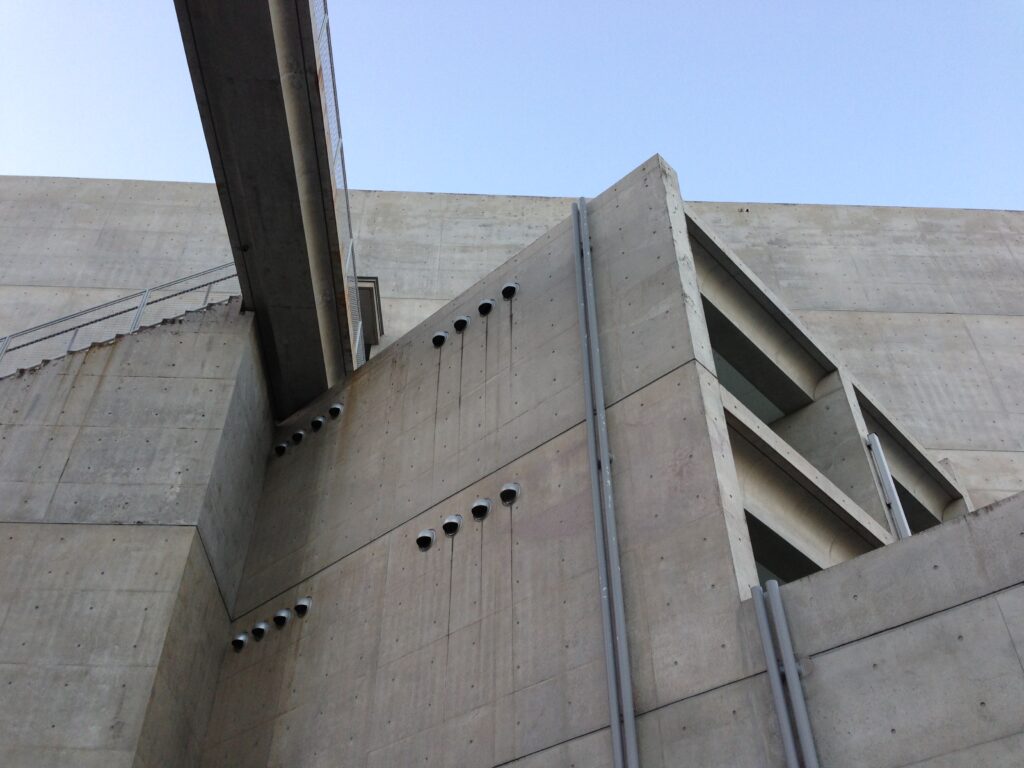
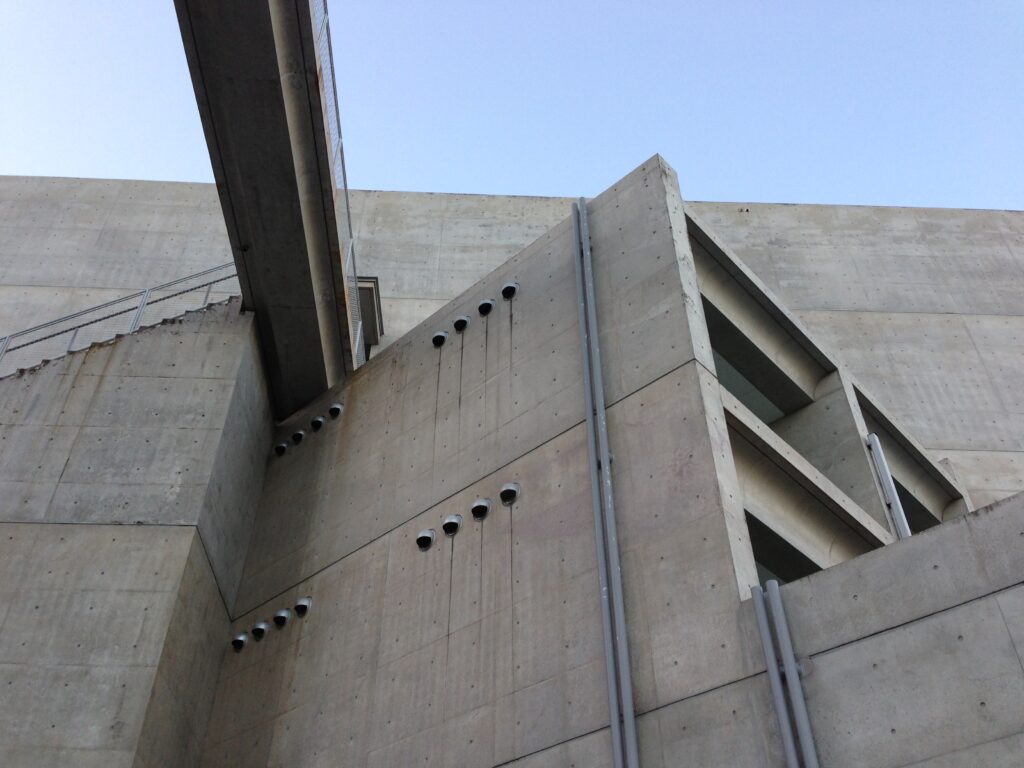
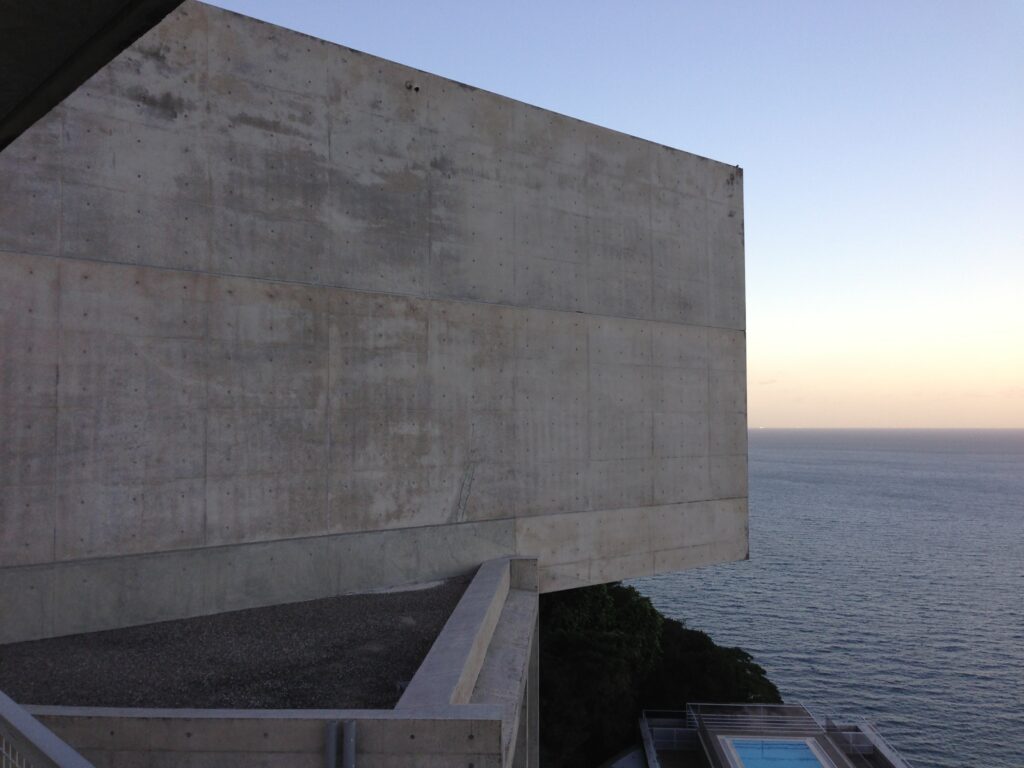
その結果、建築は一棟の巨大なホテルとして山の上へ立ち上がるのではなく、コンクリートの壁や床、ブリッジが斜面の中から部分的に現れる構成となっている。
As a result, the building does not rise above the hillside as a single monumental volume. Concrete walls, slabs, bridges, and individual masses emerge from different levels of the slope.
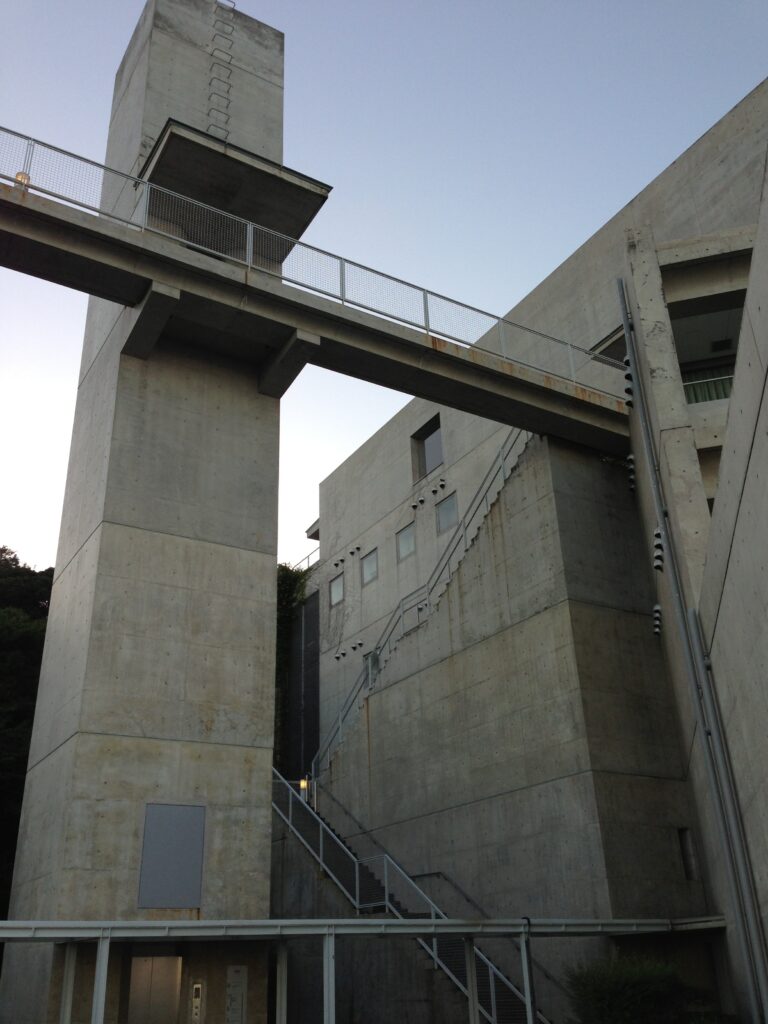
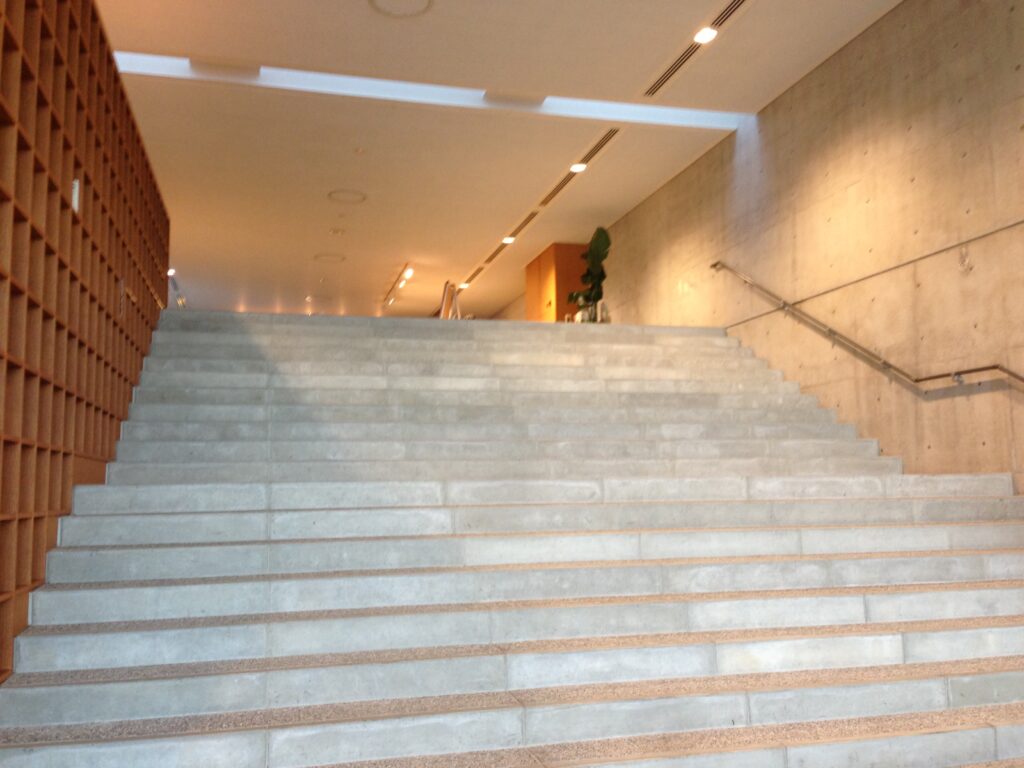
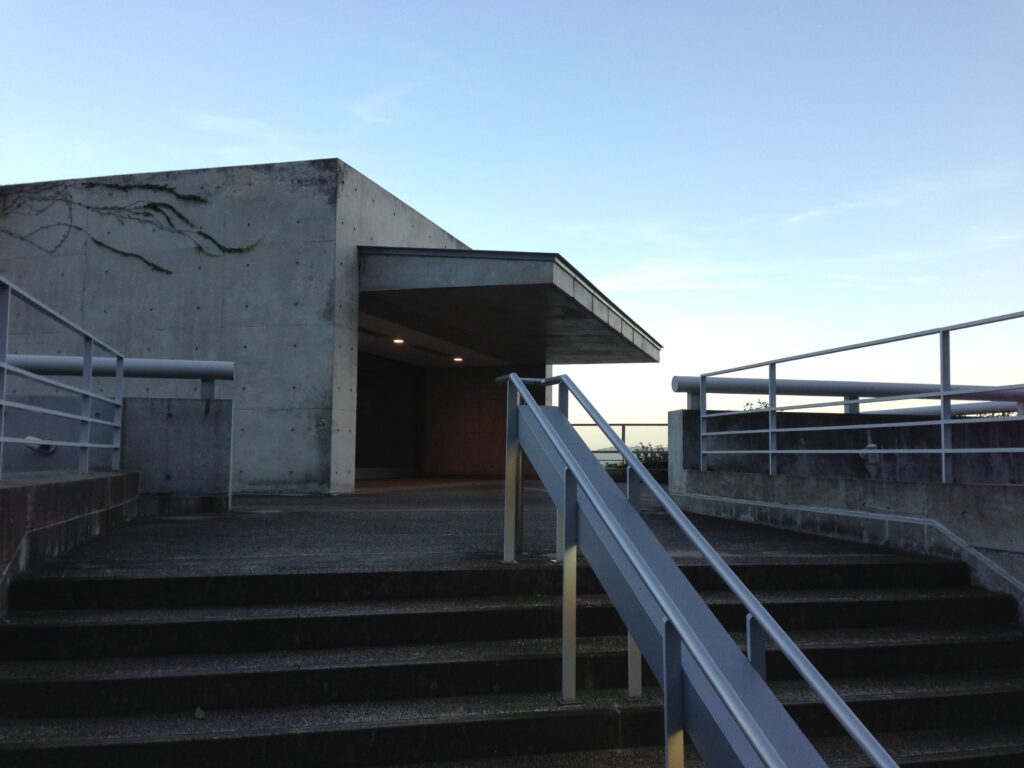
外部を歩いても建築の全体像を一度に把握することは難しく、複数の高さに配置されたヴォリュームを移動しながら、徐々にその関係を理解することになる。斜面は建物を載せるために克服すべき条件ではなく、建築を上下に分解し、人間の移動へ高低差を組み込む設計条件として使われている。
Even while walking around the exterior, it is difficult to comprehend the entire complex from one position. Its organization becomes understandable gradually as the visitor moves between levels.
The slope is therefore not an obstacle that architecture has overcome. It becomes the fundamental condition through which the building is divided vertically and movement itself acquires topographical depth.
3.見えない海を意識して歩く
Walking with an Invisible Sea
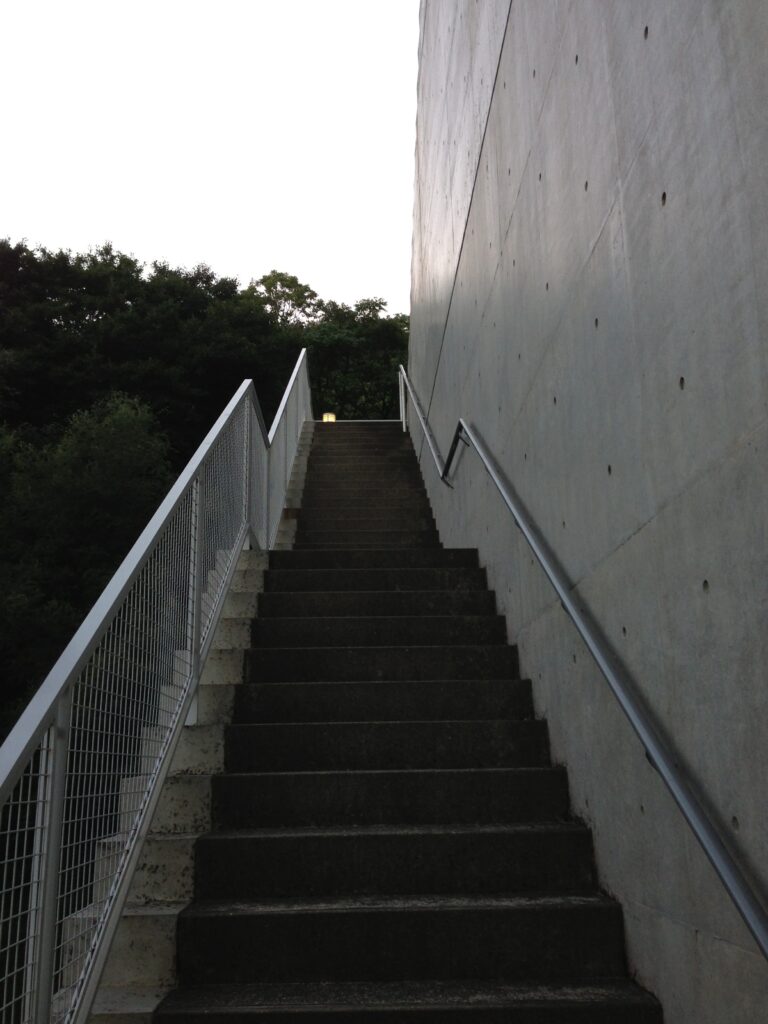
この建築の興味深いところは、海のすぐそばにいるにもかかわらず、移動中に海が完全には見えない場面が多いことである。
One of the most distinctive experiences at TOTO Seawind Awaji is that the sea can remain partially or completely hidden even when it is physically close.
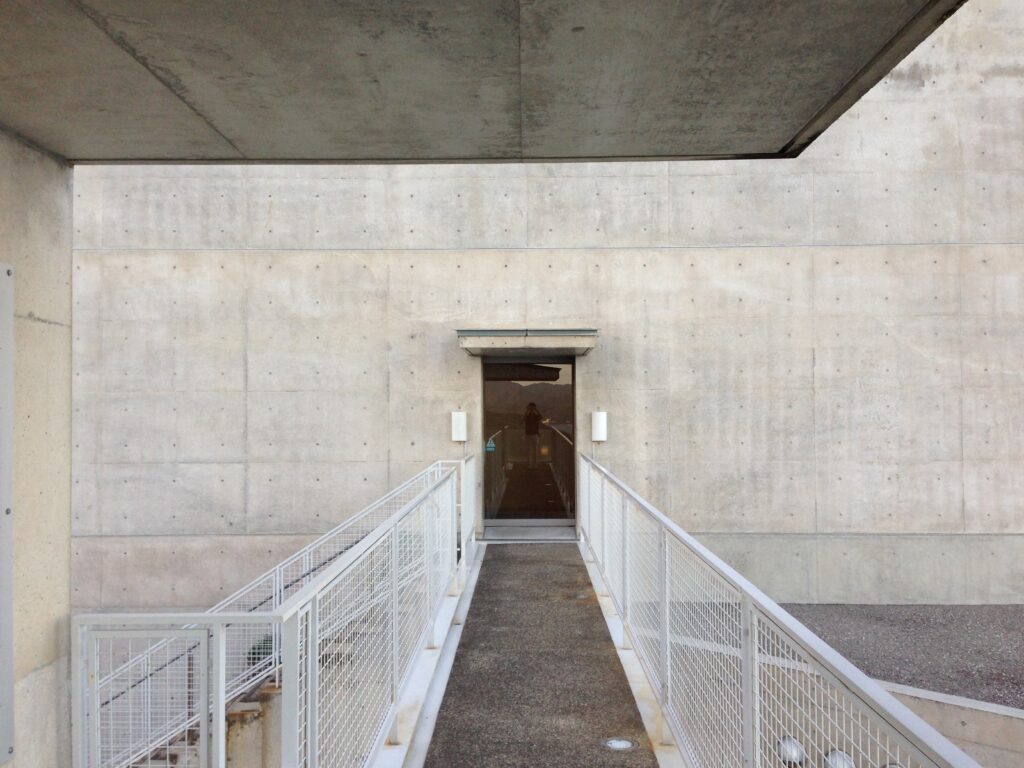
高いコンクリート壁や床、柱によって視線が限定され、海は建築の隙間や端部から断片的に現れる。
High concrete walls, slabs, and columns restrict the field of vision, allowing Osaka Bay to appear only through openings or at the edges of the architecture.
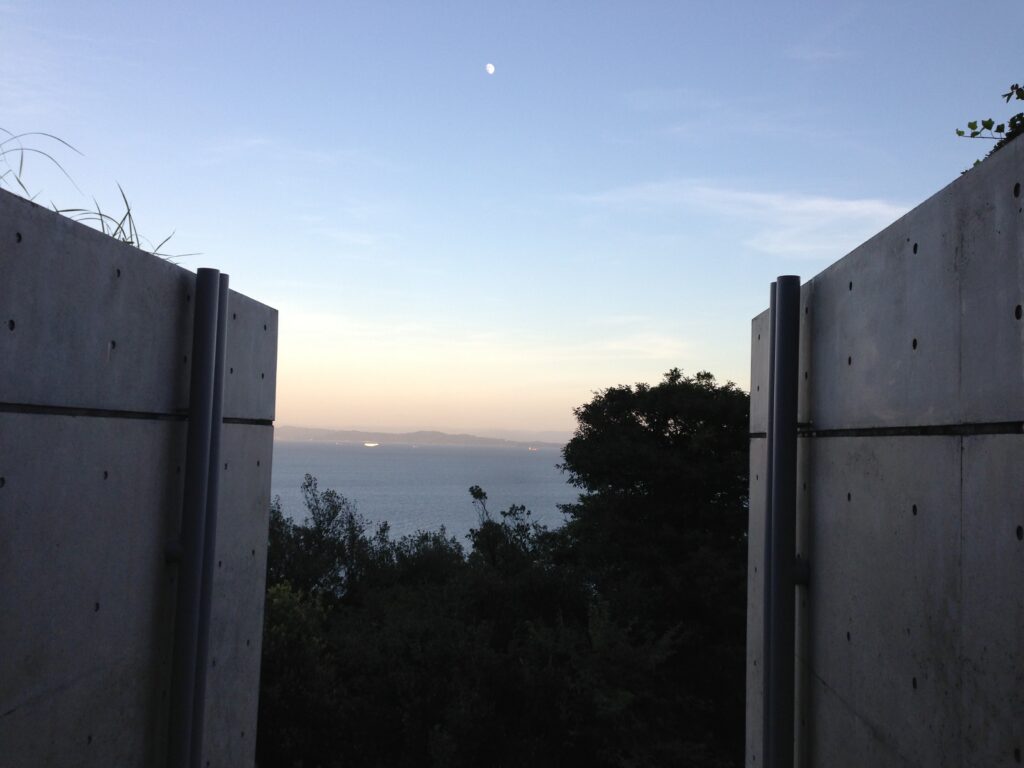
視界から海を完全に排除するわけではない。水平線の一部や青い水面だけを残すことで、その向こう側に広大な海があることを意識させながら、全景は見せない。
この視覚的な制限によって、海は背景として常に消費される景色ではなく、次にどこで見えるのかを意識しながら歩く対象へ変化する。
The sea is not entirely erased. A fragment of the horizon or a narrow strip of blue water may remain visible, enough to make the visitor aware of the vast landscape beyond without revealing it completely.
This visual restriction changes the sea from a scenic background that is continuously consumed into a presence anticipated while moving through the architecture.
4.壁の端で、水平線と再会する
Meeting the Horizon at the Edge of a Wall
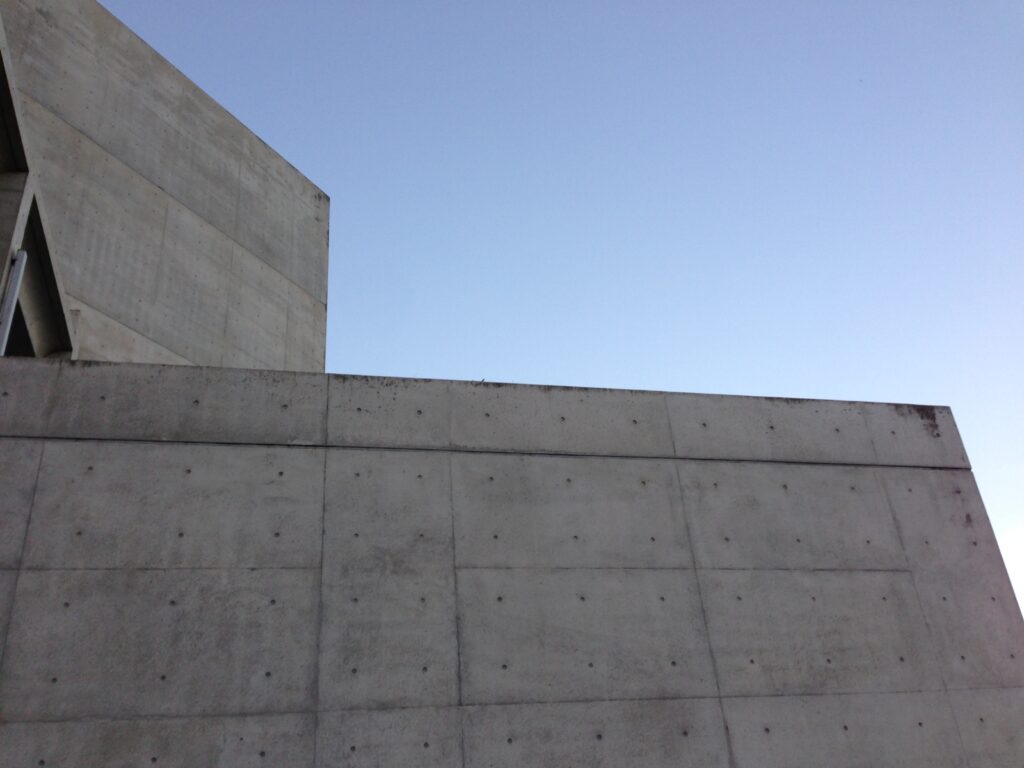
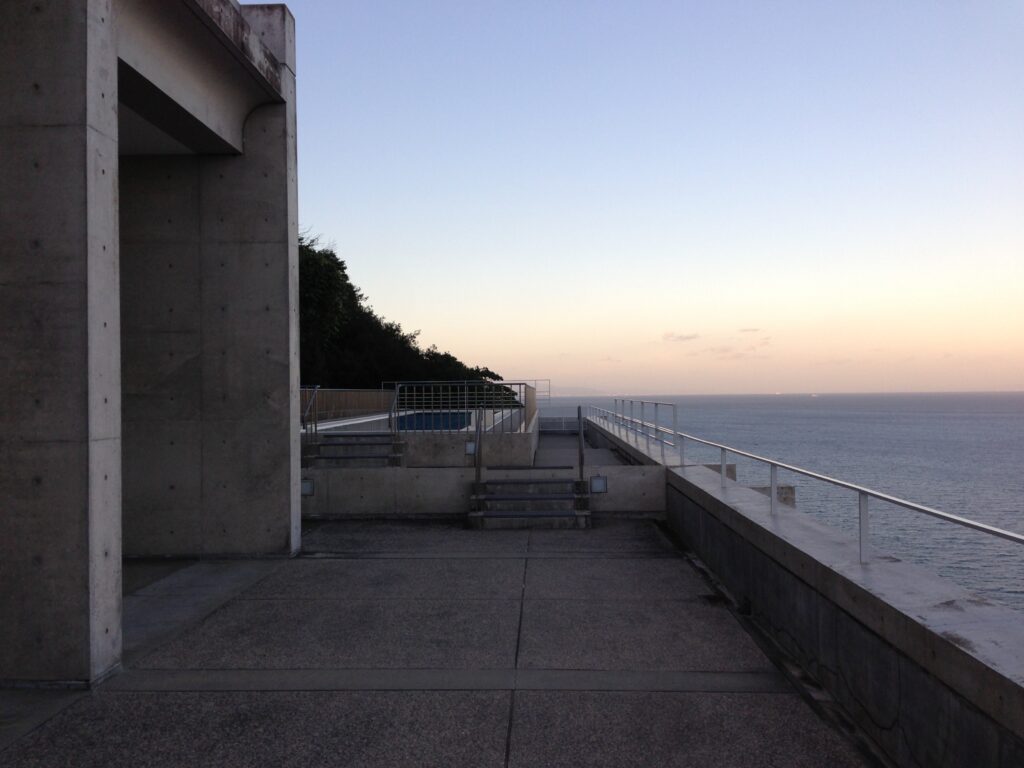
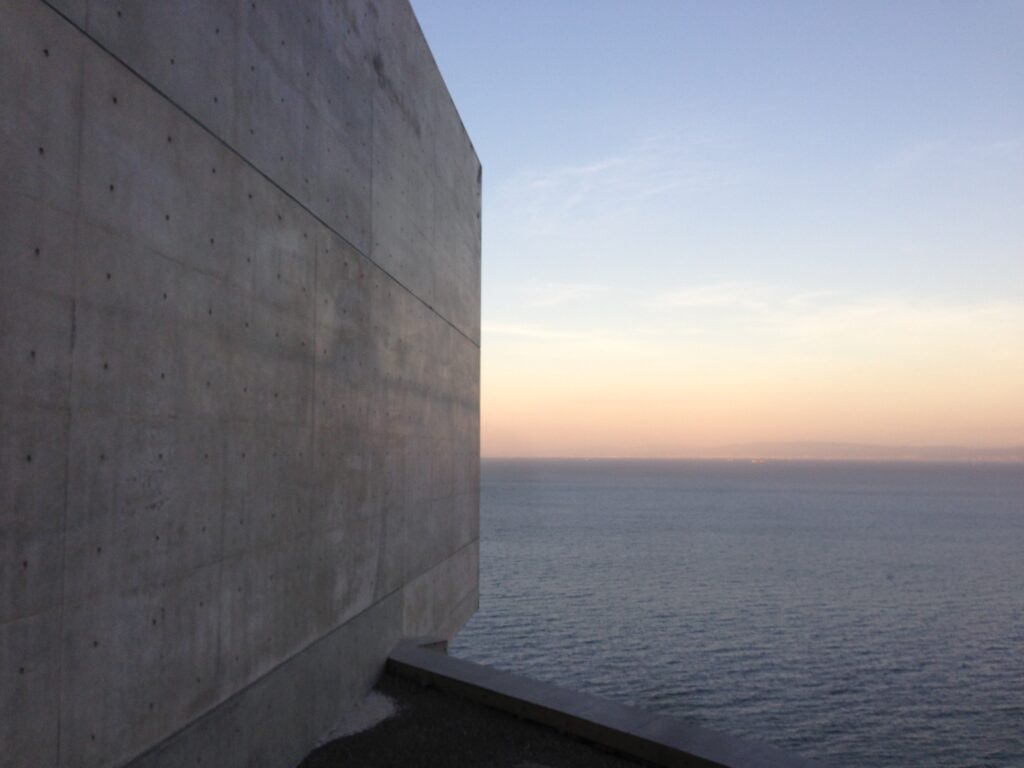
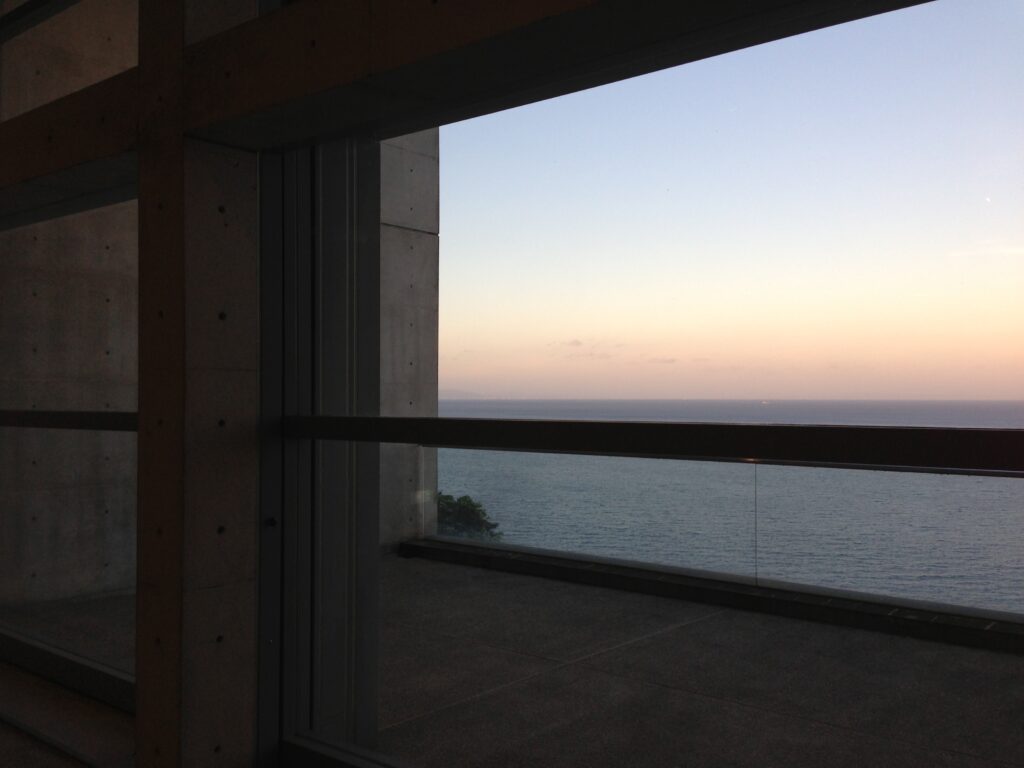
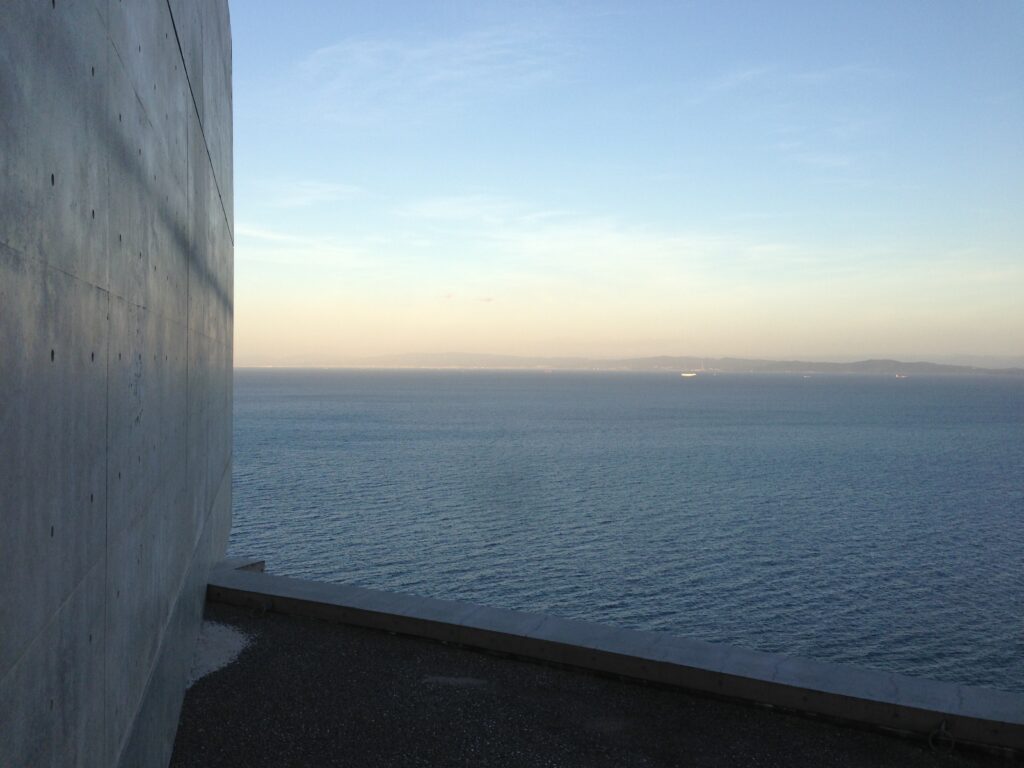
コンクリート壁に沿って移動すると、その端部から突然大阪湾が現れる場面がある。
Following a concrete wall can lead to moments when Osaka Bay suddenly appears beyond its edge.
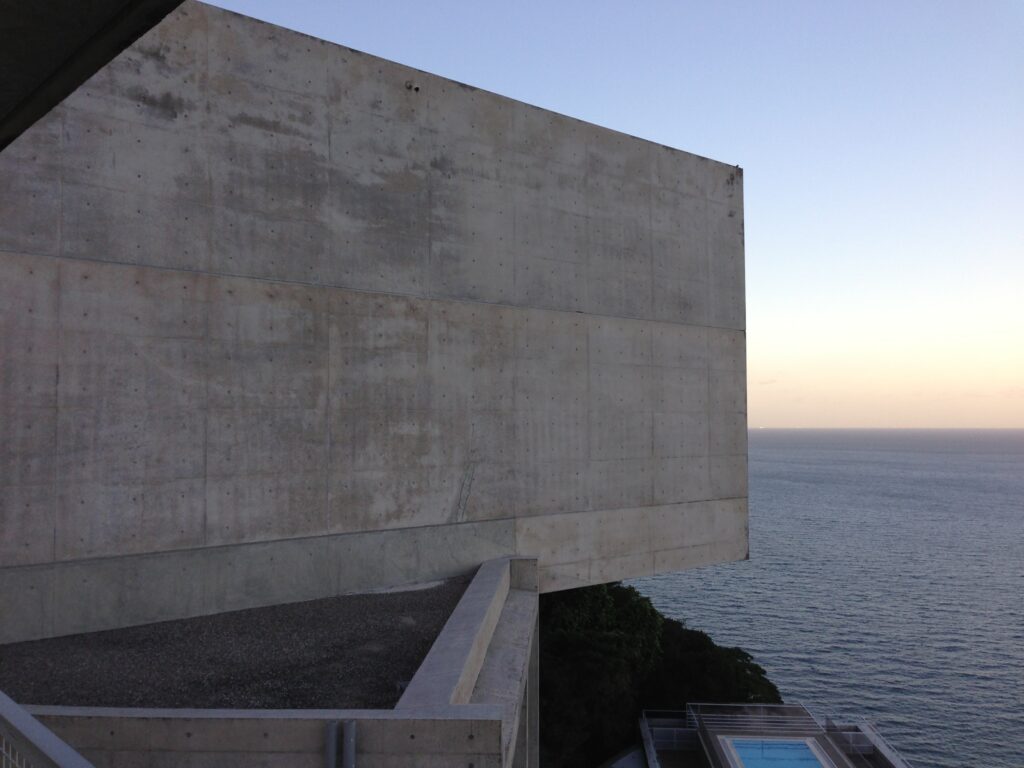
ここでは海を大きなガラス面で全面的に開放するのではなく、壁の端と空との間に風景を切り取ることで、水平方向へ伸びる海のスケールを強調している。
Instead of dissolving the architecture through a large transparent façade, Ando uses the termination of an opaque wall to frame the transition from enclosure to openness.
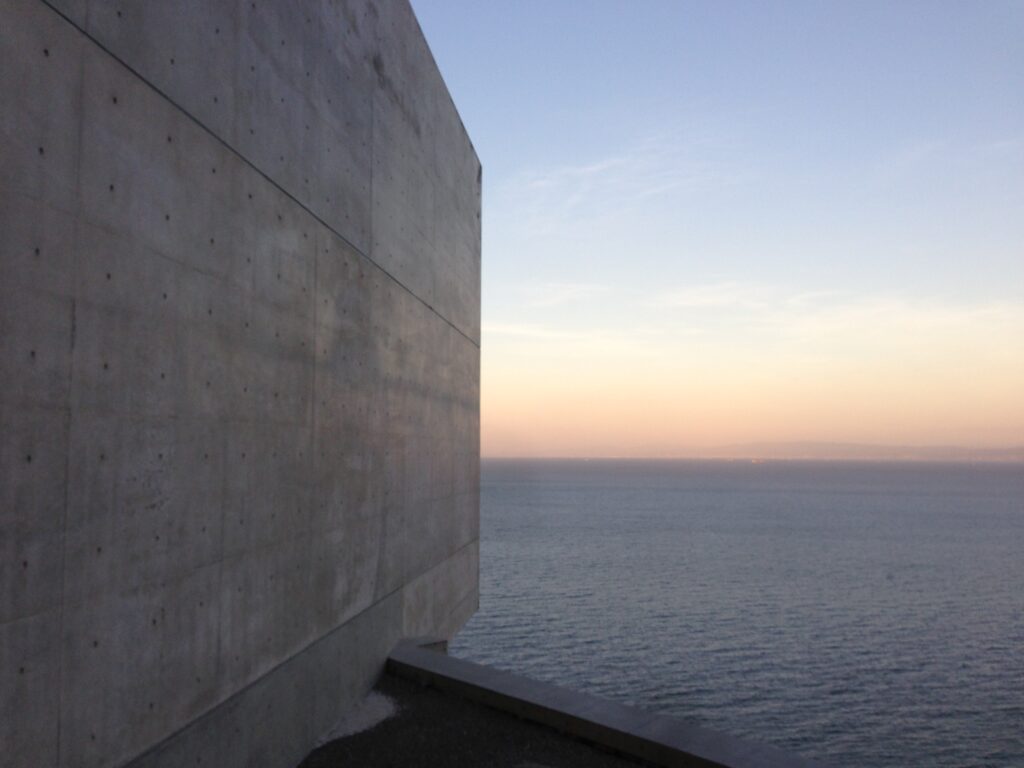
建築によって視線を一度限定した後だからこそ、壁の先に現れる水平線が強く認識される。海を見せるために建築を透明化するのではなく、不透明なコンクリートによって視野を狭め、その狭さとの対比によって海の広がりを際立たせる方法である。
Because the field of vision has first been restricted by concrete, the horizontal scale of the sea becomes more pronounced when it reappears. The architecture does not become transparent in order to celebrate the landscape. Rather, the narrowness created by concrete intensifies the vastness beyond it.
5.空と海を、一枚の風景に切り取る
Framing Sky and Sea as a Single Image
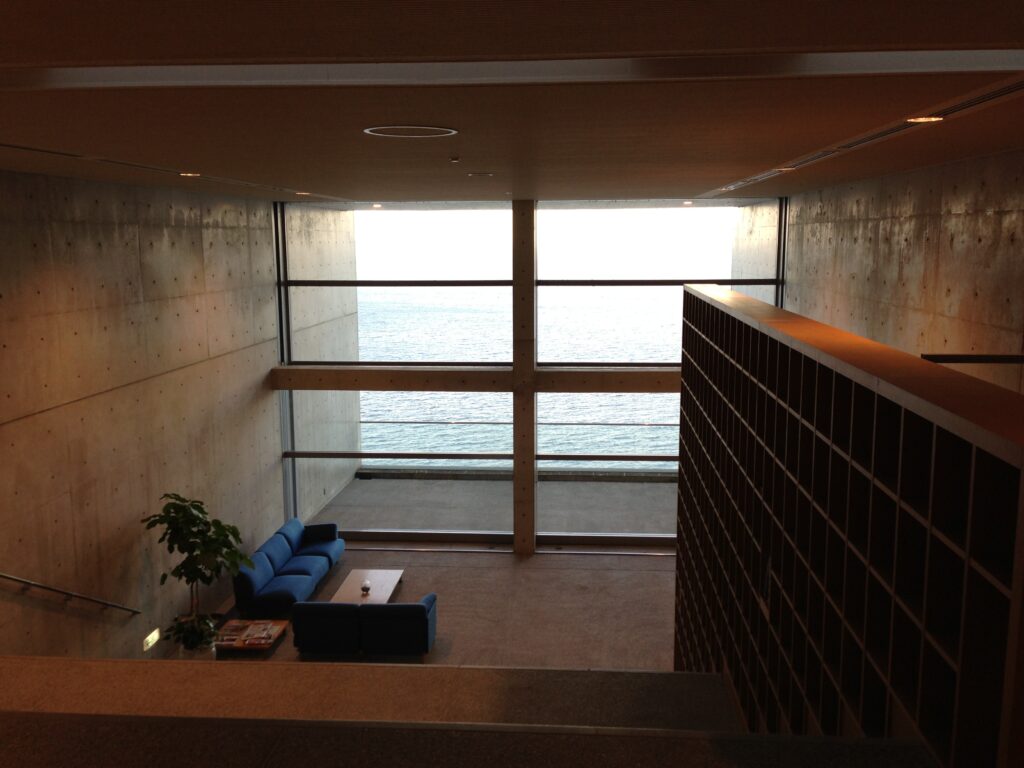
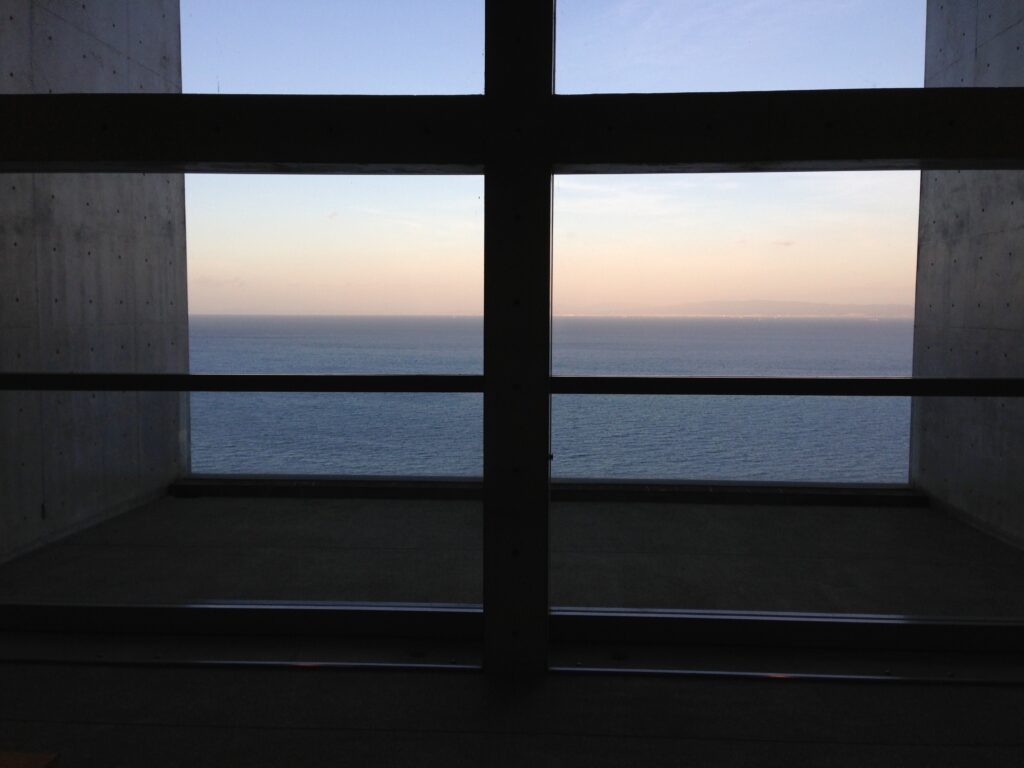
館内には、大阪湾を矩形の開口から見る場所が複数存在する。
Throughout the building, Osaka Bay is encountered through rectangular openings.
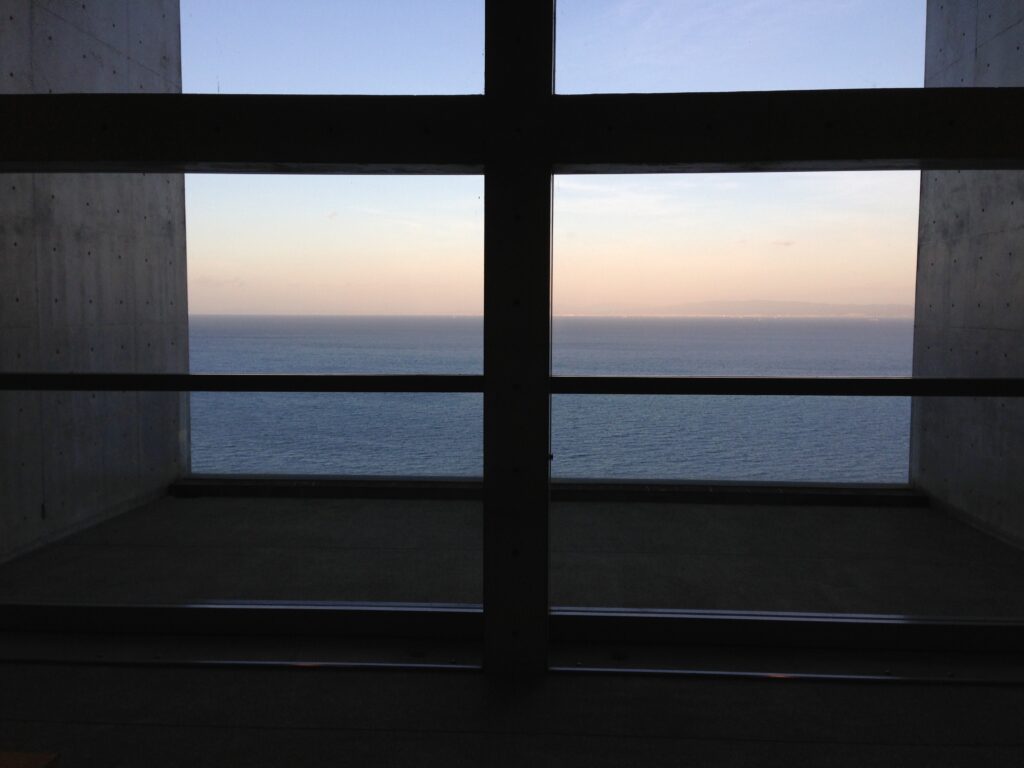
ここで重要なのは、窓が単に採光や眺望を確保する設備として扱われていないことである。コンクリート壁によって周辺の情報を消し、開口の内部だけに空と海を残すことで、風景を一つの画面として認識させている。
These openings do more than provide daylight and views. By eliminating peripheral visual information with concrete walls and leaving only sky and water visible within a defined rectangle, the architecture isolates the landscape as a concentrated visual field.
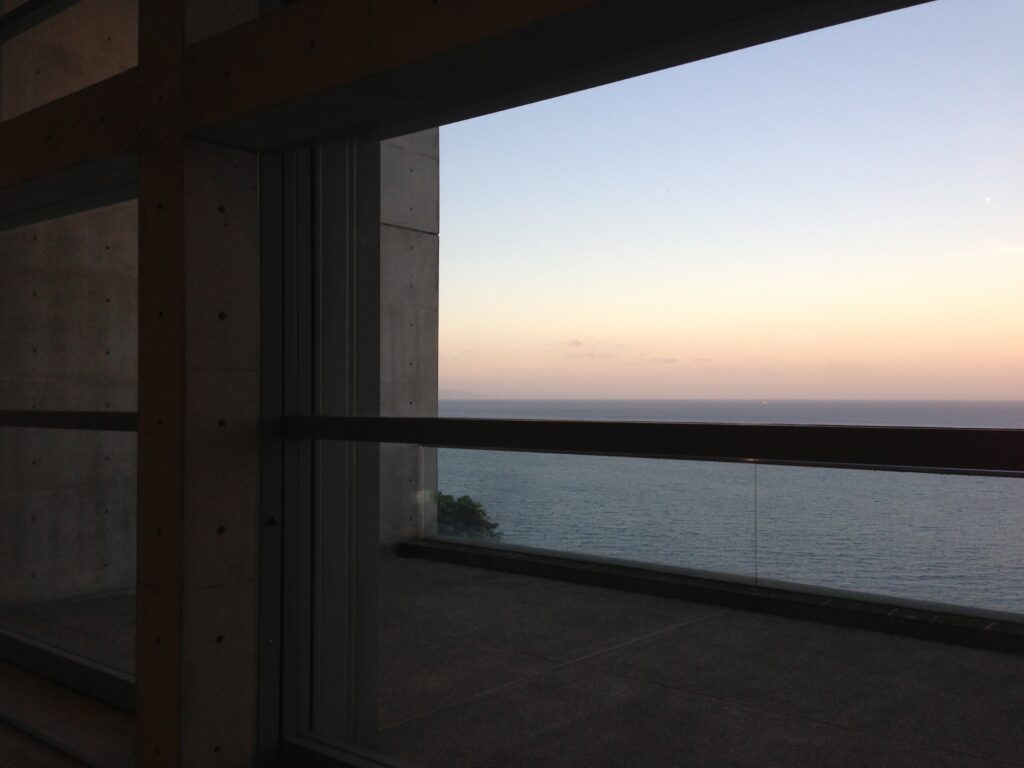
公式サイトも、この建築について窓の外の景色を額縁で切り取った「一枚の絵」のように体験させることを説明している。
ただし、ここで風景は建築から独立した絵画になっているわけではない。開口の寸法、身体の高さ、壁の厚みが視野を限定することで、自然の風景が建築によって編集された状態で現れるのである。
The facility itself describes these views as resembling pictures framed by the architecture.
Yet the landscape does not become independent of the building. The dimensions of the opening, the thickness of the wall, and the height of the observer determine exactly how much can be seen.
Nature therefore appears after being edited by architecture.
6.橋を渡るたび、海との高さが変わる
Crossing Bridges, Changing the Height of the Sea
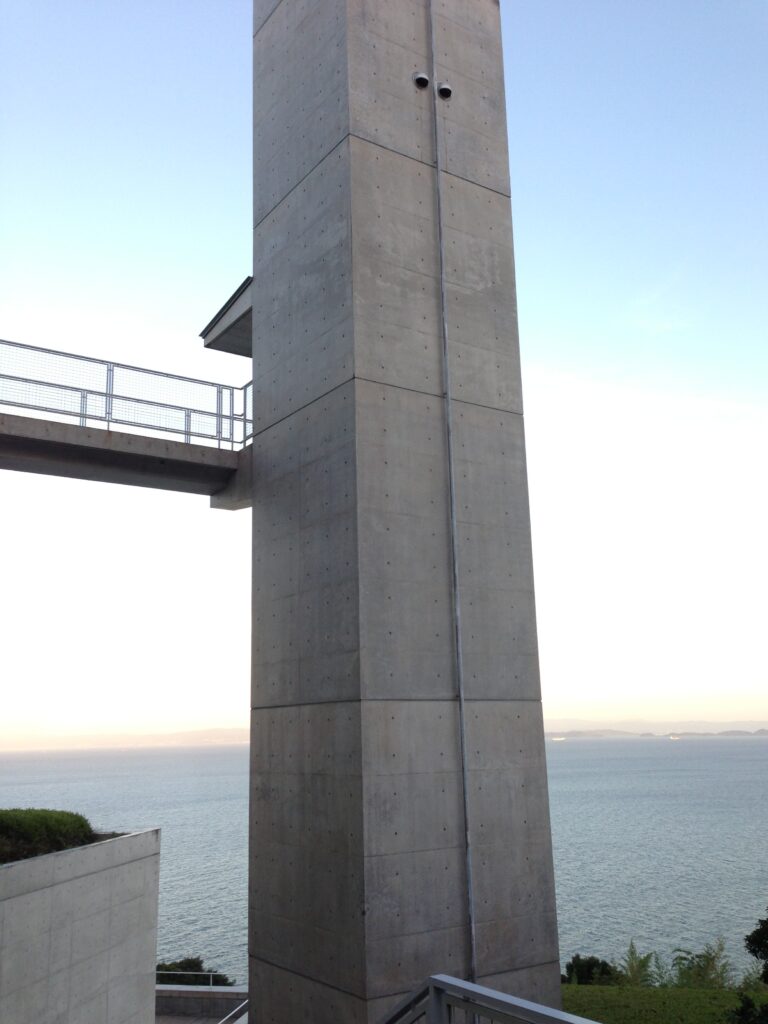
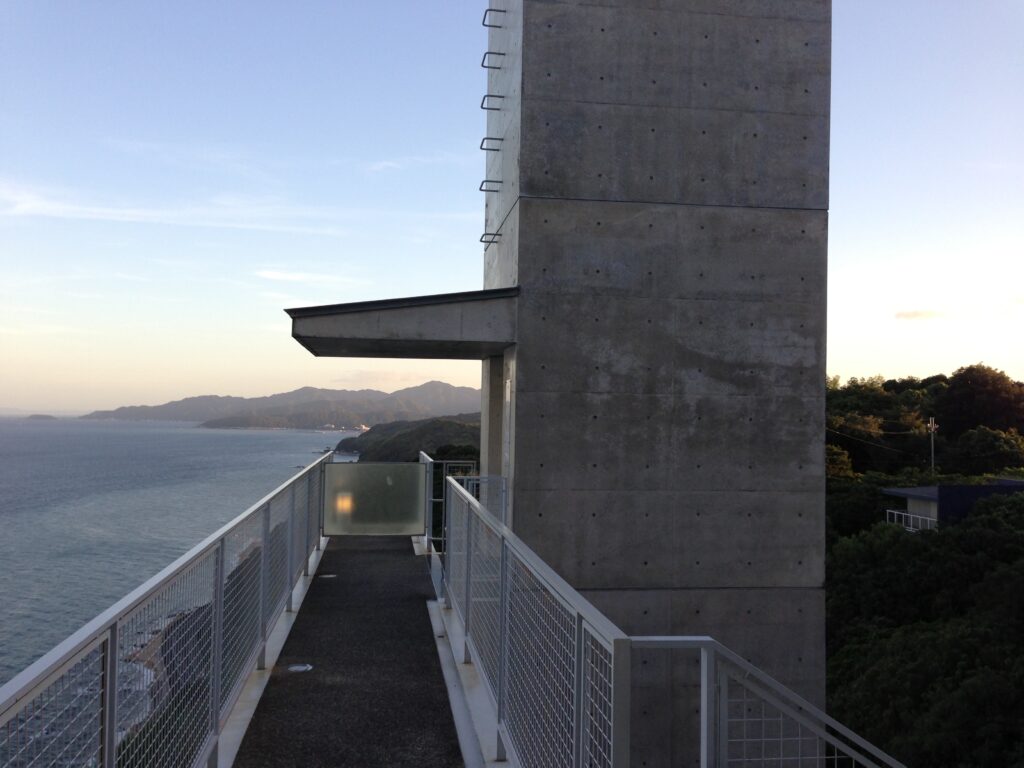
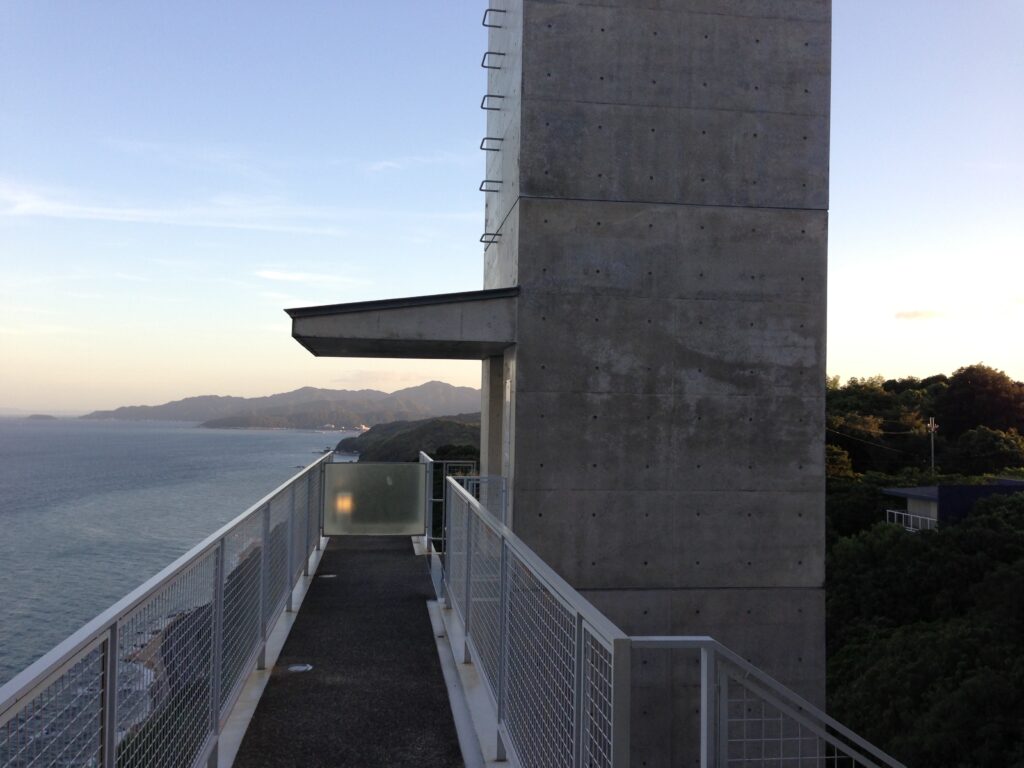
TOTOシーウィンド淡路では、斜面に分散した複数のヴォリュームをブリッジが接続している。
The different volumes distributed along the hillside are connected by bridges.
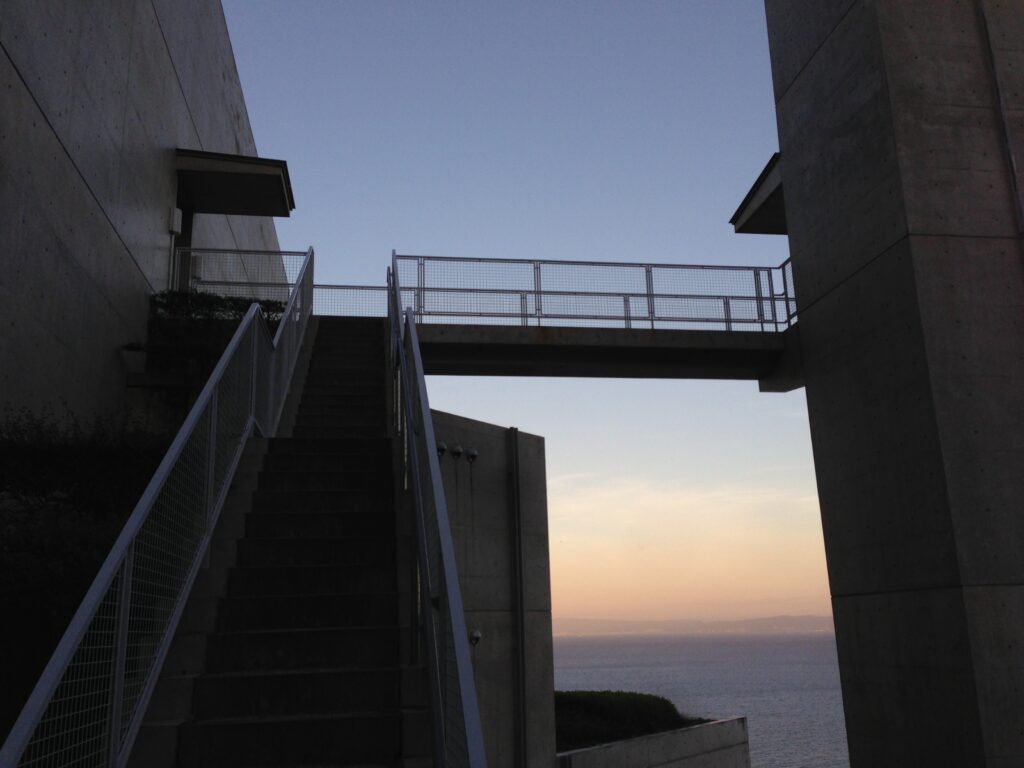
ブリッジは単なる連絡通路ではない。地面から離れた状態で身体を移動させることで、建築と海、斜面との高さ関係を一時的に明確に認識させる。
These structures serve more than a practical circulation function. By moving the body away from the ground, they make the vertical relationship between architecture, hillside, and sea particularly apparent.
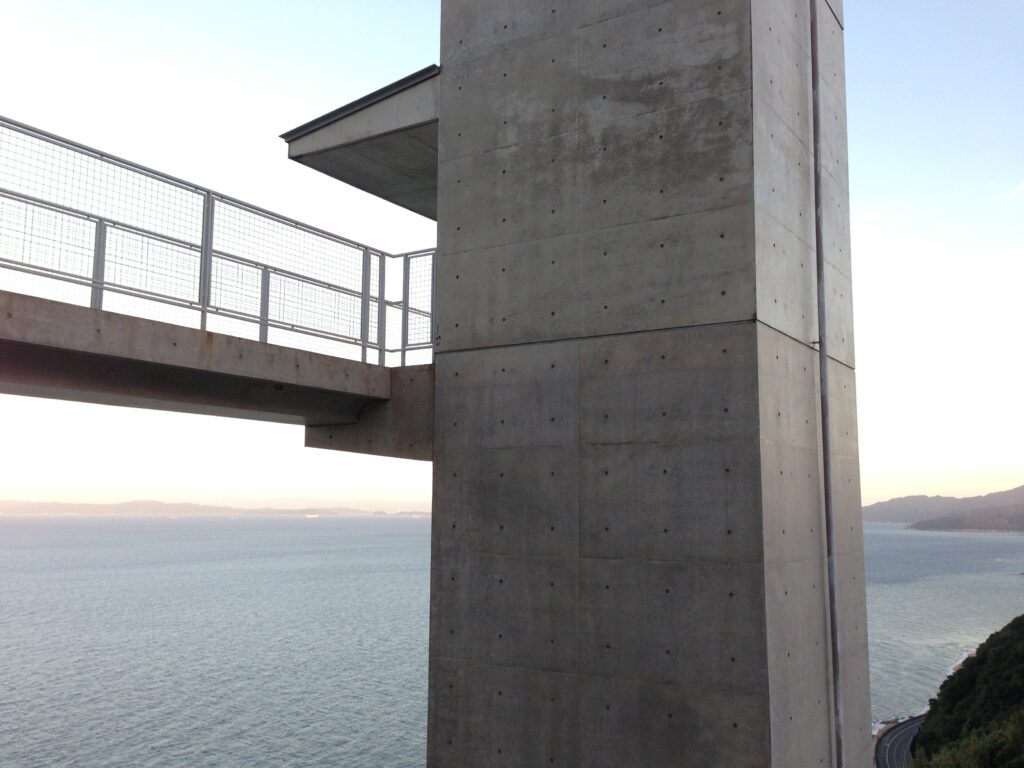
同じ海を見ていても、客室レベル、通路、ブリッジ、階段では視線の高さが異なる。そのため、大阪湾は一つの固定された景色としてではなく、身体の垂直移動に伴ってスケールと距離を変える風景として経験される。
Osaka Bay appears differently from a guest-room level, corridor, bridge, or stair. The water remains physically unchanged, but the visitor’s height continuously alters its apparent distance and scale.
The sea is therefore not experienced as a single fixed view. Its character is repeatedly reconstructed by the vertical movement of the body.
7.コンクリートの隙間に、海だけを残す
Leaving Only the Sea between Concrete Walls
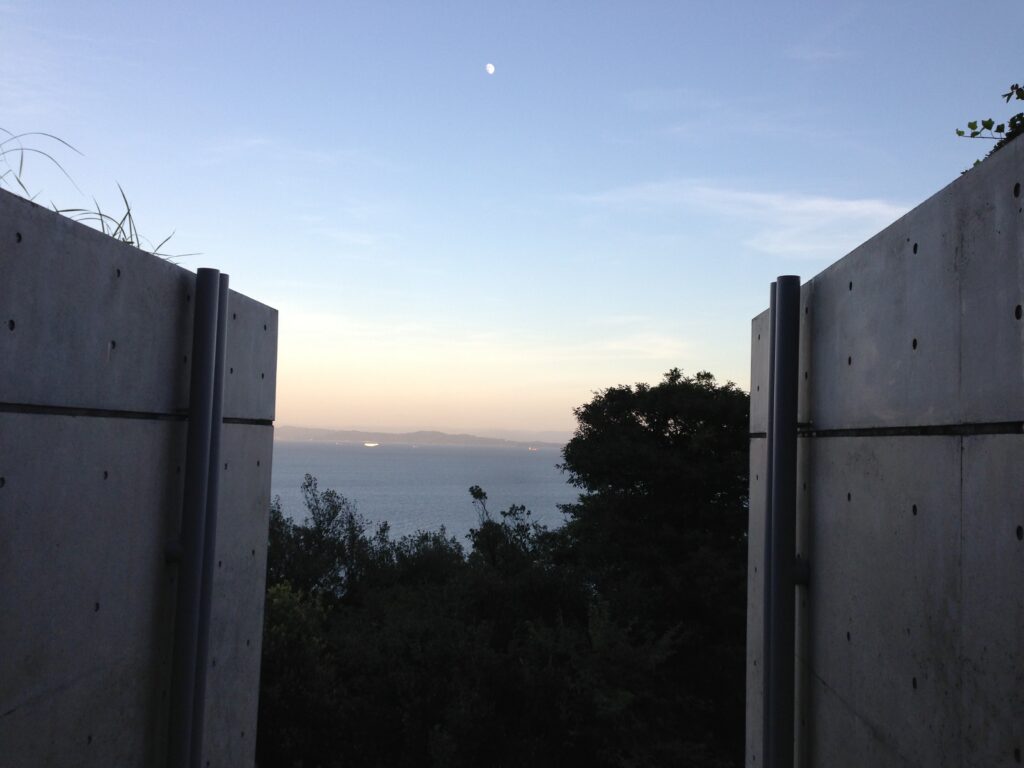
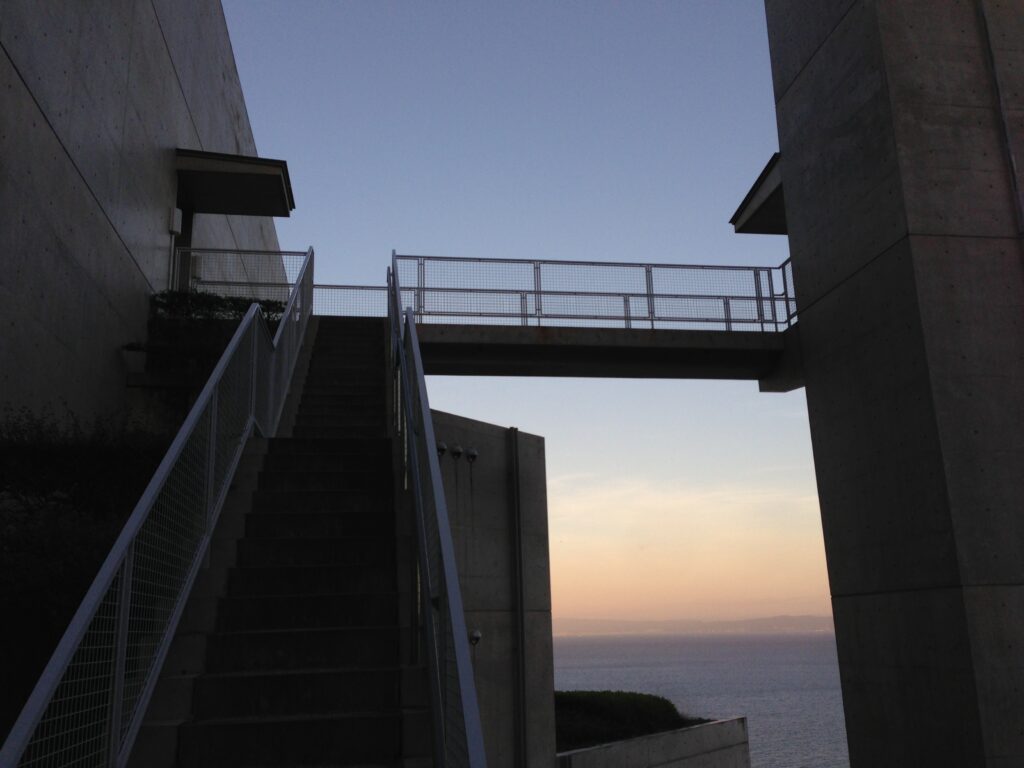
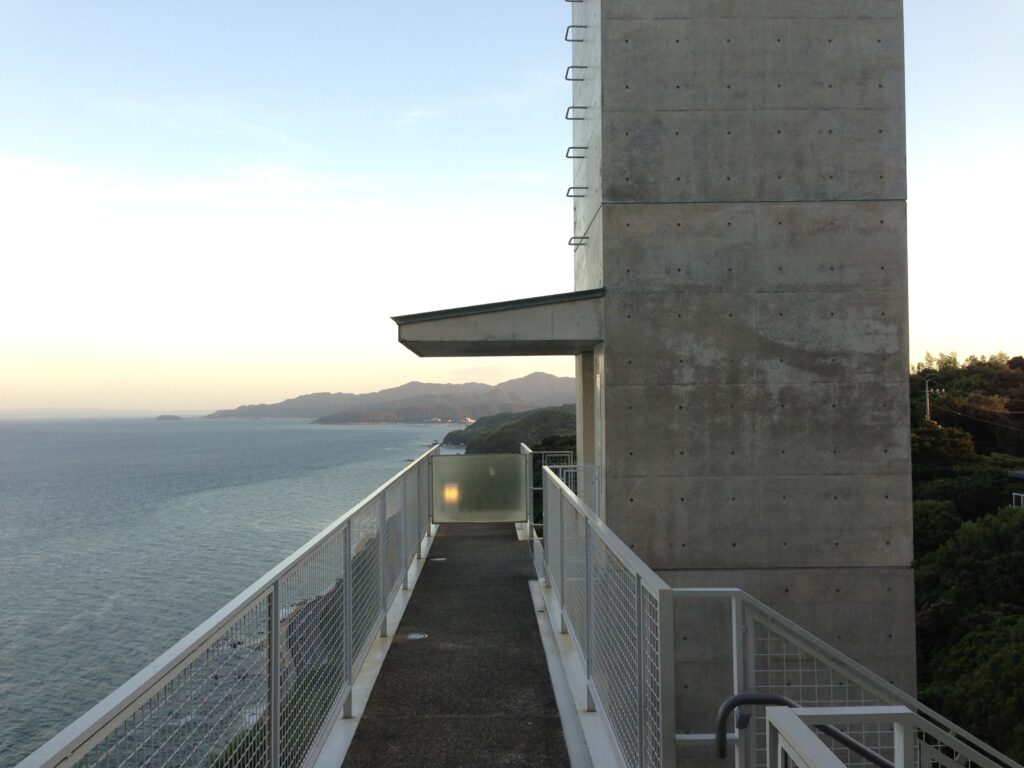
外部通路には、二つのコンクリート壁の間から海が見える場所がある。
At several points, Osaka Bay appears within narrow gaps between concrete elements.
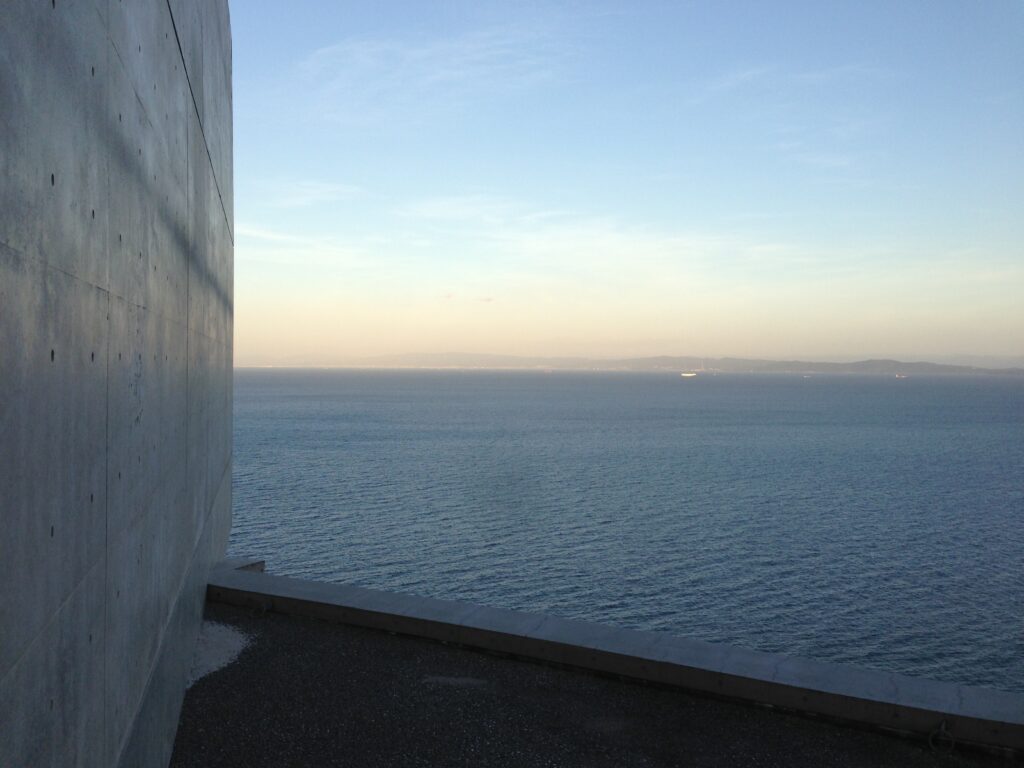
視野の大部分を建築によって遮り、細長く残された部分にだけ海を見せることで、その存在はかえって強くなる。
Most of the visual field is occupied or blocked by architecture, leaving the sea concentrated within a limited opening.
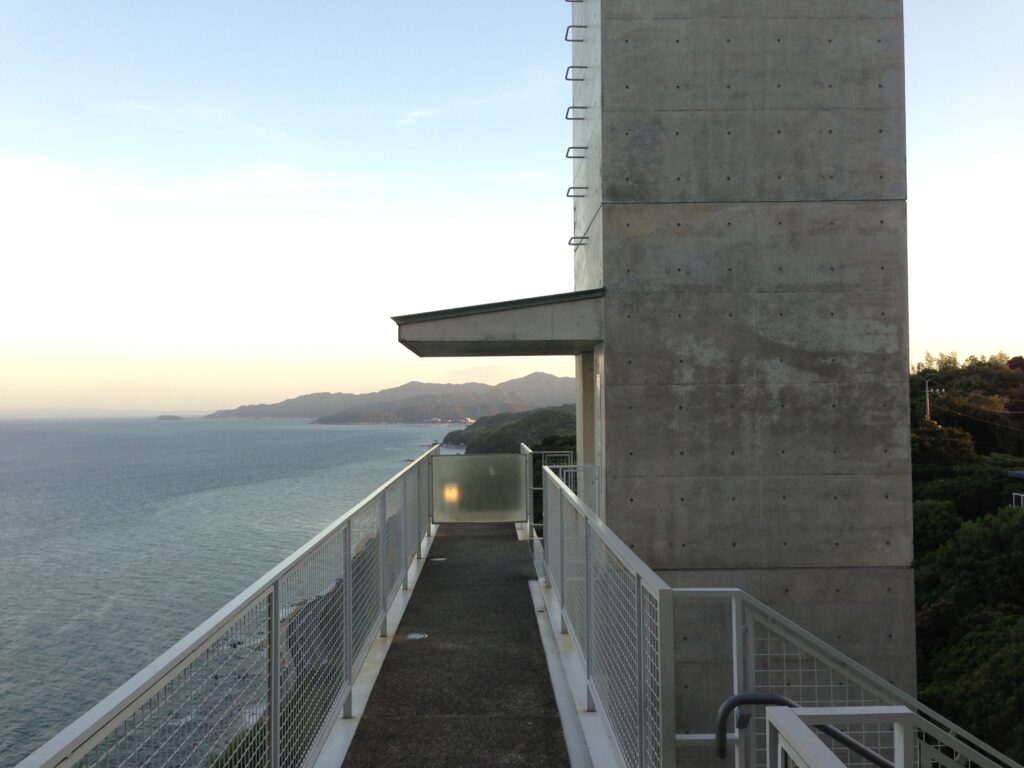
これは単に「景色のよい場所」をつくる発想とは異なる。見える情報を減らすことで、海の色、水平線の長さ、空との境界といった限られた要素へ意識を集中させている。
安藤の建築では自然を全面的に開放するのではなく、一度制御することで自然への知覚そのものを強める方法が繰り返し現れる。TOTOシーウィンド淡路では、その対象が大阪湾という巨大な風景なのである。
Reducing the amount of visible information focuses attention on a few elements: the color of the water, the length of the horizon, and the boundary between sea and sky.
Rather than maximizing visual openness, Ando strengthens awareness of nature by controlling it first. At TOTO Seawind Awaji, this method is applied to the enormous scale of Osaka Bay.
8.明るい海から、暗い内部へ
From the Bright Sea into the Dark Interior
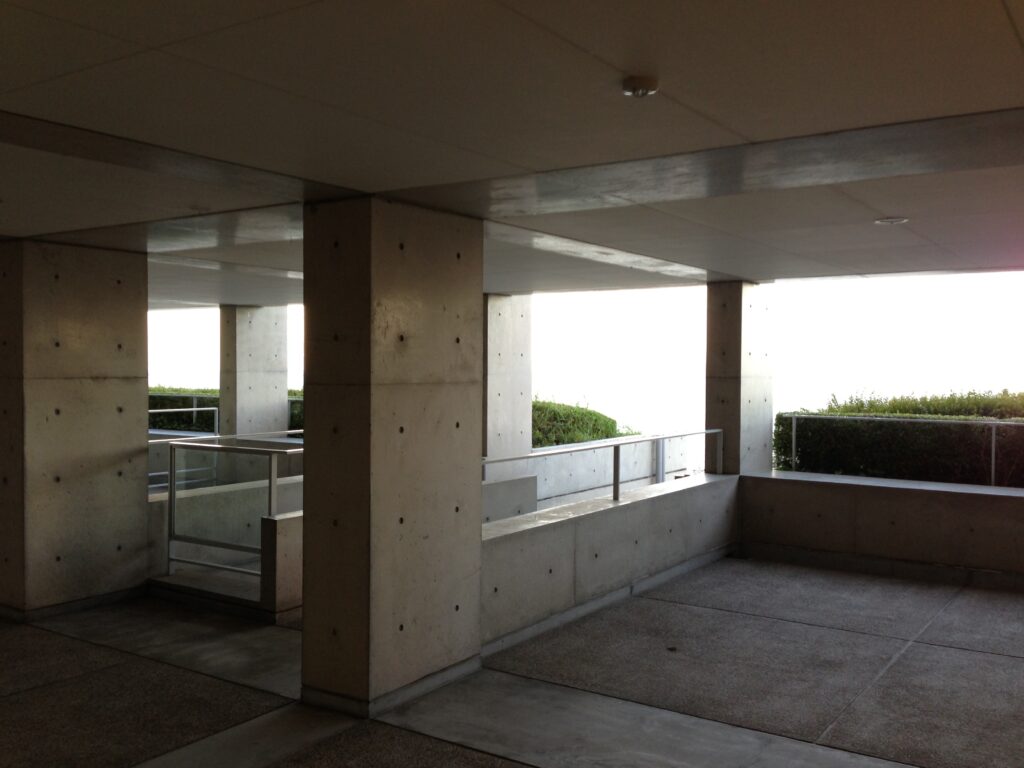
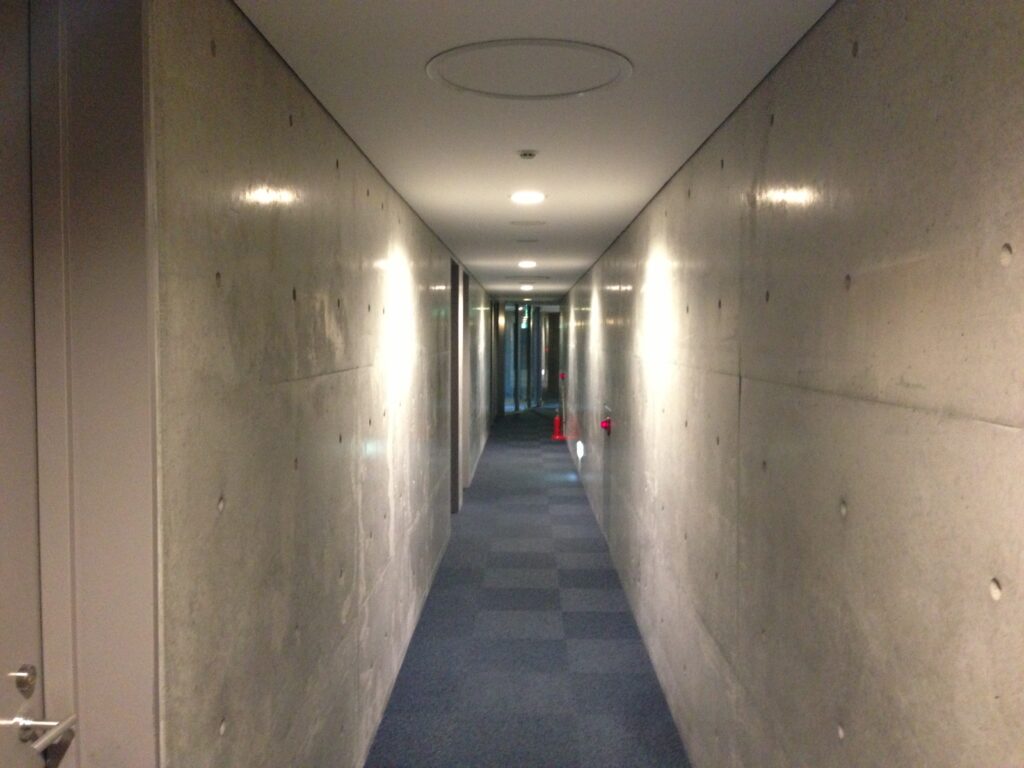
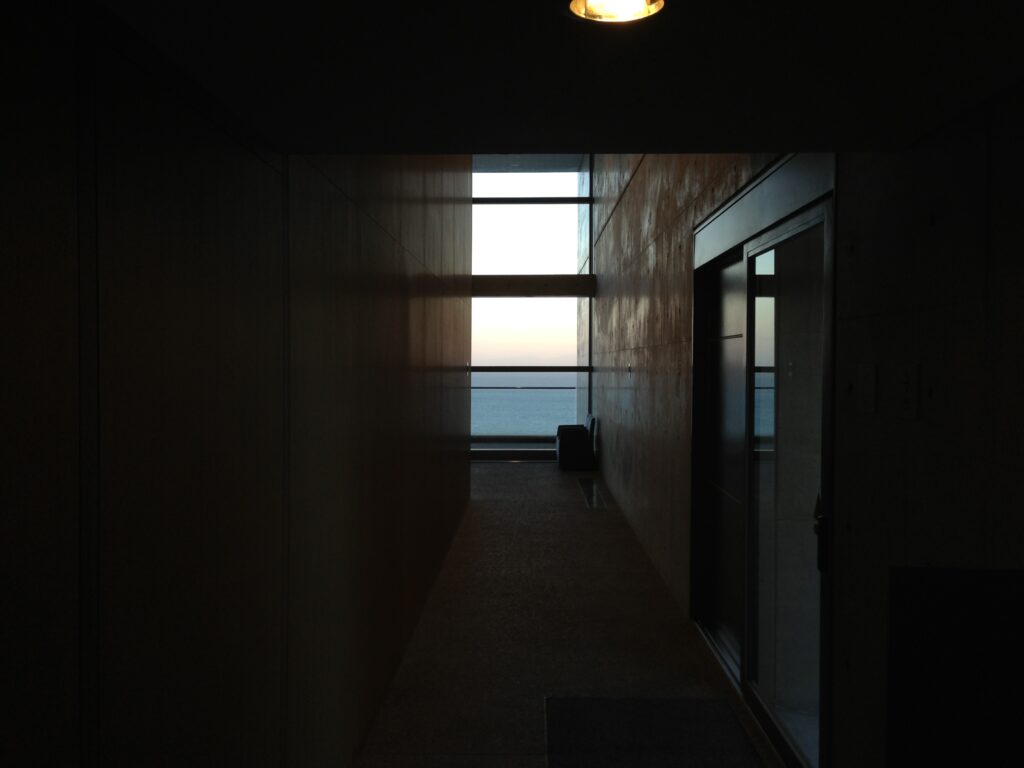
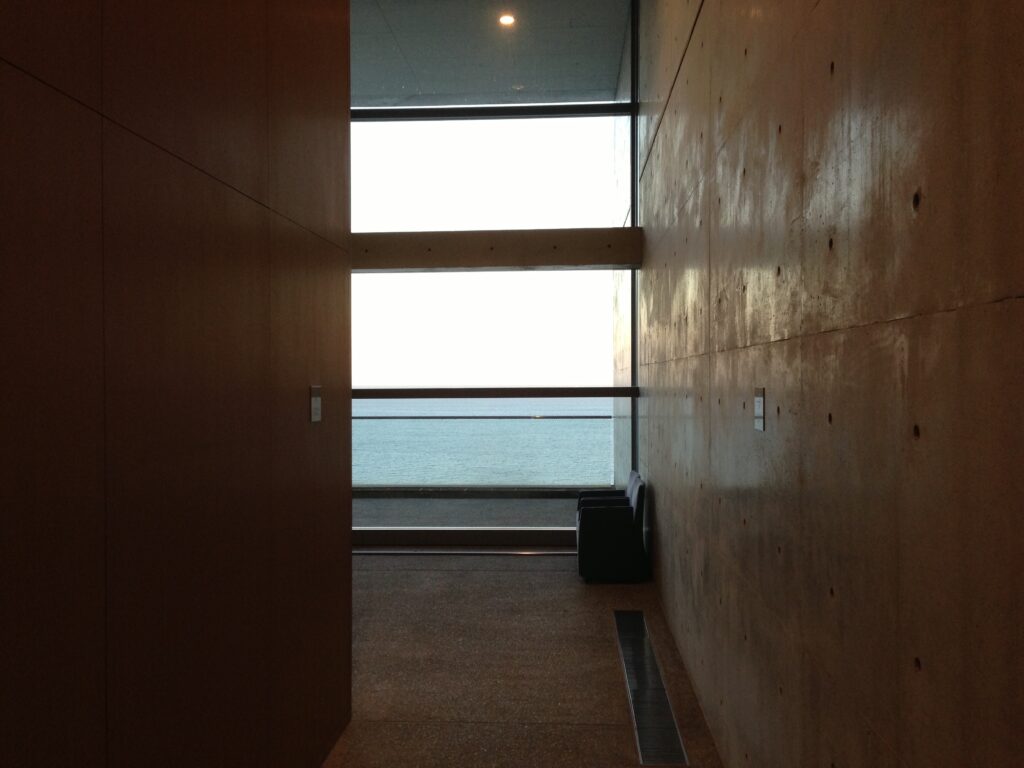
一方、館内には外部の明るさから切り離された長い廊下も存在する。
The complex also contains corridors largely separated from the brightness of the exterior landscape.
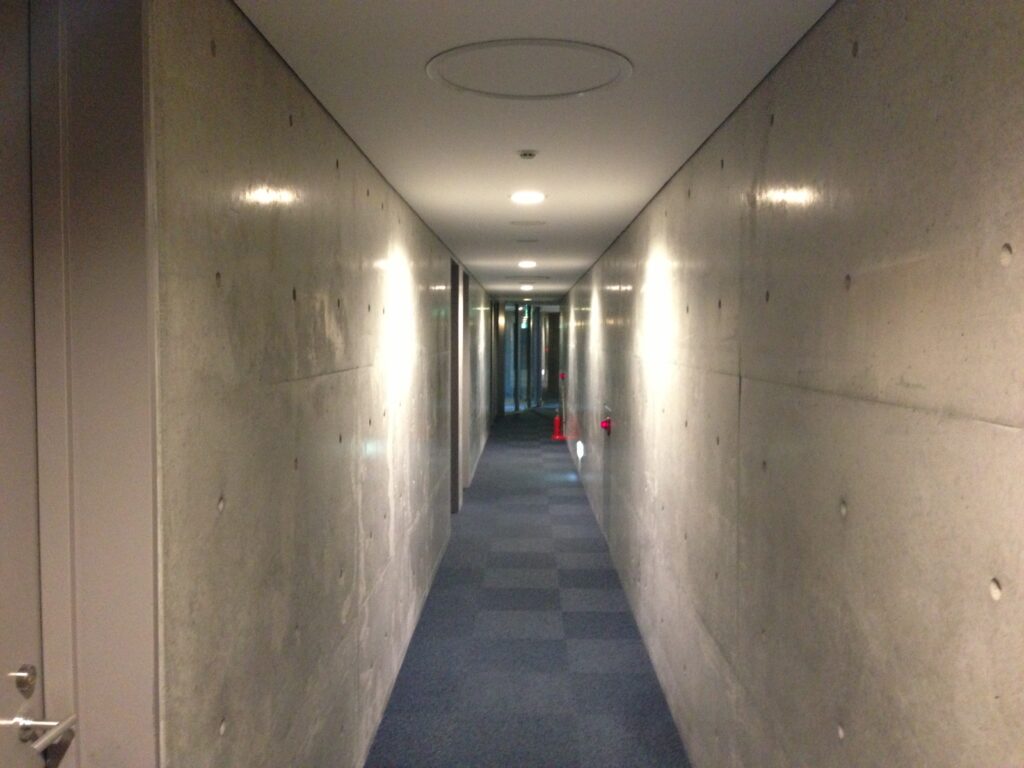
客室へ向かう廊下ではコンクリート壁に囲まれ、外部の海や空の情報が大きく抑制される。
Along routes toward the guest rooms, concrete walls suppress information from the sea and sky.
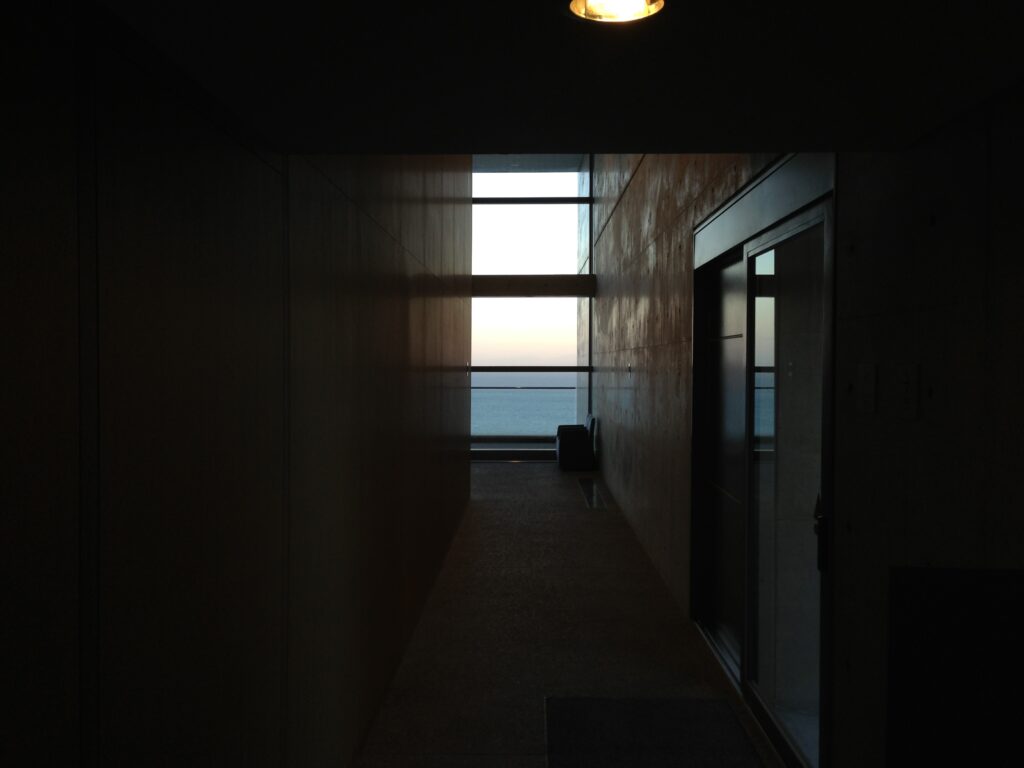
この暗さは海から離れるためだけのものではない。移動中に一度外部の風景を失わせることで、その後に客室や開口から再び海を見たときの明暗差と空間的な開放感を強くする役割を持っている。
建築全体を常にオーシャンビューにするのではなく、見えない時間を意図的に挿入することで、次に海を見る瞬間を建築体験として強調するのである。
This darkness does not merely mark a retreat from the landscape. By temporarily removing the sea from view, the architecture increases the contrast when water and daylight eventually return through another opening or guest-room window.
Instead of maintaining a continuous ocean view, Ando introduces periods in which the landscape disappears so that its next appearance becomes an architectural event.
9.客室で、風景をもう一度フレームに戻す
Returning the Landscape to a Frame
客室内部でも海は全面的なパノラマとして与えられるとは限らず、矩形の開口を通して限定的に現れる。
Within the guest rooms, the sea again appears through carefully defined openings rather than necessarily as an unrestricted panorama.
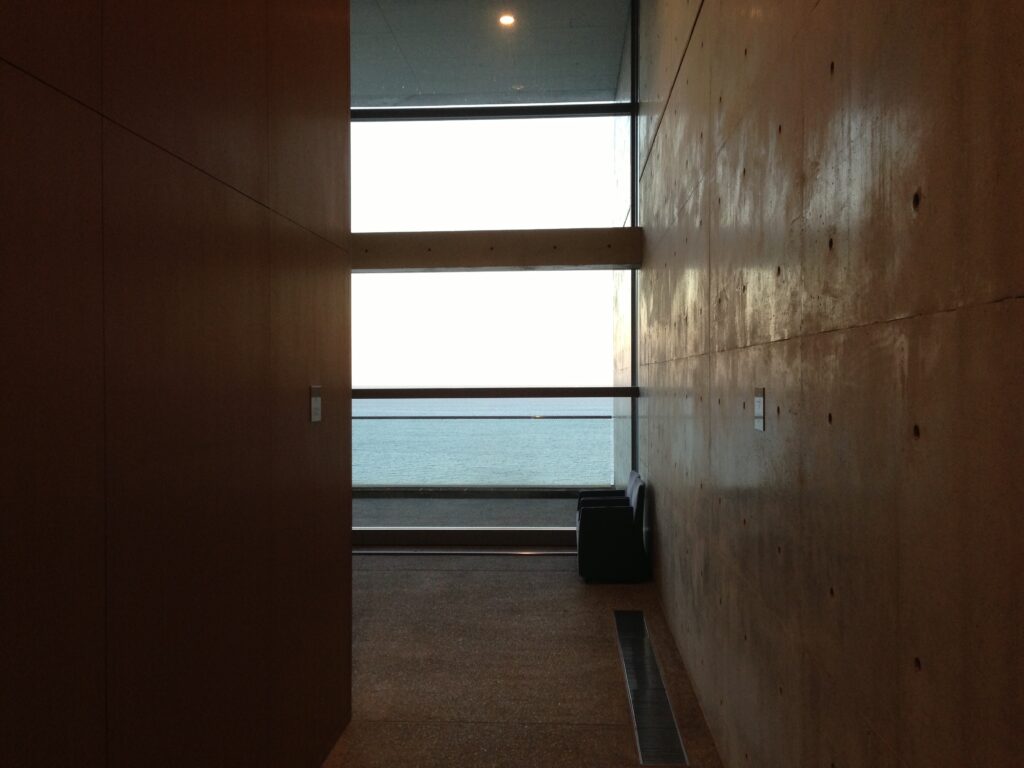
客室という閉じられた私的空間の中では、外部の移動空間とは異なり、風景を見る位置がある程度固定される。そのため窓は、移動しながら何度も異なる状態で見てきた大阪湾を、再び一つの静止した構図へ戻す役割を担う。
客室で一定時間を過ごすことで、同じ開口から夕方、夜、朝と異なる光を見ることもできる。ここで宿泊施設という用途が重要になる。
Unlike the exterior circulation spaces, where the body continuously moves and encounters the water from changing positions, the guest room establishes a more stable viewpoint.
The window therefore returns Osaka Bay to a relatively fixed composition. The same landscape previously experienced while walking now becomes something observed over a longer period.
And because this is accommodation rather than a building visited for only a few hours, the view continues to change from evening into night and again the following morning.
10.夜を越えて、建築に滞在する
Staying with the Architecture through the Night
美術館や教会であれば、建築体験には明確な終了時刻がある。見学を終えれば建物から退出し、その日の建築体験も基本的にはそこで終わる。
TOTOシーウィンド淡路では、来館者はその建築の中で食事をし、入浴し、客室へ戻り、眠り、翌朝再び同じ場所を歩く。
A museum or church is generally experienced within a defined period. Once the visit ends and the building is left behind, the architectural experience is largely complete.
TOTO Seawind Awaji operates differently. Visitors eat within the building, bathe, return to their rooms, sleep, and walk through the same architecture again the following morning.
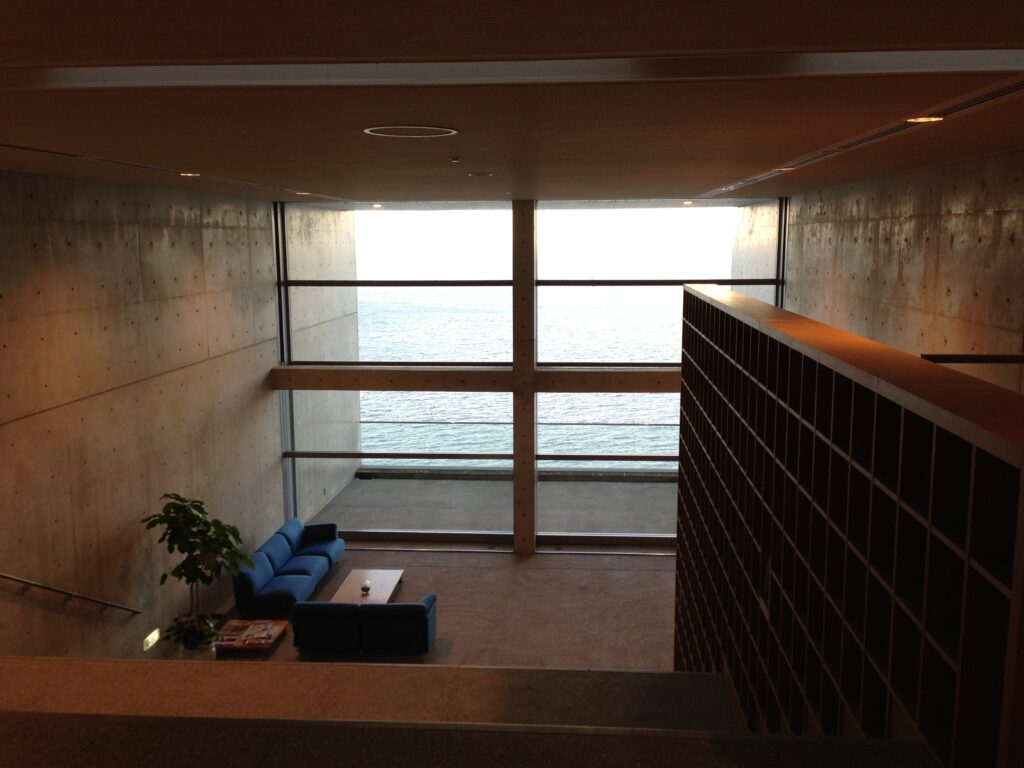
夕方には暖色へ変化する空と海が開口越しに現れ、夜には外部の情報がほぼ失われ、朝になると同じ窓に再び海が戻ってくる。
建築を一度通過するだけではなく、時間の変化を建築内部に滞在しながら経験できることが、この作品を他の安藤建築と大きく異ならせている。
In the evening, the sky and sea change color beyond the openings. At night, much of the exterior landscape disappears, leaving the interior and its concrete surfaces more strongly present. In the morning, the sea returns to those same openings under completely different light.
The ability to remain inside the building allows time itself to become part of the architectural experience.
11.同じ海を、時間によって見直す
Seeing the Same Sea after Time Has Passed
宿泊によって変化するのは光だけではない。同じ廊下、同じブリッジ、同じ開口であっても、夕方と朝では海の色、空の明るさ、コンクリートの陰影が異なる。
What changes overnight is not only the light.
The same corridor, bridge, wall, and opening can produce a different perception when revisited in the morning.
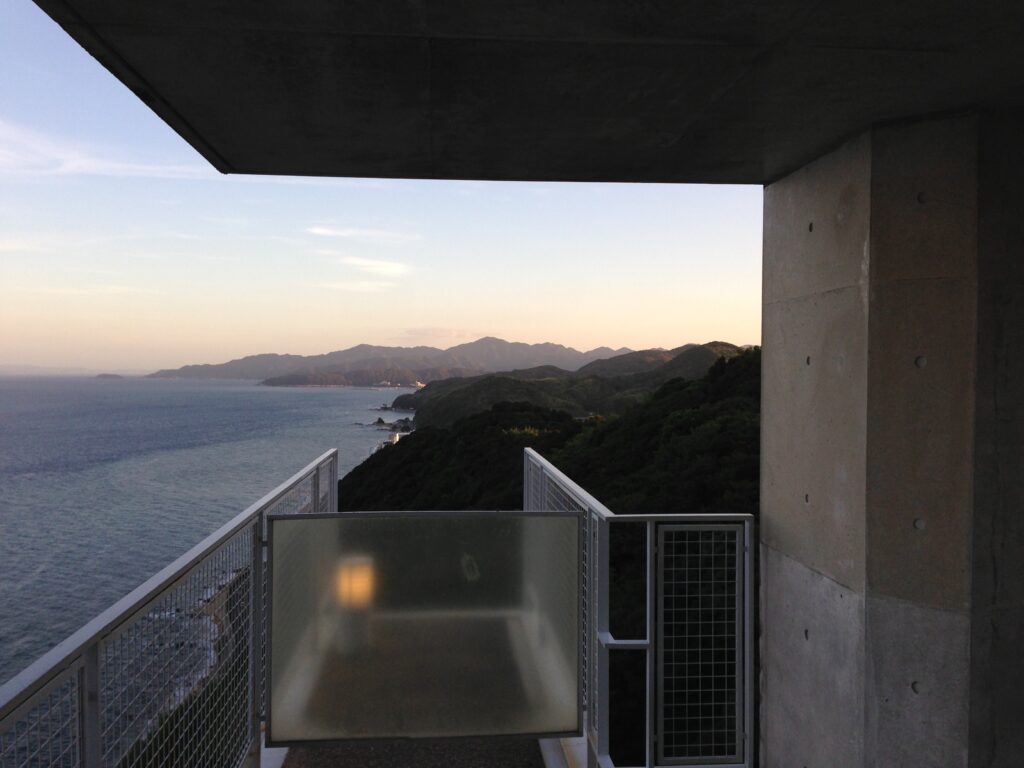
一度経験した場所を翌朝再び歩くことで、建築は同じであっても認識される風景は更新される。
ここでは身体の移動だけでなく、時間の移動そのものが建築体験へ組み込まれている。これは宿泊建築だからこそ成立する重要な特徴である。
The architecture remains physically unchanged, yet the color of the water, brightness of the sky, shadows across concrete, and the visitor’s own familiarity with the building have all changed.
Movement through space is therefore joined by movement through time. This temporal dimension is one of the qualities that distinguishes TOTO Seawind Awaji from Ando buildings experienced only during a short visit.
12.海へ開く場所を、あえて限定する
Reserving Openness for Particular Moments
TOTOシーウィンド淡路では、建築のあらゆる場所を大阪湾へ開放しているわけではない。
むしろ海を完全に見せる場所を限定し、その前後に閉じた壁、暗い廊下、狭い通路、方向転換を挿入している。
TOTO Seawind Awaji does not open every part of the building toward Osaka Bay.
Instead, moments of complete openness are limited and surrounded by walls, darker corridors, narrow passages, and changes in direction.
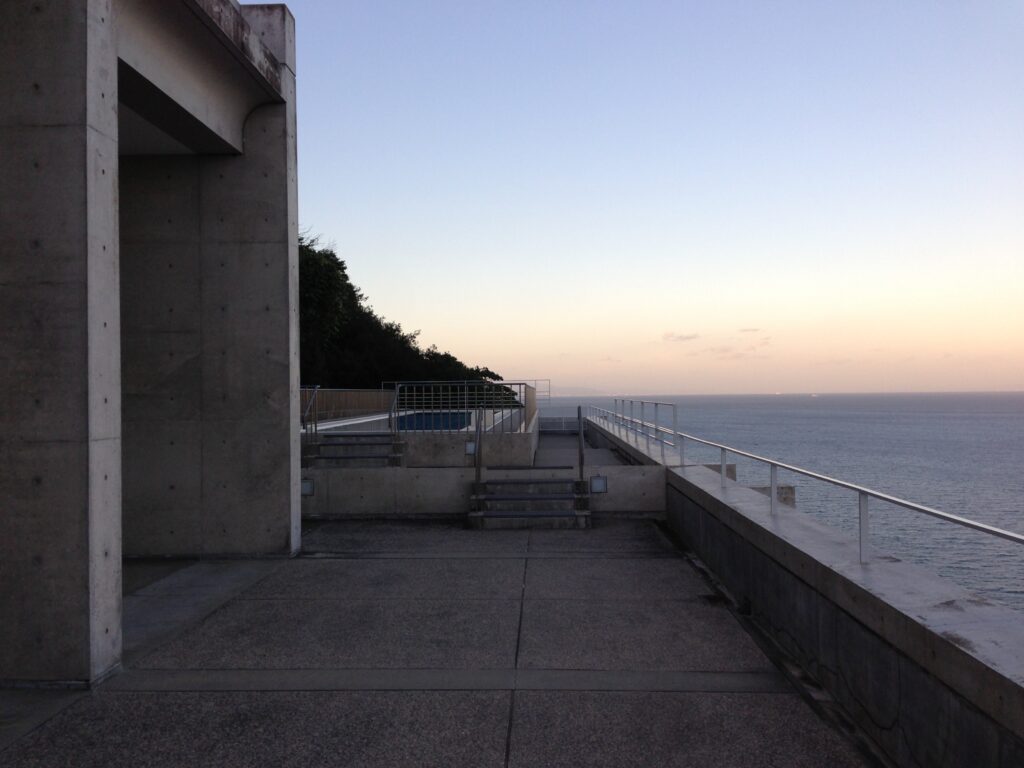
この構成によって、海への開放は日常的な状態ではなく、特定の場所で得られる建築的な出来事となる。
公式サイトが「風景を視線から隠した後、いきなり肌で感じられる眺望」と表現していることは、この作品の設計意図を非常に端的に示している。
海を隠すことは眺望を犠牲にすることではない。隠すことで、その次に現れる海の存在を増幅しているのである。
As a result, openness toward the sea ceases to be a permanent condition and becomes an event associated with particular places.
The facility’s own architectural description emphasizes this sequence: scenery is first concealed from sight before the visitor suddenly encounters a view that can be experienced almost physically.
Concealing the sea is therefore not a sacrifice of the site’s greatest asset. It amplifies the presence of the sea when it finally returns.
13.山と海の間に、もう一つの地形をつくる
Creating Another Topography between Mountain and Sea
建築を外部から見ると、斜面に沿って複数の壁、床、ブリッジが異なる高さへ配置されている。
Seen from outside, walls, slabs, and bridges are distributed across several elevations of the hillside.
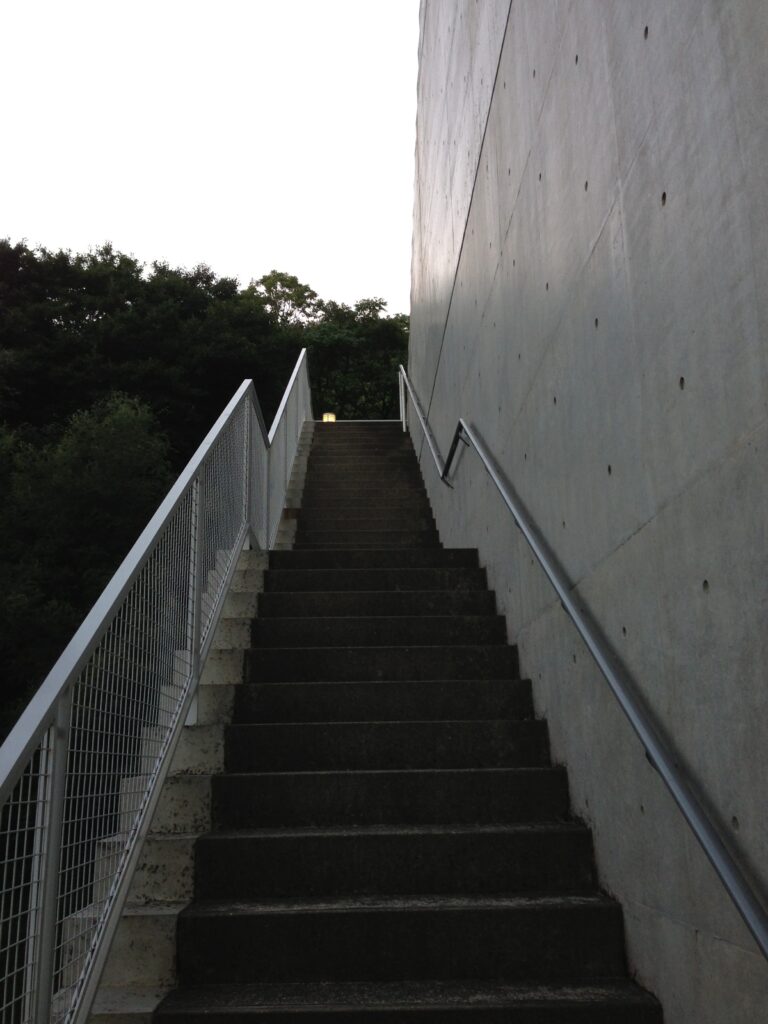
これは山の上に一つの人工物を載せた構成ではなく、斜面そのものを建築的に読み替えたものと考えることができる。
The complex does not appear simply as an artificial object placed on top of natural terrain. Instead, the architecture interprets and extends the sectional logic of the slope itself.
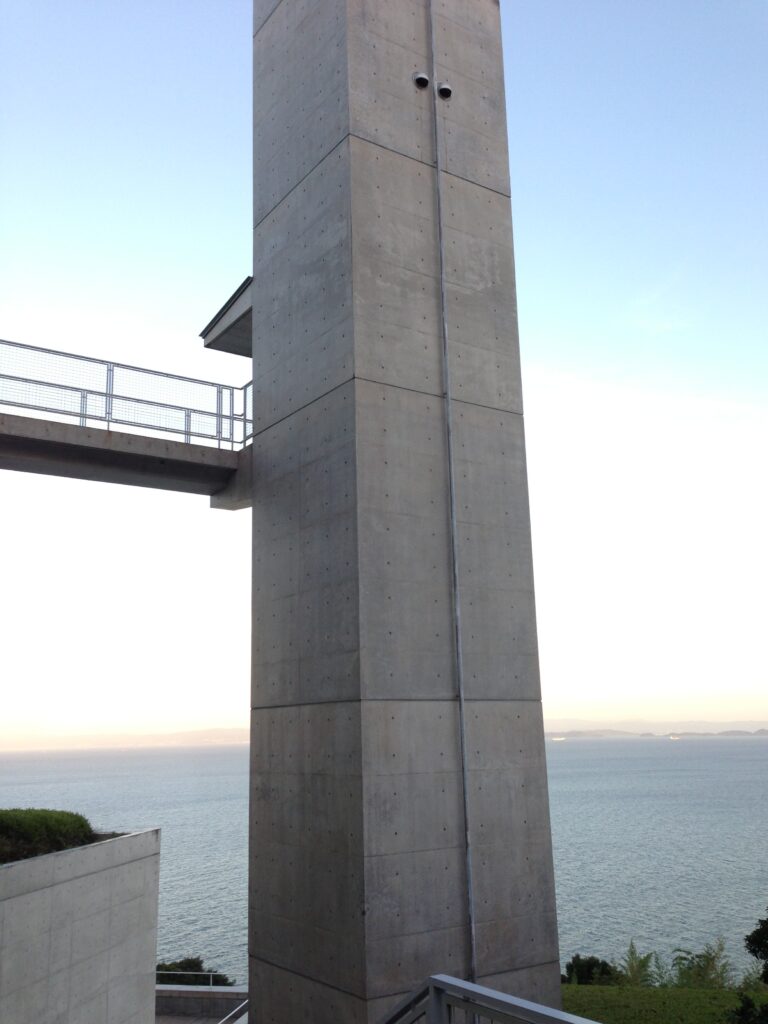
山側から海側へ移動する身体は、既存地形の高低差と建築内部の床レベルを同時に経験する。その結果、自然の斜面と人工的な建築の境界は単純には分けられず、建築自体が山と海を接続する第二の地形として機能する。
As the body moves from the mountain side toward the sea, the natural change in elevation and the artificial levels of the building are experienced simultaneously.
Architecture consequently becomes a second topography connecting mountain and sea, rather than an independent object occupying the landscape.
14.旅の終わりまで、海を一度に使い切らない
Never Using Up the Sea All at Once
リゾートホテルにとって海は非常に強い商品価値を持つ。そのため通常であれば、エントランス、ロビー、廊下、客室のすべてから海を最大限見せることが合理的である。
TOTOシーウィンド淡路は、その合理性とは異なる方法を選択している。
For a seaside resort, the ocean is an obvious asset. Conventional logic might therefore suggest maximizing the view from the entrance, lobby, corridors, guest rooms, and every other possible location.
TOTO Seawind Awaji chooses another strategy.
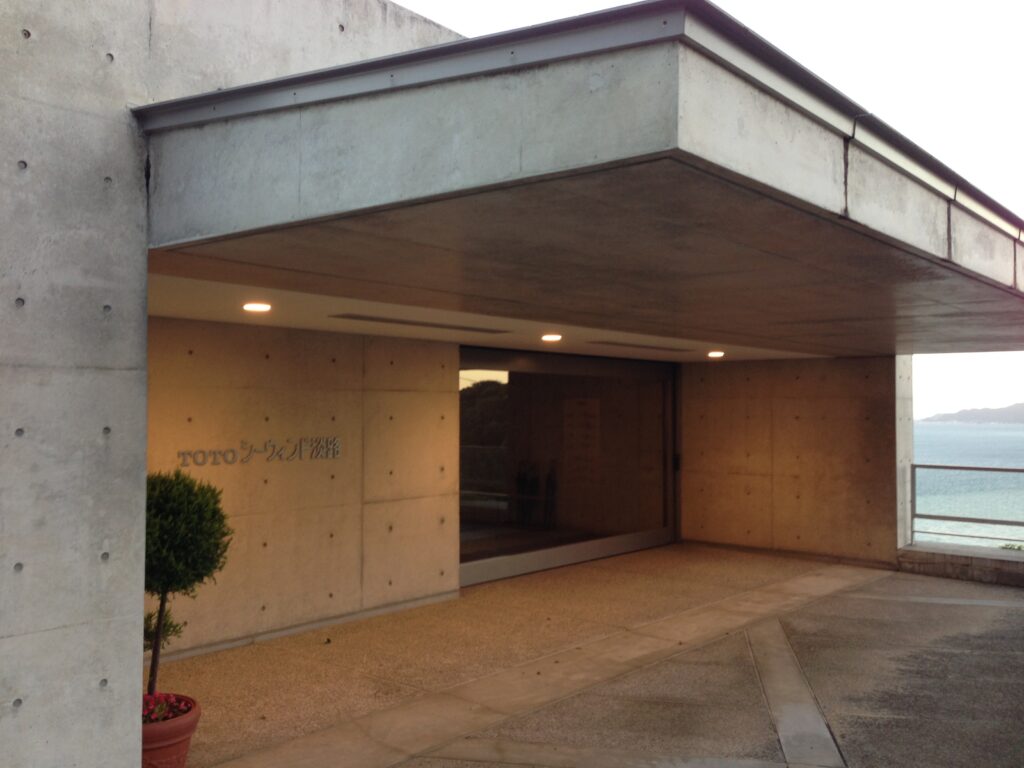
到着時に海をすべて見せず、移動する過程で隠し、切り取り、再び開放する。さらに宿泊によって夕方から夜、翌朝まで同じ風景を時間的に変化させる。
この建築では海の景観を一度で消費させず、滞在全体へ分散させているのである。
TOTOシーウィンド淡路の核心は、海辺に建つことでも、すべての場所から海が見えることでもない。急斜面へ建築を埋め込み、身体の高さと方向を変え、視線を遮り、限定された開口から海を再提示し、さらに宿泊という時間を加えることで、人間と海との距離を場所と時間の両方から繰り返し組み替えていることにある。
The sea is withheld upon arrival, concealed during movement, reduced to fragments, framed within openings, and then released again at particular moments. Staying overnight further distributes the experience from evening through darkness and into the following morning.
The landscape is therefore not consumed in a single panoramic encounter but extended across the entire duration of the stay.
The essential achievement of TOTO Seawind Awaji is not simply that it occupies a spectacular seaside site. By embedding architecture within a steep slope, changing the height and orientation of the body, obstructing sightlines, selectively framing Osaka Bay, and adding the duration of an overnight stay, Ando repeatedly reconstructs the relationship between people and the sea through both space and time.
My Impression
TOTOシーウィンド淡路は、これまで訪れてきた安藤建築の中でも、体験の長さという意味で特別な作品だった。美術館や教会では数時間の滞在で建築を経験することが多いが、ここでは夕方に到着し、建築の中で食事をし、客室で眠り、翌朝再び同じ建築を歩くことができる。
TOTO Seawind Awaji was unusual among the Ando buildings I had visited because of the length of the experience. Museums and churches are generally encountered over several hours, but here I could arrive in the afternoon, eat within the building, sleep in a guest room, and walk through the same architecture again the following morning.
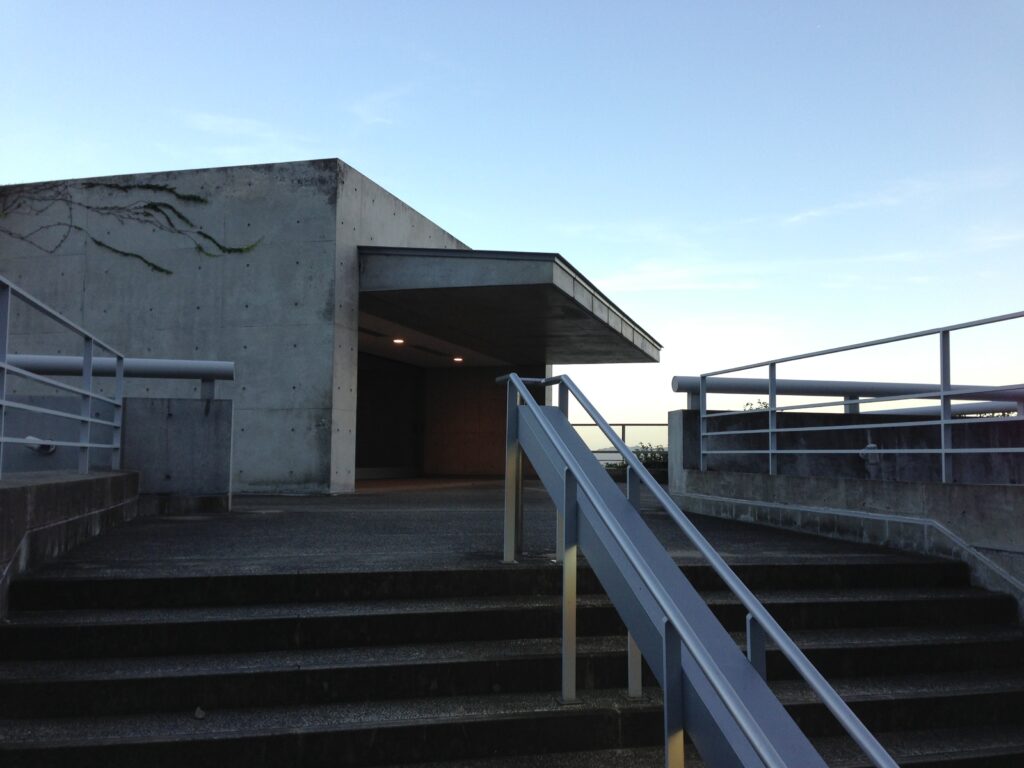
到着したとき、目の前に大阪湾が広がるリゾートホテルを想像していた。しかし実際には、コンクリートの壁や床が視界へ入り、場所によっては海がほとんど見えない。目の前に巨大な海があるにもかかわらず、それを簡単には見せないことが最初は少し意外だった。
Before arriving, I had imagined a resort hotel opening directly toward Osaka Bay. What I actually encountered was quite different. Concrete walls and slabs repeatedly entered my field of vision, and there were places where the sea was barely visible despite its enormous presence immediately beyond the building.
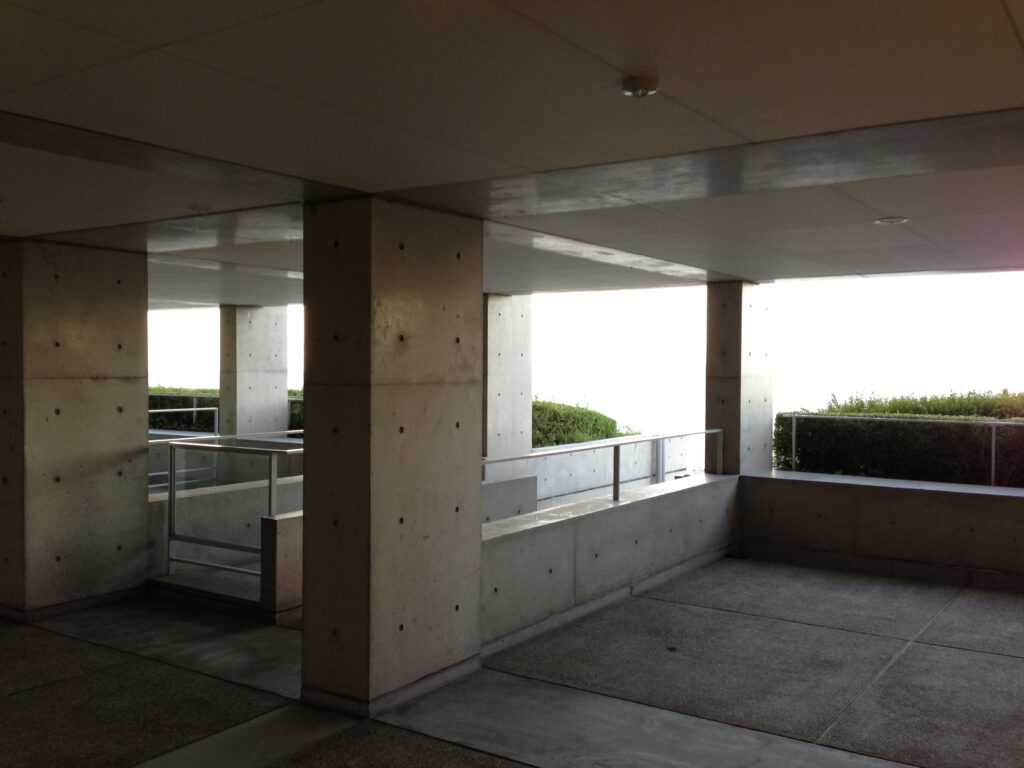
ところが館内を歩くうちに、その見えにくさこそがこの建築の面白さなのだと分かってきた。壁の間から水平線が現れたり、ブリッジへ出た瞬間に視界が開いたり、暗い廊下を抜けた後に客室の窓から海が見えたりする。そのたびに同じ大阪湾が少し違うものとして感じられた。
As I continued walking, however, that difficulty in seeing the sea became one of the most interesting aspects of the architecture. The horizon would appear between walls, the view would suddenly open while crossing a bridge, and after moving through a darker corridor, the sea would return through a guest-room window. Each encounter made the same Osaka Bay feel slightly different.
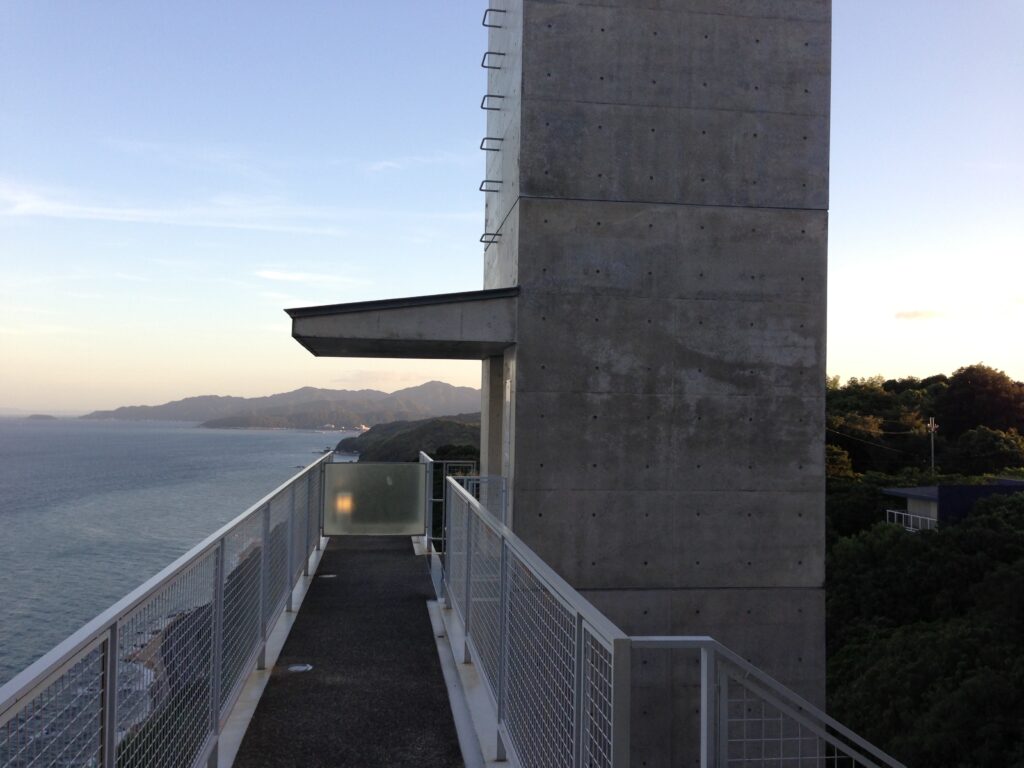
今回30枚の写真を改めて見返してみると、海だけを撮った写真よりも、壁や梁、窓、ブリッジと海が同じ画面に入った写真の方が多い。現地で私自身も、海そのものより「建築を通して海がどのように見えるのか」を繰り返し見ていたのだと思う。
そして何より印象に残っているのが、建築の中で夜を過ごしたことである。夕方には窓の向こうに海と空の色が残っていたが、夜になると外部の情報はほとんど消え、コンクリートの内部空間だけが強く感じられるようになった。
翌朝、同じ場所へ戻ると再び大阪湾が現れる。建物自体は何も変わっていないのに、前日の夕方とは違う建築のように感じられた。
Looking again at the thirty photographs from the visit, I noticed that I had taken relatively few photographs of the sea by itself. Far more often, walls, beams, windows, bridges, and the sea occupy the same image. Without consciously intending to do so, I had repeatedly photographed not the landscape alone, but the way the landscape appeared through the architecture.
What remained particularly memorable was spending the night inside the building. In the evening, the colors of the sea and sky remained visible beyond the openings. After dark, much of that external information disappeared, and the concrete interior became more strongly present.
The following morning, Osaka Bay appeared again from the same architecture. Nothing about the building itself had changed, yet the place felt different from the previous evening.
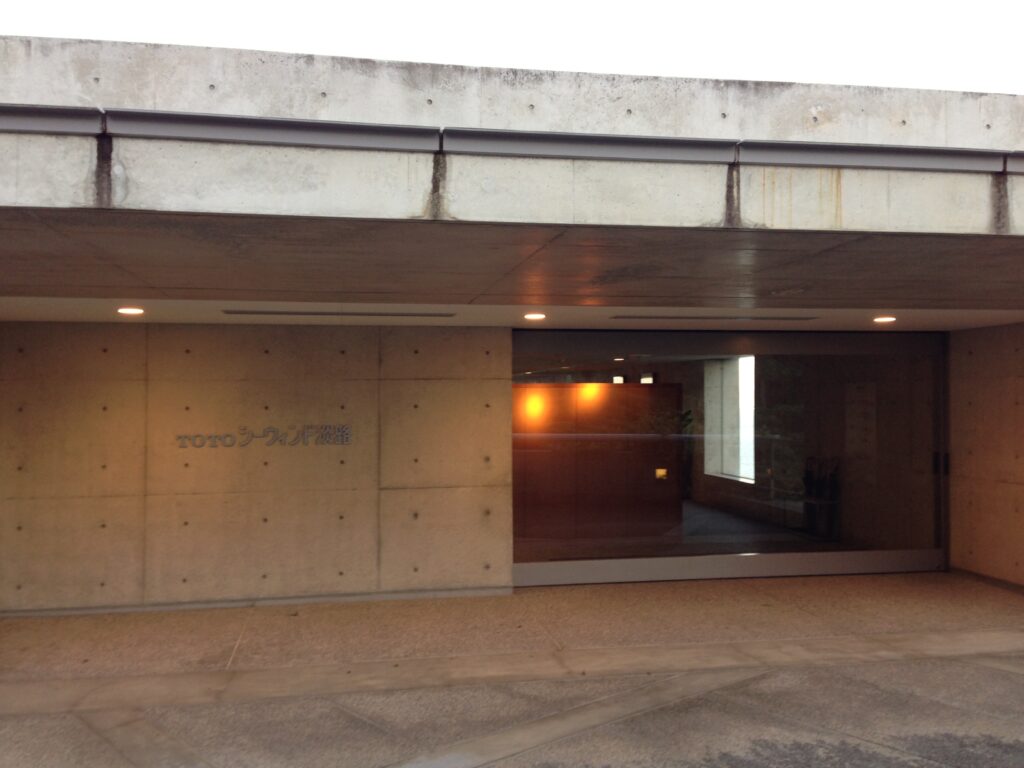
安藤建築では、壁によって風景を隠し、その先で自然を再び見せる方法を何度も経験してきた。しかしTOTOシーウィンド淡路では、それに宿泊という時間が加わる。
単に「歩いた先で海を見る」のではなく、夕方に見た海を一度失い、夜を過ごし、翌朝同じ建築からもう一度海を見ることができる。
私にとってこの建築で最も興味深かったのは、絶景のホテルに泊まったことそのものではない。海をすぐには見せない建築の中で時間を過ごした結果、普段なら当たり前に眺めてしまう海を、何度も新しい風景として認識できたことである。
TOTOシーウィンド淡路は、海を最大限に見せることで成立するリゾートではなかった。
海との距離を何度も変えながら、その風景を一晩かけて少しずつ体験させる建築だった。
I had experienced Ando’s recurring method of concealing a landscape and revealing it again in many of his buildings. At TOTO Seawind Awaji, however, another dimension is added: staying overnight.
The experience is not simply walking until the sea appears. It becomes an experience of seeing the sea in the evening, losing it in the darkness of night, and encountering it once again from the same architecture the following morning.
For me, the most interesting aspect of staying at TOTO Seawind Awaji was therefore not simply spending a night in a hotel with a spectacular ocean view. By remaining within an architecture that refused to reveal the sea continuously, I became more conscious of a landscape that might otherwise have become ordinary through constant exposure.
TOTO Seawind Awaji is not a resort whose architecture succeeds by showing as much of the sea as possible.
It is an architecture that repeatedly changes the distance between people and the sea, allowing the landscape to unfold gradually over the course of an entire night.
ARCHITECTURE FILM
実際にこの建築を歩きながら撮影した写真に、時間と静かな音楽を重ねて映像にまとめました。写真とは少し違う、空間を辿る感覚とともにご覧ください。
I brought together photographs taken while walking through the architecture, adding time and quiet music to create this film. I hope it offers a different experience from still photography—a sense of moving through the space itself.
Archive Gallery