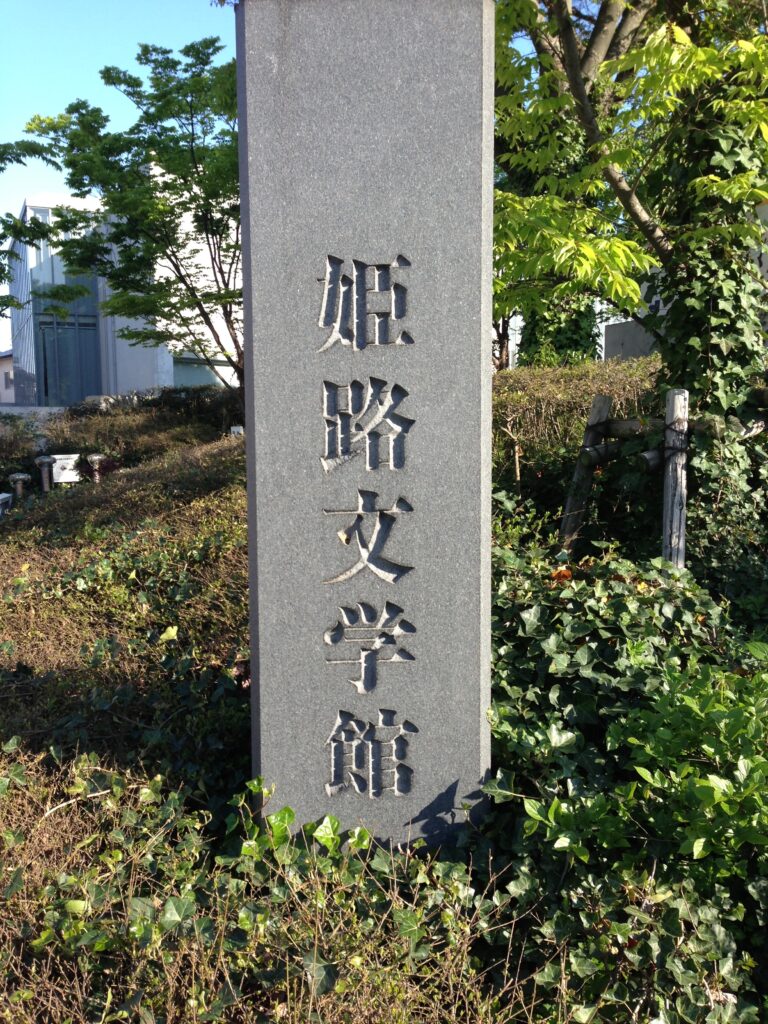
【安藤忠雄建築】姫路文学館|歩くたびに姿を変える、幾何学の建築(Himeji City Museum of Literature|Geometry That Changes as You Walk)
建築概要
Overview
- 名称:姫路文学館
- 設計:安藤忠雄
- 所在地:兵庫県姫路市山野井町
- 北館開館:1991年
- 南館開館:1996年
- 用途:文学館・博物館
- Name:Himeji City Museum of Literature
- Architect:Tadao Ando
- North Building Opened:1991
- South Building Opened:1996
- Location:Yamanoi-cho, Himeji, Hyogo, Japan
- Type:Museum / Literary Museum
1.姫路文学館 — 歩くたびに姿を変える、幾何学の建築
Himeji City Museum of Literature — Geometry That Changes as You Walk
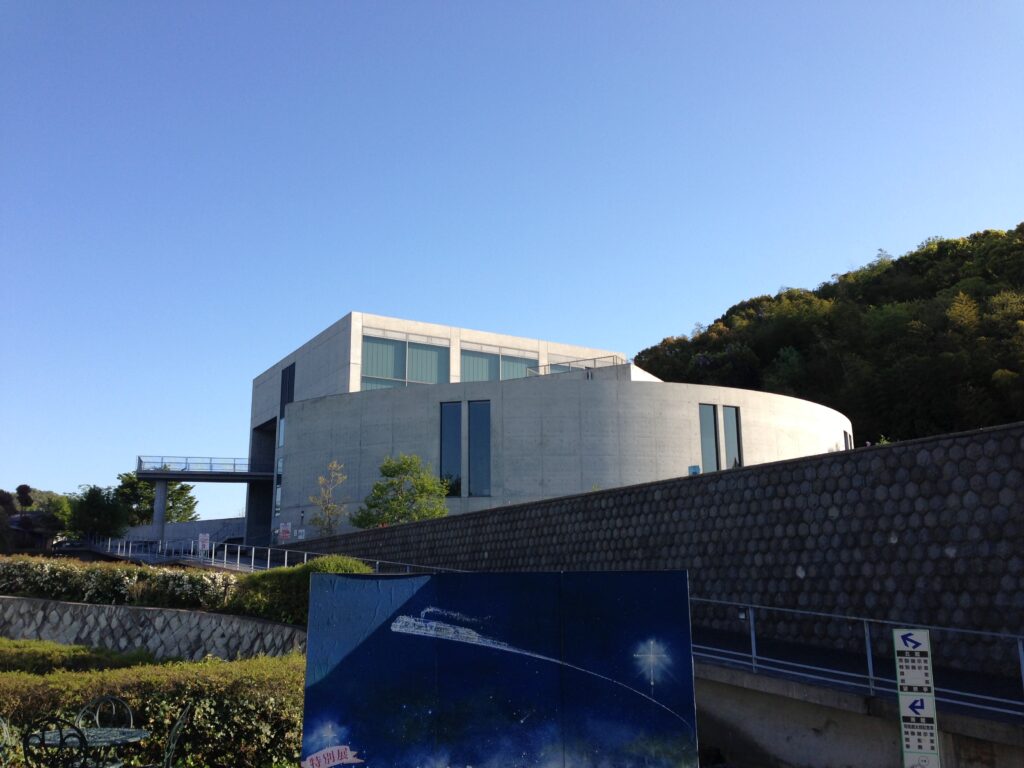
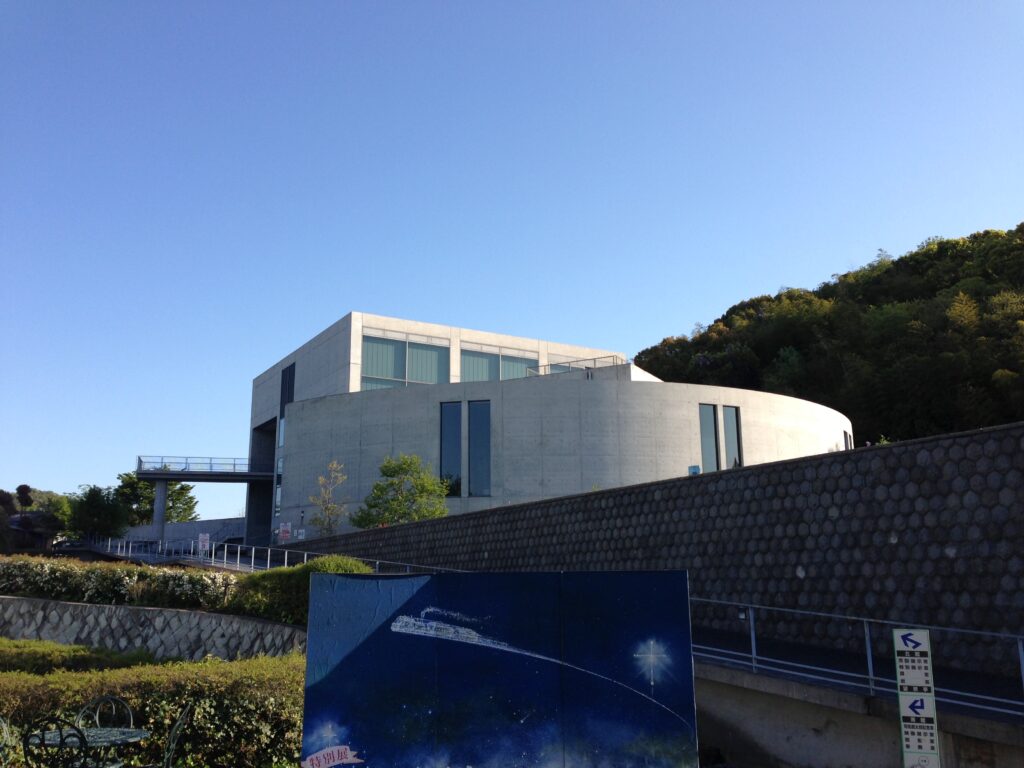
姫路城の北西、男山の麓に建つ姫路文学館。安藤忠雄が設計し、1991年に現在の北館が開館、その後1996年に南館が加わった。
初めて建物を前にしたときに感じたのは、ひと目では全体像をつかむことのできない不思議な複雑さだった。
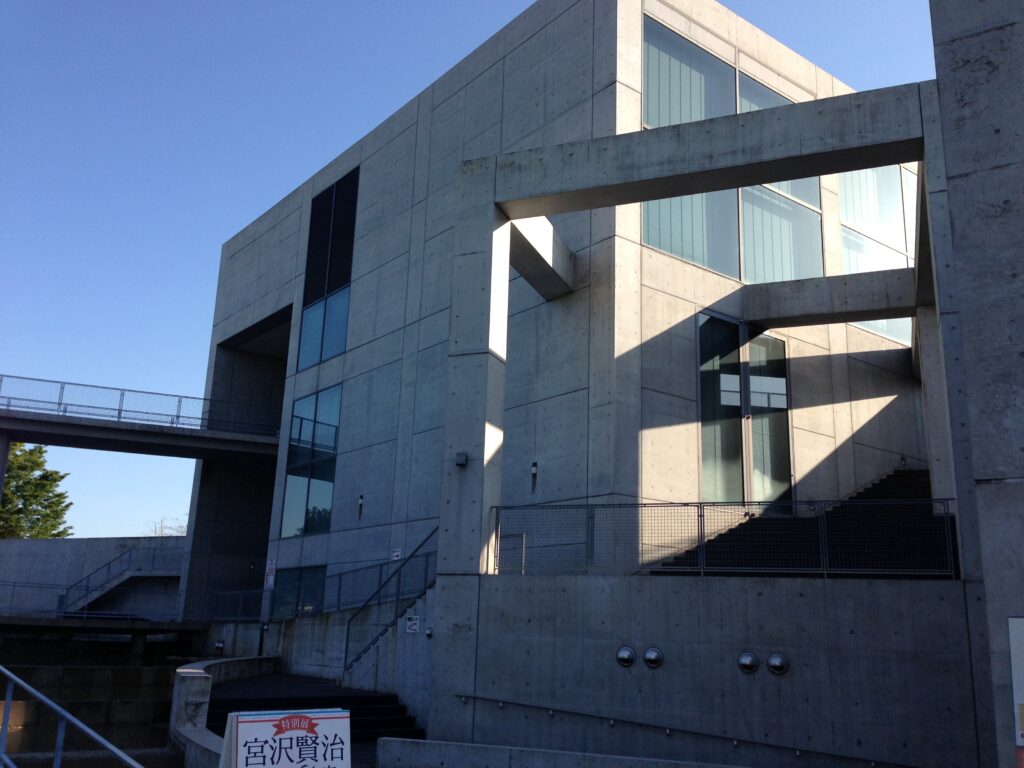
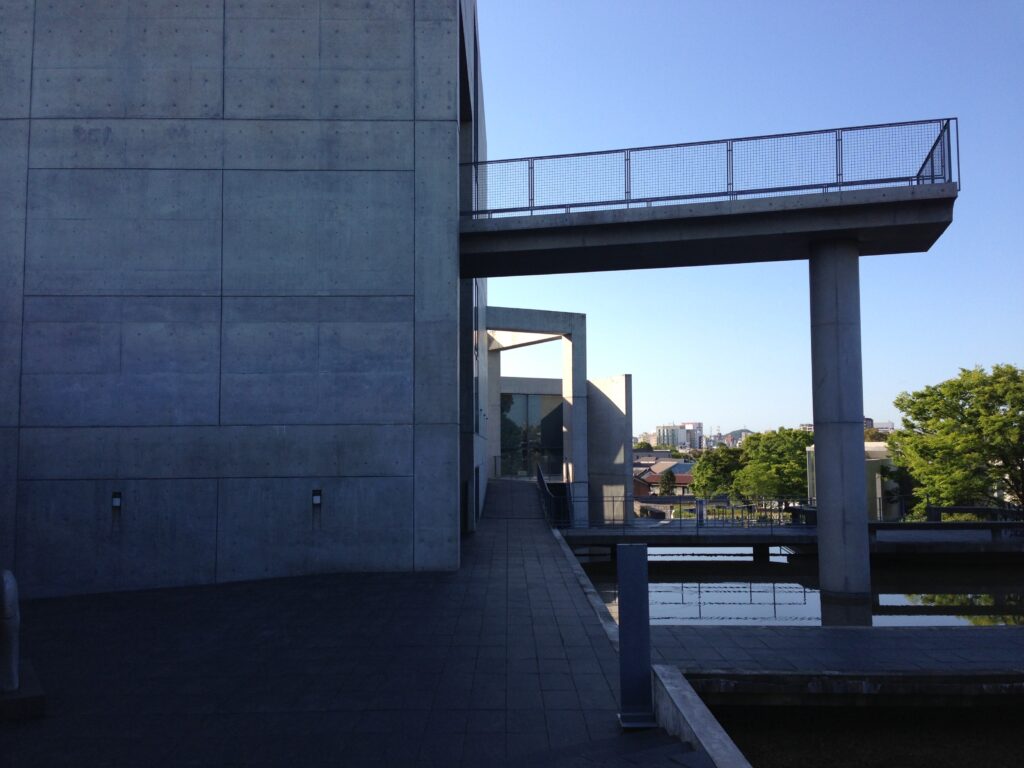
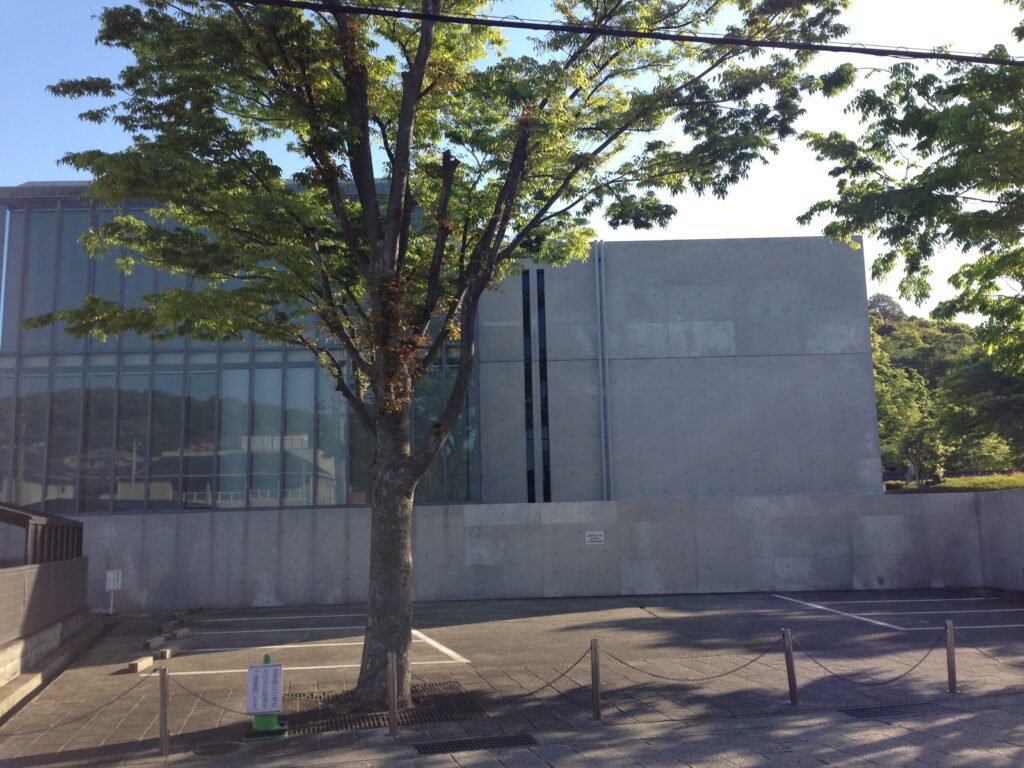
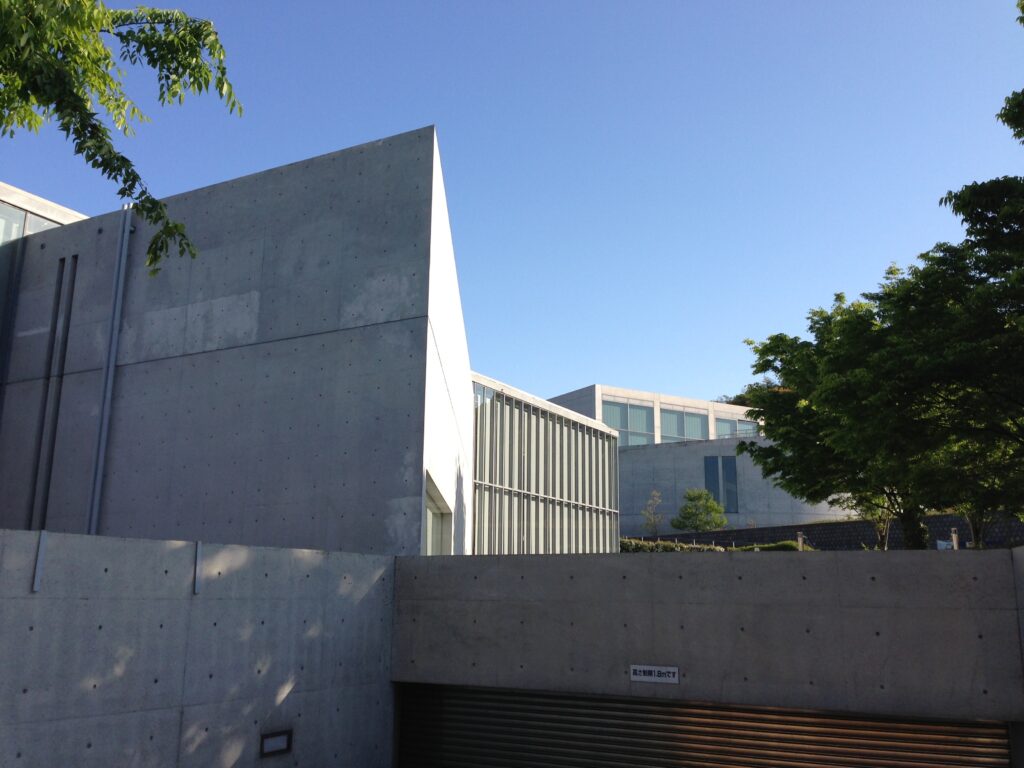
直線の壁、曲面、円筒、ブリッジ、水盤、高低差。それぞれは明快な幾何学でつくられているにもかかわらず、それらが重なり合うことで、見る場所によって建築の姿が大きく変わっていく。
姫路文学館は正面から一枚の写真を撮って理解する建築ではない。実際に歩き、方向を変え、視点を変えることで、少しずつその構成が見えてくる建築だった。
Located at the foot of Mount Otokoyama, northwest of Himeji Castle, the Himeji City Museum of Literature was designed by Tadao Ando.
The North Building opened in 1991, followed by the South Building in 1996.
What struck me when I first approached the museum was how difficult it was to understand the building as a whole from a single viewpoint.
Straight walls, curves, cylindrical forms, bridges, water, and changes in elevation all overlap.
Each element is composed of clear geometry, yet together they create an architecture that constantly changes depending on where you stand.
This is not a building that can be understood through a single frontal photograph.
Only by walking through it, changing direction and viewpoint, does its composition gradually begin to reveal itself.
2.長い壁に導かれ、建築の中へ
Guided into the Architecture by a Long Wall
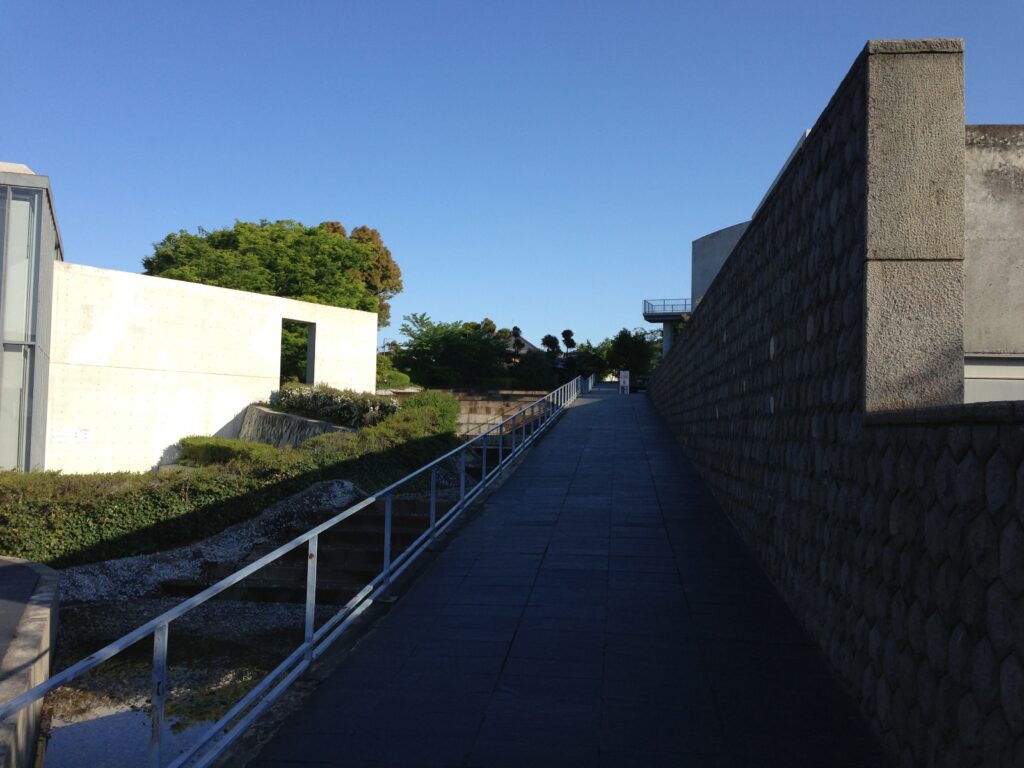
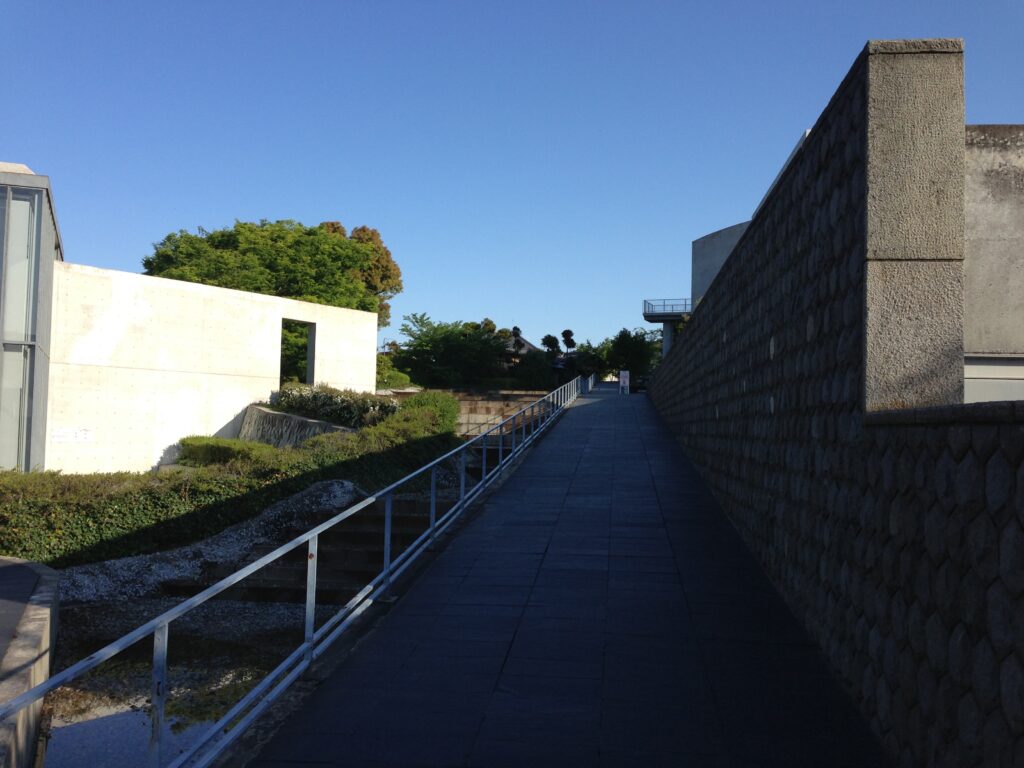
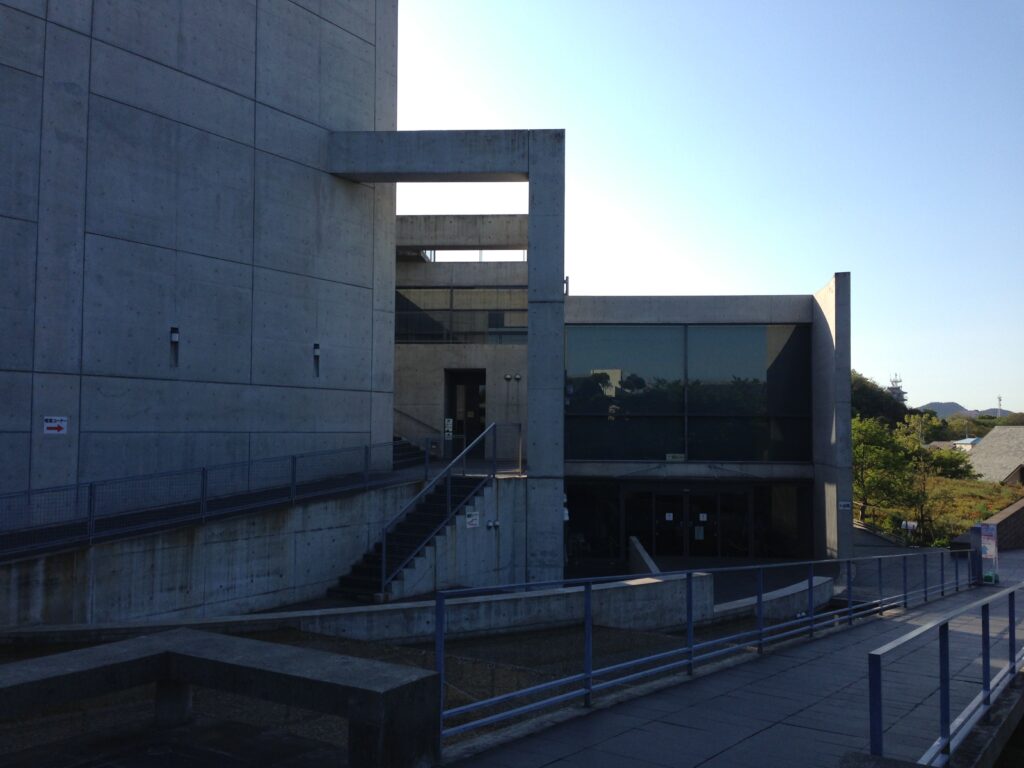
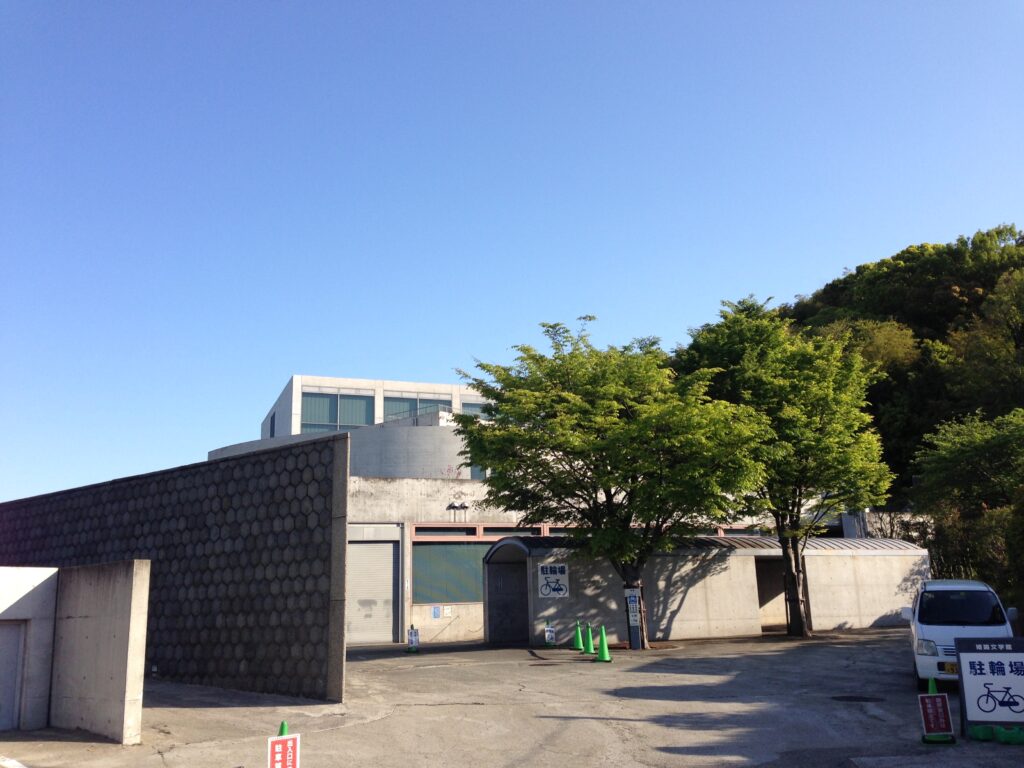
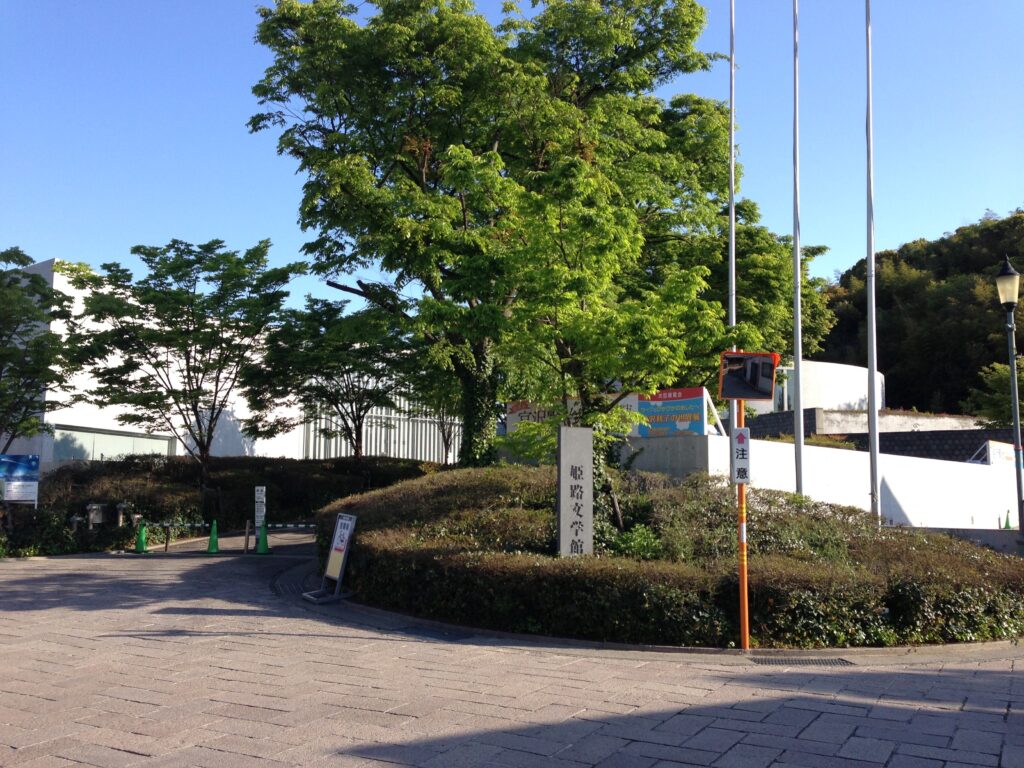
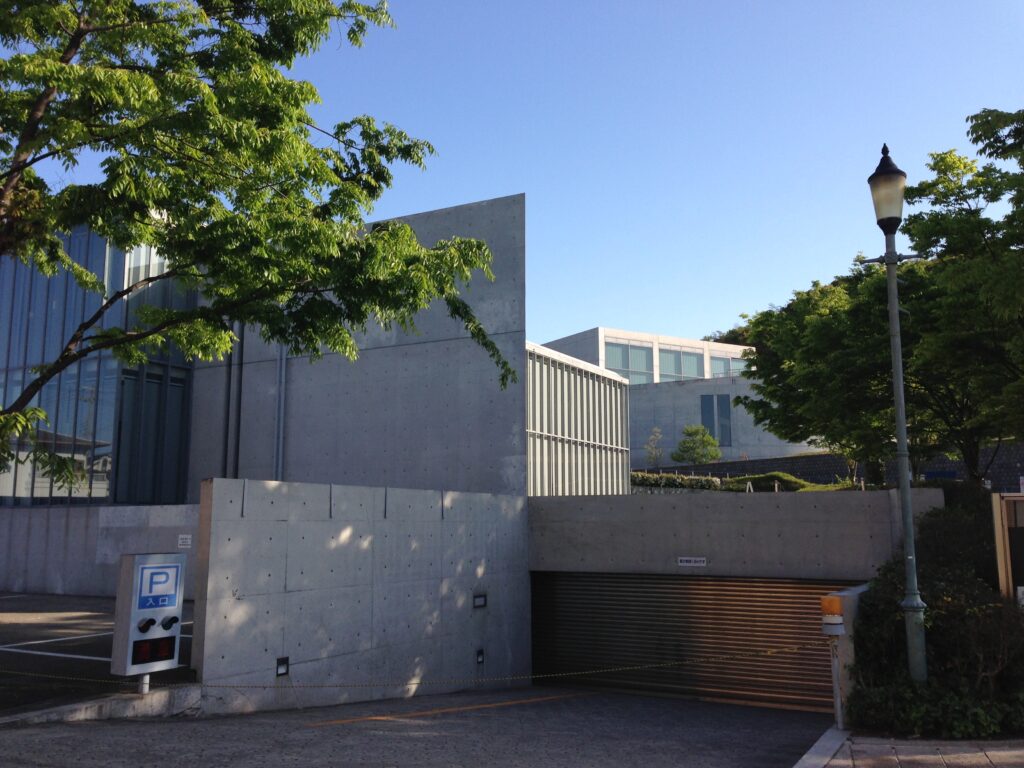
姫路文学館へのアプローチでは、建物の全体像がすぐに示されるわけではない。
視線の先に伸びる長いコンクリートの壁に導かれるように歩きながら、少しずつ建築の内部へと引き込まれていく。
目的地へ最短距離で向かわせるのではなく、あえて歩く距離をつくり、その途中で建築との関係を変化させる。
これまで訪れてきた安藤建築でも何度も経験した方法だが、姫路文学館では敷地の高低差と巨大な壁が組み合わさることで、その感覚が特に強く感じられた。
Approaching the Himeji City Museum of Literature, the entire building is never immediately revealed.
Instead, a long concrete wall stretches ahead, guiding the body gradually into the architecture. Rather than allowing visitors to reach their destination by the shortest possible route, the building creates distance and uses the act of walking to continually change the relationship between visitor and architecture.
I have encountered this strategy in many of Ando’s buildings, but here the combination of the sloping site and monumental concrete walls makes the experience particularly powerful.
3.直線と曲線がぶつかり合う
Where Straight Lines and Curves Collide
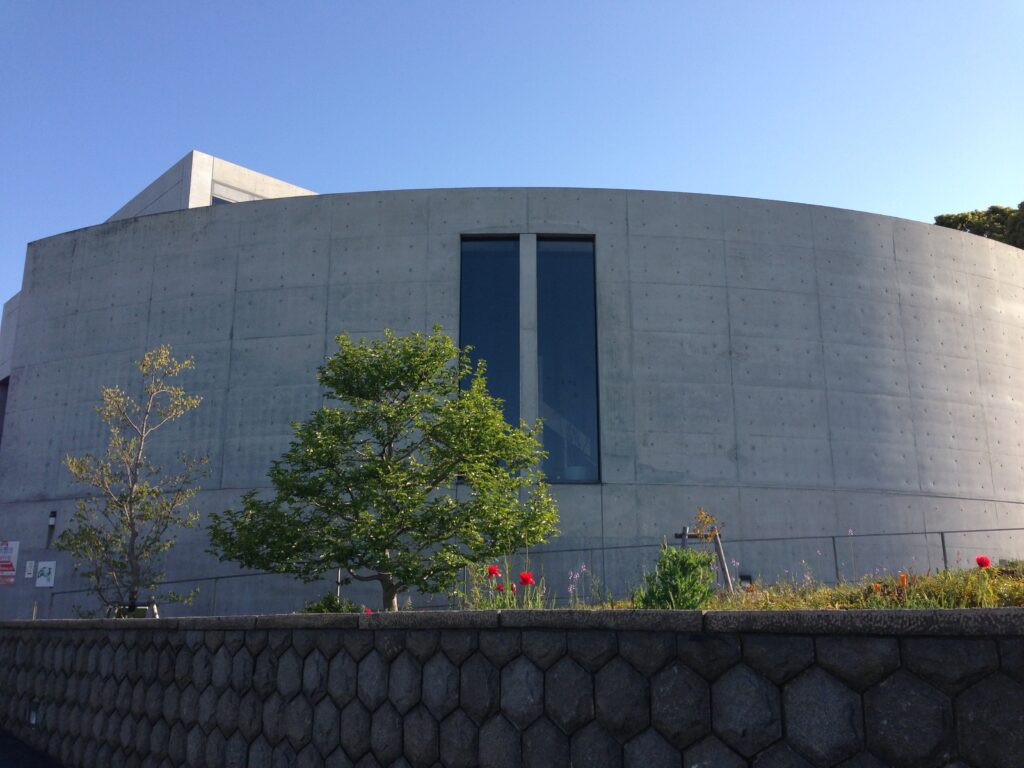
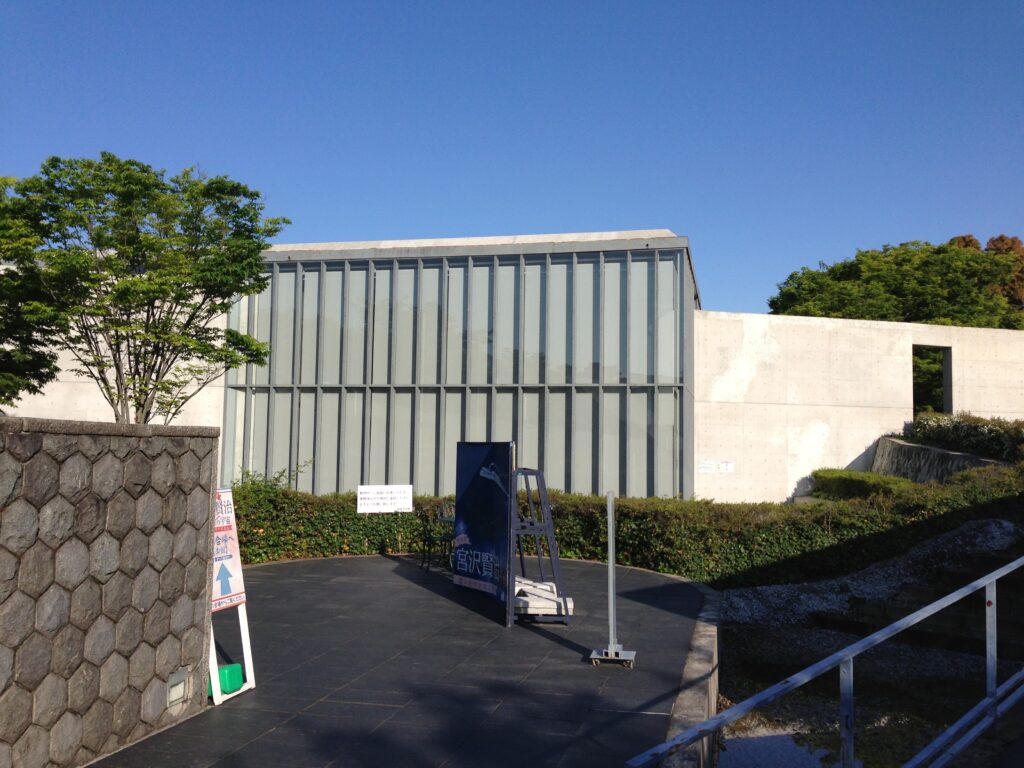
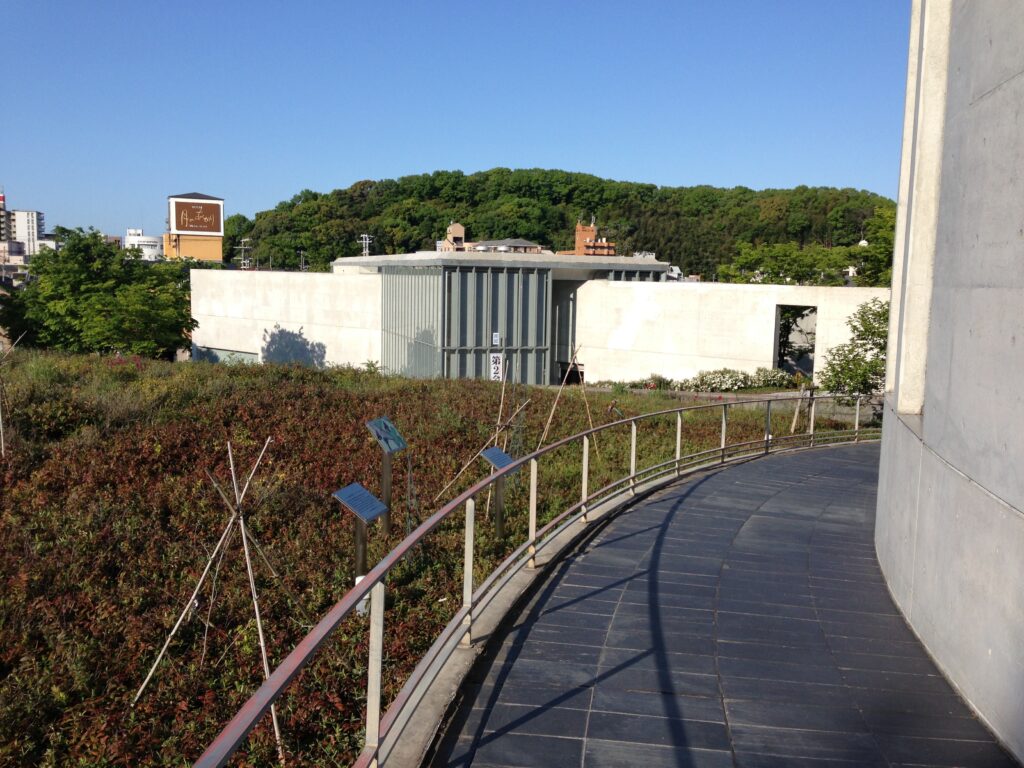
建物へ近づくにつれて、最初に見えていた直線的な構成の中へ大きな曲面が入り込んでくる。
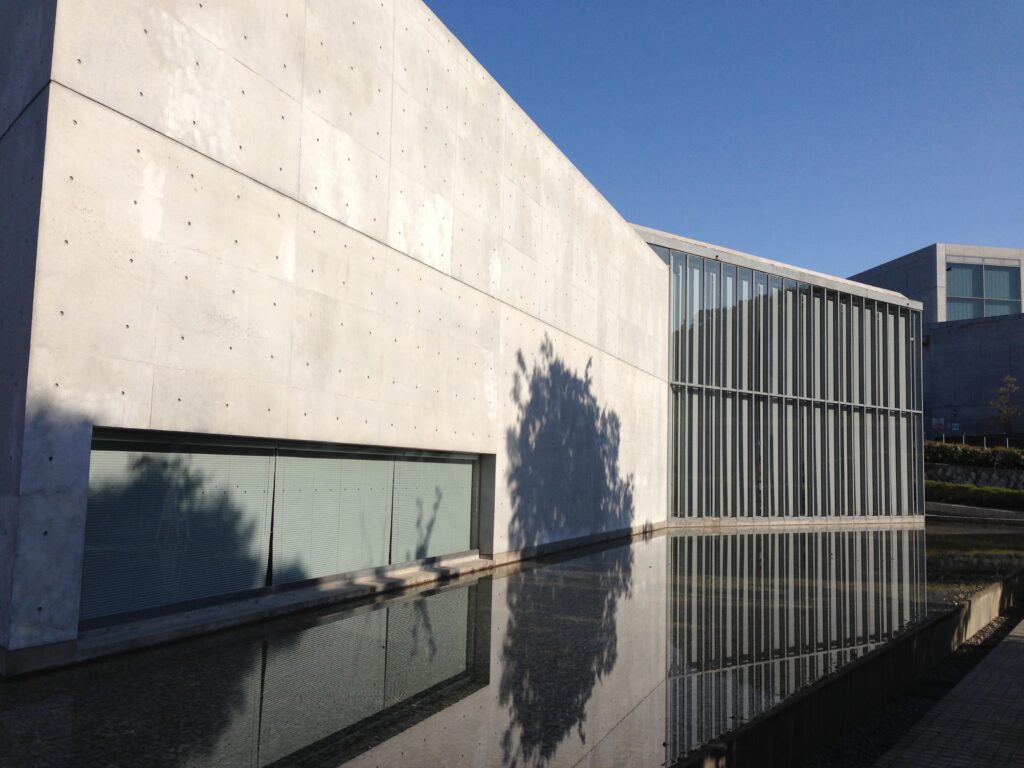
打放しコンクリートという同じ素材を使いながら、一方は鋭い直線を描き、もう一方は滑らかな円弧を描く。素材が統一されているからこそ、形の違いがより鮮明に感じられる。
安藤建築というと直線的な壁や箱を思い浮かべることも多いが、姫路文学館では曲線が建築全体の動きに大きな役割を果たしている。
As I moved closer, a large curved surface began to emerge within what had initially appeared to be a predominantly linear composition.
The same exposed concrete forms both sharp straight lines and smooth arcs.
Because the material remains consistent, the contrast between these geometries becomes even more pronounced.
Tadao Ando’s architecture is often associated with straight walls and rectangular volumes, but at the Himeji City Museum of Literature, curves play a major role in generating movement throughout the building.
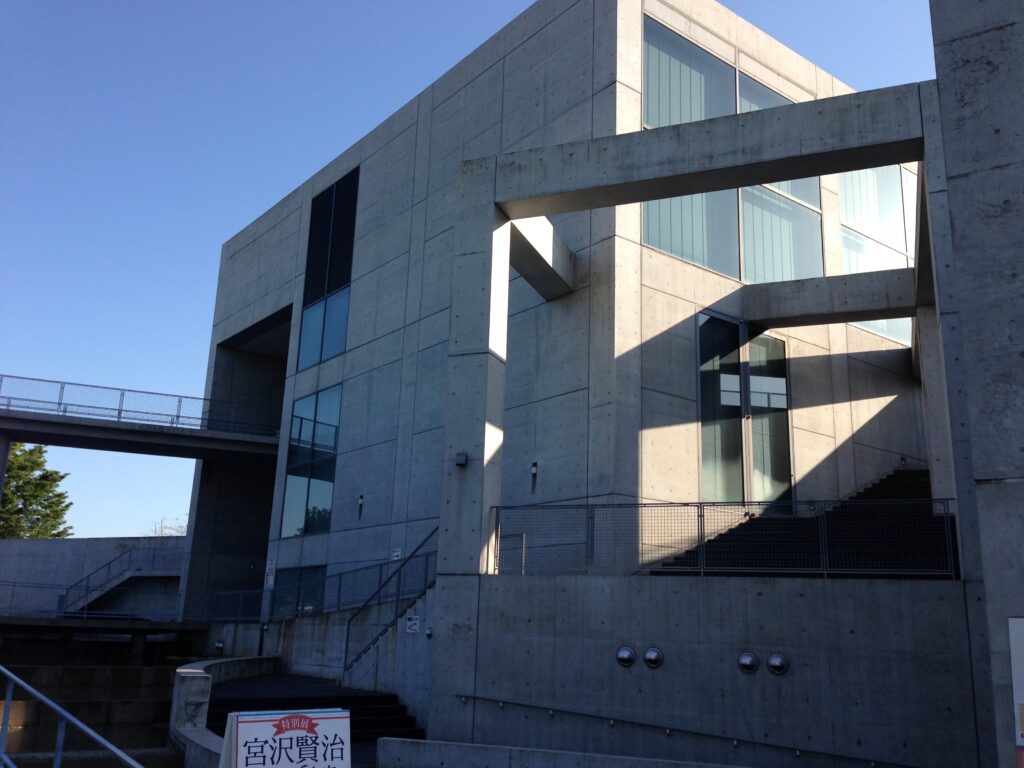
さらに歩くと、壁、円筒、床、ブリッジが立体的に交差し始める。
どこまでが一つの建物で、どこから別のボリュームが始まるのか、簡単には読み取れない。
しかし混乱するというより、その複雑さによって「もう少し先まで歩いてみたい」という感覚が生まれる。建築を見るというより、幾何学の中を身体ごと移動しているような感覚だった。
Walking farther, walls, cylindrical forms, floors, and bridges begin to intersect three-dimensionally.
It is not immediately obvious where one volume ends and another begins.
Yet rather than creating confusion, this complexity produces a desire to keep moving and discover what lies ahead.
It felt less like looking at an architectural object and more like physically moving through a composition of geometry.
4.水面によって広がるコンクリートの風景
A Concrete Landscape Expanded by Water
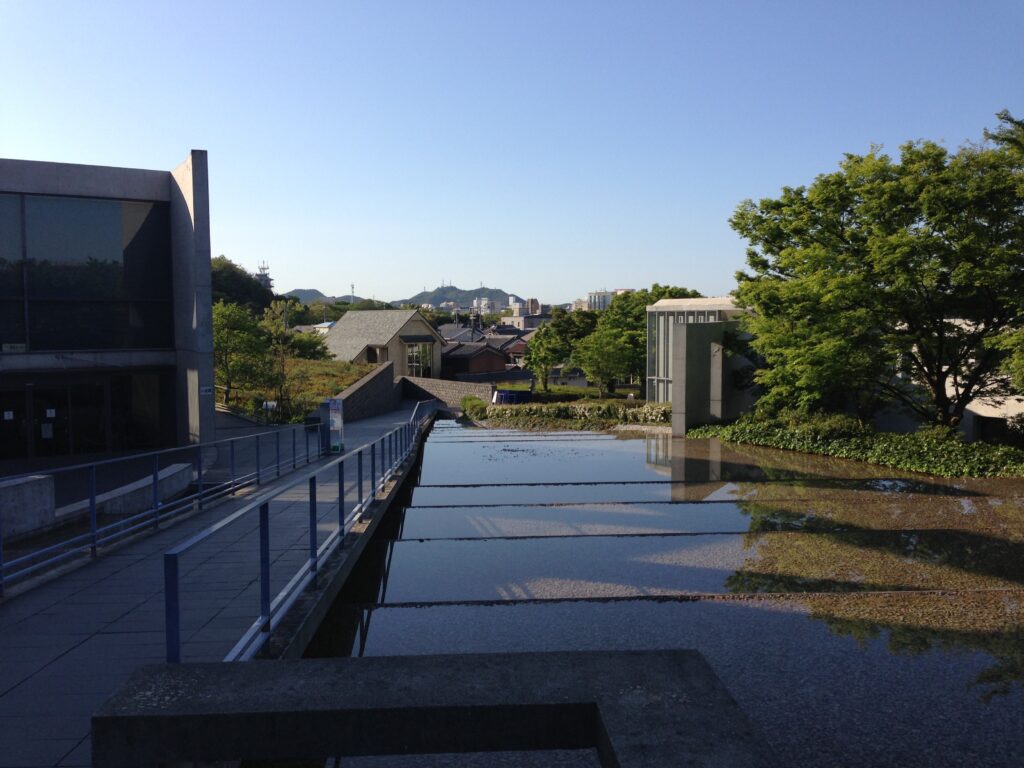
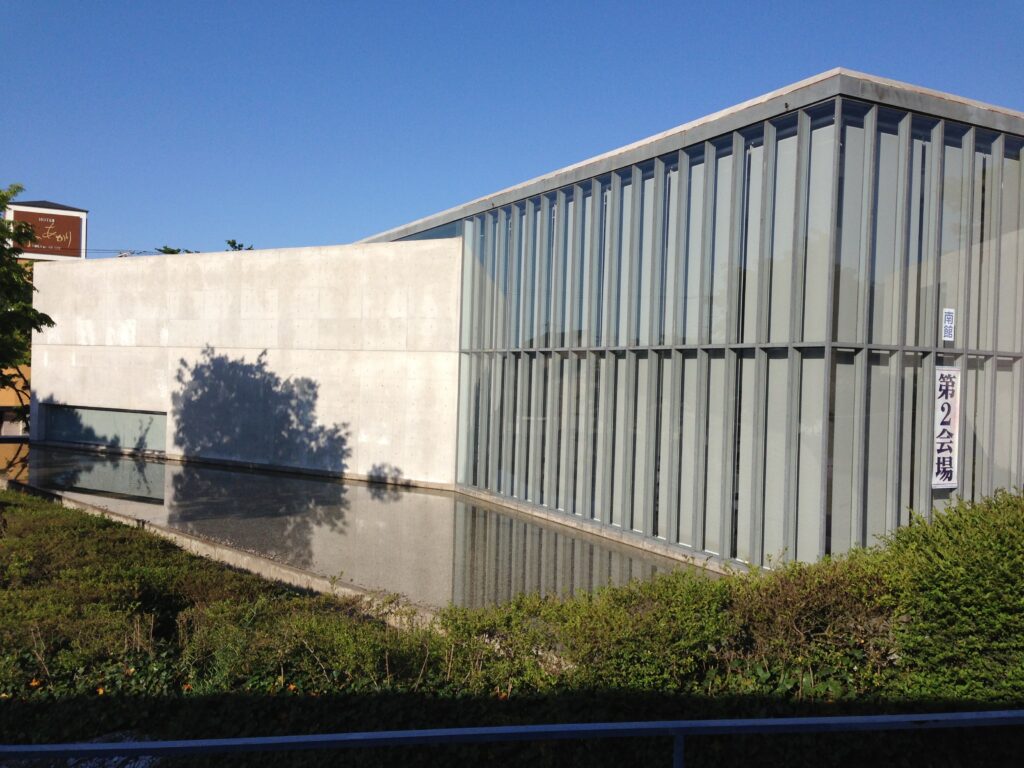
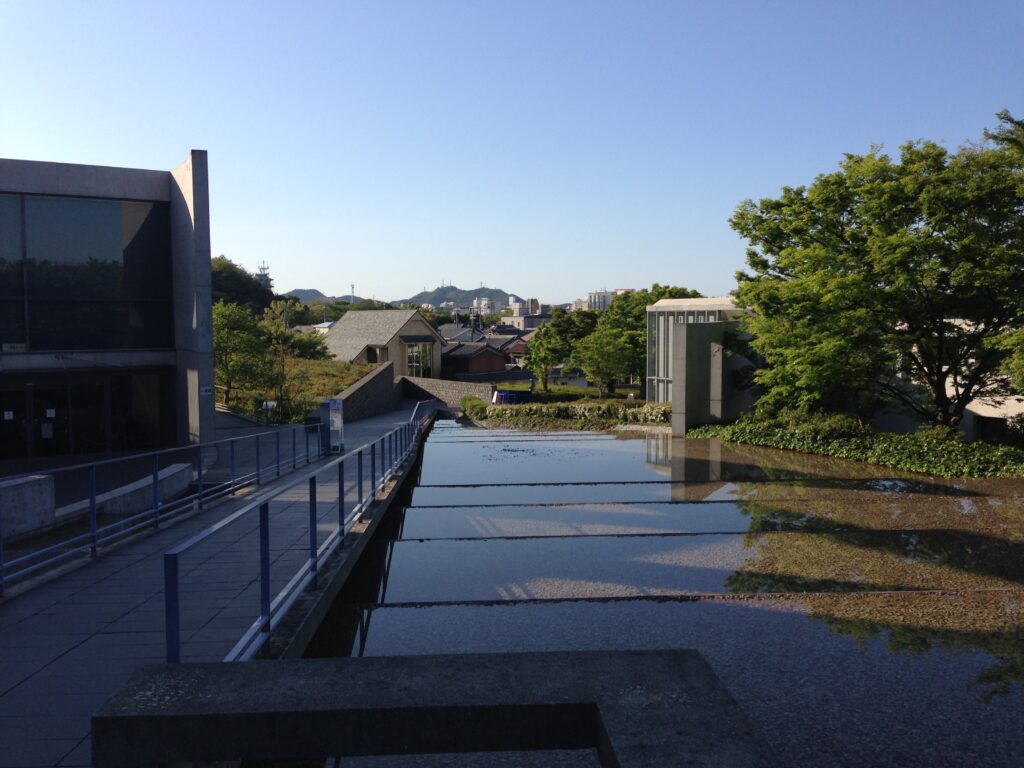
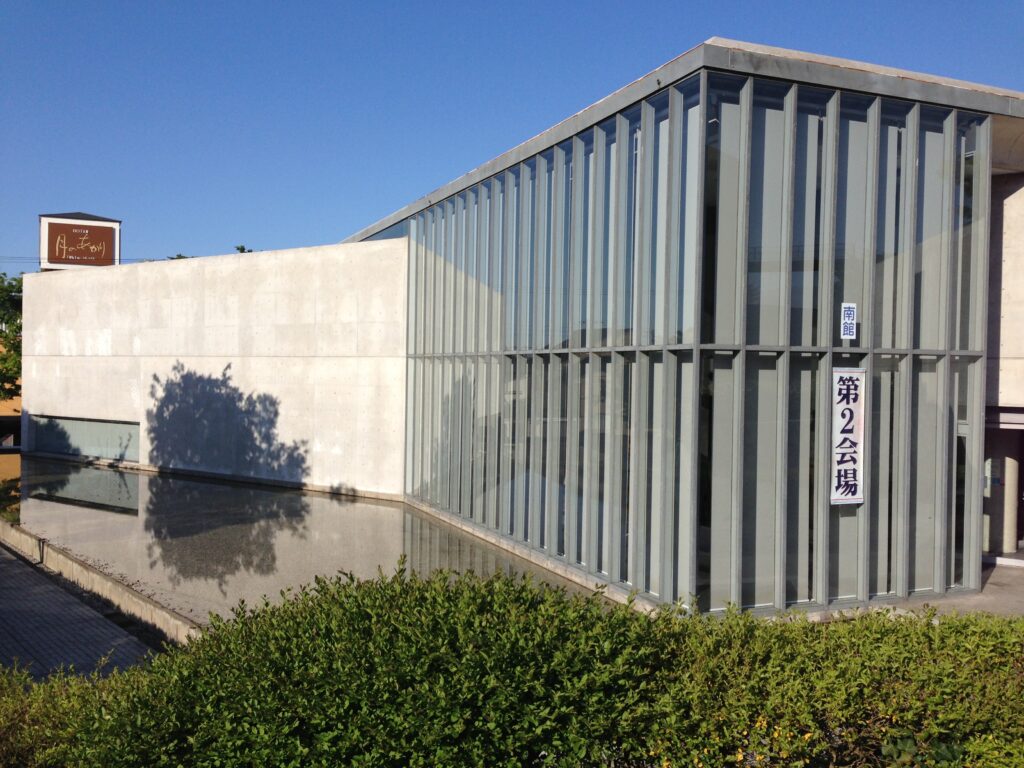
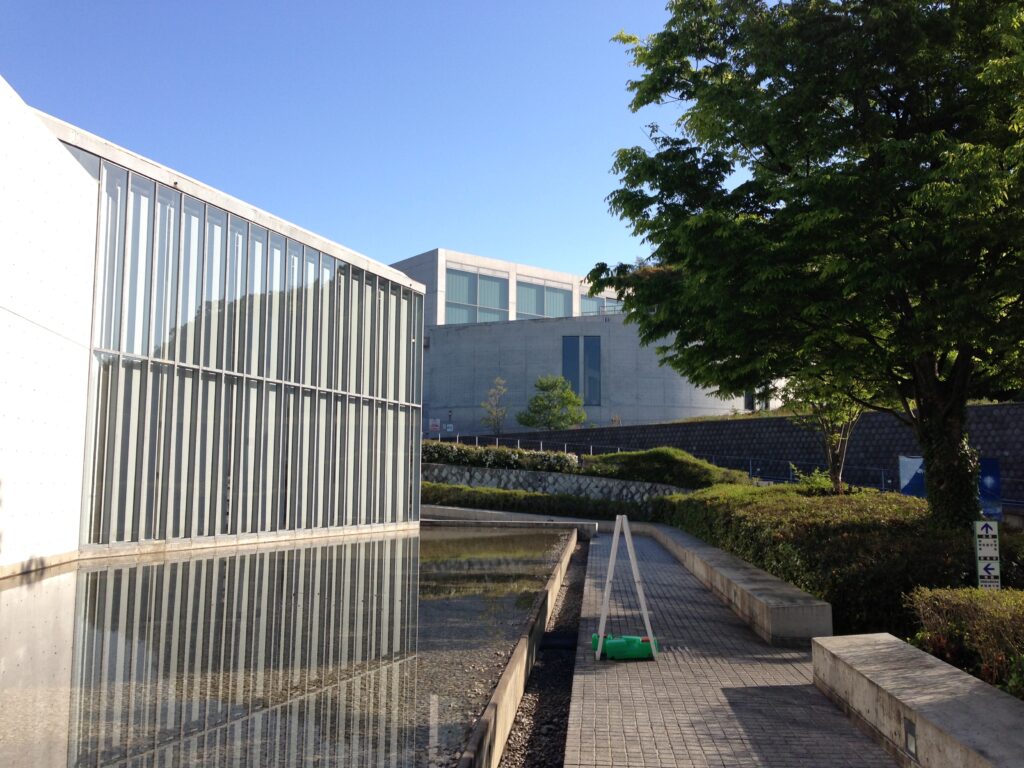
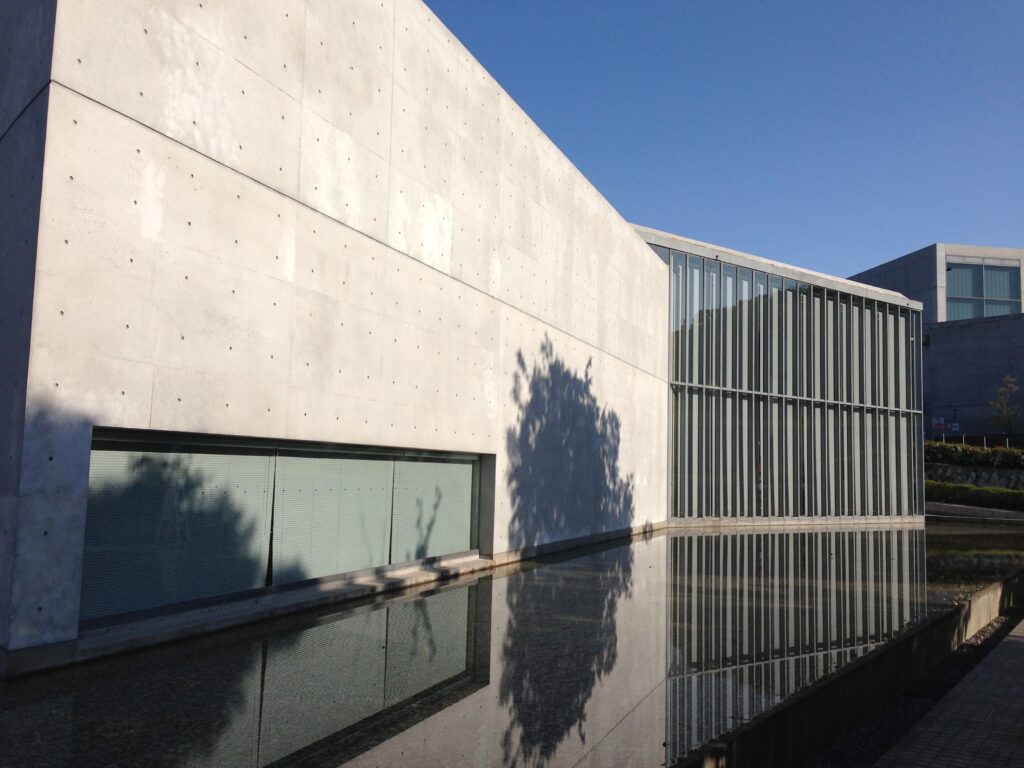
姫路文学館で印象的なのが、建築の間に設けられた水盤だ。
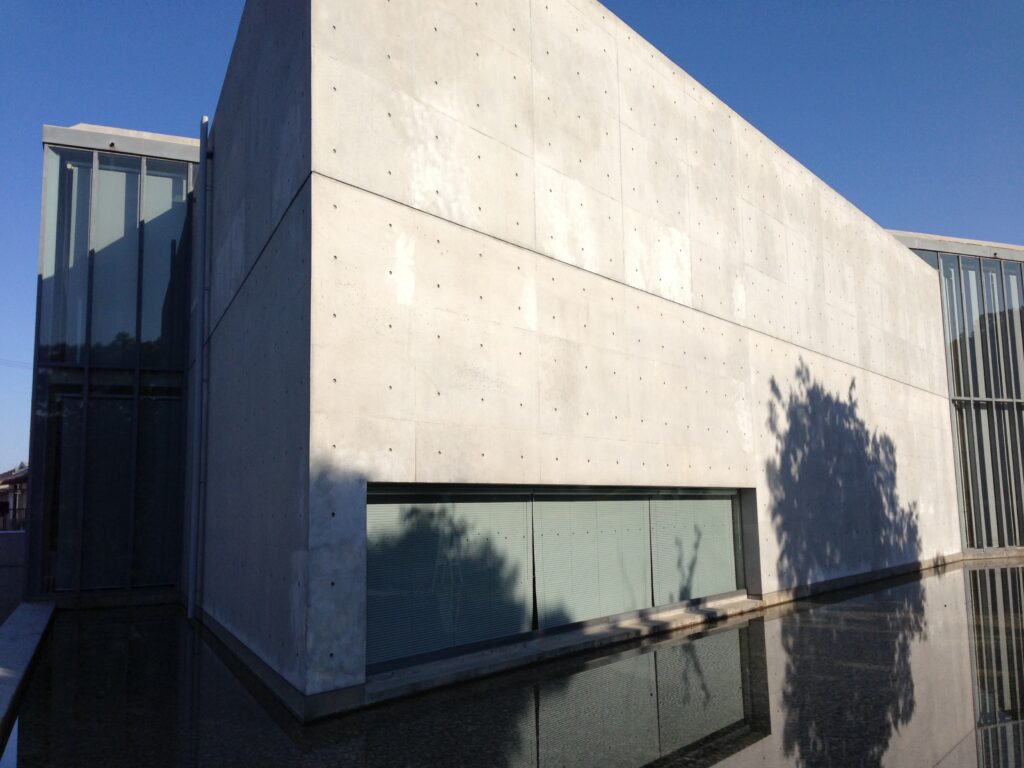
重量感のあるコンクリートの壁に対して、水面は水平に静かに広がり、建築にまったく異なる表情を与えている。
壁、水、空という少ない要素で構成された風景は極めて抽象的だが、その中に周囲の自然や光が入り込むことで、時間によって表情を変えていく。
コンクリートだけを見ていたときには感じなかった奥行きが、水が加わることで一気に広がっていくように感じた。
One of the most memorable elements of the Himeji City Museum of Literature is the water integrated into its exterior spaces.
Against the weight of the concrete walls, the horizontal surface of the water introduces an entirely different character. Wall, water, and sky form an almost abstract landscape, yet reflections of light and surrounding nature continually change its appearance.
The addition of water seems to extend the depth of a space that might otherwise be dominated by the solidity of concrete.
5.空中を横切る一本のブリッジ
A Bridge Suspended in the Air
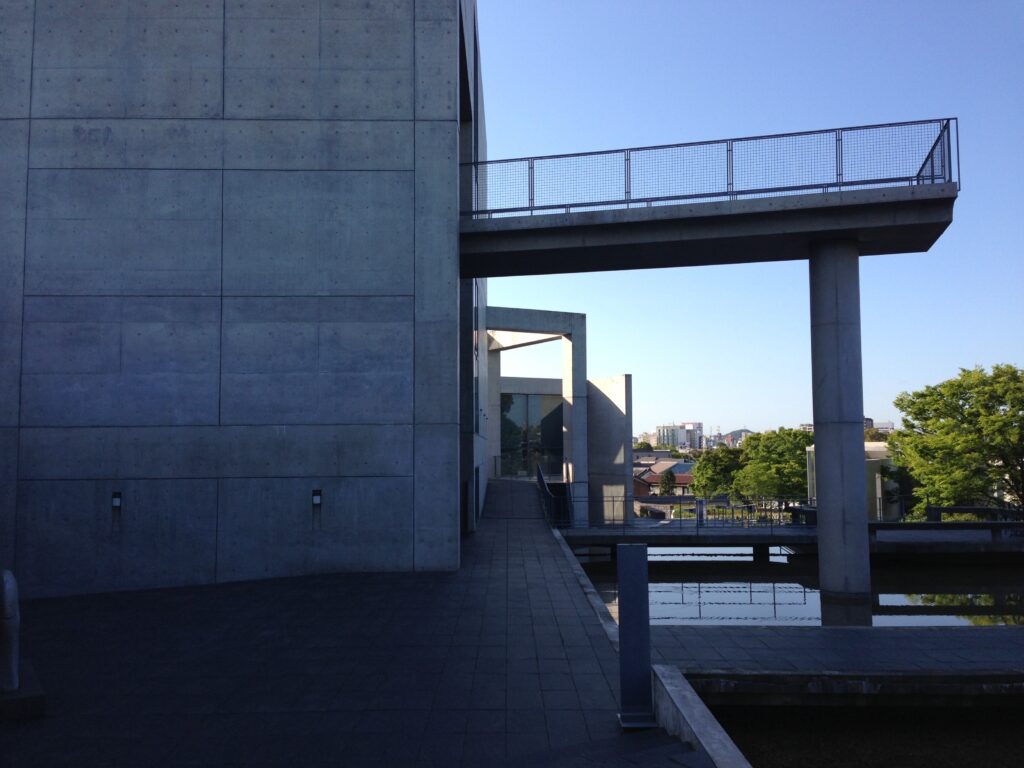
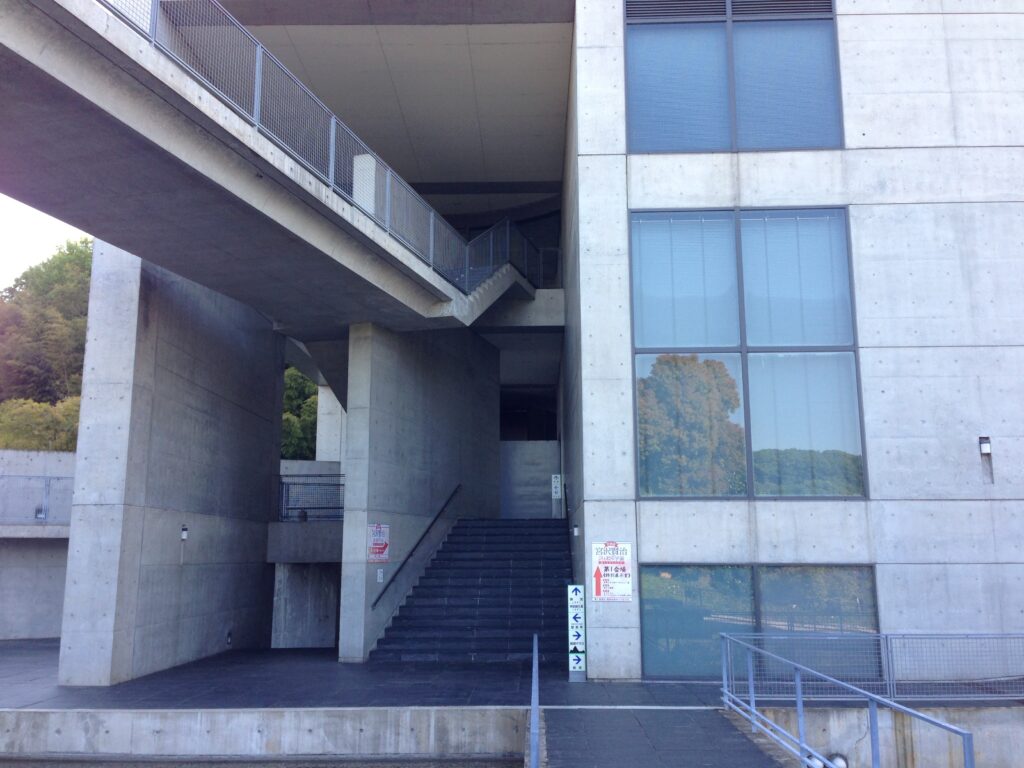
巨大なコンクリートのボリュームの間を、細いブリッジが空中へ伸びている。
重い壁と軽やかな水平線。その対比が姫路文学館の風景に強い緊張感を生み出している。
ブリッジは単なる移動のための設備ではなく、建築を別の高さから見るための装置にもなっている。
地上から見上げた建築と、高い位置から見渡す建築。同じ場所でも視点の高さが変わるだけで、空間の関係はまったく違って見える。
A slender bridge stretches through the air between massive concrete volumes.
The contrast between the heavy walls and this light horizontal line creates a strong sense of tension within the composition.
The bridge is more than a means of circulation; it also becomes a device for seeing the architecture from another height.
A building seen from the ground and the same building experienced from an elevated position can appear completely different.
By changing the height of the body, the architecture changes with it.
6.曲面に沿って身体が動かされる
Following the Curve
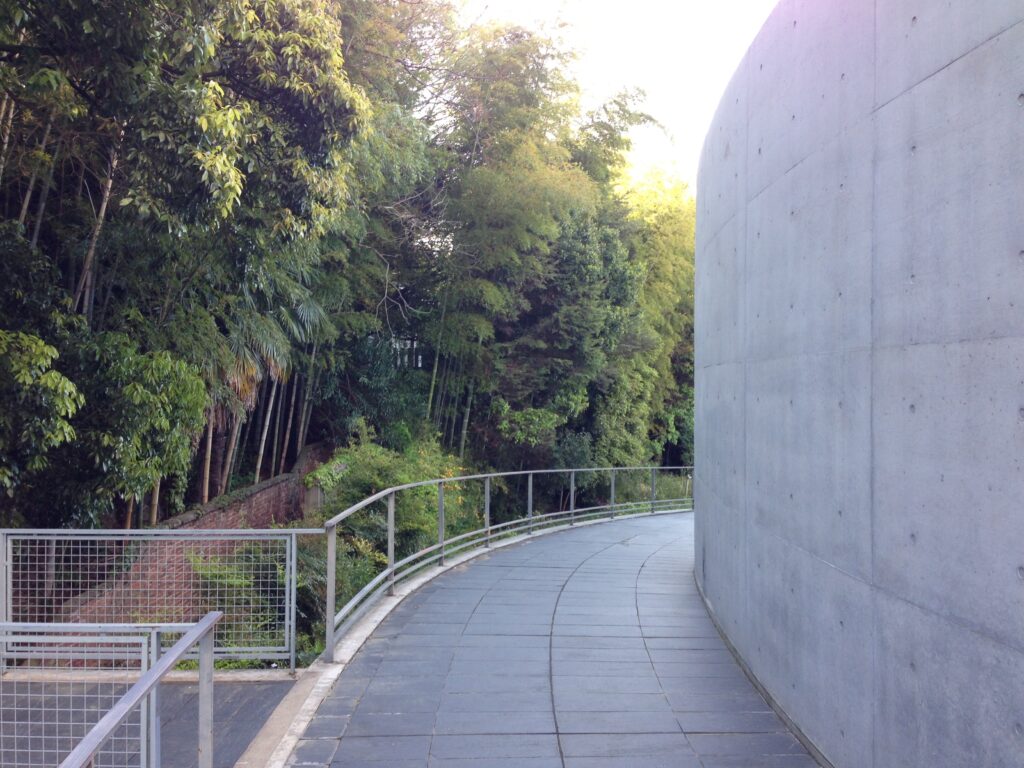
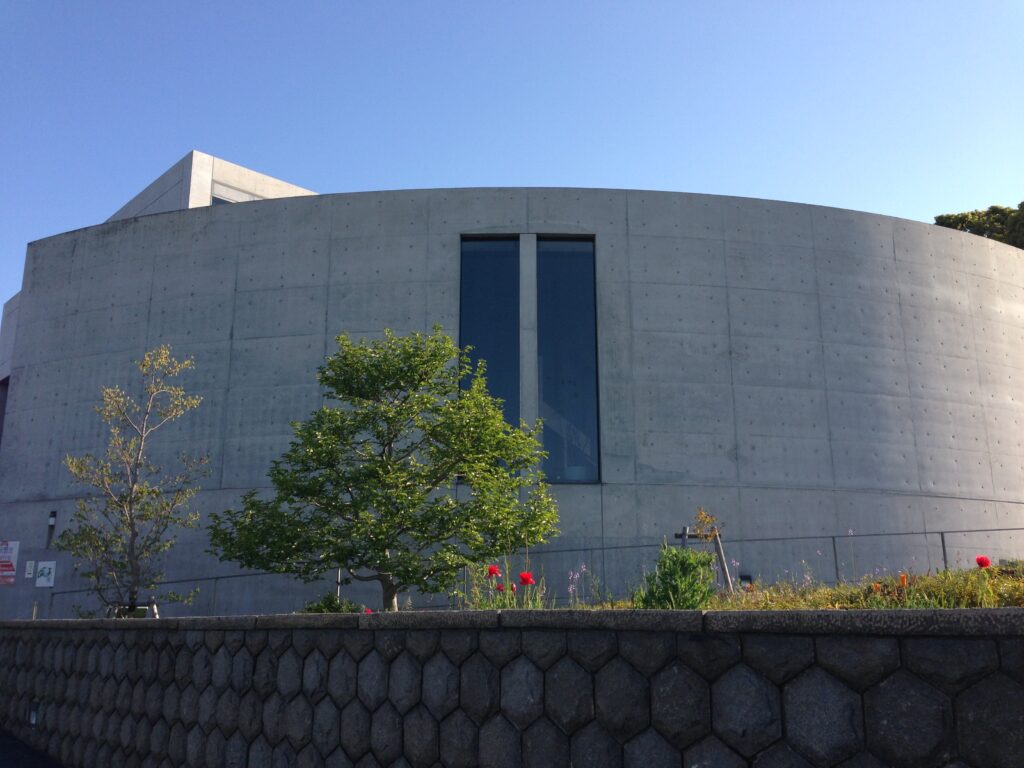
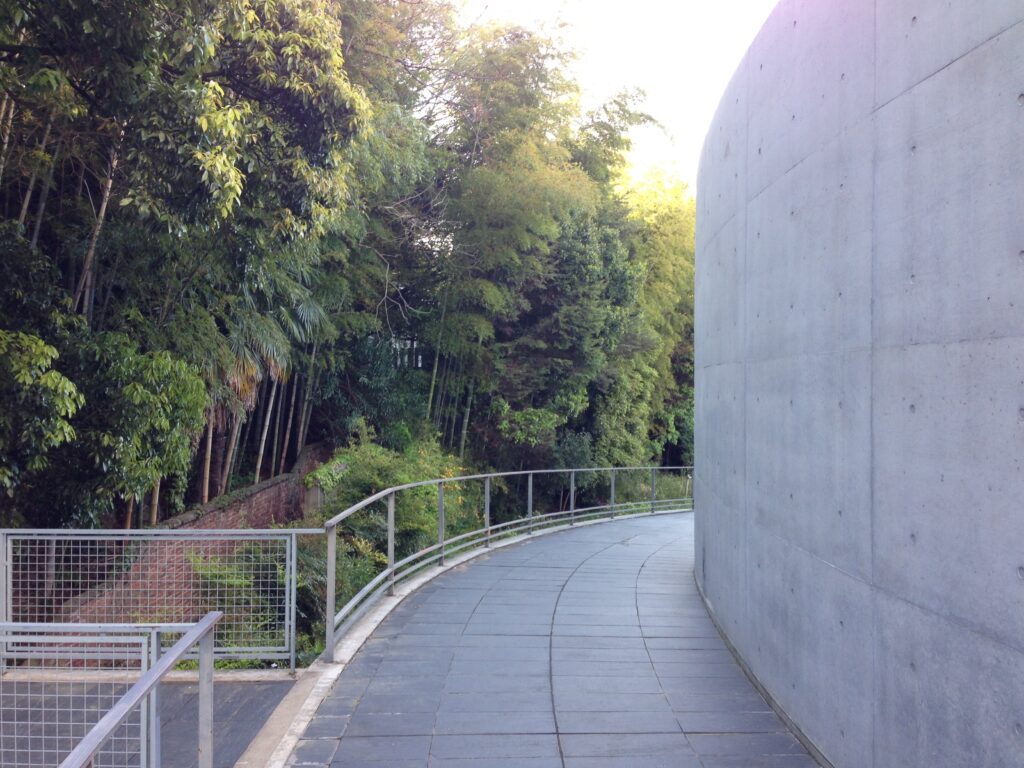
曲面のコンクリート壁に沿って歩いていくと、自分の進む方向が建築によって自然に決められていくことに気づく。
直線の通路ならその先を予測できるが、曲面の先に何があるのかは見えない。
そのため、一歩進むごとに新しい風景が少しずつ現れる。
建築を一度に見せるのではなく、身体の動きに合わせて断片的に見せていく。この「見えない先へ歩かせる」感覚が、姫路文学館を体験する面白さの一つだった。
Walking alongside the curved concrete wall, I became aware of how naturally the architecture determined the direction of my movement.
A straight passage allows us to anticipate what lies ahead, but the destination beyond a curved wall remains hidden. With each step, another fragment of the landscape gradually appears.
Rather than revealing the building all at once, the architecture unfolds according to the movement of the body.
This sense of being drawn toward something not yet visible was one of the most enjoyable aspects of walking through the museum.
7.水面に映る、もう一つの建築
Another Architecture Reflected on the Water
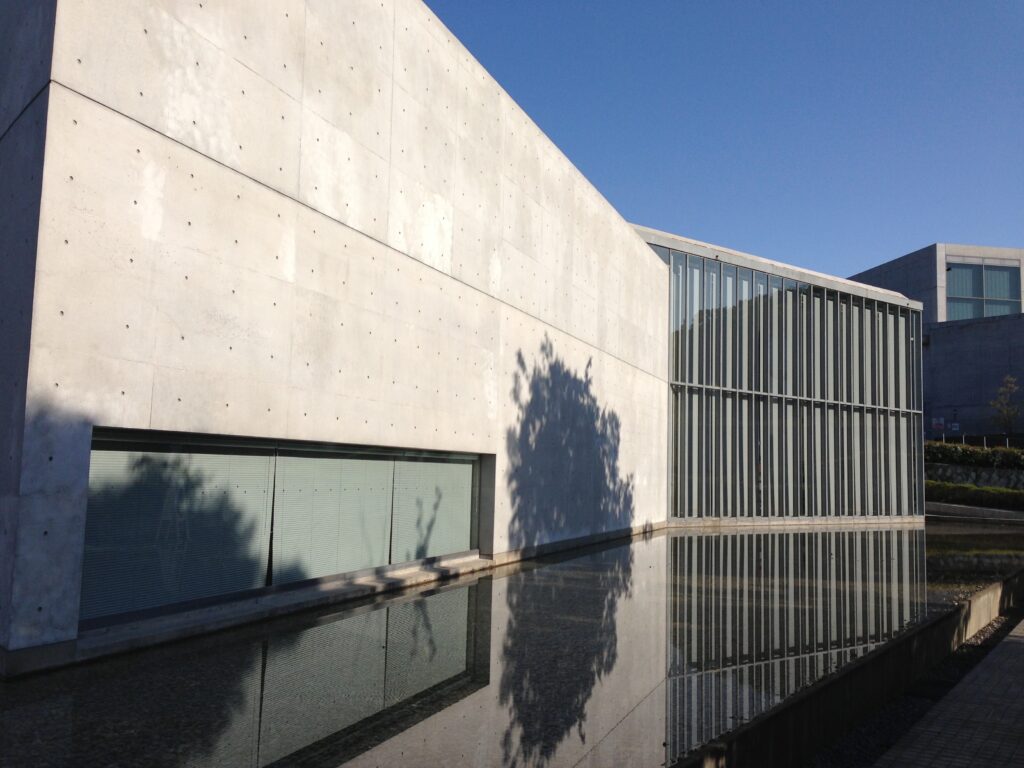
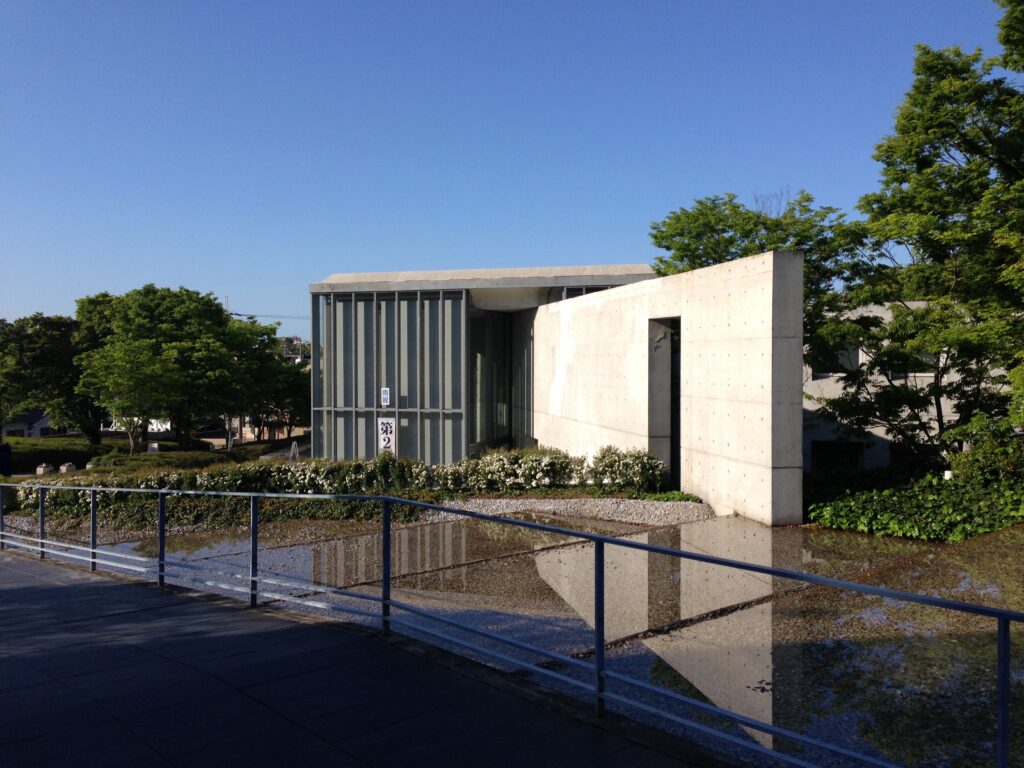
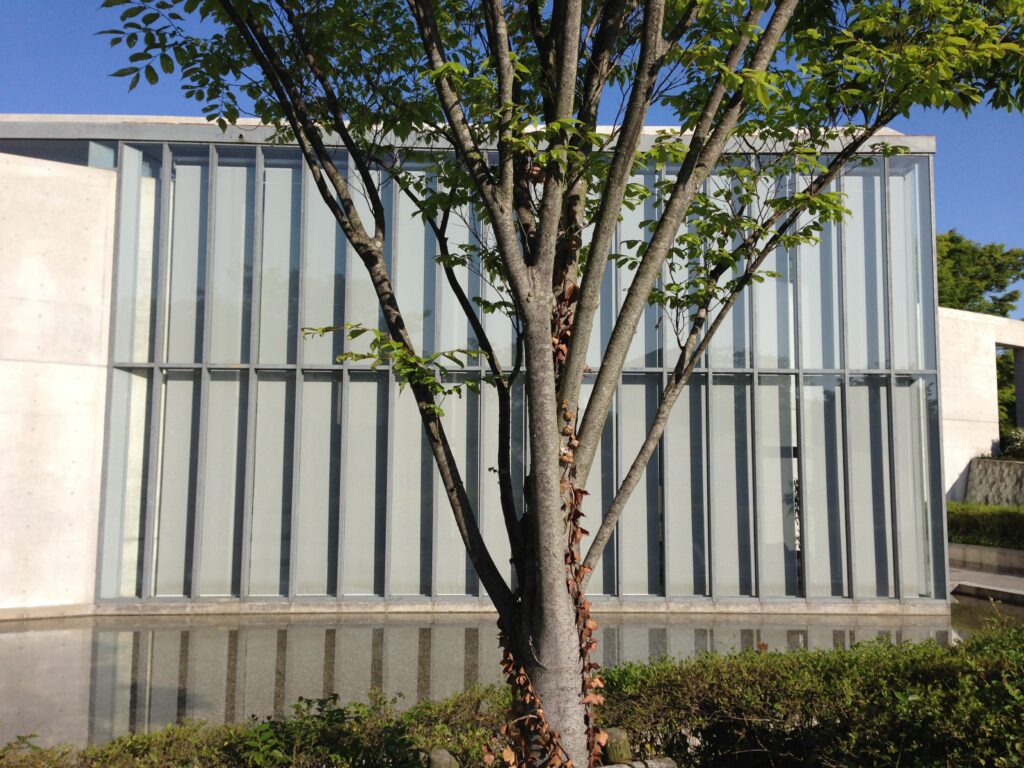
水盤のそばまで来ると、コンクリートの壁や周囲の木々が水面に映り込み、実際の建築とは別の風景が現れる。無機質なコンクリート、揺れる水、そこに映る緑。
同じ建物を見ているはずなのに、水面を介することで建築が少し柔らかく感じられるのが面白い。
安藤建築における水は、建物を飾るためのものではなく、光や自然、時間を建築の中へ取り込むための素材なのだと改めて感じる。
Beside the water, concrete walls and surrounding trees are reflected across the surface, creating another version of the architecture. Exposed concrete, moving water, and reflected greenery coexist within the same view.
Although the building itself remains unchanged, its reflection gives the heavy concrete an unexpectedly soft quality. In Ando’s architecture, water rarely feels like decoration.
Instead, it becomes a material for bringing light, nature, and the passage of time into the architectural experience.
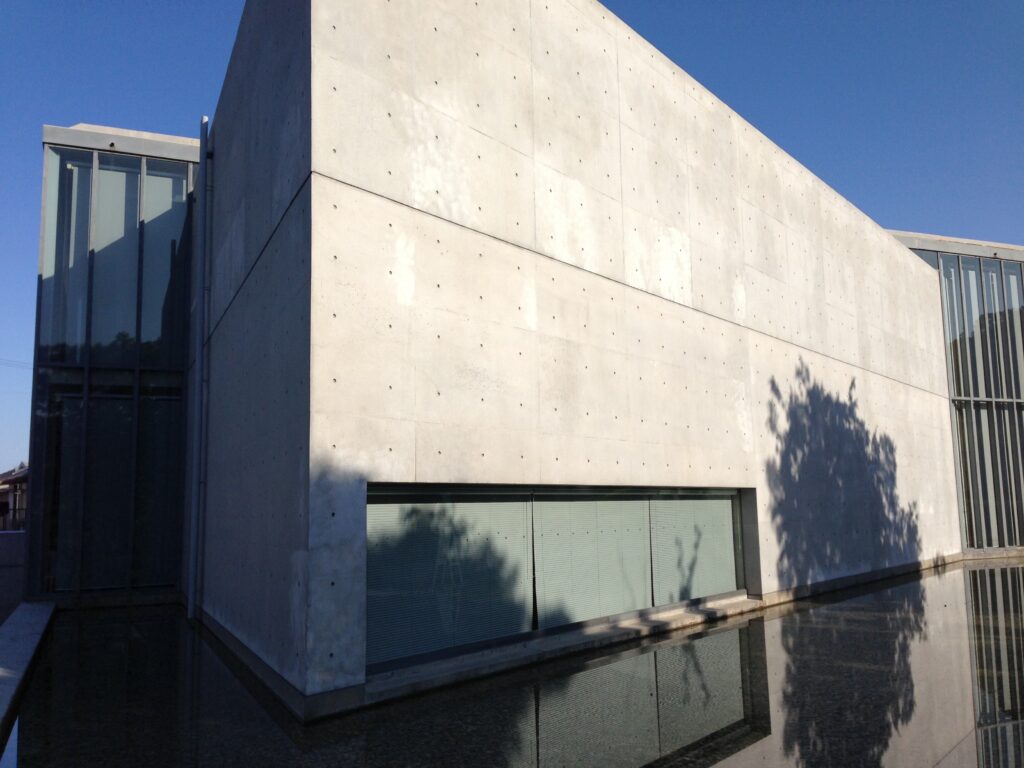
見る位置を少し変えるだけで、水面に映る壁の形も大きく変化する。
実体としての建築と反射された建築が重なり、どこまでが現実の形なのか一瞬分からなくなる。
巨大で重いはずのコンクリートが、水の上では光とともに揺らいでいる。
姫路文学館の幾何学的な強さと、水が生み出す不確かさ。その対比が、この場所の風景をより印象深いものにしていた。
A slight change in viewpoint transforms the reflections again.
The physical architecture and its mirrored image overlap, briefly making it difficult to distinguish where one ends and the other begins.
Concrete that should feel massive and immovable appears to shift with the light on the surface of the water.
The contrast between the precision of the museum’s geometry and the instability of its reflection makes this one of the most memorable scenes in the building.
8.姫路城と向き合う現代建築
Contemporary Architecture in Dialogue with Himeji Castle
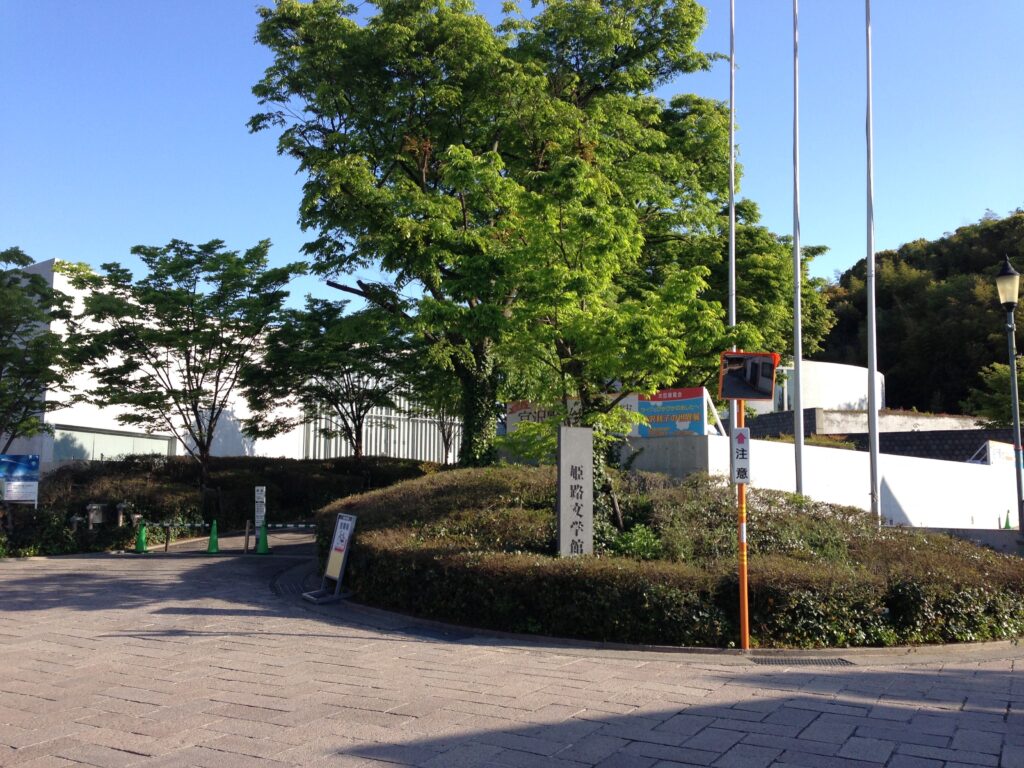
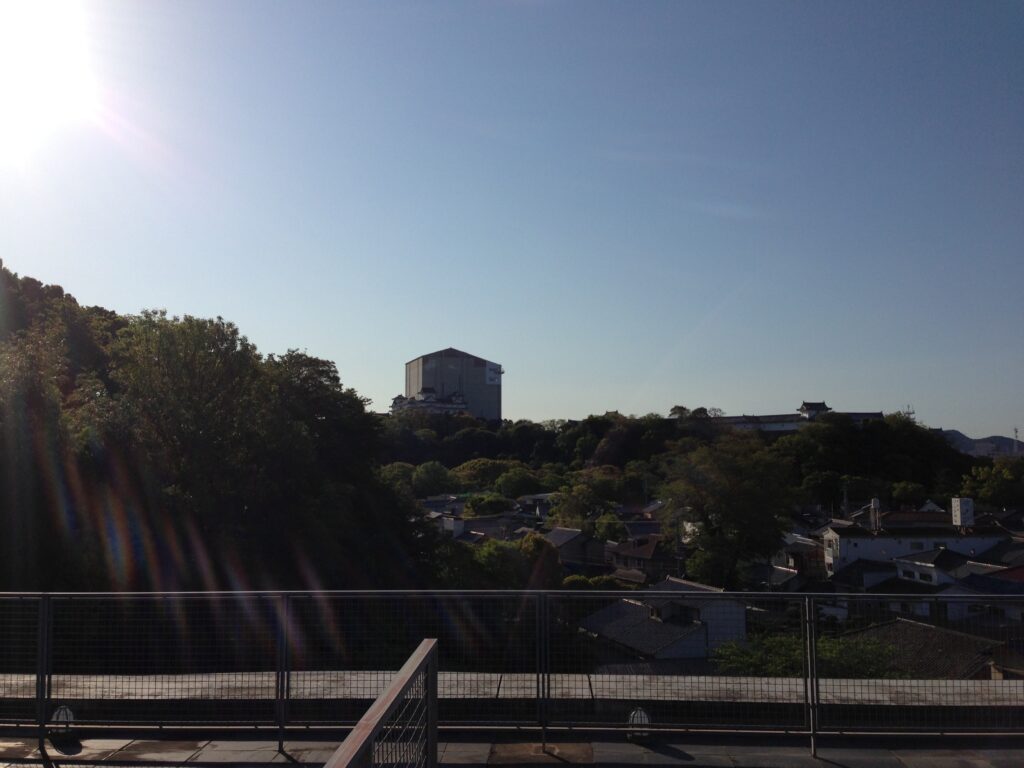
姫路文学館は、世界文化遺産・国宝姫路城の北西に位置している。
歴史的な城郭のすぐ近くに、これほど抽象的なコンクリート建築をつくることは、決して簡単なことではなかったはずだ。
しかし安藤忠雄は姫路城の形を模倣するのではなく、現代の素材と幾何学によってまったく異なる建築をつくりながら、敷地を歩く中で城や周囲の歴史的環境を意識させる。過去の建築に似せるのではなく、異なる時代の建築として向き合う。
その距離感も姫路文学館の重要な魅力だと思う。
The Himeji City Museum of Literature stands northwest of Himeji Castle, one of Japan’s most important historic landmarks.
Designing such abstract contemporary architecture within this historic context could not have been a simple task.
Ando does not attempt to imitate the forms of the castle.
Instead, he creates an entirely different architecture through contemporary materials and geometry, while allowing the surrounding landscape and the experience of moving through the site to maintain an awareness of Himeji’s history.
Rather than reproducing the architecture of the past, the museum establishes a relationship with it from the perspective of its own time.
9.重なり合う壁がつくる奥行き
Layers of Walls Creating Depth
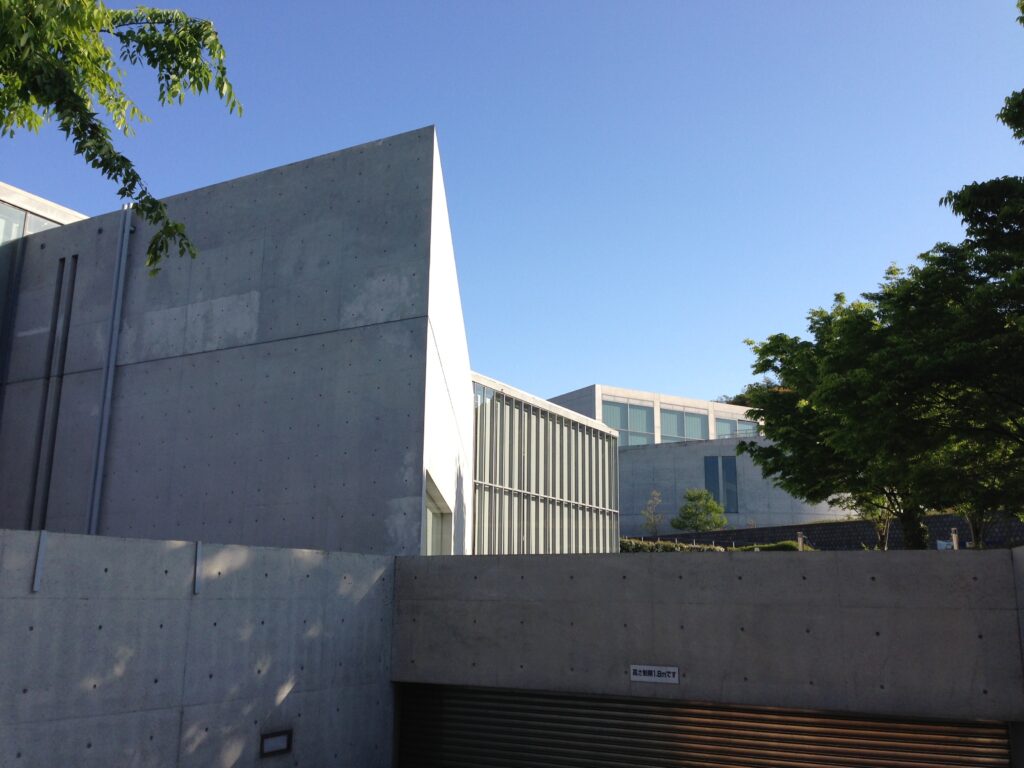
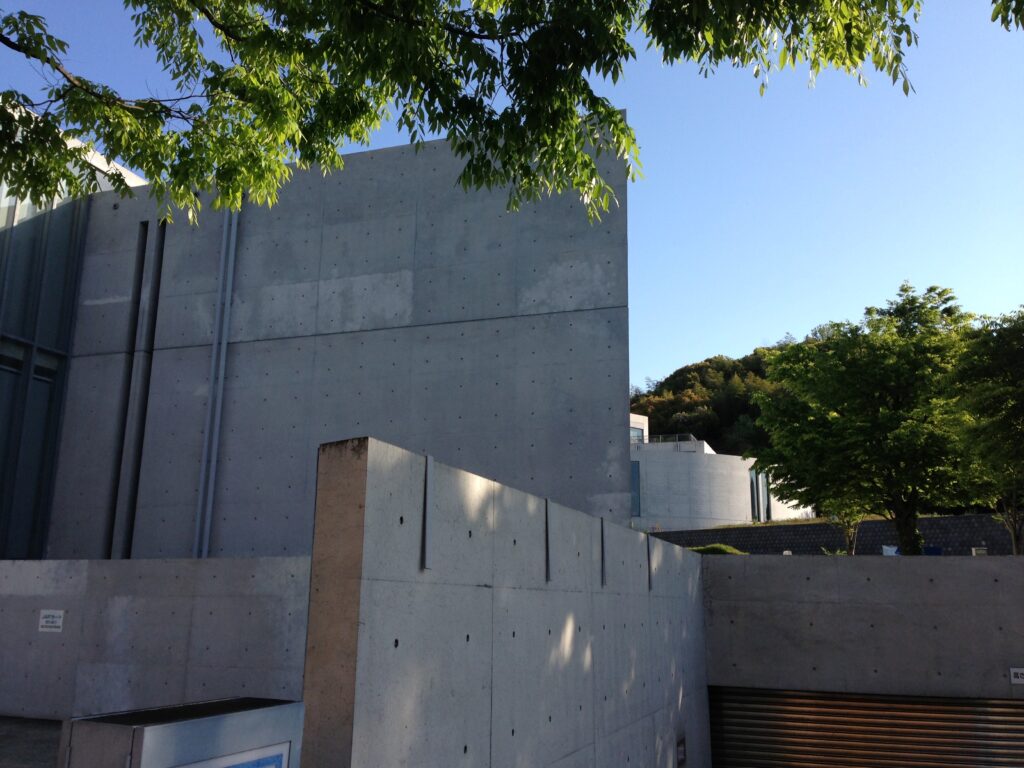
建物を離れながら振り返ると、複数のコンクリート壁が前後に重なり、一枚の巨大な壁としてではなく、いくつもの層として見えてくる。
最初に建物へ近づいたときには理解できなかったそれぞれの形が、実際にその間を歩いた後では少しずつ読み取れるようになっている。
建築を体験する前と後で、同じ外観の見え方が変わる。
この感覚は、姫路文学館を歩いたからこそ得られるものだった。
Looking back at the museum while moving away from it, the concrete walls begin to overlap in layers rather than appearing as a single monumental surface.
Forms that were difficult to understand when I first approached the building became easier to read after I had actually walked between them.
The same exterior can therefore appear different before and after experiencing the architecture.
That change in perception is something that can only really be understood by walking through the Himeji City Museum of Literature.
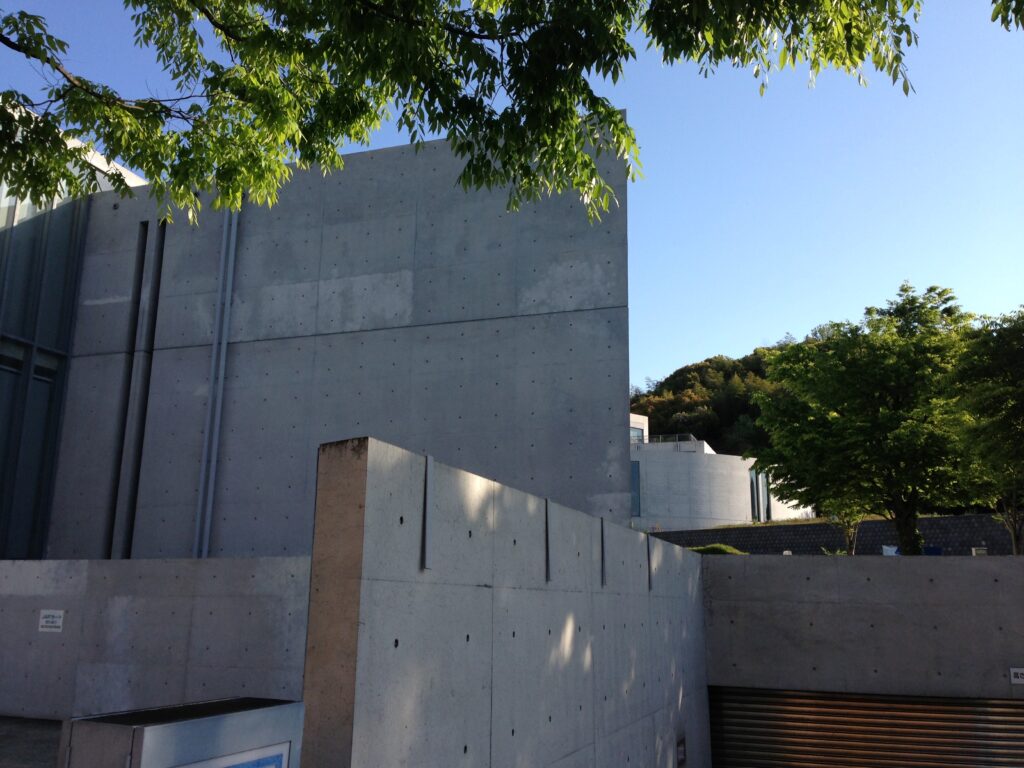
さらに距離を取ると、直線、曲線、円筒、水平線という異なる幾何学が一つの建築として重なっていることが分かる。
それでも全体がばらばらに見えないのは、打放しコンクリートという一つの素材と、敷地を巡る一連の動線によって結び付けられているからなのだろう。
見る場所によって姿を変えながら、最後には一つの建築として記憶に残る。
その複雑さと統一感の両立が印象的だった。
From farther away, straight lines, curves, cylindrical forms, and horizontal elements can all be seen overlapping within a single architectural composition.
Yet the building never feels like a random collection of shapes. Exposed concrete provides a common material language, while the sequence of circulation ties the different geometries together through experience.
The architecture constantly changes according to viewpoint, yet ultimately remains in memory as a coherent whole.
That balance between complexity and unity was one of the strongest impressions I took away from the museum.
My Impression
姫路文学館で最も印象に残ったのは、特定の一つの空間というより、歩くたびに建築の姿が変わっていくことだった。
長い壁に導かれ、曲面に沿って進み、ブリッジを見上げ、水面に映るコンクリートを見る。同じ建築の中にいるのに、数歩移動するだけでまったく違う風景が現れる。
写真だけを見ていると複雑な造形の建物に見えるが、実際に歩いてみると、その複雑さが人を動かすためにつくられていることが分かる。
建築を一枚の完成された姿として見るのではなく、時間をかけて少しずつ理解していく。姫路文学館は、「建築を見ること」と「建築を歩くこと」の違いを強く感じさせてくれた作品だった。
What stayed with me most strongly at the Himeji City Museum of Literature was not one particular room or architectural element, but the way the entire building changed as I walked through it.
I was guided by long walls, followed curves, looked up toward bridges, and watched concrete reflected on the surface of the water.
Although I remained within the same building, a completely different scene appeared after only a few steps.
In photographs, the museum can look like a complex composition of geometric forms.
Walking through it revealed that this complexity is not simply visual—it is designed to make the body move. Rather than understanding the architecture as a single completed image, I gradually discovered it over time.
The Himeji City Museum of Literature made me particularly aware of the difference between looking at architecture and actually walking through it.
Archive Gallery
本文では紹介しきれなかった写真を掲載しています。
建築を歩きながら出会った光や空間、その場の空気を記録したアーカイブです。
Additional photographs from this visit.
A collection of details, perspectives, and moments that complement the main article.