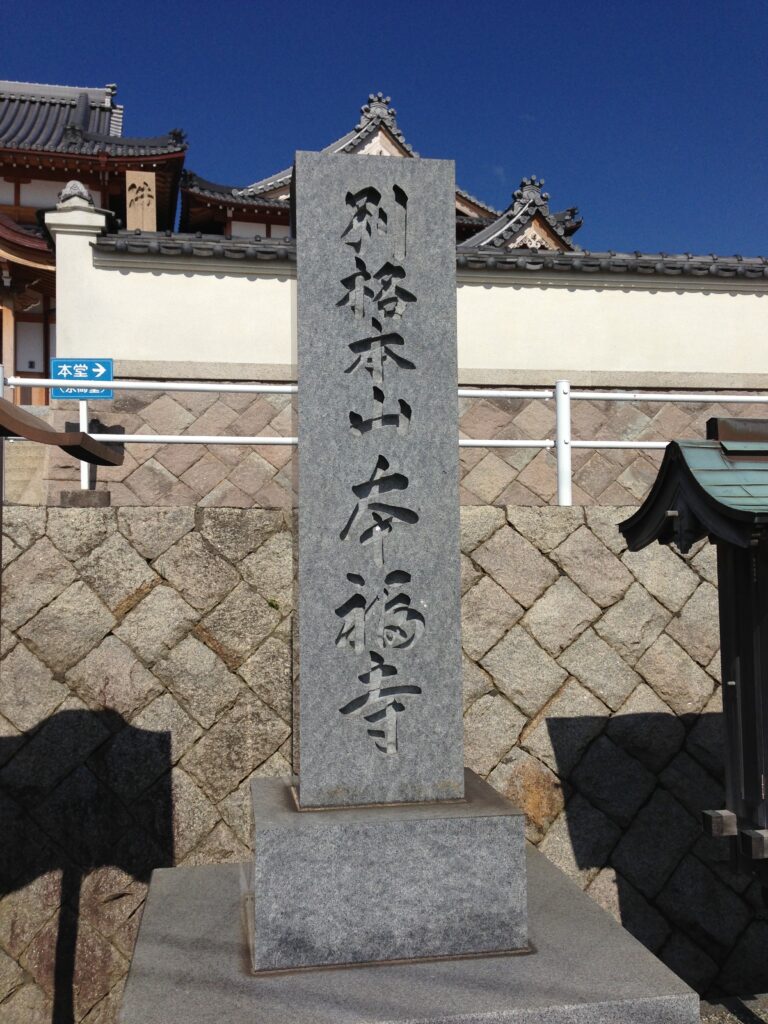
【安藤忠雄建築】本福寺 水御堂|水面の下に広がる、静かな祈りの空間(Honpukuji Temple — The Water Temple|A Quiet Place of Prayer Beneath the Water)
建築概要
- 名称:本福寺 水御堂
- 設計:安藤忠雄
- 所在地:兵庫県淡路市浦
- 竣工:1991年
- 用途:寺院(本堂)
- Name: Honpukuji Temple — The Water Temple
- Architect: Tadao Ando
- Location:Ura, Awaji, Hyogo Prefecture, Japan
- Completed: 1991
- Type:Buddhist temple and main worship hall
建築について
About the Architecture
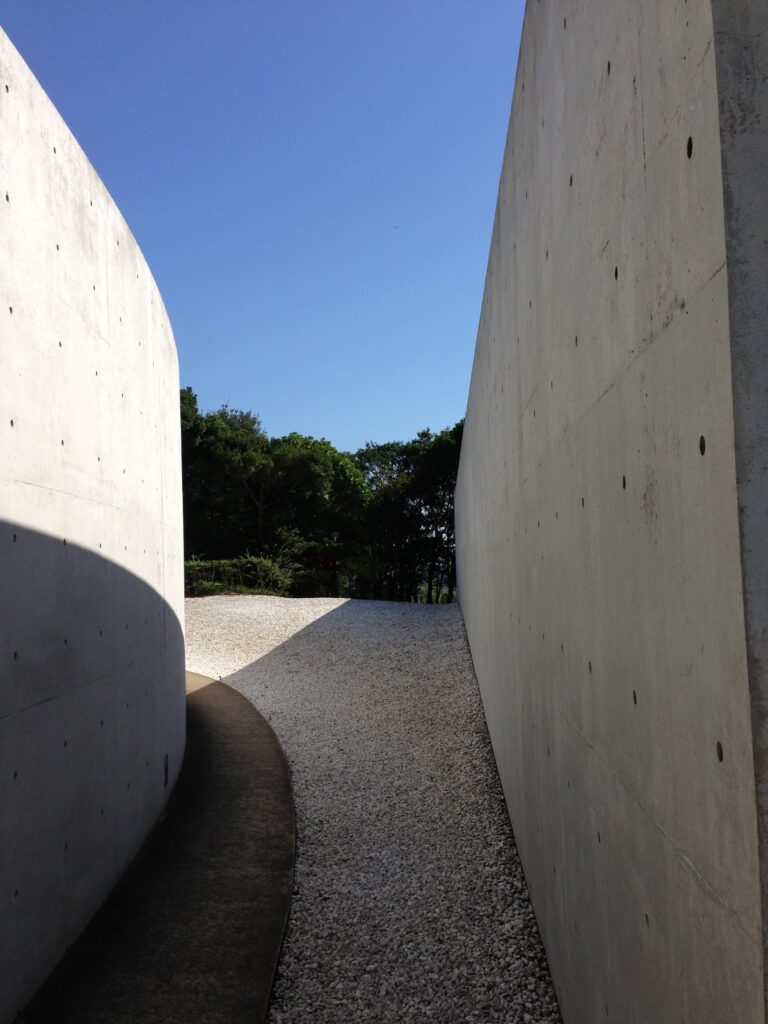
1.白いコンクリートの壁に導かれる
Guided by White Concrete Walls
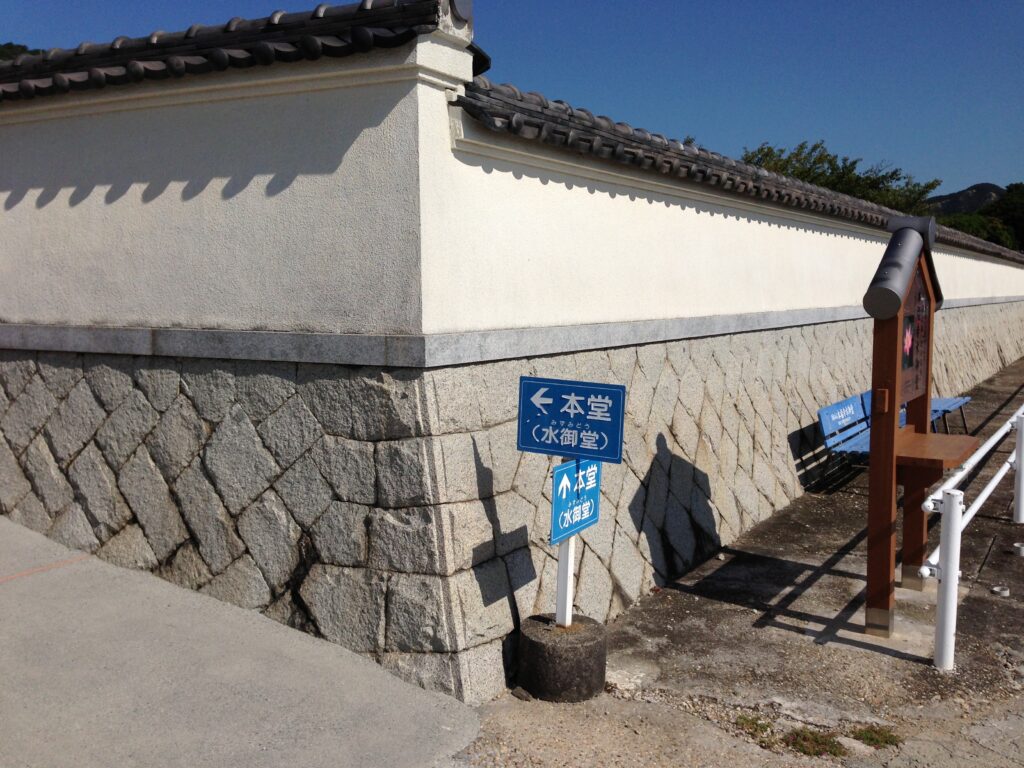
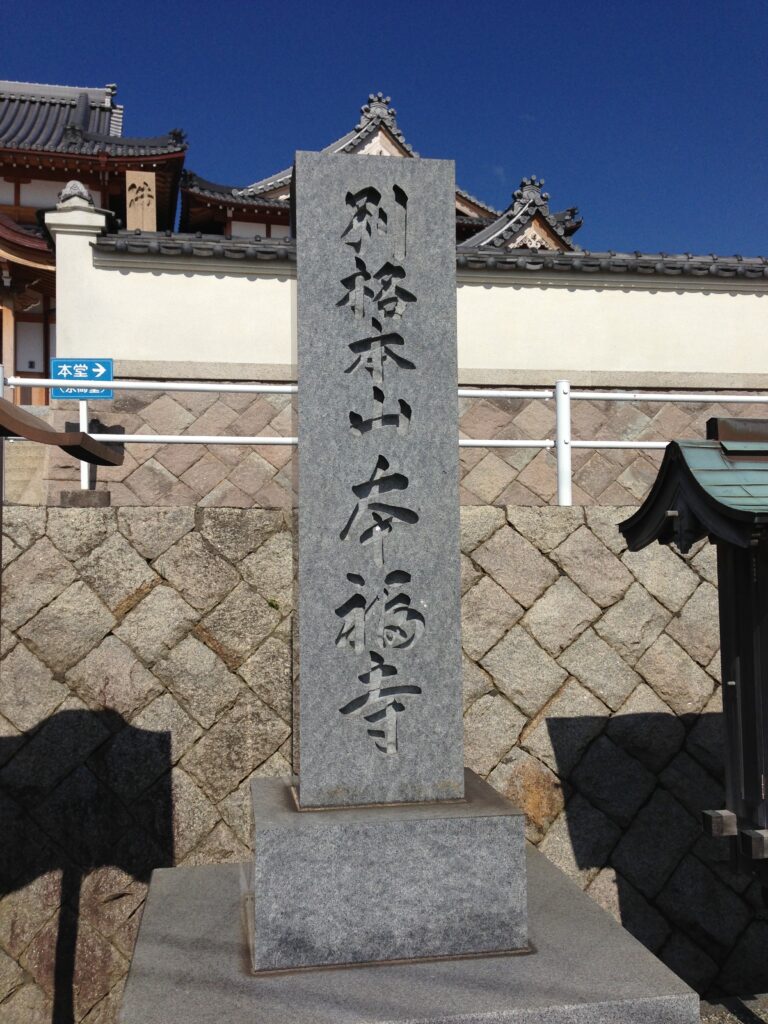
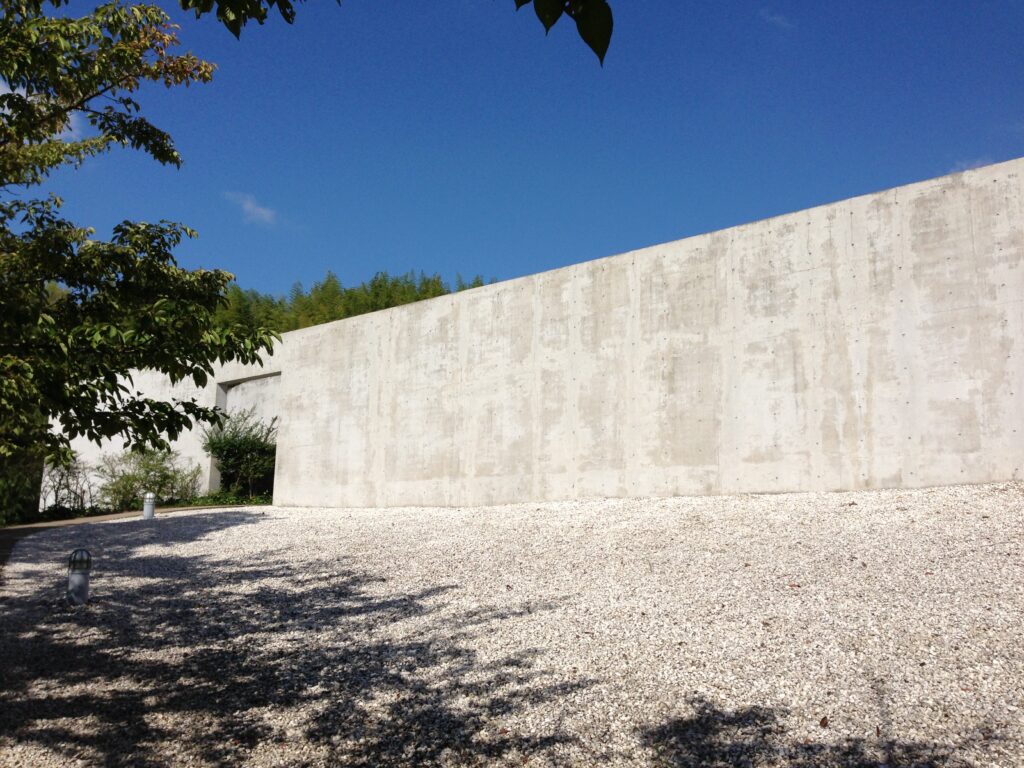
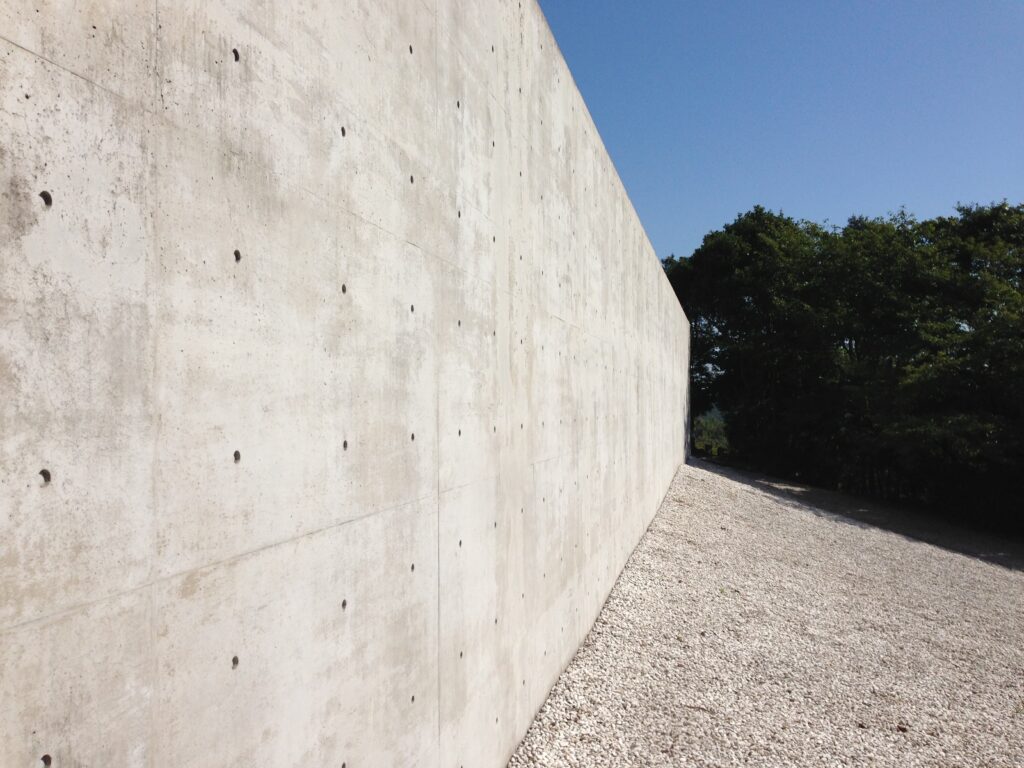
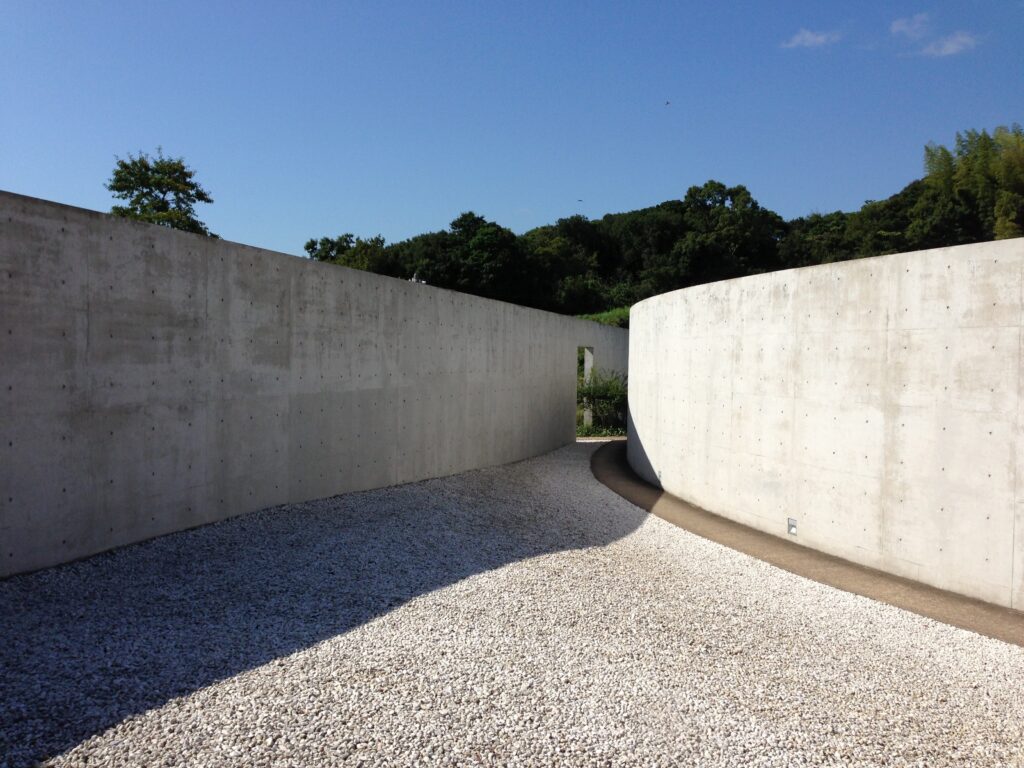
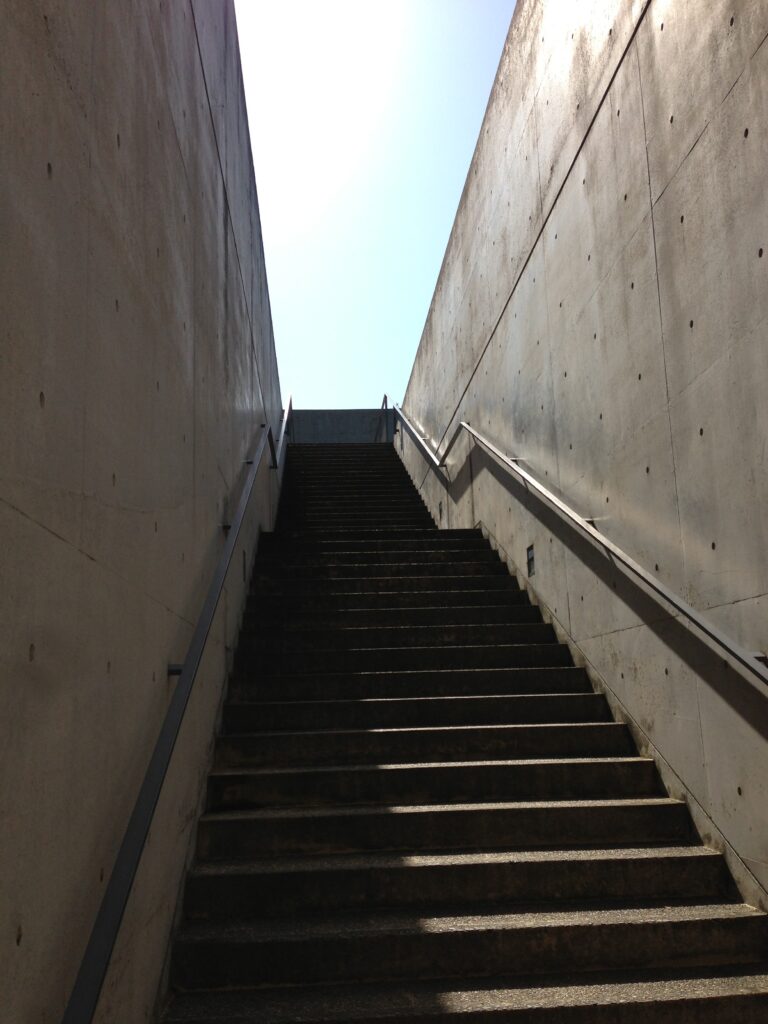
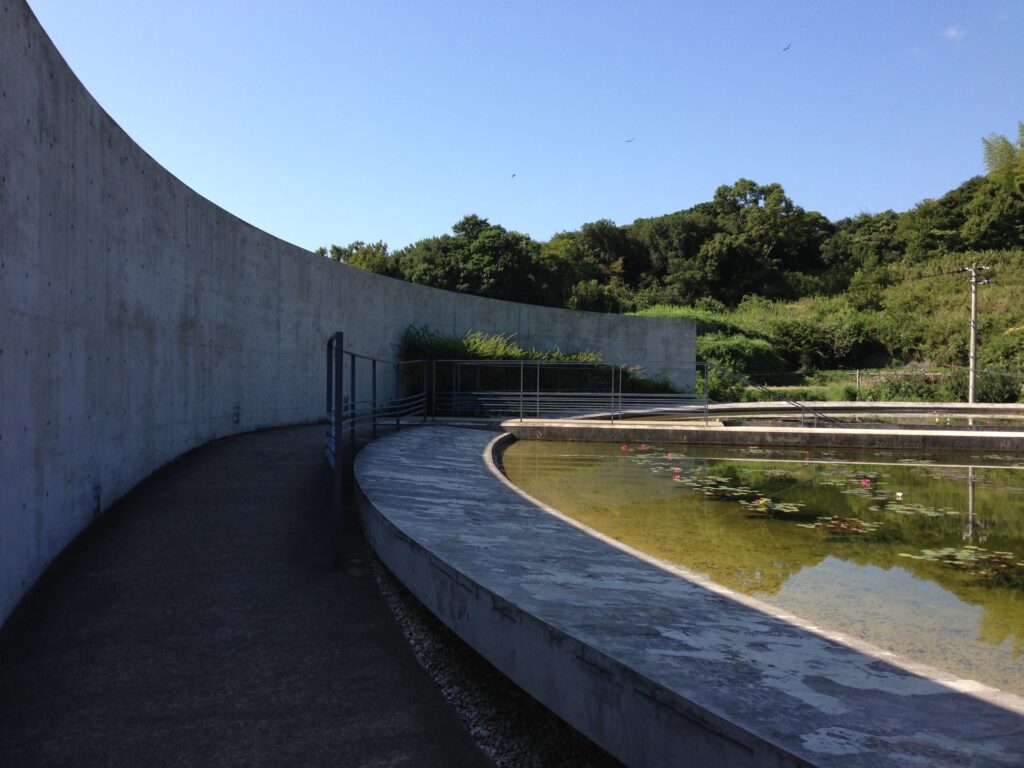
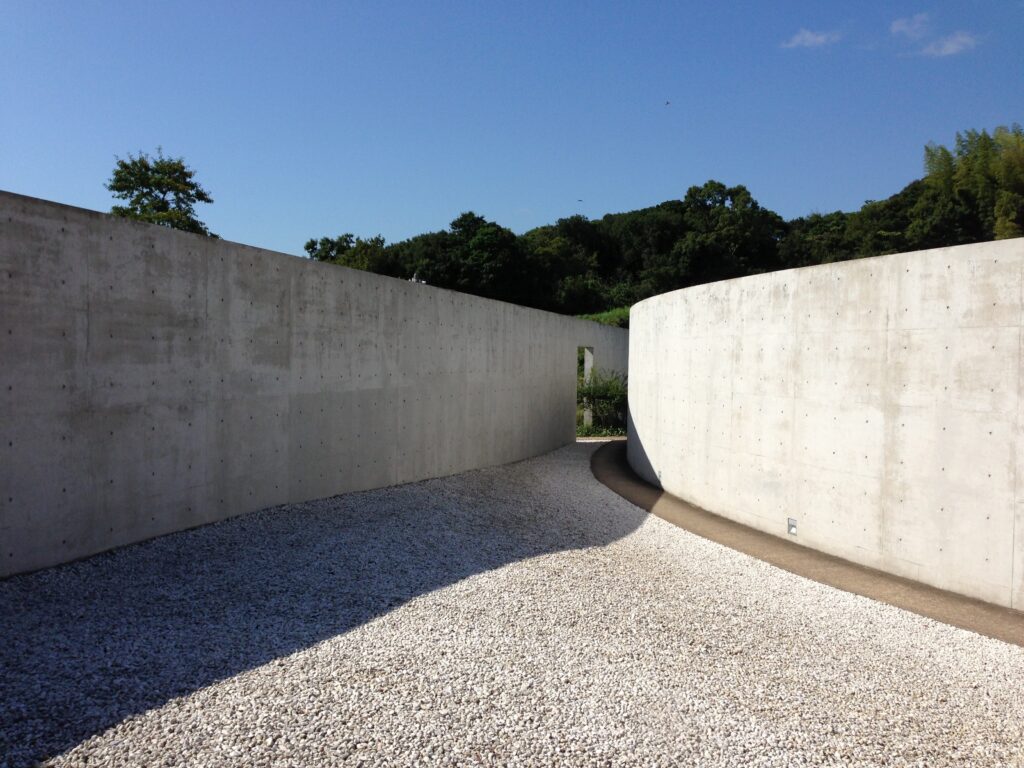
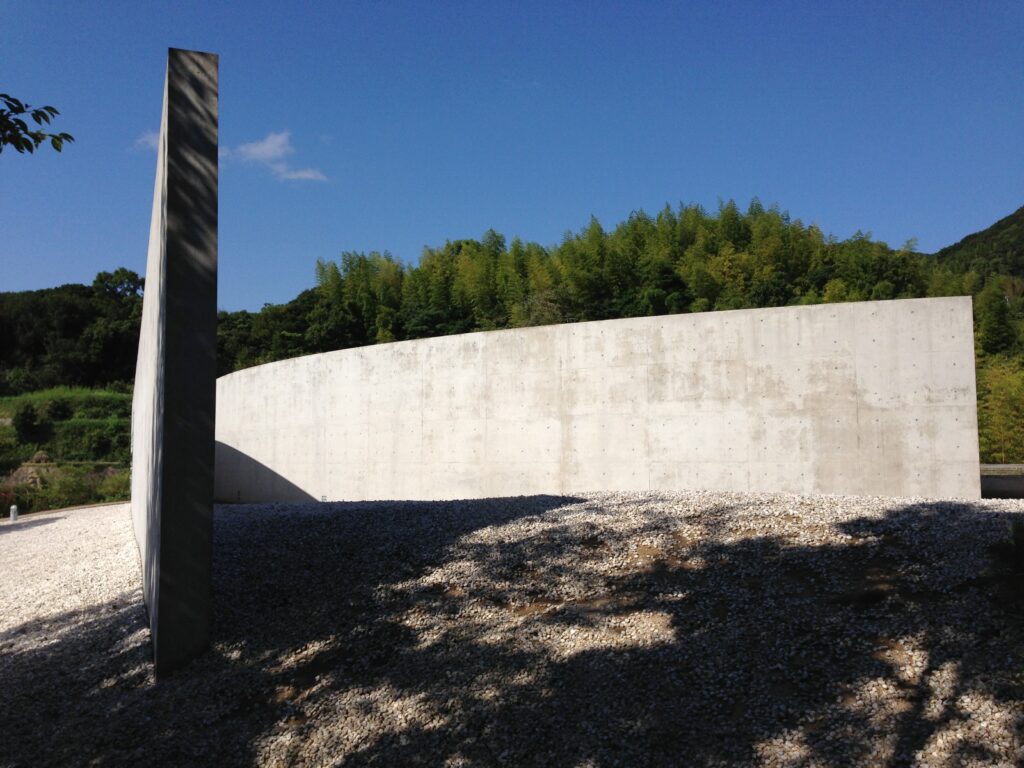
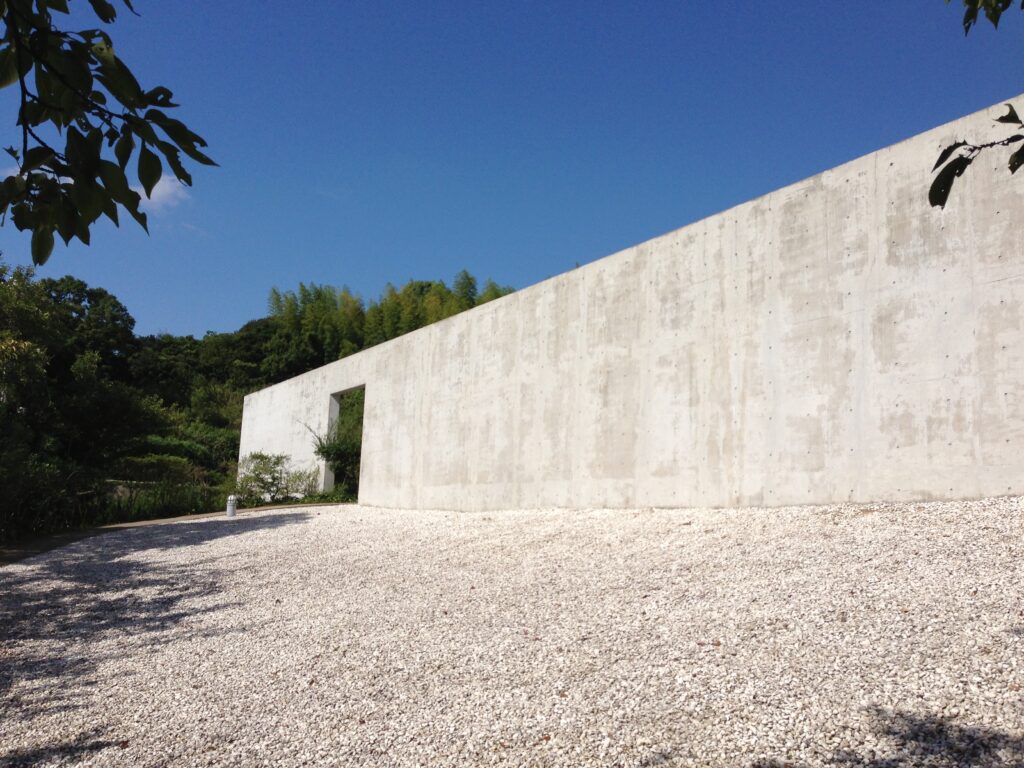
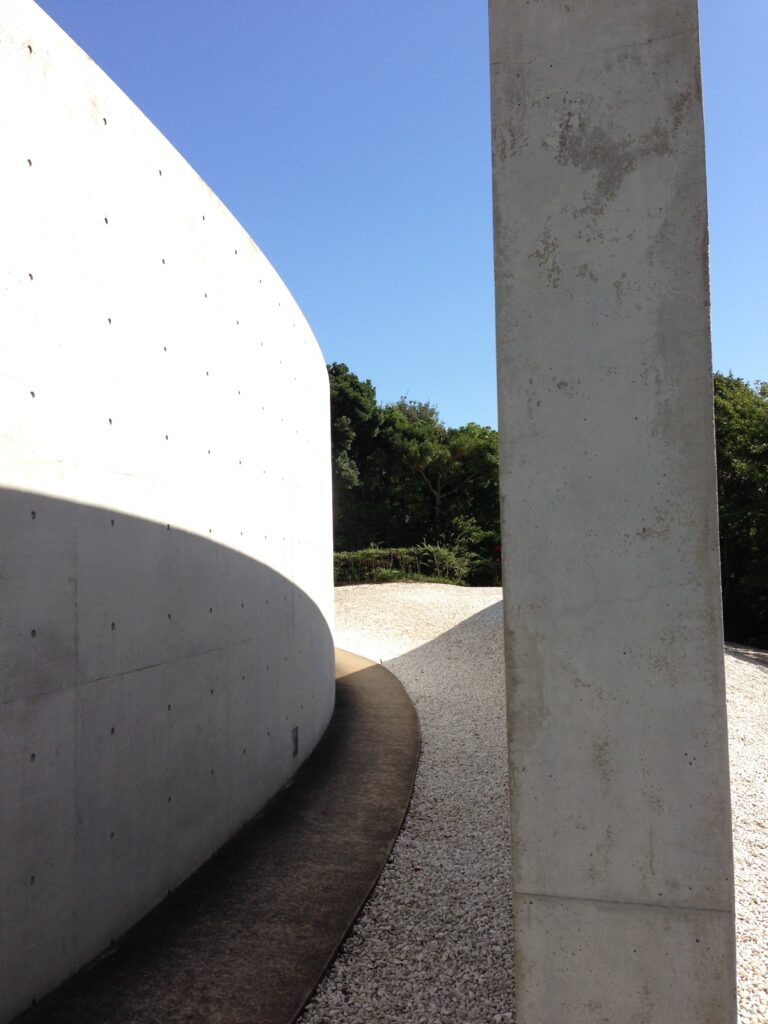
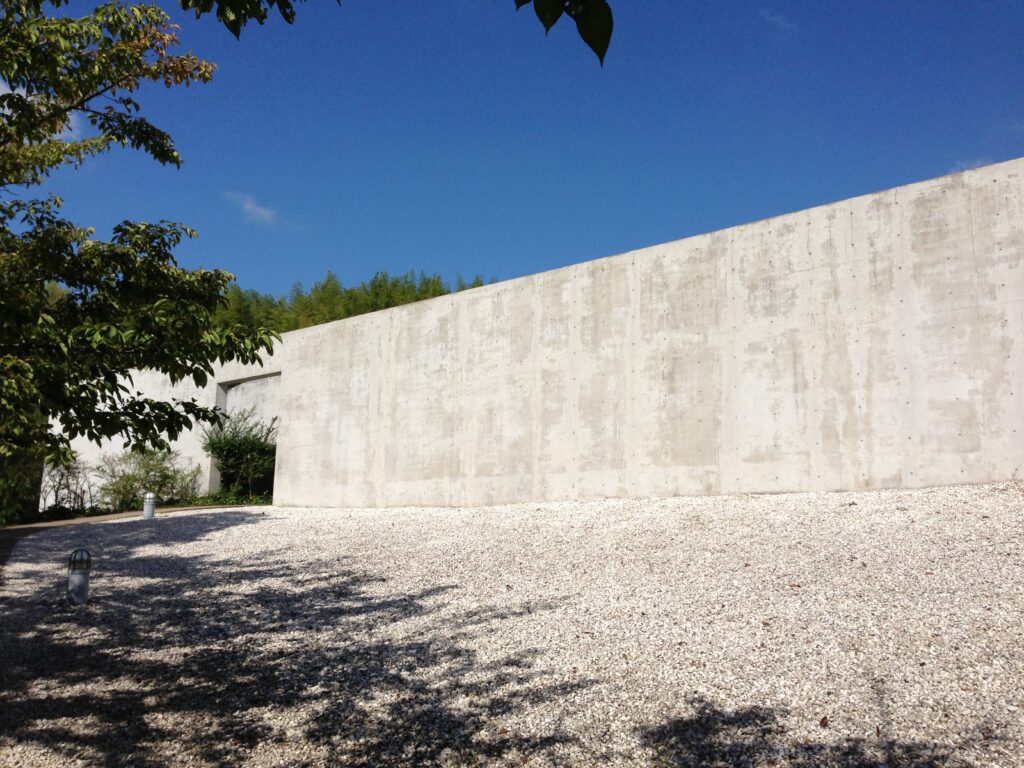
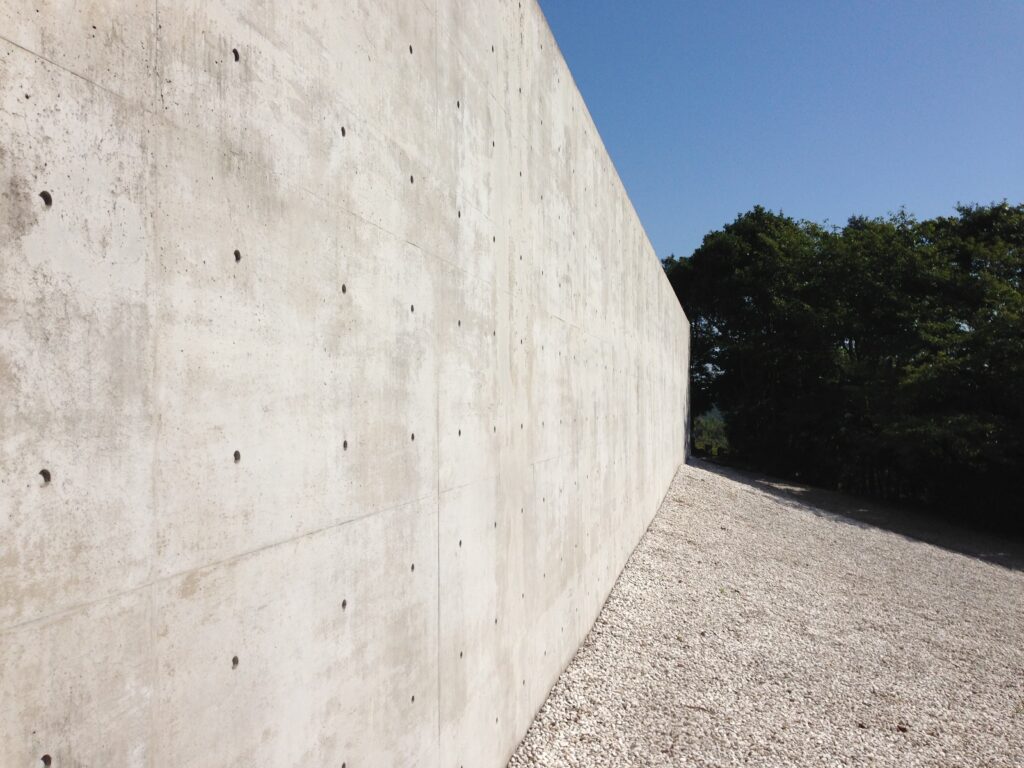
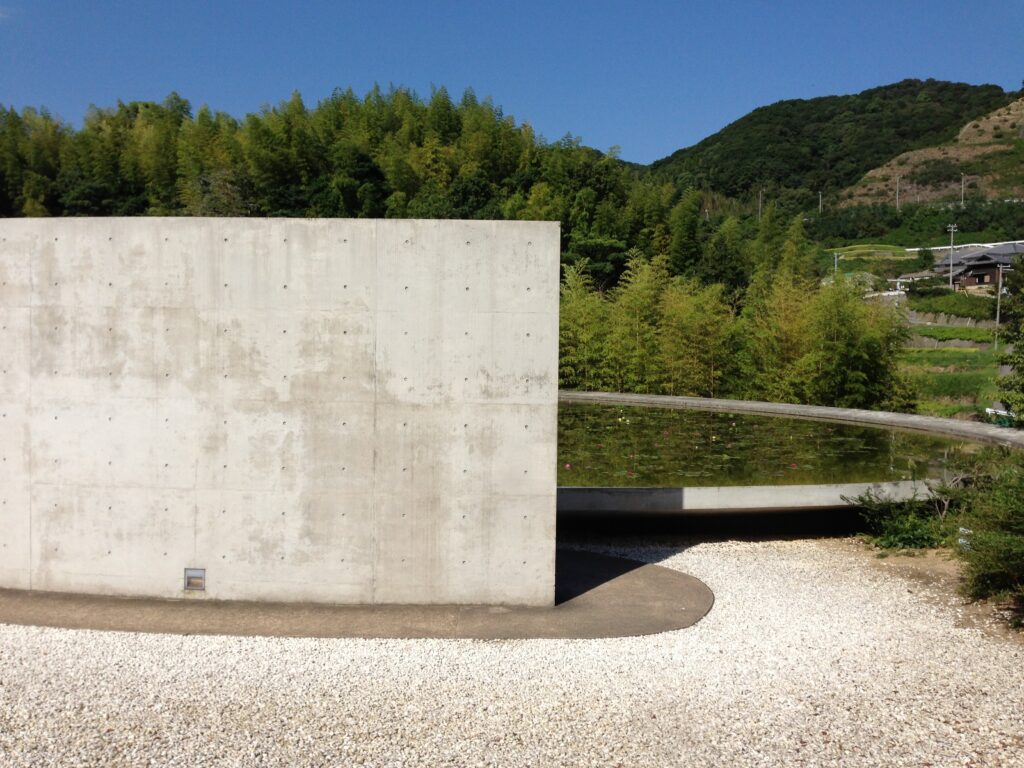
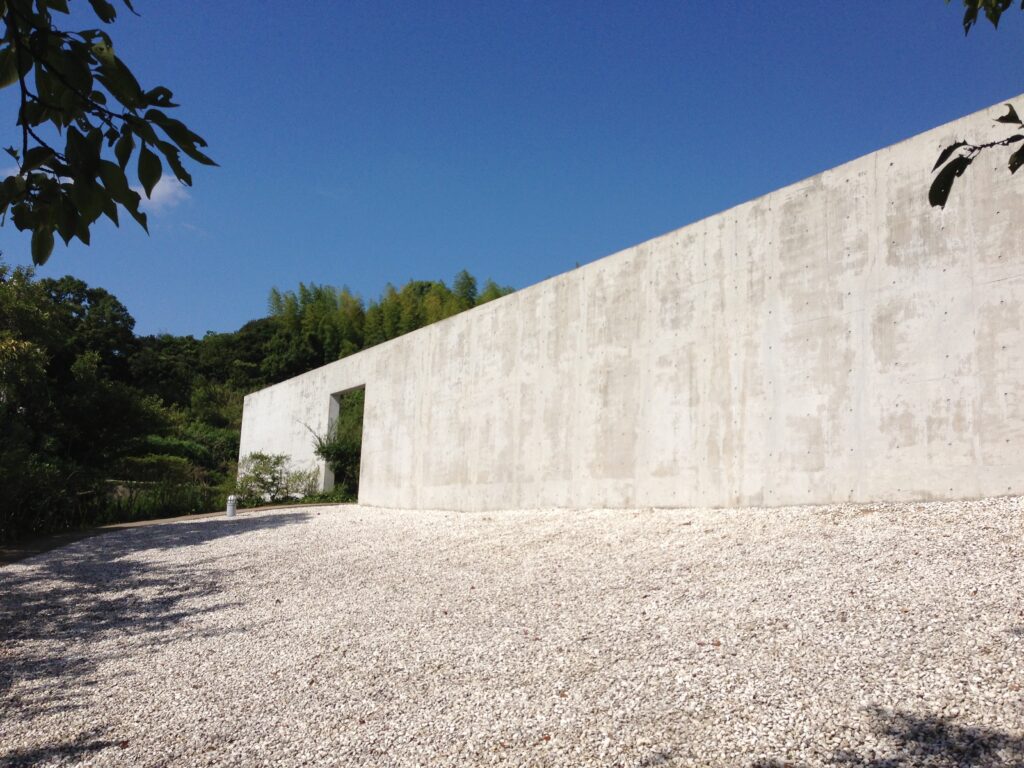
本福寺 水御堂を訪れて最初に感じたのは、「建築が姿を見せない」ということでした。
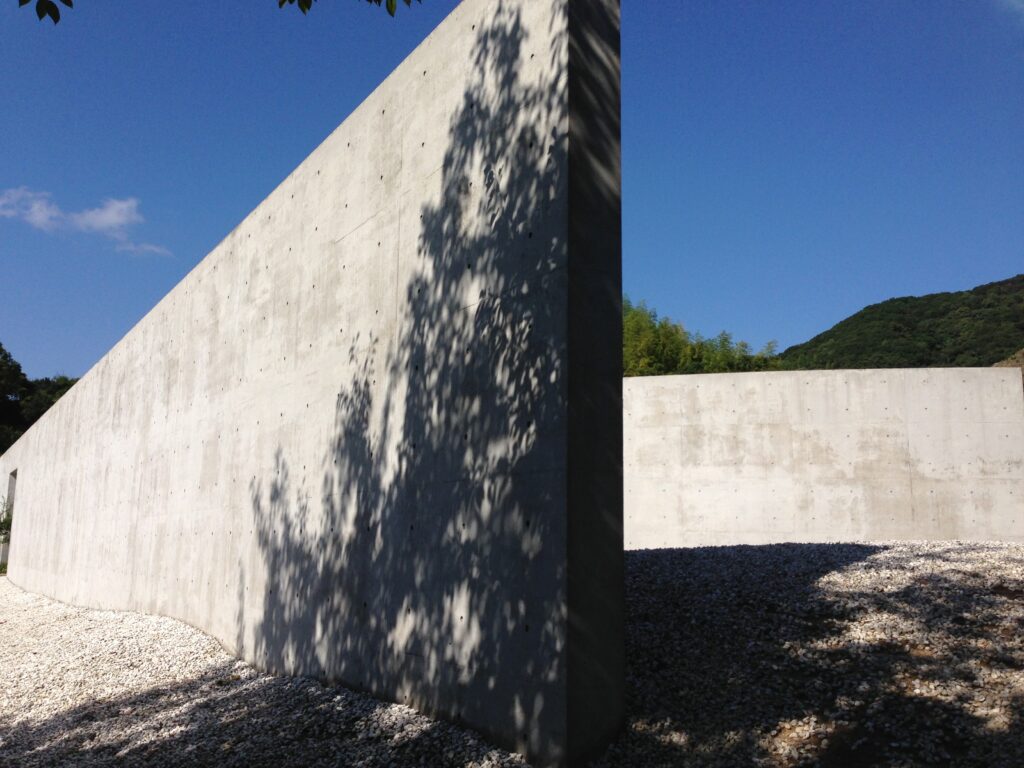
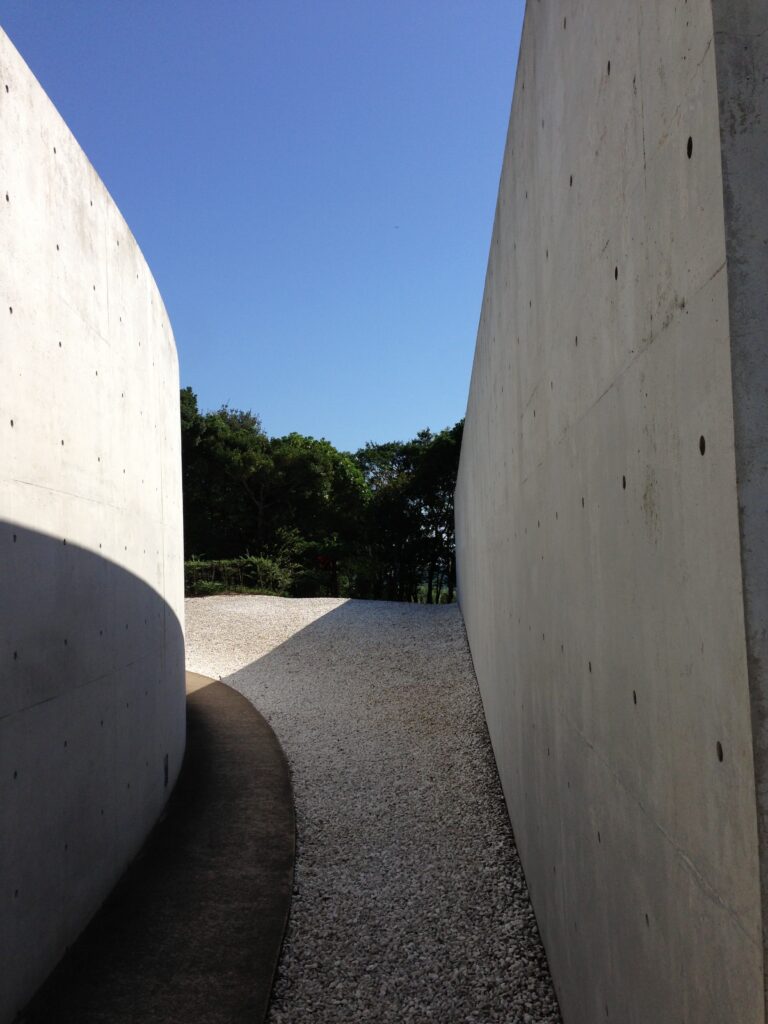
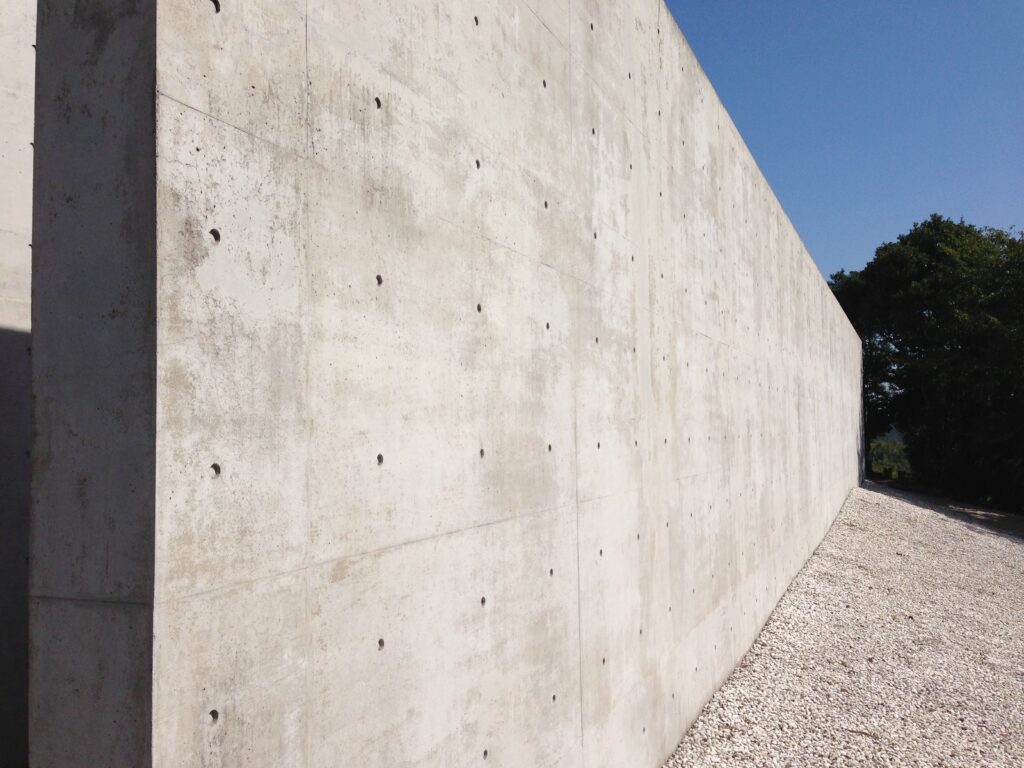
目の前に現れるのは、静かに伸びる白いコンクリートの壁だけです。
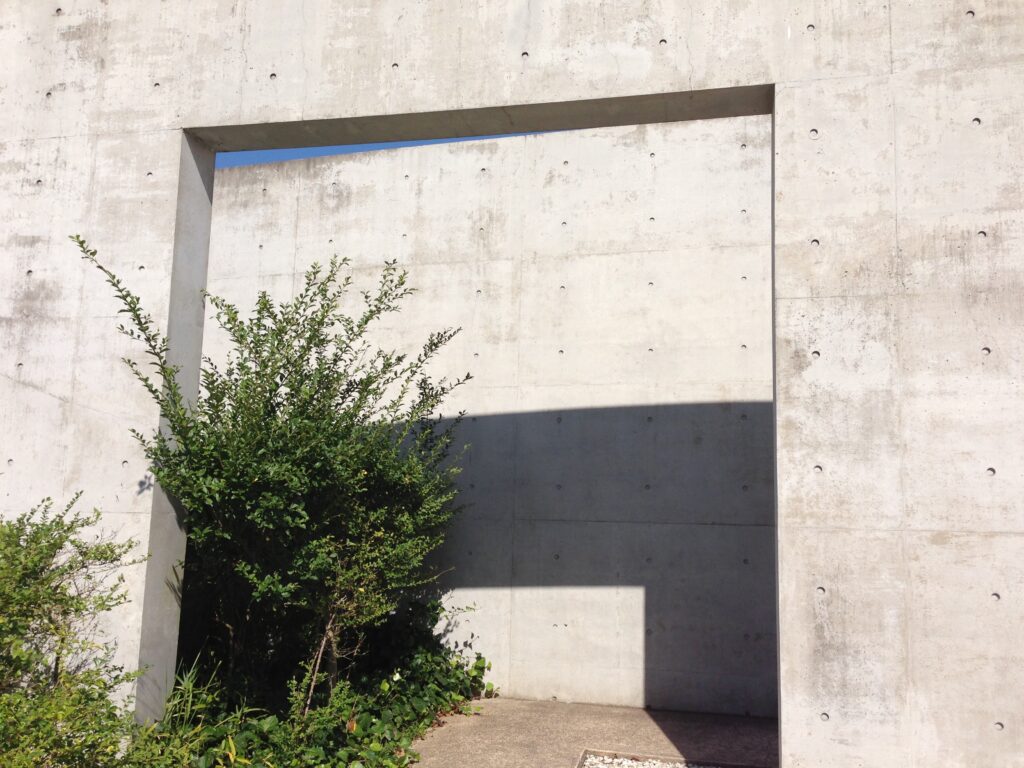
建物全体はまだ見えず、歩みを進めるにつれて少しずつ空間が開かれていきます。
何を見せるかではなく、どのように建築へ導くか。
そのアプローチそのものが、この建築の最初の体験でした。
My first impression of the Water Temple was that the architecture refused to reveal itself.
What appeared before me was not the temple itself, but a quiet expanse of white concrete wall.
The building remained hidden, and only gradually unfolded as I continued walking.
Rather than showing the destination immediately, the architecture carefully controlled how I approached it.
That journey toward the building was the first part of the experience.
2.水盤の下に広がる祈りの空間
Descending Beneath the Water
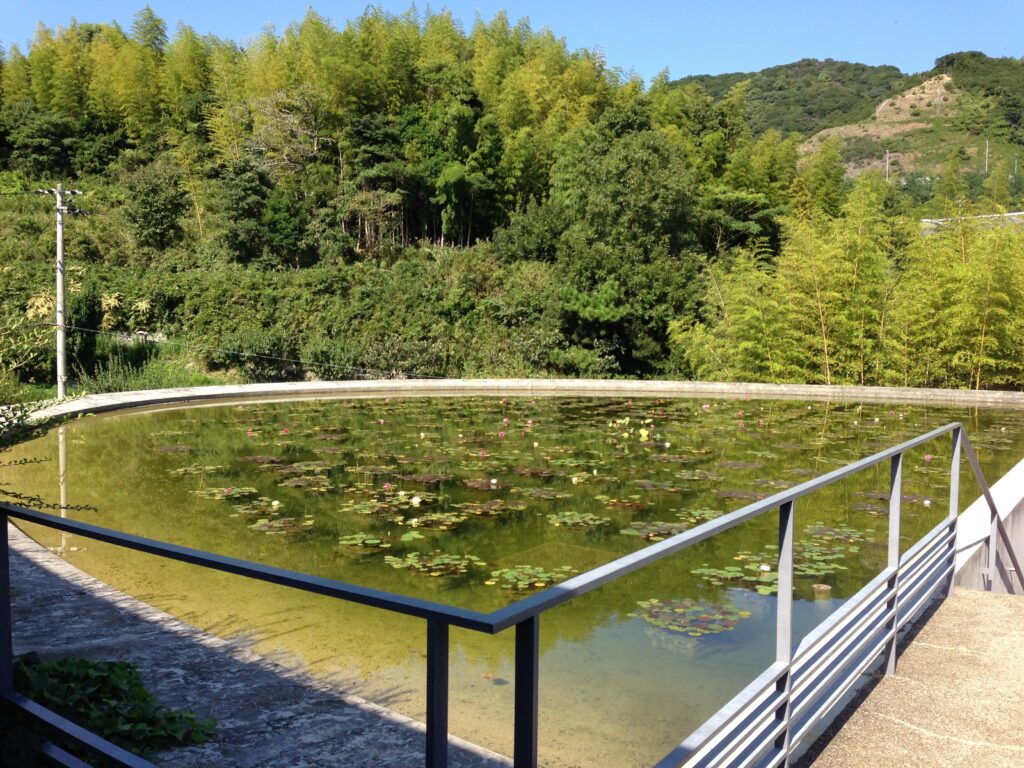
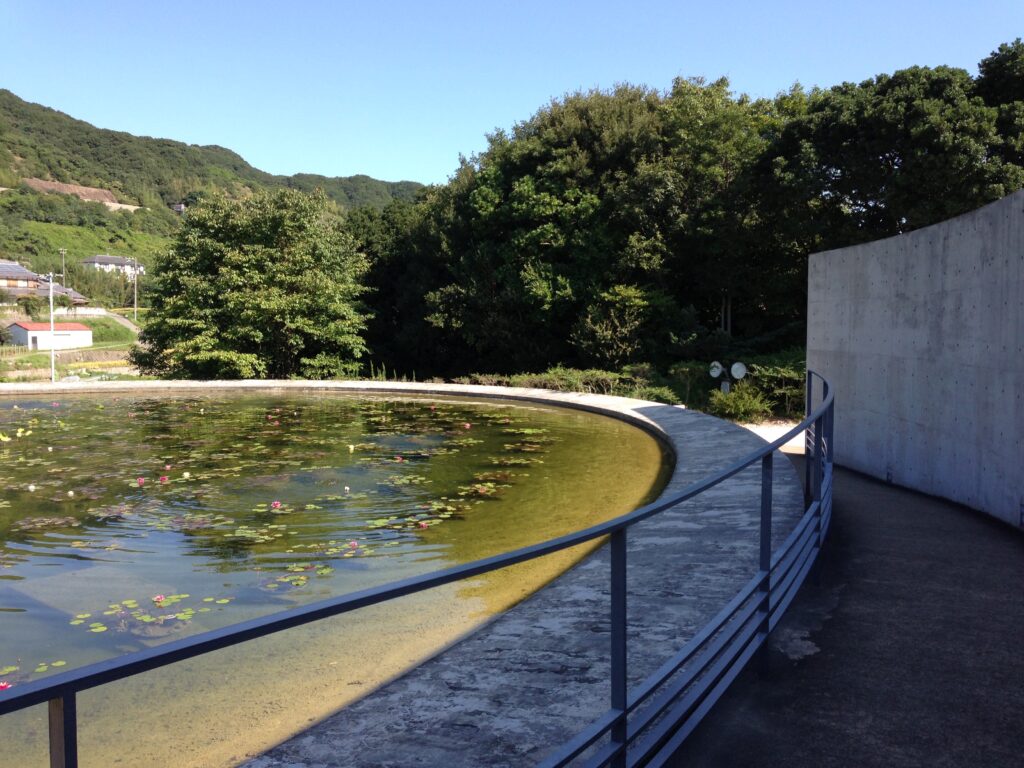
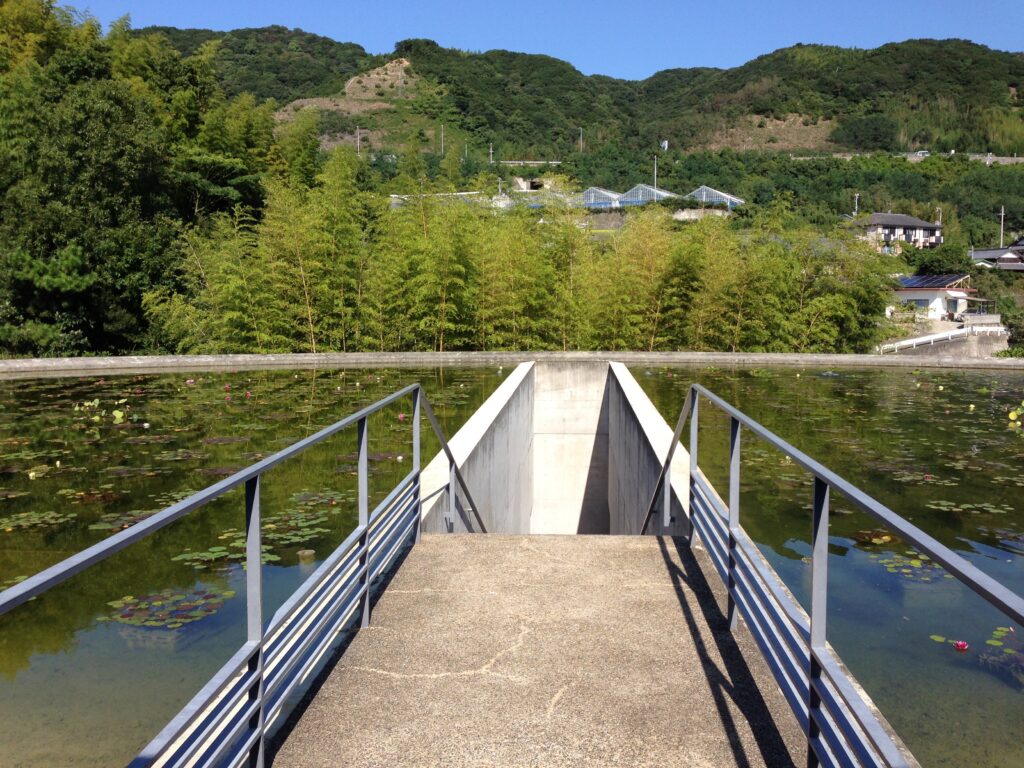
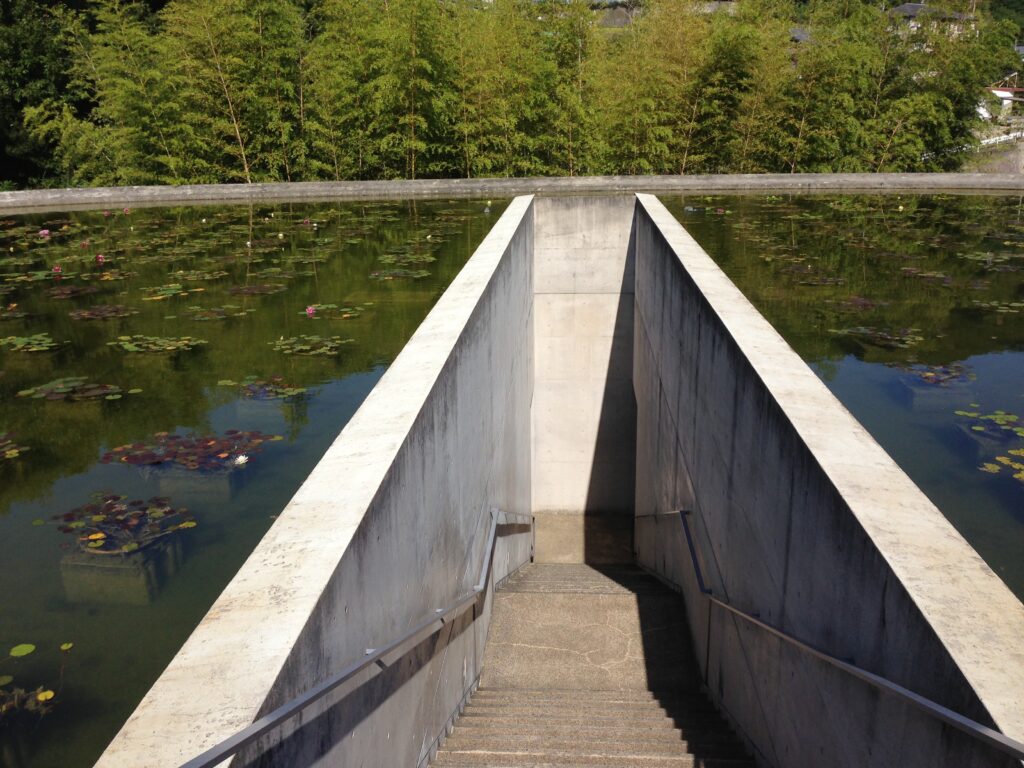
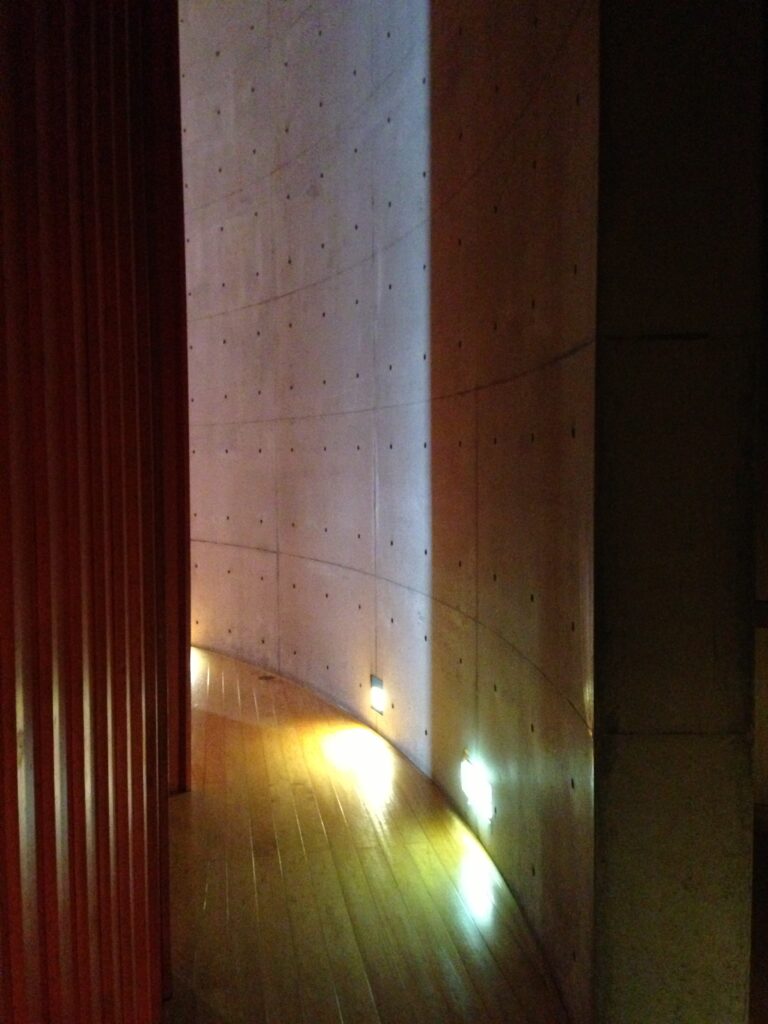
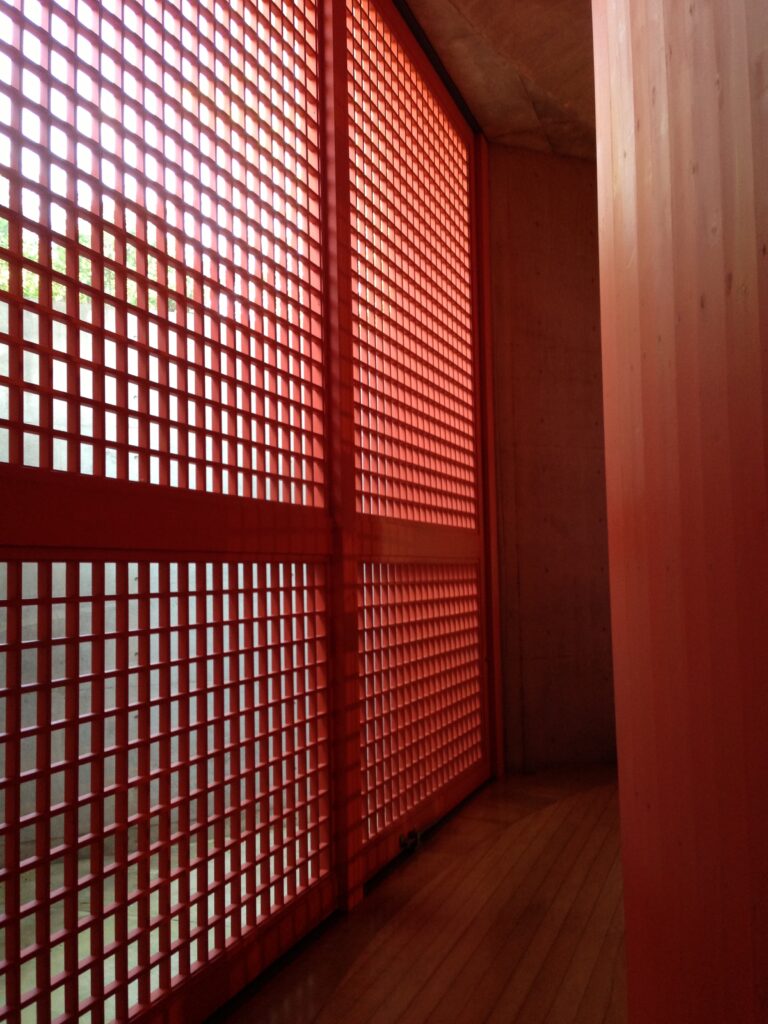
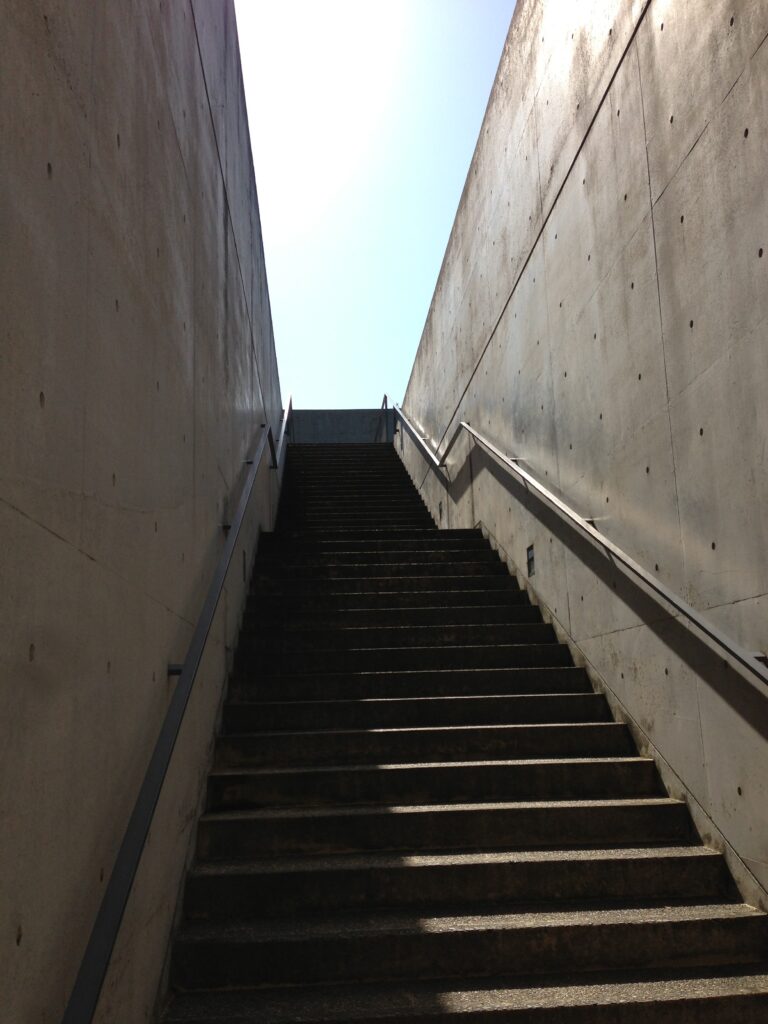
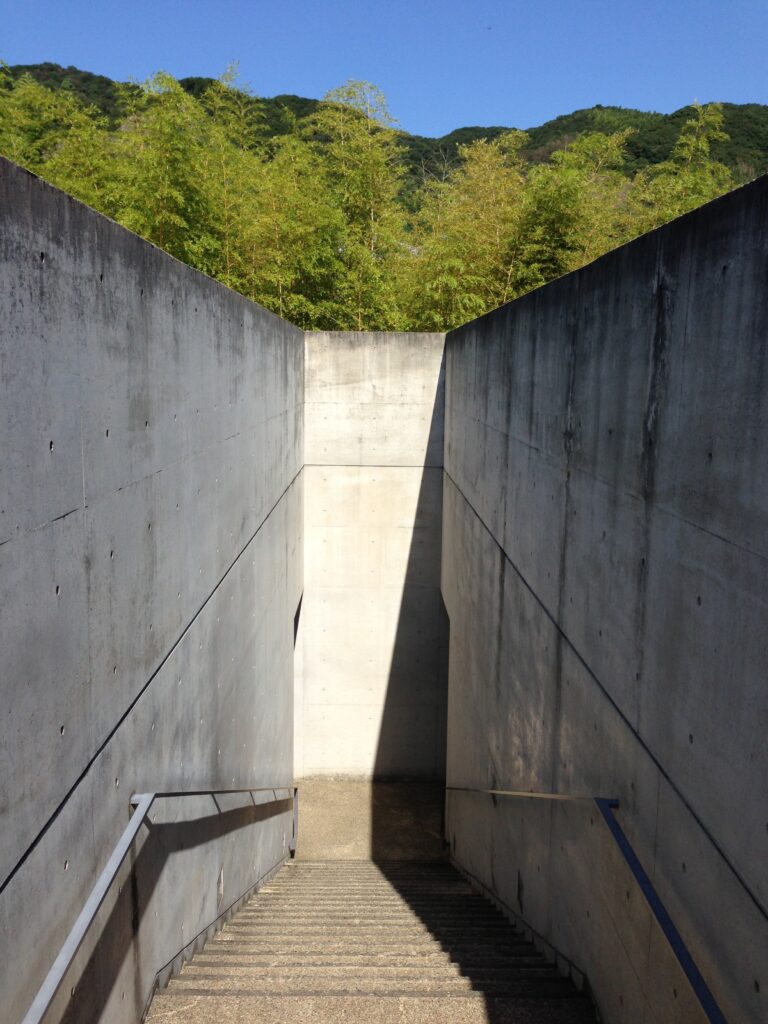
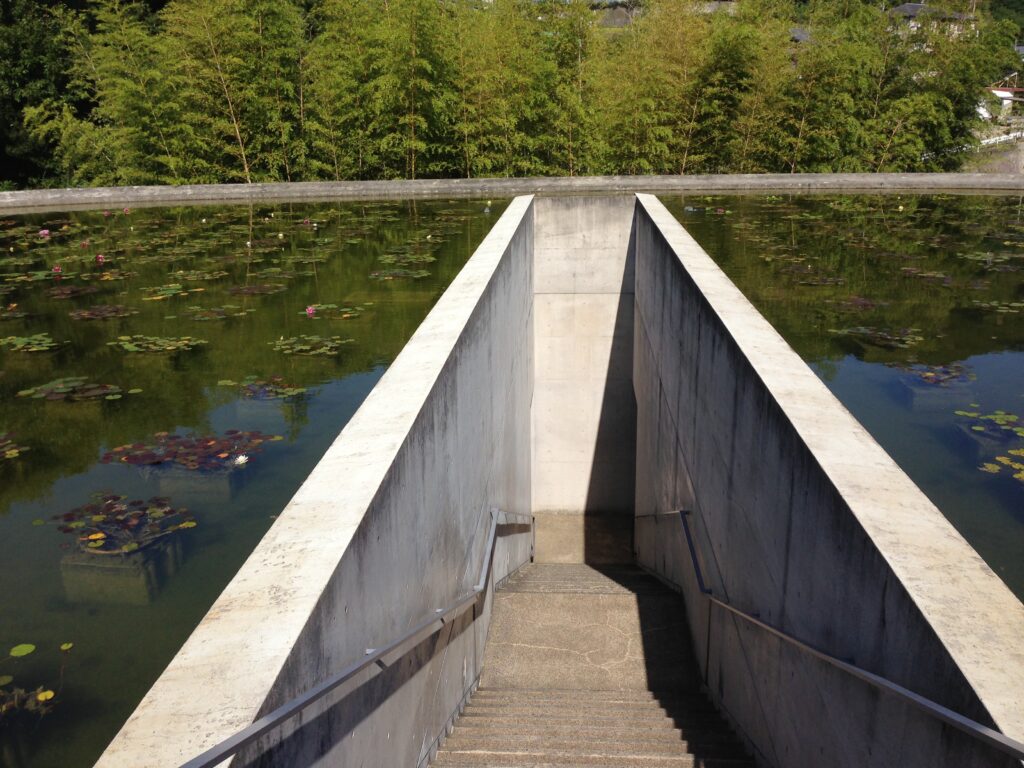
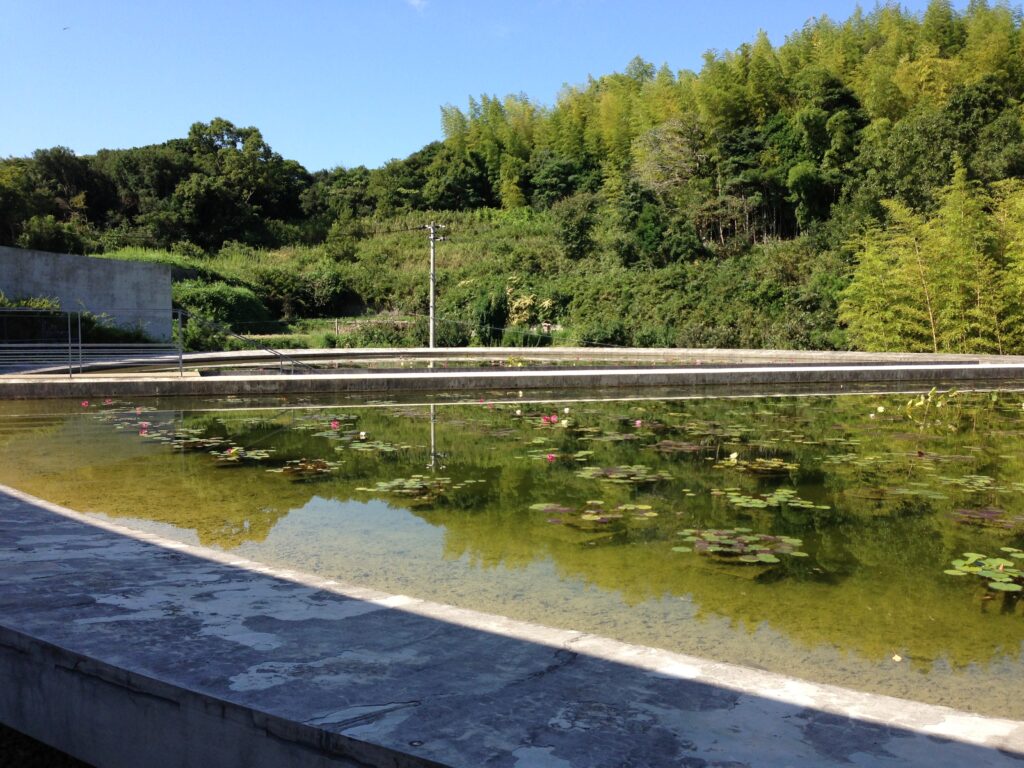
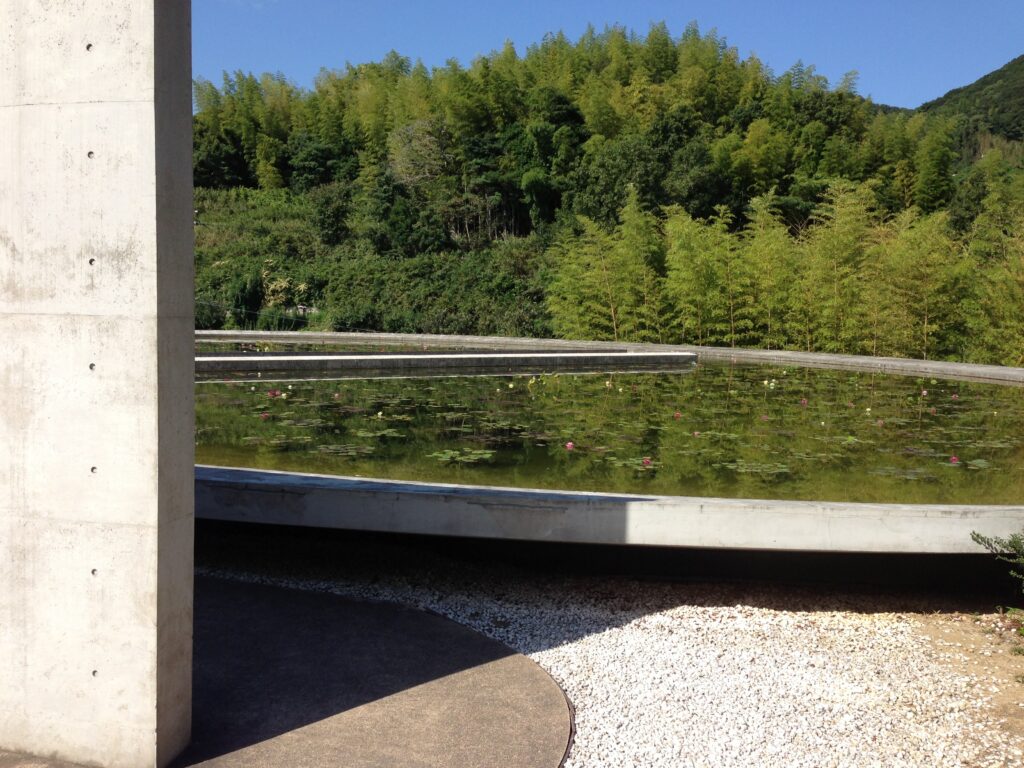
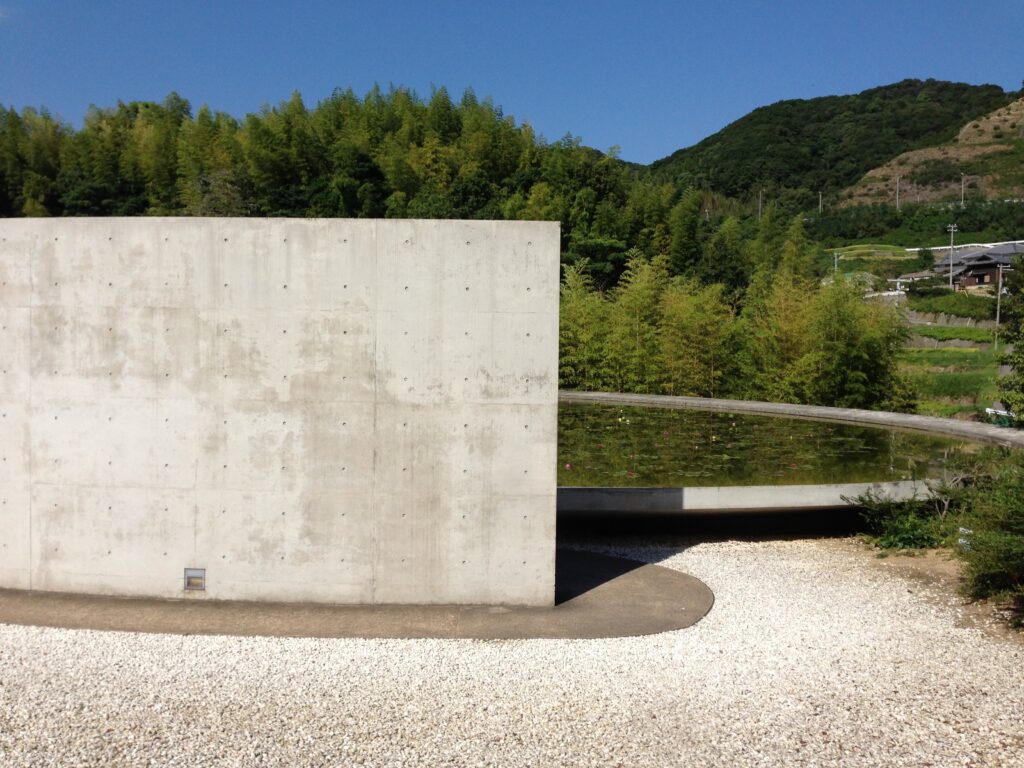
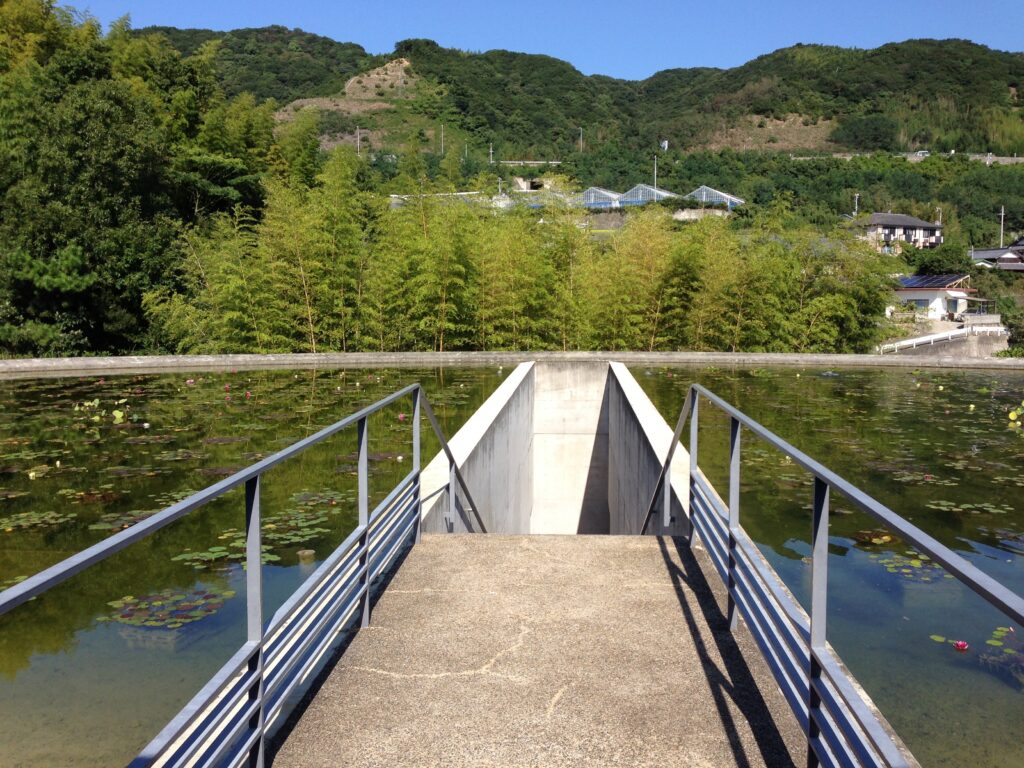
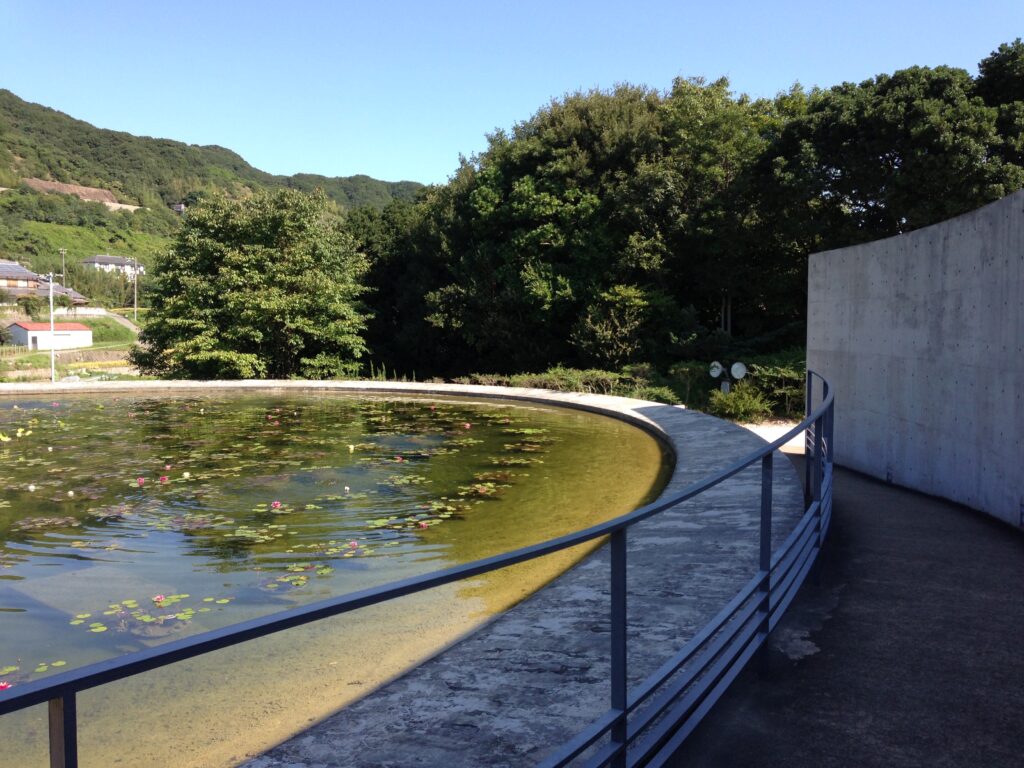
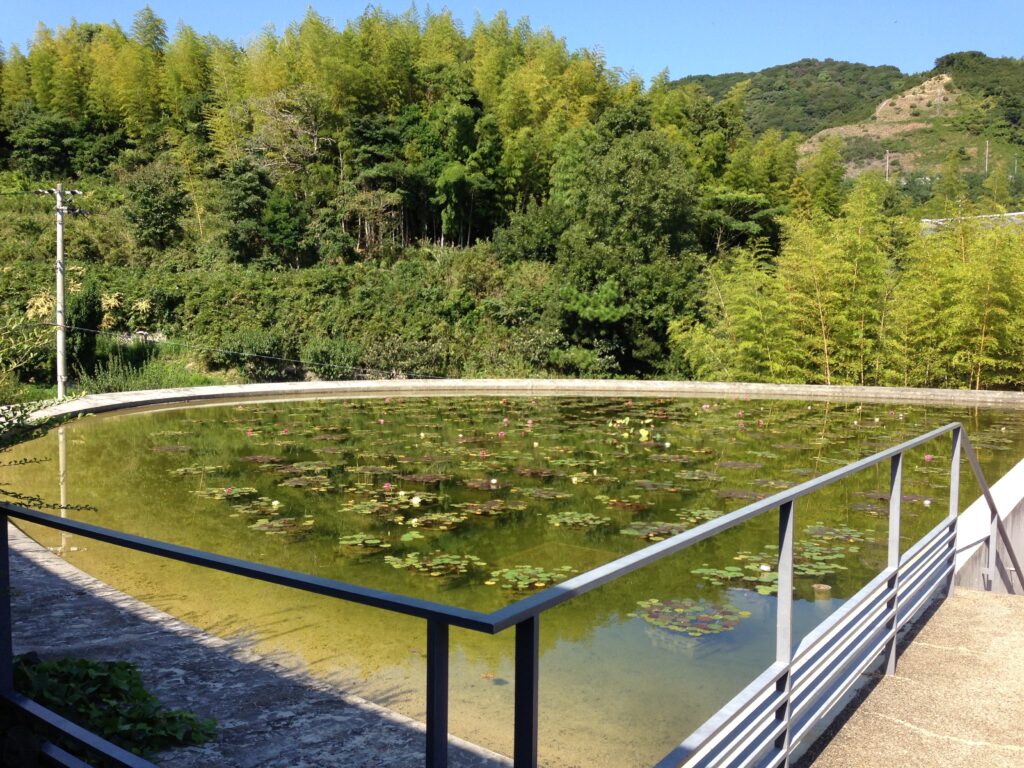
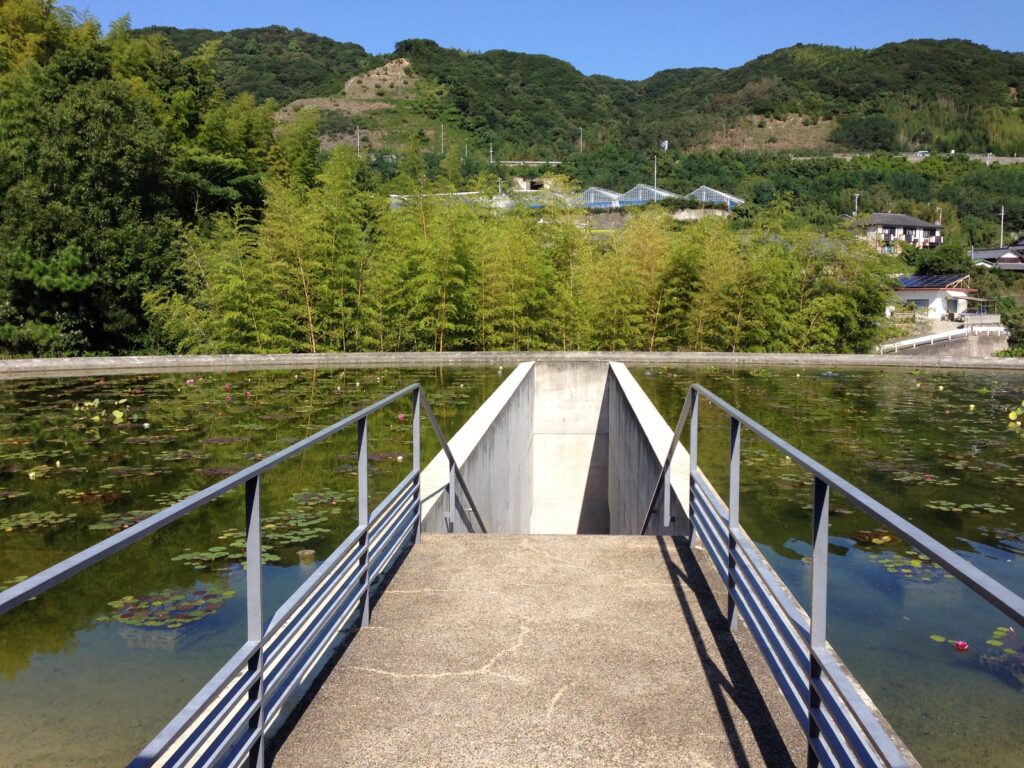
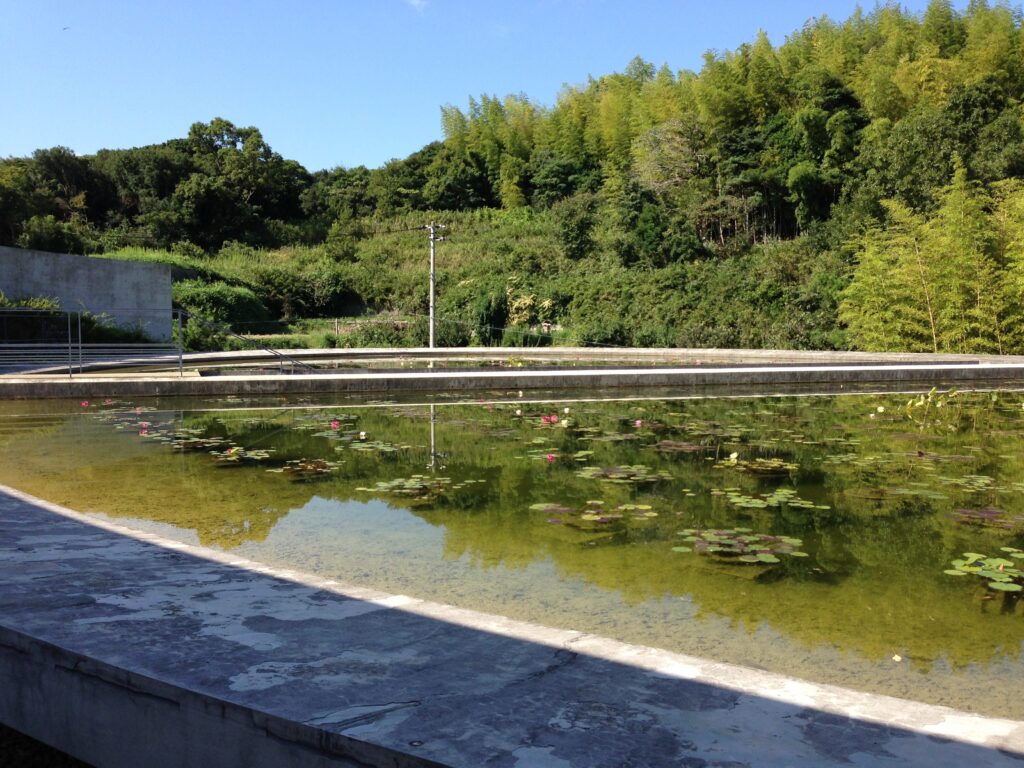
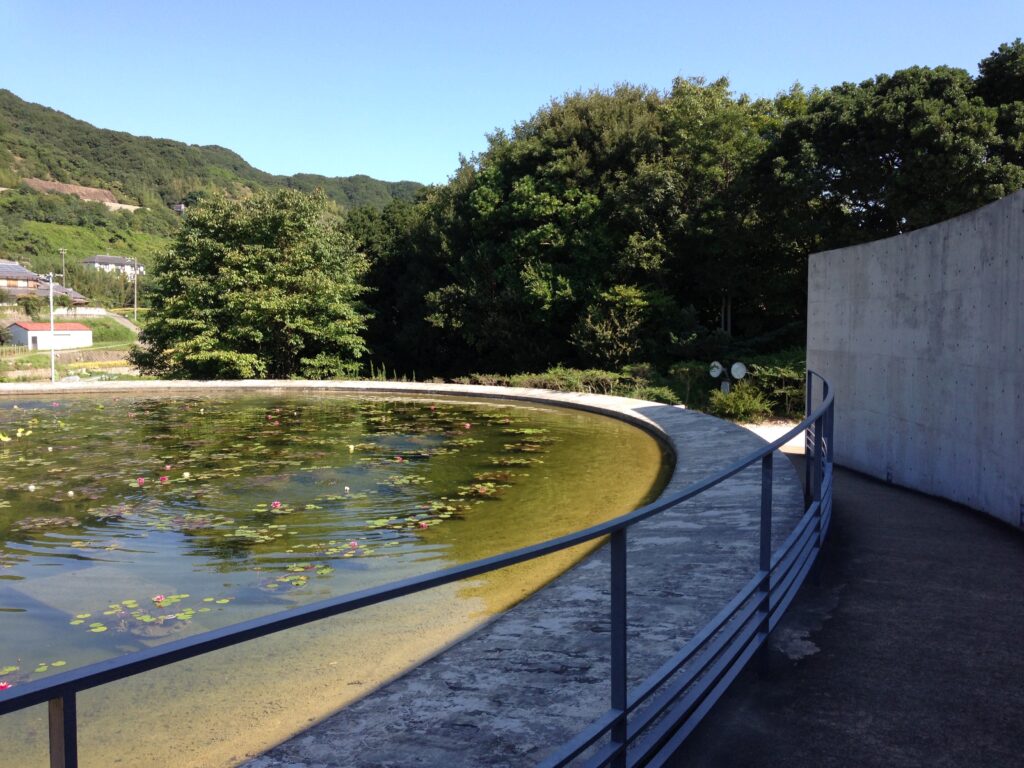
本福寺 水御堂を象徴するのが、大きな楕円形の水盤です。
水面は空を映し、周囲の景色を静かに包み込みます。
しかし、この建築の本当の魅力は水盤を見ることではありません。
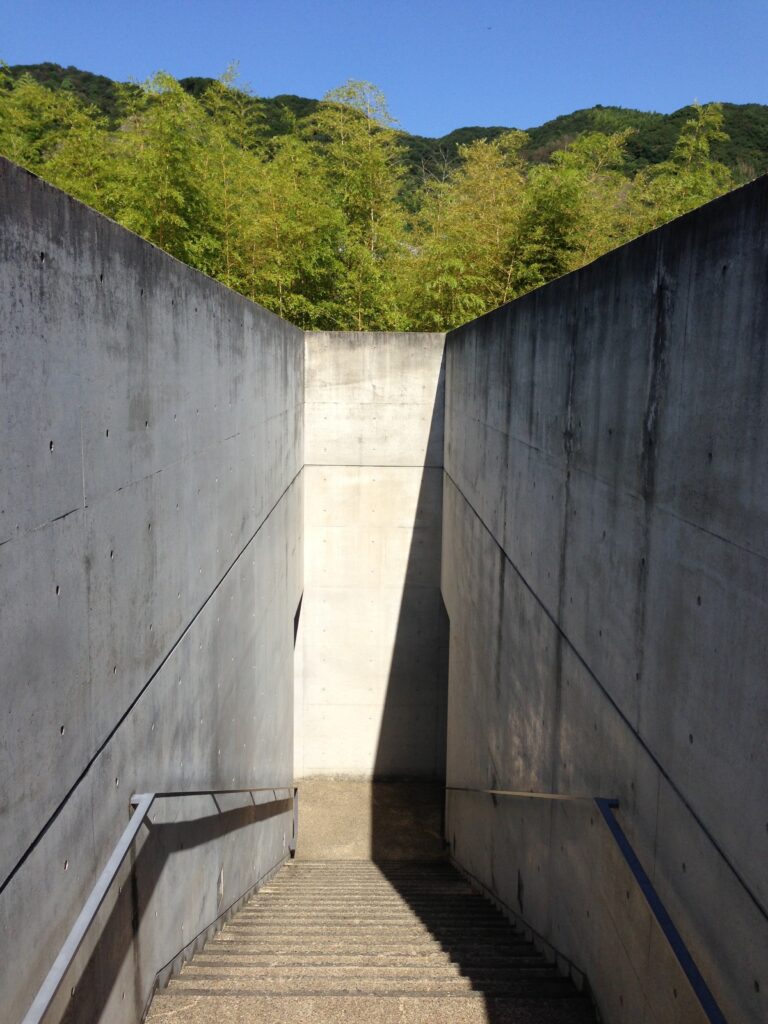
中央の階段を下り、水面の下へ入っていくことで初めて建築が始まります。
明るい屋外から暗い空間へ。
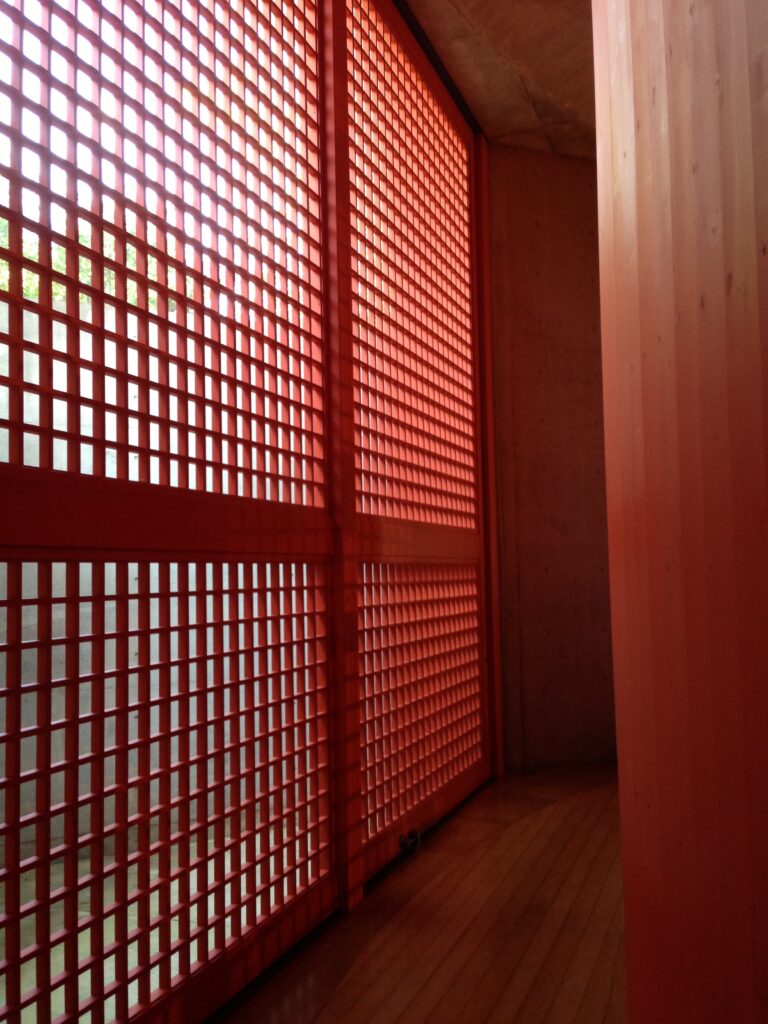
そして再び光が差し込む本堂へ。
光と影の移り変わりが、自然に気持ちを落ち着かせてくれました。
The defining feature of the Water Temple is its large elliptical pond.
Its surface reflects the sky and quietly gathers the surrounding landscape.
Yet the true experience of the architecture does not lie in simply looking at the water.
A staircase cuts through the centre of the pond, leading visitors downward beneath its surface.
From the brightness of the open air into darkness.
And then, gradually, toward the light of the worship hall.
The transition between light and shadow naturally brought a sense of calm.
3.曲線がつくる静寂
Silence Shaped by Curves
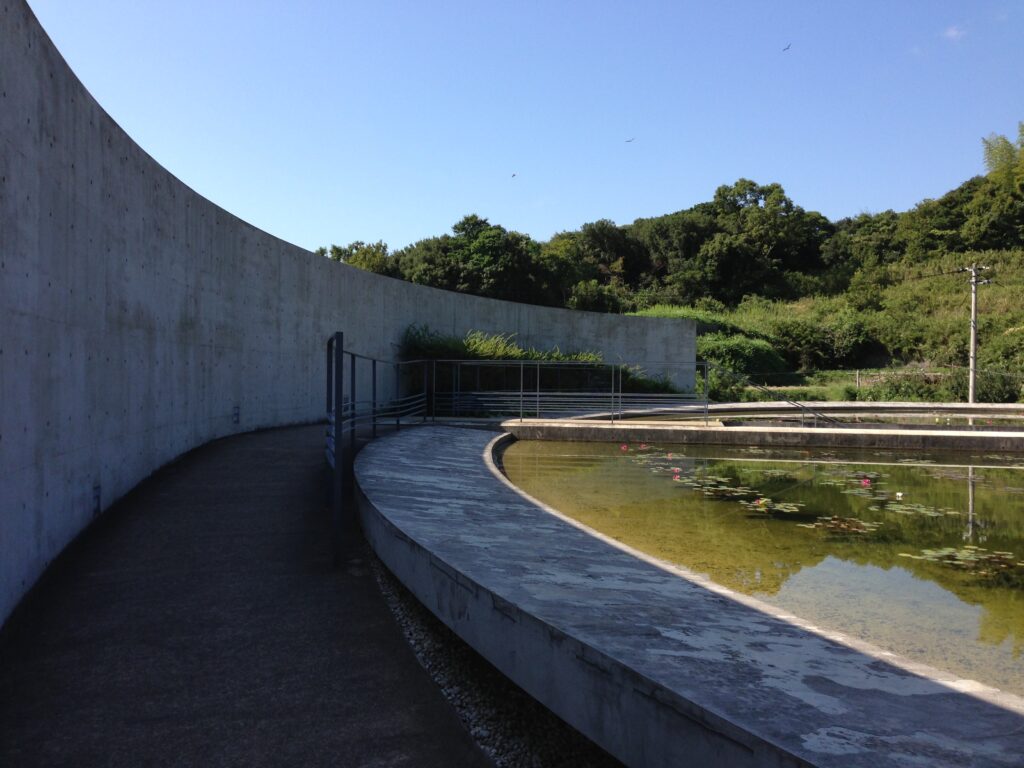
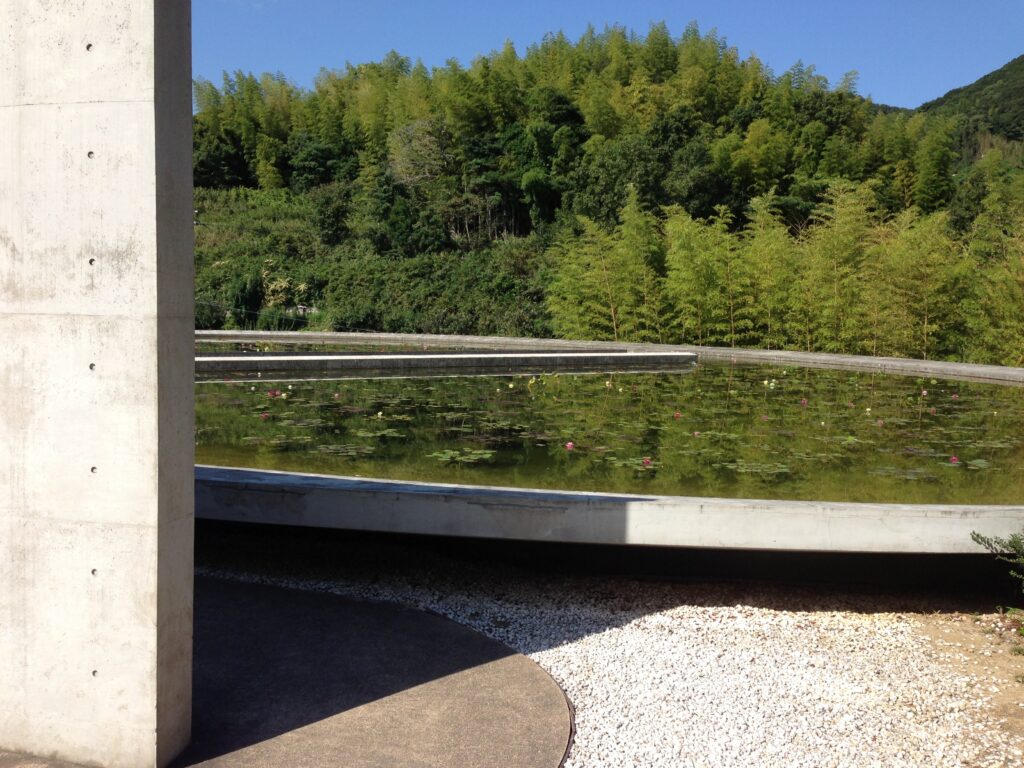
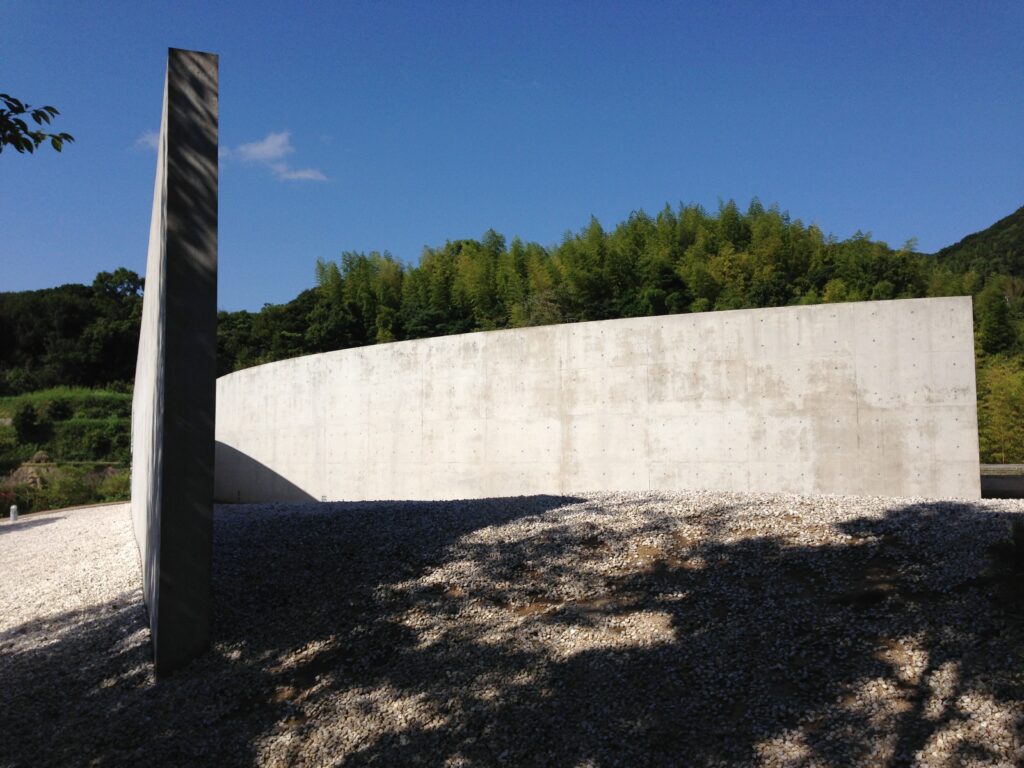
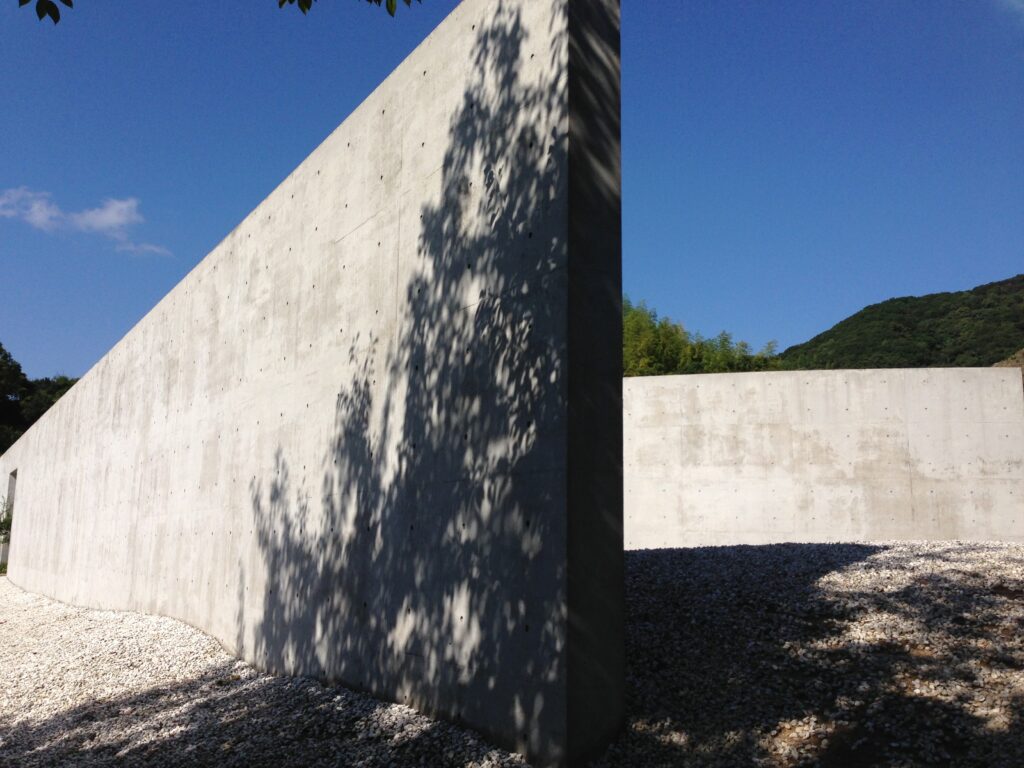
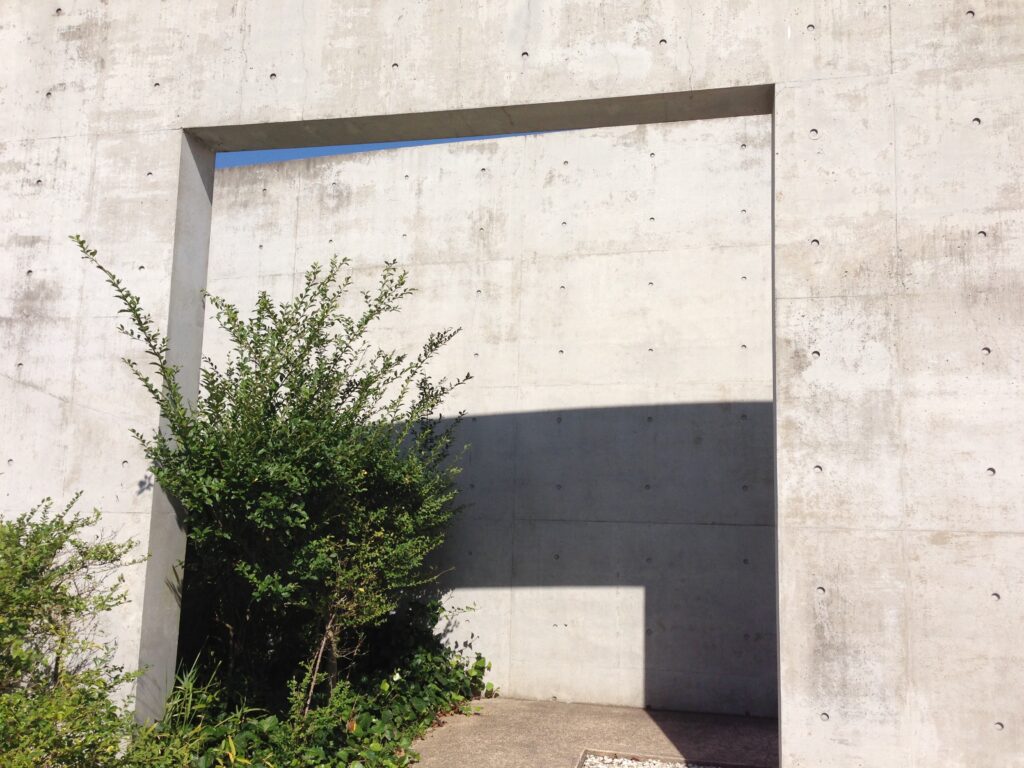
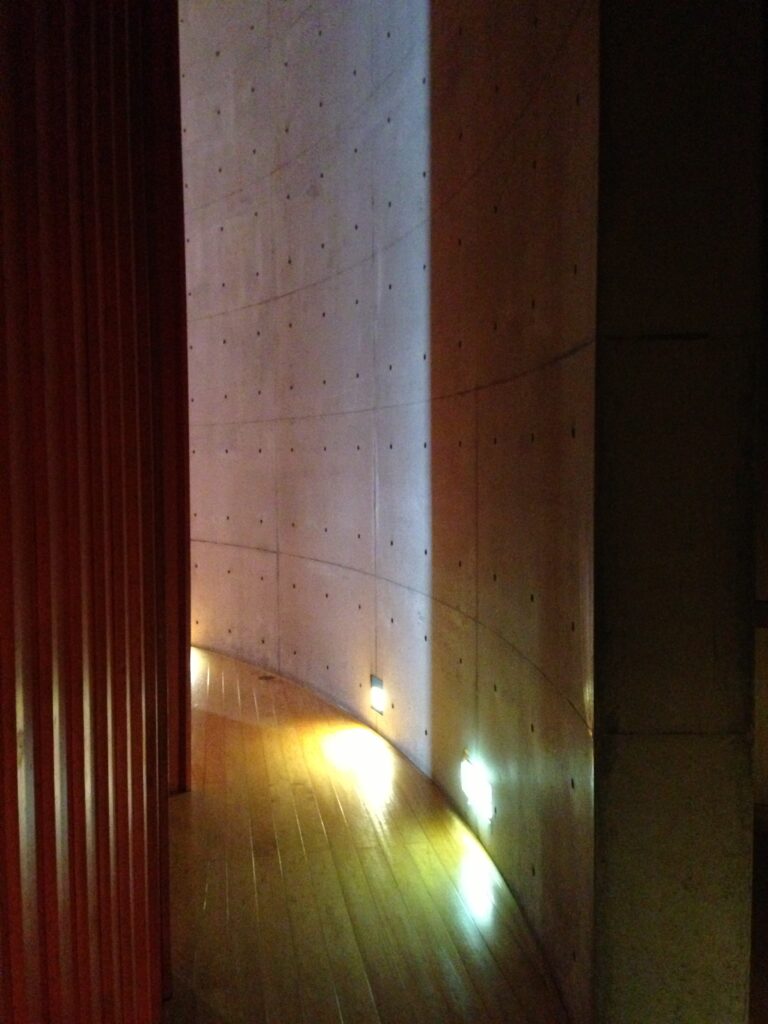
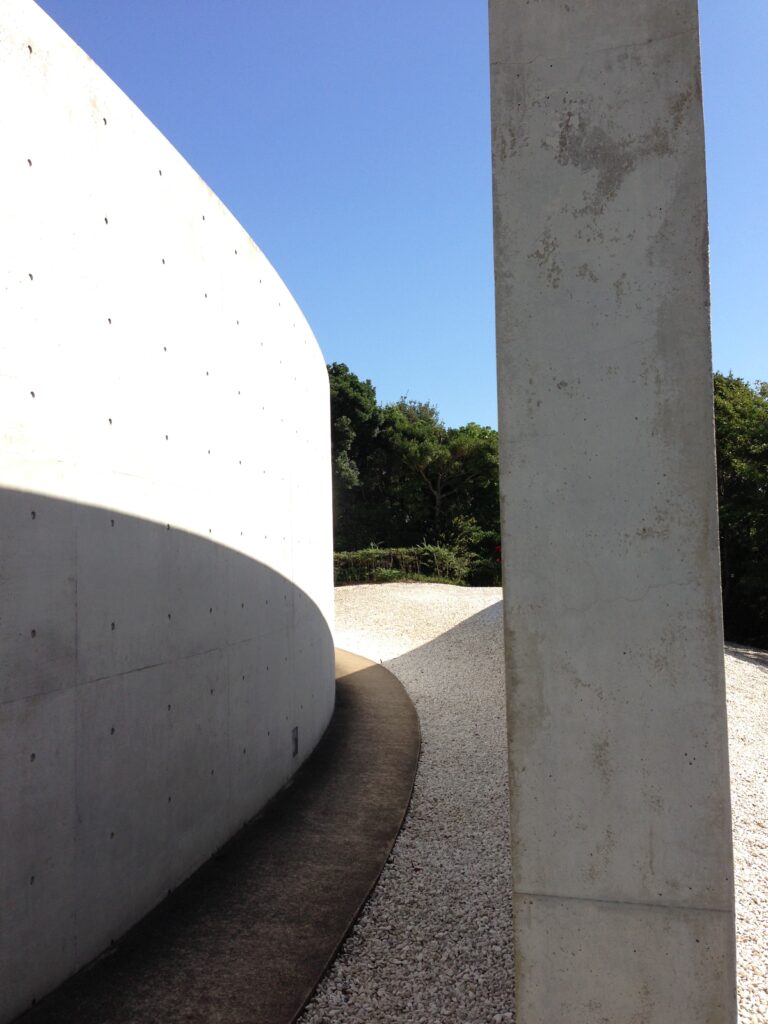
建築の内部では、曲線を描くコンクリートの壁がゆるやかに視線を導いていきます。
直線的な印象が強い安藤建築の中で、この柔らかな曲線は独特の存在感を持っています。
歩く速度までゆっくりになるような空気。
静かな時間が流れる空間でした。
Curving concrete walls gently guide the eye and shape the path through the architecture.
Although Tadao Ando’s work is often associated with strong geometric lines, the curves here create a softer and more intimate presence.
The atmosphere seems to slow every movement.
It is a space in which silence feels almost tangible.
4.建築と自然が一つになる
Where Architecture and Nature Become One
建築を歩き終え、もう一度水盤を眺めると、最初とはまったく違う景色に見えました。
建築が自然を切り離すのではなく、水や空、光と一体になって存在していることがよく分かります。
コンクリートという無機質な素材でありながら、どこか温かさを感じるのは、その周囲の自然を丁寧に取り込んでいるからなのかもしれません。
After walking through the temple and returning to the pond, the landscape appeared completely different from when I first arrived.
The architecture does not separate itself from nature.
Instead, it exists together with the water, the sky, the light, and the surrounding greenery.
Although concrete is often perceived as a cold and inorganic material, the building carries a quiet warmth.
Perhaps that warmth comes from the careful way in which the natural surroundings have been drawn into the architecture.
My Impression
今回、本福寺 水御堂を訪れて一番印象に残ったのは、「静けさ」でした。
派手な演出があるわけではありません。
建築が強く自己主張するわけでもありません。
それでも、歩き進めるにつれて空間が少しずつ変化し、水面の下へ入り、光に包まれる一連の体験は、写真だけでは伝わらない魅力がありました。
建築を見るというより、その空間に身を置くことで初めて完成する建築。
本福寺 水御堂は、そんな安藤忠雄建築の魅力を改めて感じさせてくれる場所でした。
What stayed with me most after visiting the Water Temple was its silence.
There was no dramatic display.
The architecture did not demand attention.
And yet, as I continued walking, the spaces gradually changed.
I descended beneath the surface of the water and entered a place shaped by darkness, light, colour, and stillness.
It was an experience that photographs alone could never fully convey.
This is not architecture that is completed simply by being seen.
It becomes complete only when someone enters it, walks through it, and experiences the space firsthand.
Honpukuji Temple reminded me once again of the quiet power of Tadao Ando’s architecture.
Archive Gallery
本文では紹介しきれなかった写真を掲載しています。
建築を歩きながら出会った光や空間、その場の空気を記録したアーカイブです。
Additional photographs from this visit.
A collection of details, perspectives, and moments that complement the main article.